招商银行

Search documents
Visa宣布支持中国消费者 Apple Pay绑卡
Sou Hu Cai Jing· 2026-01-15 13:29
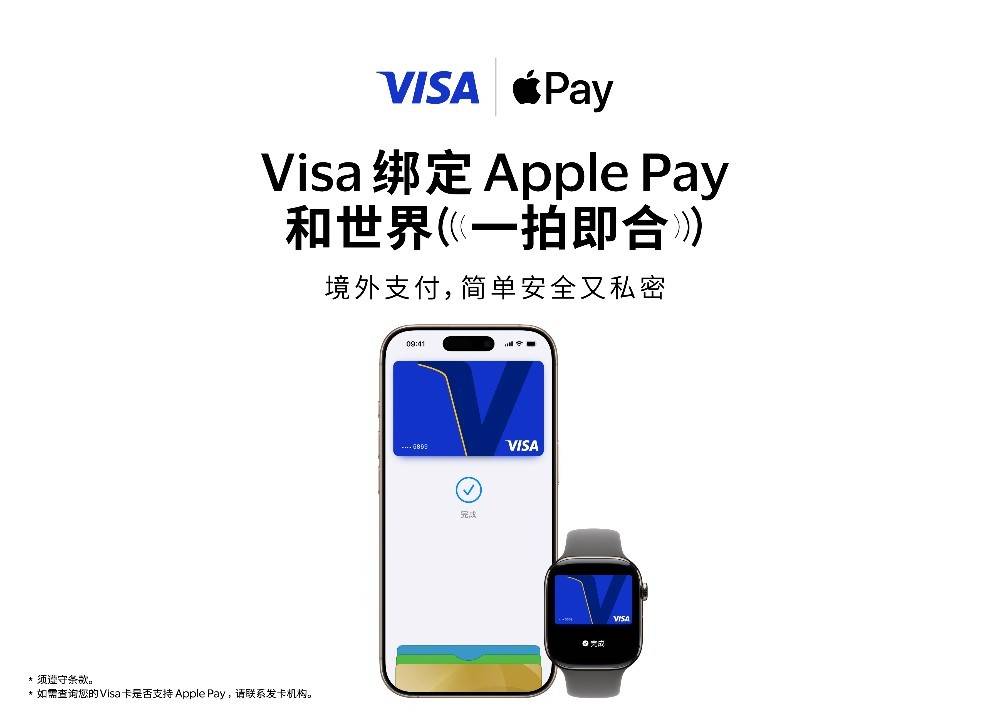
Core Insights - Visa announced support for Chinese cardholders to link their Visa cards to Apple Pay, enabling payments in various scenarios such as overseas merchants, mobile apps, and online websites. Currently, 79% of global offline transactions are made via contactless payments [1]. Group 1: Company Strategy - Visa's China President, Yin Xiaolong, emphasized the growing demand for mobile payment solutions and the company's commitment to providing diverse payment options for Chinese cardholders, ensuring a secure payment experience regardless of location [4]. - Visa is increasing investments in data and payment security, launching tokenization services for cross-border applications, and collaborating with Apple and financial institutions to enhance mobile payment experiences for Chinese consumers [4]. Group 2: Technical Details - Apple Pay allows consumers to make contactless payments by double-clicking the side button on their iPhone or Apple Watch, with security verification through Face ID, Touch ID, or device password, ensuring transaction security [5]. - When adding a Visa card, the actual card number is not stored on the device or Apple's servers. Instead, a unique device account number generated by Visa's tokenization technology is encrypted and securely stored in the device's secure element [5].


融资规则微调,市场风格要变
Sou Hu Cai Jing· 2026-01-15 13:27
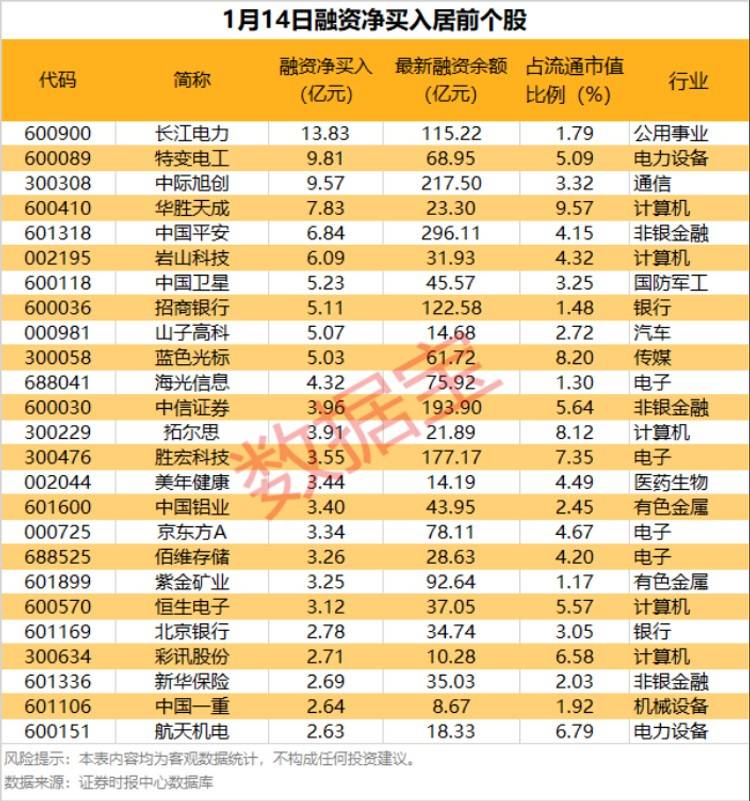
Group 1 - The recent regulatory adjustment increased the minimum margin ratio for margin trading from 80% to 100% for new contracts, aimed at preventing excessive leverage and market volatility risks [1] - The market financing balance has been increasing for several consecutive days, currently exceeding 2.6 trillion yuan, but the proportion of margin trading in A-share turnover has not yet reached the levels seen in 2015 [1] - Ordinary investors are primarily concerned with understanding the underlying capital movements to avoid being misled by superficial market fluctuations [1] Group 2 - Data analysis tools are being used to observe market participation characteristics, allowing for the extraction of different capital participation traits without relying on subjective judgment [3] - The capital participation status is categorized into four levels, with Level 1 indicating high activity and Level 4 indicating a complete lack of participation, which can lead to significant price volatility [5] - When capital alternates between Level 1 and Level 2, stock prices often experience large fluctuations, while prolonged periods in Level 3 or Level 4 indicate a lack of sustained market momentum [7][8] Group 3 - Quantitative data analysis helps eliminate subjective emotional interference, allowing for objective assessments of capital movements [8] - The market's changes are influenced by multiple factors, with the core being the state of capital participation, suggesting that investors should focus on understanding capital movements rather than short-term news impacts [8]
银联手机Pay,不仅是把银行卡「装」进手机里
36氪· 2026-01-15 13:24
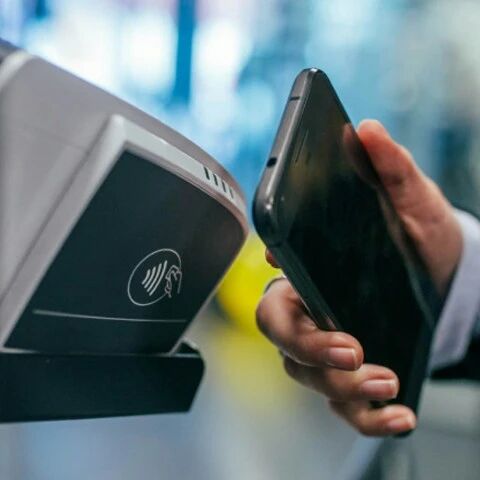
Core Viewpoint - The article emphasizes the need for a universal payment tool that bridges user experience gaps and adapts to various global payment environments, particularly through the promotion of UnionPay's mobile payment services [6]. Group 1: Global Payment Experience - Mobile payment is enhancing the travel experience for users, particularly for Chinese tourists accustomed to QR code payments, who face challenges in regions where contactless card payments are the norm [3][4]. - The disparity in payment habits reflects a fragmented global payment market, with QR code payments dominating in China and Southeast Asia, while contactless card payments are well-established in Europe and Australia [5]. - UnionPay has been actively promoting its mobile payment products, with over 100 countries supporting UnionPay mobile payment services, and a significant increase in cross-border transaction amounts and counts by over 30% and 50% respectively in the first three quarters of 2025 [6]. Group 2: Technology and User Experience - The necessity of mobile payment is underscored by the advantages of NFC (Near Field Communication) technology, which allows for seamless transactions without the need for app activation or stable internet connections, particularly in high-frequency scenarios like subway commuting [9][11]. - UnionPay's mobile payment service has expanded to cover 38 cities' subways and 1,760 public transport systems, with over 200 transportation merchants in more than 10 countries supporting the service [11]. - The service also caters to various daily consumption scenarios, allowing users to make instant payments across multiple platforms, thus changing the domestic payment ecosystem [13]. Group 3: Security and User Trust - Security concerns are addressed through Tokenization technology, which protects users' real card information during transactions, thereby mitigating risks associated with data interception [14][15]. - The requirement for biometric verification (fingerprint, facial recognition, or password) adds an additional layer of security, fostering user trust in mobile payment [15]. Group 4: Market Positioning and Strategy - UnionPay's mobile payment is currently the most mainstream mobile payment product in China, supporting nearly all major smartphone brands and over 400 banks, which provides a competitive edge in understanding local user habits [17][18]. - The "card-code fusion" design allows UnionPay to adapt to both QR code and contactless payment ecosystems, facilitating a smooth user experience across different environments [19]. - UnionPay's strategy includes partnerships with major banks to offer cashback and discounts, enhancing user engagement and transaction frequency [27]. Group 5: Future Trends and Innovations - The payment industry is shifting focus from mere tool efficiency to embedding services throughout the user journey, with predictions of a significant increase in non-cash payment transactions by 2030 [28]. - UnionPay is exploring AI-driven payment solutions, indicating a transition from a simple payment tool to an intelligent service that integrates with various applications, potentially transforming mobile payment into a seamless bridge between the physical and digital worlds [29][30].
位居第9,中信银行加入10万亿俱乐部,行长空缺,谁将接棒?
3 6 Ke· 2026-01-15 12:09
Core Viewpoint - The total assets of CITIC Bank have surpassed 10 trillion yuan, reaching 10.13 trillion yuan, marking a year-on-year growth of 6.28% [1][3]. Financial Performance - In 2025, CITIC Bank reported total operating revenue of 212.475 billion yuan, a decrease of 0.55% compared to the previous year, while net profit attributable to shareholders increased by 2.98% to 70.618 billion yuan [2][3]. - The decline in operating revenue has narrowed compared to the first three quarters, where it was down 3.46% [2]. - The bank's non-interest income, particularly from bond investment trading, has shown improvement, contributing to the overall revenue stability [2][3]. Asset Quality and Management - As of the end of 2025, CITIC Bank's non-performing loan ratio was 1.15%, a slight decrease of 0.01 percentage points from the previous year, while the provision coverage ratio was 203.61%, down by 5.82 percentage points [3]. - The bank has shifted its focus from scale to quality and efficiency in growth, emphasizing risk management and compliance [3]. Leadership Changes - CITIC Bank has undergone two leadership changes in 2025, with former president Lu Wei resigning to take a position at Postal Savings Bank [4][5]. - The current president position is temporarily held by the chairman, Fang Heying, while there are five vice presidents in place [5].

根植中国 联通世界: 银联手机Pay的无界支付生态实践
Sou Hu Wang· 2026-01-15 12:01
Core Insights - The evolution of digital payment tools is not solely based on technological advancements but also on their ability to meet real human needs and integrate into daily life [1] Group 1: Collaborative Ecosystem - UnionPay International and Samsung Electronics will launch a joint payment service based on the "Card-Code Integration" mobile payment solution on January 9, 2026, allowing overseas residents to use NFC or QR code payments flexibly [2] - UnionPay Mobile Pay adopts an "ecological neutrality" and "broad compatibility" strategy, collaborating with major Android manufacturers like Huawei, Vivo, OPPO, Xiaomi, and Meizu, ensuring that most Android smartphone users in China can easily access UnionPay Mobile Pay [2] - This extensive compatibility allows users to choose devices based on personal preferences while enjoying equal access to secure and convenient payment services, reflecting the essence of fintech for good [2] Group 2: Deep Usage Scenarios - The true value of payment tools lies in their ability to provide reliable services in various scenarios, with UnionPay Mobile Pay aiming for deep penetration in domestic markets and a seamless global experience [3] - UnionPay Mobile Pay's service network has expanded to cover over 30 cities' subways and 300 cities' buses, enhancing efficiency and convenience for users [3] - The platform employs Token 2.0 technology for full-chain security, supporting features like "no card number input" and multiple biometric verifications, while several banks have increased transaction limits to accommodate larger purchases [3] Group 3: Global Integration - UnionPay Mobile Pay's value is highlighted by its ability to extend reliable domestic experiences through a global network, allowing users to maintain familiar payment methods abroad [4] - The service is integrated with a network spanning over 100 countries and regions, enabling users to make payments at merchants displaying the UnionPay logo using their bound mobile payment methods [4] - UnionPay collaborates with banks like Agricultural Bank of China, CITIC Bank, China Merchants Bank, and Ping An Bank to offer exclusive benefits such as "1% cashback on every transaction" for cardholders [5] Group 4: Inclusive Payment Ecosystem - UnionPay Mobile Pay is not limited to regional markets but reveals a clear evolution path from local practices to global contributions, embodying UnionPay's global strategy of inclusivity and collaboration [6] - The core value lies in addressing the essence of payment: enabling seamless transitions between domestic and international scenarios, accommodating a wide range of devices, and integrating into the global digital lifestyle [6] - The ongoing exploration focuses on deeper connections and integration, emphasizing open collaboration, addressing nuanced needs, and ensuring security in every innovation [6]
龙源电力(00916)完成发行37亿元超短期融资券 票面利率为1.54%
智通财经网· 2026-01-15 10:49
Core Viewpoint - Longyuan Power (00916) has successfully completed the issuance of super short-term financing bonds totaling RMB 3.7 billion, with a maturity of 149 days and an interest rate of 1.54% [1] Group 1: Financing Details - The total amount of the super short-term financing bonds issued is RMB 3.7 billion [1] - The bonds have a maturity period of 149 days, with a face value of RMB 100 each [1] - The interest on the bonds will start accruing from January 14, 2026 [1] Group 2: Underwriters and Use of Proceeds - The lead underwriter for the bond issuance is CITIC Bank, with China Merchants Bank serving as the co-lead underwriter [1] - The funds raised from this bond issuance will be used to supplement the company's working capital and repay interest-bearing debts of the issuer and its subsidiaries [1]

“天量存款”到期后会否搬入股市
Xin Lang Cai Jing· 2026-01-15 10:10
Core Viewpoint - The article discusses the ongoing decline in deposit interest rates among banks, particularly in the context of a significant amount of deposits maturing in 2026, raising questions about whether these funds will shift to the stock market as banks lower rates to attract deposits [1][2][3]. Group 1: Deposit Rate Changes - Anhui Xin'an Bank has lowered its two-year fixed deposit rate by 10 basis points to 2.25% starting January 16 [1] - Yunnan Tengchong Rural Commercial Bank has reduced its three-month large-denomination certificate of deposit rate to 0.95% [1] - Many small and medium-sized banks have also continued to lower deposit rates, with some entering the "1% era" [1] Group 2: Maturing Deposits - According to CICC, the scale of maturing household deposits is projected to reach approximately 75 trillion yuan by 2026, with 67 trillion yuan of one-year and above deposits maturing [2] - The maturing deposits in 2026 are expected to increase by 12% compared to 2025, with a year-on-year increase of 8 trillion yuan [2] - In the first quarter of this year, the scale of maturing one-year and above household deposits is estimated to be 29 trillion yuan, an increase of about 4 trillion yuan compared to the same period in 2025 [2] Group 3: Investment Behavior and Trends - The typical "deposit migration" path is from large banks to smaller banks, with expectations of reduced marginal pressure in 2026 [3] - Analysts suggest that the current narrative of "deposit migration" does not indicate a substantial change in residents' risk preferences but rather a marginal adjustment in asset allocation in a low-interest-rate environment [3] - The primary destinations for migrated deposits include the stock market, consumption, early mortgage repayment, and various financial products such as bank wealth management and insurance [3]

招商银行研究院2025年全年微信报告汇总
招商银行研究· 2026-01-15 09:34
Core Viewpoint - The report from China Merchants Bank Research Institute provides a comprehensive overview of their published research for 2025, highlighting key insights and analyses relevant to the banking and financial sectors [1]. Summary by Sections - The report is a public version of the original research published by China Merchants Bank Research Institute, emphasizing the originality of the content [4]. - It includes a directive for proper citation and authorization for any reproduction of the report, ensuring that the integrity of the original work is maintained [4].

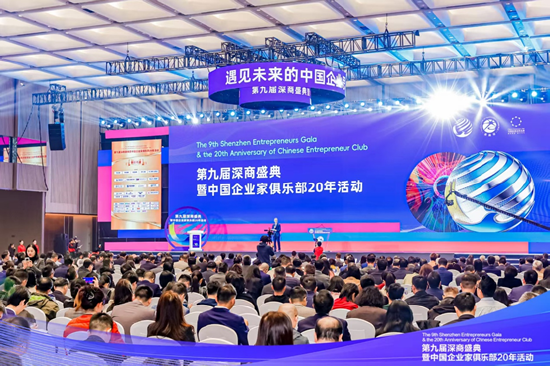
思想领航 共赴新程——第九届深商盛典暨中国企业家俱乐部20年活动书写中国企业高质量发展新篇
Xin Lang Cai Jing· 2026-01-15 09:10
Core Insights - The event, the 9th Shenzhen Business Convention and the 20th Anniversary of the China Entrepreneurs Club, gathered top Chinese entrepreneurs to discuss key topics such as industrial innovation, technological breakthroughs, ecological construction, and social responsibility, aiming to provide a clear path for high-quality economic development in China during the 14th Five-Year Plan period [1][22]. Group 1: Technology Empowerment and Industrial Innovation - TCL's founder, Li Dongsheng, emphasized the importance of AI in driving economic growth and highlighted the application of their Star Intelligence Model 3.0 in the semiconductor display industry, which significantly enhances product development and material research efficiency [4][24]. - iFlytek's founder, Liu Qingfeng, pointed out the accelerating arrival of the general artificial intelligence era, stressing the need for core technology autonomy and the company's focus on AI as a primary business, with over 3 million applications developed on their open AI platform [6][25]. - XPeng Motors' CEO, He Xiaopeng, discussed the transition of the Chinese automotive industry from electrification to intelligent competition, emphasizing breakthroughs in autonomous driving and smart cockpit technologies as key to gaining a global competitive edge [9][27]. Group 2: Financial Support and Industrial Synergy - Ping An Group's General Manager, Xie Yonglin, discussed the role of financial technology in upgrading industrial chain finance, providing targeted financial support for technology innovation and green development, aligning with the trend of steady growth in manufacturing loans [11][29]. - The CEO of Huada Group, Yin Ye, highlighted the importance of core technology in the life and health industry, advocating for the integration of cutting-edge technologies like gene technology into everyday life to enhance public health [17][35]. Group 3: Traditional Industry Transformation and Digitalization - Luzhou Laojiao's General Manager, Lin Feng, shared insights on the transformation of traditional enterprises, emphasizing the need to embrace digitalization while maintaining quality and cultural heritage [13][31]. - Wumart's founder, Zhang Wenzhong, discussed the digital transformation in the retail sector, which enhances operational efficiency and consumer experience through supply chain innovation and the integration of online and offline shopping [15][33]. Group 4: Social Responsibility and Sustainable Development - Lin Li, Chairman of Liyue Group, stressed the importance of balancing economic benefits with social responsibility, advocating for community development through public welfare and employment initiatives [19][37]. - Ma Weihua, former President of China Merchants Bank, highlighted the significance of ESG principles in guiding high-quality development, promoting green investments and social responsibility projects to achieve a win-win scenario for commercial and social values [21][39].




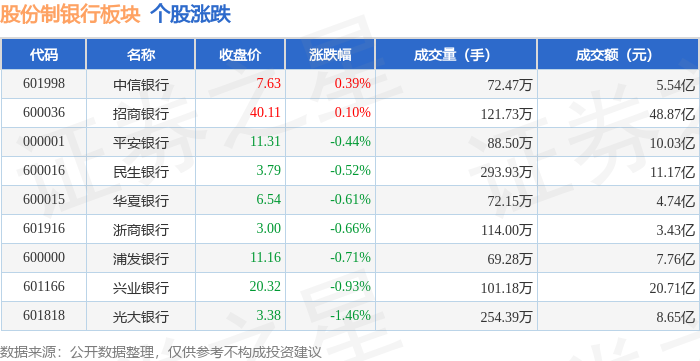
股份制银行板块1月15日跌0.37%,光大银行领跌,主力资金净流出3850.97万元
Zheng Xing Xing Ye Ri Bao· 2026-01-15 08:58
Group 1 - The banking sector experienced a decline of 0.37% on January 15, with Everbright Bank leading the drop [1] - The Shanghai Composite Index closed at 4112.6, down 0.33%, while the Shenzhen Component Index rose by 0.41% to 14306.73 [1] - The trading volume and turnover for various banks showed mixed results, with CITIC Bank closing at 7.63, up 0.39%, and Everbright Bank at 3.38, down 1.46% [1] Group 2 - The net outflow of main funds from the banking sector was 38.51 million yuan, while retail investors saw a net inflow of 42.9 million yuan [1] - The detailed fund flow data indicated that Industrial Bank had a net inflow of 13.72 million yuan from main funds, while CITIC Bank had a net outflow of 12.12 million yuan [2] - Retail investors showed varying trends, with CITIC Bank experiencing a net outflow of 7.91 million yuan, while Industrial Bank had a net inflow of 23.6 million yuan [2]