
中国财险

Search documents
台风“蝴蝶”来袭,致灾风险谁来化解
Bei Jing Shang Bao· 2025-06-15 12:07
Group 1 - Typhoon "Butterfly" made landfall in Hainan on June 13, causing severe damage in Hainan, Guangdong, and Guangxi, including landslides and mudslides [1] - The insurance industries in Guangdong, Hainan, and Guangxi quickly activated emergency plans, utilizing technology to reduce risks and opening green channels for claims [3][4] - Insurance companies are shifting from traditional "post-disaster compensation" to "pre-disaster prevention," establishing a comprehensive protection system from warning to response and loss reduction [5] Group 2 - Technology such as AI, drones, and IoT is being widely applied in the insurance sector to enhance risk identification and loss reduction efficiency [4][5] - The rapid claims process has been highlighted, with instances of claims being paid out even before the storm subsided [6][7] - Specific claims examples include a payment of 1.43 million yuan to aquaculture farmers and 24,200 yuan for mango damage in Hainan [7][8] Group 3 - Timely reporting of claims is crucial for determining the relationship between the disaster and the insured losses, affecting the insurer's liability [8] - Agricultural insurance products that cover typhoon risks may not require immediate reporting, as insurers can assess claims based on investment information [8]




从现款压力到信用增信,“外贸第一城”何解跨境电商采买痛点
2 1 Shi Ji Jing Ji Bao Dao· 2025-06-15 11:34
Core Insights - The cross-border e-commerce sector in China is experiencing significant growth, with a projected import and export volume of 2.63 trillion yuan in 2024, representing a year-on-year increase of 10.8% [1] - Shenzhen plays a crucial role in this sector, housing over 120,000 trade enterprises, accounting for approximately half of the national total, and achieving an import and export total of 372 billion yuan, which is 14% of the national total [1] Industry Challenges - Domestic procurement risks are emerging as a key constraint for cross-border e-commerce companies, particularly due to the traditional cash transaction model that creates cash flow pressures during peak sales seasons [2][3] - Issues such as supplier cash purchase demands and delayed receivables from overseas sales contribute to financial strain, leading to a situation where companies may hesitate to accept orders [3][7] Financial Solutions - In response to these challenges, the Chinese government has encouraged financial institutions to optimize service models and provide financial support to cross-border e-commerce companies with genuine trade backgrounds [3] - The introduction of the "Cross-Border E-Commerce Domestic Procurement Accounts Payable Guarantee Insurance" in Shenzhen aims to alleviate procurement-related financial pressures by offering credit support for domestic purchases [4][5] Implementation and Impact - The first instance of this insurance product was launched in April 2024, with six insurance companies collaborating to enhance underwriting capabilities and service levels through information sharing [4] - Early adopters of the insurance have reported positive outcomes, such as extended payment terms and increased credit limits from suppliers, which help mitigate cash flow issues during peak seasons [5][6] Regulatory Framework - The insurance product has specific eligibility criteria, requiring cross-border sellers to be registered and engaged in export trade while also ensuring that suppliers are legally registered domestic entities [6][7] - The initiative represents a systematic response from financial institutions to address the risks associated with domestic procurement in the cross-border e-commerce sector, although its long-term effectiveness remains to be evaluated [7]
非银金融行业跟踪周报:险资预计持续增配红利股-20250615
Soochow Securities· 2025-06-15 11:04
Investment Rating - The report maintains an "Overweight" rating for the non-bank financial sector [1] Core Insights - The non-bank financial sector has shown resilience, with all sub-sectors outperforming the CSI 300 index in recent trading days. The insurance sector rose by 2.07%, multi-financial by 1.45%, and securities by 0.88% [4][9] - The insurance sector is expected to continue increasing allocations to dividend stocks, driven by a recovery in life insurance premiums and the implementation of new accounting standards [21][23] - The securities sector is experiencing a significant increase in trading volume, with a year-on-year rise of 79.76% in daily average trading volume as of June 13, 2025 [15][20] - The multi-financial sector is entering a stable transition period, with trust assets growing but profits declining significantly [30][34] Summary by Sections 1. Recent Performance of Non-Bank Financial Sub-Sectors - All sub-sectors outperformed the CSI 300 index in the last five trading days, with the overall non-bank financial sector rising by 1.28% [4][9] - Year-to-date, the insurance sector has performed the best, with a 3.18% increase, while the securities sector has seen a decline of 7.98% [10] 2. Insights on Sub-Sectors 2.1 Securities - Trading volume has significantly increased, with daily average trading volume reaching 14,783 billion CNY, a 79.76% increase year-on-year [15][20] - The average price-to-book (PB) ratio for the securities industry is estimated at 1.2x for 2025 [20] 2.2 Insurance - Life insurance premiums are recovering, with original premiums for the first four months of 2025 reaching 20,966 billion CNY, a year-on-year increase of 1.8% [24] - The implementation of new accounting standards is expected to enhance the allocation of insurance funds to OCI stocks [23][24] 2.3 Multi-Financial - The trust industry saw its asset scale reach 29.56 trillion CNY in 2024, a year-on-year growth of 23.58%, but profits fell by 45.52% [30][34] - The futures market experienced a decline in trading volume and value in May 2025, with a total transaction volume of 6.79 billion contracts [37][41] 3. Industry Ranking and Key Company Recommendations - The recommended ranking for the industry is insurance > securities > other multi-financial sectors, with key companies including New China Life, China Pacific Insurance, China Life, China Ping An, CITIC Securities, Tonghuashun, and Jiufang Zhitu Holdings [48]
推动高科装备充实基层 大鹏新区用科技强化安全生产
Shen Zhen Shang Bao· 2025-06-14 16:54
Group 1 - The Dapeng New District has launched the 2025 "Safety Production Month" with the theme "Everyone Talks About Safety, Everyone Can Respond - Identify Safety Hazards Around Us" [1] - The event emphasizes the importance of learning from recent accident cases and proposes three work requirements: strengthening responsibility, deepening public participation, and enhancing activity content [1] - A safety culture alliance consisting of 17 organizations from various sectors, including energy, technology, and insurance, was officially established during the event [1] Group 2 - The safety production month will highlight the use of technology for safety enhancement, utilizing various channels to promote activities [2] - The initiative includes deploying advanced technology such as drones, water rescue robots, and AI hazard detection assistants to improve grassroots capabilities [2] - The campaign aims to expand safety awareness through community engagement activities in enterprises, schools, and families, thereby increasing the number of emergency responders [2]
保险行业周报(20250609-20250613):部分险企2026年可暂缓执行新准则,准则切换或持续利好OCI类股票-20250613
Huachuang Securities· 2025-06-13 15:16
Investment Rating - The report maintains a "Recommendation" rating for the insurance industry, indicating an expected increase in the industry index by more than 5% over the next 3-6 months compared to the benchmark index [21]. Core Insights - The insurance index rose by 2.07% this week, outperforming the broader market by 2.33 percentage points. Individual stocks such as Taiping (+10.36%) and ZhongAn (+4.57%) saw significant gains [1]. - The new insurance contract accounting standards are set to be implemented on January 1, 2026, with some companies allowed to defer compliance if they provide justification by June 30, 2025. This transition is expected to benefit the industry by allowing better management of financial reporting during the changeover [4][5]. - The report highlights that the implementation of new accounting standards has increased the volatility of listed insurance companies' performance, primarily due to fluctuations in financial assets measured at fair value through profit or loss (FVTPL) [5]. Summary by Sections Market Performance - The insurance sector's total market capitalization is approximately 30,425.11 billion, with a circulating market value of 21,038.53 billion [6]. - The absolute performance over the last 12 months is 41.6%, with a relative performance of 32.0% compared to the benchmark [7]. Regulatory Developments - The Ministry of Finance and the National Financial Regulatory Administration issued a notification on June 12 regarding the implementation of new insurance contract accounting standards [2]. - China Pacific Insurance received approval for its chairman's qualification from the financial regulatory authority [2]. Investment Recommendations - The report suggests a focus on FVOCI asset allocation to mitigate the impact of stock market fluctuations on performance, especially for mid-sized insurance companies [5]. - The current price-to-earnings (PE) and price-to-book (PB) ratios for major companies are provided, with China Ping An rated as a "Strong Buy" and others like China Pacific Insurance and China Life rated as "Recommended" [10].


人保财险深化绿色保障实践 赋能光伏产业高质量发展
Xin Hua Cai Jing· 2025-06-13 05:07
Group 1 - The core event is the SNEC 18th International Solar Energy and Smart Energy Conference and Exhibition held in Shanghai from June 11 to 13, where the company showcased its latest developments in photovoltaic insurance services, risk protection for the new energy industry chain, and green finance [1] - The company introduced risk protection services covering the entire lifecycle of the photovoltaic industry, including supply performance guarantee insurance to alleviate raw material procurement pressure, and various insurance products for manufacturing, sales, and downstream power station construction [1] - New insurance products were highlighted at the exhibition, including long-term quality and performance guarantee insurance for energy storage systems, income loss insurance for distributed photovoltaic power stations, and credit compensation insurance for photovoltaic electricity sales [1] Group 2 - In 2024, the company has provided risk protection for clean energy projects such as offshore wind power, photovoltaic power, new energy storage, and hydrogen energy amounting to 4 trillion yuan, leading the green insurance market [2] - The company is promoting the digital transformation of green insurance, utilizing satellite remote sensing, big data risk control models, and blockchain technology to enhance risk identification and management capabilities [2] - Future plans include strengthening technological empowerment and product innovation under the unified deployment of the parent group, focusing on a new business model of "insurance + risk reduction services + technology" to support the implementation of carbon neutrality goals [2]
年内股价暴涨超200%,泡泡玛特全是“泡泡”?步步高段永平点评看衰言论:有点意思
Jin Rong Jie· 2025-06-13 03:36
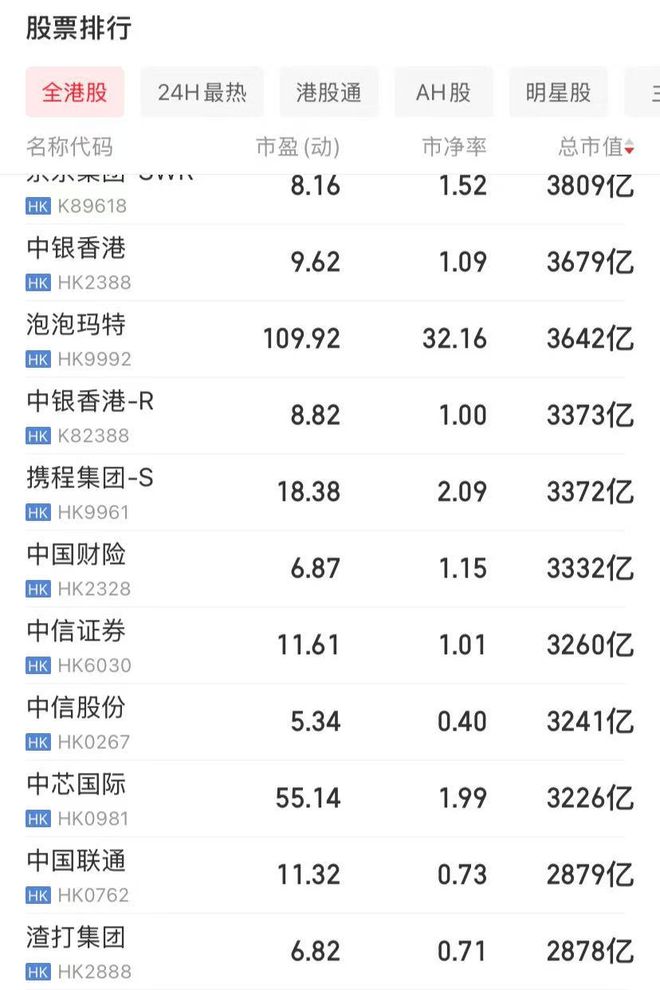
"两只Labubu拍出190万天价""在国外遭抢购甚至上演'斗殴'事件""创始人成为河南新首富"......近期, Labubu可谓是市场的红人。在其爆火的牵动下,泡泡玛特的股价也是一飞冲天。 二级市场来看,6月12日,泡泡玛特盘中股价再创历史新高,达283.4港元/股。该公司当前股价与今年 初相比已经涨超200%,另外与2024年2月的15.7港元的区间低价比,该公司在一年多的时间股价已经涨 超16倍。 市值方面,泡泡玛特最新市值已经超3600亿港元,高过携程集团、中国财险、中信证券、中信国际等港 股上市公司市值。 6月6日,名创优品回应旗下TOP TOY分拆上市传闻。名创优品集团发布公告指出,公司正在对以"TOP TOY"品牌运营的潮流玩具业务潜在分拆上市的可能性进行初步评估,以期优化股东价值。拟议计划尚 属初步阶段,是否会推进取决于包括市场条件在内的诸多因素。无法保证该拟议计划的时间、上市地点 或其他细节。 不过,市场上存在对泡泡玛特股价存在泡沫的担忧。 | 全港股 | 24H最热 | 港股通 | AH 股 | 明星股 | 111 | | --- | --- | --- | --- | --- | -- ...

规模再创新高!全市场唯一港股非银ETF(513750)连续16天净流入,交投活跃
Xin Lang Cai Jing· 2025-06-12 06:50
Group 1 - The China Securities Hong Kong Stock Connect Non-Bank Financial Theme Index (931024) experienced a decline of 0.56% as of June 12, 2025, with mixed performance among constituent stocks [1] - The Hong Kong Non-Bank ETF (513750) recorded a turnover of 27.29% and a trading volume of 659 million yuan, indicating active market participation [1] - The Hong Kong Non-Bank ETF reached a new high in size at 2.4 billion yuan and in shares at 1.672 billion, both since its inception [1] Group 2 - The top ten weighted stocks in the China Securities Hong Kong Stock Connect Non-Bank Financial Theme Index accounted for 82.79%, with Hong Kong Exchanges and Clearing (00388) being the largest at over 16% [2] - The brokerage sector is expected to see continued growth in self-operated income, supported by performance improvements, mergers, and refinancing, which may enhance net asset scale and ROE [2] - The current favorable policies aimed at stabilizing growth and boosting the capital market are expected to positively influence the securities sector's outlook [2] Group 3 - The Hong Kong Non-Bank ETF (513750) is the first and only ETF tracking the Hong Kong Non-Bank Index, with over 70% of its composition in insurance stocks [3] - The ETF selects up to 50 listed companies that meet the non-bank financial theme criteria from the Hong Kong Stock Connect securities range [3]
农业保险风险减量助力农业防灾减灾理论基础、实践经验与发展路径
Sou Hu Cai Jing· 2025-06-12 03:18
Core Viewpoint - Agricultural insurance plays a crucial role in helping the government prevent agricultural disasters and improve disaster response capabilities, becoming an essential part of the national disaster prevention and reduction system [1]. Theoretical Basis - Agricultural insurance provides economic compensation to affected farmers, helping them quickly restore production and stabilize agricultural output [2]. - The shift from passive compensation to proactive prevention in risk management leverages insurance funds, disaster data analysis, and disaster reduction services to lower the probability and severity of agricultural risks [3]. - Insurance companies incentivize farmers to enhance their disaster prevention efforts, thereby increasing their awareness and application of disaster reduction technologies [4]. - Agricultural insurance can quickly respond to disaster needs, providing timely compensation to farmers, thus transforming uncertain losses into certain premium costs [5]. Practical Experience - Current practices in risk reduction by the insurance industry include resource investment, technical support, data application, and innovative products [6]. Resource Investment - Insurance institutions donate disaster reduction materials to assist farmers during critical growth periods [7]. - They invest funds and personnel to support disaster prevention efforts [8]. - Insurance companies establish service teams to promote risk reduction awareness among clients [9]. - Expert teams are organized to provide timely agricultural management guidance during critical production periods [10]. - Collaboration with various professional entities to offer specialized disaster prevention services [11]. Technical Support - Remote sensing technology is used for rapid disaster damage assessment and crop growth monitoring [12]. - Internet of Things (IoT) technology is applied to enhance monitoring and early warning systems [13]. - A comprehensive digital platform is developed for intelligent monitoring and expert guidance [14]. - AI technology is utilized to improve risk management and service delivery [15]. Data Application - Agricultural insurance risk maps are created to assess historical disaster frequency and intensity [15]. - Disaster prediction models are developed using meteorological and agricultural data [16]. - Customized disaster reduction plans are formulated based on historical data analysis [17]. - Catastrophe models are researched to enhance risk quantification and management [18]. Innovative Products - Weather index insurance is developed to provide preemptive coverage based on climatic conditions [19]. - Pest damage compensation insurance is introduced to support farmers financially before disasters occur [20]. - Livestock medical insurance is designed to cover necessary medical expenses for livestock affected by disasters [21]. Existing Issues and Challenges - Insufficient overall investment in agricultural insurance risk reduction, including a lack of specific policies and limited funding [22]. - Inadequate collaboration between government, social organizations, and insurance companies in risk reduction efforts [23]. - Service capabilities need improvement, with many insurance companies lacking a deep understanding of risk reduction services [24]. - Weak implementation foundation due to data quality issues, high technology application costs, and a lack of proactive disaster awareness among farmers [25]. Development Path and Recommendations - Integrate the agricultural insurance industry into the national emergency management system to enhance its role in disaster prevention and recovery [26]. - Strengthen policy support for agricultural insurance risk reduction, including dedicated policy documents and improved financial systems [27]. - Build a data and technology-driven risk reduction service system to enhance risk assessment and early warning capabilities [28]. - Improve agricultural insurance by innovating products and services, enhancing talent recruitment, and increasing farmer education [29].
政策引导+产品创新 保险业攻坚小微企业风险保障难题
Jin Rong Shi Bao· 2025-06-12 01:25
Core Viewpoint - The insurance industry is increasingly focusing on providing tailored products and services to support small and micro enterprises, which are crucial for economic growth but face unique risks and challenges [1][2][3]. Group 1: Product Innovation and Impact - "Zhiwei Bao" is a specialized insurance product launched by PICC for small and micro enterprises, offering low premiums and high coverage, aimed at enhancing risk management capabilities [1]. - The "Huyebao" project in Shanghai has provided risk coverage totaling 11.3 billion yuan for nearly 10,000 small businesses, covering various risks such as property loss and business interruption [3]. - China Life Property & Casualty has developed a specialized insurance product for small construction enterprises, providing 6.625 billion yuan in risk coverage to 1,325 companies [3]. Group 2: Challenges in Insurance for Small Enterprises - Small enterprises face high insurance costs and limited coverage options, with an average employee turnover rate of 30% to 40%, complicating the continuity of insurance coverage [4][5]. - The insurance products for small enterprises have a payout rate exceeding 70%, while premiums are often only a few hundred yuan annually, highlighting the tension between high claims and low premiums [5]. Group 3: Recommendations for Insurance Industry - The insurance industry should leverage technology such as big data and AI to create more precise and tailored insurance products for small enterprises, addressing their diverse risk profiles [6]. - There is a need for insurance companies to innovate and break traditional norms to better serve small enterprises, particularly in developing risk transfer tools and financial risk control [6]. Group 4: Policy Guidance and Future Directions - The Financial Regulatory Bureau has issued guidelines to enhance financial services for small enterprises, emphasizing the importance of internal mechanisms and risk assessment [8][9]. - Insurance companies are encouraged to develop a variety of products tailored to the needs of small enterprises, including property, liability, and health insurance, to improve their risk management capabilities [9].