
通富微电

Search documents
研报 | 2024年全球前十大封测厂商营收合计415.6亿美元,年增3%
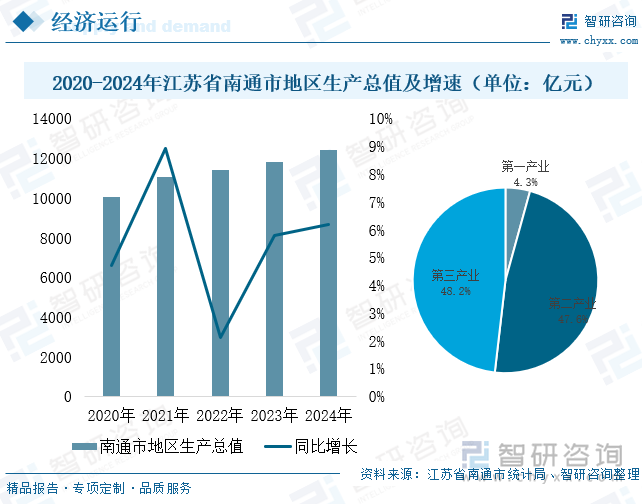
TrendForce集邦· 2025-05-13 06:16
Industry Insights - The global OSAT market is facing dual challenges of technological upgrades and industry restructuring in 2024 [1] - The top ten OSAT companies are projected to generate a combined revenue of $41.56 billion in 2024, reflecting a year-on-year growth of 3% [2][3] Company Performance - ASE Holdings (日月光控股) remains the leader with a revenue of $18.54 billion in 2024, a slight decrease of 0.7% from 2023, holding a market share of 44.6% [3][5] - Amkor (安靠) ranks second with a revenue of $6.32 billion, down 2.8% year-on-year, primarily due to weak demand in automotive electronics [3][6] - JCET (长电科技) is third with a revenue of $5 billion, showing a significant growth of 19.3%, driven by improving demand in consumer electronics and AI PC markets [3][7] - TFME (通富微电) ranks fourth with a revenue of $3.32 billion, up 5.6%, benefiting from recovering demand in communications and consumer electronics [3][8] - PTI (力成科技) is fifth with a revenue of $2.28 billion, reflecting a modest growth of 1% due to transitional challenges in advanced packaging [3][9] - TSHT (天水华天) ranks sixth with a revenue of $2.01 billion, achieving the highest growth rate of 26% among the top ten OSAT companies, supported by advancements in packaging technology [3][10] - WiseRoad (智路封测) is seventh with a revenue of $1.56 billion, up 5%, driven by semiconductor demand recovery [3][11] - Hana Micron (韩亚微) ranks eighth with a revenue of $0.92 billion, growing 23.7% due to strong performance from memory clients [3][12] - KYEC (京元电子) is ninth with a revenue of $0.91 billion, down 14.5%, impacted by the sale of a subsidiary but benefiting from growth in AI server and HPC chip markets [3][13] - ChipMOS (南茂科技) rounds out the top ten with a revenue of $0.71 billion, up 3.1%, driven by stable demand in automotive and OLED sectors [3][14] Market Trends - The 2024 OSAT market indicates a restructuring of the value chain, with increasing demands for advanced packaging technologies driven by AI and edge computing [14] - The market is characterized by a dual-axis trend of "mature leaders' stability and the rise of regional new forces," setting the stage for future competition in advanced packaging and heterogeneous integration technologies [14]


存储芯片概念下跌2.67%,主力资金净流出81股
Zheng Quan Shi Bao Wang· 2025-05-09 09:04
Group 1: Market Performance - The storage chip sector declined by 2.67%, ranking among the top losers in the market [1][2] - Notable declines were observed in companies such as Huahong Semiconductor, Hangzhou Kelin, and Canxin Technology, while companies like Oriental Zhongke, Chengbang Co., and Huada Jiutian saw gains of 1.56%, 1.24%, and 0.58% respectively [1][2] Group 2: Capital Flow - The storage chip sector experienced a net outflow of 3.008 billion yuan, with 81 stocks seeing net outflows, and 10 stocks exceeding 100 million yuan in outflows [2] - Tianyuan Dike led the outflow with a net withdrawal of 297 million yuan, followed by Zhaoyi Innovation, Allwinner Technology, and Northern Huachuang with outflows of 253 million yuan, 205 million yuan, and 165 million yuan respectively [2][3] Group 3: Stock Performance - The top stocks with significant outflows included Tianyuan Dike (-4.56%), Zhaoyi Innovation (-2.45%), and Allwinner Technology (-2.69%) [2][3] - Conversely, stocks with net inflows included Oriental Zhongke (1.56%), Deep Kangjia A (0.19%), and Xiechuang Data (0.04%) [2][5]



深科达:三足鼎立,各领新颜
Xin Lang Cai Jing· 2025-05-09 02:10
Core Viewpoint - Shenzhen Deep Tech Intelligent Equipment Co., Ltd. reported significant growth in Q1 2025, achieving revenue of 179 million yuan, a year-on-year increase of 108.13%, and a net profit of 14.31 million yuan, marking a successful turnaround to profitability [1][4] Group 1: Business Performance - The company experienced comprehensive growth across three main business segments: semiconductor packaging and testing equipment, flat panel display module equipment, and key components for intelligent equipment [1][4] - The semiconductor packaging and testing equipment segment focuses on integrated circuit back-end processes, with products achieving efficiency and stability comparable to international competitors [1][4] - The flat panel display equipment segment saw significant growth driven by demand in the electronic paper and ultrasonic fingerprint module markets [2][4] - The key components segment has expanded its product matrix to cover various industries, including semiconductors and industrial automation, contributing to overall revenue growth [3][4] Group 2: Financial Highlights - The company's gross margin improved to 30.98%, a year-on-year increase of 42.25%, while the net profit margin reached 9.32%, up 128.53% [4] - Operating cash flow increased significantly, indicating improved liquidity and operational efficiency [4] Group 3: Future Outlook - The company aims to enhance quality while maintaining stability, focusing on market expansion and technological advancements in its semiconductor and flat panel display equipment segments [5] - Continued collaboration with leading consumer electronics manufacturers is expected to drive innovation in smart glasses and other emerging markets [5] - The company is positioned to lead in the domestic intelligent equipment wave, leveraging its three business lines for sustained growth [5]

蓝箭电子:深陷“泥沼”难突围,股东再掀第三次减持潮
Tai Mei Ti A P P· 2025-05-09 01:46
Core Viewpoint - The recent intensive share reduction by major shareholders and executives of Blue Arrow Electronics (301348.SZ) raises concerns about the company's future development amidst fierce competition in the semiconductor packaging and testing industry, particularly against the backdrop of the "three giants" in the sector [2][6]. Shareholder and Executive Reduction - On May 7, major shareholders and four executives of Blue Arrow Electronics announced plans to collectively reduce their holdings by 3.3774 million shares, representing 1.68% of the total shares, with a market value decrease of approximately 80.11 million yuan [2][5]. - The specific reductions include: - Shanghai Yinsenyu Enterprise Management Consulting Partnership (Limited Partnership) plans to reduce 2 million shares (1.00%) - General Manager Yuan Fengjiang plans to reduce 388,912 shares (0.19%) - Financial Director Zhao Xiuzhen plans to reduce 489,637 shares (0.24%) - Secretary of the Board Zhang Guoguang plans to reduce 258,342 shares (0.13%) - Supervisor Li Yongxin plans to reduce 237,824 shares (0.12%) [3][5]. Financial Performance and Market Position - Blue Arrow Electronics has experienced a significant decline in both stock price and financial performance since its listing on the ChiNext board in August 2023, with the stock price dropping from a high of 84.24 yuan to around 23.74 yuan [6][8]. - The company's revenue for 2023 was 737 million yuan, a year-on-year decrease of 2.00%, and the net profit attributable to shareholders was 58.3688 million yuan, down 18.28% [6][8]. - In 2024, the company reported a revenue of 713 million yuan, a decline of 3.2%, and a net profit of 15.11 million yuan, down 74.1% [6][8]. Industry Competition and Challenges - The semiconductor packaging and testing industry is currently dominated by three major players: Longji Technology, Tongfu Microelectronics, and Huada Semiconductor, which have all reported significant revenue growth [8][11]. - Blue Arrow Electronics holds a mere 0.1% market share in the semiconductor packaging service sector, with revenue of 35.3 million yuan, indicating a substantial competitive disadvantage [11]. - The company faces challenges such as a downturn in the global semiconductor market, limited demand for consumer electronics, and increased competition leading to price pressures [8][11].

半导体行业2024年报、2025年一季报业绩综述:AI驱动算力、终端齐飞,设备、材料自主可控强化
Dongguan Securities· 2025-05-08 09:58
Investment Rating - The report maintains an "Overweight" rating for the semiconductor sector, driven by AI demand recovery and ongoing domestic substitution trends [5]. Core Insights - The semiconductor industry has entered a recovery phase since the second half of 2023, with revenue and net profit growth expected to continue into 2024 and Q1 2025 [5][23]. - The overall revenue for the semiconductor sector in 2024 is projected to reach CNY 602.23 billion, a year-on-year increase of 21.10%, with net profit expected to be CNY 35.34 billion, up 12.82% [13]. - In Q1 2025, the sector is anticipated to generate revenue of CNY 128.13 billion, reflecting a 14.35% year-on-year growth, and net profit of CNY 7.90 billion, a 28.75% increase [13]. Summary by Sections Overall Industry Performance - The semiconductor sector is experiencing an overall upward trend, with both revenue and net profit showing year-on-year growth for 2024 and Q1 2025 [5][13]. - The first quarter of 2025, typically a slow season, is expected to show resilience due to strong demand for computing chips and recovering consumer chip demand [5][23]. Subsector Performance 1. **Semiconductor Equipment** - The semiconductor equipment sector is benefiting from ongoing domestic substitution, with 2024 revenue projected at CNY 71.85 billion, a 38.59% increase, and net profit at CNY 12.18 billion, up 22.76% [24]. - In Q1 2025, revenue is expected to reach CNY 17.88 billion, a 33.38% increase, with net profit of CNY 2.57 billion, up 24.12% [24]. 2. **Semiconductor Materials** - The semiconductor materials sector is projected to achieve revenue of CNY 40.94 billion in 2024, a 12.46% increase, but net profit is expected to decline by 23.90% to CNY 2.03 billion [41]. - In Q1 2025, revenue is anticipated to be CNY 10.41 billion, a 10.93% increase, with net profit expected to rise by 40.35% to CNY 0.67 billion [41]. 3. **Digital Chip Design** - The digital chip design sector is expected to see revenue of CNY 149.20 billion in 2024, a 28.17% increase, and net profit of CNY 13.60 billion, up 213.62% [53]. - In Q1 2025, revenue is projected at CNY 37.97 billion, a 20.27% increase, with net profit of CNY 3.26 billion, up 20.59% [53]. 4. **Analog Chip Design** - The analog chip design sector is showing signs of recovery, particularly in industrial and automotive applications, with revenue growth expected in the second half of 2024 [5]. 5. **Semiconductor Packaging and Testing** - The semiconductor packaging and testing sector is expected to show steady revenue growth, with major companies reporting improved performance in 2024 and Q1 2025 [5]. 6. **Discrete Devices** - The discrete devices sector is experiencing a weak recovery, with Q1 2025 profits expected to rebound due to improved demand from the automotive sector [5]. 7. **Integrated Circuit Manufacturing** - The integrated circuit manufacturing sector is projected to see a revenue increase of 15.89% in 2025, but net profit is expected to decline by 36.39% due to rising costs and competitive pressures [5][27]. Investment Recommendations - The report suggests focusing on sectors with strong growth potential, such as semiconductor equipment, materials, AI computing, and AI terminal chips, given the clear trends of AI penetration and domestic substitution [5].
2025年江苏省南通市新质生产力发展研判:构建“一核两带多节点”创新格局,深化“616”现代化产业体系高质量发展[图]
Chan Ye Xin Xi Wang· 2025-05-08 01:20
Core Viewpoint - Nantong, as a key growth pole in Jiangsu's coastal economic belt, is leveraging its strategic position in the Yangtze River Delta to develop a modern industrial system centered around the "616" framework, which includes six trillion-level industrial clusters and sixteen advantageous industrial chains [1][12]. Group 1: New Quality Productive Forces Overview - New Quality Productive Forces, introduced by President Xi Jinping, emphasize innovation as the main driver, moving away from traditional economic growth models, characterized by high-tech, high-efficiency, and high-quality features [2]. - This concept is crucial for promoting high-quality economic development and is a key support for building a modern industrial system [2]. Group 2: Economic Performance of Nantong - Nantong's GDP is projected to exceed 1.24 trillion yuan (approximately 1242.19 billion yuan) in 2024, with a year-on-year growth rate of 6.2%, leading the province [3]. - The three industries are showing collaborative growth: the primary industry added value is 53.21 billion yuan (2.7% growth), the secondary industry 590.68 billion yuan (6.9% growth), and the tertiary industry 598.30 billion yuan (5.7% growth) [3]. Group 3: Industrial Growth and Key Sectors - Nantong's industrial economy is experiencing robust growth, with an increase of 9.3% in industrial added value, ranking among the top in the province [5]. - Key sectors such as specialized equipment, chemical fibers, and electrical machinery have shown significant growth rates of 14.4%, 14.1%, and 11.7% respectively [5]. - The six trillion-level industrial clusters continue to expand, with an annual output growth of 8.5%, contributing 5.3 percentage points to the industrial growth [5]. Group 4: Policy Framework for New Quality Productive Forces - The central economic work conference in 2024 emphasized the importance of technological innovation in leading the development of new quality productive forces [10]. - Nantong has implemented a series of targeted policies to foster new quality productive forces, including action plans for low-altitude economy, artificial intelligence, and technology innovation parks [10][11]. Group 5: Modern Industrial System Development - Nantong is integrating new quality productive forces into the national strategic framework, focusing on six trillion-level industrial clusters and sixteen advantageous industrial chains [12][13]. - The city aims to build a modern industrial system with advanced manufacturing at its core, emphasizing industrial upgrades and the development of strategic emerging industries [15]. Group 6: Spatial Layout and Industrial Clusters - Nantong is constructing a new spatial layout characterized by "one main, one deputy, two belts, and four groups," enhancing its economic and innovation capabilities [17]. - The city has established six key industrial chains, including new energy, shipbuilding, high-end equipment, new materials, biomedicine, and new generation information technology, with leading companies like Tongfu Microelectronics and Lin Yang Energy [21][22]. Group 7: Future Development Trends - Nantong is focusing on forward-looking layouts for future industries, emphasizing low-altitude economy, deep-sea equipment, and new energy storage [25][26]. - The city aims to enhance green and intelligent transformation, targeting the establishment of over 100 provincial-level smart factories by 2027 [28]. - Nantong is deepening regional collaborative innovation, integrating into the Yangtze River Delta's development, and establishing a collaborative model for research and development [29].




全球与中国半导体测试机市场现状及未来发展趋势(2025-2031)
QYResearch· 2025-05-07 09:06
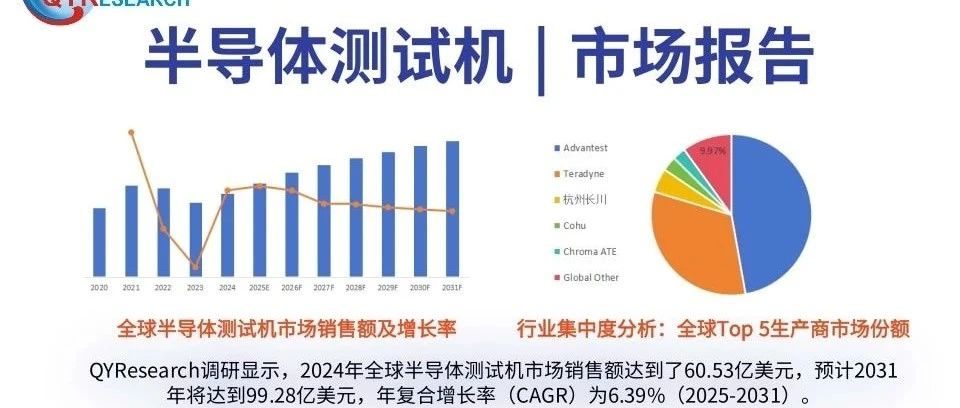
Core Viewpoint - The global semiconductor tester market is projected to grow from $6,053.36 million in 2024 to $9,927.50 million by 2031, with a CAGR of 6.39% [4]. Global Semiconductor Tester Market Overview - The semiconductor tester is essential for verifying the functionality, performance, and reliability of chips, with SoC testers holding a 52.23% market share [7]. - Major manufacturers include Advantest, Teradyne, and domestic companies like Hangzhou Changchuan and Beijing Huafeng, with the top five companies accounting for over 90% of the market [10]. - The Asia-Pacific region is the largest consumer market, accounting for over 78% of global sales, with China expected to grow from $1,782.97 million in 2024 to $3,734.76 million by 2031 [10]. Market Demand and Growth Drivers - The demand for semiconductor testers is driven by the increasing complexity and performance requirements of chips, particularly from packaging and testing companies, which account for 68.71% of the market [11]. - Key application areas include consumer electronics, automotive electronics, and AI, with rapid growth in smart driving and new energy vehicles driving the need for high-reliability testing equipment [11]. Industry Challenges - The semiconductor tester industry faces high technical barriers, requiring advanced signal processing and data transmission capabilities [11]. - High costs associated with core components like FPGA and ADC/DAC chips pose challenges for manufacturers [11]. - Geopolitical risks, particularly U.S. export controls on semiconductor equipment, significantly impact the global supply chain and Chinese market access [11]. Policy Analysis - The semiconductor tester industry is a focus for major economies, with the U.S. providing $52 billion in funding through the CHIPS Act to support domestic manufacturing and R&D [13]. - Europe plans to invest €43 billion in semiconductor R&D and production, while Japan is implementing policies to support domestic semiconductor industry upgrades [14]. - China is also promoting domestic semiconductor testing equipment development through its "14th Five-Year Plan" and investment funds [14].
路维光电(688401):营收利润双增长 产能扩张助力渗透率提升
Xin Lang Cai Jing· 2025-05-07 00:30
Core Viewpoint - The company reported strong revenue and profit growth for 2024 and Q1 2025, driven by increased demand in downstream industries and capacity expansion [1][2]. Financial Performance - In 2024, the company achieved revenue of 876 million yuan, a year-on-year increase of 30.21%, and a net profit attributable to shareholders of 191 million yuan, up 28.27% [1][2]. - For Q1 2025, the company reported revenue of 260 million yuan, a year-on-year growth of 47.09%, and a net profit of 49 million yuan, an increase of 19.66% [1][2]. Growth Drivers - The revenue and profit growth in 2024 and Q1 2025 were primarily due to strong downstream demand and steady capacity enhancement [2]. - High-end products such as AMOLED, advanced packaging, FMM, and PSM contributed significantly to revenue growth [2]. Exchange Rate Impact - The profit growth rate for Q1 2025 was affected by foreign exchange losses, with financial expenses increasing by 14.8 million yuan due to yen fluctuations, leading to a 24.9 percentage point decline in net profit growth [2]. Revenue Structure - The main revenue source remains the flat panel display mask, with significant growth in OLED mask sales driving overall growth [2]. - The semiconductor mask segment is emerging as a second growth curve, with advanced packaging masks performing well [2]. R&D Investment - In 2024, the company invested 37.6 million yuan in R&D, representing 4.30% of revenue, a slight decrease of 0.94 percentage points [3]. - The company has established long-term partnerships with major players in the flat panel display and semiconductor industries, enhancing its technological capabilities [3]. Capacity Expansion - The company is steadily advancing multiple expansion projects, including new production lines for semiconductor and high-precision flat panel display masks, expected to start production in 2025 [4]. - The company is also developing a semiconductor mask project aimed at 40nm and 28nm nodes, with initial production expected in 2025 [4]. Investment Outlook - Revenue projections for 2025-2027 are 1.07 billion yuan, 1.568 billion yuan, and 2.362 billion yuan, with net profits of 252 million yuan, 292 million yuan, and 495 million yuan respectively [5]. - The company is expected to maintain a high growth trajectory due to ongoing capacity expansion and increasing domestic mask penetration [5].

A股半导体“盈利王”易主人工智能助推行业复苏
Zheng Quan Shi Bao· 2025-05-06 17:54
2024年A股年报披露季收官,半导体行业上市公司呈现温和复苏态势。证券时报·e公司记者统计发现, 去年A股半导体行业上市公司营业收入约合6022亿元创新高,北方华创接替中芯国际成为A股半导体"盈 利王";另外,全行业库存"堰塞湖"得到有效化解,经营效率显著提升,人工智能开始显著助推数字芯 片设计等环节上市公司业绩。 存货周转优化 在人工智能逐步落地、消费电子复苏以及国产替代深化等因素带动下,A股半导体行业营收规模再创新 高,营收增速超过净利增速,运营效率得到整体提升。 按照申万行业划分,2024年A股半导体行业上市公司实现营业收入6022亿元,归母净利润353亿元,同 比增长约13%,销售毛利率中位数比上年度下降约两个百分点至31%。 另外,今年一季度行业归母净利润约合79亿元,同比增长约15%,盈利增速有所提升。 细分行业中,数字芯片设计、集成电路封测以及半导体设备行业业绩复苏显著,去年归母净利润同比增 长,但模拟芯片、分立器件、集成电路制造以及材料盈利增速下滑,产能爬坡折旧压力大、部分细分赛 道竞争恶化、研发费用增长等成为拖累业绩主要因素。 进一步来看,随着半导体行业逐步复苏,整体库存消化节奏加速,经营活 ...
以园区能级之“进” 撬动经济发展之“稳”
Zhong Guo Jing Ji Wang· 2025-05-06 02:25
Core Viewpoint - The article highlights the high-quality development initiatives and progress in three major economic development zones in Chongchuan, emphasizing the importance of projects in driving economic growth and innovation [1][8]. Group 1: Economic Development Zones - Chongchuan District has set a three-year goal for high-quality development, aiming for the three major parks to rank among the top 30, 40, and 5 in the province by 2027 [1][8]. - The three development zones—Chongchuan Economic Development Zone, Gangzha Economic Development Zone, and North High-tech Zone—are actively engaged in various projects, showcasing significant development momentum [1][3]. Group 2: Key Projects - Jiangsu Zhenghang Hongda Precision Machinery Co., Ltd. has invested 500 million yuan in a ship device R&D and manufacturing base, expected to generate an annual output value of 300 million yuan and contribute over 10 million yuan in taxes [2]. - The MiFan Technology project in North High-tech Zone, with an investment of approximately 400 million yuan, focuses on semiconductor packaging equipment, anticipating annual taxable sales of about 300 million yuan and tax revenue of 18 million yuan [3]. - The Horn Semiconductor Wheel Manufacturing Project in Gangzha Economic Development Zone has commenced production, aiming for an annual taxable sales of 100 million yuan and tax contributions of 5 million yuan [4]. Group 3: Major Investments and Growth - Tyco Electronics has invested 150 million USD in a manufacturing base in Chongchuan, which is expected to achieve an output value of 250 million yuan this year and double next year [6]. - The Sandy Cultural Tourism Resort Phase II, including the Sandy Polar Ice Kingdom and Sandy African Wilderness Hotel, is projected to attract 300,000 guests annually, generating over 15 million yuan in taxes [7]. Group 4: Strategic Goals and Future Plans - Chongchuan Economic Development Zone aims for an industrial output value of 50 billion yuan and 200 high-tech enterprises within three years, focusing on marine economy and intelligent manufacturing [9]. - North High-tech Zone targets becoming a high ground for innovation, with plans to sign over 40 major projects in three years, including significant clusters in integrated circuits and automotive electronics [10]. - Gangzha Economic Development Zone plans to cultivate 60 industrial enterprises and achieve a total output of 40 billion yuan within three years, emphasizing innovation and industry integration [10].
