得利斯

Search documents
消费赛道格外热闹!顶级资本正在大手笔“抄底”
Zheng Quan Shi Bao· 2025-11-27 00:57
Core Insights - The recent surge in mergers and acquisitions in the consumer sector contrasts with the sluggish growth of the consumption market, raising questions about the underlying investment logic of top-tier capital [1][4]. Group 1: Current Market Conditions - The retail sales of consumer goods in China reached 36.59 trillion yuan in the first three quarters, showing a year-on-year growth of 4.5%, which is still below the 8% growth rate of 2019 [1]. - The performance of listed companies in the consumer sector reveals significant disparities, with major players like Kweichow Moutai and Yum China experiencing slowed growth compared to previous years [2]. - Smaller food and beverage companies are facing considerable operational pressures, with many reporting declines in both revenue and net profit [2]. Group 2: Investment Logic Behind Mergers - The cash flow of target companies is robust, providing a solid foundation for investment despite the slowdown in revenue and profit growth [4]. - The brands being targeted possess strong brand influence and established networks, which are seen as critical for future growth [5]. - The current market downturn presents a favorable opportunity for capital to acquire these brands at lower prices, allowing for potential value enhancement through improved governance and operational efficiency [5]. Group 3: Future Trends in the Consumer Market - The consumer market is expected to face challenges due to slowing income growth and increased savings, which will test the resilience of companies [6]. - Companies are increasingly optimizing their business structures by divesting non-core assets and focusing on high-quality resource integration [6]. - Three key trends are emerging: innovation in cost-performance, the rise of niche products that provide immediate satisfaction, and growth in self-improvement sectors such as health investments and knowledge-based services [6]. Group 4: Capital Market Dynamics - The challenges of exiting investments in the domestic capital market are influencing the selection of investment targets and strategies [7]. - Capital is shifting towards a "long-term battle" approach, favoring structures that allow for continuous returns through dividends rather than relying solely on IPOs for exits [7].
得利斯涨2.16%,成交额4069.81万元,主力资金净流入653.17万元
Xin Lang Cai Jing· 2025-11-25 03:30
Core Viewpoint - The stock of Delisi Foods has shown a mixed performance recently, with a year-to-date increase of 18.99% but a decline of 2.62% over the past five trading days, indicating volatility in its market performance [1][2]. Company Overview - Delisi Foods, established on June 20, 2003, and listed on January 6, 2010, is located in Zhucheng, Shandong Province. The company specializes in pig slaughtering, production, and sales of chilled and frozen meat, as well as low-temperature meat products [1]. - The main revenue sources for Delisi Foods include chilled and frozen meat (41.41%), beef trading (17.27%), beef series products (15.03%), low-temperature meat products (9.84%), and other categories [1]. Financial Performance - For the period from January to September 2025, Delisi Foods reported a revenue of 2.393 billion yuan, reflecting a year-on-year growth of 14.95%. However, the net profit attributable to shareholders decreased by 18.50% to 5.4038 million yuan [2]. - The company has distributed a total of 102 million yuan in dividends since its A-share listing, with 6.3538 million yuan distributed over the past three years [3]. Shareholder Information - As of November 20, 2025, Delisi Foods had 35,300 shareholders, a decrease of 12.01% from the previous period. The average number of circulating shares per shareholder increased by 13.66% to 18,010 shares [2]. - Among the top ten circulating shareholders, Jinyuan Shun'an Yuanqi Flexible Allocation Mixed Fund (004685) is the sixth largest, holding 2.5105 million shares, an increase of 10,500 shares from the previous period [3].

研判2025!中国弹性蛋白行业结构分类,产业链及市场规模分析:皮肤弹性基石与抗衰新势力,行业成高潜力热点[图]
Chan Ye Xin Xi Wang· 2025-11-21 01:56
内容概况:弹性蛋白(Elastin)广泛存在于哺乳动物结缔组织,和胶原蛋白同为皮肤的重要组成部分, 胶原蛋白提供支撑作用,而弹性蛋白提供延展性与回弹性。2024年,中国弹性蛋白行业市场规模约为 6.27亿元,同比增长3.81%。其前体原弹性蛋白(tropoelastin)胞内合成后分泌到胞外,经酶催化交联 成为高度不溶的弹性蛋白网络,使弹性蛋白分子能够任意卷曲,具有高弹性。在应用领域,弹性蛋白通 常与胶原蛋白、透明质酸等成分复配作为护肤品成分以达到综合抗老化效果。其良好的生物相容性和弹 性能使其成为理想的生物医用材料,包括人工血管、创伤敷料、药物递送、伤口修复等多个方面。近年 来弹性蛋白主要用于补剂、化妆品、生物医药等领域,逐渐成为新的热点产品。 相关上市企业:丸美生物(603983) 二、行业产业链 相关企业:内蒙古伊利实业集团股份有限公司、山东得利斯食品股份有限公司、黑龙江宾西牛业有限公 司、温氏食品集团股份有限公司、牧原食品股份有限公司、新希望六和股份有限公司、北京大北农科技 集团股份有限公司、上海药明康德新药开发有限公司、深圳华大基因股份有限公司、苏州泓迅生物科技 股份有限公司、梅花生物科技集团股份有 ...


宠物经济救得了光明乳业吗?
3 6 Ke· 2025-11-20 00:20
Core Viewpoint - The recent launch of the pet food brand "Guangming Youyi" by Guangming Food International at the China International Import Expo indicates the company's strategic move to tap into the growing pet economy, aiming to create differentiated competitive advantages amidst declining performance in its core dairy business [1][12]. Group 1: Company Performance - Guangming Dairy's financial performance has been declining, with a reported revenue of 18.23 billion yuan for the first three quarters of 2025, a year-on-year decrease of 0.99%, and a net profit of 87 million yuan, down 25.05% [2][3]. - In Q3 2025, Guangming Dairy achieved a revenue of 5.76 billion yuan, showing a slight growth of 1.04%, but reported a net loss of 130 million yuan [3]. - The company's revenue has been declining for four consecutive years since 2022, with liquid milk revenue dropping to 10.15 billion yuan in the first three quarters of 2025, a decrease of 8.57% year-on-year [4]. Group 2: Market Challenges - Guangming Dairy faces intense competition from major players like Yili and Mengniu, which are eroding its market share, particularly in the low-temperature milk segment [5]. - The rise of regional dairy companies and alternative products like new tea drinks is further complicating the competitive landscape, impacting Guangming's traditional market [5]. - The company's overseas investment in Newlight has also been problematic, with significant losses reported, leading to the sale of its North Island assets for $170 million due to underutilization and losses [5]. Group 3: Pet Economy Potential - The pet economy is seen as a potential growth avenue for Guangming Dairy, with the number of pets in urban China expected to exceed 120 million by 2024, and the pet industry market size projected to surpass 580 billion yuan [10]. - The pet food market has shown significant growth, with the market size increasing from 28 billion yuan in 2015 to an expected 227.2 billion yuan by 2024, indicating a strong demand for pet food products [11]. - Guangming Dairy's entry into the pet food sector is a strategic choice to broaden its business scope and create new growth curves, leveraging its expertise in food safety and nutrition [9][12]. Group 4: Competitive Landscape in Pet Food - The pet food market is highly competitive, with established brands like Mars and Nestlé dominating, alongside new entrants from various sectors, making it challenging for Guangming to gain market share [13]. - The high repurchase rate in pet food sales means that new brands often struggle to penetrate established consumer bases, as pet owners tend to stick with brands that have worked for them [14]. - Despite the challenges, Guangming Dairy's commitment to R&D, with a reported expenditure of 100 million yuan in 2025, reflects its focus on innovation and product development [18].

顶级资本正在“抄底”消费
Xin Lang Cai Jing· 2025-11-16 02:14
Core Insights - The recent surge in mergers and acquisitions in the consumer sector contrasts with the sluggish growth of the consumption market, raising questions about the underlying investment logic of top-tier capital [1][4]. Group 1: Current Market Conditions - The retail sales of consumer goods in China reached 36.59 trillion yuan in the first three quarters, growing by 4.5% year-on-year, which is still below the 8% growth rate seen in 2019 [1]. - The performance of listed consumer companies shows significant divergence, with major players like Kweichow Moutai and Yum China experiencing slowed growth compared to previous years [2]. - Smaller food and beverage companies are facing considerable operational pressure, with many reporting declines in both revenue and net profit [2]. Group 2: Investment Logic Behind Mergers - The first logic is that target companies possess strong cash flow and a solid foundation, making them attractive despite slower growth rates [4]. - The second logic highlights the brand influence of the target companies, which have established networks and consumer loyalty, making them appealing for capital investment [5]. - The third logic suggests that the current market downturn presents a "buying opportunity" for capital, allowing for acquisitions at reasonable prices [5]. - The fourth logic emphasizes the ongoing opportunities in the consumer sector, as the majority of production activities ultimately cater to consumer needs [5]. Group 3: Future Trends in the Consumer Market - Companies face challenges in understanding new consumer demographics, adapting to new marketing methods, and embracing innovative organizational structures [6]. - Three key trends to watch include a focus on cost-effective innovation, the rise of niche products that provide immediate satisfaction, and growth in self-improvement sectors such as health investments and knowledge-based services [6]. - The exit strategies for capital in the consumer market are evolving, with a shift towards long-term investment approaches rather than relying solely on rapid growth and IPOs [7].




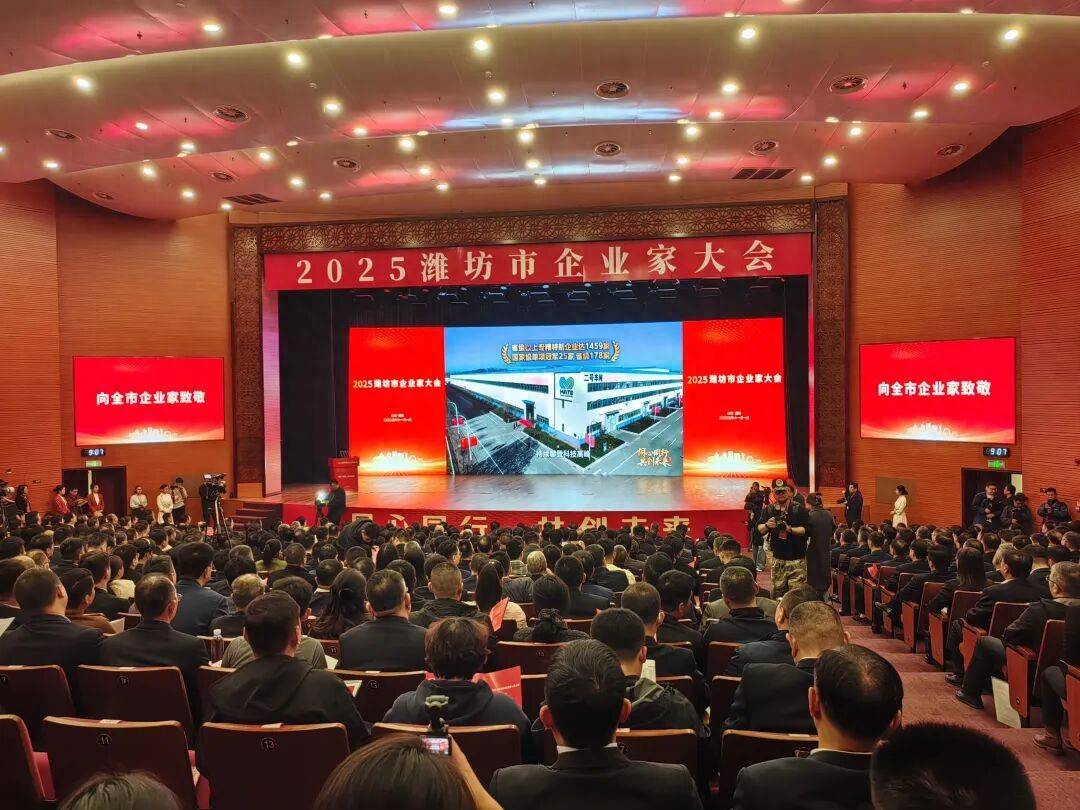
标题:潍坊:民营经济“狂飙”背后,藏着政企关系的“天花板”级操作
Sou Hu Cai Jing· 2025-11-15 08:12
Core Insights - In 2025, Weifang's private economy achieved remarkable results, adding 5 companies to China's top 500 private enterprises, 32 to Shandong's top 200, and 9 to China's manufacturing top 500, contributing 60% of the city's GDP, 70% of investments, and 80% of tax revenue [1] - Weifang's industrial enterprises reached 4,758, with a total output value exceeding 1.2 trillion yuan, and the agricultural sector leading the province in total output [1] - The city's success is attributed to a "partnership model" between government and enterprises, fostering an environment where businesses feel supported and empowered to innovate [1] Group 1: Government-Enterprise Relationship - Weifang emphasizes respect for businesses, establishing an "Entrepreneur's Day" to ensure that entrepreneurs can directly communicate their issues to government officials [3] - The government adopts a "no red tape" approach, streamlining processes such as issuing multiple permits simultaneously, significantly reducing bureaucratic delays [4] - The local government actively engages with businesses, treating them as partners rather than mere resources, which enhances trust and collaboration [5] Group 2: Supportive Infrastructure - Weifang has implemented reforms to facilitate business operations, including a "financial supermarket" that connects companies with banks and financing options, resulting in a loan balance of 386.6 billion yuan for private enterprises [4] - The government provides customized support for land and talent, ensuring that businesses have the necessary resources to grow and expand [4] - The city has developed a robust industrial ecosystem, encouraging collaboration among companies and educational institutions to drive innovation and reduce costs [4][5] Group 3: Global Expansion and Economic Cycle - Weifang encourages businesses to expand internationally, creating platforms for overseas sales and logistics support, which helps local companies thrive in global markets [5] - The cycle of "going global - making profits - upgrading" is established, where successful enterprises reinvest in the local economy, fostering further growth [5] - The partnership model between government and enterprises leads to mutual success, with the government supporting innovative projects and businesses willing to take risks [5]
重要信号!顶级资本正在“抄底”消费
证券时报· 2025-11-15 00:14
Core Viewpoint - The article discusses the recent surge in mergers and acquisitions (M&A) in the consumer sector, highlighting the contrast between significant capital investments by top firms and the sluggish growth of the consumer market in China. It explores the underlying investment logic driving this trend. Group 1: M&A Activity - Recent strategic partnerships and acquisitions include CPE Yuanfeng's collaboration with Burger King, Dazhang Capital's potential bid for Costa Coffee, and Boyu Capital acquiring a 60% stake in Starbucks China. KKR also completed the acquisition of the national soda brand, Diao Soda [1][2]. - The consumer market is experiencing a slowdown, with retail sales growth at 4.5% year-on-year for the first three quarters, which is below the 8% growth seen in 2019 [2][3]. Group 2: Financial Performance of Companies - Major companies like KFC China reported a 4% increase in revenue to $3.2 billion, while Yili's revenue grew by 1.71% to 90.564 billion yuan, but its net profit fell by 4.07% [3]. - Smaller food and beverage companies are facing significant operational pressures, with many reporting declines in both revenue and net profit [3]. Group 3: Investment Logic - Four key investment rationales are identified: 1. Target companies have strong cash flows and solid foundations, with examples like Starbucks maintaining over $6 billion in cash flow [5]. 2. The brands involved possess significant brand equity and established networks, making them attractive to investors [6]. 3. The current market downturn presents a "buying opportunity" for capital, allowing for acquisitions at lower prices [6]. 4. The consumer sector remains promising, with potential for growth despite current challenges [6]. Group 4: Future Trends in Consumer Market - The article identifies three trends in the consumer market: 1. Emphasis on cost-performance innovation as consumers prioritize practical value [8]. 2. Increased interest in niche products that provide immediate satisfaction [8]. 3. Growth in self-improvement sectors, including health investments and knowledge-based spending [8]. Group 5: Exit Strategies for Capital - The challenges of exiting investments in the consumer sector are noted, with a shift towards long-term strategies rather than quick exits through IPOs. This includes designing preferential dividend clauses to ensure returns even without an IPO [9].

重要信号!顶级资本正在“抄底”消费
Zheng Quan Shi Bao· 2025-11-14 17:47
Core Viewpoint - The recent surge in mergers and acquisitions in the consumer sector contrasts with the sluggish growth of the consumption market, raising questions about the underlying investment logic of top-tier capital entering this space [1][4]. Group 1: Mergers and Acquisitions Activity - Major capital firms are actively acquiring well-known consumer brands despite a weak consumption market, indicating a strategic move to capitalize on perceived undervaluation [1][4]. - Recent notable transactions include CPE Yuanfeng's partnership with Burger King, Hillhouse Capital's potential bid for Costa Coffee, and Boyu Capital's acquisition of a 60% stake in Starbucks China [1][2]. Group 2: Market Performance and Company Earnings - The retail sales growth in China for the first three quarters was 36.59 trillion yuan, reflecting a year-on-year increase of 4.5%, which is still below the 8% growth rate of 2019 [1]. - A significant performance disparity exists among consumer companies, with leading firms like Kweichow Moutai and Yum China showing slowed growth compared to previous years [2]. - Smaller food and beverage companies are facing greater operational pressures, with many reporting declines in both revenue and net profit [2]. Group 3: Investment Logic Behind Acquisitions - Four key investment rationales support the trend of capital entering the consumer sector: 1. Target companies possess strong cash flow and stable foundations, making them attractive despite slower growth [4]. 2. The brands being targeted have significant market influence and established networks, providing a solid base for future growth [5]. 3. The current market downturn presents a favorable opportunity for capital to acquire these brands at lower prices, allowing for potential value enhancement through improved governance [6]. 4. The consumer sector remains promising, with a large market potential and a low concentration of major brands, indicating future growth opportunities [6]. Group 4: Future Trends in the Consumer Market - The consumer market is expected to face challenges due to slowing income growth and increased savings, which will test the resilience of companies [7]. - Key trends to watch include a focus on cost-effective innovations, the rise of niche products that provide immediate satisfaction, and growth in self-improvement sectors such as health investments and knowledge-based services [7]. - Companies are increasingly optimizing their business structures by divesting non-core assets and consolidating resources to enhance operational quality [7][8].

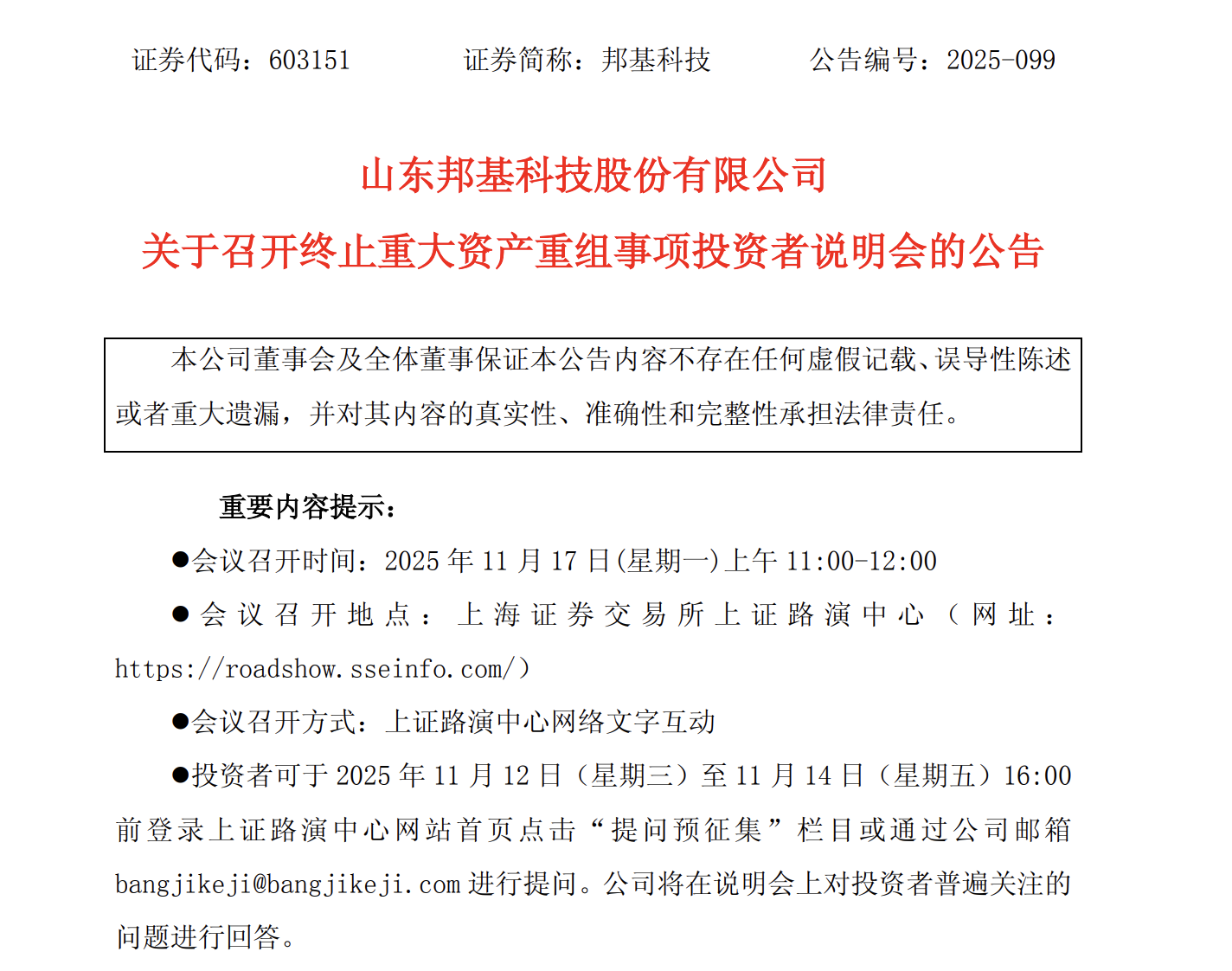
邦基科技叫停重大资产重组“饲料+养殖”闭环计划搁浅
Zheng Quan Shi Bao· 2025-11-14 09:55
Core Viewpoint - The company, Bangji Technology, has decided to terminate its major asset restructuring plan to acquire equity stakes in seven companies from Riverstone Farm Pte. Ltd. due to failure to reach an agreement after multiple negotiations [1][3]. Group 1: Termination of Restructuring - The board of Bangji Technology approved the termination of the major asset restructuring plan during its 17th meeting on November 11 [2][3]. - The intended acquisition included 100% equity stakes in six agricultural companies and 80% of a consulting company [2][3]. - The termination was attributed to the inability to reach a consensus with the transaction counterpart [1][3]. Group 2: Business Context - Bangji Technology's main business is the research, production, and sales of pig feed, facing intense competition in the feed industry, leading to a decline in performance over the past three years [5][6]. - The company reported net profits of 1.10 billion, 820 million, and 510 million yuan for the years 2022, 2023, and 2024, respectively, indicating a pressing need for business transformation [6]. - The intended restructuring aimed to create a vertically integrated supply chain by extending into the downstream pig farming sector, which is a common trend among feed companies [5][6]. Group 3: Strategic Implications - The acquisition was seen as a critical step for Bangji Technology to transition from a single feed production company to an integrated feed and pig farming enterprise, enhancing supply chain synergy [6][7]. - The targeted assets were noted for their strong foreign investment background and technical advantages, which could have provided significant operational benefits if the acquisition had proceeded [7]. - The potential acquisition price was estimated to be at least 600 million yuan, reflecting the high stakes involved in the deal [7].

鲁股观察|跨界养猪计划告吹,山东饲料龙头邦基科技终止重大资产重组
Xin Lang Cai Jing· 2025-11-14 08:23
Core Viewpoint - Shandong Bangji Technology Co., Ltd. has announced the termination of its major asset restructuring plan aimed at acquiring equity in several agricultural enterprises, marking the failure of its cross-industry merger initiative that began in June this year [1][5]. Group 1: Termination of Restructuring - The terminated restructuring involved the acquisition of equity in seven target companies, including Shandong Beixi Agricultural Co., Ltd. and Shandong Ruidong Weili Agricultural Co., Ltd., as well as 80% of the equity in Paistong Livestock Technology Consulting (Shanghai) Co., Ltd. [5] - The restructuring process began on June 5, with the company applying for a stock suspension to plan the major asset restructuring, and the restructuring proposal was officially disclosed on June 17 [5]. - Despite multiple negotiations, the parties could not reach an agreement on core terms, leading the company to terminate the transaction to protect the interests of the listed company and all shareholders [5][7]. Group 2: Market Reaction and Financial Impact - Following the announcement of the termination, the company's stock price experienced significant declines, with closing price drops of 8.91% and 7.45% on November 10 and 11, respectively, resulting in a closing price of 21.45 yuan per share and a total market value of 3.664 billion yuan as of November 11 [5]. - The termination of the restructuring plan indicates a temporary halt to the company's strategy of creating a "feed + breeding" vertical integration industry chain [7]. Group 3: Business Focus and Financial Performance - The company's main business, which focuses on the research, production, and sales of pig feed, has faced growth pressures as the domestic feed industry enters a phase of stock competition [9]. - Financial data shows a decline in the company's net profit from 110 million yuan in 2022 to 51 million yuan in 2024, highlighting the need for the company to extend into the downstream breeding industry for new profit growth opportunities [9]. - Despite the restructuring failure, the company's recent financial performance indicates signs of recovery, with a net profit of 106 million yuan for the first three quarters of 2025, representing a year-on-year increase of 148.64% [10].