格力电器

Search documents
春晚40年赞助商变迁史,从康巴丝到机器人见证中国经济跃迁
Sou Hu Cai Jing· 2026-02-18 02:17
Group 1 - The article discusses the evolution of sponsorship in the CCTV Spring Festival Gala over the past 40 years, reflecting changes in Chinese society and consumer behavior [2][3] - The first sponsor, 康巴丝 (Kambas), set a precedent in 1984 by using 3,000 quartz watches as payment, marking the beginning of brand sponsorship in the gala [6][8] - The transition from watches to bicycles as the next major sponsor in 1995 illustrates the shift in consumer goods that represented status during the era of material scarcity [10][12] Group 2 - The late 1990s saw a surge in consumer spending on new household appliances, with 山东孔府宴酒 (Shandong Confucius Banquet Wine) becoming the first "mark king" of the gala in 1995, paying 30.79 million yuan [10][12] - The rapid growth of the liquor industry during this period was fueled by "human consumption," where premium liquor became a social currency [12][14] - The article highlights the consequences of over-reliance on advertising without maintaining product quality, as seen in the case of 秦池酒 (Qin Pool Wine), which faced a significant drop in sales after quality issues emerged [14][15] Group 3 - From the early 2000s, the focus shifted to home appliances, with 美的 (Midea) becoming a prominent sponsor, securing 16 sponsorships from 2003 to 2019 [17][19] - The cost of advertising during the gala increased significantly, with Midea's sponsorship fee rising from 6.8 million yuan in 2005 to 57.2 million yuan in 2011, reflecting the growing viewership [17][19] - The brand storytelling approach adopted by companies like 海尔 (Haier) and 格力 (Gree) during this period indicates a shift towards building emotional connections with consumers [20] Group 4 - The rise of internet companies post-2010 transformed the gala's advertising landscape, with platforms like WeChat leveraging the event for massive user engagement through interactive features like the "red envelope battle" [21][23] - The article notes that the 2015 Spring Festival Gala saw WeChat's user engagement peak, with over 10.1 billion red envelopes sent, showcasing the event's potential as a digital marketing platform [21][23] - The involvement of tech giants in the gala reflects a broader trend of digital economy reshaping traditional advertising methods, with companies like 快手 (Kuaishou) and 抖音 (Douyin) entering the sponsorship arena [25][27] Group 5 - The article concludes by emphasizing the transition from showcasing products to highlighting technological advancements, as seen with the introduction of robots in recent galas [27] - This shift signifies a broader change in China's economic landscape, moving from manufacturing to innovation-driven growth, with a focus on high-tech industries [27] - The future of the Spring Festival Gala sponsorship landscape remains uncertain, raising questions about which industries will dominate the next decade [27]




春晚广告位争夺战:四十年国民记忆与商业暗流
创业邦· 2026-02-17 10:32
Core Viewpoint - The evolution of the Spring Festival Gala sponsorship reflects the changing landscape of China's economy and consumer behavior over the past 40 years, showcasing the transition from material scarcity to technological innovation and brand storytelling [4][24]. Group 1: 1980s to Early 1990s - The 1980s marked a period of material scarcity, where items like watches and radios were symbols of wealth and status, leading to the first brand sponsorship by 康巴丝 (Kangbasi) at the Spring Festival Gala [5][7]. - 康巴丝 sponsored the gala by trading 3,000 quartz watches for advertising, which significantly boosted its brand recognition and sales, reaching an annual production of 1.26 million watches by 1987 [8]. - The sponsorship model evolved, with 中华自行车 (Zhonghua Bicycle) taking over the sponsorship in 1995, reflecting the changing consumer demands and economic conditions [9][14]. Group 2: Mid-1990s to Early 2000s - The mid-1990s saw a surge in consumer spending, with the emergence of "标王" (advertising king) sponsorships, particularly in the liquor industry, exemplified by 山东孔府宴酒 (Shandong Confucius Feast Wine) and 秦池酒 (Qinchijiu) [11][12]. - 秦池酒's sponsorship led to a dramatic increase in sales from 1.8 billion yuan in 1995 to 9.5 billion yuan in 1996, highlighting the impact of gala sponsorship on brand visibility and sales [16]. - The era was characterized by a shift towards consumerism, with brands leveraging the gala to enhance their market presence, although some faced backlash due to quality issues [16]. Group 3: 2000s to Early 2010s - The early 2000s marked the rise of home appliance brands, with 美的 (Midea) becoming a prominent sponsor, securing 11 sponsorships from 2003 to 2014, reflecting the growing importance of brand trust [17][19]. - The cost of advertising skyrocketed, with Midea's sponsorship fee increasing from 6.8 million yuan in 2005 to 57.2 million yuan in 2011, indicating the gala's significant viewership and advertising value [21]. - Brands began to focus on storytelling and emotional connections with consumers, moving beyond mere product promotion to build brand loyalty [23]. Group 4: Mid-2010s to Present - The 2010s saw the rise of internet companies as key players in the advertising space, with platforms like WeChat revolutionizing audience engagement through interactive features like the "red envelope battle" during the gala [25][26]. - The digital transformation of the gala allowed for unprecedented levels of interaction, with WeChat reporting 10.1 billion red envelope transactions on New Year's Eve, significantly enhancing its user base [26]. - The emergence of technology companies in the gala sponsorship landscape reflects a broader shift towards innovation and digital engagement, with brands like Xiaomi and AI robotics showcasing advancements in technology [32].





格力电器取得分布式供电电路、智能门锁及控制方法专利
Sou Hu Cai Jing· 2026-02-17 06:13
Group 1 - Zhuhai Gree Electric Appliances Inc. has obtained a patent for a "distributed power supply circuit, smart lock, and control method," with the authorization announcement number CN115065114B, and the application date is June 2022 [1] - Zhuhai Gree Electric Appliances Inc. was established in 1989, located in Zhuhai City, primarily engaged in the manufacturing of electrical machinery and equipment, with a registered capital of 601,573.0878 million RMB [1] - The company has invested in 98 enterprises, participated in 5,000 bidding projects, and has 5,000 trademark and patent information records, along with 923 administrative licenses [1] Group 2 - Zhuhai Lianyun Technology Co., Ltd. was established in 2018, located in Zhuhai City, primarily engaged in software and information technology services, with a registered capital of 50 million RMB [1] - The company has participated in 9 bidding projects, holds 4,644 patent information records, and has 14 administrative licenses [1]
格力电器取得氟泵压缩制冷系统及其控制方法专利
Sou Hu Cai Jing· 2026-02-17 00:48
Group 1 - The State Intellectual Property Office of China has granted a patent to Zhuhai Gree Electric Appliances, Inc. for a "fluorine pump compression refrigeration system and its control method," with the authorization announcement number CN116592537B, applied on May 2023 [1] - Zhuhai Gree Electric Appliances, established in 1989, is primarily engaged in the manufacturing of electrical machinery and equipment, with a registered capital of 6,015.73 million RMB [1] - The company has invested in 98 enterprises, participated in 5,000 bidding projects, and holds 5,000 trademark and patent information records, along with 923 administrative licenses [1] Group 2 - Zhuhai Gree Energy-saving and Environmental Protection Refrigeration Technology Research Center Co., Ltd., established in 2009, focuses on manufacturing computers, communications, and other electronic devices, with a registered capital of 116.04 million RMB [1] - This research center has participated in 11 bidding projects and holds 5,000 patent information records, along with 10 administrative licenses [1]
于东来退休幕后:3年放权,永不上市,接班人须60岁退休
36氪· 2026-02-15 13:07
Core Viewpoint - The retirement of Yu Donglai, founder and chairman of the Pang Donglai Group, marks a significant shift in the company's governance structure, transitioning from personal leadership to a committee-based management model, emphasizing institutional continuity over individual authority [6][9][10]. Group 1: Retirement Announcement and Transition - Yu Donglai announced his retirement on February 11, 2026, stating he would become an advisor while the decision-making committee would manage daily operations [6][9]. - This decision is seen as a culmination of a three-year institutional reform aimed at empowering a professional management team rather than relying on family succession [9][14]. - The decision to implement a rotating management system reflects a commitment to decentralization and shared leadership, with responsibilities distributed among core team members [14][19]. Group 2: Long-term Strategy and Governance - Yu Donglai outlined four long-term strategies for Pang Donglai, including maintaining its educational nature, ensuring management exits power before age 60, never going public, and halting expansion after achieving set goals [17]. - The governance model emphasizes that the institution is more reliable than individual leadership, with Yu Donglai serving as a model for the 60-year exit rule [17][38]. - The company has established a transparent recruitment process for middle management, ensuring fairness and alignment with its core values [15][22]. Group 3: Employee Welfare and Consumer Trust - Pang Donglai has a robust employee welfare system, with an average monthly salary of 9,886 yuan and a compensation policy for dignity violations, reflecting a commitment to employee rights [22][23]. - The company’s service standards, including a "no-questions-asked" return policy, have fostered consumer trust, ensuring consistent service quality regardless of management changes [23][24]. - Employees express confidence in the stability of welfare policies, which are enshrined in company regulations, providing legal protection against arbitrary changes [37][41]. Group 4: Challenges and Industry Implications - The transition to a committee-based management model may face challenges in decision-making efficiency, particularly in urgent situations where quick decisions are necessary [39]. - The potential dilution of Yu Donglai's personal influence on company culture raises concerns about maintaining service quality and employee engagement [39][40]. - The case of Pang Donglai serves as a critical example for the broader retail industry, highlighting the importance of institutional resilience in the face of founder transitions and the pitfalls of rapid expansion [42][43].

天弘永定成长基金经理换将,产品业绩不达标是主因?
Xin Lang Cai Jing· 2026-02-15 11:54
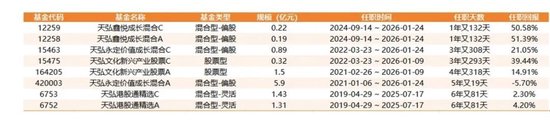
Core Viewpoint - Tianhong Fund Management announced the departure of fund manager Liu Guojiang from the Tianhong Yongding Value Growth Mixed Securities Investment Fund due to personal reasons, following a period of underperformance in fund returns [1][7]. Group 1: Fund Performance - During Liu Guojiang's management, the Tianhong Yongding Growth Fund recorded a return of -5.7% and an annualized return of -1.15%, significantly underperforming compared to the average of similar products [1][8]. - The fund's annual returns from 2021 to 2025 were -4.94%, -15.98%, -15.31%, 17.44%, and 19.32%, indicating a volatile performance with recent recovery [3][10]. - The fund has a total scale of approximately 6.79 billion yuan as of the end of 2025, with the Tianhong Yongding Value Growth Fund being the largest at 5.9 billion yuan [2][11]. Group 2: Manager Background and Transition - Liu Guojiang joined Tianhong Fund in April 2017 and took over the Tianhong Yongding Growth Fund in January 2021, having previously worked at several other asset management firms [2][8]. - Following Liu's departure, Wang Haishan, who has a dual bachelor's degree in economics and engineering and is a CPA and CFA holder, will continue to manage the fund [5][11]. - Liu Guojiang's exit is seen as a response to investor demands for better performance, highlighting the importance of consistent returns in building trust in the asset management industry [6][12].
未来已来 抢抓时代机遇!2026未来产业新材料博览会(6月10-12日 上海)
DT新材料· 2026-02-15 07:20
Core Viewpoint - The 2026 Future Industries New Materials Expo (FINE 2026) aims to lead global innovation in new materials, emphasizing their critical role in the transformation of high-tech industries and future economic development [1][2]. Group 1: Event Overview - FINE 2026 will take place from June 10 to June 12, 2026, at the Shanghai New International Expo Center, featuring a total exhibition area of 50,000 square meters and over 300 strategic and cutting-edge technology reports [2][18]. - The expo will focus on popular innovations applicable to various industries, including artificial intelligence, aerospace, smart vehicles, and renewable energy, while addressing five common needs in future industries: advanced semiconductors, advanced batteries, lightweight functionalization, low-carbon sustainability, and thermal management [2][10]. Group 2: Historical Context and Participation - The previous events, including the 2025 International Carbon Materials Expo and the 2025 Thermal Management Expo, achieved record attendance with over 35,000 professional visitors from 27 countries and regions, showcasing more than 500 exhibitors [7][36]. - The expected participation for FINE 2026 is over 100,000 professional visitors, with targeted invitations to over 5,000 industry investors to facilitate connections between startups and industry resources [35][37]. Group 3: Thematic Focus and Special Features - FINE 2026 will feature seven specialized thematic exhibition areas, including advanced semiconductors, AI chips, thermal management, and sustainable materials, aiming to present a comprehensive chain of innovation from components to cutting-edge technologies [13][15]. - The event will host over 30 forums with more than 300 renowned experts discussing trends in technology, investment strategies, and advanced manufacturing techniques related to new materials [22][24]. Group 4: Strategic Importance - The expo is positioned as a critical platform for technology transfer and industry innovation, leveraging China's growing influence in sectors like new energy vehicles, photovoltaics, and robotics, which are expected to create significant market opportunities for new materials [10][36]. - The timing of the event in June is seen as a strategic opportunity to capture business prospects for the second half of the year, supported by Shanghai's robust industrial and technological ecosystem [10][36].

被停职审查、转移资产、搞办公室恋情,董明珠身上标签哪个是真的
Sou Hu Cai Jing· 2026-02-15 04:54
Core Viewpoint - The article discusses the various rumors surrounding Dong Mingzhu, the chairwoman of Gree Electric Appliances, emphasizing that these rumors lack credible evidence and are often based on misinterpretations or malicious intent [1][10]. Group 1: Rumors of Suspension - A rumor emerged on January 18, 2025, claiming that Dong Mingzhu was suspended from her position and under investigation, which caused a slight fluctuation in Gree's stock price. However, Gree Electric Appliances issued a statement denying the rumor, labeling it as false and misleading [3][10]. - The company confirmed that Dong Mingzhu continued her regular duties, including meetings and work inspections, and there was no change in her position as chairwoman [3][10]. Group 2: Allegations of Asset Transfer - Speculation arose regarding the renaming of some Gree stores to "Dong Mingzhu Health Home," leading to accusations that she was transferring company resources to her personal accounts. However, the trademark for "Dong Mingzhu" is registered under Gree Electric Appliances, and all store revenues are accounted for within the company [5][10]. - The company clarified that the name change was a marketing strategy to leverage Dong Mingzhu's personal brand for promoting new products, and there was no financial misconduct involved [5][7]. Group 3: Office Romance Rumors - Rumors of an office romance involving Dong Mingzhu and a former executive, Wang Ziru, were based on a misinterpreted statement made by Wang in a program. Dong Mingzhu publicly condemned these rumors as disrespectful and confirmed that legal actions were taken against those spreading false information [9][10]. - The relationship between Dong Mingzhu and Wang Ziru was strictly professional, and the rumors have been repeatedly debunked [9][10]. Group 4: Company Leadership Changes - On January 23, 2026, Dong Mingzhu stepped down from her role as the legal representative and executive director of a subsidiary focused on electronic components, with a long-time employee taking over. This transition was described as a normal handover to allow Dong to focus on strategic planning [11]. - Despite this change, Dong Mingzhu remains the chairwoman of Gree Electric Appliances and continues to participate in company meetings and project advancements, with ongoing progress in the chip business [11]. Group 5: Underlying Reasons for Rumors - The persistence of these rumors may stem from Dong Mingzhu's strong adherence to her principles, which has led to conflicts with some individuals. Successful women often face undue scrutiny and misrepresentation [12]. - Ultimately, all three rumors have been proven false, highlighting the importance of relying on credible sources to avoid misinformation [12].
于东来退休幕后:3 年放权,永不上市,接班人须60岁退休
创业邦· 2026-02-15 03:59
Core Viewpoint - The retirement of Yu Donglai, founder and chairman of Pang Donglai, marks a significant shift in the company's governance structure, transitioning to a decision-making committee model that emphasizes institutional continuity over individual leadership [8][11][19]. Group 1: Retirement Announcement and Governance Changes - Yu Donglai announced his retirement on February 11, 2026, transitioning to an advisory role while maintaining his position as chairman and retaining 69.96% control of the company [8][11]. - The decision to retire is seen as a culmination of a three-year institutional reform aimed at decentralizing power and fostering a management team composed of internal core members [11][12]. - The decision-making committee will implement a rotating management system, allowing for shared leadership responsibilities among senior managers [14][19]. Group 2: Strategic Vision Post-Retirement - Yu Donglai outlined four strategic principles for Pang Donglai's future: maintaining its educational nature, ensuring management exits power before age 60, never going public, and halting expansion after achieving set goals [19][21]. - The company aims to uphold a culture of learning and sharing, focusing on employee welfare and community engagement rather than profit maximization [19][27]. Group 3: Employee Welfare and Corporate Culture - Pang Donglai has established a robust employee welfare system, including a monthly average salary of 9,886 yuan and a comprehensive dignity protection policy that compensates for mental and physical harm [21][25]. - The company emphasizes a consumer-centric approach, allowing employees to autonomously resolve disputes up to 200 yuan without needing to escalate issues [25][31]. - The governance model integrates employee participation in decision-making, ensuring that welfare policies are deeply embedded in the corporate culture [31][32]. Group 4: Challenges and Industry Implications - The transition to a committee-led governance model raises questions about decision-making efficiency and the potential for slower responses to urgent situations [34][35]. - The company's unique approach to governance and employee welfare serves as a potential model for other businesses facing founder dependency and growth challenges in the retail sector [36][38]. - The long-term success of Pang Donglai will depend on its ability to maintain its core values and operational principles without the direct influence of its founder [36][38].
2026年货消费观察 |“焕新式年货”,这些上市公司正占领市场
Xin Lang Cai Jing· 2026-02-15 00:02
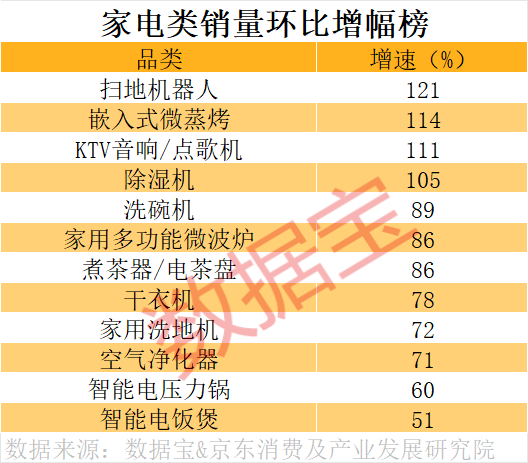
Core Insights - The definition of "New Year goods" is evolving, with traditional items being replaced by more technologically advanced and practical "smart goods" as consumer preferences shift towards enhancing the quality of life for parents [1][10] - The rise of "smart New Year goods" is particularly notable in rural markets, where products like smart home appliances are becoming popular choices among younger consumers [1][11] Consumer Trends - Young consumers are increasingly opting for gifts that improve their parents' quality of life, such as dishwashers and robotic vacuum cleaners, rather than traditional gifts like alcohol and grains [2][11] - The sales of smart appliances have seen significant growth, with robotic vacuum cleaners increasing by 121% and embedded micro-steaming ovens by 114% during the festive season [3][11] Market Dynamics - The improvement of logistics, 5G network coverage, and payment environments in rural areas has made online shopping for smart appliances more accessible [6][16] - Government subsidies ranging from 10% to 15% for green smart appliances have further lowered the consumption threshold for rural residents [6][16] Industry Response - Home appliance companies are adapting their product strategies to meet the needs of rural consumers, offering customizable and easy-to-install devices [7][17] - Brands are launching special promotional packages for the New Year, combining multiple smart appliances with discounts and installment payment options to stimulate demand [7][17] Investment Opportunities - High dividend-yielding companies in the home appliance sector are attracting attention, with companies like Gree Electric, Supor, and Hisense showing dividend yields above 3% [8][18] - Supor is noted for its nearly 100% dividend payout ratio for 2024, indicating strong financial health and investor interest [8][18]