
Rokid

Search documents
求购强脑科技公司老股份额;求购Momenta公司老股份额|资情留言板第173期
3 6 Ke· 2025-11-12 07:31
Summary of Key Points Core Viewpoint The article presents a dynamic asset trading market where buyers and sellers face challenges in connecting with potential trading partners. The platform aims to facilitate quicker access to market information and potential transactions, highlighting various asset purchase and sale opportunities. New Additions - **Acquisition of New Kai Lai Company Old Shares**: Expected valuation is negotiable, with an asset scale of approximately 30-50 million shares. The transaction can accept LP shares [1]. - **Acquisition of Momenta Company Old Shares**: Expected valuation is negotiable, with an asset scale of approximately 10-20 million RMB. The transaction can accept structured pricing based on management fees and carry [1]. - **Acquisition of Qiang Nao Technology Company Old Shares**: Expected valuation is 1.6 billion USD, with an asset scale of approximately 30 million RMB. The transaction requires a structure that allows for RMB transactions [1]. - **Acquisition of Changxin Storage Company Old Shares**: Expected valuation is between 150-200 billion RMB, with an asset scale of approximately 30-50 million USD. The transaction requires named shareholder shares [2]. - **Transfer of Fund LP Shares Holding Zhi Yuan Robot**: Expected valuation is approximately 25 billion RMB [2]. - **Transfer of Fund LP Shares Holding Super Fusion**: Expected valuation is negotiable [3]. - **Transfer of Fund LP Shares Holding Solid-State Battery Industry Leader**: Expected valuation is negotiable [4]. - **Transfer of Fund LP Shares Holding Satellite Industry Leader**: Expected valuation is negotiable [5]. - **Acquisition of Guoyi Quantum Company Old Shares**: Expected valuation is negotiable [6]. Asset Acquisition - **Seeking Medical Device M&A Targets**: Expected valuation is negotiable, with a focus on profitable companies in specific fields. The buyer is looking to invest 30-50 million for at least 51% control [9]. - **Seeking Small Home Appliance M&A Targets**: Expected valuation is negotiable, within 2 billion RMB, focusing on profitable companies [10]. - **Acquisition of Yushu Technology Company Old Shares**: Expected valuation is 15 billion RMB, with an asset scale of approximately 50 million shares [10]. - **Acquisition of DJI Company Old Shares**: Expected valuation is around 17-18 billion USD, with an asset scale of approximately 50 million RMB [10]. - **Acquisition of Qiang Nao Technology Company Old Shares**: Expected valuation is negotiable, with an asset scale of approximately 10 million USD [10]. Asset Transfer/Increase - **Transfer of Fund LP Shares Holding Wo Fei Chang Kong Technology**: Expected valuation is negotiable, with an asset scale of approximately 60 million shares [11]. - **Transfer of Old Shares of Commercial Aerospace Leader**: Expected valuation is negotiable, with an asset scale of 50 million RMB [11]. - **Transfer of Fund LP Shares for Intelligent Driving Leader**: Expected valuation is negotiable [11]. - **Transfer of Semiconductor Silicon Wafer Leader Shares**: Expected valuation is negotiable, with a focus on advanced production capabilities [12]. - **Transfer of Old Shares of Quantum Instrumentation Leader**: Expected valuation is between 8-9 billion RMB, with an asset scale of approximately 30 million shares [16]. Other Notes The information provided in the "Asset Information Board" is dynamic and may become outdated due to market changes or completed transactions. The platform serves to connect parties for potential transactions, with further negotiations and agreements required between involved parties [17].
对话爱立信高管:以“差异化连接”破局5G商业变现
Xin Lang Cai Jing· 2025-11-10 12:24
Core Insights - Ericsson showcased its latest advancements in AI-enabled networks, differentiated connectivity, and energy-efficient network products at the 8th China International Import Expo, addressing the telecom industry's revenue growth challenges and proposing differentiated connectivity as a solution [1] Group 1: 5G Commercial Challenges - The current 5G technology has strong capabilities, but operators are still using traditional revenue models from the 4G era, primarily focused on selling data, leading to homogenized services [2] - Global operators are facing stagnant ARPU (Average Revenue Per User) growth, with major Chinese operators' ARPU values also remaining flat despite high network infrastructure maturity [2] - Ericsson's solution to this challenge is differentiated connectivity, which involves packaging 5G capabilities to provide customized services for various application scenarios, shifting from "selling connectivity" to "selling services" [2] Group 2: AI and Network Integration - Despite the monetization challenges, Ericsson sees significant opportunities from AI, emphasizing that AI is essential for the industry [3] - The concept of "Networks for AI" and "AI for Networks" aims to enhance network adaptability for AI applications while leveraging AI to tackle increasing network complexities [3] - AI can predict over 95% of network faults, improve spectrum and capacity efficiency by approximately 15%, and reduce energy consumption by 14% [3] Group 3: Future Outlook on 6G - Ericsson executives indicated that the timeline for 6G is around 2030, with differentiated connectivity being a necessity not only for 5G but also for future 6G [4] - The evolution of 6G will be based on an independent 5G SA core network, and operators are encouraged to transition from NSA to SA to maximize network value and prepare for 6G [4]

智能眼镜行业“吹牛”成风
Jing Ji Guan Cha Bao· 2025-11-09 05:04
Core Insights - The smart glasses industry is experiencing a surge of optimism, with many companies claiming significant order volumes and potential for growth, but there is a disconnect between what is promised and what is delivered [1][2][3] - The competition is intensifying, with various startups and established tech companies vying for market share, leading to inflated claims about sales and orders [2][4] - The actual sales figures and order fulfillment rates are often much lower than reported, raising concerns about the sustainability of the market [5][6] Group 1: Market Dynamics - Companies like Rokid, VITURE, and others are entering the smart glasses market, with expectations of high demand and significant orders from major tech players [2][4] - The industry is characterized by a high rate of return for smart glasses, with some manufacturers reporting return rates as high as 40% to 50% [6][8] - The gap between projected sales and actual performance is evident, with many companies unable to meet their own ambitious targets [3][5] Group 2: Investment Sentiment - Investors are cautious about the smart glasses sector, with some choosing to focus on upstream supply chain opportunities rather than direct investments in smart glasses manufacturers [13][14] - The trend of over-reporting sales figures and order volumes is prevalent, leading to skepticism among investors regarding the true health of the market [5][6] - The potential for a bubble exists, as many companies are competing to secure funding without delivering on their promises [14][15] Group 3: Product Development Challenges - Smart glasses are still considered "half-finished" products, with many companies struggling to balance performance, weight, and battery life [9][10] - The integration of advanced technologies into smart glasses has led to increased complexity, making it difficult for manufacturers to deliver a viable product [9][10] - The industry is facing significant hurdles in achieving the necessary functionality and user experience that consumers expect [10][14]
智能眼镜行业“吹牛”成风
经济观察报· 2025-11-09 04:19
Core Insights - The article discusses the disparity between the promises made by companies in the AI and AR glasses industry and their actual capabilities, highlighting a potential bubble in the market driven by inflated claims and unfulfilled orders [2][3][5] Group 1: Market Dynamics - A Shenzhen-based AI glasses company announced significant funding and projected order growth, but faced delivery delays and customer dissatisfaction, indicating a disconnect between claims and reality [2][3] - The "hundred glasses war" is characterized by numerous players claiming large orders, but the actual sales figures are often much lower, leading to skepticism among investors [5][6] - The industry is seeing a surge of interest from major tech companies like Huawei and Xiaomi, as well as platforms like Alibaba and Tencent, all seeking new entry points into the consumer electronics market [2] Group 2: Order and Sales Discrepancies - Reports indicate that actual shipments of smart glasses are significantly lower than claimed, with one company stating a shipment of only 20,000 units despite claiming much higher figures [6][10] - Suppliers reveal that many companies are inflating their order numbers, with some using framework contracts to misrepresent sales figures, leading to a lack of trust in reported data [7][10] - High return rates in the smart glasses market, often exceeding 40%, further complicate the reliability of sales data, as many products fail to meet consumer expectations [10][19] Group 3: Investment Sentiment - Investors are becoming increasingly cautious about the smart glasses sector, with some opting to invest in upstream suppliers rather than direct competitors in the hardware space [9][17] - The article highlights a trend where investors prefer to back niche markets within the smart glasses industry, such as gaming or outdoor sports, rather than general-purpose devices that face stiff competition from larger tech firms [17][18] - The overall sentiment in the investment community is one of skepticism, with many believing that the current excitement around smart glasses may not be sustainable [18][19] Group 4: Product Development Challenges - The integration of multiple components in smart glasses, such as chips and sensors, poses significant challenges in terms of weight, power consumption, and user comfort, leading to products that are often seen as "half-finished" [13][14] - Many companies are struggling to achieve the necessary balance between functionality and user experience, with current products often falling short of consumer expectations [14][19] - The article emphasizes that the technology behind smart glasses is still evolving, and many products are not yet ready for mass adoption due to performance and usability issues [12][14]


高通连续八年参展进博会,携手生态伙伴共建智能未来
Jing Ji Wang· 2025-11-06 09:06
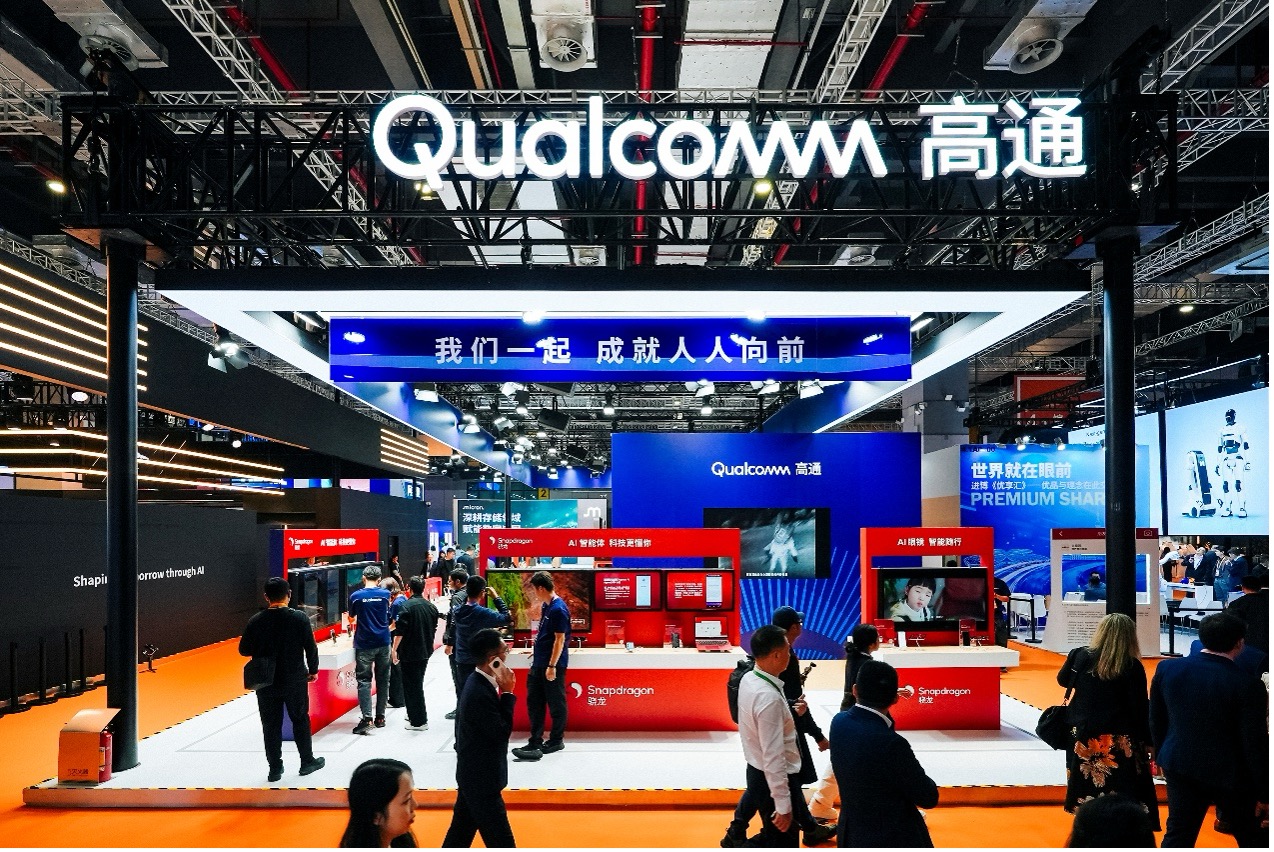
Core Insights - Qualcomm has participated in the China International Import Expo for eight consecutive years, showcasing its continuous innovation in technology and collaboration with Chinese industry partners [3][9] - The theme of Qualcomm's exhibition this year is "Together, We Achieve Progress for Everyone," highlighting its commitment to enhancing China's innovation ecosystem through technological advancements and partnerships [1][3] Group 1: Product Innovations - At the expo, Qualcomm displayed 12 flagship smartphones from Chinese manufacturers powered by the fifth-generation Snapdragon 8 Gen 2 mobile platform, marking the first large-scale offline exhibition of these products [3][5] - The rapid introduction of new products reflects Qualcomm's deep collaboration with leading Chinese smartphone brands such as Xiaomi, Honor, and OnePlus, showcasing breakthroughs in AI, imaging, gaming, and connectivity [3][5] Group 2: Expansion into New Markets - Qualcomm's collaboration with Chinese smart industries extends beyond smartphones to include AI PCs and tablets, with nearly 150 designs powered by the Snapdragon X series platform [5] - In the automotive sector, Qualcomm partnered with Chery to develop the Zongheng G700 model, integrating smart technologies and supporting over 210 models from Chinese automotive brands since 2023 [5] Group 3: AI and IoT Applications - Qualcomm introduced its new brand "Qualcomm Leap," focusing on industrial IoT and cellular infrastructure solutions, complementing its well-known Snapdragon brand [7] - The expo featured various applications of Qualcomm Leap, including humanoid robots and retail terminals, demonstrating the company's commitment to digital transformation in collaboration with over 90 Chinese partners [7] Group 4: Vision for the Future - Qualcomm emphasizes the importance of open collaboration and continuous innovation as core drivers for future development, aiming to unlock new opportunities for high-quality industrial growth [9] - The company is dedicated to promoting the deep integration of technology and industry, from edge intelligence to the future of 6G, and from personal AI to industrial intelligence [9]

资本奔涌入局 成本贵上天的Micro LED如何走向商业化
2 1 Shi Ji Jing Ji Bao Dao· 2025-11-06 09:03
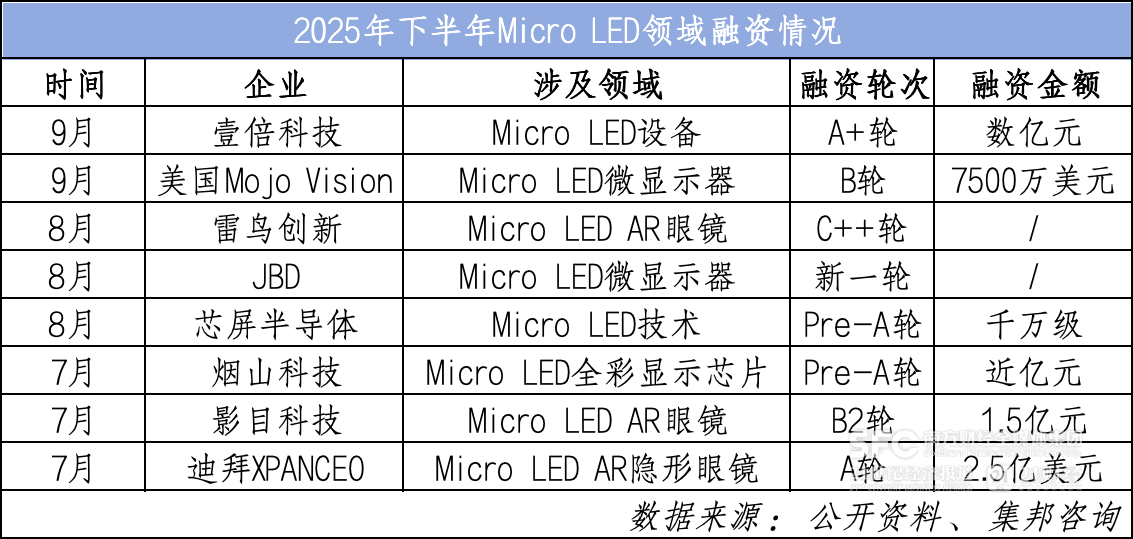
Core Insights - Micro LED technology is gradually developing a significant market, with expectations for the chip market to exceed $461 million by 2029 due to cost reductions, design optimizations, and application expansions [2][7]. Industry Developments - The Micro LED industry has seen dynamic advancements in technology research, product development, capacity planning, and capital investment, attracting considerable market attention [3]. - Meta's launch of the Meta Ray-Ban Display AR glasses in September sparked a global buying frenzy, highlighting the AR segment of the Micro LED field as a focal point for capital investment [4]. - Despite challenges in cost control and yield improvement, the commercial pathway for Micro LED technology is becoming clearer [5]. Market Opportunities - Micro LED technology is recognized as the next-generation display technology, offering advantages such as high pixel density, ultra-high brightness, low response time, low power consumption, long lifespan, high color saturation, high reliability, and small size [6]. - The technology is penetrating various fields, including near-eye displays, micro-projection, automotive displays, and optical communication, with significant applications in AR/VR and smartwatches [6]. Capital Investment Trends - The capital market's enthusiasm for Micro LED technology is high, with several companies securing substantial financing. For instance, JBD completed a financing round exceeding 1 billion RMB, setting a record for single financing in the Micro LED micro-display sector [7][8]. - Various companies, including Rokid and Yingmu Technology, have also completed significant financing rounds to support their Micro LED AR glasses initiatives [8]. Production Capacity and Challenges - Major panel manufacturers like BOE, TCL, and Visionox are actively investing in Micro LED production, with some projects entering the product delivery phase [9]. - The industry faces challenges in scaling production, particularly regarding yield and cost, with chip costs accounting for over 80% of total expenses [10]. Technological Advancements - Innovations in production efficiency and cost reduction are critical, with a focus on larger sizes to lower costs and improve compatibility with CMOS processes [11]. - Micro LED technology is expected to enhance product lifespan and reduce maintenance costs, particularly in niche markets beyond consumer displays [12]. AR Glasses Market Dynamics - AR glasses are seen as a primary battleground for Micro LED technology, with significant cost contributions from optical display modules [12]. - Companies are competing to develop high-brightness, full-color, high-pixel-density, and miniaturized technologies for AR applications [12]. Recent Product Launches - The second half of the year has seen multiple new products featuring Micro LED technology, including AI glasses and various AR glasses targeting different markets [13]. - Companies like Guozhao Optoelectronics and Xingyao Semiconductor are expanding their production capabilities, with significant investments in Micro LED production lines [14][15]. Supply Chain Integration - China's AR glasses supply chain is rapidly evolving, with numerous companies involved in various components, indicating a trend towards horizontal cooperation and vertical integration [16].
中国硬件_从 Meta 人工智能眼镜 2025 年第三季度更新推导关联影响
2025-11-05 10:58
Summary of Key Points from the Conference Call Industry Overview - The conference call primarily discusses the **AI glasses** market, particularly focusing on **Meta's** performance and its impact on the supply chain, including companies like **Goertek** and **Sunny Optical**. Core Insights and Arguments 1. **Sales Performance of Meta AI Glasses**: - The new **Ray-Ban Meta glasses** and **Oakley Meta Vanguards** are performing well, with the Ray-Ban display glasses selling out within **48 hours** [1][2] - **Reality Labs** revenue increased by **74% YoY** to **US$470 million**, driven by strong demand for AI glasses and stocking up of Quest headsets ahead of the holiday season [1][2] 2. **Future Revenue Expectations**: - Anticipated decline in **4Q25** revenue due to pull-forward stocking and a high base from the previous year, although this is partially offset by significant growth in AI glasses [1][2] 3. **AI Glasses Shipment Growth**: - **3Q25** global AI glasses shipments reached approximately **1.65 million units**, a **370% YoY** and **90% QoQ** increase, with Meta accounting for **1.12 million units** [3] - Meta's AI glasses shipments since launch in **4Q23** have approached **4 million units**, with **2.3-2.4 million units** shipped in the first nine months of **2025** [3] 4. **Production Forecast Adjustments**: - Meta has raised its production forecast for **2025/26** to **12 million/30 million+ units**, up from previous estimates of **10 million/20 million** [3] 5. **Beneficiaries of AI Glasses Market**: - **Goertek** and **Sunny Optical** are identified as key beneficiaries of the AI glasses market, with Goertek gaining market share in new AI glasses series and Sunny Optical continuing to supply camera modules [1][3] Additional Important Insights 1. **Market Dynamics**: - Other brands in the AI glasses market have also seen significant growth, with some brands experiencing a **1667% YoY** increase in shipments [3] 2. **Valuation Insights**: - Goertek's target price is set at **Rmb38**, based on a **28.2x 2026E P/E**, reflecting stabilizing AirPods shipments and AI smart glass demand [5] - Sunny Optical's target price is set at **HK$103**, based on a **23x 2026E P/E**, driven by a new camera cycle in smart vehicles and XR [7] 3. **Risks to Consider**: - Key risks for Goertek include lower-than-expected VR/AR penetration rates and increased competition leading to ASP pressures [6] - For Sunny Optical, risks include slower shipments of domestic-brand smartphones and high inventory levels impacting volume growth [8]

中金《秒懂研报》 | AI眼镜能成为下一个手机吗?
中金点睛· 2025-11-02 01:03
Group 1 - The core viewpoint of the article discusses the ongoing "eyewear revolution" driven by AI glasses, highlighting their potential to enhance daily life through hands-free interaction and real-time information access [2][3]. - The article emphasizes the significant growth in AI glasses shipments, projecting a 533% year-on-year increase in 2024, with an expected total of 3.5 million units shipped by 2028, reflecting a compound annual growth rate of 119% from 2024 to 2028 [6][8]. - Key players in the AI glasses market include global tech giants like Meta and domestic brands such as Xiaomi, which are innovating in hardware and software to improve user experience and functionality [6][8]. Group 2 - The article outlines the AI glasses industry chain, which consists of upstream components like SoC chips and storage, midstream optical modules, and downstream assembly processes, indicating that each segment is crucial for the overall development of AI glasses [8][10]. - It highlights the importance of hardware upgrades, including advancements in chips, interaction methods, and display technologies, with a focus on dual-chip solutions and the integration of Micro LED for better performance and efficiency [11][16]. - The software aspect is also crucial, with trends towards dual systems for improved battery life and the development of proprietary large models to enhance user engagement and functionality in AI glasses [17][19].




天猫双11:消费级AI设备智能眼镜成交同比涨25倍
Xin Lang Cai Jing· 2025-10-31 10:34
Core Insights - The consumer-grade AI smart hardware is experiencing explosive growth during this year's Tmall Double 11 shopping festival [1] Sales Performance - AI smart hardware devices are seeing significant sales, with smart glasses category sales increasing by 25 times year-on-year [1] - Rokid brand's sales have surged over 7 times compared to the previous year [1] - Thunderbird smart glasses have seen an increase of over 80% in year-on-year sales [1] - Robot brands such as Weilan, Yundongchu, Ubtech, and Enabot have all reported double-digit percentage growth [1]
求购长鑫存储老股份额;求购国仪量子公司老股|资情留言板第172期
Sou Hu Cai Jing· 2025-10-29 10:27
本文是这个栏目的第172期。如果你对本文提到的相关的交易线索感兴趣,希望接触这些潜在的交易对 手,或者如果你手中直接握有希望交易的资金或者资产,欢迎与我们联系。(邮箱:zcjy@36kr.com) 一、本月新增1、求购字节跳动公司老股份额(预期估值3400亿美元) 交易价格:预期估值3400亿美元 资产交易市场,信息瞬息万变,消息真假难辨,即使买卖双方花费大量的时间、精力,推动成交往往困 难重重。为了能够帮助买卖双方更快速链接市场信息和潜在交易对手,避免不必要的投入与浪费,我们 特地打造了这样一档栏目。 3、求购DJI公司老股份额(预期估值170-200亿美元左右) 交易价格:预期估值170-200亿美元左右 资产规模:约3000-5000万美元份额 交易方式:具体看是否承担管理费和carry 联系方式:zcjy@36kr.com 2、求购小红书公司老股份额(预期估值380亿美元左右) 交易价格:预期估值380亿美元左右 资产规模:约3000-5000万美元 交易方式:可以接受进结构,价格具体看是否承担管理费和carry 联系方式:zcjy@36kr.com 交易方式:要求可以人民币交易的结构 联系方式:zc ...