饿了么

Search documents
两天在上海,我们学的不只是运营,还有对创业者的敬畏
Sou Hu Cai Jing· 2025-10-23 07:17
10月20日清晨,合肥高铁站。数位年轻人拖着行李箱快步走进候车厅,手中紧握着一份打印好的《培训须知》。他们是安徽顺雅的运营骨干,即将奔赴上海 参加美团官方的高级运营培训。 对他们来说,这不是一次普通的出差。而是代表数百位合作商去"取经"。 "很多人觉得做外卖礼品店很简单,上架商品、等人下单就行。"一位参训成员说,"但我们知道,现实残酷得多;有的甚至因为不懂平台规则,被降权封 店。 正是这些真实的反馈,推动安徽顺雅做出决定:必须把最先进的运营方法论带回来。 两天时间里,他们像学生一样记笔记、画思维导图,反复追问讲师关于"自然流量池突破""活动叠加机制"等问题。课间休息时,还在讨论结合实操情况同步 更新重点内容,生怕遗漏任何一个细节。 "我们不是为了自己学,是为了能让每一个选择我们的创业者少走弯路。"项目负责人陈经理说。 自创立以来,安徽顺雅始终坚持"共生共赢"的理念。0元供货、卖后结算,是对抗压货风险的制度设计;而这次主动投入人力财力参与头部平台培训,则是 对服务质量的极致追求。 在这个不确定的时代,或许最大的确定性,就是始终站在创业者身后,做那盏不灭的灯。 2025年,是中国即时零售从"规模扩张"转向"精细运 ...



外卖平台试点骑手超时取消罚款,济南暂未纳入试点
Qi Lu Wan Bao Wang· 2025-10-22 04:55
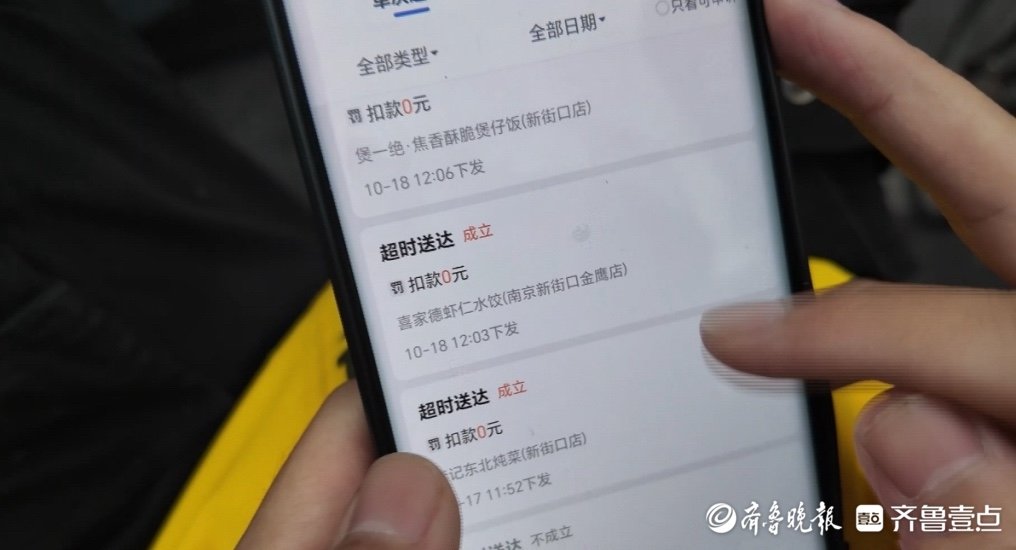
Core Insights - Major food delivery platforms in China, including JD.com, Ele.me, and Meituan, are shifting from direct fines for delivery delays to a service points system, aiming to enhance management through positive incentives rather than punitive measures [1][3] Group 1: Changes in Delivery Management - Meituan plans to eliminate fines for delivery delays by the end of 2025, having already initiated a pilot program in Quanzhou that uses a points system to reward timely deliveries and penalize delays [1][3] - JD.com is conducting trials in 25 cities, including Shenzhen and Nanjing, replacing direct fines with a service points system that deducts points based on the duration of the delay [1][2] - Ele.me is also testing a new service points system in cities like Nantong and Changzhou, with plans to expand to over ten provinces by the end of October [1][2] Group 2: Rider Perspectives - Many delivery riders support the transition from fines to a points deduction system, as it allows them to recover points through improved performance rather than facing immediate financial penalties [3][5] - Riders have reported that the previous fine system was burdensome, especially when delivery assignments were unreasonable, leading to delays [3][5] Group 3: Expert Opinions and Future Directions - Experts suggest that the new points-based management system enhances riders' professional identity and contributes to the sustainable development of platform economies [6][8] - Platforms are increasing investments in rider welfare, including additional subsidies during adverse weather and various support programs for riders and their families [8] - The shift from punitive measures to a dual empowerment system is seen as a response to policies promoting high-quality employment and improving service quality through enhanced rider recognition [8]
长沙试点取消骑手超时罚款,三大平台推行服务分机制
Chang Sha Wan Bao· 2025-10-22 02:38
Core Viewpoint - Major food delivery platforms in China are shifting from penalizing riders for late deliveries to a service score management system, aiming to enhance rider experience and rights protection [1] Group 1: Company Initiatives - JD.com has initiated a pilot program in 25 cities, including Shenzhen and Nanjing, to eliminate penalties for late deliveries, replacing them with a service score system [1] - The pilot is part of JD.com's ongoing efforts to improve rider rights and includes additional measures such as extra subsidies during adverse weather and various support programs for riders [1] - Meituan plans to fully eliminate late delivery penalties by the end of 2025, as stated during a recent event focused on rider experience [1] Group 2: Industry Trends - Ele.me is also moving towards gradually eliminating late delivery penalties, promoting a shift from negative penalties to positive incentives [1] - The industry is collectively focusing on enhancing rider well-being by implementing fatigue prevention rules and optimizing mandatory offline features [1]



美团饿了么京东试点取消骑手超时罚款,长沙等城市先行
Chang Sha Wan Bao· 2025-10-22 02:19
Core Viewpoint - The article discusses the shift in the food delivery industry towards eliminating penalties for late orders, highlighting the safety concerns associated with the previous penalty system and the adoption of new evaluation mechanisms by major platforms like Meituan and Ele.me [1] Group 1: Industry Changes - Meituan initiated a pilot program to eliminate penalties for late deliveries in December 2024, which was followed by the introduction of the "Anzhun Card" system in March 2025, replacing the penalty system with a scoring mechanism [1] - By July 2025, the new assessment mechanism was tested in major cities including Changsha, Wuhan, and Hangzhou, with plans for broader implementation [1] - As of August 2025, Meituan announced plans to fully eliminate late delivery penalties by the end of the year, with the "Anzhun Card" already operational in over 100 cities nationwide [1] Group 2: Competitor Responses - Other platforms have begun to follow Meituan's lead, with Ele.me announcing in September 2025 the gradual elimination of late delivery penalties and the introduction of a new "service score" system [1] - JD.com also announced a pilot program to eliminate late delivery penalties in 25 cities, including Changsha, adopting a "service score" management approach [1]
多家外卖平台试点取消骑手订单超时罚款
Chang Sha Wan Bao· 2025-10-22 00:34
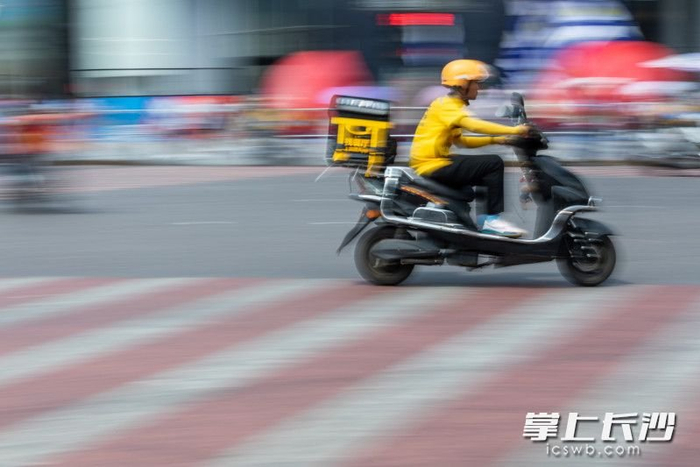
长沙晚报10月21日讯(全媒体记者 吴鑫矾)超时罚款一直困扰着外卖骑手,但随着外卖平台陆续以扣积分替代 罚款,有望正向激励行业发展。21日,记者从多个外卖平台获悉,外卖平台正持续通过多项举措优化骑手体 验,其中美团、京东等已在长沙试点取消骑手订单超时罚款。 在长沙试点取消超时罚款 "骑手肯定是想快点送,毕竟是按单挣钱。从罚款到扣分,让我们送单时心态更从容,再也不用冒险了。"骑手 王师傅在长沙从业已有3年,他告诉记者,"骑手超时一般是遇到了商家爆单、交通堵塞等情况,这些都是非自 长期以来,超时即罚是外卖平台的刚性规则。这在行业发展初期确有一定的效率优势,却也埋下了诸多安全隐 患,比如骑手为避免扣款,采取加速行驶、逆行等行为。 2024年12月,美团在行业内率先开启超时免罚试点。2025年3月美团推出了"安准卡"制度,以超时扣分、准时加 分的方式,替代原有的超时罚款。7月,超时免罚的考核机制在包括长沙、武汉、杭州在内的一线城市试点,逐 步向多个城市展开。8月,美团率先宣布年底将全面取消超时罚款。数据显示,截至目前,美团"安准卡"已经上 线包括长沙在内的全国100多个城市,并将在年底完成全国覆盖。 目前,多家行业内 ...

平台配送费为何由商家承担
Hu Xiu· 2025-10-21 10:55
Core Insights - The rapid development of the digital economy has led to the flourishing of various instant delivery platforms, reshaping the operational logic of businesses while intensifying competition through aggressive promotional tactics [1] Delivery Fee International Differences - In many countries like the US, UK, and India, delivery fees are typically paid directly by consumers at the time of order settlement, often supported by membership systems that enhance consumer perception of delivery costs [2] - In China, however, the burden of delivery fees often falls on merchants, especially small and medium-sized businesses, as platforms encourage them to absorb these costs to boost sales [2][3] Theoretical Origins of Delivery Fees - Delivery fees have evolved from being a basic logistics cost to a critical tool for market competition and profit distribution in the platform economy [4] - Initially, consumers bore the delivery costs, but over time, platforms began to subsidize these costs to attract users, leading to a shift in who pays [5] Shift in Delivery Fee Responsibility - The responsibility for delivery fees has increasingly shifted from consumers to merchants, particularly in competitive sectors where small businesses feel pressured to absorb these costs to remain visible [6][7] Long-term Implications of Delivery Fee Strategies - Relying on delivery fee absorption as a competitive strategy can lead to a "path dependency trap," where businesses neglect product quality and brand building, ultimately increasing customer acquisition costs [8] - Larger brands with established supply chains and brand recognition can better manage delivery costs and maintain order volumes without resorting to price wars [8] Recommendations for Industry Improvement - To address the over-competition in delivery fees, a multi-faceted approach involving platform governance, regulatory oversight, merchant upgrades, and consumer education is necessary [10] - Platforms should shift towards a value-oriented algorithm that prioritizes quality and service over immediate sales metrics, thereby reducing the reliance on price competition [10][11] Consumer and Regulatory Perspectives - Consumers should be educated to value quality and service over the lowest price, fostering a culture of rational consumption [12] - Regulators need to enhance competition rules and transparency in cost allocation, ensuring fair practices in the delivery fee structure [13][14]
平台配送费为何由商家承担
经济观察报· 2025-10-21 10:09
Core Viewpoint - The article discusses the shift in the burden of delivery fees from consumers to merchants in the context of intense competition among small and medium-sized businesses in the delivery service industry [1][2][10]. Delivery Fee Dynamics - In the digital economy, various instant delivery platforms are thriving, leading merchants to adopt aggressive promotional tactics, including discounts and absorbing delivery costs to attract customers [2][10]. - Globally, delivery fees are typically paid by consumers, with models in countries like the US and UK emphasizing consumer awareness of delivery costs through membership systems [4]. - In China, however, delivery fees are increasingly borne by merchants, particularly small and medium-sized ones, as platforms encourage them to absorb these costs to boost sales [5][10]. Theoretical Background of Delivery Fees - Delivery fees have evolved from being a straightforward cost to a complex variable in market competition, influenced by logistics, labor costs, and platform algorithms [7][8]. - The rise of instant delivery services has further complicated the structure of delivery fees, which now include various factors such as rider costs and peak time surcharges [8]. Merchant Behavior Regarding Delivery Fees - Merchants are often compelled to absorb delivery fees to improve their visibility and competitiveness on platforms, leading to a reliance on discounts rather than quality improvements [10][11]. - This behavior creates a "path dependency trap," where merchants focus on short-term gains at the expense of long-term brand building and customer loyalty [11][12]. Long-term Strategies for Merchants - To escape the cycle of competing on price, merchants should focus on enhancing product quality and brand recognition, moving away from the reliance on delivery fee absorption [15]. - Large chain brands exhibit resilience against price wars due to established supply chains and brand equity, allowing them to maintain order volumes without resorting to aggressive pricing strategies [11]. Recommendations for Industry Improvement - The article suggests a multi-faceted approach to address the over-competition in delivery fees, including platform governance, regulatory oversight, merchant upgrades, and consumer education [14][16]. - Platforms should shift towards a value-oriented algorithm that prioritizes quality and service stability over immediate sales metrics, thereby reducing the pressure on merchants to absorb delivery costs [14]. - Consumers should be educated to recognize the value of quality service over the lowest price, fostering a culture of rational consumption [16]. Regulatory Perspective - Regulators are encouraged to enhance fair competition rules and transparency in cost allocation, ensuring that delivery fee structures are clear and equitable [17].

五指山联合外卖平台探索食品安全监管模式
Hai Nan Ri Bao· 2025-10-21 01:32
五指山联合外卖平台探索食品安全监管模式 鼓励外卖骑手"随手拍"上报食品安全隐患 "例如,无证经营、环境卫生差、食品浪费、未取得有效健康证从事餐饮服务等,都可以通过五指 山专属平台一键上传。"五指山市市场监督管理局相关负责人介绍,监管部门收到信息后将会快速审核 和响应、现场核查、依法处理,形成"发现-受理-处置"的闭环监管。 海南日报五指山10月20日电(海南日报全媒体记者 谢凯 特约记者 钟丽)"骑手也是监督员,在取餐 的时候就可以拍照上传,实施食品安全监督。"为筑牢食品卫生防线,五指山市市场监督管理局近日与 美团、饿了么等平台探索建立高效便捷的食品安全监管模式。 据悉,截至目前五指山市食品安全职能部门已核查50余条"随手拍"隐患线索,整改43条。 外卖骑手是如何变成食品安全监管员的?据介绍,五指山将打通食品安全监管"最后一公里"作为食 品安全的有效举措。今年8月,五指山市市场监督管理局与美团、饿了么等外卖平台携手合作,共同建 立起"随手拍"食品安全监督工作机制,鼓励外卖骑手化身"移动探头",在取餐过程中及时发现并上报食 品经营环节的安全隐患。 ...
线上20元线下60元,药店一药两价到底是怎么出现的?
3 6 Ke· 2025-10-20 09:43
Group 1 - The phenomenon of "one drug, two prices" has emerged, where the same medication is priced significantly lower online compared to physical stores, raising questions about the pricing mechanisms in the pharmaceutical market [3][4] - A specific case highlighted a price difference where an antiviral oral solution was priced at 10.3 yuan online versus 29.8 yuan in-store, illustrating a price disparity exceeding three times [3][4] - The disparity is attributed to various factors, including platform subsidies, pricing strategies, and the operational costs associated with physical stores [6][8] Group 2 - Online platforms are engaging in aggressive pricing strategies, offering substantial subsidies to pharmacies to attract customers, which allows them to sell medications at prices below cost [6][8] - The pricing differences are also influenced by the inherent cost structures of online versus offline sales, with online platforms having lower fixed costs compared to physical stores [8][9] - The regional monopolistic nature of many local pharmacies contributes to higher prices in those areas, while online competition fosters lower prices due to a broader market reach [9][11] Group 3 - The long-term sustainability of the current pricing practices in pharmacies is questionable, as increasing transparency in drug pricing and enhanced regulatory oversight are expected to challenge the existing pricing disparities [11]
9月应用月报:短剧素材量上涨114万组,腾讯元宝蝉联工具榜首
3 6 Ke· 2025-10-20 02:59
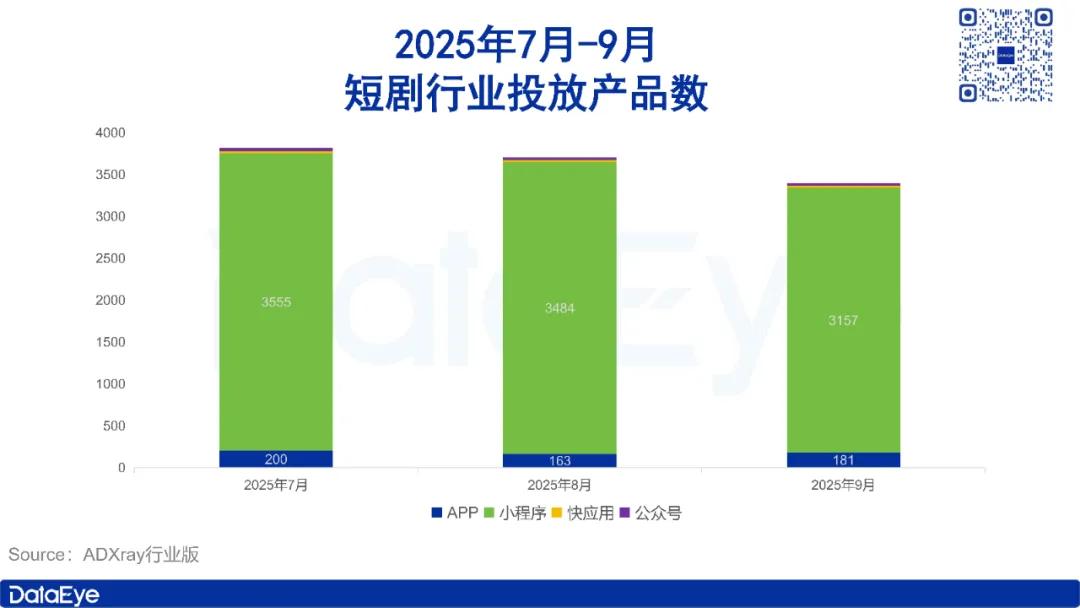
Short Drama Industry - In September 2025, the number of products in the short drama industry decreased to 3,398, down by 304 from August, representing a decline of 8.3% [4] - The number of short drama materials increased to 20.534 million sets, up by 1.147 million sets from August, marking a growth of 5.9% [7] - The top two products in the short drama material ranking were "Red Fruit Free Short Drama" and "Red Fruit Short Drama," with material counts of 810,950 and 652,770 sets, respectively, both showing declines from August [8][9] Pan-Entertainment Industry - In September 2025, the number of products in the pan-entertainment industry was 496, a decrease of 37 from August, reflecting a decline of 6.9% [12] - The total material count for the pan-entertainment industry fell to 4.599 million sets, down by 820,000 sets from August, a decline of 15.2% [13] - The leading products in the pan-entertainment material ranking were "Kuaishou" and "Douyin," with material counts of 1.109 million and 1.027 million sets, respectively, both experiencing significant declines [16][17] Social Industry - In September 2025, the number of products in the social industry increased to 623, up by 10 from August, representing a growth of 1.6% [20] - The total material count for the social industry was 786,000 sets, down by 79,000 sets from August, a decline of 9.1% [23] - The top product in the social material ranking was "Soul," with a material count of 77,858 sets, down by 19.3% from August [25][26] Novel Industry - In September 2025, the number of products in the novel industry reached 3,777, an increase of 29 from August, reflecting a growth of 0.8% [30] - The total material count for the novel industry was 10.638 million sets, down by 2.393 million sets from August, a decline of 18.4% [33] - The leading product in the novel material ranking was an unnamed product with a material count of 3.099 million sets, showing a dramatic increase of 466.5% [34][36] Life Services Industry - In September 2025, the number of products in the life services industry was 849, a decrease of 27 from August, representing a decline of 3.1% [40] - The total material count for the life services industry was 1.374 million sets, down by 274,000 sets from August, a decline of 16.6% [43] - The top product in the life services material ranking was "China Mobile," with a material count of 188,751 sets, down by 38.4% from August [44][46] Tools Industry - In September 2025, the number of products in the tools industry increased to 1,962, up by 60 from August, representing a growth of 3.2% [49] - The total material count for the tools industry was 3.281 million sets, up by 346,000 sets from August, marking an increase of 11.8% [53] - The leading products in the tools material ranking were "Tencent Yuanbao" and "Quark," with material counts of 586,131 and 452,955 sets, respectively, both showing increases from August [54][55]