腾讯控股

Search documents
【财闻联播】正元智慧:实控人被判刑三年!新一轮俄美乌会谈将在瑞士日内瓦举行
券商中国· 2026-02-13 12:11
Macro Dynamics - In January 2026, the social financing scale increased by 7.22 trillion yuan, which is 166.2 billion yuan more than the same period last year [2] - The increase in RMB loans to the real economy was 4.9 trillion yuan, a decrease of 317.8 billion yuan year-on-year [2] - Net financing of corporate bonds was 503.3 billion yuan, an increase of 57.9 billion yuan year-on-year [2] - Government bonds net financing reached 976.4 billion yuan, an increase of 283.1 billion yuan year-on-year [2] Financial Institutions - The People's Bank of China and the National Financial Regulatory Administration have identified 21 systemically important banks in China, including 6 state-owned commercial banks, 10 joint-stock commercial banks, and 5 city commercial banks [3] Market Data - On February 13, A-shares saw all three major indices drop over 1%, with the Shanghai Composite Index falling 1.26% to below 4100 points [10] - The Hong Kong stock market closed with the Hang Seng Index down 1.72% and the Hang Seng Tech Index down 0.9% [11] Company Dynamics - Zhengyuan Wisdom's actual controller, Chen Jian, was sentenced to three years in prison for manipulating the securities market, but the company's operations remain normal [12] - CATL, Luoyang Molybdenum, and Laopu Gold will be included in the Hong Kong Hang Seng Index, increasing the number of constituent stocks from 88 to 90 [13] - Sinopec announced the resignation of Li Yonglin from his positions as executive director and senior vice president [14][15] - Zongshen Power plans to swap its motorcycle engine business with Longxin General's general machinery business, which is expected to constitute a major asset restructuring [16]








年会折叠:有人狂撒黄金,有人食堂吃自助餐
凤凰网财经· 2026-02-13 12:05
Core Viewpoint - The article discusses the changing landscape of corporate annual meetings, highlighting a significant decline in traditional large-scale events and a shift towards more cost-effective and simplified gatherings [4][5]. Group 1: Decline of Traditional Annual Meetings - The proportion of companies hosting large annual meetings for over 100 people has dropped from 68% in 2019 to 31% in 2024, with projections indicating that by the end of 2025, less than 20% will maintain this tradition [4]. - By 2026, it is expected that 80% of hotel-based annual meetings will have effectively disappeared, indicating a major shift in corporate culture [4]. Group 2: Polarization of Meeting Formats - Companies are increasingly polarizing their annual meeting formats, with some opting for extravagant celebrations while many others are downsizing to departmental dinners, online raffles, or outright cancellation [4][5]. - Notable examples include a lavish event by Chasing Technology, which featured performances by multiple celebrities and gold rewards for employees, contrasting sharply with the austerity seen in other companies [6][8]. Group 3: Cost-Cutting Measures - Many companies are now hosting meetings in-house or at minimal cost venues, with some opting for self-catered events, significantly reducing expenses from previous years [10][11]. - The average budget for annual meetings has decreased, with some companies reporting a drop from 120,000 yuan to 30,000 yuan, reflecting a broader trend of cost-cutting [11][12]. Group 4: Changing Employee Expectations - Younger employees (post-90s and post-00s) are increasingly valuing personal boundaries and pragmatic work relationships, viewing traditional annual meetings as burdensome rather than beneficial [16][19]. - There is a growing sentiment among employees that the effort put into annual meetings does not justify the outcomes, leading to a preference for simpler, more meaningful gatherings [16][18].

春节爆单,机器人租赁火了?擎天租称订单总量预破5000单
Nan Fang Du Shi Bao· 2026-02-13 11:36
Group 1 - The 2026 Spring Festival period has become a significant "stress test" for the robot rental industry, with the platform Qingtian Rental expecting over 5,000 orders and an 80% increase in overall GMV compared to the previous period [2] - The platform has initiated a "City Partner Strategy" to address the challenges of fulfilling the explosive growth in orders, as the CEO indicated the need to restructure the business infrastructure to penetrate the market from B-end to C-end [2][4] - The proportion of first-time rental users reached 30% during the Spring Festival, indicating a shift from a novelty to a necessity for C-end users [2] Group 2 - The "999 Yuan National Robot Experience Plan" accounted for about 15% of the platform's total orders, aimed at testing consumer willingness to pay for robot services, revealing a higher-than-expected market demand [3] - The platform faces significant pressure due to high order volumes and insufficient delivery personnel, with a reported global production of only 18,000 humanoid robots in 2025 [3] - To solve the "unable to fulfill orders" issue, the company plans to establish a robot service network similar to a logistics network, lowering entry barriers for local partners to enhance last-mile delivery [4] Group 3 - The first batch of city partners has reported a promising return on investment, with an average of 10 orders per robot per month at an average price of 2,500 Yuan, leading to a payback period of approximately 6 to 8 months [4] - The company anticipates a prosperous future for the robot industry, emphasizing the need to build a commercial infrastructure that allows broader participation [4] - The robot rental market is projected to reach a scale of 10 billion Yuan by 2026, driven by supply capacity release, the expansion of partner networks, and the shift in demand from B-end to C-end [6] Group 4 - The management believes that the competition in the industry will focus on capabilities rather than just traffic, highlighting the importance of machine scheduling systems, trust platforms, and local service team efficiency [6] - The company is in discussions with major investors like Alibaba, Tencent, and ByteDance for new financing rounds, aiming to complete a significant funding phase by mid-year [5]


携程旅行、高德地图、同程旅行、飞猪旅行、航旅纵横、去哪儿旅行,被约谈
证券时报· 2026-02-13 11:31
Core Viewpoint - The article discusses recent regulatory actions taken against six travel platform companies in China, focusing on their compliance with financial practices and consumer protection standards [2]. Group 1: Regulatory Actions - The Financial Regulatory Bureau, in conjunction with the Market Regulatory Bureau and the People's Bank of China, held discussions with six travel platforms, including Ctrip, Gaode Map, and Qunar, regarding issues in their lending practices with financial institutions [2]. - The platforms were instructed to standardize their marketing behaviors, avoid misleading promotional language, and clearly disclose loan institution names and credit product information [2]. - Companies are required to enhance customer complaint channels, respond promptly to consumer disputes, and improve service quality to protect consumer rights [2]. Group 2: Compliance Requirements - The Beijing Market Supervision Administration organized a meeting with 12 major platforms involved in online train ticket sales, emphasizing compliance with operational requirements [5]. - Key compliance requirements include prohibiting misleading claims about paid services providing priority ticket purchasing privileges and rectifying misleading promotions related to ticket availability [7]. - Platforms must ensure clear pricing, prominently display additional service costs, and rectify discrepancies between displayed ticket prices and actual payment amounts to safeguard consumer rights [7]. Group 3: Specific Issues Addressed - The meeting highlighted issues with Gaode Dache, including inadequate management of partner ride-hailing platforms, price suppression, and improper emergency response [6]. - Gaode Dache was instructed to strengthen supervision of partner platforms, ensure stable operational strategies, and monitor price fluctuations [6]. - The company must also enhance driver rights protection, improve safety management, and provide better working conditions for drivers, especially during peak travel seasons [6].

智谱、MiniMax发布新模型、迅策(3317.HK)将入港股通:数据成为释放大模型价值的稀缺资源
Ge Long Hui· 2026-02-13 11:29
春节前AI军备竞赛如火如荼。 继Deepseek之后,2月12日MiniMax与智谱发布新一代大模型,二者股价单日暴涨,AI赛道再度被情绪 点燃。 迅策科技准确把握了这一产业痛点。 但在情绪之外,产业侧的变化更值得关注。 随着大模型能力加速商品化,模型本身正逐步从"稀缺能力"转向"可规模采购的工具"。真正制约大模型 进入企业核心系统的瓶颈,正在从算法层转移到数据侧。模型能力的趋同,正使得高质量、可实时调用 的数据成为释放大模型价值的真正稀缺资源。 2月13日盘后,港股通迎来年度审议关键节点。恒生指数公司公布恒生系列指数调整结果,并于3月9日 正式实施。其中,港股"Data Agent"第一股迅策科技(03317.HK)获纳入恒生综指和恒生综指中小型/小 型股指和恒综多个行业指数,以及恒生港股通多个行业指数等共计8个指数。一般而言,"入指"(纳入 恒生综合指数成份股)即"入通"(纳入港股通)。 这家被称为"中国版Palantir"的公司,并不提供模型本身,而是解决模型进入企业真实业务之前最难的一 步——为企业搭建一套可被大模型持续调用的实时数据基础设施,让企业真正掌握可被模型反复调用的 数据资产,从而真正地释放 ...
商家必看:微信私域运营从0到1落地指南,低成本实现复购翻倍
Sou Hu Cai Jing· 2026-02-13 11:22
"投流烧钱加剧,新客成本翻倍,利润缩水""公域规则多变,用户资产流失快"……这是当下多数商家的共同困境。 流量红利消退后,私域已成商家沉淀用户、穿越周期的必选项。微信作为12亿+活跃用户的超级生态,是私域核心阵地,但不少商家仅停留在"拉群发广 告"阶段,收效甚微。 本文拆解一套可落地的微信私域运营方法论,从价值认知、执行步骤到避坑指南,帮你把微信用户转化为复购资产。 一、先搞懂,为什么微信私域是商家的"救命稻草"? 1.大幅降本增效 在流量成本居高不下的当下,私域运营的降本优势尤为突出。权威数据显示,老客维系成本仅为新客开发的1/7,这意味着商家无需在公域持续"烧钱抢 量",就能通过存量用户实现稳定收益。某连锁零售品牌的实战案例印证了这一点,其通过私域社群的老客复购运营,不仅让营销成本直降30%,还带动 整体利润率提升了12个百分点,这种"以老带新、以复购补增量"的模式,对资金有限的中小商家来说,远比盲目投流更稳妥、更可持续。 2.提升用户终身价值(LTV) 私域核心是延长用户生命周期,通过精准运营可让核心用户复购率提升40%、客单价增长25%,单客生命周期贡献可达单次消费的10倍以上。 引流核心是"全域收口 ...
智通港股通活跃成交|2月13日





智通财经网· 2026-02-13 11:02
Group 1 - Tencent Holdings (00700), Alibaba-W (09988), and Meituan-W (03690) ranked as the top three companies in terms of trading volume on the Hong Kong Stock Connect (southbound) on February 13, 2026, with transaction amounts of 4.301 billion, 3.680 billion, and 3.169 billion respectively [1] - Tencent Holdings (00700), Alibaba-W (09988), and Meituan-W (03690) also led the trading volume on the Shenzhen-Hong Kong Stock Connect (southbound) with transaction amounts of 3.563 billion, 2.870 billion, and 1.460 billion respectively [1] Group 2 - The top ten active companies on the Hong Kong Stock Connect (southbound) included Tencent Holdings (00700) with a net buy of 1.426 billion, Alibaba-W (09988) with a net buy of 1.143 billion, and Meituan-W (03690) with a net sell of 0.368 billion [2] - On the Shenzhen-Hong Kong Stock Connect (southbound), Tencent Holdings (00700) had a net buy of 0.837 billion, Alibaba-W (09988) had a net buy of 1.156 billion, and Meituan-W (03690) had a net buy of 0.611 billion [2]
越秀证券每日晨报-20260213
越秀证券· 2026-02-13 10:39
Market Overview - The Hang Seng Index closed at 27,032, down 0.86% for the day and up 5.47% year-to-date [1] - The Hang Seng Tech Index fell 1.65% to 5,408, with notable declines in major tech stocks [5] - The A-share market saw the Shanghai Composite Index close at 4,134, up 0.05%, while the Shenzhen Component Index rose 0.86% to 14,283 [5] Currency Performance - The Renminbi Index stood at 98.340, increasing by 0.36% over the past month and 1.44% over six months [2] - The US Dollar Index decreased by 2.10% in the last month and 1.34% over six months [2] Commodity Prices - Brent crude oil rose by 10.06% over the past month, reaching $69.570 per barrel [3] - Gold prices increased by 10.36% in the last month, currently priced at $5,073.21 per ounce [3] Company News - Grab reported its first annual profit of $268 million, a significant turnaround from a loss of $105 million the previous year, with Q4 profit soaring 533% year-on-year [13] - SoftBank's investment in OpenAI has yielded substantial returns, with an estimated investment gain of $19.8 billion, contributing to a return to profitability for the company [14][15] - MINIMAX launched its new programming model, MiniMax M2.5, which is designed for high-performance coding and competes with top international models [16] Stock Performance - Zijin Mining rose by 3.45% to HKD 45.02, making it the best-performing blue-chip stock [19] - Budweiser Asia saw a decline of 5.21% to HKD 7.83, marking it as one of the worst performers [19] IPO Information - Recent IPOs include Xian Dao Intelligent, which debuted at HKD 43.80, and Aixin Yuan Zhi, which started at HKD 24.12, both showing varied performance in their initial trading days [26] Economic Indicators - Hong Kong's overall export volume increased by 21.6% year-on-year in December, with significant growth in exports to Taiwan and the US [10][11]
港股互联网ETF博时(159568)跌0.91%,成交额5962.44万元
Xin Lang Cai Jing· 2026-02-13 10:32
Core Viewpoint - The BoShi Hong Kong Internet ETF (159568) has shown a decline of 0.91% in its closing price on February 13, 2024, with a trading volume of 596.24 million yuan [1] Group 1: Fund Overview - The BoShi Hong Kong Internet ETF was established on February 8, 2024, with an annual management fee of 0.50% and a custody fee of 0.10% [1] - As of February 12, 2024, the fund has a total of 324 million shares and a total size of 536 million yuan [1] - The fund's share count increased by 27.57% and its size increased by 26.44% since December 31, 2025, when it had 254 million shares and a size of 424 million yuan [1] Group 2: Liquidity and Trading Activity - Over the last 20 trading days, the cumulative trading amount for the ETF reached 1.856 billion yuan, with an average daily trading amount of 92.80 million yuan [1] - In the year-to-date, the ETF has recorded a cumulative trading amount of 3.585 billion yuan over 30 trading days, with an average daily trading amount of 120 million yuan [1] Group 3: Fund Management and Holdings - The current fund manager, Li Qingyang, has managed the ETF since its inception, achieving a return of 66.36% during his tenure [2] - Major holdings in the ETF include Tencent Holdings (15.35%), Alibaba-W (14.43%), Xiaomi Group-W (13.96%), and Meituan-W (12.30%), among others [2] - The fund's top holdings account for significant portions of the total portfolio, with Tencent Holdings valued at approximately 65.03 million yuan [2]
蒸发1.43万亿,跌出了黄金坑?
3 6 Ke· 2026-02-13 10:08
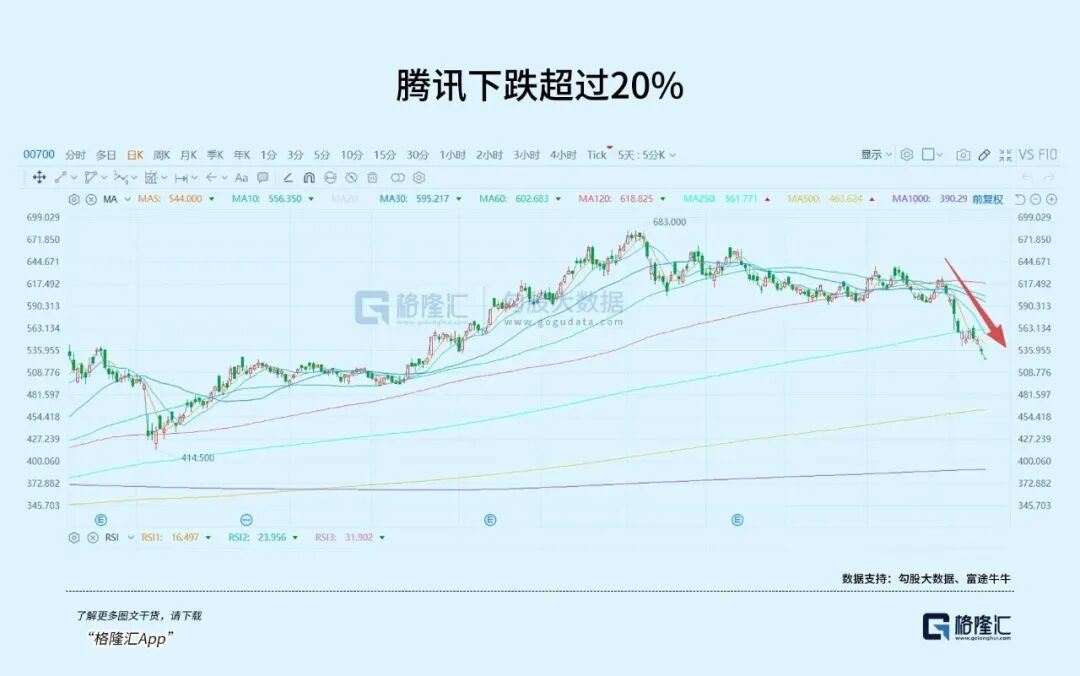
Group 1 - The last trading day before the Spring Festival saw A-shares close in the green, influenced by a significant drop in the US stock market and pre-holiday sentiment [1] - Investors may feel disappointed for missing the last market gains before the holiday, but the market will reopen in two weeks, providing an opportunity for reflection and strategy [2][3] Group 2 - Tencent's recent performance has been concerning, with a 23% decline from its peak in October 2025, resulting in a market cap loss of 1.43 trillion yuan [4] - The main factors for the decline include tax rumors and internal product competition, but the fundamental business remains unchanged, with a forward PE of approximately 15-16 times for 2026 [7] - Tencent's core business PE, excluding external investments, is around 13 times, aligning with an expected EPS growth of 12%-15% for 2026 [7] Group 3 - Tencent's valuation is supported by share buybacks and a stable dividend yield of 4-5%, making it attractive compared to high valuations of similar US tech stocks [8] - The recent strengthening of the RMB may accelerate the rebalancing of foreign investments into Tencent and similar companies [9][10] - Even if negative rumors materialize, they may only affect valuations rather than the underlying logic, with recent declines potentially setting the stage for a technical rebound [11] Group 4 - The AI industry is expected to undergo a fundamental shift by 2026, with a focus on application commercialization rather than just computational power [15][16] - Microsoft's Copilot has reached 52 million enterprise users, demonstrating a willingness to pay for AI solutions, which could serve as a benchmark for AI application commercialization [18] - In contrast to the US, China's AI application sector is at a critical point of penetration and valuation, with a significant increase in active users and usage time [22] Group 5 - The shift from linear to exponential revenue models in AI applications is a key driver for valuation restructuring, but A-shares have yet to fully account for this premium [25] - Institutional investors have been overweight in US AI applications for three consecutive years, while Hong Kong and A-shares remain underweight [26] - A potential "expectation gap" could lead to rapid valuation adjustments once it begins [27] Group 6 - Concerns are rising regarding the capital expenditure of major AI cloud computing firms, which have announced a total of $650 billion in spending, exceeding market expectations [30][31] - The market is worried that these high expenditures may impact profits and cash flow, leading to significant stock price declines [32] - The current environment is highly selective, with a shift from broad market optimism to a focus on substantial earnings growth, which could lead to sharp sell-offs if expectations are not met [36][38] Group 7 - The AI technology landscape in 2026 is expected to be volatile, with significant shifts in market dynamics [39] - Stability is considered a prudent strategy, focusing on fundamental and valuation factors to avoid poor investment decisions [40]