携程旅行

Search documents
2025年Q4移动互联网行业数据研究报告
Sou Hu Cai Jing· 2026-02-26 04:48
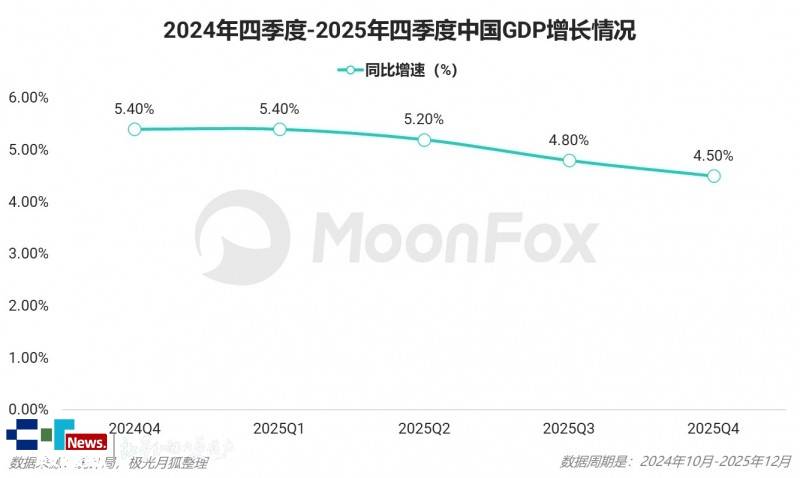
Macro Insights - In 2025, China's GDP surpassed 140 trillion yuan, reaching 1401879 billion yuan, with a year-on-year growth of 5.0% [1][6] - In Q4 2025, GDP was 387911 billion yuan, with a year-on-year growth of 4.5% [1][6] - The contribution of final consumption expenditure to economic growth was 52.0% in 2025, and 52.9% in Q4 [6] - The industrial sector showed stable growth, with a year-on-year increase of 5.0% in Q4, contributing 1.5 percentage points to economic growth [6][9] - Net exports demonstrated resilience, contributing 32.7% to economic growth in 2025 [9] Internet Sector Development Analysis AI Sector - The focus of the AI industry shifted from algorithm competition to deep exploration of commercial value and efficient realization [21][22] - AI technology integration into market applications is accelerating, with significant growth in smart terminal devices [22][25] - The AIGC application scenarios expanded, with notable growth in industrial and autonomous driving sectors [25][30] Video Sector - The online video industry experienced a seasonal decline in Q4 2025, with a slight year-on-year decrease of 0.9% [39] - Ten S+ series were launched in Q4, with overall video content showing a decline compared to the previous year [44][48] - Platforms are actively promoting high-quality content strategies, with significant successes in series like "反人类暴行" [49][66] E-commerce Sector - The e-commerce industry continued to grow, with user device coverage reaching 11.66 billion [75] - Regulatory policies are being optimized to promote healthy development in the e-commerce sector [73][74] - Major players like Alibaba and JD.com are deepening their integration into lifestyle services and enhancing AI applications [79][81] Tourism Sector - Winter tourism is becoming a new growth engine for the tourism industry, particularly during the traditional peak season [2] Short Drama Sector - The short drama industry is rapidly growing, with an estimated annual output value nearing 900 billion yuan in 2025 [1] Social Sector - The social media market remains stable, with vertical social platforms continuing to show significant potential [1]

携程旅行、高德地图、同程旅行、飞猪旅行、航旅纵横、去哪儿旅行,被约谈
证券时报· 2026-02-13 11:31
Core Viewpoint - The article discusses recent regulatory actions taken against six travel platform companies in China, focusing on their compliance with financial practices and consumer protection standards [2]. Group 1: Regulatory Actions - The Financial Regulatory Bureau, in conjunction with the Market Regulatory Bureau and the People's Bank of China, held discussions with six travel platforms, including Ctrip, Gaode Map, and Qunar, regarding issues in their lending practices with financial institutions [2]. - The platforms were instructed to standardize their marketing behaviors, avoid misleading promotional language, and clearly disclose loan institution names and credit product information [2]. - Companies are required to enhance customer complaint channels, respond promptly to consumer disputes, and improve service quality to protect consumer rights [2]. Group 2: Compliance Requirements - The Beijing Market Supervision Administration organized a meeting with 12 major platforms involved in online train ticket sales, emphasizing compliance with operational requirements [5]. - Key compliance requirements include prohibiting misleading claims about paid services providing priority ticket purchasing privileges and rectifying misleading promotions related to ticket availability [7]. - Platforms must ensure clear pricing, prominently display additional service costs, and rectify discrepancies between displayed ticket prices and actual payment amounts to safeguard consumer rights [7]. Group 3: Specific Issues Addressed - The meeting highlighted issues with Gaode Dache, including inadequate management of partner ride-hailing platforms, price suppression, and improper emergency response [6]. - Gaode Dache was instructed to strengthen supervision of partner platforms, ensure stable operational strategies, and monitor price fluctuations [6]. - The company must also enhance driver rights protection, improve safety management, and provide better working conditions for drivers, especially during peak travel seasons [6].

携程集团遭反垄断调查毛利率高达81% 市占率56%被指“携流量以令商家”
Chang Jiang Shang Bao· 2026-01-15 00:02
Core Viewpoint - Ctrip Group is under investigation for alleged monopolistic practices, including abuse of market dominance, as announced by the State Administration for Market Regulation on January 14 [2][3]. Group 1: Investigation Details - The investigation is based on prior checks and is conducted under the Anti-Monopoly Law of the People's Republic of China [2][3]. - Ctrip has faced multiple inquiries from local regulatory bodies prior to the investigation, with accusations of practices such as "forcing merchants to choose" and price manipulation [4][5]. - Ctrip's official response indicates cooperation with regulatory authorities and a commitment to maintaining normal business operations [3]. Group 2: Market Position and Performance - Ctrip holds a dominant position in the OTA industry, with a projected market share of 56% in China's OTA market for 2024, significantly ahead of competitors [8]. - The company has experienced substantial revenue growth, with net revenues of 200.39 billion, 445.10 billion, and 532.94 billion yuan from 2022 to 2024, and 470.11 billion yuan in the first three quarters of 2025 [9]. - The net profit attributable to Ctrip was 14.03 billion, 99.18 billion, and 170.67 billion yuan for the same periods, with a gross margin of 81% in 2025 [9][10]. Group 3: Pricing Practices - Ctrip's "Price Adjustment Assistant" has been criticized for unilaterally modifying hotel room prices, leading to complaints from merchants about forced price reductions [6][7]. - The system is designed to ensure competitive pricing but has been described as a "one-sided coercion" by hotel operators [6]. - Complaints from users about fluctuating hotel prices during peak seasons have also surfaced, indicating potential issues with pricing transparency [8].


中国官方依法对携程集团有限公司立案调查
Zhong Guo Xin Wen Wang· 2026-01-14 10:26
Core Viewpoint - The National Market Supervision Administration of China has initiated an antitrust investigation against Trip.com Group Limited for alleged abuse of market dominance and monopolistic practices [1] Group 1: Company Overview - Trip.com Group Limited is a leading one-stop travel platform globally, operating brands such as Trip.com, Ctrip, Skyscanner, and Qunar [1] - The company was listed on the NASDAQ in 2003 and subsequently on the Hong Kong Stock Exchange in 2021 [1] Group 2: Allegations and Complaints - The Yunnan Province Tourism Homestay Industry Association has reported multiple complaints from its members regarding Trip.com and other online travel agencies (OTAs) using their market dominance to impose unfair practices [1] - Allegations include the implementation of "pick one from two" clauses, arbitrary commission increases, unfair trading conditions, and traffic blocking [1] Group 3: Regulatory Actions - In August 2025, the Guizhou Provincial Market Supervision Administration held discussions with Trip.com and four other travel platform companies regarding potential issues such as "pick one from two," interference with merchant pricing through technology, contract breaches, price fraud, and price gouging [1]
美股异动|携程一度涨超3%,与票务供应商Cityline合作拓展港澳市场票务服务
Ge Long Hui· 2025-09-11 15:01
Group 1 - Ctrip (TCOM.US) saw an initial increase of over 3%, reaching a high of $74.68 [1] - Ctrip Group has established a five-year strategic partnership with Cityline, marking its first collaboration with a major ticketing supplier in Hong Kong and Macau [1] - Users of Ctrip's Trip.com and Ctrip Travel will be able to easily collect event tickets from Cityline's self-service machine network in Hong Kong, Macau, and mainland China, enhancing convenience and providing a smoother ticketing experience for large events [1]
美股异动|携程盘前涨约1.5%,与Cityline达成战略合作拓展港澳市场票务服务
Ge Long Hui· 2025-09-11 08:25
Core Viewpoint - Ctrip (TCOM.US) has entered a five-year strategic partnership with Cityline, marking its first collaboration with a major ticketing supplier in Hong Kong and Macau, which is expected to enhance user experience in ticket purchasing and collection [1] Group 1 - Ctrip's stock rose approximately 1.5% to $73.55 in pre-market trading [1] - The partnership will allow users of Trip.com and Ctrip to easily collect event tickets at Cityline's self-service kiosks in Hong Kong, Macau, and mainland China [1] - The integration of online ticket purchasing with offline collection is anticipated to improve convenience for users attending large events [1]
携程宣布:所有产研员工无需审批,直接居家办公
券商中国· 2025-09-03 15:21
Group 1 - The core viewpoint of the article is that Ctrip has implemented a new policy allowing research and development employees to work from home without needing direct supervisor approval, aiming to enhance work-life balance and foster a culture of trust and self-drive [1][2] - Since the introduction of the hybrid work policy in 2022, approximately 70% of Ctrip's employees have participated, resulting in around 640,000 instances of remote work [1] - Ctrip's chairman, Liang Jianzhang, advocates for the hybrid work model as a win-win for employees, companies, and society, highlighting benefits such as increased employee satisfaction, reduced traffic congestion, and improved family harmony [2] Group 2 - Ctrip is a leading one-stop travel platform globally, offering a comprehensive range of travel products and services through its various platforms, including Trip.com and Qunar [2] - The company was listed on the NASDAQ in 2003 and later on the Hong Kong Stock Exchange in 2021, indicating its significant growth and international presence [2]

QuestMobile2025 中国移动互联网半年大报告:产业韧性增长已现,一二梯队格局成型但核心玩家战火再燃!
QuestMobile· 2025-07-29 02:00
Core Insights - The article highlights the robust growth of China's mobile internet sector, with a total of 1.267 billion monthly active users as of June 2025, reflecting a year-on-year increase of 2.5% [3][11]. - User engagement metrics show an increase in average daily usage time to 7.97 hours and frequency of use to 117.9 times per day, representing growth of 7.8% and 2.6% respectively [3][13]. - The competitive landscape among top internet companies is intensifying, with significant user growth for JD and Douyin at 13% and 12% year-on-year, while Pinduoduo and Baidu show minimal growth [3][18]. Group 1: Mobile Internet Growth - The overall economic environment in China is stabilizing, with digital economy policies boosting consumer confidence and market activity [9][15]. - The mobile internet user base continues to grow steadily, maintaining an increase of over 2% in the first half of 2025 [11]. - The increase in user engagement is primarily driven by younger and elderly demographics, with a notable shift of users towards first-tier cities [15][17]. Group 2: AI Applications - The AI application market is experiencing fierce competition, with 66.7% of the top 30 AI applications coming from the leading internet companies [4][22]. - The growth of AI applications is evident across various sectors, with significant user increases in AI native apps and plugins [4][26]. - The AI search engine segment has shown the largest growth, indicating a shift in user preferences towards AI-integrated solutions [4][32]. Group 3: Advertising and Marketing - The online advertising market in China surpassed 200 billion yuan in the second quarter of 2025, with a year-on-year growth rate of 6.8% [45][53]. - Brands are increasingly investing in marketing to enhance brand image, with a notable rise in advertising expenditure among beauty brands [59][61]. - The "618" shopping festival remains a critical marketing period, significantly impacting advertising spend and consumer engagement [57][63]. Group 4: Industry Insights - The short video industry continues to consolidate around platforms like Douyin and Kuaishou, with Douyin reaching 900 million users [76][78]. - The online travel sector has seen a 4.4% year-on-year increase in user numbers, reaching 156 million users by June 2025 [107][109]. - The integration of technology in the travel sector is enhancing user experiences, with AI and AR applications becoming more prevalent [111][113]. Group 5: Consumer Behavior Trends - The trend of "lightweight travel" is growing, with consumers favoring immediate purchase options and personalized experiences [116][118]. - The rise of "pet-friendly" services in the travel industry reflects changing consumer preferences, particularly among younger demographics [120][122]. - The demand for experiential consumption is driving innovation in the hospitality sector, with hotels offering unique service combinations [114][116].




供应链暗战,谁撑起了京东旅行的野心?
Tai Mei Ti A P P· 2025-06-26 08:11
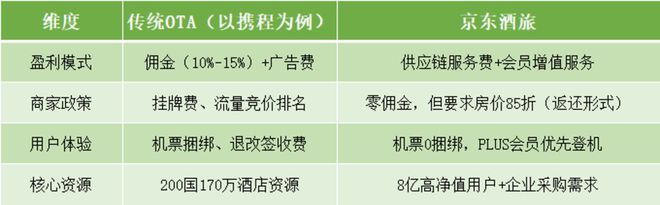
Core Insights - The Chinese OTA market has undergone significant changes over the past few decades, with Ctrip emerging as the leader, while Meituan, Tongcheng, Qunar, and Fliggy have settled into secondary positions [1][2] - JD.com is entering the OTA space, leveraging its existing user base and resources to challenge Ctrip, indicating a shift in the competitive landscape [1][2] - The hotel market in China is still dominated by non-chain hotels, presenting an opportunity for JD.com to capture market share by targeting smaller hotels that are sensitive to commission fees [3][4] Market Dynamics - JD.com has over 800 million users, with a significant portion being high-net-worth individuals, aligning well with the business travel needs that Ctrip caters to [2] - The 2024 hotel market is expected to see Ctrip leading, followed by Tongcheng and Meituan, with the latter two having established advantages in resource integration and brand building [2][3] - JD.com is focusing on a supply chain model rather than a traditional commission-based model, which may allow it to attract hotels that are looking to reduce dependency on OTAs [4][21] Competitive Strategies - JD.com is adopting a "rural encircling the city" strategy by initially targeting smaller, commission-sensitive hotels rather than high-end chains [4][5] - The competition between JD.com and Ctrip is not just about immediate market share but also about long-term sustainability and resource allocation [8][21] - The traditional OTA model relies heavily on commissions and advertising fees, while JD.com is exploring supply chain service fees and membership value-added services [4][21] Supply Chain Considerations - The hotel supply chain in China is complex, with significant costs associated with distribution, which JD.com aims to streamline [5][21] - In 2023, 41,800 new hotels entered the market, indicating a growing supply that JD.com can tap into, especially among smaller hotels [5][17] - The shift towards a buyer's market is evident, with average revenue per available room (RevPAR) declining, which may benefit JD.com’s zero-commission model [22] Future Outlook - The entry of JD.com into the OTA space is seen as a potential game-changer, with the possibility of reshaping the competitive landscape [7][23] - The evolving dynamics of the hotel market suggest that companies with strong supply chain capabilities, like JD.com, may gain a competitive edge [19][23] - The focus on user experience and supply chain efficiency will be critical for JD.com as it seeks to establish itself in the OTA market [21][22]

【惊喜】携程旅行,信用卡单笔最高优惠196元
中国建设银行· 2025-04-10 06:35
Group 1 - The article promotes the benefits of using credit cards for travel, emphasizing the value and discounts available for cardholders [1] - It highlights the convenience and advantages of using credit cards for various travel-related expenses [1] - The content suggests that every travel experience can be enhanced through the use of credit cards, making it more rewarding [1] Group 2 - The article mentions that China Construction Bank only provides credit card payment services, while the products and services are offered by related merchants [3]