迈瑞医疗

Search documents
考虑出售中国业务?GE医疗回应市场传闻
2 1 Shi Ji Jing Ji Bao Dao· 2025-09-19 03:53
Core Viewpoint - GE Healthcare is reportedly exploring options to sell its stake in the Chinese market due to declining revenues, rising tariff costs, and increasing competition from local companies [1][5]. Group 1: Financial Performance - GE Healthcare's global revenue for the year reached $19.7 billion, a slight increase of 1% year-on-year, while adjusted EBIT was $3.2 billion [1]. - In China, GE Healthcare's revenue fell to $2.36 billion, marking a significant decline of 15%, the largest drop since the company became independent in 2023 [1]. Group 2: Market Competition - In the first half of 2025, Siemens Healthineers achieved revenue of €11.57 billion (approximately $13.39 billion), a 7% year-on-year increase, while GE Healthcare's revenue was $9.78 billion, up 3% [2]. - Siemens Healthineers was the only major player to see growth in the Chinese market, with a 2.4% increase, while GE Healthcare and Philips experienced declines of 2% and 11%, respectively [2]. - Local companies like United Imaging, Mindray, and Neusoft are rapidly gaining market share, employing integrated strategies to challenge foreign giants [2]. Group 3: Technological Advancements - Chinese companies are making significant strides in high-end medical equipment, with United Imaging and Neusoft receiving approval for photon-counting CT devices, marking a leap in next-generation CT technology [3][4]. - The photon-counting CT market is projected to reach approximately $2 billion globally by 2025, with local firms establishing a dual-leader position in the market [4]. Group 4: Strategic Implications - The potential sale of GE Healthcare's Chinese business could signal a significant strategic shift for multinational companies operating in China, reflecting the increasing challenges posed by local competitors [5].

出海并购“双轮”驱动 科创板医疗器械企业二季度业绩增速明显回升
Xin Hua Cai Jing· 2025-09-19 02:22
Core Insights - The export value of China's medical devices reached $24.1 billion in the first half of 2025, showing a year-on-year growth of 5.0% [1] - The revenue and net profit growth rates for Sci-Tech Innovation Board medical device companies were 9% and 3% respectively, with significant quarter-on-quarter increases in Q2 [1] - Nearly 30% of Sci-Tech Innovation Board medical device companies have over 30% of their business from overseas markets, indicating a trend towards internationalization [1] Group 1: Industry Growth and Internationalization - Sci-Tech Innovation Board medical device companies are focusing on high-value consumables and medical equipment, supported by capital market resources to build global marketing networks [2] - The industry is characterized by a strong emphasis on innovation, international expansion, and mergers and acquisitions, with approximately 18,000 invention patents held by these companies [2] - Leading companies like United Imaging and Mindray have made significant advancements in global markets, with United Imaging's overseas revenue increasing from less than 10% at the time of listing to nearly 20% in the first half of 2025 [3] Group 2: Mergers and Acquisitions - The medical device industry is seeing deep integration through mergers and acquisitions, with companies like Sanyou Medical successfully acquiring international firms to enhance their product lines and market reach [4] - Sanyou Medical's acquisition of the French company Implanet has significantly boosted its overseas revenue, with a reported 41.10% year-on-year growth in Q2 2025 [4] - The trend of mergers and acquisitions is supported by national policies aimed at fostering high-quality development in the medical device sector [6] Group 3: Performance of Key Players - Huatai Medical, a leader in electrophysiology and vascular intervention consumables, has seen increased market penetration and product coverage following the introduction of Mindray Medical as a major shareholder [5] - Companies like Sanyou Medical, Weigao Orthopedics, and Chuangli Medical reported net profit growth rates exceeding 40%, while micro-electrophysiology and Bairen Medical saw growth rates over 90% [5] - Nanwei Medical's acquisition of a Spanish company has further deepened its penetration into the European market, with overseas revenue increasing by 45% to 898 million yuan in the first half of 2025 [5]


电子行业涨幅居前,大湾区ETF(512970)盘中有折价,相关投资机会受关注
Xin Lang Cai Jing· 2025-09-19 02:04
Core Viewpoint - The performance of the China Securities Guangdong-Hong Kong-Macao Greater Bay Area Development Theme Index and its related ETF indicates a positive trend, with significant gains in individual stocks and overall index performance, reflecting the growth potential in the Greater Bay Area market. Group 1: Index Performance - As of September 19, 2025, the China Securities Guangdong-Hong Kong-Macao Greater Bay Area Development Theme Index (931000) increased by 0.68% [1] - The top-performing constituent stocks include Jiangbolong (301308) up 10.00%, Guangdong Hongda (002683) up 6.58%, and Bawei Storage (688525) up 4.64% [1] - The Greater Bay Area ETF (512970) experienced a slight decline of 0.13%, with a latest price of 1.49 yuan [1] Group 2: ETF Performance Metrics - The Greater Bay Area ETF has shown a 53.68% increase in net value over the past year as of September 18, 2025 [1] - The ETF's highest single-month return since inception was 21.99%, with the longest consecutive monthly gain being 4 months and a maximum increase of 26.18% [1] - The ETF's average monthly return during rising months is 5.38% [1] Group 3: Trading and Liquidity - The trading volume for the Greater Bay Area ETF was 4315.20 yuan with a turnover rate of 0.01% [1] - The average daily trading volume over the past month was 779,100 yuan [1] Group 4: Risk and Recovery - The Greater Bay Area ETF has a relative benchmark drawdown of 0.43% year-to-date, with a recovery period of 108 days [2] Group 5: Fees and Tracking Accuracy - The management fee for the Greater Bay Area ETF is 0.15%, and the custody fee is 0.05% [3] - The tracking error for the ETF over the past two months is 0.028%, indicating close tracking of the underlying index [4] Group 6: Top Holdings - As of August 29, 2025, the top ten weighted stocks in the index include China Ping An (601318), BYD (002594), and China Merchants Bank (600036), collectively accounting for 49.06% of the index [5]
外资机构密集调研A股上市公司
Zheng Quan Ri Bao· 2025-09-18 23:38
Group 1 - Foreign institutions have shown a high frequency and broad coverage in their research of A-share listed companies, with 415 foreign institutions conducting a total of 1,885 research sessions since the second half of the year [1][2] - Key sectors of focus for foreign institutions include industrial machinery, electronic components, integrated circuits, electronic instruments, and medical care equipment, with companies like Huichuan Technology, Estun, Huaming Equipment, and Optoelectronics receiving over 80 research sessions each [1][2] - Notable foreign institutions such as Point72, Goldman Sachs, Bank of America Securities, and Citigroup have been particularly active, with Point72 leading with 63 research sessions [2] Group 2 - The current global political and economic uncertainties have increased investor interest in assets with higher certainty, with China being viewed as a stable environment amidst complex geopolitical trends [2][3] - Significant trends such as the rise of emerging consumption, strong demand for export trade, and investments related to artificial intelligence (AI) are boosting market confidence in China's economic growth prospects [3] - Foreign institutions are optimistic about the long-term growth resilience of the Chinese economy and the trend of industrial upgrading, with a focus on technology, high-end manufacturing, and healthcare sectors [6] Group 3 - The healthcare equipment sector has also attracted significant attention from foreign institutions, with companies like United Imaging, Mindray, and Aohua Endoscopy seeing high research activity due to long-term growth drivers such as aging population and increased health awareness [5] - Foreign institutions are strategically positioning themselves in sectors like technology, high-end manufacturing, and healthcare, while also exploring structural opportunities in consumption and new energy [4] - The investment outlook for Chinese stocks remains positive, particularly for companies that continuously invest in R&D and possess core technologies with international competitiveness [4][6]


外资机构密集调研A股上市公司 深挖中国资产长期投资价值
Zheng Quan Ri Bao Zhi Sheng· 2025-09-18 16:39
Group 1 - Foreign institutions have shown high frequency and broad coverage in their research on A-share listed companies, with 415 foreign institutions conducting a total of 1,885 research sessions since the second half of the year [1][2] - Key sectors of focus for foreign institutions include industrial machinery, electronic components, integrated circuits, electronic instruments, and medical equipment, with companies like Huichuan Technology, Estun, Huaming Equipment, and Optoelectronics receiving over 80 research sessions each [1][2] - Notable foreign institutions such as Point72, Goldman Sachs, Bank of America Securities, and Citigroup have been particularly active, with Point72 leading with 63 research sessions [2] Group 2 - The current global political and economic uncertainties have increased investor interest in assets with higher certainty, with China being viewed as a stable environment with strong economic resilience [2][3] - Emerging trends such as the rise of new consumption, strong demand for export trade, and investments related to artificial intelligence (AI) are boosting market confidence in China's economic growth prospects [3] - Foreign institutions are optimistic about sectors like technology, high-end manufacturing, and healthcare, with a clear investment logic emerging in these areas [4] Group 3 - The healthcare equipment sector has also attracted significant attention from foreign institutions, driven by long-term growth factors such as an aging population and increased health awareness among residents [5] - Foreign institutions recognize the long-term growth resilience of the Chinese economy and the trend of industrial upgrading, capturing investment opportunities through in-depth research [6]




“创新、出海、并购”出实效 科创板医疗器械企业迎发展良机
Zheng Quan Ri Bao Wang· 2025-09-18 12:12
Core Viewpoint - The medical device export sector in China is experiencing growth, with a notable increase in revenue and profit among companies listed on the STAR Market, driven by innovation, international expansion, and strategic mergers and acquisitions [1][2][4]. Group 1: Market Performance - In the first half of 2025, China's medical device exports reached $24.1 billion, marking a 5.0% year-on-year increase and accounting for over 40% of total pharmaceutical product exports [1]. - STAR Market medical device companies reported a revenue growth of 9% and a net profit growth of 3% year-on-year, with second-quarter revenue and net profit showing quarter-on-quarter growth of 22% and 30%, respectively [1]. - Nearly 30% of STAR Market medical device companies have over 30% of their business coming from overseas [1]. Group 2: Innovation and Global Strategy - STAR Market medical device companies focus on high-value consumables and medical equipment, leveraging capital market support to build extensive global marketing networks [2]. - The industry has seen the emergence of several benchmark companies, with a total of approximately 18,000 invention patents held by STAR Market medical device firms [2]. - Notable innovations include the world's first branched aortic stent graft approved for market by Shanghai MicroPort Medical, and the FDA breakthrough designation for the self-expanding intracranial drug-coated stent system by Sinno Medical [2]. Group 3: International Expansion - Shanghai United Imaging Healthcare Co., Ltd. has increased its overseas revenue share from less than 10% at the time of listing to nearly 20% in the first half of 2025 [3]. - Haier Biomedical and Chongqing Mountain Outside Mountain Blood Purification Technology Co., Ltd. reported overseas revenue growth of 30% and 41%, respectively, in the first half of 2025 [3]. - The global expansion of domestic medical device companies is evident, with Haier Biomedical's products applied in over 150 countries and regions [3]. Group 4: Mergers and Acquisitions - The medical device industry is increasingly utilizing mergers and acquisitions to expand product lines and enhance technological capabilities, supported by policies such as "Merger and Acquisition Six Articles" and "STAR Market Eight Articles" [4]. - Shanghai Sanyou Medical Devices Co., Ltd. has successfully acquired the French orthopedic company Implanet, significantly boosting its overseas revenue [5]. - Shenzhen Huatai Medical Devices Co., Ltd. has improved its market penetration and product coverage following the introduction of Mindray Medical as a controlling shareholder [5]. Group 5: Policy Support and Future Outlook - The Chinese government has introduced numerous supportive policies aimed at fostering high-end innovation and quality development in the medical device sector [6]. - The industry is expected to transition from "product export" to "technology output" and from "landing" to "local integration," positioning itself for higher value within the global value chain [6].


9月18日医疗健康R(480016)指数跌0.21%,成份股奕瑞科技(688301)领跌
Sou Hu Cai Jing· 2025-09-18 10:46
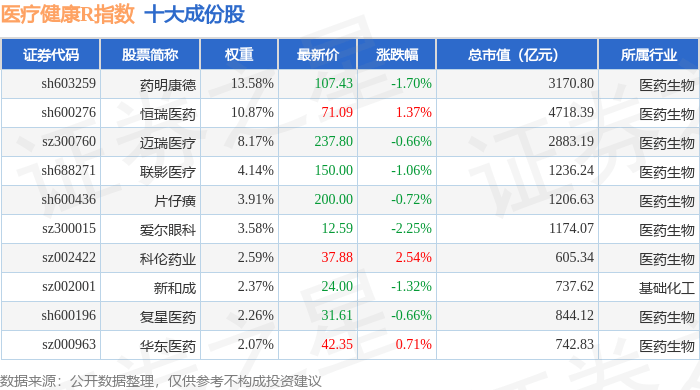
证券之星消息,9月18日,医疗健康R(480016)指数报收于8279.99点,跌0.21%,成交485.59亿元,换 手率1.57%。当日该指数成份股中,上涨的有19家,长春高新以5.19%的涨幅领涨,下跌的有31家,奕瑞 科技以2.94%的跌幅领跌。 医疗健康R(480016)指数十大成份股详情如下: | 医疗健康R指数 十大成份股 | | --- | | 证券代码 | 股票简称 | 权重 | 最新价 | 涨跌幅 | 总市值(亿元) | | 所属行业 | | --- | --- | --- | --- | --- | --- | --- | --- | | sh603259 | 药明康德 | 13.58% | 107.43 | -1.70% | | 3170.80 | 医药生物 | | sh600276 | 恒瑞医药 | 10.87% | 71.09 | 1.37% | | 4718.39 | 医药生物 | | sz300760 | 迈瑞医疗 | 8.17% | 237.80 | -0.66% | | 2883.19 | 医药生物 | | sh688271 | 联影医疗 | 4.14% | 150.00 ...


前瞻全球产业早报:香港将成立内地企业出海专班
Qian Zhan Wang· 2025-09-18 10:33
央企控股上市公司市值超过22万亿,"十四五"以来累计分红2.5万亿元 商务部:将在约50城开展消费新业态、新模式、新场景试点建设 9月17日,国务院新闻办举行新闻发布会,介绍《关于扩大服务消费的若干政策措施》的主要内容及亮点。 商务部有关负责人表示,下一步,我们将通过竞争性评审方式在全国选择50个左右人口基数大、带动作用 强、发展潜力好的消费新业态、新模式、新场景试点城市,增加优质消费供给,创新和丰富多元化消费场 景,推动新的消费业态不断涌现、消费活力进一步提升,更好满足人民群众多样化、差异化消费需求,为经 济高质量发展提供有力支撑。 工信部就智能网联汽车组合驾驶辅助相关标准公开征求意见 9月17日,工业和信息化部公开对《智能网联汽车组合驾驶辅助系统安全要求》强制性国家标准,向社会征 求意见。这次发布的征求意见稿构建了智能网联汽车产品的安全基线,要求系统只能在其设计运行条件下激 活。针对单车道、多车道、领航辅助等不同功能,设置了人机交互、功能安全和预期功能安全、信息安全、 数据记录等全方位安全技术要求,构建了"三重安全保障"。征求意见稿中提到,标准要求系统具备手部脱离 检测以及视线脱离检测能力,一旦系统激活期 ...

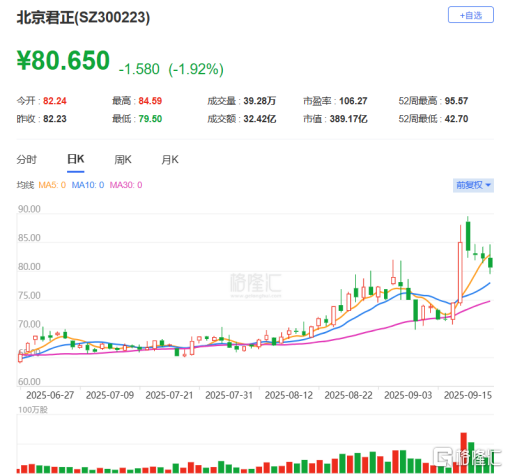
北京君正冲击A+H双重上市!受半导体周期影响明显,虞仁荣持股
Ge Long Hui A P P· 2025-09-18 09:46
Group 1: Company Overview - Beijing Junzheng is a semiconductor company focusing on "computing + storage + analog" chips, primarily serving markets such as automotive electronics, industrial medical, AIoT, and smart security [5][7] - The actual controllers of the company are Liu Qiang and Li Jie, who collectively control 13.68% of the shares [5][6] - The company operates a fabless model, with three main product lines: computing chips, storage chips, and analog chips [7][11] Group 2: Financial Performance - The company's revenue has declined over the past two years, with reported revenues of 54.12 billion RMB in 2022, 45.31 billion RMB in 2023, and projected 42.13 billion RMB in 2024 [9][10] - Net profits for the same periods were 7.79 billion RMB, 5.16 billion RMB, and 3.64 billion RMB respectively [9][10] - The gross margin has fluctuated, with rates of 33.4% in 2022, 35.5% in 2023, and 34.2% in the first half of 2025 [10][13] Group 3: Market Dynamics - The semiconductor industry is experiencing a cyclical downturn, with a low period from 2022 to early 2024, but is expected to expand significantly in the coming years [19][22] - The global chip market is projected to grow from approximately 356.2 billion USD in 2020 to 515.3 billion USD by 2024, with a compound annual growth rate (CAGR) of 9.7% [21] - Emerging fields such as AI, automotive, and industrial automation are expected to drive future growth in chip demand [19][20][23] Group 4: Product Pricing and Sales - The average price of computing chips has decreased from 16.3 RMB to 10.9 RMB, a decline of 33%, while storage chips dropped from 7.1 RMB to 4.8 RMB, a 32% decrease [14][16] - Storage chips are the primary revenue source, expected to account for 61.5% of total revenue in 2024 [11][12] - The company maintains a certain level of inventory to meet consumer demand, with inventory levels increasing from 23.04 billion RMB in 2022 to 27.73 billion RMB in 2025 [18]

医疗设备月度中标梳理-20250918
Tianfeng Securities· 2025-09-18 07:13
Investment Rating - The industry investment rating is maintained at "Outperform the Market" [2][50]. Core Insights - The medical device bidding amount in August 2025 reached 13.065 billion yuan, representing a year-on-year increase of 17% and a month-on-month increase of 2%. The total bidding amount from January to August 2025 was 110.3 billion yuan, showing a year-on-year growth of 51% [3][9]. Summary by Sections Medical Device Bidding Overview - The total bidding amount for medical devices in August 2025 was 13.065 billion yuan, with a year-on-year increase of 17% and a month-on-month increase of 2%. The cumulative bidding amount from January to August 2025 was 110.3 billion yuan, reflecting a year-on-year growth of 51% [3][9]. Domestic Brands - **United Imaging**: August bidding amount was 1.014 billion yuan, up 49% year-on-year; cumulative amount from January to August was 7.028 billion yuan, up 60% [4][13]. - **Myray Medical**: August bidding amount was 850 million yuan, up 18% year-on-year; cumulative amount from January to August was 5.904 billion yuan, up 49% [17][18]. - **Kaili Medical**: August bidding amount was 150 million yuan, up 63% year-on-year; cumulative amount from January to August was 890 million yuan, up 97% [25][26]. - **Shanwaishan**: August bidding amount was 48 million yuan, up 78% year-on-year; cumulative amount from January to August was 284 million yuan, up 194% [28][29]. - **Wandong Medical**: August bidding amount was 137 million yuan, up 200% year-on-year; cumulative amount from January to August was 936 million yuan, up 107% [31][32]. Imported Brands - **Philips**: August bidding amount was 638 million yuan, down 11% year-on-year; cumulative amount from January to August was 5.715 billion yuan, up 31% [34][35]. - **Siemens**: August bidding amount was 852 million yuan, up 41% year-on-year; cumulative amount from January to August was 7.489 billion yuan, up 49% [38][39]. - **GE Medical**: August bidding amount was 1.127 billion yuan, up 36% year-on-year; cumulative amount from January to August was 8.541 billion yuan, up 42% [41][42].