
科大讯飞

Search documents
AI人工智能ETF(512930)涨近1%,AI大模型接连取得突破
Xin Lang Cai Jing· 2025-12-01 02:36
Core Insights - The AI sector is experiencing significant growth, with the Zhongzheng AI Theme Index (930713) rising by 0.79% and key stocks like Beijing Junzheng (300223) and Zhongke Xingtou (688568) showing notable increases in their share prices [1][2] - The rapid development of AI large models and applications is supported by continuous investment in computing infrastructure, emphasizing the importance of high-performance, low-latency networks [2] Group 1: Market Performance - The Zhongzheng AI Theme Index has seen a rise of 0.79%, with component stocks such as Beijing Junzheng increasing by 5.10% and Zhongke Xingtou by 4.63% [1] - The AI Artificial Intelligence ETF (512930) has also increased by 0.78%, currently priced at 2.07 yuan [1] Group 2: Technological Advancements - AI large models are achieving breakthroughs in both theoretical and practical applications, with Alibaba's "Qianwen" app surpassing 10 million downloads in just one week, marking it as the fastest-growing AI application globally [1] - The DeepSeekMath-V2 model has introduced a self-verification mechanism, achieving gold medal status in the International Mathematical Olympiad, showcasing China's innovation in foundational algorithms [1] Group 3: Industry Outlook - The report from CITIC Securities highlights that the growth of AI large models is closely tied to ongoing investments in computing infrastructure, with a focus on optical interconnection technology [2] - The top ten weighted stocks in the Zhongzheng AI Theme Index account for 63.92% of the index, indicating a concentration of investment in leading companies within the AI sector [2]

海南自贸港以高水平开放引领高质量发展,打造引领我国新时代对外开放的重要门户
Hai Nan Ri Bao· 2025-12-01 02:10
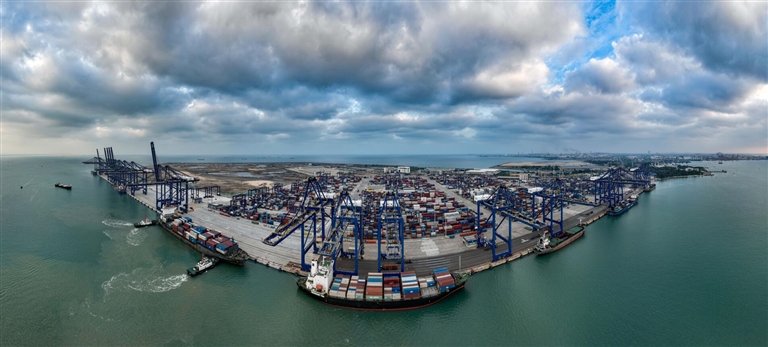
Core Viewpoint - The strategic goal of building the Hainan Free Trade Port is to establish it as an important gateway for China's new era of opening up to the world, promoting high-quality development through high-level openness [7][28]. Group 1: Economic Development and Trade - Hainan's trade import and export volume has increased from 93.3 billion yuan in 2020 to 277.8 billion yuan in 2024, marking a continuous crossing of two thousand billion yuan thresholds over five years [11]. - The opening of direct shipping routes, such as the "Palembang Port-Yangpu Port" route, has significantly reduced transportation time for goods, enhancing freshness and reducing loss rates [10]. - Hainan has become a hub for international trade, with increasing numbers of foreign tourists and businesses choosing it as a destination for commerce and tourism [12][13]. Group 2: Infrastructure and Connectivity - Hainan is enhancing its logistics and transportation infrastructure, with expansions at key ports and airports, and the establishment of numerous international flight routes [14]. - The implementation of policies such as visa-free entry for citizens from 86 countries has made Hainan one of the most favorable regions for international visitors [14]. - The development of the "multi-functional free trade account" has expedited cross-border fund transfers, reducing processing times from 1-2 days to 2-3 hours [19]. Group 3: Policy and Innovation - Hainan is actively integrating into international trade rules, having introduced the first cross-border service trade negative list in China and various measures to facilitate market access [25][20]. - The establishment of international certification processes within Hainan has allowed local businesses to access major markets without the need for multiple inspections [22]. - The region is fostering innovation in various sectors, including healthcare and education, with initiatives aimed at aligning with international standards and practices [26]. Group 4: Future Prospects - The official launch of the Hainan Free Trade Port's full closure on December 18 is seen as a significant step towards enhancing China's commitment to high-level opening up and building an open world economy [28]. - Hainan's ongoing efforts to attract global capital, talent, and technology are expected to create unlimited opportunities for businesses and investors [29].

逐浪AI大时代:从A股到全球,人工智能基金怎么选?
阿尔法工场研究院· 2025-12-01 00:06
Core Viewpoint - The article emphasizes that artificial intelligence (AI) is transforming the global economy and presents a significant investment opportunity for investors through various fund options, particularly ETFs and public/private funds [1]. ETF Investment - ETFs are highlighted as an efficient tool for investors who prefer to follow industry trends without the hassle of selecting fund managers. The main focus of AI investment in A-shares is on "computing power infrastructure" and "application end" [2]. - Core broad-based ETFs include the AI ETF (515980) and AI ETF (515070), which track the China Securities Artificial Intelligence Index. These ETFs cover leading companies across the AI value chain, including chip manufacturers (e.g., Cambricon, Haiguang Information), large models and algorithms (e.g., iFlytek), and application scenarios (e.g., Hikvision, Kingsoft) [3][4]. - Segment-specific ETFs such as Cloud Computing 50 ETF (516630) and Communication ETF (515880) focus on computing power hardware and high-speed network facilities that support AI data transmission, respectively. The rationale is that hardware providers often see early performance returns in the AI development phase [5][6][7][8]. Public Funds (Active Equity) - Public funds rely on professional stock selection to seek alpha. The A-share market experiences rapid style rotation, and skilled fund managers can rotate investments within the AI value chain based on fundamental research [9][10]. - Focus on veteran managers in the "digital economy" and "TMT" sectors, particularly those with a track record during the mobile internet wave from 2013-2015. These managers tend to select companies with real performance rather than mere narratives [11][12]. - Quantitative public funds, such as those tracking the CSI 500 or CSI 1000 indices, excel in the active mid- and small-cap companies within the AI sector, often outperforming benchmark indices [13]. Private Funds - Private funds are characterized by greater flexibility in position management and the use of derivatives for risk hedging. They can effectively manage volatility in the AI sector by controlling drawdowns during declines and capitalizing on gains during upswings [14][15]. - Notable institutions include Huanfang Quantitative, Jiukun Investment, and Yifan Investment, which leverage deep learning to uncover market patterns and opportunities that active management may overlook [16]. - The article also highlights the importance of investing in global AI leaders through local private funds, as the U.S. maintains a dominant position in high-end computing and foundational models [18]. Recommended Fund Analysis - The Keywise Penguin No. 1 fund is recommended for its strong reputation and global investment scope, covering major tech markets and key AI players like Nvidia, Microsoft, and TSMC. The fund's strategy includes both long and short positions to protect net value during market fluctuations [19][20][21]. Investment Strategy Summary - The article concludes with a tailored investment strategy for different investor types, recommending ETFs for conservative investors, public funds for those seeking alpha, and the Keywise Penguin No. 1 for high-net-worth individuals looking for global exposure to AI assets [22].






一周要闻·阿联酋&卡塔尔|迪拜、香港联手举办第二届气候金融联合会议/Vodafone Qatar联合科大讯飞与DVTT推动AI应用
3 6 Ke· 2025-11-30 23:01
Group 1: Climate Finance and Innovation - The second Climate Finance Joint Conference was held in Dubai on November 26, focusing on financial risks and innovative opportunities related to climate change, attracting nearly 250 participants [2] - The conference discussed a joint research report on expanding the sustainable debt market in emerging markets, highlighting the role of sustainable debt instruments in climate financing [2] Group 2: Industrial Land Supply and Real Estate - Abu Dhabi and Dubai are planning to release a significant amount of industrial land to alleviate rental pressures caused by long-term supply shortages, with Dubai's industrial real estate rents increasing by approximately 30% over the past two years [3] - The "300 billion action" plan aims to increase the industrial sector's contribution to GDP from 133 billion dirhams in 2021 to 300 billion dirhams (approximately 82 billion USD) by 2031 [3] Group 3: Virtual Assets and Regulation - The Dubai Virtual Assets Regulatory Authority (VARA) anticipates that local virtual asset trading volume will reach approximately 681 billion dirhams (681 billion USD) by 2025, reflecting significant progress in establishing Dubai as a global virtual asset economic hub [3] - A new federal law in the UAE has been enacted to regulate digital assets and decentralized finance (DeFi), requiring all related businesses to obtain central bank licenses [4] Group 4: Industry Exhibitions and Sustainable Development - The BIG5 Global 2025 exhibition in Dubai focuses on supply chain resilience, technological advancements, and sustainable construction, featuring a sustainable China Pavilion made from recyclable materials [4] Group 5: AI in Investment Management - A survey by Alpheya revealed that approximately 73% of UAE investors plan to use AI instead of human advisors, with 70.8% willing to let AI manage their investment portfolios [5] - High-net-worth individuals showed a satisfaction rate of 52% with AI wealth management, significantly higher than the 37% satisfaction rate among regular investors [5] Group 6: Smart and Sustainable City Development in Qatar - Qatar is advancing smart and sustainable city initiatives, with plans to launch over 30 national-level smart solutions in the next two years [7] - The "Smart Qatar – Tasmu" initiative aims to create a national digital twin system supported by sovereign data centers and advanced connectivity infrastructure [7] Group 7: Local Value Certification Growth in Qatar - The number of companies certified for local value (ICV) in Qatar increased by 33% this year, reaching 3,484, reflecting the government's focus on enhancing local economic contributions [8] Group 8: Strategic Projects and Investment Services in Qatar - The Ministry of Commerce and Industry in Qatar has partnered with PwC to launch a multi-year strategic project aimed at upgrading investor services to a more integrated and data-driven platform [9]


登顶T-RO!清华仿生“海龟”机器人,实现水陆动态环境全自主适应
机器人大讲堂· 2025-11-30 15:55
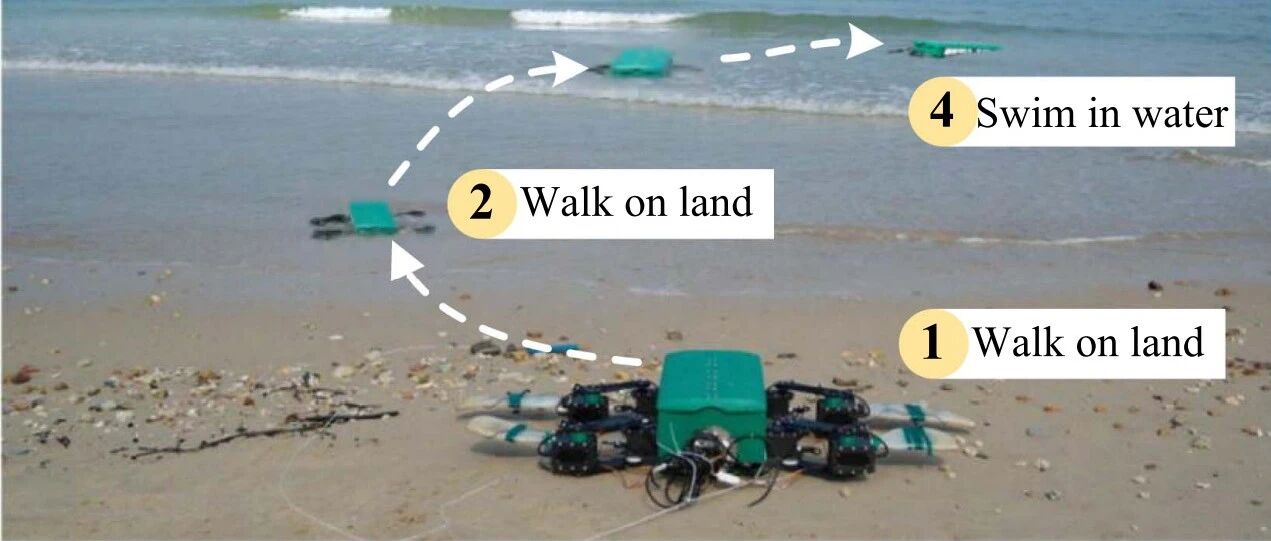
Core Insights - The article discusses the breakthrough research by Tsinghua University on an intelligent bionic amphibious turtle robot named "IBATR," which can operate effectively in both water and land environments, showcasing high adaptability and performance [3][20]. Group 1: Innovation and Design - IBATR is designed to mimic the physical and movement characteristics of a turtle, providing excellent stability and propulsion capabilities, making it suitable for complex coastal environments [6][7]. - The robot weighs only 10.48 kg, featuring a flat design with a waterproof cylindrical shell and a carbon fiber skeleton, ensuring both strength and lightweight properties [7][10]. Group 2: Sensory and Control Systems - IBATR incorporates a dual-modal perception system that combines visual and tactile information, allowing it to identify terrain types with an accuracy of 99.17% [11][14]. - The control system includes a Raspberry Pi 4B main controller and a STM32F103C8T6 servo control board, enabling real-time data transmission and motion state awareness [10][18]. Group 3: Adaptive Movement and Optimization - The robot can autonomously switch its movement modes based on terrain recognition, optimizing its locomotion for different surfaces such as grass, sand, and water [14][15]. - A Bayesian optimization algorithm is used to enhance movement parameters, achieving a balance between speed and energy efficiency, with improvements in speed by 9.2% and energy efficiency by 25.9% compared to traditional methods [17][19]. Group 4: Testing and Real-World Applications - Extensive testing in various environments, including indoor simulations and real coastal settings, demonstrated IBATR's ability to navigate complex terrains and switch between land and water seamlessly [18][19]. - The robot has potential applications in marine exploration, environmental monitoring, and disaster response, showcasing its versatility and effectiveness in real-world scenarios [20].
国际观察丨携手“AI+”赋能合作 中马共迎创新发展
Xin Hua She· 2025-11-30 07:11
Group 1 - The core viewpoint emphasizes the collaboration between China and Malaysia in the field of artificial intelligence (AI), showcasing the establishment of the China-Malaysia AI Application Cooperation Center as a significant step in their partnership [1][2] - The digital cooperation between China and Malaysia has been strengthened through various initiatives, including the signing of a memorandum of understanding and hosting of technology exhibitions, indicating a robust commitment to advancing regional economic innovation [2][3] - The AI technology is being leveraged to enhance various sectors, including digital services for local businesses in Malaysia and the establishment of multilingual AI translation centers, which highlights the practical applications of AI in facilitating business operations [2][4] Group 2 - The China-Malaysia AI Application Cooperation Center features advanced technological solutions in areas such as justice and transportation, with a focus on cross-border digital identity recognition, which is currently in pilot stages in Guangxi [4] - The collaboration is not limited to technology but extends to cultural exchanges, with AI facilitating greater accessibility to cultural resources and fostering connections among students from various countries through innovation competitions [6] - The potential for further cooperation in cultural and technological integration is significant, with opportunities identified in digital tourism, cultural heritage protection, and innovation exchanges, which could strengthen the partnership between China and Malaysia [6]
计算机行业研究:ChatGPT上线电商功能,阿里发布夸克AI眼镜
SINOLINK SECURITIES· 2025-11-30 06:28
Investment Rating - The report suggests a focus on the generative AI model leader iFlytek, AI hardware companies such as Hikvision, Hongsoft Technology, and Hesai, as well as companies like Maifushi that can enhance paid rates and ARPU through AI-related functionalities [3] Core Insights - The AI design platform Lovart has integrated Google's latest image generation model NanoBananaPro, introducing new features that allow processing of up to 14 images simultaneously while maintaining style consistency [2] - OpenAI launched a new feature called "ShoppingResearch" on the ChatGPT platform, providing personalized shopping research and recommendations through conversational interactions [2] - Alibaba released its first AI smart hardware product, Quark AI Glasses S1, which serves as a personal assistant with various functionalities [2] - The computer industry showed weak performance in November, contrary to historical trends, primarily due to external pressures such as geopolitical conflicts and internal factors like weak revenue growth [2][11] - The report anticipates a rebound in the spring following a three-month correction, with historical data suggesting a new round of elasticity typically follows a 2-4 month correction in non-bear market phases [2] Summary by Sections Computer Industry Insights - The report identifies high-growth areas for 2025, including AI computing power and LiDAR, with accelerating growth in AI applications and stable growth in software outsourcing, financial IT, quantum computing, data elements, EDA, and overseas software [10][12] - The report highlights the current pressures on certain sectors, such as industrial software and medical IT, while noting that sectors like smart transportation and government IT are stabilizing [10][12] Market Performance Review - From November 24 to November 28, 2025, the computer industry index (Shenwan) decreased by 3.08%, outperforming the CSI 300 index by 1.44 percentage points [13] - The report lists the top five companies with the highest gains and losses during this period, indicating a mixed performance across the sector [14] Upcoming Key Events - The report highlights two significant upcoming events: the "Artificial Intelligence +" Industry Ecosystem Conference and the 8th GAIR Global Artificial Intelligence and Robotics Conference, suggesting that these events may present opportunities within the industry [24][25]
智源RoboCOIN重磅开源!全球本体数最多、标注最精细、使用最便捷的高质量双臂机器人真机数据集来了
机器人大讲堂· 2025-11-30 06:25
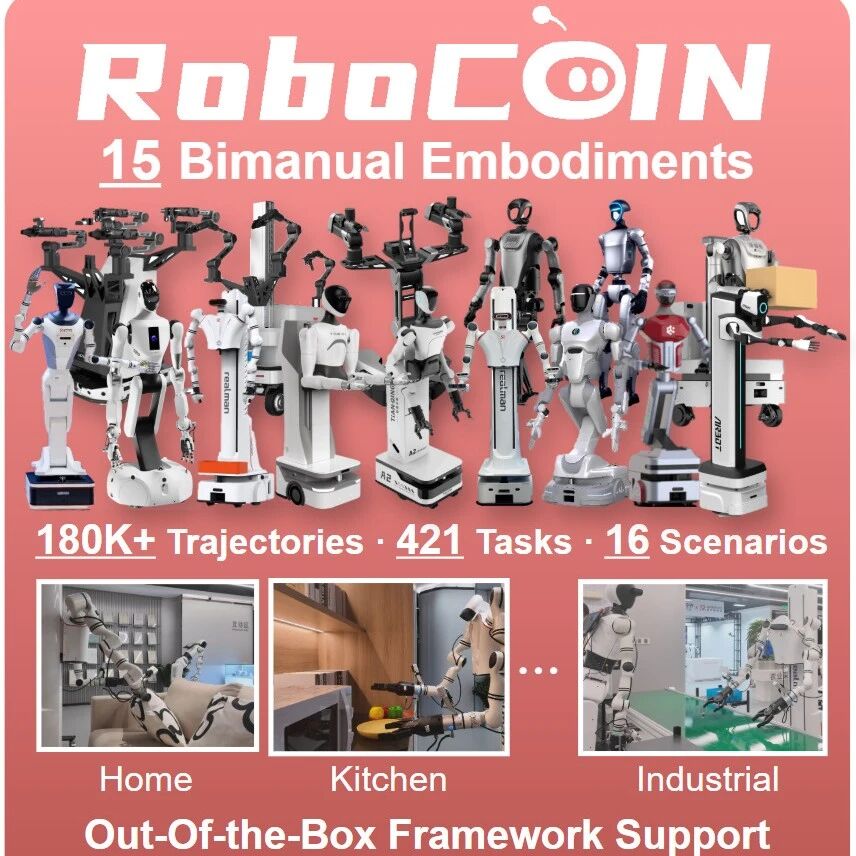
Core Insights - The article discusses the launch of RoboCOIN, a high-quality bimanual robotic dataset aimed at overcoming the challenges in embodied intelligence applications, particularly the scarcity of large-scale, high-quality, and multi-platform compatible robotic operation data [2][5]. Group 1: Challenges in Embodied Intelligence Data - The current embodied intelligence data faces three main challenges: lack of standards, weak quality control, and high usage barriers, which severely restrict industry development [3]. - Existing datasets are often characterized by insufficient real-world coverage, single-task focus, and excessive laboratory conditions, leading to a lack of generalizability across different robotic platforms [2][6]. Group 2: RoboCOIN Dataset Features - RoboCOIN dataset boasts three core advantages: it includes 15 heterogeneous robotic platforms, over 180,000 trajectories, and 421 tasks, making it the most diverse bimanual real-machine dataset globally [5][7]. - The dataset covers 16 types of real-world environments and includes 432 different objects, supporting 36 types of bimanual operation skills, thus creating a progressive task system from simple to complex [7][8]. Group 3: Data Quality and Annotation - The dataset is collected through human teleoperation, ensuring high quality with over 180,000 real trajectories, each equipped with multi-view images, joint states, and end-effector poses, all synchronized in time and unified in coordinate systems [8][9]. - RoboCOIN introduces a "Hierarchical Capability Pyramid" for multi-resolution annotation, enhancing data information density and teaching value, allowing models to learn "what to do," "how to do it," and "how to do it accurately" [10][19]. Group 4: CoRobot Software Framework - To support the efficient construction and application of RoboCOIN, the CoRobot software framework has been developed, featuring three core components: RTML for trajectory markup, an automated annotation toolchain, and a unified multi-embodiment management platform [12][13][16]. - The RTML significantly improves data reliability by automatically evaluating and filtering low-quality trajectories [13]. Group 5: Performance Improvement - Experiments on real robotic platforms show that the introduction of RoboCOIN's hierarchical annotation has increased the success rate of complex tasks from 20% to 70% [19]. - Training models with high-quality data filtered through RTML has resulted in an average success rate improvement of 23%, validating the "quality over quantity" data paradigm [20]. Group 6: Community and Collaboration - The initiative encourages global researchers and developers to join the RoboCOIN community, aiming to build a new ecosystem for embodied data and promote the transition of embodied intelligence from laboratories to various industries [22][23].
绕过大脑思考,超材料机赋予机器人身体本能! | Science Robotics
机器人大讲堂· 2025-11-30 06:25
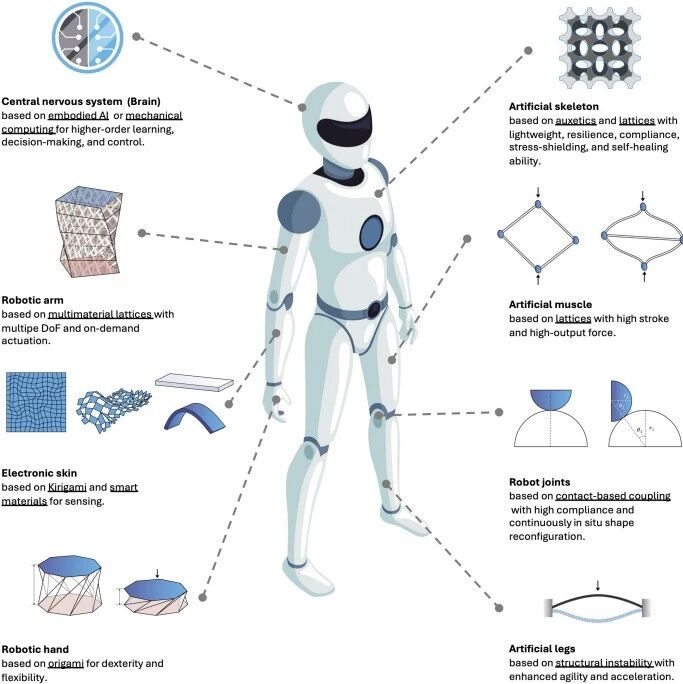
Core Concept - The article discusses a silent revolution in robotics, focusing on the integration of "mechanical metamaterials" to enhance robots' capabilities by allowing them to perceive, react, and adapt autonomously, merging central command with instinctive responses [1][4]. Group 1: Current Challenges in Robotics - Traditional robots operate on a "brain + body" model, where a central processor controls all functions, leading to limitations in flexibility and responsiveness [5][9]. - Current robotic systems are often heavy and rigid, making them unsuitable for delicate tasks that require safe interaction [6][9]. - The reliance on a central brain for every action creates bottlenecks, especially in unpredictable environments where rapid response is crucial [9][10]. Group 2: Mechanical Metamaterials - Mechanical metamaterials are defined as intelligent materials with programmable structures that can directly interpret and execute complex mechanical commands [7][11]. - The design principles of metamaterials include mechanics-inspired architectures, reconfigurable structures, and material-driven functionalities, which collectively enhance robots' physical capabilities [8][11][17]. Group 3: Innovations in Robotic Design - The first principle involves creating lightweight yet strong lattice structures that allow for adaptable flexibility and energy storage for rapid movements [11][12]. - The second principle utilizes origami and kirigami techniques to enable robots to dynamically change their shapes, enhancing their adaptability to various environments [13][15]. - The third principle integrates responsive materials that allow robots to sense and react to their surroundings, effectively merging sensory and motor functions [17][19]. Group 4: AI and Metamaterials - The integration of AI with metamaterials is seen as a key to overcoming current design challenges, allowing for efficient modeling and intelligent control of robotic systems [23][24]. - AI can assist in reverse engineering designs based on desired functionalities, improving the efficiency of creating complex metamaterial structures [24][26]. Group 5: Future Vision - The ultimate vision for metamaterial robots is a deep integration of embodied intelligence, where robots can operate more like biological entities, with distributed sensory and decision-making capabilities [27][28]. - Future robots are expected to function effectively in dynamic environments, with the ability to self-assemble and reconfigure into different forms as needed [28].
国际观察|携手“AI+”赋能合作 中马共迎创新发展
Xin Hua She· 2025-11-30 04:04
Group 1 - The core viewpoint of the articles highlights the collaboration between China and Malaysia in the field of artificial intelligence (AI), emphasizing the establishment of the China-Malaysia AI Application Cooperation Center as a significant step in enhancing digital cooperation and innovation development between the two countries [1][2][3] - The partnership aims to leverage AI technology to drive economic growth and digital transformation in Malaysia, with local companies receiving support from Chinese firms for their digital upgrades [2][3] - The AI collaboration includes various initiatives such as the establishment of a cross-border service platform for digital identity recognition, which is currently in pilot stages in Guangxi, China [3] Group 2 - The articles discuss the potential of Southeast Asia as a key engine for global digital user growth, with Malaysia's digital minister emphasizing the importance of collaboration with partners like China for inclusive growth [2] - The integration of AI technology in cultural exchanges is noted, with initiatives such as student competitions fostering academic and innovative interactions among youth from multiple countries [4][5] - The overall sentiment reflects a growing belief that AI technology serves as a bridge for deeper cooperation between China and Malaysia, enhancing cultural and technological ties [5]