
云深处

Search documents
VLA+RL正在不断拉升着具身操作的上限!
具身智能之心· 2025-11-11 00:02
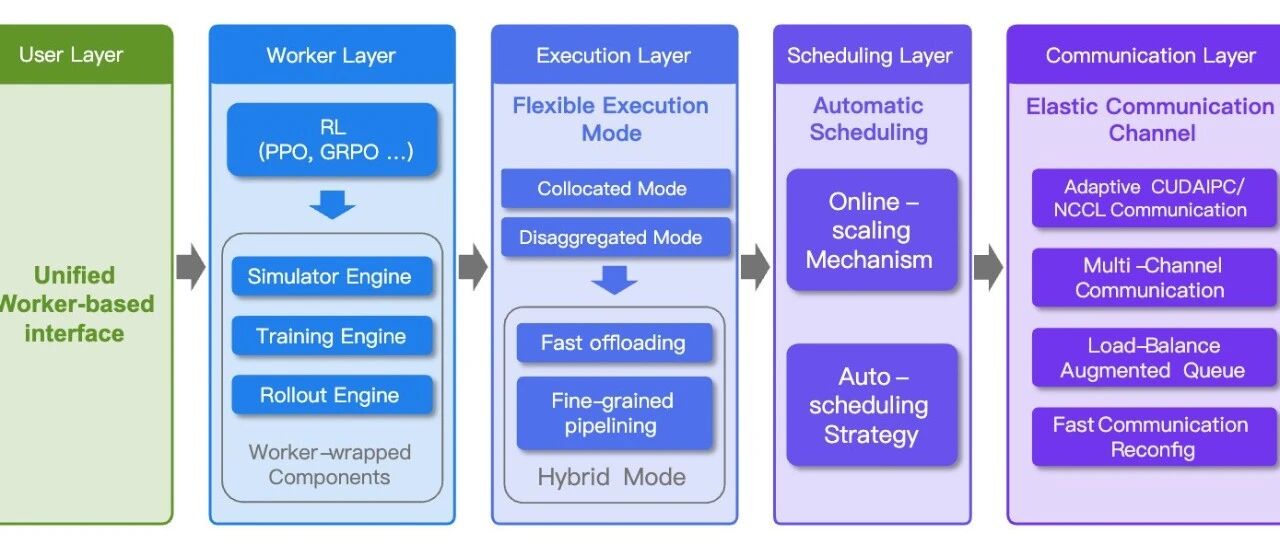
Core Insights - The article discusses the integration of Reinforcement Learning (RL) with Visual Language Models (VLA), highlighting how RL enhances the capabilities of VLA by bridging the gap between pre-training and real-world tasks [1][4]. Group 1: Technical Developments - RL training models directly optimize the "complete task" goal, allowing models to handle unexpected situations not present in training data, thus improving robustness [1]. - The reward mechanism enables VLA to learn smoother trajectories and align more closely with the physical world [1]. - A recommended open-source repository for VLA+RL methods is provided, facilitating entry-level research [2]. Group 2: Evaluation Results - Evaluation results on various LIBERO task groups show significant performance metrics for different models, with the π0.5 model achieving an average accuracy of 96.9% across tasks [5]. - The Flow-SDE π0 model demonstrated a 38.5% improvement in average accuracy when combined with RL [5]. Group 3: Community and Resources - The community offers continuous live sharing sessions, including roundtable forums and discussions on various topics within the embodied intelligence industry [7]. - A comprehensive technical roadmap is available for beginners, outlining essential technologies and learning paths [9]. - The community has established job referral mechanisms with several companies in the embodied intelligence sector, providing valuable networking opportunities [13]. Group 4: Educational Materials - The community has compiled over 40 open-source projects and nearly 60 datasets related to embodied intelligence, along with mainstream simulation platforms and various technical learning routes [15]. - Specific learning routes for different aspects of embodied intelligence, such as reinforcement learning and multi-modal large models, are detailed to assist learners at various levels [16][42]. Group 5: Industry Insights - The community includes members from renowned universities and leading companies in the field, fostering a rich environment for academic and industrial exchange [14]. - Regular updates on academic progress and industrial applications in embodied intelligence are shared, keeping members informed about the latest developments [21][23].

人形机器人周报:特斯拉股权激励方案落地,马斯克将全力推进机器人业务-20251110
CMS· 2025-11-10 09:05
Investment Rating - The report maintains a positive outlook on the humanoid robotics industry, highlighting significant developments and investment opportunities in the sector [3][4]. Core Insights - The approval of Elon Musk's compensation plan on November 6 will lead to a full push for Tesla's robotics business, with a target of delivering over 1 million units of the Optimus robot in the next decade [4][6]. - Xiaopeng Motors unveiled its seventh-generation IRON humanoid robot, which boasts advanced features and aims for mass production by the end of 2026, showcasing the competitiveness of domestic robots against global standards [4][7]. - Several domestic robotics manufacturers are preparing for IPOs, indicating a trend towards capitalizing on the growing market [4][12]. Industry Overview - The humanoid robotics sector is experiencing rapid growth, with significant orders and partnerships being established, such as the strategic collaboration between Lens Technology and Yuejiang Robotics, which includes orders for 1,000 robots and 10,000 robotic dogs [4][8]. - UBTECH has secured a 160 million yuan order for its Walker S2 humanoid robot, bringing its total orders for the year to 790 million yuan, reflecting strong market demand [4][9]. - The introduction of the NavFoM navigation foundation model by Galaxy General and several universities marks a technological advancement in the field, enabling robots to operate in diverse environments [4][10]. Related Companies - Key companies to watch in the logistics equipment sector include Hangcha Group, Zhongli Co., Anhui Heli, and Jingsong Intelligent [3]. - In the T-chain related sector, notable companies include Sanhua Intelligent Control, Top Group, and Junsheng Electronics [3]. - The report highlights several leading companies in the humanoid robotics space, such as UBTECH, Yuejiang, and Zhongjian Technology, which are pivotal in driving innovation and market growth [5].



少年乌镇说:犹记“大佬”论剑术,却见“小龙”弄潮头
Mei Ri Jing Ji Xin Wen· 2025-11-09 04:43
Core Viewpoint - The article highlights the evolution of the World Internet Conference in Wuzhen, showcasing the transition from established internet giants to emerging innovators, referred to as the "Six Little Dragons," who are reshaping the landscape of China's hard technology sector [1][5]. Group 1: The Rise of the "Six Little Dragons" - The "Six Little Dragons" have redefined the investment logic in China's hard technology landscape through their entrepreneurial journeys, marking a significant shift in focus from internet-based models to AI and hard-core innovation [2][4]. - The founders of the "Six Little Dragons" are primarily young grassroots entrepreneurs, representing a new wave of innovation that emphasizes self-research, global market engagement, and a long-term perspective [4][7]. - The transition from established internet leaders to these new innovators signifies a broader change in China's technological focus, moving from "traffic-based innovation" to "technology-driven solutions" [4][5]. Group 2: Challenges and Growth - The entrepreneurial paths of the "Six Little Dragons" were fraught with challenges, including initial product imperfections and skepticism from the industry, which ultimately drove them to improve their offerings [3][4]. - The analogy used by Wang Jian, an academician, compares startups to children that grow and improve over time, emphasizing the importance of perseverance and continuous innovation in entrepreneurship [3][4]. Group 3: Impact of AI on Traditional Industries - The integration of AI technology into various sectors is revitalizing traditional industries, as demonstrated at the Wuzhen conference, where AI is being utilized for cultural heritage preservation and early disease detection [4][5]. - The conference serves as a platform for showcasing how AI can enhance existing industries, indicating a significant shift in how technology is applied across different fields [4][5].

签约项目金额超66亿元 湖州加速打造具身智能机器人产业高地
Zhong Zheng Wang· 2025-11-09 02:34
Core Insights - Huzhou has made significant strides in the field of embodied intelligence, with a total investment of 6.66 billion yuan signed at an investment matchmaking event, marking a key step in industrial aggregation in this sector [1] - The city has established a complete AI industry chain, comprising 105 core enterprises, including service providers in computing power, data services, and algorithm companies, as well as manufacturers of intelligent terminals [1] - Huzhou has introduced 34 AI industry projects in the first three quarters of this year, with each project having an average fixed asset investment exceeding 300 million yuan, leading to a total investment scale surpassing 20 billion yuan [1] Investment and Infrastructure Development - Huzhou is constructing a 50-acre "Data Source Space," which will serve as a large base for data collection and robot training, with the first phase covering 40,000 square meters and capable of accommodating over 1,000 robots simultaneously [2] - The city has established a 30 billion yuan industrial mother fund, focusing on investments in AI and embodied intelligence through a "sub-fund + direct investment" model, with total AI-related fund size exceeding 90 billion yuan [2] Strategic Goals - Huzhou is advancing its AI industry development with a "1+4+N" strategic goal, aiming to build a "national AI characteristic city" while focusing on four key areas: embodied intelligent robots, intelligent driving, smart wearables, and computing data [2] - The city is promoting the integration of intelligence across various scenarios, including industry, government, space-time, and transportation, to enhance its industrial competitiveness [2]


具身领域的图文+问答+路线+视频+研报来了!
具身智能之心· 2025-11-08 00:03
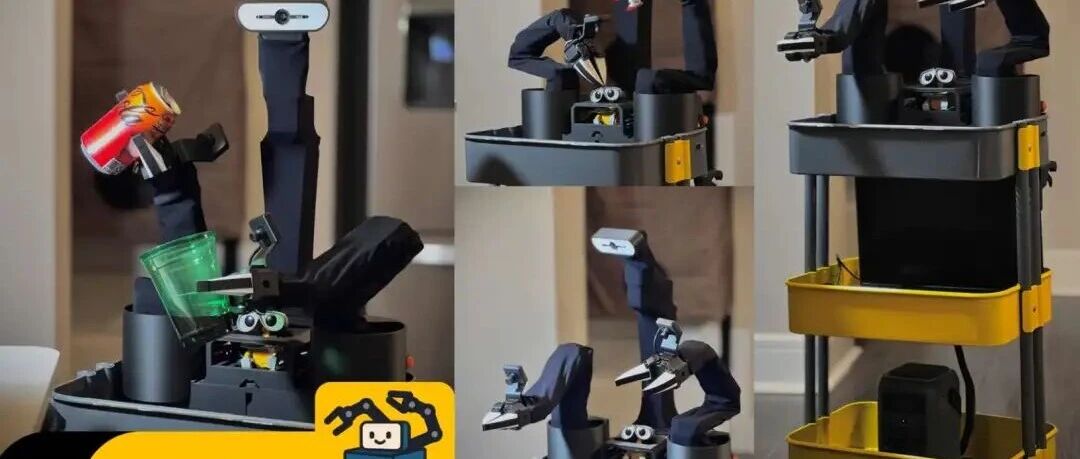
Core Insights - The article focuses on the development and research of embodied intelligence, highlighting key companies and laboratories involved in the field [2][10][21] - It provides recommendations for suitable robotic platforms for research, including SO-100 series, Openarm series, and XLerobot series [3][5][7] - The article discusses various algorithmic approaches and deployment strategies, emphasizing cloud-based inference and edge computing solutions [10][20] Industry Overview - The article identifies active companies and laboratories engaged in the development of embodied brains and robotics, noting a competitive landscape [2][21] - It mentions the increasing interest in embodied intelligence research, with a community established for knowledge sharing and collaboration [2][14][20] Product Recommendations - Recommended robotic platforms include: - SO-100 series, which supports various algorithms [3] - Openarm series, designed for dual-arm tasks but lacks mobility [5] - XLerobot series, suitable for entry-level research and personal development [7] - Other high-cost development platforms are also mentioned, such as Ark Infinite and Xinghai Map [9] Algorithmic and Deployment Insights - The article outlines several algorithmic directions, including VLA (Vision-Language-Action), VLN (Vision-Language Navigation), and control strategies [10] - Deployment strategies are primarily focused on cloud inference, with some companies like Xiaopeng completing deployments based on self-developed chips [10] Community and Educational Resources - The community offers various resources for newcomers, including technical stacks and learning routes [16][21] - It provides job referral mechanisms and opportunities for networking with industry professionals [20][24] Research and Development Focus - The article highlights ongoing research in areas such as data collection, dexterous manipulation, and multi-sensor fusion perception [15][21] - It emphasizes the importance of collaboration between academia and industry to advance the field of embodied intelligence [21][24]
浙江社保科创基金的“长期主义”:以“耐心”陪跑创新
Zhong Guo Xin Wen Wang· 2025-11-07 17:56
Core Viewpoint - The establishment of the Zhejiang Social Security Science and Technology Innovation Fund, with an initial scale of 50 billion yuan, represents a significant capital investment aimed at fostering innovation and industrial development in Zhejiang province, aligning with national strategies for high-quality growth [1][8]. Group 1: Fund Overview - The Zhejiang Social Security Science and Technology Innovation Fund has completed its business registration in Hangzhou and is a collaboration between the National Social Security Fund Council, Zhejiang Province, and Agricultural Bank of China [1]. - The fund's first phase is set at 50 billion yuan, with the Zhejiang Provincial Innovation Investment Group acting as the manager [1][4]. Group 2: Historical Context and Development - Zhejiang has a long-standing commitment to venture capital, having established a provincial-level venture capital guiding fund as early as 2009, which has evolved into a comprehensive investment ecosystem [2]. - By mid-2025, Zhejiang will have 147 government investment funds with a total scale exceeding 320 billion yuan, leveraging social capital to create a vast innovation capital network [2][3]. Group 3: Investment Strategy and Impact - The Zhejiang Provincial Innovation Investment Group has supported over 1,600 projects and facilitated the successful listing of more than 100 companies, demonstrating its effectiveness in nurturing local enterprises [3]. - The fund emphasizes the integration of industry, academia, and research, focusing on early-stage technology projects and fostering collaboration with institutions like Zhejiang University [3][5]. Group 4: Future Prospects - The Zhejiang Social Security Science and Technology Innovation Fund aims to create a multi-layered fund system covering the entire lifecycle of technology enterprises, with a focus on artificial intelligence and life sciences [8]. - The fund will operate under a "mother fund + direct investment" model, combining national strategic advantages with local market insights to provide stable long-term capital for high-risk innovative sectors [8][9].
独家对话群核科技董事长:未来机器人数量将超700亿
Sou Hu Cai Jing· 2025-11-07 08:11
Core Viewpoint - The "Hangzhou Six Little Dragons" are gaining attention, particularly with the focus on spatial intelligence and the potential for a significant increase in the number of robots globally, predicted to exceed 70 billion units [2][7]. Group 1: Company Overview - Qunhe Technology, a member of the "Hangzhou Six Little Dragons," has submitted its IPO application to the Hong Kong Stock Exchange, marking the beginning of the "Hangzhou Six Little Dragons IPO" [3]. - The company owns the spatial design software KuJiaLe, its overseas version Coohom, and the AI development platform SpatialVerse, and is recognized as the largest spatial design platform globally, holding a 22.2% market share in China [3]. Group 2: Spatial Intelligence - Qunhe Technology emphasizes a differentiated approach to spatial intelligence, focusing on understanding and reasoning about space rather than hardware development, which is already being addressed by other companies [3][4]. - The company believes that embodied intelligence requires spatial intelligence, as robots need to navigate physical environments, which involves spatial understanding and reasoning [3][4]. Group 3: AI Development - The current wave of generative AI has been anticipated by Qunhe Technology, which has previously encountered early forms of this technology. The unexpected aspect is the ability of algorithms to produce surprising intelligence through vast amounts of data [6]. - The company is leveraging its extensive physical design and spatial data accumulated through the KuJiaLe 3D cloud design platform to train models that generate spatial data consistent with the physical world, addressing issues of data scarcity and high acquisition costs [6]. Group 4: Future Predictions - The CEO predicts that the future may see a robot population ten times that of humans, with the global number of robots potentially exceeding 70 billion [7]. - The transition from automation to intelligent robots is expected to occur within the next two to three years, although achieving human-like flexibility and intelligence may take longer [7].
第八届进博会映见开放新高度
Mei Ri Shang Bao· 2025-11-07 06:47
Core Insights - The eighth China International Import Expo (CIIE) is set to enhance global economic certainty, showcasing 4,108 overseas exhibitors and their innovations, while highlighting China's high-level openness and development opportunities [1] Group 1: Commitment to Openness - Hangzhou has demonstrated a strong commitment to high-level openness, with companies like AstraZeneca, Ford, Mastercard, and Panasonic participating consistently in the CIIE [2] - AstraZeneca announced an additional investment of approximately $136 million to expand its production base in Qingdao on the first day of the expo [2] - Mastercard showcased its popular JAVA brand coffee machines, emphasizing the digital and intelligent features of its products [2] Group 2: Innovation Showcase - The CIIE serves as a platform for innovation, with Hangzhou's technology sector presenting groundbreaking innovations such as a commercial-grade near-Earth manned aircraft and a "smell TV" that synchronizes scents with visual content [3] - Other innovative exhibits included advanced robotics and AI technologies, showcasing Hangzhou's strong capabilities in high-tech development [3] Group 3: Cultural Heritage and Global Connection - Hangzhou's high-quality development merges tradition and modernity, with 13 local heritage brands showcasing their craftsmanship at the expo [4] - Traditional crafts such as silk weaving and copper sculpture were highlighted, demonstrating the city's rich cultural heritage on an international stage [4] Group 4: New Manufacturing and Global Market Engagement - Hangzhou's Teimeike Industrial Co., as a designated supplier for the G20 Hangzhou Summit, showcased its manufacturing prowess at the expo [5] - The company participated in a series of events aimed at promoting exports and demonstrating the quality of Hangzhou's consumer goods [5] Group 5: Deepening Cooperation - The CIIE acts as a platform for procurement and collaborative innovation, with nearly 50 Hangzhou companies engaging with over 70 multinational corporations [6] - The procurement strategy has shifted from large-scale imports to precise technology acquisition, reflecting local companies' confidence in global perspectives and self-innovation [6] - A large delegation of over 8,100 professional buyers from Hangzhou actively sought advanced equipment and quality agricultural products at the expo [6]
一场关于人工智能当下与未来的对话
3 6 Ke· 2025-11-07 02:27
Core Insights - The dialogue at the 2025 Dachen Entrepreneur Summit highlighted the emergence of AI "Six Little Dragons" in Hangzhou, emphasizing both the accidental and inevitable factors contributing to this phenomenon [1][2] - The discussion underscored the importance of a supportive ecosystem, characterized by a clear boundary between government and market roles, fostering innovation and investment [2][3] Group 1: AI Ecosystem in Hangzhou - Hangzhou's unique talent structure, government support, and a balanced lifestyle conducive to long-term innovation are key factors in the success of the AI "Six Little Dragons" [2][3] - The local government adopts a non-intrusive approach, focusing on optimizing the ecosystem and providing public services, which has been crucial for nurturing innovation [2][3] Group 2: Competition in the AI Landscape - The relationship between startups like Zhipu AI and tech giants such as Alibaba is complex, with startups needing to leverage their agility against the deep resources of larger companies [4][6] - Zhipu AI emphasizes the importance of conversion efficiency and ecosystem building as core competitive advantages, allowing for rapid adaptation to market feedback [6] Group 3: Philosophical Perspectives on Embodied Intelligence - The discussion on embodied intelligence raised philosophical questions about the ultimate goals of humanoid robots, debating whether they should be seen merely as tools or as companions [7][8] - Different innovation strategies were presented, with one focusing on revolutionary breakthroughs and the other on incremental improvements to address current challenges [8] Group 4: Risks and Challenges in AI Development - The dialogue acknowledged the inherent risks in AI investments, with strategies for risk management including diversified investment portfolios [10][12] - Concerns were raised about both internal risks related to technological disruption and external risks concerning safety and ethical implications of AI [11][12]
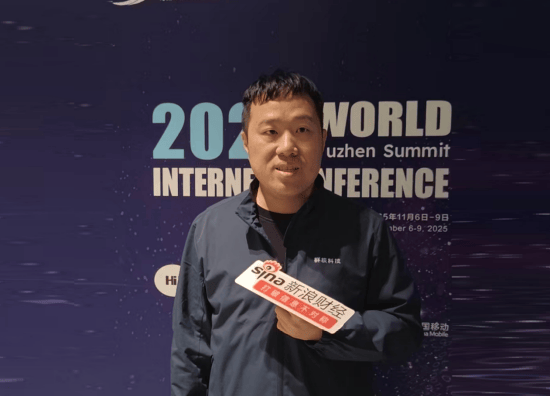
对话群核科技董事长黄晓煌:我们跟DeepSeek一样,都做“智能”但更偏空间丨直击乌镇
Xin Lang Ke Ji· 2025-11-06 09:23
Core Insights - The 2025 World Internet Conference in Wuzhen highlighted the focus of Qunhe Technology on spatial intelligence, emphasizing its distinction from DeepSeek's focus on human language understanding [1] - Qunhe Technology does not engage in hardware development, citing existing competition from companies like Yushu and Yundongchu [1] - Huang Xiaohuang, the co-founder and chairman of Qunhe Technology, stated that embodied intelligence requires spatial intelligence for robots to operate in physical environments, which includes spatial understanding, reasoning, and action [1]
