极米科技

Search documents
券商首席带你看“科技界春晚”
Zhong Guo Ji Jin Bao· 2026-01-11 12:57
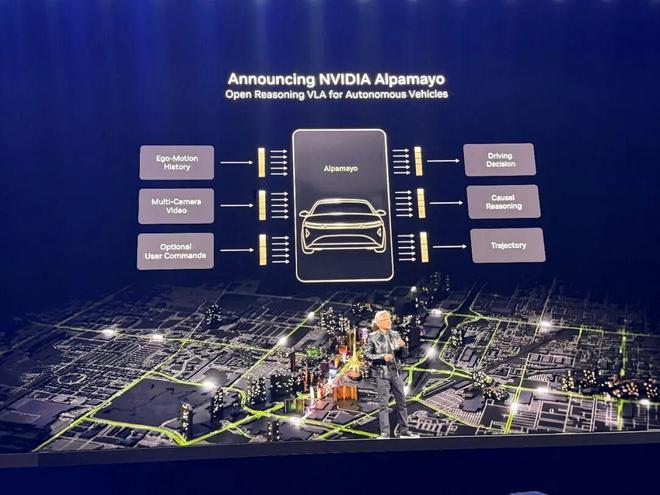
Core Insights - The main highlight of CES 2026 is "Physical AI," particularly applications involving robotics, which is seen as a potential turning point similar to the early days of autonomous driving [1][3] - NVIDIA's CEO emphasized "Physical AI" during his keynote, indicating a shift towards building global AI infrastructure that integrates intelligent agents into the physical world [1][3] Group 1: Definition and Challenges of Physical AI - "Physical AI" refers to models that use motion skills to understand and interact with the real world, typically encapsulated in autonomous machines like robots and self-driving cars [3][4] - A fundamental challenge in training such AI is enabling it to comprehend common physical world concepts, such as object permanence and causality, which are intuitive for humans but not for AI [4] Group 2: Technological Developments and Future Trends - NVIDIA's new computing architecture, Rubin, and the release of the open-source model Alpamayo aim to accelerate advancements in autonomous driving and Physical AI [4] - The year 2026 is anticipated to mark the emergence of Agentic AI, supported by acquisitions and deployments from companies like Meta and NVIDIA, which are enhancing AI training and large-scale reasoning capabilities [4] Group 3: Consumer Applications and Market Opportunities - The application of AI in consumer scenarios is a key focus of CES, with innovations in products ranging from indoor cleaning to smart wearables, indicating a significant acceleration in product development [4] - AI glasses are expected to enter a phase of widespread adoption, with notable products from Chinese companies like Alibaba and Rokid showcasing advanced features and ecosystem integration [5] - The technology consumer sector is projected to experience a new growth cycle driven by technological innovation and valuation reassessment, particularly for companies with strong ecosystem capabilities [5]

家用电器行业周度跟踪:消费机器人向具身智能迈进,供应链国产替代下降本可期-20260111
Western Securities· 2026-01-11 10:52
Investment Rating - The industry investment rating is "Overweight" [5][9] Core Insights - The report highlights Midea's acquisition of Carestream Health's global business, which is expected to create synergies with Midea's existing medical business in terms of channels and equipment resources [5][6] - The consumer robotics sector is advancing towards embodied intelligence, with a notable decline in domestic supply chain substitution expected [2][4] - The report emphasizes the performance of major brands in the vacuum cleaner market, noting a significant sales decline for some brands while others, like Roborock, have shown growth [2][3] Summary by Sections White Goods - Midea's acquisition of Carestream Medical's global business is expected to enhance its existing medical operations through effective resource synergy [5][6] Consumer Robotics - December sales data shows a year-on-year decline of 29% for the overall market, with leading brands like Ecovacs and Roborock experiencing varying sales changes [2] - New product launches at CES include Roborock's G-Rover, which is the world's first stair-climbing vacuum robot, and Ecovacs' T90 pro omni, which features upgraded roller lengths and new pre-spray functions [3] Laser Technology in Robotics - Hesai Technology announced that it will lead the market in 3D LiDAR shipments for lawn mowing robots by 2025, showcasing its new models at CES 2026 [4] - The integration of digital all-solid-state LiDAR in new lawn mowing robots was highlighted by Ninebot and other companies [4] Investment Recommendations - The report recommends focusing on white goods, particularly Haier, Midea, and Gree, due to their strong market positions and potential benefits from the current economic environment [7] - It also suggests selecting consumer technology stocks like Ecovacs and others, while keeping an eye on companies like TCL Electronics for overseas growth opportunities [7]





银河证券:主流消费品创新不断 可穿戴产品未来可期
智通财经网· 2026-01-11 06:41
Group 1 - The core viewpoint is that technological advancements are driving market demand, with continuous innovation in the consumer electronics industry, particularly in AI glasses and wearable devices [1][2] - AI glasses are evolving towards becoming potential smartphone replacements, enhancing user experience, with significant contributions from domestic manufacturers [2][4] - The 2026 International Consumer Electronics Show (CES) highlighted the integration of artificial intelligence with physical hardware, showcasing a variety of new wearable products [1][3] Group 2 - AI glasses are seeing advancements in communication independence and ecosystem openness, with manufacturers focusing on lightweight designs and specialized applications [2][3] - Notable product launches include the first eSIM smart glasses by Thunderbird and Rokid's AI glasses supporting multiple AI engines, addressing application ecosystem limitations [2] - Traditional consumer electronics companies are innovating hardware forms to create new demands and applications, aiming to shorten the extended replacement cycles of current consumer electronics [3][4] Group 3 - New types of wearable products, such as vibrating AI smart rings and camera-equipped headphones, are emerging, indicating a shift towards more integrated and sensory-rich devices [4] - The vibrating AI smart ring by Chasing is designed for active health monitoring and emotional management, while the AI camera headphones by Goer provide a direction for the evolution from auditory to audiovisual integration [4]
CES 2026观察:“物理AI时刻”要靠中国制造落地
Jing Ji Guan Cha Wang· 2026-01-10 11:01
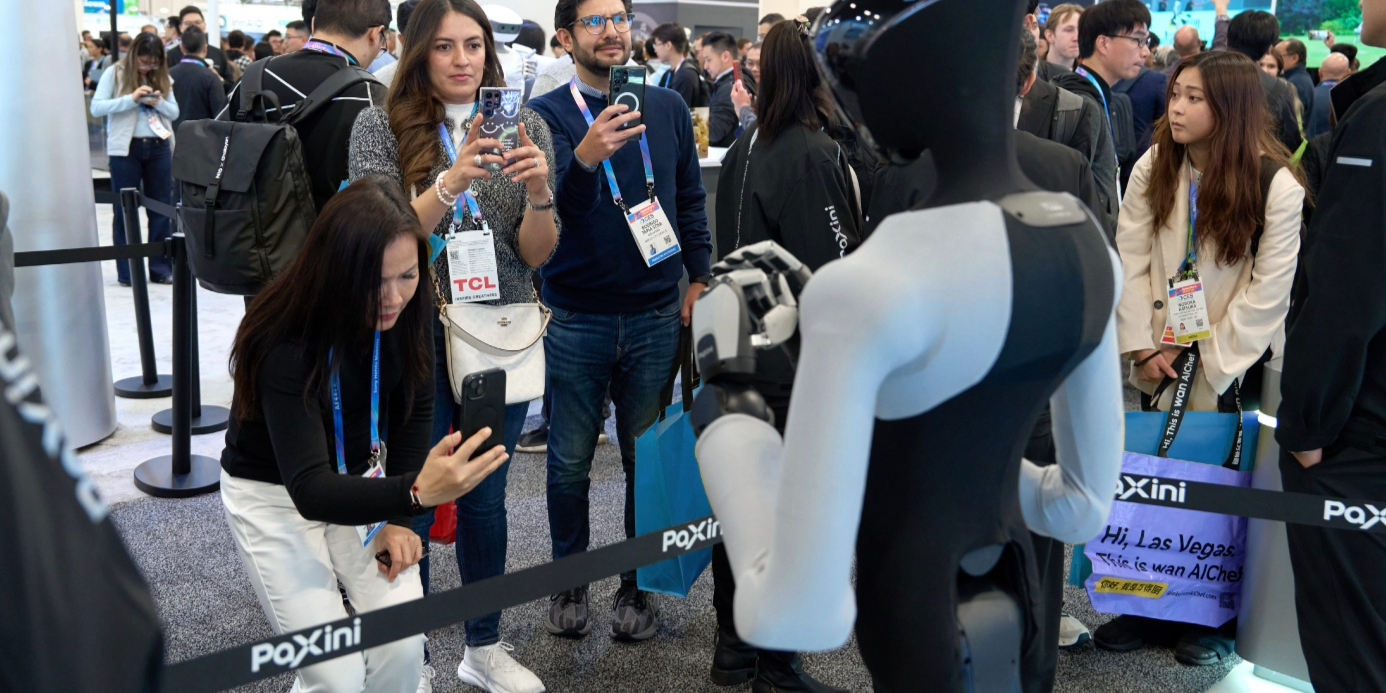
Group 1: Physical AI and Computing Power - The core theme of CES 2026 is the emergence of "Physical AI," where AI technology is transitioning from generating text or video to interacting with physical hardware [4][10] - AMD's chairwoman, Lisa Su, highlighted the increasing demand for computing power, predicting a 100-fold increase in global computing capacity over the next five years [3][4] - The presence of over 200 Chinese companies at CES indicates a strong support for the "Physical AI moment," showcasing various AI applications in physical products [4][23] Group 2: Robotics Innovations - The robotics sector at CES has shifted focus from mere physical movement to specific job functions and operational scenarios, with Chinese companies leading this evolution [5][9] - Companies like Pasoni and Fourier Intelligence showcased advanced robots capable of performing intricate tasks, such as ice cream making and automotive part sorting, demonstrating significant advancements in robotic dexterity [5][6] - The global sales of robots are projected to reach approximately $45 billion by 2026, with expectations to exceed $60 billion by 2030, driven by rising labor costs and efficiency in Chinese manufacturing [8][9] Group 3: Smart Glasses and AR Technology - Chinese companies are aggressively entering the AR/AI glasses market, aiming to redefine the concept of a "second screen" beyond smartphones [11][12] - Innovations include the launch of the world's first dual-lens AR glasses with eSIM functionality by Thunderbird Innovation, allowing users to make calls and connect to the internet without a smartphone [12][13] - The global market for smart glasses is expected to see significant growth, with sales projected to reach around $10.7 billion by 2026, reflecting an over 80% year-on-year increase [18][23] Group 4: Display and Chip Technology - Companies like Tianma Microelectronics and TCL Huaxing are pushing the boundaries of display technology, with innovations such as large-scale OLED screens and advanced automotive displays [19][20] - Lenovo and NVIDIA announced a partnership to enhance AI infrastructure, aiming to quadruple their business collaboration over the next few years [22] - The trend in AI chip development is moving towards high computing power, low energy consumption, and integration, with significant growth expected in AI terminal sales by 2028 [22][23]



在拉斯维加斯,我看到概念已死
虎嗅APP· 2026-01-10 09:16
Core Viewpoint - The article discusses the shift in the AI hardware industry from a focus on disruptive innovation to a more pragmatic approach, emphasizing the importance of "scene value" in product development [4][7]. Group 1: AI Hardware Trends - At CES 2026, the atmosphere was notably different from previous years, with less emphasis on grand concepts and more on practical upgrades [5][6]. - The AI hardware industry is moving towards a focus on specific use cases and functionality, rather than broad, ambitious claims [7][15]. Group 2: Wearable Devices - The wearable device sector saw an increase in cross-industry players, particularly in the AI glasses market, with products designed for specific functionalities rather than flashy features [9][12]. - Notable products include the MemoMind AI glasses, which offer user-friendly design and practical applications, and the OpenGuide AI glasses aimed at assisting visually impaired users [11][12][15]. Group 3: Companion Robots - The companion robot market has expanded rapidly, with over 50 companies showcasing products at CES, but many face challenges related to product consistency [20][21]. - There is a trend towards customization in companion robots, allowing for personalized features and interactions, as seen in prototypes like the Fourier desktop companion robot [24][28]. Group 4: Cleaning Robots - The cleaning robot sector is experiencing significant technological advancements, with products like the Cyber X and G-Rover capable of navigating stairs and complex environments [36][38]. - Future developments may include robots with mechanical arms for more precise cleaning tasks, as demonstrated by the AI cleaning robot that can handle laundry processes [43][45].

CES观察|智能眼镜群雄逐鹿 清洁电器进化“具身智能”
Xin Jing Bao· 2026-01-09 15:03
Group 1: Core Insights - CES 2026 focuses on systemic transformations in artificial intelligence technology, with smart glasses emerging as a key highlight of the event [1] - The year 2026 is anticipated to be a golden period for the development of smart glasses, driven by an increasing number of players entering the market [2][3] - AI is being fully integrated into home appliances and consumer electronics, with traditional companies merging with new entrants [1][6] Group 2: Smart Glasses Development - Over 50 companies, including notable brands like Thunder Innovation, XREAL, and Rokid, showcased their smart glasses at CES 2026 [2] - New lightweight models were introduced, such as Rokid's AI+AR glasses weighing only 49 grams and another model at 38.5 grams [2] - The Chinese market is seeing a surge in AI glasses from various brands, including Xiaomi and Lenovo, since 2025 [2][3] Group 3: Market Trends and Opportunities - The introduction of new national subsidy policies in China has expanded the categories eligible for subsidies, including smart glasses [3] - The global shipment of smart glasses is projected to exceed 11 million units in 2026, indicating a competitive and diverse market landscape [3] - The penetration rate of cleaning robots in global households remains below 10%, suggesting significant growth potential in the cleaning appliance sector [4] Group 4: Cleaning Appliances and AI Integration - Cleaning appliances, particularly robotic vacuums, are advancing towards embodied intelligence, with innovations like bionic designs enabling multi-floor cleaning [4] - Chinese brands have rapidly increased their market share in the global robotic vacuum sector, capturing 65.7% of the market in the first three quarters of 2025 [5] - AI is becoming a core capability across home appliances, with companies like TCL and Hisense showcasing advanced AI-integrated products at CES [6][7]
智能眼镜群雄逐鹿,清洁电器进化“具身智能”
Xin Jing Bao· 2026-01-09 15:02
作为全球规模最大、最具权威性及影响力的科技盛会CES(国际消费电子展)2026正在进行,展会聚焦 人工智能技术的系统级变革。 其中,智能眼镜成为展会上的"最靓仔",随着越来越多的玩家加入,2026年成为智能眼镜发展黄金期。 而清洁电器率先体现"具身智能"趋势,多家品牌通过仿生机械臂、轮足设计等创新,突破跨楼层清洁等 长期瓶颈。AI全面融入家电与消费电子领域,老牌企业融合新生。 2025年以来,在中国市场,小米、联想、海信、李未可、360、阿里、小度、理想、老凤祥、KTC康冠 等来自各领域的品牌纷纷布局AI眼镜。 同时,CES成为多元智能终端展示平台,越来越多的智能终端正在各场景落地。 智能眼镜新晋玩家增多,不断轻量化 智能眼镜就已经成为CES2026当之无愧的主角之一。在今年的展览中,洛图科技统计,包括雷鸟创新、 XREAL、INMO、Rokid、星纪魅族、阿里、光峰、歌尔、联想在内超过50家相关产业企业参展。 AR品牌雷鸟创新带来了首款支持eSIM功能的AR眼镜,支持微信、抖音、B站等多款主流应用,可以在 AR眼镜与智能手机间切换。乐奇Rokid亮相量产的轻质全功能AI+AR眼镜,重量仅49克。乐奇现场发布 ...
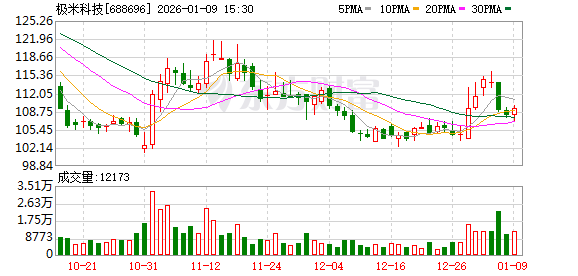
极米科技:2024年与2025年员工持股计划包括的员工不完全重叠
Zheng Quan Ri Bao Wang· 2026-01-09 13:50
Core Viewpoint - The company, XGIMI Technology, is implementing a rolling employee stock ownership plan for 2024 and 2025 to ensure long-term rewards for employees who join at different times and to retain top performers, thereby maintaining the stability of its core team [1] Group 1 - The employee stock ownership plan will not include the same employees for both years, allowing for a diverse group of participants [1] - The rolling incentive structure aims to prevent talent loss due to "empty periods" in incentives, ensuring that contributions are matched with appropriate long-term returns [1] - This strategy is designed to support the continuous stability of the core team within the company [1]
CES大会闭幕,可穿戴产品热度不减
Yin He Zheng Quan· 2026-01-09 10:31
Investment Rating - The report maintains a "Recommended" rating for the electronic industry [1]. Core Insights - The 2026 International Consumer Electronics Show (CES) highlighted the ongoing popularity of wearable products, with a focus on the integration of artificial intelligence and hardware [3]. - AI glasses are evolving with features like independent communication and open ecosystems, enhancing user experience and potentially replacing smartphones [3]. - Innovations in mainstream consumer electronics include the introduction of a robot-shaped smartphone and satellite communication capabilities in consumer-grade devices, aimed at creating new demand and applications [3]. - New wearable products, such as AI smart rings and camera-integrated headphones, are emerging, indicating a shift towards more sensory and seamless user experiences [3]. - The report suggests that technological advancements will drive market demand, recommending attention to companies like GoerTek, Luxshare Precision, Lens Technology, and others [3].



极米科技:公司主要产品指公司销售的智能投影整机,不包括配件产品
Mei Ri Jing Ji Xin Wen· 2026-01-09 09:07
每经AI快讯,有投资者在投资者互动平台提问:请公司回复:2、解锁条件之一是主要产品销量的台 数,2025年和2024年的这个条件一样的 ,也就是完成一个事情,同时享受2次奖励? 还有主要产品的台 数这个口径如何确定,是价值超过多少金额的整机算一台,还是一个配件就算一台,谁来监督这个条件 是否满足。为什么不用股民都认可的营业收入、归属于母公司的净利润这些指标来做解锁条件? (文章来源:每日经济新闻) 极米科技(688696.SH)1月9日在投资者互动平台表示,尊敬的投资者,您好,感谢您的关注。公司主 要产品指公司销售的智能投影整机,不包括配件产品,产品销量以公司年度报告中披露的外部销售台数 为准。 ...