荣耀

Search documents
《2025企业ESG实践观察报告》发布,53家企业入选优秀案例| 2025华夏ESG管理体系大会
Hua Xia Shi Bao· 2025-09-23 01:39
Core Viewpoint - The 2025 China ESG Management System Conference highlighted the growing importance of ESG as a core strategic pillar for companies, transitioning from a niche compliance issue to a significant driver of value creation [1][2]. Summary by Sections Conference Overview - The conference took place on September 19, 2023, in Beijing, focusing on the theme "Coexistence of Ideas and Practices, Development and Quality" [1]. - The event was organized by the China Times and supported by various organizations, including SGS and the China ESG Research Institute [1]. ESG Report Findings - The "2025 Corporate ESG Practice Observation Report" was released, marking the third consecutive year of publication by the China ESG Observation Alliance [1]. - The report indicates that the number of sustainable development reports published by A-share listed companies increased over 12 times from 2014 to 2024, with a disclosure rate improvement of nearly 40 percentage points [1]. - As of April 30, 2025, only 46% of A-share companies had published sustainable development reports, with less than 10% receiving third-party verification, indicating a need for improved ESG information quality and credibility [1]. Excellent ESG Practice Cases - A total of 53 companies were selected as "2025 ESG Practice Excellent Cases," evaluated by a panel of experts from various fields [2]. - The selected companies exemplify the integration of ESG into core business practices rather than superficial compliance [2]. Categories of ESG Cases - The excellent cases were categorized into nine types, including: - **Green Opportunity Cases**: Companies like NIO and China Bank that seized sustainable development opportunities [3]. - **Low Carbon Leading Cases**: Companies such as JD Logistics and Siemens that reduced carbon emissions in their operations [3]. - **Energy Saving and Consumption Reduction Cases**: Companies like TCL Technology and Mengniu that significantly lowered resource consumption [3]. - **Environmentally Friendly Cases**: Companies such as JinkoSolar and China Merchants Shekou that reduced pollution [3]. - **Quality Selection Cases**: Companies like Fosun Pharma and Haier that provided reliable products or services [3]. - **Human Resources and Public Welfare Benchmark Cases**: Companies like Ping An and Xpeng that managed employment relations and contributed to public welfare [4]. - **Supply Chain Responsibility Cases**: Companies such as Li Auto and Lenovo that actively fulfilled supply chain responsibilities [4]. - **Outstanding Governance Cases**: Companies like GCL-Poly and China Minsheng Bank that improved governance structures [4]. - **Compliance Model Cases**: Companies like Tigermed and JD Group that adhered to legal norms [4]. Top Ten ESG Practices - Among the excellent cases, ten companies were recognized as "Top Ten ESG Practices" for their innovation and effectiveness, including: - Ping An, TCL Technology, Mengniu, JD Logistics, JinkoSolar, China Merchants Shekou, Tongwei, Fosun Pharma, Siemens, and Schaeffler [5]. - These companies serve as industry benchmarks for sustainable practices [5]. Recognition of Individuals - The event also recognized eight individuals as "2025 China ESG Observation Alliance Recommended Officials" for their contributions to the development of the ESG ecosystem in Chinese enterprises [5].
原荣耀副董事长万飚加入头部电池厂商 | 36氪独家
3 6 Ke· 2025-09-23 00:01
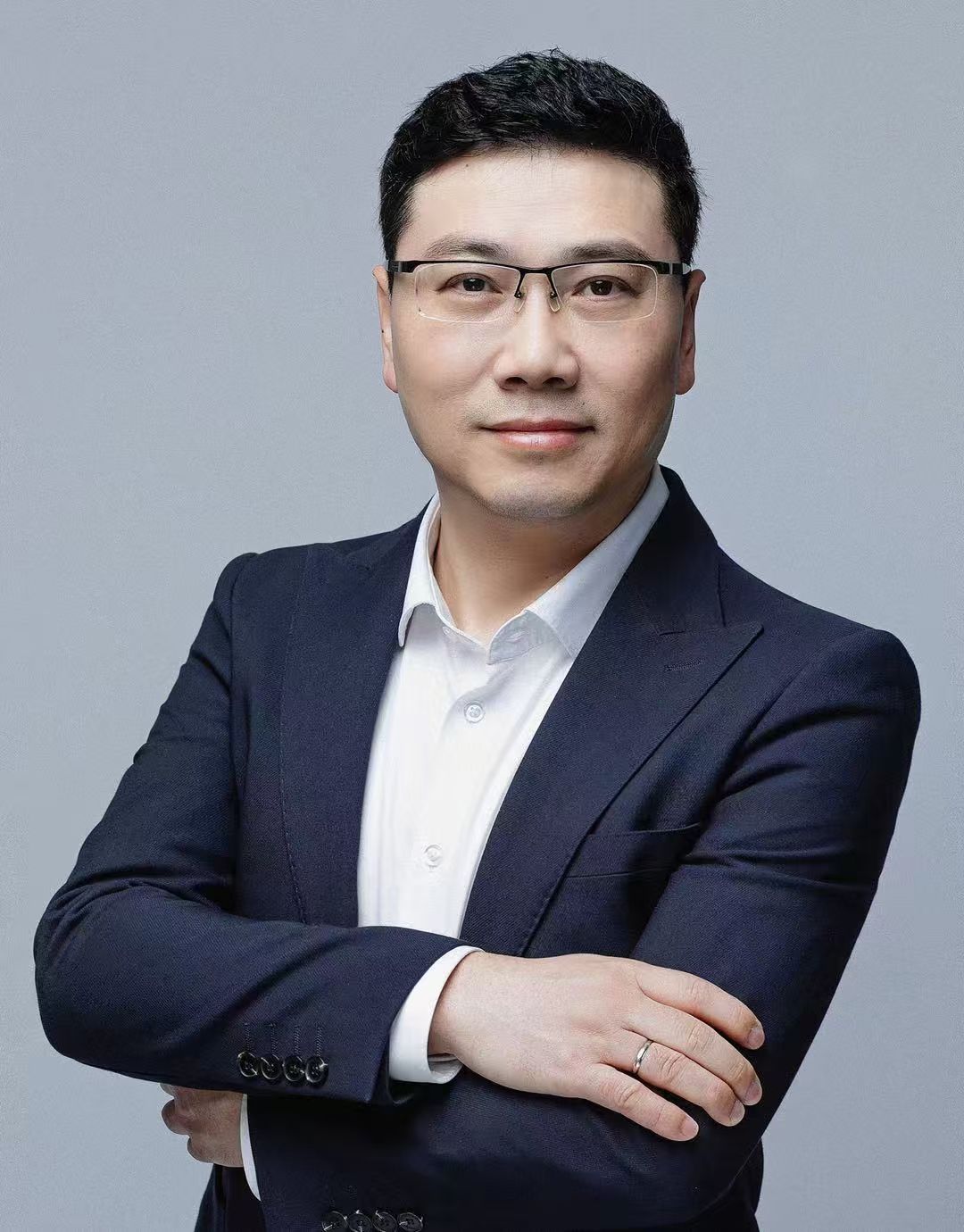
Core Insights - Wan Biao, former Vice Chairman of Honor, has joined AESC as CEO, aiming to leverage growth opportunities in the renewable energy sector and enhance AESC's position in clean energy technology [1][5] - AESC, established in 2007, is a leading battery technology company with a global client base including major automakers like BMW, Mercedes-Benz, and Nissan [5][6] Company Background - Wan Biao has extensive experience at Huawei, where he held various senior positions, contributing significantly to the company's wireless and terminal business success [3][4] - After Honor's independence from Huawei in 2020, Wan played a crucial role in restoring its supply chain and market presence [4][5] Strategic Importance - Wan's appointment is seen as a strategic move for AESC to enhance product competitiveness and achieve sustainable growth in key global markets [5][6] - His dual role as Executive Director and CTO at Envision Group allows for better resource integration and collaboration across various business sectors, including wind power, energy storage, and hydrogen [5][6] Global Expansion - AESC has made significant strides in global production capacity, with new factories launched in China, Japan, and France, and plans for further expansion in the UK and Spain [6][8] - The company has secured over 40 GWh of battery orders from leading energy storage integrators, positioning itself among the top three in global energy storage cell shipments for 2024 [8]

体验iPhone17后,我想说苹果终于要回击国产机了
Hu Xiu· 2025-09-22 23:40
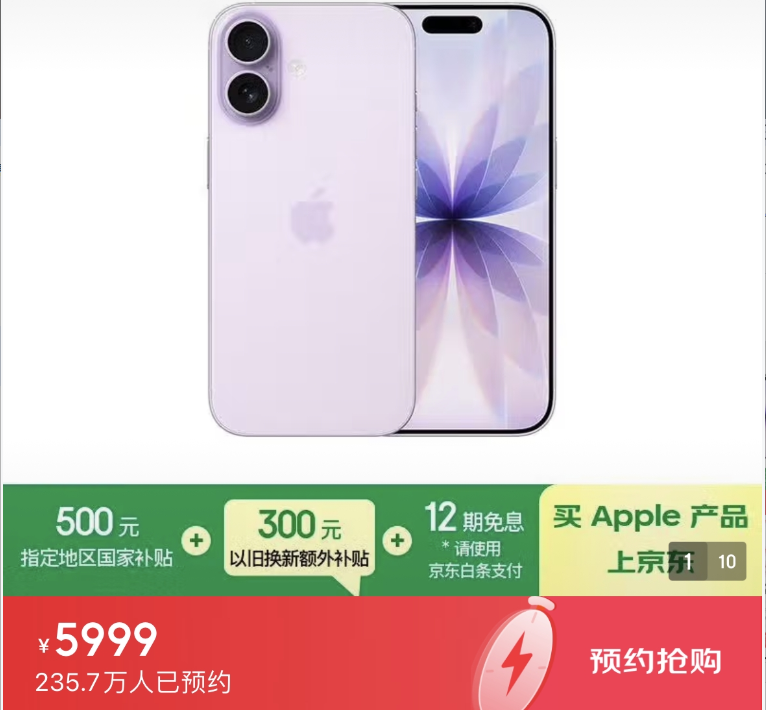
Core Insights - The iPhone 17 series has been officially released and is experiencing high demand, particularly the standard version, which has surpassed previous years' sales figures significantly [2][4][7] - The iPhone 17's pricing strategy remains competitive, with the starting price unchanged from the iPhone 16 at 5999 yuan, but with additional subsidies making it even more attractive [13][16][19] - Apple's market share in China has been declining, facing increasing pressure from domestic brands like Vivo, Huawei, and Xiaomi, which have improved their offerings and pricing strategies [9][27][29][66] Group 1: Sales Performance - The iPhone 17 standard version has received over 2 million pre-orders on a single e-commerce platform, a tenfold increase compared to the iPhone 16's pre-orders [2][4] - The iPhone 17 series is expected to revive iPhone sales, which had been struggling in the previous year [7][31] - The iPhone 17 Pro has also gained attention due to its enhanced features, including better cooling and battery performance [5][57] Group 2: Competitive Landscape - Domestic brands have been aggressively competing with Apple, leading to a significant drop in Apple's market share in China, where it fell to third place [9][27][29] - The introduction of high-refresh-rate screens and dual-frequency GPS in the standard version of the iPhone 17 marks a shift in Apple's strategy to counteract competition [14][22] - The competitive pressure has forced Apple to adopt a more aggressive pricing and feature strategy, which was previously not characteristic of the brand [10][46][66] Group 3: Market Dynamics - IDC data indicates that while Apple remains a global leader in smartphone shipments, its performance in the Chinese market is declining, with a year-over-year drop in market share [25][28] - The iPhone 17 series is seen as a response to the increasing capabilities of domestic brands, which have been able to offer similar features at lower prices [19][34][68] - The ongoing competition is expected to benefit consumers, as brands continue to enhance their offerings in response to each other [68][70]

2025年《财富》可持续发展峰会即将开幕
财富FORTUNE· 2025-09-22 13:09
2025年《财富》可持续发展峰会将于10月10日在福州举办 。 智能时代的浪潮,既为可持续发展注入澎湃动力,也裹挟着具有破坏力的暗流。智慧医疗与数字能源网 络等全球实践证明,数字化与智能化技术已经从辅助工具进化为驱动可持续发展的核心引擎;然而数据 中心能耗激增、算法参与决策、机器取代劳力,又向我们发出全新的拷问:技术进步能否推动人类福祉 的"净增长"? "智惠共生" 的价值在当下凸显:它要求将环境永续、社会公平、人类福祉和尊严铸入科技演进与商业 转型的核心,技术应普惠大众,为人类所利用、为人类所掌控。 本次峰会将汇集来自《财富》500强、最具创新精神公司的可持续践行者和专家学者,共同探讨科技赋 能下的可持续发展路径,凝聚共识并展开创新合作,令智能技术真正惠及人类命运。 *更多活动信息将在近期陆续发布,敬请关注。 部分发言嘉宾 智能时代 智惠共生 Intelligent Era: Shared Wisdom, Shared Prosperity 部分发言嘉宾 André Rittermeier 科恩创亚太区集团 创新与可持续发展 负责人 亚太创新中心负责人 翡 版 宜家供应 东亚区总裁 博 龙源电力集团 有限公 ...
国元证券-电子行业周报:英伟达投资50亿美元入股英特尔,三星HBM3e通过英伟达验证-250922
Xin Lang Cai Jing· 2025-09-22 07:57
Market Review - The overseas AI chip index decreased by 0.80% this week, with Marvell rising over 10% while Broadcom fell by 4.15% [1] - The domestic AI chip index increased by 2.0%, with SMIC rising over 10% and Cambricon dropping nearly 10% [1] - The NVIDIA mapping index rose by 3.6%, with Changxin Bochuang increasing by 7.30%, while Jianghai Co. fell by nearly 10% [1] - The server ODM index decreased by 0.6%, with Quanta experiencing a significant drop of 14.70% after a large increase last week [1] - The storage chip index increased by 3.7%, with Demingli and Puran shares rising over 20% [1] - The power semiconductor index rose by 0.6%, with the A-share Apple index increasing by 5.5% and the Hong Kong Apple index rising by 0.4% [1] Industry Data - From 2024 to 2030, the global automotive display panel market will see a gradual decline in a-Si TFT LCD share, with high-end technologies like AMOLED, LTPS TFT LCD, IGZO TFT LCD, and Micro LED expected to reach a combined share of 54% by 2030. AMOLED is projected to grow at an annual compound growth rate of 20.4%, the fastest among them [2] - In Q2 2025, the European smartphone market saw a year-on-year shipment increase of 4%, ending a period of low performance at the beginning of the year. Samsung led with a 31% share, followed by Apple at 25%, Xiaomi at 19%, and Honor and realme each at 4%, indicating a concentration of market share among leading players [2] Major Events - NVIDIA invested $5 billion in Intel, with both companies collaborating to develop a system-on-chip (SoC) integrating NVIDIA GPUs and Intel's x86 architecture, targeting the high-performance PC and data center markets. The collaborative product is expected to launch in 2026, with a projected market size of $50 billion, while Intel emphasized that this will not affect its own GPU development [3] - The Ministry of Commerce announced an anti-dumping investigation on relevant analog chips originating from the U.S. starting September 13, 2025, citing that previous U.S. restrictions harm the development of Chinese enterprises and the stability of the global semiconductor supply chain [3] - Apple is in discussions with suppliers to trial production of a foldable iPhone in Taiwan, with plans for mass production in India by 2026. Foxconn and other supply chain companies are expected to benefit from this move [3]


感谢超高清升级,才知道家里是4K电视!
第一财经· 2025-09-22 07:07
Core Viewpoint - The article discusses the rapid adoption and market penetration of 4K televisions, highlighting the importance of content and signal quality to fully utilize the capabilities of these devices. Group 1: Market Overview - 4K televisions have become a significant selling point in the market, transitioning from high-end products to mainstream options with prices starting from around 1,000 yuan for 50-inch models and up to over 10,000 yuan for 100-inch models [2][4] - In 2023, global shipments of 4K televisions reached approximately 150 million units, accounting for over 70% of total television shipments, with a projected increase to 160 million units in 2024, representing a year-on-year growth of about 6.7% [4] Group 2: Industry Participants - Major global players in the 4K/8K ultra-high-definition television market include Sharp, Sony, LG, and Samsung, while domestic brands in China consist of TCL, Hisense, Haier, Changhong, Konka, as well as emerging brands like Huawei, Honor, and Xiaomi [5] Group 3: Content and Signal Development - The availability of 4K content and signals is crucial for enhancing the viewing experience, with the National Radio and Television Administration planning to launch 13 new ultra-high-definition channels by the end of 2025 and an additional 11 channels in 2026 [10][11] - By 2025, the number of ultra-high-definition channels in China is expected to reach 12, with platforms like iQIYI, Youku, and Tencent planning to have over 50% of their newly added programs in ultra-high-definition [11] Group 4: Consumer Engagement and Upgrades - The "Oriental Cable Ultra HD AI Upgrade Action" launched in Shanghai aims to provide free upgrades of ultra-high-definition AI set-top boxes to cable television users, facilitating access to enhanced viewing experiences [10][11] - Consumers can also benefit from a television renewal service, allowing them to purchase 4K televisions at discounted prices, further promoting the adoption of ultra-high-definition technology [13]






市场销量实现快速增长 中国品牌手机日益走俏拉美市场
Ren Min Ri Bao· 2025-09-22 02:04
Core Insights - Chinese smartphone brands are increasingly popular in the Latin American market, with significant growth in sales and market share [1][2][3][4][5][6]. Market Performance - Overall smartphone sales in Latin America are projected to grow by approximately 2% in Q2 2025, reaching 34.3 million units [1]. - In Brazil, Motorola holds about 24% of the smartphone market share, while Xiaomi and Realme account for 17% and 6%, respectively [2]. - In Mexico, Chinese brands have captured around 43% of the smartphone market share, a significant increase from nearly zero in 2019 [3]. - In Peru, Xiaomi and Honor led smartphone imports with 890,000 and 830,000 units, reflecting quarter-on-quarter growth of 11.2% and 25.7% [3]. Consumer Preferences - Over 60% of Brazilian respondents prefer Chinese smartphones, with 67% believing China has a technological innovation advantage [2]. - In Ecuador, most of the 3.2 million smartphones imported in 2024 were Chinese brands, favored for their performance and value [4]. Innovation and Localization Strategy - Chinese smartphone brands are focusing on localization strategies, adapting products to meet local consumer preferences, which has helped build a loyal customer base [5][6]. - The introduction of AI features and high-quality designs in smartphones has positioned Chinese brands as leaders in innovation [6]. - Companies are increasingly investing in local production and supply chains in Latin America, enhancing manufacturing capabilities [7][8]. Industry Collaboration - Chinese smartphone manufacturers are establishing local production lines and partnerships in Latin America, contributing to job creation and technological skill development [7][8]. - Collaborative efforts in the smartphone industry are expected to improve understanding of local consumer needs and enhance regional industrialization [8].
中国品牌手机日益走俏拉美市场(国际视点)
Ren Min Ri Bao· 2025-09-21 22:41
Core Insights - The Latin American smartphone market is projected to see a 2% increase in overall sales by Q2 2025, reaching 34.3 million units, with Chinese brands gaining significant market share [1] - Xiaomi, Motorola, Honor, and Transsion are among the top five smartphone brands in the region, with Xiaomi achieving a record sales increase of 8% to 6.7 million units [1] Market Growth - Brazil is the largest smartphone market in Latin America, with Motorola capturing 24% of the market share, followed by Xiaomi at 17% and Realme at 6% [2] - Over 60% of Brazilian respondents prefer Chinese smartphones, with 67% believing China has a technological innovation advantage [2] Brand Performance - In Mexico, Chinese smartphone brands hold approximately 43% market share, with significant growth from near-zero in 2019 [3] - Honor launched the Honor 400 series in Peru, achieving notable import figures of 890,000 units for Xiaomi and 830,000 units for Honor, reflecting growth rates of 11.2% and 25.7% respectively [3] Consumer Preferences - Ecuador's smartphone imports in 2024 are expected to exceed 3.2 million units, predominantly from Chinese brands, which are favored for their performance and design [4] - In Venezuela, Transsion and Xiaomi have rapidly increased their market share, accounting for 50.6% of smartphone sales [4] Innovation and Localization Strategy - Chinese smartphone brands are successful in Latin America due to their localization strategies, adapting products to meet local preferences and expanding their loyal customer base [5] - The focus on technology democratization and high cost-performance ratio has been a key factor in the success of Chinese brands [5] Competitive Landscape - The competitive landscape in Latin America is expected to evolve, requiring brands to adopt diversified and personalized operational models to enhance brand trust and achieve scalable growth [6][7] Local Production and Collaboration - Increasing numbers of Chinese smartphone manufacturers are establishing local production lines in Latin America, enhancing local manufacturing capabilities and supply chains [8] - Collaborations with local companies are seen as strategic moves to better understand consumer needs and improve product offerings [9]
2025年第二季度销量排名前五的智能手机品牌中 中国品牌占据四席 中国品牌手机日益走俏拉美市场(国际视点)
Ren Min Ri Bao· 2025-09-21 22:21
Market Growth - The overall smartphone sales in the Latin American region are projected to grow by approximately 2% in Q2 2025, reaching 34.3 million units [2] - Xiaomi's smartphone sales increased by 8%, achieving a record of 6.7 million units in the same period [2] - In Brazil, Motorola accounted for about 24% of the smartphone market share, while Xiaomi and Realme held 17% and 6% respectively [3] Brand Performance - Chinese smartphone brands dominate the top five positions in the Latin American market, with Xiaomi, Motorola, Honor, and Transsion leading [2] - In Mexico, Chinese brands hold approximately 43% of the smartphone market share, a significant increase from nearly zero in 2019 [4] - In Peru, Xiaomi and Honor were the top two imported smartphone brands, with imports of 890,000 and 830,000 units respectively, showing quarter-on-quarter growth of 11.2% and 25.7% [4] Consumer Preferences - Over 60% of Brazilian respondents prefer Chinese smartphones, with 67% believing that China has a technological innovation advantage [3] - Consumers in Ecuador prioritize cost-effectiveness, speed, storage, camera quality, and screen design, favoring Chinese brands for their competitive advantages [5] Innovation and Localization Strategy - Chinese smartphone brands are successful in Latin America due to their focus on localization strategies, adapting product features and marketing to local preferences [6] - The introduction of advanced technologies such as artificial intelligence and foldable screens by Chinese brands is attracting consumers [6] - Industry experts emphasize the need for diversified and personalized operational models to maintain long-term competitiveness in the market [7] Local Production and Collaboration - Chinese smartphone manufacturers are increasingly establishing local production lines or collaborating with local companies in Latin America [9] - The establishment of local manufacturing capabilities is seen as a strategic long-term decision to better understand consumer needs and enhance supply chain efficiency [9] - Strengthening the smartphone industry chain cooperation between China and Latin America is expected to improve local manufacturing capabilities and contribute to regional industrialization [9]
全球手机品牌销量十强深度评测:2025年消费市场格局与选购指南
Sou Hu Cai Jing· 2025-09-21 18:17
Global Sales Landscape - The global smartphone sales landscape for Q2 2025 shows a "2+8" structure, with Samsung and Apple leading at 19% and 16% market shares respectively, while Chinese brands occupy eight positions, collectively surpassing 58% market share, an increase of 12 percentage points from 2023 [1][2] - Samsung's advantage is driven by the Galaxy A and S series, with the Galaxy A16 5G achieving over 8 million units shipped in a single quarter in India and Southeast Asia, and the Galaxy S25 Ultra capturing 23% of the high-end market [1] - Apple's iPhone 16 series, particularly the Pro Max version, dominates the high-end market with a 68% share in the over $1000 segment [1] Differentiated Growth of Chinese Brands - Xiaomi's "smartphone × AIoT" strategy has led to a 30% annual growth in markets like India and Latin America [2] - Transsion's TECNO Camon 30 has achieved over 55% market share in Africa, leveraging its 64MP night photography capabilities [2] - Huawei's Mate 70 series, featuring the Kirin 9020 chip and satellite communication, has significantly increased its market share in the high-end segment in China [2] High-End Market Competition - In the high-end market (over $800), Apple holds a 62% market share, but faces increasing competition from Huawei and Samsung [4] - The iPhone 16 Pro Max features the A18 chip with a 40% GPU performance improvement, while Samsung's Galaxy S25 Ultra boasts a peak brightness of 2600 nits and advanced camera capabilities [4] - Huawei's Mate 70 Pro+ has seen its market share in the 6000 yuan and above segment rise from 12% to 28% post-launch, directly challenging Apple's position [4] Mid-Range Market Dynamics - The mid-range segment (priced $400-$799) is highly competitive, with Xiaomi, vivo, and OPPO vying for market share [5] - Xiaomi 15 Ultra features advanced cooling technology and gaming performance, while vivo X100s Pro excels in low-light photography [5] - OPPO Reno12 Pro focuses on lightweight design and fast charging capabilities [5] Entry-Level Market Transformation - The entry-level market (under $200) is experiencing a transformation driven by 5G and AI technologies [8] - The Redmi 14C 4G has achieved significant sales in Latin America, while the realme C65 5G has gained popularity for its dual 5G support and efficient power consumption [8] - AI technology is enhancing user experience, with devices like the Infinix HOT 40 Pro offering advanced features tailored to local languages [8] Future Trends and Consumer Choices - The foldable smartphone market is evolving from novelty to practicality, with devices like the Samsung Z Fold7 and Huawei Mate X6 offering enhanced usability [9] - AI smartphones are entering a competitive phase, with Google's Pixel 9 series and Apple's A18 chip providing advanced AI functionalities [9] - Consumers are advised to focus on their specific needs, such as gaming performance, photography capabilities, or business requirements, rather than solely on technical specifications [10]