
中国星网

Search documents
从新时代奋斗者的五组日记看新发展理念深入人心
Ren Min Ri Bao· 2025-10-20 22:01
Group 1: Innovation Development - The past decade has seen significant advancements in innovation across various sectors, including aerospace, transportation, and marine industries, with notable achievements such as the successful operation of the CR450 high-speed train and the launch of the "Chang'e" lunar missions [2][4][5] Group 2: Coordinated Development - The income disparity between urban and rural residents has decreased, with the ratio of disposable income per capita dropping from 2.73 in 2015 to 2.34 in 2024, indicating improved balance in development across regions [3] Group 3: Green Development - There has been a more than 33% reduction in the average PM2.5 concentration in cities from 2015 to 2024, alongside the establishment of the world's largest renewable energy system and a significant increase in the registration of new energy vehicles [4][21] Group 4: Open Development - The construction of the Hainan Free Trade Port is progressing, with the port expected to officially commence operations by December 18, 2025, enhancing China's international trade capabilities [5][24] Group 5: Shared Development - The country has achieved significant milestones in poverty alleviation, with a focus on building a comprehensive education, social security, and healthcare system, contributing to a greater sense of community and shared prosperity [6][30]
北斗“国家队”18个月加速布局:构筑时空智能新生态
Hua Xia Shi Bao· 2025-10-17 12:46
Core Viewpoint - The establishment of China Space-Time Information Group represents a significant advancement in the integration of space and terrestrial technologies, aiming to enhance the application of the BeiDou system and promote digital economy development [2][5][11]. Group 1: Company Development - China Space-Time Information Group, formed by three major state-owned enterprises, has achieved rapid development within 18 months, transitioning from organizational setup to leading the BeiDou ecosystem [2][3]. - The company has a registered capital of 4 billion yuan and has made significant strides in the industrialization of the BeiDou system, moving from conceptualization to large-scale application [2][5]. - The first holding subsidiary is set to be established in Chongqing by September 2024, marking a key step in the construction of a national space-time big data center [5]. Group 2: Technological Integration - The integration of space and terrestrial technologies is becoming an industry trend, with the China Space-Time Information Group positioned to support this development [5][6]. - The company is focused on creating a comprehensive service network that combines BeiDou short messages and high-precision positioning to form a unified data infrastructure [5][6]. Group 3: Market Expansion - The BeiDou system is increasingly being adopted in various sectors such as transportation, agriculture, and disaster prevention, indicating a robust domestic market acceptance [9][11]. - The system is projected to cover over 200 countries and regions, with a complete industrial chain established, contributing to a total industry output value of 575.8 billion yuan in 2024, reflecting a year-on-year growth of 7.39% [11]. Group 4: Future Outlook - The company aims to balance "independent control" with "global adaptation" by promoting core component localization and establishing international cooperation platforms [12]. - The future growth of the BeiDou industry is expected to be driven by high-precision positioning services and emerging applications in smart driving, low-altitude logistics, and digital agriculture [12].


千帆星座明年发射目标600多颗,垣信开启新一轮融资
Guan Cha Zhe Wang· 2025-10-17 09:26
Core Viewpoint - Shanghai Yuanxin Satellite Technology Co., Ltd. is initiating a new round of financing, aiming to raise between 5 billion to 6 billion RMB, with a pre-investment valuation exceeding 40 billion RMB [1] Group 1: Financing and Valuation - The company previously completed a record-breaking A-round financing of 6.7 billion RMB in February 2024, marking the largest single-round financing in China's satellite industry [1] - The latest financing round is expected to inject significant capital into the company's "Qianfan Constellation" project, reflecting market optimism about low Earth orbit satellite internet prospects [11] Group 2: Satellite Deployment Plans - The "Qianfan Constellation" aims to accelerate its deployment, with current plans to have 90 low Earth orbit satellites in space, targeting 108 by mid-2025, 324 by mid-2026, and 1,296 by 2027, ultimately aiming for 15,000 satellites post-2030 [3] - The company faces strict international regulations regarding satellite frequency and orbital resource allocation, necessitating timely launches to maintain resource rights [3] Group 3: Competitive Landscape - The global competition in low Earth orbit satellites has intensified, with SpaceX's Starlink leading the way, having launched 8,926 satellites by August 2025, with plans to reach 12,000 by the end of the year [3] - China's main satellite communication players include China Star Network's GW constellation and Shanghai Yuanxin's "Qianfan Constellation," with both companies currently working to increase their satellite launches [5] Group 4: Market Expansion and Partnerships - Shanghai Yuanxin plans to expand its market in countries along the Belt and Road Initiative, including Brazil, Pakistan, and several Central Asian nations, where there is a high demand for wireless mobile communication [11] - A memorandum of cooperation was signed with Brazil's state-owned telecommunications company TELEBRAS, aiming to bridge the digital divide in Brazil [13] - It is estimated that once the "Qianfan Constellation" has 600 satellites in orbit, the company could secure orders worth around 5 billion RMB, highlighting the commercial potential of low Earth orbit satellite networks [13]

央企,撑不起雄安的天!
Sou Hu Cai Jing· 2025-10-16 22:51
Core Insights - The relocation of central enterprises (SOEs) to Xiong'an New Area is expected to boost local development, with three SOEs having officially settled and over 300 branches established, indicating a significant influx of corporate presence [3] - However, the direct impact on local employment and economic growth is limited, as the number of jobs created by these SOEs is insufficient to meet the area's population target of 5 million [4] - The experience from across the country suggests that private and small enterprises are more effective in driving regional economic development compared to SOEs, highlighting the need for supportive policies for these businesses [5] Group 1: SOE Relocation and Impact - China Huaneng and China Sinochem have established their headquarters in Xiong'an, contributing to the formation of an innovation ecosystem in the aerospace information sector [3] - The "headquarters + industrial chain" model is anticipated to reconstruct the industrial ecosystem in Xiong'an, promoting the implementation of development plans [3] - The initial focus of SOEs on stable operations may delay their economic contributions to the local area, necessitating significant investment in infrastructure to support these enterprises [4] Group 2: Employment and Economic Contribution - The three SOEs have brought approximately 3,000 employees, which is far from sufficient to support the projected population growth in Xiong'an [4] - The stable nature of SOEs means they are unlikely to create immediate economic benefits, requiring a long-term approach to foster local economic growth [4] Group 3: Role of Private and Small Enterprises - Private and small enterprises contribute significantly to tax revenue, GDP, innovation, employment, and the number of businesses, underscoring their importance in economic development [5] - The presence of private tech companies in the Xiong'an internet industrial park is crucial for developing the aerospace information and AI sectors, creating a symbiotic relationship with SOEs [5] - To enhance the vitality of private and small enterprises, Xiong'an needs to implement more targeted support policies, ensuring equitable treatment compared to SOEs [6] Group 4: Recommendations for Policy Support - Suggestions include optimizing the business environment for small enterprises, creating platforms for collaboration between SOEs and private firms, and expanding support in financing and public services [6] - The successful integration of SOEs and private enterprises is essential for Xiong'an to transition from merely accommodating SOEs to achieving autonomous development and high-quality growth [6]


通宇通讯:公司此前已投资蓝箭鸿擎,其余相关项目也在有序推进中
Mei Ri Jing Ji Xin Wen· 2025-10-14 03:45
Core Viewpoint - The company has identified leading low Earth orbit (LEO) satellite internet enterprises and is actively investing in related projects to enhance collaboration with these key players [1]. Group 1: Company Information - The company confirmed its investment in Blue Arrow Hongqing, one of the leading LEO satellite internet enterprises [1]. - The company is involved in ongoing projects with three major satellite constellations, which include State Grid (GW) with 12,992 satellites, Qianfan with 12,000 satellites, and Honghu with 10,000 satellites [1]. Group 2: Industry Context - The leading LEO satellite internet enterprises are characterized by their significant satellite constellations, which are crucial for establishing robust satellite internet networks [1]. - The company aims to deepen collaboration with these leading satellite constellations, indicating a strategic focus on partnerships within the satellite internet industry [1].

推动京津冀协同发展迈上新台阶
Jing Ji Ri Bao· 2025-10-11 22:18
Core Viewpoint - The coordinated development of the Beijing-Tianjin-Hebei region is a significant national strategy aimed at enhancing regional strengths and achieving high-quality development, with a focus on optimizing the capital's core functions and addressing regional imbalances [1][2]. Economic Development - The GDP of the Beijing-Tianjin-Hebei region is projected to reach 11.5 trillion yuan in 2024, doubling since 2013 and accounting for 8.5% of the national total [3]. - The industrial structure has shifted from 6.2:35.7:58.1 in 2013 to 4.3:26.8:68.9 in 2024, with the tertiary sector in Beijing exceeding 80% [3]. - The region has established a collaborative industrial model characterized by "Beijing R&D, Tianjin and Hebei manufacturing" [3]. Innovation and Collaboration - The establishment of the Beijing-Tianjin-Hebei National Technology Innovation Center has facilitated regional innovation, with significant breakthroughs in key technologies [3]. - The three regions are working together to create a world-class port cluster and improve transportation integration, achieving a basic regional traffic circle within 1 to 1.5 hours [4]. Infrastructure and Public Services - By the end of 2024, 1,053 cross-province services will be operational, and 230 "same standards" items will be introduced in the Beijing-Tianjin-Hebei Free Trade Zone [4]. - The region has made significant progress in sharing educational and medical resources, with notable collaborations between Beijing and Hebei in establishing schools and healthcare facilities [10]. Industrial Transformation - The focus is on building a modern industrial system, emphasizing high-end, intelligent, and green development, with a strong push for technological and industrial innovation [5][6]. - The region is actively promoting the transformation of traditional industries and fostering strategic emerging industries [5]. Non-Capital Function Relief - The relief of non-capital functions in Beijing is crucial for enhancing the capital's core functions and optimizing the regional spatial structure [7]. - Over 3,000 general manufacturing enterprises and more than 1,000 markets have been relocated from Beijing, creating space for core functions [8]. Population and Talent Management - The population in Beijing is stabilizing, with a focus on attracting high-skilled and innovative talent, which is essential for the city's sustainable development [8][9]. Future Directions - The coordinated development strategy aims to make the Beijing-Tianjin-Hebei region a model for China's modernization, with ongoing efforts to enhance public services and achieve balanced development across the region [4][12].
雄安“新地标”崛起!央企总部高校医院加速入驻
Huan Qiu Wang· 2025-10-11 04:17
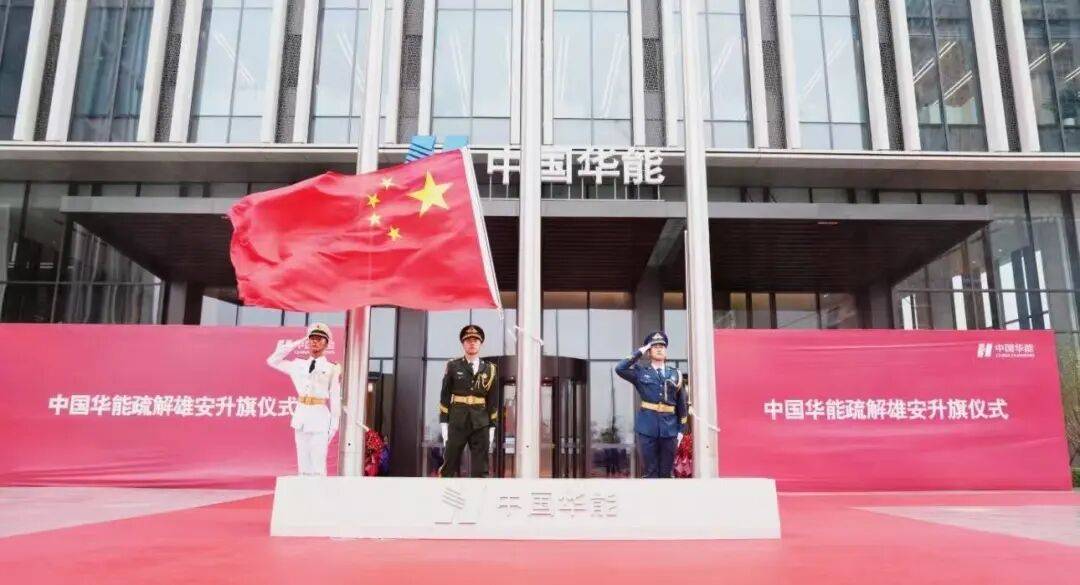
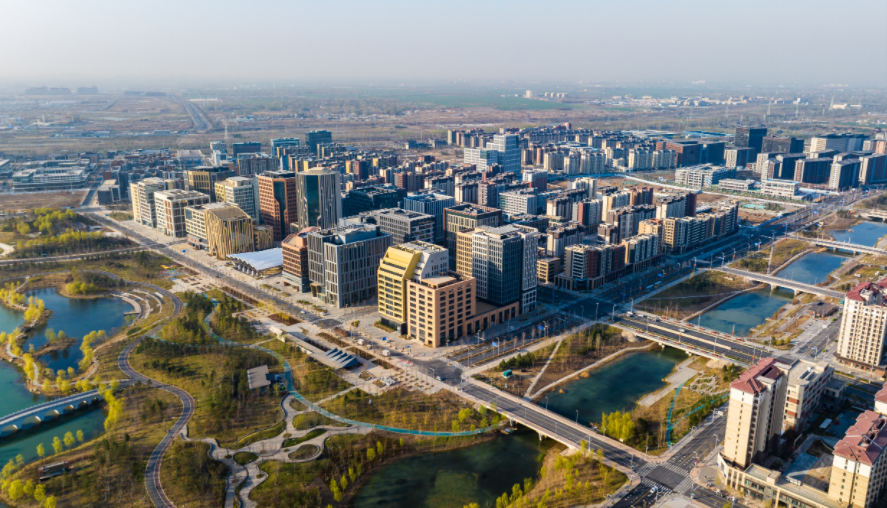
Group 1 - The construction of Xiong'an New Area is experiencing a significant surge, marked by the relocation of major state-owned enterprises (SOEs) headquarters, including China Huaneng and China Sinochem, which officially settled on October 9 [1][2] - The relocation of these SOEs is expected to create a "headquarters matrix" in Xiong'an, driving the aggregation of related upstream and downstream enterprises, thereby accelerating the development of a high-quality industrial ecosystem in the area [2][6] Group 2 - Xiong'an New Area is also making progress in enhancing public service resources, with several universities, including Beijing Jiaotong University and Beijing University of Science and Technology, accelerating the construction of their campuses [4] - In the healthcare sector, major hospitals such as Peking University People's Hospital and Peking Union Medical College Hospital are advancing their construction projects in Xiong'an, indicating a comprehensive improvement in urban functions [4] Group 3 - The relocation of the Beijing-Tianjin-Hebei Railway Company to Xiong'an is a crucial step in regional collaborative development, with the company responsible for planning and operating intercity railways in the region, covering approximately 1,220 kilometers of railway projects [5] - This move is expected to enhance the railway network layout in the Beijing-Tianjin-Hebei region, providing strong support for the construction of Xiong'an New Area and regional cooperation [5] Group 4 - The Central Regional Office and the National Development and Reform Commission will continue to promote the implementation of subsequent relocation projects and improve municipal and public service policies in Xiong'an, ensuring that relocated personnel can settle and thrive [6]
北京非首都功能疏解标志性项目取得重要进展
券商中国· 2025-10-11 00:54
Core Viewpoint - The article highlights the significant progress in the relocation of central state-owned enterprises (SOEs) to Xiong'an New Area, which is part of a broader initiative to relieve Beijing of non-capital functions and promote regional development [3][4][7]. Group 1: Relocation of Central SOEs - The first batch of central SOEs, including China Huaneng and China Sinochem, officially relocated their headquarters to Xiong'an New Area on October 9, 2023, marking a crucial milestone in the area's development [4][7]. - Over 1,000 employees from China Huaneng and nearly 1,000 from China Sinochem have begun regular operations in Xiong'an, indicating a successful transition [7]. - The relocation of these enterprises is expected to attract related upstream and downstream companies, enhancing the industrial structure and promoting high-quality development in the region [7]. Group 2: Infrastructure and Educational Developments - Several universities, including Beijing Jiaotong University and Beijing University of Technology, are accelerating the construction of their campuses in Xiong'an, with specific sites already designated for five additional institutions [5]. - Major hospitals, such as Peking University People's Hospital and Peking Union Medical College Hospital, are also advancing their projects in Xiong'an, with construction already underway for some facilities [5]. Group 3: Transportation and Connectivity - The Beijing-Tianjin-Hebei Railway Company has officially moved its operations to Xiong'an, with a registered capital of 800 billion yuan, focusing on intercity railway projects in the region [8]. - The company is tasked with the construction of 11 railway projects during the 14th Five-Year Plan, covering approximately 1,220 kilometers with a total investment of about 2,950 billion yuan [8].

北京非首都功能疏解标志性项目取得重要进展
证券时报· 2025-10-10 15:00
Core Points - The article discusses the significant progress in the relocation of central state-owned enterprises (SOEs) to Xiong'an New Area, which is part of the broader initiative to relieve Beijing of non-capital functions [4][5][10]. - The establishment of headquarters for major SOEs like China Huaneng and China Sinochem in Xiong'an marks a critical milestone in this initiative, expected to enhance the local economy and attract related industries [10][11]. Group 1: Relocation of Enterprises - The first batch of central SOEs, including China Huaneng and China Sinochem, officially relocated to Xiong'an New Area on October 9, 2023, with over 1,000 employees from each company now working in the new headquarters [10]. - The China National Railway Group's subsidiary, Beijing-Tianjin-Hebei Railway Company, also moved its operations to Xiong'an, which is responsible for significant railway projects in the region [11]. Group 2: Educational and Medical Institutions - Four universities, including Beijing Jiaotong University and Beijing University of Science and Technology, are accelerating the construction of their campuses in Xiong'an, while five other universities have confirmed their site selections [7]. - Medical facilities are also expanding, with the construction of the Peking University People's Hospital Xiong'an branch and the opening of the Peking Union Medical College National Medical Center in Xiong'an [7]. Group 3: Future Developments - The National Development and Reform Commission plans to continue promoting the relocation of additional projects to Xiong'an, focusing on improving municipal and public service infrastructure [8]. - The relocation of SOEs is expected to bring talent and technology to Xiong'an, enhancing the area's urban functions and vitality [10][11].

又一国企迁驻雄安
Zhong Guo Ji Jin Bao· 2025-10-10 12:40
Group 1 - The Beijing-Tianjin-Hebei Railway Company has officially relocated its office to Xiong'an New Area to enhance its role in railway construction investment and support the high-quality development of Xiong'an and the coordinated development of the Beijing-Tianjin-Hebei region [1] - The company, established in March 2015 with a registered capital of 80 billion yuan, is responsible for planning, construction, operation, financing, and comprehensive development of intercity railway projects in the Beijing-Tianjin-Hebei area [1] - During the 14th Five-Year Plan period, the company is tasked with constructing 11 railway projects with a total length of approximately 1,220 kilometers and a total investment of about 295 billion yuan [1] Group 2 - The National Development and Reform Commission has been actively promoting the relocation of non-capital functions from Beijing to Xiong'an New Area, achieving significant progress in landmark projects [2] - Several universities, including Beijing Jiaotong University and Beijing University of Science and Technology, are accelerating the construction of their campuses in Xiong'an, with others having confirmed land for their campuses [2] - Major hospitals, such as Peking University People's Hospital and Beijing Union Medical College Hospital, are advancing their construction projects in Xiong'an, with several others in the planning stages [2] - Several central enterprises, including China Star Network and China National Chemical Corporation, have established their headquarters in Xiong'an, with ongoing projects and site selections for additional enterprises [2]