胖东来

Search documents
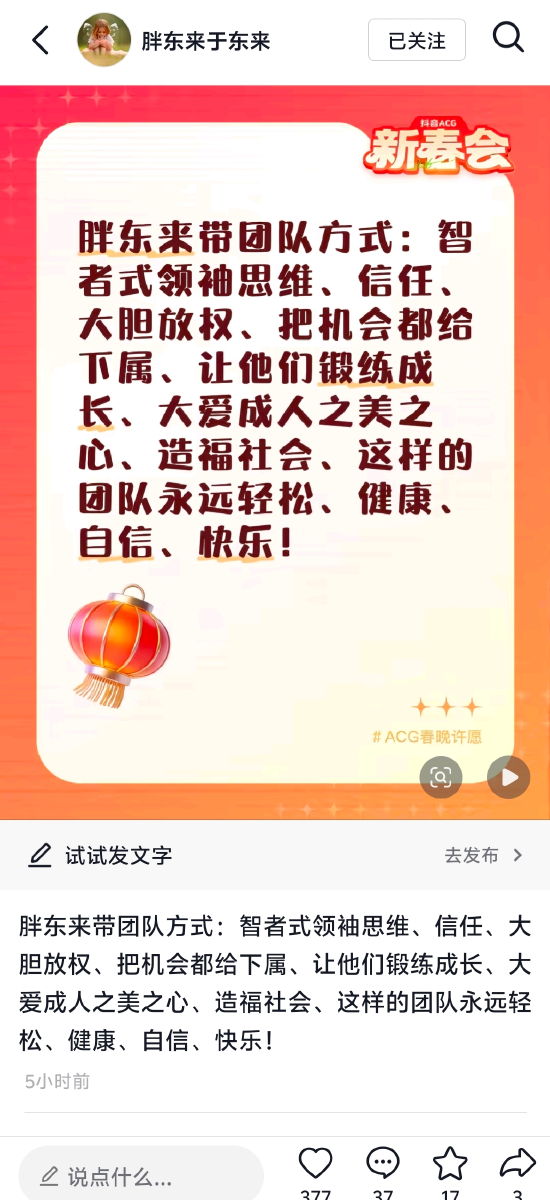
于东来谈胖东来带团队方式:智者式领袖思维,大胆放权、把机会都给下属
Xin Lang Cai Jing· 2026-01-26 05:18
1月26日消息,胖东来创始人于东来在社交媒体谈"胖东来带团队方式":智者式领袖思维、信任、大胆 放权、把机会都给下属、让他们锻练成长、大爱成人之美之心、造福社会、这样的团队永远轻松、健 康、自信、快乐! 责任编辑:李思阳 1月26日消息,胖东来创始人于东来在社交媒体谈"胖东来带团队方式":智者式领袖思维、信任、大胆 放权、把机会都给下属、让他们锻练成长、大爱成人之美之心、造福社会、这样的团队永远轻松、健 康、自信、快乐! 责任编辑:李思阳 ...

巨亏21亿!“胖东来之子”崩了
Sou Hu Cai Jing· 2026-01-26 03:45
Core Viewpoint - The article discusses the struggles of Yonghui Supermarket as it attempts to emulate the successful business model of the renowned retailer Pang Donglai, but faces significant challenges and ongoing losses. Group 1: Yonghui Supermarket's Current Situation - Yonghui Supermarket, once a leading player in China's supermarket industry, is projected to incur a net loss of 2.14 billion yuan in 2025, accumulating losses of 11.6 billion yuan over five years [1][5] - The company has attempted to reform by adopting strategies from Pang Donglai, including significant changes in employee compensation, product quality, and shopping environment [5][6] - Despite a brief stock price recovery, Yonghui has closed nearly 20% of its stores within six months, indicating that the implementation of these strategies has not been effective [6][19] Group 2: Comparison with Pang Donglai - Pang Donglai reported an annual revenue of 23.531 billion yuan in 2025, a 38.7% increase from 17 billion yuan in 2024, showcasing a stark contrast to Yonghui's financial struggles [2][3] - The article highlights that while many retailers attempt to replicate Pang Donglai's model, they fail to grasp the underlying principles that contribute to its success, particularly the restructuring of profit-sharing mechanisms [11][17] - Pang Donglai's approach emphasizes employee satisfaction and high-quality service, which has resulted in a low employee turnover rate of less than 3%, compared to the industry average of over 25% [15][19] Group 3: Challenges in Implementation - Yonghui's strategy shift from "scale expansion" to "quality growth" has led to significant store closures, which the company claims are necessary to align with its new strategic direction [6][19] - The difficulties faced by Yonghui and other imitators stem from their inability to adapt the core principles of Pang Donglai's model to their larger, more complex operations [17][19] - The article suggests that successful retail strategies must consider the unique context of each company, rather than blindly copying successful models [17][19]

破解“幽灵网店”难题
Jing Ji Ri Bao· 2026-01-26 00:02
强化部门联动执法。应针对不同行业特点精准施策:食品行业重点核查货源追溯链条,化妆品行业 严查备案信息真实性,电子产品行业加大抽检力度。同时,打通市场监管、电商平台的数据壁垒, 对"幽灵网店"的注册、运营、收款等环节实施全链条追踪,依法处罚违法经营行为。 引导消费者理性维权。消费者网购时应优先选择"旗舰店""品牌授权店",核对食品生产许可证号、 化妆品备案号、电子产品防伪标识等关键信息,遇到异常情况及时通过官方渠道投诉举报。通过强化消 费者维权意识,以社会监督挤压"幽灵网店"生存空间,形成全民共治的良好氛围。 规范电子商务发展是维护市场公平、保障消费安全的必然要求,唯有为每家网店"验明正身",才能 让消费者放心消费、商家公平竞争,推动电子商务行业行稳致远。(本文来源:经济日报 作者:李翱) (责任编辑:武晓娟) 近日,市场监管部门在查处涉嫌侵犯"胖东来"注册商标专用权的14家网店时发现,有10家未在公示 地址经营,其中8家更是难寻踪迹。这类"幽灵网店"已成为扰乱市场秩序的突出隐患。 "幽灵网店"普遍存在无实体经营地址、无真实联系方式、无售后保障等情况,依靠虚假宣传、低价 诱惑、刷单造势等手段吸引消费者,在交易完 ...
“抄答案都抄不明白”,想学胖东来的超市怎么一家接一家倒下
Sou Hu Cai Jing· 2026-01-25 20:55
Core Viewpoint - The article discusses the challenges faced by companies attempting to emulate the successful business model of Pang Donglai, highlighting that many have struggled to achieve similar results despite extensive efforts to learn from his approach. Group 1: Challenges in Learning from Pang Donglai - Many companies, including Meitoh and Yonghui Supermarket, have attempted to adopt the "Pang Donglai model" but have encountered significant difficulties, with some even failing to graduate from training programs [1][3]. - Yonghui Supermarket has reported a projected annual loss, while other competitors like Zhongbai have seen revenue decline by nearly 20% year-on-year [3]. - Despite these struggles, Pang Donglai has achieved remarkable success, completing a sales target of 20 billion yuan ahead of schedule, which is 25% more than the previous year's total [3]. Group 2: Key Characteristics of the Pang Donglai Model - The essence of the "Pang Donglai model" lies in fundamentally changing the survival strategies of traditional retail stores, moving away from the reliance on key account (KA) sales [5][6]. - Traditional supermarkets often charge suppliers various fees to place products on shelves, which can significantly reduce profit margins [7][10]. - Pang Donglai, along with Costco and Sam's Club, has adopted a model that emphasizes direct profit from consumers rather than relying on supplier fees, allowing for better product selection and control over inventory [9][10]. Group 3: Management and Operational Insights - The article emphasizes the importance of effective management and organizational structure in successfully implementing the Pang Donglai model, noting that traditional procurement systems can hinder progress [11][25]. - High employee compensation and generous benefits at Pang Donglai are designed to reduce unethical behavior and improve overall management efficiency [14][20]. - The complexity of managing a large organization can dilute the effectiveness of detailed management practices, making it challenging for companies to replicate Pang Donglai's success [25][26].
永辉抄胖东来作业,没抄明白
虎嗅APP· 2026-01-25 14:11
Core Viewpoint - Yonghui Supermarket is facing significant financial challenges, with a projected net loss of 2.14 billion yuan for 2025, marking its fifth consecutive year of losses and a 45.6% year-on-year increase in losses [2][4]. Financial Performance - From 2021 to 2025, Yonghui's net profits were -3.944 billion yuan, -2.763 billion yuan, -1.329 billion yuan, -1.465 billion yuan, and a projected -2.14 billion yuan, totaling over 11.6 billion yuan in losses over five years [4]. - The company's asset-liability ratio reached 88.96% by the end of Q3 2025, with total assets of 31.62 billion yuan and liabilities of 28.129 billion yuan [5]. - Operating cash flow has significantly decreased from 5.864 billion yuan in 2022 to 1.14 billion yuan in Q3 2025, indicating severe cash flow pressure [5]. Strategic Transformation - Yonghui's management attributes the massive losses to "short-term pain" from strategic transformation, including the deep adjustment of 315 stores and the closure of 381 low-efficiency stores, resulting in over 1.2 billion yuan in direct losses [4][5]. - The transformation costs for Yonghui are significantly higher than the industry average, with 81% of supermarket companies achieving performance growth while keeping adjustment costs within 3%-5% of revenue, whereas Yonghui's adjustment costs are projected to consume all profits [5]. Comparison with Competitors - The "Fat Donglai model" has shown positive results, with an average customer flow increase of 80% and 60% of adjusted stores achieving record profits, but Yonghui's adaptation has not translated into overall profitability [7][8]. - Fat Donglai's success is attributed to a unique distribution mechanism, regional supply chain barriers, and a trust-based economy, which are difficult for national chains like Yonghui to replicate [8][9]. Industry Context - The retail industry is experiencing a "diversification intensification," with 50% of companies achieving sales growth and 46% achieving net profit growth, while regional supermarkets are outperforming national chains like Yonghui [11][12]. - The shift from scale-driven growth to efficiency-driven growth is evident, with successful companies focusing on single-store efficiency rather than just increasing customer flow [12]. Future Outlook - Yonghui's future hinges on its ability to effectively utilize funds from a planned 3.1 billion yuan capital increase for store adjustments and supply chain upgrades, with potential cash flow crises looming if the capital increase fails [11][12]. - The company must address two core issues: efficiently investing in profit distribution reform and localizing the supply chain while controlling costs during the transformation process [12][13].
胖东来的第一批学徒,已经挂科了
首席商业评论· 2026-01-25 04:48
Core Viewpoint - The article discusses the challenges and complexities of replicating the "胖东来" (Pang Donglai) retail model, highlighting the difficulties faced by other supermarkets in adopting this approach and the unique characteristics that define Pang Donglai's success [5][8][29]. Group 1: Industry Challenges - The retail industry is experiencing significant turmoil, with major players like 永辉超市 (Yonghui Supermarket) and 中百 (Zhongbai) reporting substantial losses, while 胖东来 continues to thrive, achieving a sales target of 20 billion yuan ahead of schedule [8][9]. - The traditional supermarket model relies heavily on key account (KA) relationships, which often leads to high fees for suppliers and a lack of control over product selection [10][12]. - The shift towards a new model, as exemplified by 胖东来, involves reducing reliance on KA and focusing on direct consumer sales, which requires a fundamental change in operational strategy [12][13]. Group 2: Management and Organizational Structure - The difficulties in adopting the 胖东来 model stem from the need to overhaul existing procurement systems and the entrenched interests within traditional supermarket structures [13][14]. - The management challenges include maintaining high standards of employee compensation and performance while ensuring that the complexities of large-scale operations do not dilute the effectiveness of management practices [16][22]. - 胖东来’s approach to employee compensation is notably generous, with base salaries for various positions significantly higher than industry standards, which is intended to reduce corruption and improve performance [16][21]. Group 3: Learning from 胖东来 - Other supermarkets attempting to learn from 胖东来 often struggle to implement the necessary changes, as the model requires a deep understanding of operational efficiency and customer engagement [9][30]. - The article emphasizes that simply copying products or practices from 胖东来 is insufficient; a comprehensive transformation of the business model and culture is essential for success [12][31]. - The unique characteristics of 胖东来, including its focus on self-branded products and customer-centric strategies, make it difficult for competitors to replicate its success without significant organizational changes [12][29].

山姆499元羽绒服被抢购,我们对比了16款羽绒服发现:同充绒量价差最高达46倍
Xin Lang Cai Jing· 2026-01-25 02:51
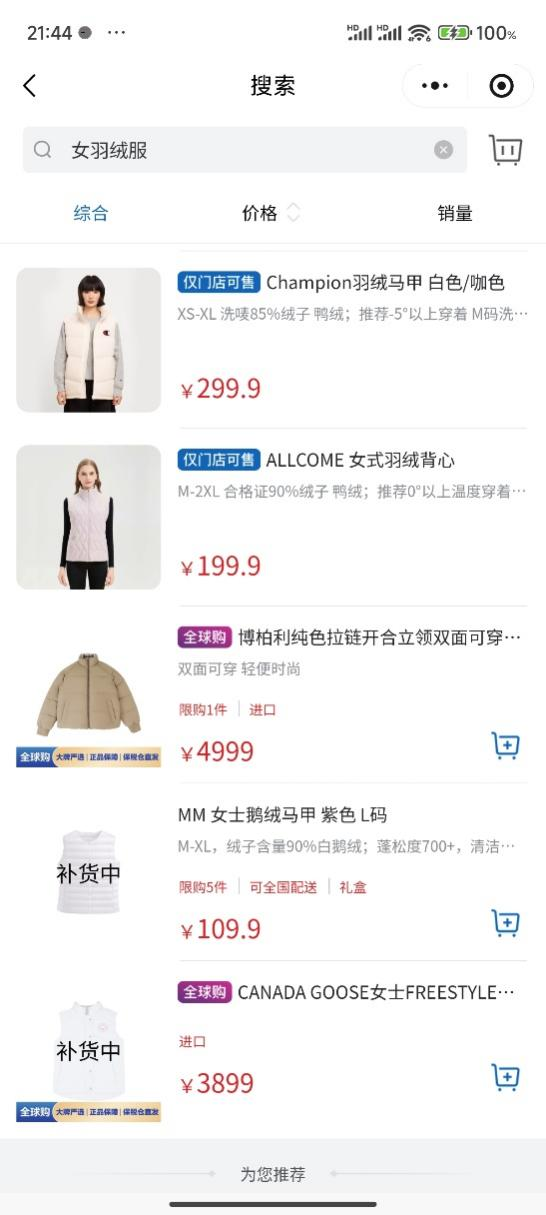
山姆499元女款羽绒服各平台热卖 近日,山姆会员商店售价499元的RR女士经典羽绒服走红,其充绒量高达400克,吸引了众多消费者前往抢购,不少购买者甚至在二手平台加价出售。一时 间,"山姆499元充绒400克羽绒服卖爆""山姆回应充绒400克499元羽绒服卖爆"等话题冲上热搜。 该款山姆羽绒服的性价比真的很高吗?到底是怎么火起来的?为了一探究竟,《消费者报道》记者近日收集了市面上多款高绒量的女士长款羽绒服产品信 息,从售价、充绒量、绒子含量等情况进行比较,品牌涉及山姆、波司登、骆驼、优衣库、鸭鸭、雪中飞、安踏、UR、迪卡侬、北面、盟可睐、FILA、始 祖鸟等。 01. 1月22日,《消费者报道》记者致电广州多家山姆超市门店咨询,均被告知该款499元的女士羽绒服均已断货有一段时间,不清楚未来是否会补货。 同时,山姆会员商店小程序也显示,这款RR女士经典羽绒服已断货。且其余多款女士羽绒服、羽绒马甲均显示在补货中,售价从109元到3899元不等。 而在某电商平台,这款原价499元的山姆羽绒服已加价到519.9元(不包邮)出售,且只有棕色款式有货。在某二手平台,白色款式的该款羽绒服还有货,但 已加价到550元,溢价5 ...
金饰每克便宜200元,抢爆了!凌晨6点开始排队,有人拖着行李箱去买
Sou Hu Cai Jing· 2026-01-24 14:12
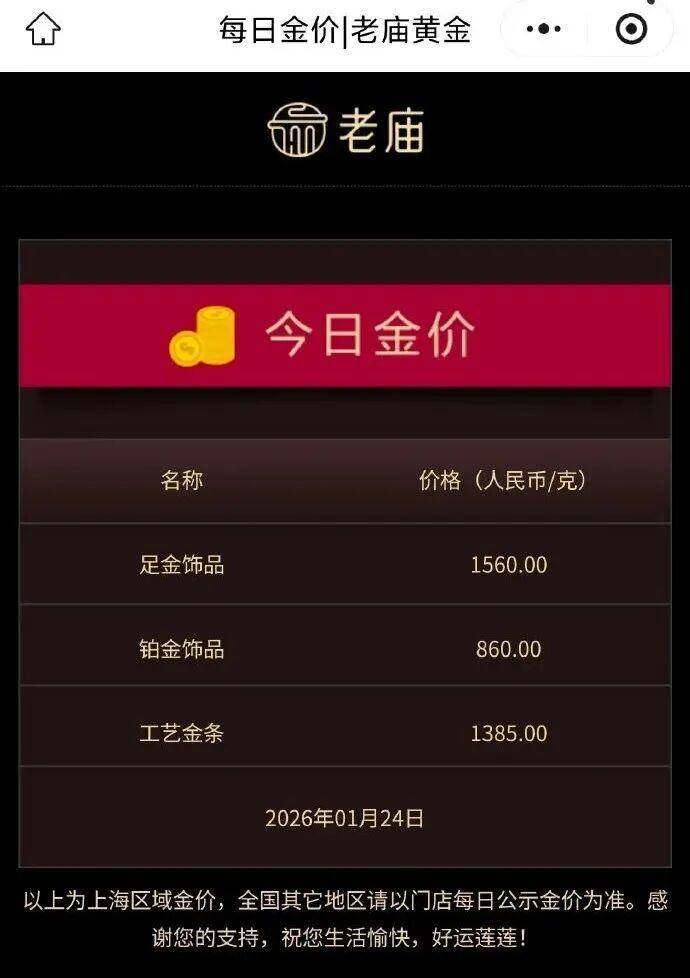
Market Overview - Gold prices surged, with spot gold breaking the $4,990 mark, closing at $4,981.31 per ounce, a 0.92% increase, while COMEX gold futures rose by 1.42% to $4,983.10 per ounce [1] - Silver also saw significant gains, with spot silver increasing by 7.48% to $103.34 per ounce, and COMEX silver futures up 7.15% to $103.26 per ounce [1] Pricing Trends - The price of gold jewelry from Chow Sang Sang was reported at ¥1,551 per gram, up from ¥1,545 per gram, reflecting a daily increase of ¥6 [1] - Lao Miao gold jewelry was priced at ¥1,560 per gram [2] Consumer Behavior - The topic of "Pang Donglai gold jewelry being ¥200 cheaper per gram" trended on social media, indicating high consumer interest [4] - Pang Donglai's store experienced high foot traffic, with customers advised to visit in person or use their app for appointments [4] Sales and Supply Chain - Pang Donglai's gold jewelry prices were competitive, with ordinary craftsmanship gold jewelry priced at ¥1,291 per gram and premium craftsmanship at ¥1,336 per gram [5] - The company has a strong supply chain, directly sourcing gold and operating its own processing facilities, which helps minimize costs and avoid middlemen [9] - Pang Donglai reported a total sales figure of approximately ¥234.09 billion for 2025, with jewelry sales contributing ¥24.41 billion [9]
超市大量倒闭,真的是电商冲击的?原因是老年人不来了
Sou Hu Cai Jing· 2026-01-24 13:25
Core Insights - The closure of supermarkets across China is not solely due to the rise of e-commerce but also significantly influenced by the shift in shopping habits among the elderly population [1][10] - In 2024, it is projected that over 1,500 supermarkets will close, with 720 closures occurring in the first half of the year alone [1][6] - The trend indicates a broader transformation in consumer behavior, particularly among older adults who are increasingly embracing online shopping [4][10] Group 1: Supermarket Closures - By 2024, 782 supermarkets have already closed, with expectations of more closures in 2025 [1] - Major chains like Yonghui Supermarket are also affected, planning to close 381 stores by 2025 due to declining customer traffic [7] - The closures reflect a significant industry trend rather than isolated incidents [1][6] Group 2: E-commerce Impact - Online retail growth is at 3.75%, but this alone does not account for the high number of supermarket closures [2] - The elderly demographic, once a primary customer base for supermarkets, is increasingly shopping online, with 51.2% of seniors indicating they shop frequently online [4][10] - The rapid growth in online shopping among seniors is evidenced by a 238% increase in transaction volume from 2019 to 2024 [4] Group 3: Changing Consumer Behavior - Seniors are motivated to shop online for convenience, avoiding the physical effort of visiting supermarkets [5][10] - Familiarity with platforms like WeChat has facilitated this transition, with 24.8% of seniors using WeChat for purchases [5] - The shift in shopping behavior is not just about convenience but also reflects a change in social interaction, as online shopping provides a sense of community [5][10] Group 4: Supermarket Adaptation - Supermarkets that remain open are attempting to adapt by creating more senior-friendly environments and offering specialized sections [7] - However, these adaptations may be too late, as many seniors have already shifted to online shopping [7][10] - The overall retail landscape is changing, with smaller formats like community stores and specialty shops gaining traction [8][10] Group 5: Future Outlook - The retail industry must recognize the importance of understanding and adapting to the new shopping habits of seniors [10] - Successful retailers will be those that can differentiate themselves and embrace online integration, rather than relying solely on traditional models [10] - The evolving consumer landscape indicates that while some seniors still shop in traditional stores, many are now exploring various channels, including online and community group purchases [9][10]
永辉学习胖东来,结果每天一开门就亏600万
盐财经· 2026-01-24 09:56
Core Viewpoint - Yonghui Supermarket is experiencing continuous losses, with a projected net profit loss of 2.14 billion yuan for 2025, marking the fifth consecutive year of losses, totaling over 11.6 billion yuan since 2021 [2][4][11]. Group 1: Financial Performance - The company reported a daily loss of nearly 6 million yuan over the past year [3]. - From 2021 to 2025, Yonghui's losses were 3.944 billion yuan, 2.763 billion yuan, 1.329 billion yuan, 1.465 billion yuan, and 2.14 billion yuan respectively [4]. - In the first half of 2025, Yonghui's revenue was approximately 29.95 billion yuan, a decrease of 20.73% compared to the previous year [34]. Group 2: Strategic Changes and Challenges - Yonghui has attempted various strategies to reverse its decline, including launching "Super Species," community mini-stores, and digital transformation, but these efforts have not yielded positive results [7]. - The company initiated a transformation plan inspired by the successful case of another supermarket, but after 20 months, the anticipated improvements have not materialized, and losses have increased [10][11]. - The transformation involved significant costs, with each store renovation costing between 5 million to 8 million yuan, leading to a total of approximately 9.1 billion yuan in related expenses for 2025 [31][32]. Group 3: Market Position and Consumer Perception - Despite initial positive consumer responses to store renovations, long-term customer retention remains a challenge, with a 19% decline in customer traffic [34][35]. - The price adjustments post-renovation have led to consumer dissatisfaction, as many perceive the new prices as higher than before, deviating from Yonghui's original "everyday low price" strategy [25][26]. - The company has struggled to establish a unique product identity, with its private label offerings lacking distinctiveness compared to competitors [42]. Group 4: Industry Context - The challenges faced by Yonghui are not unique, as other traditional supermarkets are also struggling with store closures and adapting to changing consumer preferences [45]. - The retail landscape has shifted, with price-sensitive consumers gravitating towards community group buying and discount stores, while those seeking quality and experience are moving towards membership-based stores [43][45].