
欣旺达

Search documents
“数据要素×工业制造”决赛在东莞举行,提速数据产业集聚区建设
2 1 Shi Ji Jing Ji Bao Dao· 2025-09-19 05:38
(原标题:"数据要素×工业制造"决赛在东莞举行,提速数据产业集聚区建设) 南方财经记者 程浩 东莞报道 近日,2025年"数据要素×"大赛广东分赛工业制造赛道决赛在东莞,39个参赛团队同台竞技。 广东分赛由国家数据局指导,广东省政务服务和数据管理局主办,广州、深圳、珠海、东莞、江门、阳 江等6个地市承办,广东省数据要素产业协会执行。大赛设置14个赛道打造数据创新应用标杆。 工业制造赛道是由广东省政务服务和数据管理局和东莞市人民政府指导,东莞市政务服务和数据管理 局、东莞市工业和信息化局主办,广东省数据要素产业协会执行。 作为制造业大市和粤港澳大湾区重要节点城市,东莞拥有特色鲜明、协同发展的产业布局。此次工业制 造赛道决赛的举办,不仅是东莞数据赋能制造业发展成果的展示窗口,更将进一步打造"数据+AI+场 景"融合发展样板,提速东莞数据产业集聚区建设。 将数据生产力转化成业务价值 近年来,制造业由于数据不流通、数据未治理、机理不清晰等痛点,面临生产、制造、质量、管理、运 营等方面成本高和效率低等困难。如何更好地开发利用数据,成为解决行业痛点的关键。 在决赛现场,欣旺达电子股份有限公司带来了"欣旺达-AI与大数据驱 ...
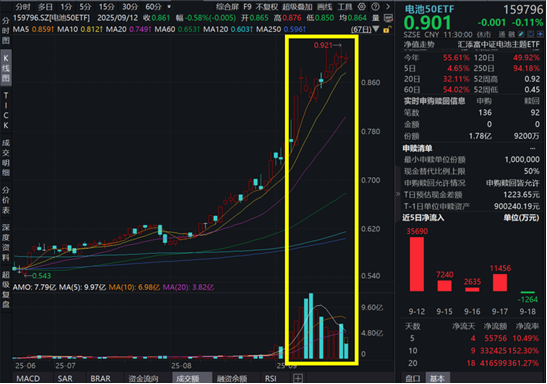
先导智能大涨超4%,打通全固态电池量产的全线工艺环节!电池50ETF(159796)微跌,资金重手增仓8500万份!固态电池0-1产业化加速
Xin Lang Cai Jing· 2025-09-19 05:01
Core Viewpoint - The battery sector is experiencing fluctuations, with the Battery 50 ETF (159796) showing a slight decline but significant investment interest, indicating strong market engagement and potential growth opportunities in the sector [1][2]. Group 1: Market Performance - As of September 19, the Battery 50 ETF (159796) saw a minor drop of 0.11%, but it gained 86 million shares during the day, pushing its total scale beyond 6 billion yuan, leading its peers significantly [1]. - The China Securities Battery Theme Index (931719) increased by 0.1%, with notable gains from companies like Xian Dao Intelligent (over 4%) and Yiwei Lithium Energy (over 3%), while companies like Sanhua Intelligent Control experienced a significant drop of over 8% [2][3]. Group 2: Key Stocks and Components - The top ten components of the Battery 50 ETF include: - Sungrow Power (14.38%, -1.87%) - CATL (8.22%, +0.66%) - Sanhua Intelligent Control (7.15%, -8.30%) - Yiwei Lithium Energy (6.32%, +3.33%) - Xian Dao Intelligent (4.45%, +4.20%) [4]. - The ETF's index has a high storage content of 24%, significantly benefiting from the storage sub-sector's growth, while solid-state battery content stands at 37%, indicating strong potential for future growth [7]. Group 3: Industry Developments - The 2025 Suining International Lithium Battery Industry Conference emphasized the need for innovation in lithium battery technology, focusing on solid-state batteries, sodium-ion batteries, and fast-charging batteries [4]. - Xian Dao Intelligent announced advancements in solid-state battery production, having achieved multiple technological breakthroughs and successfully delivered equipment to various battery manufacturers [5]. - The solid-state battery industry is projected to see significant growth, with a potential market space of 2.5 billion yuan by 2027, growing at a CAGR of 122% to reach 27.3 billion yuan by 2030 [6].







德福科技亮相2025泰国电子电路亚洲展,创新展示铜箔科技与应用前沿
Quan Jing Wang· 2025-09-19 03:12
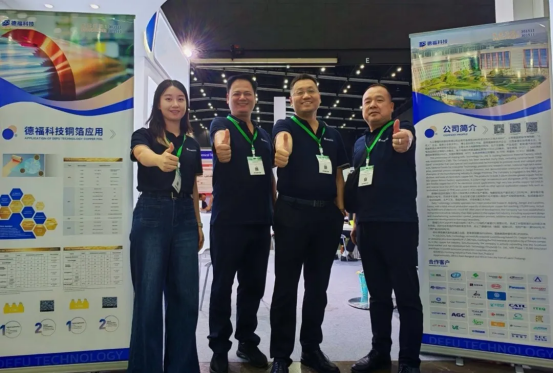
Core Insights - The Thailand Electronics Circuit Asia 2025 exhibition will take place from August 20 to 22, 2025, in Bangkok, showcasing high-end copper foil applications and fostering collaboration among global electronic industry players [1][3]. Group 1: Exhibition Overview - The exhibition is co-hosted by the Thailand Board of Investment, the Thai Printed Circuit Association, and the Hong Kong Printed Circuit Association, focusing on building a future electronic ecosystem [3]. - Over 250 companies from 15 countries and regions are expected to participate, covering an area of 12,000 square meters, with a projected trade volume exceeding 20 billion Thai Baht and over 7,000 professional visitors [3]. Group 2: Company Participation - Defu Technology showcased high-performance copper foil products and innovative applications in high-frequency, high-speed circuits, 5G communication, and automotive electronics, attracting significant attention from industry experts and potential partners [3][5]. - The company has established a subsidiary in Thailand and is collaborating with local firms such as KCE and TLM in the PCB sector, emphasizing its strategy of collaboration and localization [5]. Group 3: Future Outlook - Defu Technology aims to leverage its advanced copper foil material technology to drive innovation in the electronic industry and build a smarter, more interconnected electronic ecosystem with global partners [7].
小鹏MONA系列要引入亿纬锂能?车企选择混装电池背后:提升议价能力、获取更优质资源
Mei Ri Jing Ji Xin Wen· 2025-09-19 02:32
Core Viewpoint - Xiaopeng Motors has introduced Yiwei Lithium Energy as a battery supplier for its MONA series vehicles, while the long-range versions will continue to use BYD batteries. This move reflects a broader trend in the automotive industry towards multi-supplier strategies to enhance supply chain stability and reduce costs [1][2][4]. Group 1: Supplier Strategy - Many leading automotive companies, including Tesla, BMW, Geely, and SAIC, have adopted a strategy of collaborating with multiple battery suppliers to mitigate risks associated with relying on a single source [2][4]. - The multi-supplier approach allows companies to enhance their bargaining power, as competition among suppliers can lead to improved service quality and lower prices [4][5]. - Analysts suggest that while companies prefer to have a single supplier for optimal quality, they typically maintain two to three backup suppliers to ensure reliability [5]. Group 2: Consumer Concerns - The mixed battery supply strategy has raised concerns among consumers regarding the transparency of battery sourcing and performance, as seen in the case of Li Auto's models that use batteries from different suppliers [6][7]. - Consumers have expressed dissatisfaction over the lack of clarity about battery origins, particularly for high-priced models, leading to questions about potential cost-cutting measures by manufacturers [6][7]. - Industry experts emphasize the importance of clear communication regarding battery specifications to respect consumer rights and avoid misunderstandings [7].


欣旺达涨2.06%,成交额11.28亿元,主力资金净流入2297.92万元
Xin Lang Zheng Quan· 2025-09-19 02:30
Company Overview - XINWANDA is primarily engaged in the research, design, production, and sales of lithium-ion battery modules, with a revenue composition of 51.47% from consumer batteries, 28.18% from electric vehicle batteries, 16.63% from other sources, and 3.72% from energy storage systems [1] - The company is located in Shenzhen, Guangdong Province, and was established on December 9, 1997, with its listing date on April 21, 2011 [1] Financial Performance - For the first half of 2025, XINWANDA achieved a revenue of 26.985 billion yuan, representing a year-on-year growth of 12.82%, and a net profit attributable to shareholders of 856 million yuan, up 3.88% year-on-year [2] - Cumulative cash dividends since the A-share listing amount to 1.661 billion yuan, with 645 million yuan distributed over the past three years [3] Stock Performance - As of September 19, XINWANDA's stock price increased by 36.19% year-to-date, with a 5.67% rise over the last five trading days, 33.54% over the last 20 days, and 52.04% over the last 60 days [1] - The stock was trading at 30.18 yuan per share, with a market capitalization of 55.756 billion yuan [1] Shareholder Structure - As of June 30, 2025, the number of shareholders increased to 114,600, with an average of 14,946 circulating shares per person, a decrease of 5.45% from the previous period [2] - Major shareholders include Hong Kong Central Clearing Limited and various ETFs, with notable changes in their holdings [3]

崔东树:8月我国动力和其它电池合计产量为139.6GWh 同比增长45%
智通财经网· 2025-09-19 02:28
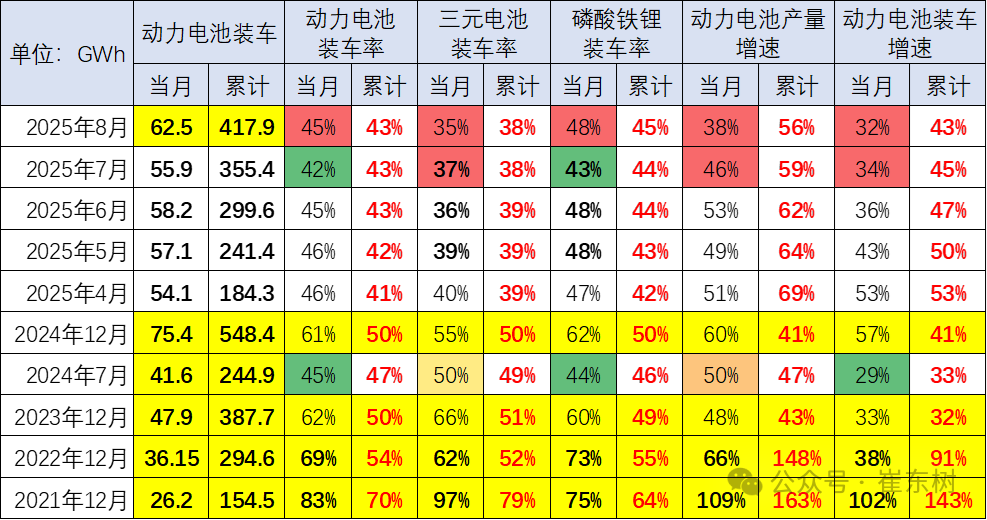
Core Insights - The competitive landscape of the battery industry is characterized by strong positions of CATL and BYD, with CATL's share of lithium iron phosphate batteries surpassing BYD's since 2024 [1] - The industry is experiencing rapid changes in competition, with companies like EVE Energy and Zhongxin Innovation showing strong performance, while others like Xinwangda and Ruipu Lanjun are also improving significantly [1] - The transition of BYD to fully focus on lithium iron phosphate batteries has enhanced the competitive advantage of CATL, LG, and other leading companies in ternary batteries [1] Battery Production and Demand - In August 2025, the total production of power and other batteries reached 139.6 GWh, marking a month-on-month increase of 4.4% and a year-on-year increase of 45% [4] - Cumulative production from January to August 2025 was 970.7 GWh, with a year-on-year growth of 43% [4] - The proportion of batteries installed in vehicles is decreasing, with the installation rate for power batteries dropping from 70% in 2021 to 50% in 2024, and further down to 43% in 2025 [2][3] Market Trends - The demand for batteries in the energy storage sector is growing rapidly due to the global energy crisis exacerbated by the Russia-Ukraine conflict, leading to a notable decline in the proportion of batteries installed in vehicles [3] - The growth rate of power battery installations has been lower than that of vehicle sales in 2021 and 2022, but is expected to stabilize in 2025 with a production surplus [3] - The demand for pure electric passenger vehicles is projected to grow by 36.4% in 2025, while plug-in hybrid passenger vehicles are expected to see a growth of 16.9% [6] Competitive Landscape - The battery market remains stable with no significant changes in the competitive landscape, as larger companies continue to expand their market share while smaller firms seek growth through technological advancements [13] - The number of battery companies supplying the market reached a low of 33 in August 2025, indicating a concentration of production capabilities among fewer players [12] - The market share of CATL decreased to 42% in Q3 2025, while BYD's share fluctuated from 15% in 2020 to 26.9% in 2023, and then down to 21.4% in Q3 2025 [18]

数字能源大佬齐聚深圳!最新技术集中爆发
2 1 Shi Ji Jing Ji Bao Dao· 2025-09-18 12:41
Core Insights - The 2025 International Digital Energy Exhibition opened in Shenzhen, showcasing over 300 cutting-edge technologies from more than 2,000 companies across 50 countries, emphasizing a comprehensive approach to the global energy revolution with a focus on "source-network-load-storage" [1][2] Group 1: Technological Innovations - Huawei presented its all-scenario networking technology, which has been successfully validated in global projects, addressing the stability challenges of high renewable energy integration into the grid [2] - BYD launched its new energy storage product "Haohan," featuring a unit capacity of 14.5 MWh, a 51.4% increase in volume capacity density, and a system volume utilization rate of 52.1%, marking the highest in the industry [2] - The collaboration between China General Nuclear Power Group and Zhejiang Kesheng Technology showcased the world's largest single-tower 350 MW solar thermal technology, achieving a cost of 0.55 yuan per kWh [3] Group 2: Urban Energy Infrastructure - Shenzhen has established a new energy infrastructure where the number of charging stations exceeds traditional gas stations, creating the highest density urban charging network globally [4] - The city's virtual power plant 3.0 platform utilizes AI for intelligent scheduling, significantly improving the efficiency of clean energy consumption [4] - The exhibition introduced a dual-track model of "technology sandbox + urban laboratory," facilitating large-scale validation of cutting-edge technologies in real-world scenarios [4] Group 3: Strategic Development - The "2025 Shenzhen Digital Energy White Paper" was released, outlining the implementation path for building a global digital energy pioneer city, focusing on six key areas including "source-network-load-storage-carbon" [5] - Shenzhen aims to create three city trademarks: the world's first supercharging city 2.0, an integrated power charging and storage network, and a virtual power plant management cloud platform [5] - The initiative seeks to accelerate the digital energy technology, product, and model development from demonstration to national and global levels, contributing to a trillion-level new productive force [5]

2025年中国移动储能电池行业研究:新场景催生新需求,移动储能成为能源变革新焦点
Tou Bao Yan Jiu Yuan· 2025-09-18 11:57
Investment Rating - The report does not explicitly provide an investment rating for the mobile energy storage battery industry. Core Insights - The mobile energy storage battery technology is diversifying, with lithium batteries remaining dominant while sodium-ion and solid-state batteries are emerging [2][3] - The integration of AI-driven Battery Management Systems (AI-BMS) and high-capacity fast charging technologies is accelerating the upgrade of mobile energy storage devices towards intelligence, high endurance, and efficiency [3] - The market for mobile energy storage batteries is rapidly expanding, driven by outdoor economy trends, energy structure transformation, and technological advancements [23][25] Industry Overview - Mobile energy storage batteries are portable power solutions widely used in outdoor activities, emergency preparedness, and lightweight power supply scenarios [9][10] - The main types of mobile energy storage batteries include ternary lithium, lithium iron phosphate, lithium polymer, lead-acid, and sodium-ion batteries, each suited for different applications [15][16] - The market for energy storage batteries in China is projected to grow significantly, with lithium iron phosphate batteries expected to dominate due to their safety and cost advantages [19][21] Market Size - From 2020 to 2024, the Chinese energy storage battery market is expected to grow from 18.9 billion to 134.7 billion RMB, with a compound annual growth rate (CAGR) of 63.4% [21] - By 2029, the market size is projected to reach 847.1 billion RMB, driven by strong policy support and the rapid development of renewable energy [21][25] - The global mobile energy storage battery market is also expanding, with China's products accounting for over 90% of global shipments [25] Cost Analysis - The battery pack constitutes 67% of the total cost of electrochemical energy storage systems, with cathode materials accounting for about 40% of lithium battery material costs [30][31] - The decline in lithium carbonate prices is contributing to the reduction of energy storage cell costs, facilitating the optimization and industrialization of energy storage systems [31][34] Industry Insights - The lithium battery industry in China is characterized by regional clustering and optimization of technology routes, with lithium iron phosphate batteries continuing to replace ternary lithium batteries [36] - Solid-state batteries are emerging as a mainstream technology due to their high safety and energy density, although practical applications are still in the early stages [38][44] Application Scenarios - The application scenarios for mobile energy storage batteries are increasingly diverse, with outdoor leisure and emergency backup being core demands [46][49] - The outdoor activities segment accounts for 39% of the market, while emergency backup power represents 32% [49]
共绘全球能源转型新蓝图,2025国际数字能源展在深圳开幕
Nan Fang Du Shi Bao· 2025-09-18 11:54
Group 1: Event Overview - The 2025 International Digital Energy Exhibition opened in Shenzhen, focusing on global energy digital transformation, featuring over 2,000 companies from more than 50 countries and showcasing over 300 cutting-edge technologies across a 50,000 square meter platform [1][2] Group 2: Shenzhen's Innovations - Shenzhen has achieved full electrification of public buses and has established a charging network denser than traditional gas stations, leading the world in clean energy consumption efficiency through its Virtual Power Plant 3.0 platform [2][3] - The city aims to provide a replicable model for energy transition in high-density urban areas, showcasing its innovative capabilities in the digital energy sector [2] Group 3: Technological Showcases - Leading companies presented their latest innovations, including Huawei's all-scenario networking technology and BYD's new energy storage product with a capacity of 14.5 MWh, which boasts a 51.4% increase in volume capacity density [3][4] - The exhibition featured a significant focus on solar thermal technology, with a project achieving a cost of 0.55 yuan per kWh through innovative distributed thermal storage solutions [4] Group 4: Industry Collaboration - Major companies like China Power Construction and China Energy Engineering showcased innovations in smart construction and power grid technologies, enhancing efficiency and reducing environmental impact [7][8] - Shenzhen Gas presented its high-end smart energy equipment, demonstrating leadership in gas-electricity complementary technology [7] Group 5: International Engagement - The exhibition emphasized international collaboration, featuring an international business matching area and forums to facilitate global partnerships and knowledge sharing [9][10] - Reports from international organizations highlighted China's transition from a technology follower to a rule-maker in the global energy governance system [9] Group 6: Future Directions - The event launched initiatives for digital energy project matchmaking and technology releases, showcasing the innovative vitality of China's digital energy sector [10] - The exhibition serves as a platform for ongoing discussions on digital energy ecosystem construction, energy internet innovation, and AI empowerment in the energy sector [10]
“一带一路”上的中国汽车足迹
Zhong Guo Qi Che Bao Wang· 2025-09-18 10:36
Group 1: Overview of China's Automotive Industry Going Global - The "Belt and Road" initiative has led to significant achievements in international cooperation, with the automotive industry being a prime example of this success [3] - China has become the world's largest automobile exporter since 2023, surpassing Japan, with exports reaching 4.292 million vehicles from January to August 2025, a year-on-year increase of 13.7% [3] - Exports of new energy vehicles (NEVs) reached 1.532 million units during the same period, marking an impressive growth of 87.3% [3] Group 2: Export Channels and Logistics - The Horgos port has emerged as China's largest land port for automobile exports, with 421,000 vehicles exported in 2024, reflecting a 38.6% increase [4] - Chinese shipping companies have customized large roll-on/roll-off ships to meet the demands of automobile sea transport, with approximately 75% of vehicles exported via this method in the first half of the year [4] Group 3: Impact on Local Markets - Chinese automotive brands such as BYD, Chery, and Great Wall have gained popularity in international markets, significantly enhancing local automotive choices and improving transportation quality [5] - In Kazakhstan, six out of the top ten best-selling car brands in the first half of 2025 were Chinese brands, showcasing their market penetration [5] Group 4: Global Manufacturing and Talent Development - Chinese automakers are actively participating in the global automotive industry by establishing assembly plants in various countries, providing technical training to local employees, and fostering local talent [8][9] - The establishment of after-sales service networks in Brazil and the operation of factories in Russia exemplify the transfer of Chinese automotive manufacturing standards to international markets [9] Group 5: Social Responsibility and Green Development - Chinese automotive companies are committed to localizing production and contributing to the development of local industries, creating job opportunities, and supporting community projects [11] - Initiatives such as the establishment of scholarships and donations to educational institutions in various countries highlight the social responsibility of Chinese automakers [11] Group 6: Conclusion on Global Integration - The evolution of the automotive industry reflects China's commitment to open cooperation and mutual benefit, as it continues to share technological advancements and development opportunities with countries along the "Belt and Road" [12]

