平安银行

Search documents
深圳金融史,一个波澜壮阔的中国金融改革奇迹
首席商业评论· 2025-09-13 03:58
Core Viewpoint - Shenzhen has transformed from a financial desert in 1979 to one of China's three major financial centers by 2024, showcasing a remarkable journey of financial reform and innovation [5][8]. Group 1: Initial Creation and Exploration (1979-1990) - Shenzhen was designated as a "test field" for economic reform in 1979, leading to the establishment of the first foreign bank branch in China and the birth of national banks like China Merchants Bank [9]. - The first stock in New China was issued in 1983, marking the beginning of the capital market, with significant events like the public offering of Shenzhen Development Bank in 1987 [9]. - The emergence of non-bank financial institutions, such as Ping An Insurance in 1988, laid the groundwork for future financial giants [9]. Group 2: Leap and Growth (1990-2004) - The establishment of the Shenzhen Stock Exchange in December 1990 marked a significant leap in Shenzhen's financial history, providing direct financing channels for enterprises [10]. - By the end of 2004, the Shenzhen Stock Exchange had 536 listed companies with a total market value of 1.1 trillion yuan and an annual trading volume of 1.6 trillion yuan [10]. - Shenzhen became a hub for venture capital, with over 20 billion yuan invested in more than 100 projects by 2004 [10]. Group 3: Adjustment and Transformation (2004-2019) - The introduction of the SME Board in 2004 provided a dedicated platform for small and medium enterprises, with over 327 companies listed and more than 300 billion yuan raised by 2009 [12]. - The launch of the ChiNext in 2009 focused on innovative and growth-oriented enterprises, leading to a surge in the number of listed companies from 28 to nearly 800 by 2019 [12]. - The establishment of Qianhai as a financial innovation zone in 2010 facilitated cross-border financial services, with over 52,000 financial enterprises registered by 2019 [16]. Group 4: Elevation and Leadership (2019-Present) - Shenzhen's financial sector has been elevated under national strategies, with over 400 companies listed on the ChiNext through a registration system by 2025, raising over 500 billion yuan [18]. - The total number of companies on the Shenzhen main board is expected to approach 1,600 by mid-2025, with a market value nearing 40 trillion yuan [18]. - The implementation of the "Cross-Border Wealth Management Connect" in 2024 has seen significant participation from banks and a substantial increase in cross-border transactions [19]. Group 5: Achievements and Strengths - By the end of 2024, Shenzhen's financial institutions held deposits of 135.78 trillion yuan and loans of 94.83 trillion yuan, with total banking assets reaching 13.57 trillion yuan [21]. - The Shenzhen Stock Exchange had 2,852 listed companies with a market capitalization of 33.04 trillion yuan, ranking it among the top globally [21][23]. - The insurance sector reported premium income of 195.82 billion yuan in 2024, with total assets of 7.3 trillion yuan [25]. Group 6: Reflection and Future Outlook - Over 45 years, Shenzhen has evolved from a financial desert to a global financial technology leader, with significant achievements in various financial sectors [34]. - The city's success is attributed to its innovative spirit, close ties between finance and the real economy, and a highly market-oriented system [34]. - Looking ahead, Shenzhen's financial industry is poised for further growth and innovation, building on its past successes [34].





中国银行业正迎来重要拐点
2 1 Shi Ji Jing Ji Bao Dao· 2025-09-13 00:27
Core Viewpoint - The banking industry is facing a critical turning point as net interest margins have fallen below non-performing loan ratios, indicating a dual pressure of shrinking income and rising risk [1][4][5] Group 1: Financial Indicators - As of Q1 2025, the non-performing loan ratio for commercial banks was 1.51%, while the net interest margin was 1.43%, marking the lowest net interest margin since 2005 [1][5] - By Q2 2025, the net interest margin further declined to 1.42%, with the non-performing loan ratio rising to 1.49% [1] - Over 20% of the 42 listed banks reported net interest margins lower than their non-performing loan ratios, highlighting a concerning trend in the industry [1][6] Group 2: Industry Response - In response to these challenges, banks are shifting towards middle-income business models, with a notable resurgence in insurance and banking (银保) business, which accounted for over 50% of income for the first time in 15 years [2][21] - Major banks like China Merchants Bank and Ping An Bank reported over 40% year-on-year growth in insurance income [2] Group 3: Asset and Liability Management - The continuous decline in net interest margins is attributed to a combination of low asset yields and rigid liability costs, exacerbated by insufficient effective credit demand and external pressures from bond market financing [10][12] - Banks are adjusting their asset-liability strategies to cope with narrowing margins, focusing on optimizing their loan structures and reducing costs [13] Group 4: Asset Quality and Risk - The total non-performing loan balance for commercial banks was reported at 34,342 billion yuan in Q2 2025, with a slight decrease from Q1 [15] - The provision coverage ratio improved to 211.97%, indicating enhanced risk mitigation capabilities [15] - However, the non-performing loan generation rate and overdue loan rates are on the rise, suggesting ongoing pressure on asset quality [17][19] Group 5: Middle-Income Business Growth - The middle-income business segment is showing signs of recovery, with non-interest income growing by 6.97% year-on-year in the first half of 2025, reversing a downward trend [21][22] - The insurance business is becoming a key growth driver, with banks leveraging their networks to enhance insurance sales [23]



中国银行业正迎来重要拐点
21世纪经济报道· 2025-09-13 00:14
Core Viewpoint - The banking industry is facing a critical turning point as net interest margins (NIM) have fallen below non-performing loan (NPL) ratios, indicating a dual pressure of shrinking income and rising risk [1][4][5]. Group 1: Financial Indicators - As of Q1 2025, the NPL ratio for commercial banks was 1.51%, while the NIM was 1.43%, marking the lowest NIM since 2005 [1][4]. - By Q2 2025, the NIM further declined to 1.42%, and the NPL ratio increased to 1.49%, showing a continued trend of NIM being lower than NPL [1][4]. - Over 20% of the 42 listed banks reported NIM below their NPL ratios, highlighting a significant industry trend [1][6]. Group 2: Shift to Intermediate Business Income - To address the challenges, banks are accelerating their shift towards intermediate business income, with bancassurance revenues returning to a 50% share for the first time in 15 years [2][19]. - Major banks like China Merchants Bank and Ping An Bank reported over 40% year-on-year growth in bancassurance income [2][19]. - The industry faces challenges such as intensified competition, regulatory risks, and the need to escape the "low NIM-high risk" operational dilemma [2][19]. Group 3: Asset and Liability Management - The persistent decline in NIM is attributed to a combination of falling asset yields and rigid liability costs, exacerbated by insufficient effective credit demand and external pressures from bond financing [8][10]. - In H1 2025, the average NIM for listed banks decreased by 8 basis points to 1.53%, despite a 5.89% increase in loan volume, indicating that price declines are outpacing volume increases [9][10]. - Banks are adjusting their asset-liability strategies to cope with narrowing NIM, focusing on optimizing asset allocation and reducing costs [10][11]. Group 4: Non-Performing Loans and Asset Quality - The total NPL balance for commercial banks was 34,342 billion yuan in Q2 2025, with an NPL ratio of 1.49%, reflecting a slight decrease from the previous quarter [13][15]. - The provision coverage ratio improved to 211.97%, indicating enhanced risk mitigation capacity [13]. - However, the NPL generation rate and overdue loan rates are rising, suggesting ongoing pressure on asset quality [15][16]. Group 5: Retail and Corporate Loan Dynamics - Retail loan NPLs are increasing, driven by economic fluctuations affecting small businesses and consumer credit [16][17]. - The corporate loan sector is showing signs of recovery, aided by government refinancing efforts and improved repayment capabilities in supported sectors [17][18]. - The overall loan overdue rate for listed banks rose to 1.67%, indicating a growing concern over asset quality [15][16]. Group 6: Intermediate Business Recovery - Intermediate business income is becoming a crucial growth avenue for banks, with non-interest income rising by 6.97% year-on-year in H1 2025 [19][20]. - The growth in intermediate business income is primarily driven by a recovery in capital markets and increased investment income [19][20]. - Banks are focusing on bancassurance as a key component of their wealth management strategies, with significant growth in insurance sales through bank channels [21].

金价高位震荡 多家银行调整贵金属业务
Zhong Guo Jing Ying Bao· 2025-09-12 18:54
Core Viewpoint - International gold prices have been rising, prompting banks to adjust their precious metals business to manage market volatility and risk control [1][2][3] Group 1: Bank Adjustments - Several banks, including China Construction Bank and China Merchants Bank, have made adjustments to their precious metals business, such as increasing risk levels for gold investment products and optimizing risk assessments [1][3] - Construction Bank will close trading functions for clients with no transactions for 12 consecutive months, while China Merchants Bank has adjusted margin levels and price fluctuation limits for certain contracts [2][3] - The adjustments mainly affect personal clients' trading services related to the Shanghai Gold Exchange, indicating a tightening of risk management practices [2][3] Group 2: Investment Strategies - Investors are advised to participate in gold investments based on their financial situation and risk tolerance, with conservative investors recommended to limit their gold investments to 10%-15% of their investable assets [1][3] - The current high gold prices, combined with central bank policies and global economic conditions, suggest a long-term support for gold prices, making it a strategic asset allocation choice [6][7] - Investment strategies such as regular gold accumulation and timing-based investments are recommended to manage risks and enhance returns [6][8] Group 3: Market Dynamics - The rapid increase in gold prices has led to higher margin requirements and adjustments in trading limits, affecting investors' risk management strategies [3][5] - The demand for gold buyback services has increased as residents seek to liquidate physical gold, with several banks expanding their buyback networks [4][5] - Banks are enhancing their risk management measures, including establishing price risk warning mechanisms and optimizing risk assessments for personal clients [5][6]

创新·破局·共进 2025平安银行特殊资产专家论坛顺利召开
2 1 Shi Ji Jing Ji Bao Dao· 2025-09-12 14:33
Core Insights - The forum highlighted the challenges faced by the special asset industry, including rising total volume and structural transformation, pricing imbalances, and shrinking profitability, necessitating a shift from disposal thinking to operational thinking [1][4] - The establishment of a special asset expert mechanism in 2020 has yielded significant results, with the recent forum recognizing new experts in the field [2] - Discussions at the forum focused on the protection of financial creditors during corporate bankruptcy restructuring and the revitalization of distressed real estate [3][4] Group 1 - The special asset management department of Ping An Bank emphasized the need for collaborative efforts to create impactful benchmark projects [1] - The forum featured expert presentations on the new developments and trends in China's restructuring system, highlighting the value of restructuring from multiple perspectives [2] - The challenges in the special asset market during low growth, low inflation, and low interest rate periods were discussed, with a focus on cooperation and innovation as pathways to success [3] Group 2 - The forum included discussions on the balance between creditor protection and corporate rescue in bankruptcy law revisions [3] - Practical case studies on bankruptcy and real estate revitalization were analyzed, providing valuable insights for future project handling [3] - The overall theme of the forum revolved around innovation and collaboration to address new challenges and opportunities in the special asset industry [4]
金风科技收到中国银行间市场交易商协会《接受注册通知书》
Zhi Tong Cai Jing· 2025-09-12 14:27
Core Points - The company has received approval for the issuance of medium-term notes totaling up to RMB 3 billion [1] - The registration for the medium-term notes is valid for two years from the date of the acceptance notice [1] - A consortium of banks will act as joint lead underwriters for the issuance [1] Group 1 - The company held its eighth board meeting and annual shareholder meeting, where it approved the general authorization for issuing bonds and asset-backed securities [1] - The company plans to apply for the registration of long-term, option-containing medium-term notes [1] - The acceptance notice for the registration was received on September 11, 2025, from the China Interbank Market Dealers Association [1] Group 2 - The company will comply with the relevant rules and regulations for the issuance of the medium-term notes [2] - The company is obligated to fulfill its information disclosure duties in a timely manner [2]

服贸会秀“绿”绩:42.4万亿信贷筑基,碳减排工具成效初显
2 1 Shi Ji Jing Ji Bao Dao· 2025-09-12 13:09
Core Insights - The balance of green loans in China is approximately 42.4 trillion yuan, and the balance of green bonds exceeds 2.2 trillion yuan, placing these figures among the highest globally [1] - As of September 12, 2025, 37 listed banks reported a total green loan balance of 29.22 trillion yuan, with an average balance exceeding 800 billion yuan, reflecting a year-on-year growth of 41.79% [3] - The carbon reduction support tool has led to over 1.38 trillion yuan in carbon reduction loans issued by financial institutions, indicating significant progress in green finance [1][6] Green Loan Growth - The green loan balance of 37 listed banks reached 29.22 trillion yuan, with state-owned banks holding over 20 trillion yuan, accounting for nearly half of the total [3] - Industrial and Commercial Bank of China leads with a green loan balance of 6 trillion yuan, followed by China Construction Bank and Agricultural Bank of China, each with approximately 5.72 trillion yuan [3] - Postal Savings Bank of China showed a remarkable year-on-year growth of 38%, nearing the 1 trillion yuan mark [3] Innovation in Green Financial Products - Banks are actively expanding and innovating specialized green financial products and service models, covering areas such as clean energy and environmental remediation [2] - The green financial product system is becoming increasingly diverse, showcasing various practical paths and innovative outcomes [2] Carbon Reduction Support Tool - The carbon reduction support tool is becoming a key indicator of banks' green finance capabilities, effectively guiding financial resources towards green and low-carbon sectors [6] - In the second quarter of 2025, 16 banks reported carbon reduction loans leading to over 7 million tons of carbon reduction, with a total loan amount of nearly 24 billion yuan [6] - Major banks like ICBC and CCB have over 100 projects funded through carbon reduction loans, demonstrating their significant role in this area [6] Performance of Smaller Banks - Smaller banks are showing strong growth in green loan scales, with some achieving substantial increases in 2024 [5] - Banks like Xi'an Bank and Shaoxing Ruifeng Rural Commercial Bank reported green loan growth rates of 202.75% and 144.63%, respectively [5] - There is a need for smaller banks to leverage local advantages and develop differentiated paths in green finance [5]
平安银行大宗交易成交416.15万元
Zheng Quan Shi Bao Wang· 2025-09-12 13:09
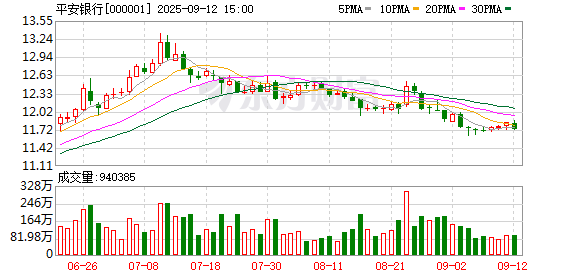
Group 1 - The core point of the article is the recent block trade of Ping An Bank, which involved a transaction volume of 350,000 shares and a transaction amount of 4.1615 million yuan, with a transaction price of 11.89 yuan, representing a premium of 1.45% over the closing price of the day [2] - The buyer of the block trade was from China Merchants Securities Co., Ltd., while the seller was from Ping An Securities Co., Ltd. [2] - In the last three months, Ping An Bank has recorded a total of two block trades, with a cumulative transaction amount of 16.3133 million yuan [2] Group 2 - On the day of the block trade, Ping An Bank's closing price was 11.72 yuan, reflecting a decrease of 1.10%, with a daily turnover rate of 0.48% and a total transaction amount of 1.107 billion yuan [2] - The net outflow of main funds for the day was 103 million yuan, and over the past five days, the stock has reported a flat performance with a total net outflow of 190 million yuan [2] - The latest margin financing balance for Ping An Bank is 5.553 billion yuan, which has decreased by 104 million yuan over the past five days, representing a decline of 1.84% [2]
净息差持续低于不良率 银行绸缪第二增长曲线
2 1 Shi Ji Jing Ji Bao Dao· 2025-09-12 12:21
Core Insights - The banking industry is facing a critical turning point as net interest margins (NIM) have fallen below the non-performing loan (NPL) ratio, indicating a dual pressure of shrinking income and rising risk [1][3][4] - Over 20% of listed banks have reported NIM lower than their NPL ratio, highlighting a concerning trend in profitability and asset quality [1][4] Group 1: Financial Indicators - As of Q1 2025, the NPL ratio for commercial banks was 1.51%, while the NIM was 1.43%, marking the lowest NIM since 2005 [1] - By Q2 2025, the NIM further declined to 1.42%, and the NPL ratio slightly decreased to 1.49% [1] - The average NIM for listed banks fell by 8 basis points to 1.53% in the first half of 2025, despite a 5.89% increase in loan volume [5][12] Group 2: Revenue and Risk Management - The banking sector is shifting towards intermediary business income as a primary revenue source, with insurance and banking (银保) collaboration seeing a resurgence, accounting for over 50% of income for the first time in 15 years [2][14] - Non-interest income for listed banks grew by 6.97% year-on-year in the first half of 2025, reversing a previous decline [12] - The average personal loan NPL ratio increased by 16 basis points to 1.58% in the first half of 2025, indicating rising risks in retail lending [11] Group 3: Market Dynamics - The bond market is increasingly substituting bank credit, with local governments issuing 2.16 trillion yuan in new special bonds, a 45% year-on-year increase, further pressuring bank margins [7] - The trend of deposit regularization continues, maintaining high funding costs for banks, which constrains NIM [5][6] - The overall NPL balance for commercial banks was 34.34 trillion yuan in Q2 2025, with a slight decrease from Q1 [8] Group 4: Future Outlook - The NIM is expected to stabilize in the second half of 2025, with retail loan rates projected to remain above 3%, providing some support [8] - The banking sector is actively adjusting asset-liability strategies to manage the pressure on NIM, focusing on optimizing loan structures and reducing costs [7][12] - The potential for intermediary business, particularly in insurance, is seen as a critical avenue for banks to enhance profitability amidst ongoing challenges [14]
上半年多家股份行人均薪酬微降,人力资源成降本重要“阵地”
Nan Fang Du Shi Bao· 2025-09-12 12:01
Core Viewpoint - The banking industry is focusing on cost control and efficiency improvement as a consensus, with human resource optimization being a key strategy for cost management in 2025 [2][4]. Salary Analysis - Over 10 banks reported an average monthly salary exceeding 40,000 yuan, with notable figures including China Merchants Bank at 50,500 yuan and Nanjing Bank at 48,200 yuan [2]. - Salary changes varied, with some banks like China Merchants Bank and Everbright Bank experiencing slight declines compared to the previous year [4]. - State-owned banks generally reported lower average salaries, with Bank of China showing a monthly salary of 28,000 yuan, a slight increase year-on-year [4]. Cost Control Measures - Banks are implementing strict cost control measures, including reducing employee numbers and optimizing salary expenditures [2][5]. - For instance, Shanghai Pudong Development Bank reduced its employee expenses by 9.58 billion yuan, with a decrease in employee count by 673 [5]. - The overall trend shows a reduction in workforce among major state-owned banks, totaling over 20,000 employees, while some joint-stock banks increased their workforce [5]. Deposit Cost Management - Managing deposit costs has become a common strategy, with a focus on low-cost deposits as a key tool for banks [6][8]. - As of the end of Q2, the net interest margin for commercial banks was 1.42%, a slight decrease from the previous quarter [8]. - China Merchants Bank reported a significant reduction in deposit costs, with an average annual cost rate of 1.26%, down 34 basis points year-on-year [8]. Digital Transformation and Efficiency - Banks are increasingly adopting digital solutions to enhance operational efficiency and reduce costs, focusing on automating processes and minimizing manual operations [12]. - The shift towards digital banking is seen as a means to not only cut costs but also to restructure processes and improve overall efficiency [12]. - Some banks are closing inefficient branches and optimizing their real estate management to further reduce costs [11].