
绿城中国

Search documents
“千亿资金进豪宅”背后:谁在抢购上海豪宅
Xin Jing Bao· 2025-05-28 09:34
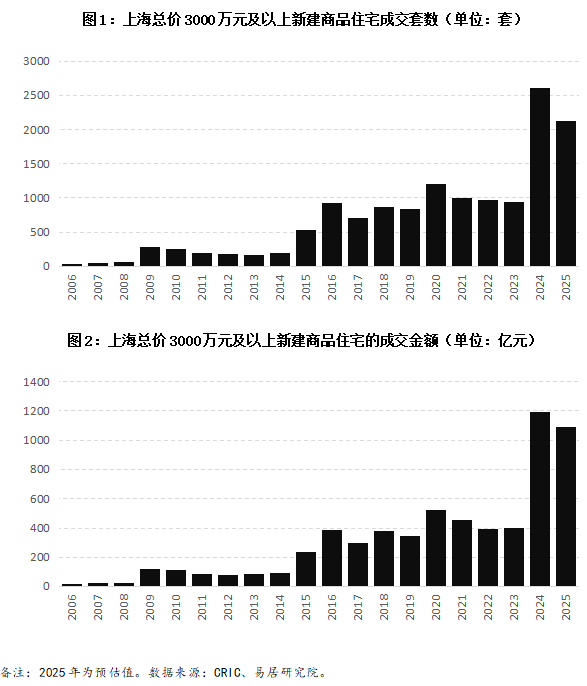
Core Insights - The luxury real estate market in Shanghai is experiencing significant growth, with multiple projects achieving "sunshine sales" where all units are sold on the first day of opening [1][2][4] - High-end properties are attracting substantial investment, with expectations that the total sales for luxury homes in Shanghai will exceed 100 billion yuan in 2025 [2][4][7] Group 1: Market Performance - On May 21, the Shanghai Yihua Courtyard achieved a sales revenue of 40.25 billion yuan, with all 64 units sold out, marking a total sales of 108.71 billion yuan for the year [1] - The "Green City Tide Ming Oriental" project sold 120 units at an average price of 19.5 million yuan per square meter, generating a sales amount of 69.88 billion yuan in a single day [1][2] - As of May 25, 2025, the number of new homes sold in Shanghai priced at 30 million yuan and above reached 897 units, with a total transaction amount of approximately 466.2 billion yuan [2] Group 2: Buyer Demographics - Non-local buyers are becoming the main force in the luxury real estate market, with 70% of buyers at Shanghai Yihua Courtyard coming from outside Shanghai [6][7] - Buyers from neighboring provinces, particularly Zhejiang and Jiangsu, are prominent, with Zhejiang buyers accounting for 17.1% of the total [6][7] - The buyer profile shows a trend of high net worth, high education, and high aesthetic standards, with a diverse age range and professional backgrounds [7] Group 3: Market Drivers - The influx of capital into the luxury market is driven by the need for asset preservation and appreciation, especially in the context of declining interest rates and a volatile investment market [4][5] - The strong demand for high-quality properties in prime locations indicates a shift towards upgraded housing consumption [4][7] - Analysts predict that the luxury market will continue to thrive, with expectations of a second wave of significant investment in 2025 [4][7]

“好房子”家国命题下,房企产品力进阶大盘点
克而瑞地产研究· 2025-05-28 09:33
Core Viewpoint - The concept of "Good House" has been introduced in the government work report, providing policy guidance for the "housing for all" initiative, marking a significant shift from policy advocacy to a binding national standard with the implementation of the "Residential Project Specification" on May 1, 2025, leading to a profound transformation in the industry from "quantity" to "quality" [2][3]. Group 1: Industry Response to "Good House" - Over 50% of monitored real estate companies have mentioned "Good House" in their official communications this year, indicating a strong industry response to this significant concept [2]. - Various companies have developed comprehensive systems to ensure their products meet the expectations and standards set by the "Good House" initiative, integrating their past experiences and advancements in the quality era [2][3]. Group 2: Company Standards and Innovations - Greentown China introduced the industry's first "Good House" standard, focusing on six key elements: aesthetics, affordability, intelligence, low carbon, full lifecycle, and health [3]. - China Electric Power Real Estate established a "Good House" standard with six dimensions and 165 technical parameters, emphasizing safety, health, green, and smart features [3]. - Poly Developments proposed a "Cultural Community" product concept, integrating "good products, good services, good living" as its core strategy [3]. - China Resources Land has established a "Good House" system focusing on community, product, and service, detailing twelve key scenarios to meet customer needs [3][6]. Group 3: Addressing Consumer Pain Points - The focus on consumer needs has become paramount, with companies like Greentown China responding to insights from a lifestyle demand report by offering customized living spaces [10]. - China State Construction developed a "Good House" construction system based on extensive customer feedback, addressing over 95% of common residential pain points [11]. - China Overseas Property launched the Living OS system, aiming to meet diverse customer expectations through a technology-driven approach [13]. Group 4: Technological Integration - The integration of technology and intelligence into housing products is a growing trend, with companies like Poly Developments implementing a comprehensive smart response across their product and service chains [14]. - Wuhan Urban Construction is utilizing BIM technology in its projects to enhance construction efficiency and quality control [14][16]. - Jinji Real Estate is collaborating with Huawei to provide smart home systems for high-end residential projects, aiming to create a holistic intelligent living environment [17]. Group 5: Product Launches and Market Trends - The "Good House" era has seen the launch of innovative products, such as Huafa's "Good House" project in Zhuhai, featuring advanced technology like AI butlers and drone delivery systems [18]. - China State Construction has introduced several projects with "Good House" characteristics, focusing on green and low-carbon living environments [21]. - Poly Developments' project "Zhenluan" emphasizes functional aesthetics, transforming traditional luxury into practical living spaces [24]. Group 6: Future Developments and Evaluations - The 2025 semi-annual CRIC "China Real Estate Product Evaluation" has been initiated, including a new category for "Good House" evaluations, with results expected in June [25][27].





前50房企单月新增土地建面环比升30.85% 质量优越地块多为联合拿地
Sou Hu Cai Jing· 2025-05-27 09:54
Core Insights - The report from the Perspective Index Research Institute indicates that the competition for land acquisition among leading real estate companies in major cities has intensified, particularly for high-quality core plots, often resulting in joint acquisitions [2][8]. Group 1: Land Acquisition Trends - In the first four months of the year, the top 50 real estate companies added a total of 4.54 million square meters of land, representing a month-on-month increase of 30.85% [2]. - Leading companies in land acquisition include Poly Developments, China Overseas Land & Investment, and Greentown China, with land reserves of 1.46 million square meters, 1.28 million square meters, and 1.27 million square meters, respectively [5]. - The companies with the highest investment in land acquisition during this period were Greentown China, China Overseas Land & Investment, and Binjiang Group, with equity acquisition amounts of 29.14 billion, 27.29 billion, and 26.97 billion yuan, respectively [5]. Group 2: New Land Value - The companies that saw the most significant increase in land value from January to April were China Jinmao, Yuexiu Property, and China Overseas Land & Investment, with new land values of 55.96 billion, 54.47 billion, and 53.79 billion yuan, respectively [5]. - In April, Poly Developments acquired four plots in Hangzhou, Xiamen, and Shijiazhuang, with an equity land area of 454,100 square meters and an equity price of 12.8 billion yuan [5]. Group 3: Market Dynamics - State-owned enterprises dominated the land acquisition market in April, accounting for 58.7% of the total equity acquisition amount, followed by private enterprises at 23.54% [8]. - Many companies are actively negotiating with local governments for cooperation in land development and urban renewal, aiming to increase market share in less penetrated areas [8]. - The land auction market in some regions is primarily led by local developers, which has created a competitive advantage for these companies [8]. Group 4: Key City Transactions - Between April 21 and May 19, 2025, a total of 17 residential land plots were sold in six key cities, with a total transaction value of 37.21 billion yuan and an area of 668,200 square meters [13]. - In Beijing, a consortium including China State Construction and China Jinmao won a plot in Chaoyang District for 12.6 billion yuan, setting a new record for land prices in the area [9][10].

地产“变天”!中建、中铁、城投 “杀” 进地产却陷 “卖房死局”:降价百万卖不动
第一财经· 2025-05-27 08:55
Core Viewpoint - The real estate market is experiencing a shift, with state-owned enterprises and construction companies becoming significant players in land acquisition, while facing challenges in property sales due to ongoing market adjustments and high inventory levels [2][3]. Group 1: Market Dynamics - The real estate landscape has changed after three years of clearing, with state-owned enterprises and construction companies emerging as key players in land acquisition [2]. - Despite some signs of stabilization in the market, there remains significant disparity between cities and property types, with high-end projects in core cities performing better than those in less desirable areas [3][4]. - In the first four months of the year, the national new housing market generated 2.7 trillion yuan, a year-on-year decline of 3.2%, with residential sales down by 1.9% [3]. Group 2: Sales Challenges - Projects from construction companies and local investment platforms are struggling with low sales rates, with some new launches in Guangzhou achieving only single-digit sales rates [4][6]. - For instance, the Zhongjian Tianyu project in Guangzhou saw a drastic price reduction from 4.98 million yuan to 3.98 million yuan, yet still only managed to sell 9 units, resulting in a 6% sales rate [4][5]. - The challenges are compounded by factors such as poor location, inadequate amenities, and a mismatch between product offerings and market demand [6][7]. Group 3: Construction Companies' Position - Construction companies entering the real estate market face difficulties due to their lack of experience in property development, leading to lower sales performance [6][7]. - The "China Construction" group, despite being a leader in sales, reported a 34.1% year-on-year decline in profits from its real estate segment due to market adjustments [9]. - The competitive landscape is fierce, with many projects in high-supply areas resorting to price cuts to attract buyers [9][10]. Group 4: Local Investment Platforms - Local investment platforms have increased their land acquisition activities, reaching a peak of 64% of total land purchases in 2024, but often lack the operational capacity to develop these projects effectively [14][15]. - The opening rates for projects acquired by local investment companies are significantly lower than those of state-owned and central enterprises, indicating a potential for low sales rates [15]. - There is a growing trend of local governments considering the repurchase of idle land from these platforms, which may alleviate some financial pressures [16].
以产品力点燃城市进阶,揭秘金茂璞系产品上海首秀背后的信号
Xin Lang Cai Jing· 2025-05-27 08:17
Core Insights - The Shanghai government highlighted the achievements of the North Bund development after five years, emphasizing its rapid urban transformation and the pivotal role of Jin Mao as the key developer [1] - Jin Mao's recent introduction of the high-end "Pu Yuan" product line in the Ruihong New City area signifies a shift towards creating an international elite living environment [1][4] - The evolution of Ruihong New City reflects a three-act narrative in large community development, transitioning from initial modernization to a self-sufficient lifestyle hub, and now aiming for a breakthrough in product quality [3][4] Group 1: Development Achievements - The North Bund is characterized by unprecedented development intensity and speed, with Jin Mao being a significant contributor to this transformation [1] - Ruihong New City, after 30 years of development, is at a critical juncture, needing to elevate its product offerings to unlock true community value [3][4] - The competition for the "Pu Yuan" site among top developers indicates the area's potential to transform into a high-end living space, achieving a 38% premium in bidding [4] Group 2: Community Characteristics - Ruihong New City boasts a unique blend of unity and diversity, with a single developer ensuring a cohesive aesthetic while catering to varied lifestyle needs [6] - The area features extensive amenities, including quality communities, commercial spaces, schools, and parks, fostering a vibrant international community [6][7] - The future outlook for Ruihong New City is promising, with projected GDP growth and a rich cultural heritage enhancing its appeal [7] Group 3: Product Innovation - Jin Mao's "Pu" series products are designed to integrate cultural elements and modern living, aiming to redefine high-end residential experiences [11][13] - The "Pu Yuan" project is expected to incorporate advanced technology and innovative design, setting a new benchmark in residential development [13][15] - The project symbolizes a new era in living standards, enhancing the overall quality of life for residents in the area [15]
开盘数月只卖几套房,建筑城投转开发后遭遇去化尴尬
Di Yi Cai Jing· 2025-05-27 07:52
Core Insights - The real estate market is facing challenges with high land acquisition but low sales, particularly for construction companies and local state-owned enterprises [2][3] - The market has seen a shift in players, with state-owned enterprises and construction companies becoming more prominent as private companies retreat [2][6] - Despite some signs of stabilization in the market, significant disparities exist between cities and projects, with many struggling to sell despite price reductions [3][4] Group 1: Market Dynamics - The new housing market in China sold 2.7 trillion yuan in the first four months of the year, a year-on-year decrease of 3.2%, with residential sales down by 1.9% [3] - In Guangzhou, some construction and state-owned projects have low sales rates, with new projects achieving only single-digit sales rates [2][3] - The market is characterized by a price war, particularly in areas with high inventory, affecting the sales performance of construction company projects [2][3][4] Group 2: Challenges Faced by Construction Companies - Construction companies entering the real estate market are facing difficulties due to their lack of experience in property development [4][5] - Projects like Zhongjian Tianyu in Guangzhou have seen significant price cuts, yet still struggle to sell, with a sales rate of only 6% as of late May [3][4] - The competitive landscape is tough, with projects facing challenges from better-located or better-equipped competitors [4][5] Group 3: Performance of State-Owned Enterprises - State-owned enterprises have increased their presence in land acquisition, with a peak of 64% of land purchases in 2024 [10] - However, many state-owned projects have low construction initiation rates, with only 8.5% of new land acquisitions in 2024 starting construction [10][11] - The trend of "state-owned land acquisition + real estate company construction" is becoming more common, as state-owned enterprises seek partnerships with more experienced developers [12] Group 4: Financial Performance and Strategy - The real estate segment of major construction companies like China State Construction saw a 34.1% decline in profit due to market adjustments [6] - Companies are shifting strategies from expansion to cash flow management, focusing on inventory reduction and project quality [7][8] - The integration of real estate operations within construction firms is seen as a way to leverage their existing strengths, such as cost control and supply chain advantages [9]
优质土储联合行动 | 2025年5月房地产企业新增土地储备报告
Sou Hu Cai Jing· 2025-05-26 11:51
Core Insights - The report highlights a competitive landscape among real estate companies for acquiring quality land reserves, with a notable increase in land acquisition activities during the first four months of the year [5][12][15]. Group 1: Land Acquisition Trends - The top companies in land acquisition from January to April include Poly Developments, China Overseas, and Greentown China, with land reserves of 145.57 million square meters, 128.22 million square meters, and 126.75 million square meters respectively [11][12]. - The total land area acquired by the top 50 real estate companies in April was 454.01 million square meters, reflecting a month-on-month increase of 30.85% [8][12]. - The total investment in land acquisition by leading companies during this period was significant, with Greentown China leading at 291.44 billion yuan, followed closely by China Overseas at 272.91 billion yuan [12][13]. Group 2: Market Dynamics - The supply of residential land in first, second, and third-tier cities has decreased, with 450 plots offered, totaling 2,504.16 million square meters, representing a month-on-month decline of 9.13% and a year-on-year decline of 19.04% [16][18]. - The average transaction price for residential land increased to 6,579.75 yuan per square meter, with a month-on-month increase of 12.5% and a year-on-year increase of 26.37% [22][24]. - The competitive bidding for core land plots has intensified, with several major companies forming alliances to secure high-quality land [6][35]. Group 3: Government Policies and Support - The central government has emphasized the need for high-quality housing supply and has initiated policies to optimize the land supply structure, which is expected to stabilize the market [16][18]. - The government is also supporting urban renewal projects, with significant funding allocated to improve old residential areas, particularly in cities like Shijiazhuang and Shanghai [7][36][39]. - Local governments are increasingly collaborating with state-owned enterprises to enhance urban renewal efforts, indicating a shift towards more integrated development strategies [15][37].
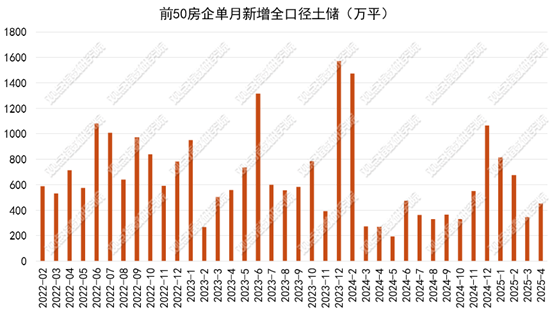
观点指数:前50房企5月新增土地建筑面积454.01万平方米 环比上升30.85%
智通财经网· 2025-05-26 11:37
Core Insights - The report indicates a significant increase in land acquisition by the top 50 real estate companies, with a monthly increase of 454.01 million square meters, representing a 30.85% month-on-month rise [1] - The leading companies in land investment from January to April include Greentown China, China Overseas Property, and others, with equity land acquisition amounts reaching 291.44 billion, 272.91 billion, and 269.68 billion yuan respectively [1] - The total value of newly acquired land from January to April shows that China Jinmao and Yuexiu Property led with 559.61 billion and 544.67 billion yuan respectively [3] Land Transaction Overview - During the report period, 360 residential land transactions occurred across first, second, and third-tier cities, with a total planned building area of 1,964.82 million square meters, marking a 7.22% increase month-on-month and a 4.22% increase year-on-year [5] - The total transaction price reached 1,291.5 billion yuan, reflecting a 20.62% month-on-month increase and a 31.7% year-on-year increase [5] - The average floor price was 6,579.75 yuan per square meter, with a month-on-month increase of 12.5% and a year-on-year increase of 26.37% [5] City-Level Land Transaction Data - In April 2025, first-tier cities saw a total of 44.1 million square meters of land transacted, with a total price of 179.9 billion yuan and an average floor price of 40,839 yuan per square meter [7] - Second-tier cities experienced a month-on-month decrease in transaction volume but a year-on-year increase in both transaction price and average floor price [7] - Third-tier cities showed a 20.8% month-on-month increase in transaction volume, with a 3.3% year-on-year increase [7] Competitive Landscape - The report highlights that non-core land parcels are often sold at base prices, while core parcels attract competitive bidding, primarily from local enterprises in second and third-tier cities [8] - In key cities, there were 36 residential land parcels available for bidding, with a starting price of 552.16 billion yuan and a total area of 147.76 million square meters, indicating a 48% increase in offered area compared to the previous period [10] - The competitive landscape for high-quality core land is characterized by joint bidding among leading developers [12]


土地收储持续提速,地产数据底部震荡
SINOLINK SECURITIES· 2025-05-25 14:34
Investment Rating - The report indicates a weak investment sentiment in the real estate sector, but new home sales data shows signs of bottoming out and recovery [7] Core Insights - The real estate market is experiencing a bottoming phase, with new home sales showing a week-on-week increase of 16% and a year-on-year increase of 9% in 47 cities [4][50] - The land market has seen a decline in activity, with a total of 493,000 square meters of residential land sold in the week of May 17-23, representing a 6% week-on-week increase but a 34% year-on-year decrease [44] - Special bonds for land acquisition have accelerated, with over 350 billion yuan allocated for the purchase of idle land across nearly 3,000 plots [5][14] Summary by Sections Real Estate Market Overview - The A-share real estate sector declined by 1.5% this week, ranking 23rd among all sectors, while the Hong Kong real estate sector fell by 0.7%, ranking 11th [30] - The property service and management index in Hong Kong decreased by 1.8%, while the Hang Seng China Enterprises Index increased by 1.4% [38] New Home Sales - In the week of May 17-23, new home sales totaled 404,000 square meters, with a 16% increase from the previous week and a 9% increase year-on-year [4][50] - Sales in first-tier cities saw a slight increase of 1% week-on-week but a decrease of 1% year-on-year [50] Second-Hand Home Sales - Second-hand home transactions totaled 284,000 square meters, with a 4% week-on-week increase and a 10% year-on-year increase [58] - First-tier cities experienced a 2% decrease week-on-week but a 25% increase year-on-year [58] Land Market Activity - The total area of residential land sold in 300 cities reached 131.98 million square meters year-to-date, with a year-on-year decrease of 1.5% [44] - The average premium rate for land sales was 13% during the week [44] Investment Recommendations - Developers are advised to focus on first-tier and core second-tier cities, emphasizing improved products and maintaining land acquisition capabilities [7] - Real estate agencies with strong competitive advantages, such as Beike, are recommended due to increasing market activity [7]
房地产行业最新观点及25年1-4月数据深度解读
CMS· 2025-05-25 10:25
Investment Rating - The report maintains a recommendation for the real estate industry, indicating a cautious outlook with potential for gradual recovery in the market [3]. Core Insights - The real estate market continues to experience low-level fluctuations, with construction completions showing a year-on-year decline, indicating a challenging environment for developers [1][42]. - New construction starts are expected to gradually decrease in their rate of decline throughout the first half of 2025, driven by stabilizing housing demand and strategic adjustments by developers [2][43]. - The report highlights the importance of government policies aimed at stabilizing the real estate market, with a focus on urban renewal and optimizing existing property acquisition strategies [40][41]. Summary by Sections Sales and Market Performance - In April, the year-on-year growth rate of sales area adjusted for the base period was -2.1%, reflecting ongoing low market activity and suppressed buyer sentiment [7][13]. - The total sales area for January to April was 28.26 million square meters, with a cumulative year-on-year decline of 2.8% [9][14]. - The sales amount for April was 270.35 billion yuan, showing a year-on-year decrease of 3.2% [9][14]. Construction and Investment - The new construction area in April saw a year-on-year decline of 22.1%, with expectations for a gradual narrowing of this decline in the coming months [2][43]. - The total investment in real estate development for April was 277.30 billion yuan, reflecting a year-on-year decrease of 10.3% [9][12]. - The completion area in April decreased by 27.9% year-on-year, indicating a faster-than-expected decline in construction completions [42][46]. Financial Indicators - The funding index for the real estate sector showed a downward trend, currently at a historically low level, suggesting potential improvements in cash flow for some companies [2][9]. - The funding sources for real estate development in April totaled 325.96 billion yuan, with a year-on-year decline of 4.1% [12][41]. Price Trends - The new home prices in 70 cities fell by 0.12% month-on-month in April, with an increasing number of cities experiencing price declines [10][11]. - The average price of new homes was 9,566 yuan per square meter, reflecting a slight year-on-year decrease of 0.4% [12][14].
