
荣耀

Search documents
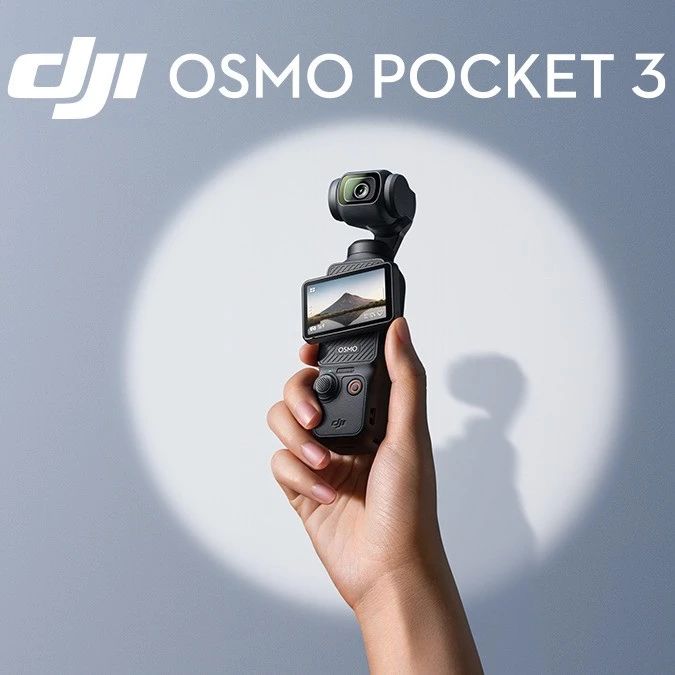
独家丨大疆 Pocket3 冲破一千万台销量,多家手机厂商悄然进军Pocket赛道
雷峰网· 2025-08-26 11:01
Core Viewpoint - The article discusses the significant success of DJI's Osmo Pocket 3, highlighting its sales performance and the competitive landscape as other companies enter the handheld camera market. Group 1: DJI's Success with Pocket 3 - DJI's Osmo Pocket 3 has sold over 10 million units since its launch in October 2023, generating revenue close to 200 billion [2] - The initial sales forecast for Pocket 3 was 30,000-40,000 units, which was later revised to 1 million and finally reached 5 million units sold [2] - The expected revenue from DJI's handheld products, including Pocket 3 and the newly launched Osmo 360 camera, is projected to exceed 500 billion this year, contributing to an overall revenue estimate of 850-900 billion for DJI [2] Group 2: Competitive Landscape - Other smartphone manufacturers, including OPPO and vivo, are actively developing their own versions of pocket cameras, with vivo reportedly assembling a team of nearly 100 people for this project [3] - Xiaomi has partnered with Haohan to create a competing gimbal camera, targeting the lower-end market and differentiating itself from DJI's offerings [4] - The competitor, Innosilicon, has also restarted its Pocket project, indicating the growing interest in this product category [5] Group 3: Challenges in Developing Pocket Cameras - The complexity of creating a pocket camera lies in miniaturizing the gimbal and body while accommodating a 1-inch image sensor and advanced image processing chips [8] - Previous attempts to create similar products faced challenges such as overheating and poor user experience due to modular designs [8] - The supply chain issues, particularly with the 1-inch CMOS sensor from Sony and motor module production, have contributed to the ongoing shortages of Pocket 3 [9][10] Group 4: Technological Barriers - The development of the camera motor module is particularly challenging due to the need for precision and the use of glass lenses, which significantly increase weight and complicate motor design [11] - The technology behind the gimbal stabilization and motor control is complex, requiring advanced algorithms and sensor integration [12] - Despite the advancements in technology, competitors struggle to differentiate their products from DJI's, making it difficult to capture market share [12][13] Group 5: Market Positioning and User Base - DJI's Pocket series has successfully expanded its user base over three generations, evolving from content creators to a broader audience, including vloggers and casual users [14][15] - The third generation, Pocket 3, has introduced features like beauty filters and color adjustments, further appealing to female users [15] - Competitors must find significant differentiation to compete effectively with DJI, as replicating the product without unique features may not yield profitable margins [15]

马斯克正式起诉OpenAI和苹果,电商成为小红书一级入口 | 蓝媒GPT
Sou Hu Cai Jing· 2025-08-26 10:48
Group 1: Legal Actions and Allegations - Musk's company xAI has filed a lawsuit against OpenAI and Apple, accusing them of illegal collusion to hinder competition in the AI sector [1] - Musk claims that Apple is violating antitrust laws by favoring OpenAI in its app store rankings, making it difficult for other AI companies to compete [1] - Musk has threatened immediate legal action against Apple and questioned why Apple has not included xAI's applications in its recommended section [1] Group 2: E-commerce Developments - Xiaohongshu has launched a new version of its app, making e-commerce a primary entry point, indicating a significant investment in its e-commerce business [1] - The new version features a "Market" page in the bottom navigation bar, positioned near the main "Home" page, showcasing Xiaohongshu's lifestyle e-commerce offerings [1] Group 3: Technology and Product Innovations - Zhixiang Future has introduced a new self-regressive image editing framework called VAREdit, which executes user commands accurately and improves editing speed to 0.7 seconds [1] - Multiple smartphone manufacturers, including Vivo, Honor, Xiaomi, Huawei, and OPPO, are entering the mixed reality (MR) and augmented reality (AR) markets, reflecting a strategic shift towards new human-computer interaction opportunities [2] - Meta Platforms plans to unveil a new type of smart glasses with a display at the upcoming Connect conference, priced around $800, indicating ongoing expansion in augmented reality and wearable technology [3]

深圳45年产业跃迁:当AI深入产线 如何锻造智造硬实力
Nan Fang Du Shi Bao· 2025-08-26 09:08
Core Viewpoint - Shenzhen's 45th anniversary highlights its high-quality development driven by leading companies like Huawei, Honor, BYD, and ZTE, forming a resilient modern industrial cluster that emphasizes intelligent manufacturing as a key area for industrial upgrading [1] Group 1: Intelligent Manufacturing and AI Integration - The production of industrial robots in Shenzhen has seen over 40% growth, with AI accelerating its penetration into frontline production, reshaping productivity [1] - Honor's new foldable flagship Magic V5 exemplifies the integration of AI in overcoming precision challenges in manufacturing, achieving assembly precision of 0.003 millimeters through collaborative development with industry partners [2][3] - The Honor smart manufacturing industrial park, recognized as the first national-level intelligent manufacturing demonstration factory in the smartphone industry, boasts over 85% of its production processes automated, with a 100% CNC rate for key equipment by the end of 2023 [3] Group 2: New Craftsman Spirit and Investment Trends - The emergence of "new craftsmen" in Shenzhen reflects a shift from traditional experience-based skills to a model that integrates knowledge, data, and creativity, enhancing manufacturing precision and efficiency [4][5] - Investment in industrial technology upgrades in Shenzhen is projected to grow by 61.8% year-on-year in Q1 2025, indicating a strong trend towards high-end, intelligent, and green manufacturing [5] Group 3: Industrial Ecosystem and Collaborative Innovation - Shenzhen's strategy focuses on creating a "chain master" leading and a cluster co-prosperity industrial ecosystem, with leading companies like Honor playing a crucial role in driving innovation and collaboration across the supply chain [6][8] - The total output value of Shenzhen's robotics industry is expected to exceed 200 billion yuan in 2024, with a year-on-year growth of 12.58%, and a 40.1% increase in industrial robot production in Q1 2025 [6] Group 4: Comprehensive Industrial Support - The success of individual companies in Shenzhen is rooted in a complete industrial ecosystem that supports technological innovation, with over a thousand national-level specialized "little giant" enterprises contributing to the industry [8] - The "20+8" industrial cluster policy is accelerating the formation of a world-class smart terminal industry cluster, with Honor's initiatives in both hardware and software exemplifying this trend [9]
深圳45年产业跃迁:当AI深入产线,如何锻造智造硬实力
Nan Fang Du Shi Bao· 2025-08-26 08:30
Core Insights - Shenzhen's 45th anniversary highlights its high-quality development driven by leading companies like Huawei, Honor, BYD, and ZTE, forming a resilient economic foundation through a modern industrial cluster [1] - The city is focusing on smart manufacturing as a key area for industrial upgrading, with AI playing a crucial role in enhancing productivity and efficiency [1] Group 1: Smart Manufacturing and AI Integration - Shenzhen's industrial robot production has seen over 40% growth, with humanoid robots being applied in real-world scenarios, showcasing the city's advancements in smart manufacturing [1] - Honor's new foldable flagship Magic V5 exemplifies the integration of AI in overcoming precision challenges in manufacturing, achieving a remarkable assembly accuracy of 0.003 millimeters [2][3] - The Honor smart manufacturing industrial park, recognized as the first national-level smart manufacturing demonstration factory in the smartphone industry, has over 85% of its production processes automated [3] Group 2: Collaborative Innovation in the Industry - The collaborative development model among companies, such as Honor's partnership with industry chain partners, is crucial for tackling industry challenges and enhancing innovation capabilities [2] - The AI-driven manufacturing system at Honor's factory transforms traditional craftsmanship into replicable algorithms, significantly improving production efficiency and quality control [3] Group 3: Investment and Growth Trends - Shenzhen's industrial technology transformation investment is projected to grow by 61.8% year-on-year in Q1 2025, indicating a strong shift towards high-end, intelligent, and green manufacturing [5] - The robot industry in Shenzhen is thriving, with the total output value surpassing 200 billion yuan in 2024, reflecting a 12.58% year-on-year growth [6] Group 4: Ecosystem and Industrial Clusters - The strategic focus on building a "chain master" and collaborative industrial ecosystem is essential for Shenzhen's future competitiveness, with leading companies like Honor playing a pivotal role [6][8] - The presence of over a thousand national-level specialized and innovative "little giant" enterprises in Shenzhen contributes to a vibrant industrial ecosystem, enhancing resource allocation and innovation [8][9] - Shenzhen's "20+8" industrial cluster policy is accelerating the formation of a world-class smart terminal industry cluster, integrating both hardware and software innovations [9]
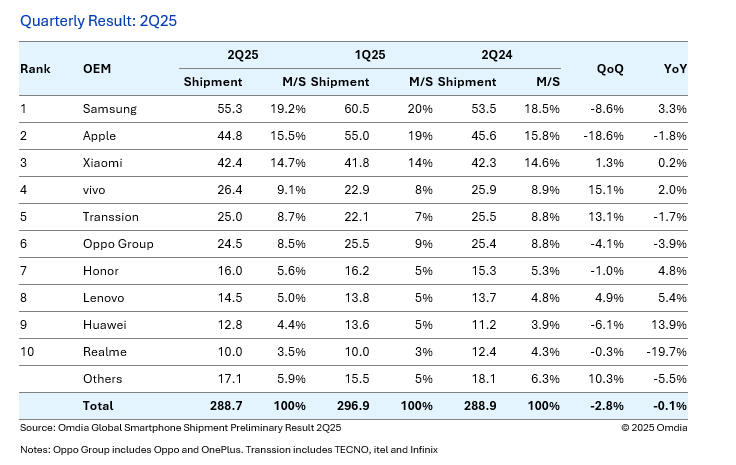
Omdia:2025第二季度全球智能手机市场微跌0.1% 下半年市场不确定性仍然持续
智通财经网· 2025-08-26 05:53
Core Insights - Global smartphone shipments are projected to decline to 288.7 million units in Q2 2025, a decrease of over 8 million units or 2.8% quarter-on-quarter, and a slight year-on-year decrease of 20,000 units or less than 0.1% [1][2] Company Performance - Samsung remains the market leader with shipments of 55.3 million units, holding a market share of 19.2%, despite a quarter-on-quarter decline of 8.6% and a year-on-year increase of 3.3% [2][4] - Apple ranks second with shipments of 44.8 million units and a market share of 15.5%, experiencing a significant quarter-on-quarter decline of 18.6% and a slight year-on-year decrease of 1.8% [2][4] - Xiaomi holds the third position with 42.4 million units shipped, reflecting a minor quarter-on-quarter increase of 1.3% and a year-on-year increase of 0.2% [2][4] - Vivo and Transsion are tied for fifth place, each with a market share of 9%, with Vivo showing a strong quarter-on-quarter growth of 15.1% [2][5] - Honor, Lenovo, and Huawei have shown strong growth, with Huawei achieving a year-on-year increase of 16.0%, reclaiming its position in the Chinese market [5] Market Trends - The smartphone market is facing significant macroeconomic challenges, with a decline in consumer demand post-pandemic and a shift in purchasing behavior [1][5] - Many manufacturers have had to lower production targets to avoid excess inventory, particularly in the U.S. market due to uncertainties surrounding tariffs [1][4] - The introduction of innovative hardware, such as silicon-carbon anode batteries and ultra-thin smartphone designs, is being leveraged to stimulate replacement demand among existing users [6]



苹果、vivo、荣耀接连入局!手机厂商为何看好这一新赛道?
Zheng Quan Shi Bao Wang· 2025-08-26 04:42
Core Insights - The mixed reality (MR) market is still in its early stages, with various companies like vivo, Honor, Xiaomi, Huawei, and OPPO entering the field, but facing challenges in sales and product acceptance [1][4][5] - Vivo has launched its first MR headset, the vivo Vision Exploration Edition, which is the lightest in the market at 398g, but it is currently only available for reservation and has not disclosed a price [2][4] - Apple's Vision Pro headset, launched in 2024, initially saw high demand but has since struggled with sales, leading to its production halt due to high pricing and a lack of ecosystem [3][4] Industry Trends - The consumer-grade XR device market in China saw a retail volume of 307,000 units in the first half of 2025, a 17.6% year-on-year increase, but the VR/MR segment experienced a 25.6% decline [3] - Analysts attribute the decline in VR device sales to a "content drought," with most products focusing on entertainment without compelling applications for broader audiences [3][4] - The MR market is expected to mature over the next 5 to 10 years, requiring advancements in hardware design, display quality, application ecosystems, and pricing [4][5] Company Strategies - Vivo's MR team has grown to 500 members, with a focus on bridging the physical and digital worlds, aiming to integrate MR into future household robotics [2][5] - Companies are leveraging their existing supply chain and technological expertise in smartphones to expand into the MR market, which is seen as a response to the saturation of the smartphone market [6][7] - Xiaomi has adjusted its smartphone sales target to approximately 175 million units, reflecting a broader industry trend of declining growth expectations [7] Technological Challenges - Experts highlight several bottlenecks in the MR and robotics integration, including the need for high-performance sensors, real-time data processing, low-latency communication, and mature AI algorithms [8][9] - The relationship between MR and robotics is emphasized, with MR providing enhanced environmental perception and interaction capabilities for robots, while robots can improve MR's physical interaction [8][9] Market Outlook - Global VR/MR shipments are projected to reach 5.6 million units in 2025, potentially increasing to 14.4 million units by 2030 [6] - The smartphone market in China has seen a decline in shipments, with a 4% year-on-year drop in the second quarter of 2025, indicating a shift in focus towards MR technologies [6]
手机明年或进入10000mAh大电池时代,可以丢掉充电宝了
猿大侠· 2025-08-26 04:11
Core Viewpoint - The article highlights the rapid advancements in battery capacity among Chinese smartphone manufacturers, indicating a shift towards larger batteries and improved technology, with expectations of entering the 10,000mAh era soon [1][10]. Group 1: Current Battery Trends - As of May, the average battery capacity of smartphones in China is 5418mAh, which is 518mAh higher than other markets [1]. - Several Chinese brands are competing in the large battery segment, with models reaching 7000mAh and even 8000mAh in the first half of the year [5]. - A concept phone by Realme, featuring a 10,000mAh battery, has been showcased, indicating a trend towards higher capacity batteries while maintaining a slim profile [5][11]. Group 2: Future Developments - A 10,000mAh battery smartphone is expected to be mass-produced next year, marking a significant milestone in smartphone battery technology [3]. - Realme has teased a new model with a 15,000mAh battery, which could be unveiled in 2025, pushing the boundaries of battery capacity further [5][10]. Group 3: Technological Innovations - The use of silicon-carbon anode materials has significantly improved energy density, allowing for higher capacity batteries without increasing device thickness [11]. - This advancement in battery technology is expected to enhance overall performance and safety, reducing risks associated with overheating and short circuits [11]. Group 4: Market Dynamics - While Chinese manufacturers focus on increasing battery capacity, Apple is pursuing a different strategy by emphasizing ultra-thin designs, which may involve reducing battery size [12]. - Consumer preferences are split, with some valuing larger batteries for extended usage, while others prefer lighter devices, indicating a diverse market demand [14][15].

光弘科技 双轮驱动显韧性 并购AC 公司助力全球化版图扩张
Quan Jing Wang· 2025-08-26 03:31
Group 1 - The core viewpoint of the news is that Guanghong Technology (300735) is strengthening its position in the secondary market and has made significant progress in its acquisition of AC, a European electronic manufacturing services (EMS) giant, which enhances its global strategic layout [1][2]. - The acquisition of AC is a crucial step for global expansion, allowing Guanghong Technology to integrate high-quality targets and establish a manufacturing network across Asia, Europe, America, and Africa [2]. - AC has a strong presence in the automotive electronics sector, ranking 9th in Europe and 47th globally, which aligns with Guanghong Technology's strategy to expand its automotive electronics business [3]. Group 2 - Guanghong Technology's existing business shows resilience, with stable growth expected in the consumer electronics sector, particularly in providing high-end manufacturing services for major clients like Huawei and Honor [4]. - The automotive electronics business is projected to increase its revenue share to 15% by Q1 2025, benefiting from the rising penetration of new energy vehicles [4]. - The current valuation of Guanghong Technology does not fully reflect its growth potential post-acquisition, indicating room for valuation recovery as the company integrates AC's capabilities and stabilizes its domestic operations [4].

8.26犀牛财经早报:ETF规模达5.07万亿元再创新高 车企高管称新能源汽车行业利润率5%
Xi Niu Cai Jing· 2025-08-26 02:17
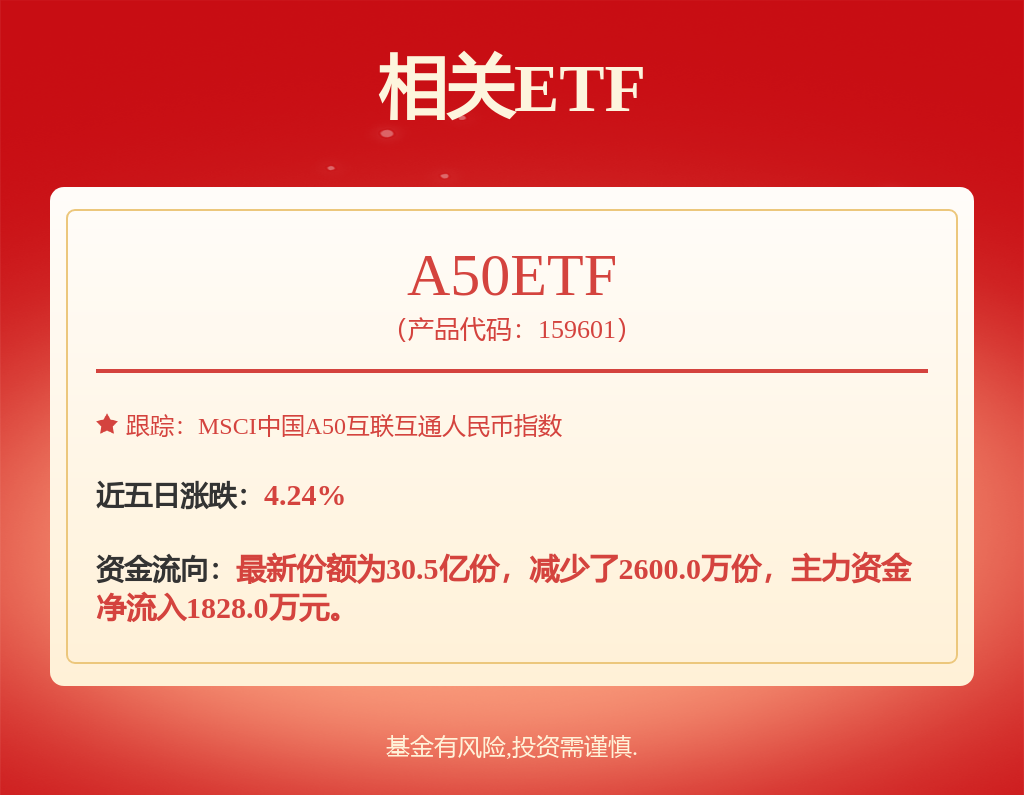
Group 1: ETF Market in China - The scale of China's ETF market has reached a historical high of 5.07 trillion yuan, marking the entry into the 5 trillion yuan era [1] - The number of ETFs in the market is currently 1,271, with 101 ETFs exceeding 10 billion yuan in scale and 6 exceeding 100 billion yuan [1] - The equity ETF market has seen a year-to-date growth of over 24%, with a total scale of 41,170.94 billion yuan as of August 25, 2023 [1] Group 2: Public Fundraising Trends - Several fund companies are engaging in "second launches" for high-performing funds, which allows for more efficient fundraising and quicker market entry [2] - As of August 25, 2023, 127 public fund institutions have initiated self-purchases of their equity funds, with stock and mixed funds making up nearly half of these purchases [2] Group 3: A-Share Company Performance - By August 25, 2023, 1,688 A-share companies reported a total revenue of 9.5 trillion yuan for the first half of the year, with a slight year-on-year decrease of 0.1% [3] - The net profit attributable to shareholders reached 615.198 billion yuan, showing a year-on-year increase of 3.98% [3] - In the second quarter, these companies achieved a revenue of 4.87 trillion yuan, reflecting a quarter-on-quarter growth of 6.72% [3] Group 4: Lithium Industry Insights - The lithium price recovery is expected to improve the supply-demand relationship in the lithium mining industry, despite some companies reporting losses due to previous price drops [4] - The price of carbonate lithium has recently surged above 80,000 yuan per ton, which may positively impact miner profits and supply responses [4] Group 5: Automotive Industry Challenges - The COO of Lantu Automotive indicated that the electric vehicle industry is facing intense competition, with profit margins around 5% [5] - The need for stable cash flow and reasonable profit margins for supply chain companies is emphasized to ensure high-quality development in the automotive sector [5] Group 6: Company Announcements - Dongfeng Motor Group has acquired a 55% stake in Dongfeng Motor Co., with no change in the actual controller [7] - Beijing Junzheng is planning to issue H-shares and list on the Hong Kong Stock Exchange [8] - Hunan Gold's subsidiary has temporarily suspended operations due to a fatal accident, which may impact production and operations [9] - Yangfan New Materials announced that its controlling shareholder is under investigation, but control of the company remains unchanged [10] - Dazhu Laser reported a net profit of 488 million yuan for the first half of the year, a decline of 60.15% year-on-year [11] - Jianghuai Automobile reported a net loss of 773 million yuan for the first half of 2023 [12]
四大证券报精华摘要:8月26日
Zhong Guo Jin Rong Xin Xi Wang· 2025-08-26 00:21
Group 1 - The rare earth industry is experiencing positive mid-year performance due to policy support and growing demand, with the Wande Rare Earth Concept Index rising by 19.41% since August 18 [1] - Analysts believe the rare earth sector will benefit from increasing demand in applications such as electric vehicles and robotics, highlighting the scarcity of resources and potential price increases [1] - The Central Committee and State Council's recent opinions support the development of a national carbon market, aiming for comprehensive coverage of major industrial sectors by 2027 and a robust carbon pricing mechanism by 2030 [1] Group 2 - During the 14th Five-Year Plan period, China's customs will manage an average of 5.2 billion tons of imports and exports annually, with a total value of 41.5 trillion yuan, making it the largest globally [2] - The customs authority, in collaboration with over 20 ministries, has launched annual cross-border trade facilitation initiatives, expanding participation to 25 cities across 17 provinces [2] Group 3 - Over 1600 listed companies reported their mid-year results, with insurance funds entering the top ten shareholders of over 120 companies, particularly favoring sectors like chemicals, machinery, and electrical equipment [3] - The onshore RMB strengthened against the USD, closing at 7.1517, a rise of 288 basis points, influenced by a decline in the dollar index and improved market sentiment [3] Group 4 - The bond market is under pressure, with rising yields leading to capital losses, and traditional investment logic failing, prompting a shift towards a risk preference-driven pricing state [4] - Analysts suggest that the most pessimistic phase for the bond market may be over, indicating potential trading and allocation opportunities [4] Group 5 - Agricultural Bank of China announced a tender for AI quality inspection capabilities, reflecting the banking sector's active engagement in AI development [5] - The white liquor market faces challenges due to a lack of unified standards for vintage liquor, leading to issues of trust and quality [6] Group 6 - The implementation of personal consumption loan interest subsidies is set for September 1, with banks preparing to assist customers despite pending policy details [7] - Public fund institutions have been actively purchasing their own products, with equity funds making up a significant portion of these purchases [7] - The total scale of equity ETFs in China reached a historical high of 4.117 trillion yuan, marking a 24.05% increase since the beginning of the year [7]