
石药集团

Search documents
AI制药行业动态点评:晶泰控股收到5100万美金首付款,AI制药商业模式得到验证
Shanxi Securities· 2025-08-12 07:52
Investment Rating - The report maintains an investment rating of "Leading the Market-A" for the pharmaceutical AI drug development industry [1]. Core Insights - The collaboration between CrystalTech Holdings and DoveTree, which includes a $51 million upfront payment, validates the AI drug development business model and reflects the accelerating commercialization of AI pharmaceutical companies [1][4]. - The AI pharmaceutical sector is on the brink of an explosive growth phase, characterized by three major trends: deepening technological integration, diversification of collaboration models, and the gradual establishment of regulatory frameworks [5]. Summary by Sections Industry Performance - The pharmaceutical sector has shown significant market performance over the past year, with a notable increase in high-value collaborations in the AI drug development space [1]. Key Developments - CrystalTech Holdings signed a strategic cooperation agreement with DoveTree to develop drug candidates in oncology and immune inflammation, receiving a $51 million upfront payment and potential future payments totaling up to $5.89 billion [1][4]. - The report highlights several high-value collaborations in the AI pharmaceutical field, indicating a strong demand from traditional pharmaceutical companies for AI technologies [4]. Future Outlook - The report anticipates that AI pharmaceutical companies will increasingly engage in downstream clinical development to share higher profits, moving beyond traditional licensing agreements [5]. - The FDA and other regulatory bodies are beginning to establish guidelines for the evaluation of AI in drug development, which will accelerate the standardization process within the industry [5].
纯度升级!恒生创新药指数编制方案修订8月11日起实施
Jin Rong Jie· 2025-08-12 07:14
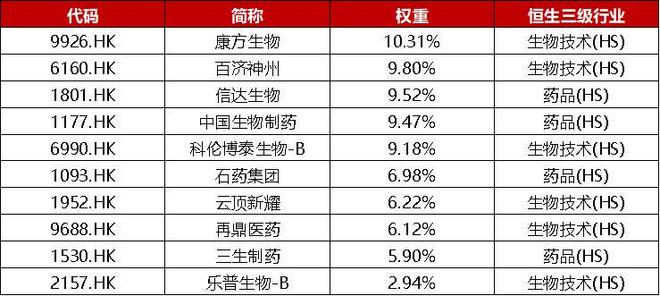
Core Viewpoint - The Hong Kong stock market's innovative drug sector has seen a significant rebound in performance this year, driven by favorable policies, accelerated R&D, and a surge in overseas expansion. The Hang Seng Innovative Drug Index (HSIDI.HI) has gained over 100% year-to-date, attracting considerable market attention. In light of this positive trend, the index's compilation rules have undergone important revisions [1][2]. Summary by Relevant Sections Index Adjustments - On August 1, 2025, the Hang Seng Index Company announced key revisions to the Hang Seng Innovative Drug Index, effective from August 11, 2025. The main changes include the removal of companies in the CXO sector, which encompasses Contract Research Organizations (CRO), Contract Manufacturing Organizations (CMO), and Contract Development and Manufacturing Organizations (CDMO) [1][2]. Focus on Core Enterprises - The index has removed seven companies with relatively low "innovative drug content," resulting in a renewed focus on core innovative drug enterprises. These companies typically possess strong R&D capabilities and core patent technologies, enhancing the index's ability to capture the industry's driving forces [3][5]. Top Constituents and Their Weightings - The top ten constituents of the revised index and their respective weights are as follows: - 9926.HK: 10.31% - 6160.HK: 9.80% - 1801.HK: 9.52% - 1177.HK: 9.47% - 6990.HK: 9.18% - 1093.HK: 6.98% - 1952.HK: 6.22% - 9688.HK: 6.12% - 1530.HK: 5.90% - 2157.HK: 2.94% [4]. Enhanced Liquidity and Trading Efficiency - The index's selection criteria have been modified to include only companies eligible for trading under the Southbound Stock Connect, thereby enhancing liquidity and trading convenience. This change is expected to attract more mainland capital, further improving the index's trading dynamics [7]. Investment Opportunities - The Huatai-PineBridge Fund's Hang Seng Innovative Drug ETF (520500) is the first ETF tracking the Hang Seng Innovative Drug Index. As of August 8, 2025, the ETF has seen a significant increase in both shares and scale, with year-to-date growth rates of 389.34% and 854.55%, respectively. The ETF has also demonstrated strong liquidity, with daily trading volumes exceeding 1 billion HKD for 15 consecutive trading days [8].

诺和诺德司美格鲁肽销售额激增 国内药企加快布局步伐
Xin Hua Wang· 2025-08-12 05:47
Core Viewpoint - The weight loss drug sector is experiencing a rebound driven by strong performance from Novo Nordisk and a technical correction after recent declines in stock prices [1][2]. Group 1: Market Performance - The weight loss drug concept sector opened higher on February 1, with notable gains from companies like Hongbo Pharmaceutical, Changshan Pharmaceutical, and Puli Pharmaceutical [1]. - The innovative drug ETF for the Shanghai-Hong Kong-Shenzhen market also saw a strong rebound, rising over 2%, with leading stocks including Kelaiying, WuXi Biologics, and others [1]. Group 2: Novo Nordisk's Performance - Novo Nordisk reported a 31% year-on-year increase in total revenue for 2023, with operating profit rising by 37% [1]. - The company's star product, semaglutide, generated sales of 145.81 billion Danish Krone (approximately 21.20 billion USD), marking an 88.78% increase and accounting for 62.78% of total revenue [1]. Group 3: Growth of GLP-1 Drugs - The semaglutide injection for weight management, Wegovy, achieved revenue of 31.34 billion Danish Krone (4.56 billion USD), reflecting a staggering 407% year-on-year growth [2]. - The global popularity of GLP-1 receptor agonists like semaglutide is attributed to their effectiveness in weight loss, blood sugar control, and cardiovascular benefits, leading to a surge in sales and clinical developments [2]. Group 4: Industry Innovations and Developments - Domestic companies are accelerating their innovation efforts in the weight loss drug market, with several GLP-1 receptor agonists in various stages of clinical trials [3]. - Companies like Hanyu Pharmaceutical and Changshan Pharmaceutical are actively pursuing new drug approvals and clinical trials for GLP-1 related products [3][4]. - The market for effective weight loss drugs remains vast due to the limited number of approved medications, highlighting significant growth potential in this sector [4].


石药集团(01093)下跌2.03%,报10.15元/股
Jin Rong Jie· 2025-08-12 03:11
Group 1 - The core viewpoint of the article highlights the recent stock performance of CSPC Pharmaceutical Group, which saw a decline of 2.03% to HKD 10.15 per share, with a trading volume of HKD 374 million [1] - CSPC Pharmaceutical Group is a Hong Kong-listed pharmaceutical company primarily engaged in the production of finished drugs and active pharmaceutical ingredients, focusing on innovative drugs as its core development strategy [1] - The company has a strong product portfolio in therapeutic areas such as neurological diseases, oncology, anti-infection, and cardiovascular diseases, supported by an international R&D team [1] Group 2 - As of the first quarter of 2025, CSPC Pharmaceutical Group reported total revenue of HKD 7.015 billion and a net profit of HKD 1.478 billion [2]
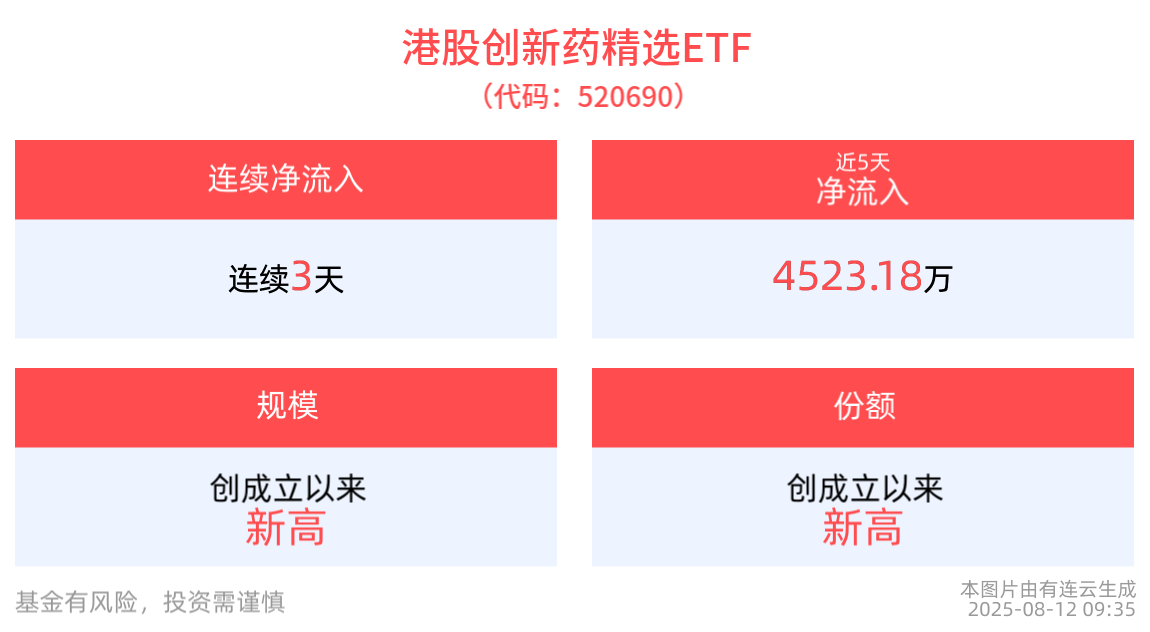
港股创新药精选ETF(520690)连续3天获资金净流入,晶泰控股领涨超7%,预计中期综合收益同比增加至少约387%
Xin Lang Cai Jing· 2025-08-12 02:13
Group 1 - The Hang Seng Hong Kong Stock Connect Innovative Drug Selection Index (HSSCPB) increased by 0.02%, with notable stock performances including Jingtai Holdings (02228) up 7.38% and Fosun Pharma (02196) up 6.00% [3] - The Hong Kong Innovative Drug Selection ETF (520690) rose by 0.52%, reaching a latest price of 0.97 yuan, with a trading volume of 240.45 million yuan and a turnover rate of 0.62% [3] - Jingtai Holdings announced an expected comprehensive income of no less than 500 million yuan for the six months ending June 30, 2025, representing an increase of at least 387% compared to the same period in 2024 [3] Group 2 - The Hong Kong Innovative Drug Selection ETF reached a new high in scale at 385 million yuan and a new high in shares at 399 million [4] - The ETF has seen continuous net inflows over the past three days, with a maximum single-day net inflow of 22.93 million yuan, totaling 42.28 million yuan [4] - The ETF's management fee is 0.50% and the custody fee is 0.10%, which are among the lowest in comparable funds [5] Group 3 - The HSSCPB index aims to reflect the performance of Hong Kong-listed companies involved in innovative drug research, development, and production [5] - The top ten weighted stocks in the HSSCPB index account for 78.05% of the total index weight, including companies like BeiGene (06160) and WuXi Biologics (02269) [5]



智通港股沽空统计|8月12日
智通财经网· 2025-08-12 00:23
Summary of Key Points Core Viewpoint - The report highlights the top short-selling stocks in the market, indicating significant investor sentiment against these companies, with notable short-selling ratios and amounts for specific stocks [1][2]. Group 1: Top Short-Selling Ratios - Anta Sports (82020) has the highest short-selling ratio at 100.00% with a short-selling amount of 97,800 CNY [2]. - China National Offshore Oil Corporation (80883) follows with a short-selling ratio of 90.59% and a short-selling amount of 1,305,000 CNY [2]. - Tencent Holdings (00700) has a short-selling ratio of 87.99% with a short-selling amount of 1,125,000 CNY [2]. Group 2: Top Short-Selling Amounts - Meituan (03690) leads in short-selling amount with 1.136 billion CNY and a short-selling ratio of 23.98% [2]. - Xiaomi Group (01810) has a short-selling amount of 1.04 billion CNY and a short-selling ratio of 16.20% [2]. - Tencent Holdings (00700) also appears in this category with a short-selling amount of 1.007 billion CNY and a short-selling ratio of 15.29% [2]. Group 3: Top Short-Selling Deviation Values - Tencent Holdings (80700) has the highest deviation value at 45.57%, indicating a significant difference from its average short-selling ratio over the past 30 days [2]. - China National Offshore Oil Corporation (80883) has a deviation value of 42.14% [2]. - China State Construction International (03311) shows a deviation value of 34.50% [2].




天风证券晨会集萃-20250812
Tianfeng Securities· 2025-08-12 00:12
Group 1 - The overall industry sentiment shows an upward trend in sectors such as steel, electric equipment, electronics, food and beverage, environmental protection, and retail, while sectors like oil and petrochemicals, machinery, light manufacturing, home appliances, automotive, banking, real estate, and public utilities are experiencing a downward trend [3][22] - As of August 10, 2025, notable industry data includes: automotive semi-steel tire operating rate at 74.35%, down 0.1% month-on-month; machinery equipment price index at 125.17 points, down 0.11% month-on-month; electric equipment Topcon component price at 0.7 yuan/watt, up 4.2% month-on-month; transportation with Suzhou subway passenger volume at 2.156 million, up 27.57% month-on-month; light manufacturing white cardboard price at 4010 yuan/ton, down 2.43% month-on-month [3][23][24] Group 2 - Insurance capital is increasingly allocating to equity, with banks and high-dividend sectors being core beneficiaries. By the end of Q1 2025, life and property insurance companies had invested a total of 2.82 trillion yuan in the stock market, a year-on-year increase of 44.5% [5] - The potential for insurance capital to increase its allocation to bank stocks remains significant, with estimated incremental funds of 140.4 billion yuan and 73.7 billion yuan for bank stocks in 2025, assuming 25% of new premium income is directed to the A-share market [5] Group 3 - The report on Shiyao Group indicates a revenue of 7.015 billion yuan in Q1 2025, a year-on-year decrease of 21.9%, with a net profit of 1.495 billion yuan, down 8.3%. The decrease in revenue is primarily due to the impact of price adjustments and centralized procurement policies [8][28] - The core pipeline SYS6010 (EGFRADC) shows strong potential for authorization, having started its first phase III clinical trial in March 2025, targeting patients with EGFR mutation non-small cell lung cancer [8][28] Group 4 - Shenzhen Airport's operational data shows a significant recovery, with 221,000 aircraft movements in the first half of 2025, a year-on-year increase of 7.2%, and a passenger throughput of 32.57 million, up 10.9% year-on-year [19][30] - The airport's non-aeronautical business is diversifying, with advertising revenue expected to increase as passenger traffic grows, and the new cargo station is anticipated to boost international cargo volume [19][31] Group 5 - Beiding Co. reported a revenue of 430 million yuan in the first half of 2025, a year-on-year increase of 34%, with a net profit of 56 million yuan, up 75% year-on-year. The company benefited significantly from domestic subsidies and the "old-for-new" replacement policy [10][36] - The company's gross margin improved to 49.7% in the first half of 2025, driven by high-margin products, with a notable increase in sales from new product lines [10][36]


飙涨900%,A股又一“神药”杀疯了?
3 6 Ke· 2025-08-12 00:04
Core Viewpoint - The surge in stock price of Hotgen Biotech, which increased over 900% since September 2024, is disconnected from its declining performance, as the company reported its first loss since going public in 2024 [1][2][15]. Company Performance - Hotgen Biotech's main business is in in vitro diagnostic (IVD) reagents and instruments, accounting for 99% of its revenue. The company has faced significant challenges due to centralized procurement policies, leading to an over 80% decline in the sector [2][15]. - The company's revenue plummeted by 90% in 2024 compared to its historical peak, with a net loss of 1.9 billion yuan. In Q1 2025, revenue further decreased by nearly 20% year-on-year [15][19]. - The gross margin has been declining for nine consecutive years, dropping from over 73% before 2019 to significantly lower levels due to changes in business structure and demand fluctuations [17][21]. Market Dynamics - The A-share innovation drug index hit a ten-year low in September 2024, down over 50% from its peak in 2020, but rebounded nearly 90% thereafter, driven by both market recovery and advancements in domestic innovative drug development [5][6]. - Chinese innovative pharmaceutical companies have significantly improved their R&D capabilities, contributing to one-third of global innovative drug development, with external licensing transactions exceeding 50 billion USD in 2024, a year-on-year increase of over 20% [5][6]. Investment Speculation - Hotgen Biotech's stock surge is largely attributed to speculative investments in its innovative drug business, which has yet to generate any revenue. The company has invested in several innovative drug firms, including ShunJing Pharmaceutical, which is developing a novel antibody drug for acute myocardial infarction [7][12]. - The global market for acute myocardial infarction treatment is substantial, with a demand exceeding 50 billion USD, but the success of the drug pipeline remains uncertain due to the lengthy and risky nature of drug development [7][8]. Competitive Landscape - The Alzheimer's disease (AD) treatment market is also highly competitive, with numerous domestic and international companies developing drugs. Hotgen Biotech's stake in ZhiYuan Biotech, which is working on an AD treatment, faces significant competition from established players [9][10][11]. - Hotgen Biotech holds only a 23% stake in ZhiYuan Biotech, limiting its potential financial benefits from any successful drug development [11][12]. Industry Challenges - The IVD sector is experiencing severe price pressures due to centralized procurement policies, with significant revenue declines reported across the industry. Over 70% of IVD companies saw revenue shrink year-on-year, and many are facing substantial losses [18][19][20]. - The future growth prospects for Hotgen Biotech's core IVD business appear bleak, raising concerns about its ability to support its investments in innovative drug companies [21][22].
国产减肥药加速突围:如何与进口药竞争?是否还有BD预期?
Xin Lang Cai Jing· 2025-08-11 23:50
Group 1 - Xinda Biologics announced the official launch of its dual receptor agonist, Masitide, for weight management, which is the first GCG/GLP-1 dual receptor agonist approved for long-term weight control in adults in China [1] - Clinical data shows that Masitide can achieve a weight reduction of 21%, over 80% reduction in liver fat content, and significant improvements in cardiovascular and metabolic indicators [1] - The GLP-1 weight loss drug market has seen significant growth, with Novo Nordisk's semaglutide generating $16.5 billion in revenue and Eli Lilly's tirzepatide generating $14.7 billion in the first half of 2025 [1] Group 2 - The trend in GLP-1 weight loss drug development is shifting towards multi-target, long-acting, and oral formulations, with many domestic innovative pharmaceutical companies actively participating [2] - The popularity of GLP-1 drugs has been fueled by endorsements from high-profile individuals, leading to increased public interest and demand for these medications [3] - The market for GLP-1 drugs in China is estimated to be between 40 billion to 50 billion yuan, with significant potential for generic drugs as original patents expire [5] Group 3 - The competitive landscape for GLP-1 weight loss drugs is evolving, with various products entering the market, and companies need to adapt their commercialization strategies to succeed [6][9] - Regulatory requirements for GLP-1 products in China are stringent, necessitating large-scale clinical trials, which poses challenges for many companies [7] - Partnerships and business development (BD) opportunities are emerging as companies seek to expand their market presence internationally, with notable agreements already in place [8]

智通港股通资金流向统计(T+2)|8月12日
智通财经网· 2025-08-11 23:33
Group 1 - Xiaomi Group-W (01810), SMIC (00981), and Alibaba-W (09988) ranked the top three in net inflow of southbound funds, with net inflows of 1.716 billion, 0.497 billion, and 0.492 billion respectively [1] - The top three stocks with the highest net outflow of southbound funds were the Tracker Fund of Hong Kong (02800), Hang Seng China Enterprises (02828), and China Mobile (00941), with net outflows of -4.725 billion, -1.560 billion, and -0.794 billion respectively [1] - In terms of net inflow ratio, Reshape Energy (02570), Haitian International (01882), and Guofu Hydrogen Energy (02582) led the market with ratios of 69.81%, 56.10%, and 54.91% respectively [1] Group 2 - The top ten stocks by net inflow included Xiaomi Group-W (01810) with 1.716 billion and a closing price of 51.850, down 3.98% [2] - The top ten stocks by net outflow included the Tracker Fund of Hong Kong (02800) with -4.725 billion and a closing price of 25.560, up 0.55% [2] - The highest net inflow ratio was recorded by Reshape Energy (02570) at 69.81% with a closing price of 167.000, up 1.33% [3]



