DeepSeek

Search documents
Cursor技术负责人详解AI编程三大难题:奖励信号、过程优化与经验积累 | Jinqiu Select
锦秋集· 2025-05-31 02:37
Core Insights - The article emphasizes that AI programming is not merely about generating syntactically correct code but involves a complex cognitive process that requires understanding problems, selecting appropriate tools, and iterating through multiple debugging cycles [1][3][6] Group 1: Challenges in AI Programming - AI programming faces unique challenges due to the vast "action space" compared to fields like mathematics, where reasoning is embedded in the code itself [7][8] - The iterative process of "writing code → calling tools → receiving feedback → adjusting code" complicates the optimization of reinforcement learning [7][8] - Designing effective reward signals for programming tasks is a core challenge, as models may find shortcuts that bypass the core logic of a problem [8][9] Group 2: Reward Signal Design - Using "passing tests" as a reward can lead to models generating unrelated solutions that merely pass tests without solving the actual problem [8][9] - Researchers are exploring more refined reward designs, including code quality and learning from expert solutions, to guide models effectively [8][9] - The issue of sparse rewards persists, necessitating the breakdown of complex tasks into smaller components to facilitate more frequent feedback [9] Group 3: Evolution of Reinforcement Learning Algorithms - The shift from process reward models (PRMs) to result-based reward mechanisms is noted, as the latter provides more reliable guidance for models [10] - The GRPO algorithm demonstrates success by evaluating multiple candidate solutions rather than relying on inaccurate value functions [10] - Modern reinforcement learning systems require optimized infrastructure for high throughput, including various engineering strategies [11] Group 4: Tool Selection in Programming - The choice of tools significantly impacts the performance of reinforcement learning models, with terminal operations being favored for their simplicity [12] - Static analysis tools can provide valuable feedback but face deployment complexities [12] - The introduction of "thinking tools" allows models to explicitly call reasoning tools, enhancing control over their thought processes [13] Group 5: Memory Mechanisms and Challenges - Implementing memory functions in reinforcement learning models presents challenges, particularly with delayed credit assignment [17] - A practical solution involves rule-based optimization methods rather than end-to-end training for memory mechanisms [17] Group 6: User Feedback and Model Evaluation - Real user behavior provides critical feedback signals, with implicit behaviors being more valuable than explicit ratings [18][20] - Observing user modifications to model outputs can serve as a "ground truth" for retraining models to better align with user expectations [20] Group 7: Future Trends in Programming Agents - The future of programming agents lies in their ability to accumulate experience and knowledge, allowing them to avoid starting from scratch for each task [23] - This knowledge reuse will fundamentally change how programming agents operate, making them more efficient and aligned with project requirements [23]


申万宏源研究换帅,80后王胜接任总经理,重点布局智能投研
Mei Ri Jing Ji Xin Wen· 2025-05-30 14:49
Group 1 - The core viewpoint is that the Chinese capital market is expected to enter a long bull market, driven by improved ROE returns and the increasing influence of leading brands, even if GDP growth slows to a medium-high rate [3][4]. - Wang Sheng has been appointed as the new General Manager of Shenwan Hongyuan Research, succeeding Zhou Haichen, and aims to explore a more flexible and agile organizational structure to empower analysts [1][5]. - The research institute will focus on intelligent investment research, leveraging big data, algorithms, and computing power to enhance its research methodologies and frameworks [6]. Group 2 - The Chinese capital market is characterized by a well-designed top-level structure, improved corporate governance, and a rising awareness of shareholder returns, with dividends and buybacks exceeding financing for three consecutive years [3][4]. - The emergence of Chinese technology companies, such as Huawei and ByteDance, is creating a unique opportunity for growth in the new economy sector, coinciding with the global advancement of artificial intelligence [4]. - Wang Sheng emphasizes the importance of stable teams, solid research styles, and systematic frameworks in building client trust within the sell-side research sector [5].

尘埃落定!王胜出任申万宏源研究总经理
券商中国· 2025-05-30 13:05
Core Viewpoint - The Chinese capital market is expected to enter a long-term bull market, driven by external challenges that strengthen the economy and enhance market resilience [4][5]. Group 1: Leadership Changes - Wang Sheng has been appointed as the new General Manager of Shenwan Hongyuan Research, succeeding Zhou Haichen, who will continue to oversee research and institutional business [1]. - Wang Sheng holds a PhD in management from Tongji University and has extensive experience in strategy research and analysis [2]. Group 2: Market Outlook - The Chinese capital market is anticipated to grow stronger, with improved corporate governance and increased shareholder returns, as evidenced by dividends and buybacks exceeding financing for three consecutive years [4]. - The rise of Chinese technology companies, such as Huawei and ByteDance, alongside advancements in artificial intelligence, presents a unique opportunity for the market [4]. Group 3: Research Development - Wang Sheng emphasizes the need to enhance the "research product" concept, focusing on quality and customization to better serve clients [6]. - The research team aims to integrate artificial intelligence into their methodologies, improving data processing and analysis capabilities [7].

国际旅行商齐聚杭州 “科技感”成全球推广新名片
Zhong Guo Xin Wen Wang· 2025-05-30 12:15
Core Insights - The 2025 ITB CHINA International Travel Business "Hangzhou Tour" event commenced in Hangzhou, attracting over 60 international travel representatives from 25 countries and regions to explore global tourism markets [1] Group 1: Technology and Tourism - Hangzhou showcased its technological innovations, including smart tracking flying cameras, brain-machine interface sleep devices, and real-time translation glasses, which became focal points of the event [1] - The presence of technology products impressed international attendees, with a French travel merchant expressing that the technological advancements in Hangzhou surpassed his previous impressions of the city [2] Group 2: Changing Travel Trends - Young travelers are reshaping tourism consumption patterns through short video strategies and influencer recommendations, leading to exponential growth in visitor numbers for popular attractions [2] - Korean travel agencies are adapting by promoting diversified itineraries that encourage young tourists to travel from Shanghai to Hangzhou via high-speed rail, influenced by direct flight availability and ticket prices [2] Group 3: International Exposure and Promotion - Suggestions were made to enhance Hangzhou's international visibility through events like the Liangzhu Forum, which could attract global scholars and industry leaders, thereby increasing the city's global profile [2] - The Hangzhou Cultural, Radio, Television, and Tourism Bureau plans to optimize inbound services and develop themed travel routes, aiming to showcase both the cultural heritage and the digital economy of the city [4]

重磅!华为发布准万亿大模型
Mei Ri Jing Ji Xin Wen· 2025-05-30 11:41
Core Insights - Huawei has launched a new model called Pangu Ultra MoE, which has a parameter scale of 718 billion, marking a significant advancement in the MoE model training field on the Ascend AI computing platform [1][3][6] - The release of Pangu Ultra MoE and the Pangu Pro MoE series demonstrates Huawei's capability in achieving a fully controllable training process for domestic computing power and models, validating the innovation capacity of China's AI infrastructure [3][6] Model Architecture and Training Innovations - The Pangu team has introduced innovative designs in model architecture and training methods to address the challenges of training ultra-large-scale and highly sparse MoE models, achieving stable training on the Ascend platform [1][4] - Key innovations include the Depth-Scaled Sandwich-Norm (DSSN) architecture and TinyInit initialization method, which have enabled long-term stable training with over 18TB of data [4] - The introduction of the EP loss load optimization method ensures better load balancing among experts and enhances their specialization capabilities [4] Performance and Efficiency Improvements - The training methods disclosed by Huawei have enabled efficient integration of large sparse MoE reinforcement learning (RL) post-training frameworks on the Ascend CloudMatrix 384 supernodes [5] - Recent upgrades have improved the pre-training system's performance, increasing the multi-factor utilization (MFU) from 30% to 41% [5] - The Pangu Pro MoE model, with 72 billion parameters and 16 billion active parameters, has demonstrated performance comparable to larger models, ranking first among domestic models under 100 billion parameters in the SuperCLUE leaderboard [5] Industry Implications - The successful training and optimization of ultra-large-scale sparse models on domestic AI platforms signify a closed-loop of "full-stack domestication" and "fully controllable processes" from hardware to software, and from research to engineering [6] - This advancement provides a strong foundation for the development of China's AI industry, reinforcing confidence in domestic AI capabilities [3][6]
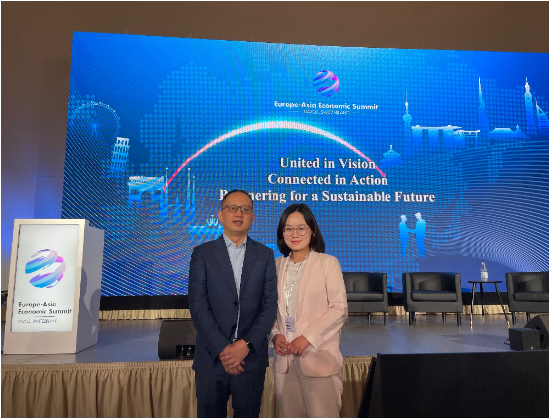
张宇昕:华为云加速行业智能化,繁荣欧洲市场AI生态
Xin Lang Cai Jing· 2025-05-30 11:15
Core Viewpoint - The first Eurasian Economic Summit highlights Huawei Cloud's strategy to leverage AI for industrial upgrades, aiming to support various industries in both domestic and European markets [1][3]. Group 1: AI and Industrial Upgrades - Huawei Cloud's global strategy focuses on using AI to assist industrial upgrades, particularly in manufacturing, which is a stronghold for both China and Europe [3][10]. - The company sees significant opportunities in the European market due to the demand for AI in traditional manufacturing sectors [3][10]. Group 2: AI Ecosystem Development in Europe - Huawei Cloud is building an AI ecosystem in Europe through three main approaches: academic collaboration with European universities and research institutions, expanding cloud and developer ecosystems, and customer outreach across various industries [4][8]. - A notable collaboration includes the development of a meteorological AI model with the European Centre for Medium-Range Weather Forecasts (ECMWF), showcasing the application of AI in weather prediction [4][12]. Group 3: Efficiency Gains from AI - Traditional weather forecasting required extensive computational resources, but AI technology has drastically reduced the time and cost involved, achieving results in seconds instead of hours [5][11]. - In drug discovery, AI is transforming the process of molecular analysis, significantly shortening the time required for drug development from years to months [13][14]. Group 4: Strategic Focus on Renewable Energy - Huawei has established a strong presence in renewable and clean energy solutions in Europe, leveraging its digital energy technologies to enhance the sustainability of its data centers and services [16].
DeepSeek再出手!R1升级版性能大提升,美国对手慌了?
Jin Shi Shu Ju· 2025-05-30 03:52
Core Insights - DeepSeek's R1 model has undergone a minor version upgrade, enhancing semantic understanding, complex logical reasoning, and long text processing stability [1] - The upgraded model shows significant improvements in understanding capabilities and programming skills, capable of generating over 1000 lines of error-free code [1] - The R1 model's cost-effectiveness is highlighted, being priced at 1/11 of Claude-3.7-Sonnet and 1/277 of GPT-4.5, while being open-source for commercial use [1] Group 1 - The R1 model has gained global attention since its January release, outperforming Western competitors and causing a drop in tech stocks [2] - Following the release of the V3 model, interest in DeepSeek has shifted towards the anticipated R2 model, which is expected to utilize a mixture of experts model with 1.2 trillion parameters [2] - The latest version R1-0528 has sparked renewed media interest, showcasing competitive performance against OpenAI's models in code generation [2] Group 2 - DeepSeek's low-cost, high-performance R1 model has positively influenced the Chinese tech stock market and reflects optimistic market expectations regarding China's AI capabilities [2] - The upgrade has also shown improvements in reducing hallucinations, indicating that DeepSeek is not only catching up but competing with top models [1]

对话傅盛:Agent杀死了传统图形界面
创业邦· 2025-05-30 03:34
Core Viewpoint - The article discusses the evolving landscape of AI and entrepreneurship, emphasizing the shift from developing large models to focusing on practical applications and user experience as the core of business growth [4][11][12]. Group 1: AI Model Development and Strategy - The debate on the viability of large models for startups has shifted towards a consensus that practical applications are more important than the models themselves [4][6]. - The emergence of the DeepSeek-R1 model has changed the competitive landscape, leading many companies to pivot from foundational model development to application-focused strategies [5][11]. - Companies are increasingly recognizing that large models will become a common infrastructure, akin to utilities like water and electricity, with a focus on applications driving revenue [11][12]. Group 2: User Experience and Market Dynamics - User experience is identified as the most critical growth metric, with companies needing to adapt quickly to user needs and behaviors [16][22]. - The rapid evolution of foundational models means that companies must continuously innovate and improve their applications to retain user engagement [15][19]. - The article highlights that user habits are hard to change, and once established, they can sustain a product's market position even in the face of new competition [18][22]. Group 3: Robotics and Practical Applications - The article discusses the challenges of human-like robots, emphasizing that practical applications and stability are more important than flashy demonstrations [31][36]. - The development of robots should focus on specific tasks and environments, with a timeline of 3 to 5 years for significant advancements in functionality [34][36]. - The importance of creating reliable products that meet user expectations is stressed, as high accuracy is crucial for user acceptance [36][37]. Group 4: Organizational Changes and Future Trends - Companies are encouraged to adopt a culture of AI integration, with all employees expected to engage with AI technologies [42][43]. - The article suggests that organizations should restructure to incorporate AI capabilities into their core operations, enhancing overall productivity and innovation [42][44]. - The need for entrepreneurs to explore global trends and ideas, particularly from Silicon Valley, is emphasized as a way to foster innovation and avoid homogenization in the startup ecosystem [44][45].
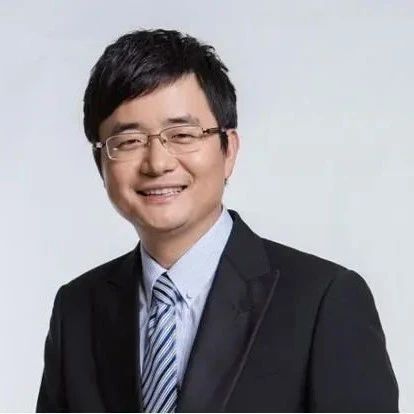
AI浪潮录丨王晟:谋求窗口期,AI初创公司不要跟巨头抢地盘
Bei Ke Cai Jing· 2025-05-30 02:59
Core Insights - Beijing is emerging as a strategic hub in the AI large model sector, driven by technological innovation and a supportive ecosystem for breakthroughs [1] - The role of angel investors is crucial in the AI industry, providing essential support to startups and helping them take their first steps [4] - The AI large model wave has gained momentum globally since 2023, with early investments in generative models proving to be prescient [5][6] Group 1: AI Development and Investment Trends - The AI large model trend is characterized by a shift from previous waves focused on computer vision and autonomous driving to the current emphasis on AI agents and embodied intelligence [5][6] - Investors are increasingly favoring experienced founders with strong academic and research backgrounds, as seen in the case of companies like DeepMind and the Tsinghua NLP team [12][16] - The emergence of open-source models like Llama has accelerated competition among AI companies, allowing them to shorten development timelines [13] Group 2: Investment Strategies and Market Dynamics - Angel investors are focusing on a select number of projects, often operating in a "water under the bridge" manner, avoiding fully marketized projects [14][15] - The investment landscape is divided between long-term oriented funds that prioritize innovation and those focused on immediate revenue generation [21][22] - The success of companies like DeepSeek highlights the challenges faced by startups in competing with established giants, as the consensus around large models has solidified post-ChatGPT [26][27] Group 3: Entrepreneurial Characteristics and Market Challenges - Current AI entrepreneurs are predominantly scientists or technical experts, forming a close-knit community that is easier to identify and engage with [18][19] - The academic foundation of AI startups is critical, as many successful ventures are built on decades of research and development from their respective institutions [16][20] - The market is witnessing a shift where the ability to innovate is becoming more important than merely having financial resources, as the previous model of "buying capability" is no longer sustainable [27][28]

OpenAI称将加大对亚洲的投资;DeepSeek开源新版R1,媲美OpenAI最高o3模型丨AIGC日报
创业邦· 2025-05-29 23:57
Group 1 - Elon Musk is attempting to block a major AI deal in Abu Dhabi led by OpenAI unless his own AI startup is involved [1] - Nvidia CEO Jensen Huang stated that China is one of the largest AI markets globally, with a $50 billion market, and emphasized the importance of winning the Chinese platform for global success [2] - DeepSeek has released an open-source version of its R1 model, which reportedly matches the performance of OpenAI's latest o3 model [3] Group 2 - Reed Hastings, co-founder of Netflix, has joined the board of AI startup Anthropic, which aims to explore the impact of AI on work, relationships, and education [4] - OpenAI plans to increase investments in Asia following its expansions in South Korea and Japan, expressing optimism about growth prospects in the region [5]