
开源模型

Search documents
关于产业发展,雷军、蔡崇信、李东生最新发声!
证券时报· 2026-03-22 13:26
Group 1 - The core viewpoint of the article emphasizes the importance of a complete industrial ecosystem in China as fertile ground for the growth of future industries, highlighting the strategic significance of nurturing and expanding future industries for national development and innovation opportunities [4]. - Lei Jun pointed out that the depth and breadth of existing industrial foundations directly influence the speed and height of future industrial development, with Xiaomi focusing on developing embodied intelligence robots that rely on advanced components and a robust industrial system [4][5]. - The article discusses the unique advantages of China's large-scale market in driving a feedback mechanism from demand to technology, applications, and industries, which is essential for fostering high-uncertainty industries [4]. Group 2 - Jack Ma emphasized that China's technological development is based on independent innovation and an open, mutually beneficial philosophy, marking a transition from a period of accumulation to an explosive phase of innovation across various sectors [6][7]. - The article highlights that the ultimate goal of AI is to make its applications widespread and beneficial to society, with Alibaba focusing on innovation and the application of AI in personal consumption, enterprise, healthcare, and finance [7]. - The article notes that the construction of a modern industrial system requires both hard support through technological breakthroughs and capital investment, as well as soft support through institutional innovation and open collaboration [8]. Group 3 - Li Dongsheng pointed out that emerging pillar industries like integrated circuits and new energy exhibit characteristics of high technology, heavy assets, and long cycles, necessitating a dual drive of technology and capital for successful industrialization [8]. - The article mentions that the "14th Five-Year Plan" categorizes manufacturing into traditional, emerging, and future industries, which are interdependent and mutually beneficial, providing fertile ground for AI technology applications [9]. - It is suggested that companies should actively expand foreign investment and international cooperation to achieve globalization and enhance global resource allocation capabilities [9].



黄仁勋100分钟交流会,信息量巨大
第一财经· 2026-03-18 04:13
Core Viewpoint - NVIDIA's CEO Jensen Huang predicts significant growth in AI infrastructure, projecting $1 trillion in revenue from Blackwell and Rubin chips alone, reflecting the increasing demand for AI technologies [7][11]. Group 1: Product Launch and Market Outlook - At the GTC event, NVIDIA unveiled a new product lineup, including seven chips based on the Rubin architecture and five machines, alongside new space computing modules and open-source models [3]. - Huang emphasized that the $1 trillion revenue forecast is based on business visibility and purchase orders, excluding revenues from CPUs and other diverse business lines [7]. - The company is experiencing rapid growth, with record orders in the last quarter and an accelerating demand for AI-related computing [7][10]. Group 2: AI Infrastructure and Storage Solutions - Huang highlighted the need for enhanced manufacturing capabilities to meet growing computational demands, particularly in storage systems, which are crucial for AI memory capabilities [8]. - NVIDIA is innovating storage systems for AI, utilizing various memory technologies, including LPDDR4 and LPDDR5, to ensure supply and performance [8]. Group 3: Business Diversification - NVIDIA's business extends beyond chips, with 40% of its revenue coming from diverse AI applications, including autonomous vehicles and robotics [11]. - The company has established strong relationships with cloud service providers, which contribute significantly to its revenue, while also emphasizing the importance of software and AI factory construction for clients [11][12]. Group 4: Future Workforce and AI Impact - Huang predicts that the future workforce at NVIDIA will grow to 75,000 employees, alongside 7.5 million AI agents working continuously [18]. - The introduction of AI technologies is expected to increase productivity, making people busier rather than reducing job opportunities, as tasks can be completed much faster than before [18][19]. - Huang believes that AI will lead to economic growth and job creation, filling labor gaps and transforming the nature of work [19].


外媒:中国人,会笑到最后
Xin Lang Cai Jing· 2026-01-19 18:12
Group 1 - The core viewpoint of the articles is that while the U.S. currently leads in AI due to its chip advantages, China is expected to have greater long-term potential in the AI field, particularly through innovation and application in real-world scenarios [1][4]. - China is facing challenges in chip computing power due to U.S. restrictions, but this has led to innovations in algorithms and training methods that allow Chinese AI models to perform comparably to U.S. models with less computing power [1][3]. - Open-source models from China have already surpassed similar products from the U.S., which can significantly aid in the promotion of Chinese AI models both domestically and internationally [1][4]. Group 2 - The Chinese government is heavily investing in its semiconductor industry, focusing on research, talent development, and infrastructure, which is crucial for the application of AI in the real economy [3]. - Despite some lag in certain areas, Chinese companies have identified suitable use cases for domestic chips, particularly in inference rather than resource-intensive model training, which narrows the gap with U.S. chips [3]. - China's strong capabilities in power generation and rapid scaling of data center construction provide a significant advantage, allowing for effective deployment of AI models in the economy [3][4]. Group 3 - China possesses a comprehensive ecosystem for AI development, leveraging its strengths in rare earth resources and processing, which is more important than merely focusing on the performance of large models [4]. - Continuous investment in talent cultivation, research, and infrastructure will not only lead to more AI patents but also alleviate the capital pressure and investment risks associated with building data centers [3].

外交部回应委内瑞拉形势突变;美国法官要求马杜罗3月17日再次出庭;格陵兰岛总理回应特朗普:格陵兰永远是我们的领土|早报
Di Yi Cai Jing· 2026-01-06 00:14
Group 1: International Relations and Geopolitical Events - China's Foreign Ministry condemned the U.S. for its military actions against Venezuela, emphasizing the violation of international law and the need to respect Venezuela's sovereignty [2] - Venezuelan President Maduro appeared in a U.S. court and pleaded not guilty to charges, with a follow-up court date set for March 17 [3] - The U.S. Secretary of Defense stated that fewer than 200 personnel were involved in the military operation against Venezuela [15] Group 2: Economic and Market Developments - The Chinese government plans to issue over 100 billion yuan in special bonds to support ecological projects along the Yangtze River [7] - The China Passenger Car Association forecasts a 25% growth in the sales of new energy vehicles by 2025, with total sales expected to reach 15.33 million units [10] - Goldman Sachs recommends overweighting Chinese stocks, predicting annual growth of 15% to 20% in the Chinese stock market for 2026 and 2027 [20] Group 3: Corporate News - Gree Electric Appliances announced that it will not raise air conditioner prices and has no current plans to replace copper with aluminum in its products [17] - The China Securities Regulatory Commission is enhancing measures to combat financial fraud in the capital market, aiming to improve the quality of listed companies [8]
新民环球年终特刊⑪
Xin Lang Cai Jing· 2025-12-30 19:09
Group 1 - The core viewpoint emphasizes the acceleration of artificial intelligence (AI) technology iteration by 2025, with a collective pursuit of balanced development and security amid intense geopolitical competition [3] - The United Nations has established an independent international scientific group for AI to provide objective risk assessments and policy recommendations, with annual global dialogues on AI governance starting in 2026 [3] Group 2 - The Trump administration in the U.S. is promoting AI innovation through deregulation and infrastructure acceleration while reinforcing its leading position through export controls and international strategies, including the signing of the executive order to eliminate barriers to U.S. AI leadership [5] - The EU's AI Act is being fully implemented, transitioning from a principles framework to practical risk-based regulation, aiming to influence global digital governance standards through market and regulatory power [5] - The EU has imposed significant fines on U.S. social media platforms for violating transparency clauses, reflecting tensions in transatlantic relations due to differing approaches to AI and digital issues [5] Group 3 - China advocates for inclusive and beneficial AI development, addressing global South countries' challenges in capacity building and digital divides through initiatives like the Global Governance Initiative and the AI Global Governance Action Plan [6] - The establishment of a World AI Cooperation Organization headquartered in Shanghai aims to foster international consensus and practical collaboration in AI [6] - China's AI Safety Governance Framework 2.0 reflects its commitment to balancing development and security while mitigating various risks associated with AI [6]

富达基金戴旻:黄金资产会像固定收益一样,在资本保值类资产类别中发挥重要作用
Xin Lang Cai Jing· 2025-12-27 09:35
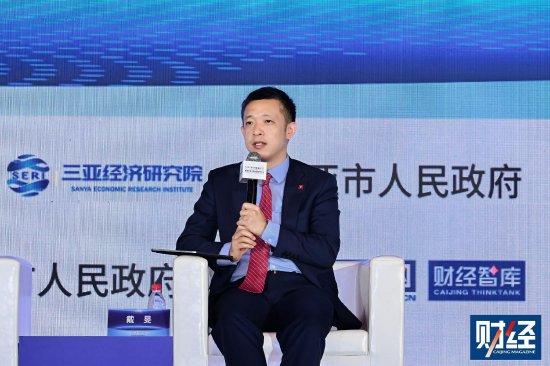
Group 1 - The Sanya Financial International Forum and the Fifth Sanya Wealth Management Conference will be held on December 27 in Sanya, Hainan [1][6] - Dai Min, head of investment advisory at Fidelity, highlighted significant achievements by leading Chinese technology companies in open-source models, model applications, and industrial robotics, benefiting both China and the global capital market [3][8] - The current economic upturn, supported by technology, presents opportunities for growth through diversified global equity asset allocation [3][8] Group 2 - The development of new energy has reached a stage where it not only applies to the energy sector but also drives demand for storage and computing power, which may create opportunities in traditional commodities, particularly copper, as a hedge against a weakening dollar [3][8] - Dai Min emphasized that gold assets will play an important role in capital preservation, similar to fixed income, amid ongoing geopolitical uncertainties [3][8] - There is a necessity for domestic wealth management to incorporate more diverse and composite investment tools into its framework [4][8]
《自然》社论:中国正引领全球人工智能治理
Ke Ji Ri Bao· 2025-12-12 02:26
Group 1 - The core viewpoint of the article emphasizes the need for global consensus on AI governance to maximize benefits and minimize risks, highlighting China's initiative to lead this effort [1][6]. - China is proposing the establishment of a global AI coordination body, the World AI Cooperation Organization, which aligns with the interests of all nations and encourages government participation [3][6]. - The article notes that while AI models have significant potential for scientific and economic advancement, they also pose risks such as exacerbating inequality and spreading misinformation, which have not been adequately addressed in the current competitive landscape [5][6]. Group 2 - The article points out that the United States lacks a unified regulatory body for AI, relying instead on fragmented state legislation and self-regulation by companies, which has resulted in low safety ratings for major tech firms [5][6]. - In contrast, China is actively integrating AI across various sectors and has implemented regulations requiring safety assessments for AI models, including embedding identifiable markers in generated content to prevent fraud [6][8]. - The global governance of AI is seen as a necessity, with existing frameworks like the OECD's AI Principles and the EU's AI Framework Convention being criticized for their lack of enforceability and effectiveness [8].

AI步入“立体化变革”深水区 “AI+”时代的中国路径逐渐清晰
Zhong Guo Jing Ying Bao· 2025-12-01 16:52
Core Insights - The core viewpoint of the articles emphasizes China's transition in AI development from a focus on "technical frenzy" to "systematic construction," highlighting the importance of governance, practical applications, and talent cultivation in the AI ecosystem [1][7]. Governance as Anchor - The concept of "good governance" is central to China's AI governance strategy, advocating for a balance between technology and ethics, ensuring AI systems align with human values [2][3]. - The governance framework proposed includes "cultural alignment" with three layers: value alignment, institutional alignment, and philosophical alignment [2]. Industry Integration - The integration of AI into the real economy is seen as crucial, with a target set for 2025 to achieve deep integration across six key sectors, leading to a smart economy by 2035 [4]. - China is undergoing three efficiency revolutions: model efficiency, computing efficiency, and data efficiency, which are expected to drive the "AI+" initiative [4]. Talent Development - Talent cultivation is identified as a critical bottleneck in the "14th Five-Year Plan," with initiatives like the "Innovative Leadership Entrepreneur Enhancement Project" aimed at addressing the skills gap among entrepreneurs [6][7]. - The project focuses on immersive learning and practical problem-solving to equip entrepreneurs with the necessary AI knowledge and skills [6]. Practical Applications - Companies like Tencent are already seeing significant improvements in efficiency through AI applications in various sectors, such as advertising and customer service [5]. - The emergence of new roles and the need for a restructured workforce to accommodate AI integration are highlighted, raising questions about labor rights and education reform [5][6]. Conclusion - China's approach to AI development is characterized by a multi-dimensional evolution, integrating governance, practical applications, and talent development to navigate the challenges and opportunities in the AI landscape [7].
高盛闭门会-阿里的全栈ai战略和芯片,估值逻辑和数据中心
Goldman Sachs· 2025-10-09 02:00
Investment Rating - The investment rating for the industry is optimistic, with a target price for Alibaba set at $247, based on a 10x valuation multiple for core e-commerce and a 6x valuation for total revenue [1][5]. Core Insights - Alibaba's cloud revenue growth expectation has been raised to 30%-32%, driven by increased demand for AI model training and the attraction of enterprise customers through open-source models [1][3]. - The Chinese data center industry is experiencing accelerated capacity growth, with a year-on-year increase of approximately 30%, expected to reach 30 GW by year-end, primarily driven by AI demand [1][8]. - Alibaba's current valuation is around 18-19 times next year's earnings, which is lower than the 24 times seen in the US market, indicating potential for investment [2][17]. Summary by Sections Cloud Computing - Alibaba's cloud revenue grew by 26% last quarter, attracting new enterprise customers for AI model training, which lays a foundation for long-term revenue acceleration [3]. - The company occupies about 2 GW of the total data center capacity in China, which is expected to grow significantly in the coming years [8][9]. E-commerce Performance - The growth in retail business CMR and GMV is partly due to cross-selling, which may lead to savings in sales and marketing costs [4]. - The core e-commerce business is valued at a 10x multiple based on core revenue, while total revenue is valued at a 6x multiple, reflecting a strong performance [4][5]. Market Dynamics - Investors are increasingly focused on Alibaba's profitability, rapid business investment conversion rates, and cloud revenue growth, which will impact performance in the December quarter [1][14]. - The market is reassessing the self-sufficiency of China's chip supply and the growth prospects of cloud computing, with Alibaba's performance remaining tight and profit margins stable [14]. Competitive Landscape - Alibaba's full-stack AI products are seen as competitive against Google's offerings, attracting attention from US investors [7]. - The data center market in China is expected to maintain its competitive edge due to advancements in technology and efficiency [11]. Future Outlook - The overall sentiment for the next 12 months remains optimistic, driven by AI advancements and a stabilizing macroeconomic environment [2][18]. - Investors are particularly interested in the company's ability to convert business investments into user engagement and revenue growth, with expectations of continued performance improvements [15].
美股异动|阿里巴巴涨超2%创2021年10月以来新高,Qwen团队预告今晚要发布6个“新东西”
Ge Long Hui· 2025-09-23 14:30
Core Viewpoint - Alibaba (BABA.US) shares rose over 2%, reaching a high of $167.82, the highest since October 2021, driven by news of upcoming product releases from the Alibaba Qwen team [1] Group 1 - Alibaba Qwen team is set to announce 6 new items, including 1 product, 2 open-source models, and 3 API interfaces [1]