腾讯控股

Search documents
晚点独家丨阿里要继续大投入淘宝闪购,三年不担心亏损
晚点LatePost· 2026-02-11 11:50
Core Viewpoint - The new round of instant retail competition has been accelerated by the AI assistant battle, with Alibaba's Taobao Flash Purchase aiming to increase its market share significantly in 2026, particularly in the food delivery sector [2][3][5]. Group 1: Strategic Initiatives - Alibaba's core management has encouraged bold investments in flash purchases, with a focus on high-value orders above 30 yuan and improving delivery operations [3][5]. - Taobao Flash Purchase plans to invest over 30 billion yuan in 2026, with a goal to surpass Meituan's market share [5][6]. - The company aims to increase the proportion of high-quality orders (30 yuan and above) to 60% while controlling subsidies to maintain profitability [6][10]. Group 2: Competitive Landscape - The current market share for Meituan and Taobao Flash Purchase stands at over 50% and 40%, respectively, with JD.com below 5% [6]. - Meituan has a competitive advantage in the winter due to its established rider network, while Taobao Flash Purchase is focusing on improving delivery efficiency in southern regions [6][10]. - Both companies are enhancing their delivery capabilities, with Taobao Flash Purchase implementing a more precise rider allocation system and various acceleration products [9][10]. Group 3: Infrastructure Development - Instant retail requires long-term investment, with a focus on building warehouses and optimizing supply chains for categories like pharmaceuticals, alcohol, and fresh produce [11][12]. - Taobao Flash Purchase is expanding its logistics infrastructure, including the establishment of front warehouses and partnerships with various suppliers [12][13]. - The integration of Taobao's main site with instant retail services is underway, aiming to drive traffic and enhance user experience [11][12]. Group 4: AI and User Engagement - The competition for AI entry points is intensifying, with Alibaba investing in its AI assistant, Qianwen, to cultivate consumer habits in online shopping [15][16]. - The rapid growth of Qianwen's daily active users indicates a successful engagement strategy, despite challenges in system capacity during peak times [16][17]. - The potential for AI to reshape consumer behavior raises concerns about the sustainability of traditional business models and competitive advantages [17].



知鱼智联CTO董云鹏:发布“里链”AI智能体集群,以AI原生技术重构空间数智化未来形态
Zhong Guo Fa Zhan Wang· 2026-02-11 11:45
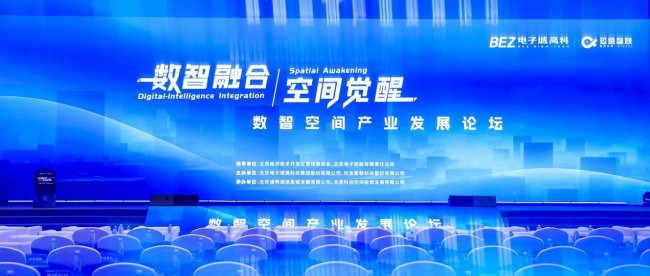
Core Insights - The forum highlighted the importance of AI-native technologies in reshaping spatial intelligence systems, with the launch of the "LiChain" AI agent cluster product by Zhiyu Zhili [1][3] - The evolution of spatial intelligence is now centered around AI-native approaches, emphasizing the integration of industry knowledge, AI tools, and human-machine collaboration [3][10] Company Developments - Zhiyu Zhili has developed the "LiChain" AI agent cluster, which features three core capabilities: intelligent computing power scheduling, industry model refinement, and collaborative agent networks [6][10] - The company has achieved over 70% code auto-generation in its AI-native reconstruction, transforming its development team to focus on architecture design and effect validation [10] Industry Trends - The current phase of spatial intelligence is moving beyond simple technology stacking to creating "spatial intelligent agents" with perception, analysis, decision-making, and interaction capabilities [10] - The "Double Hundred Star Chain" ecological co-construction initiative aims to unify standards in spatial intelligence, involving multiple industry partners to foster collaborative development [10][12] Technological Innovations - Zhiyu Zhili's AI platform addresses key technical pain points by ensuring data credibility and usability, which are essential for effective AI model training [12] - The company employs domestic technology to safeguard data sovereignty and security, enhancing the reliability of its AI applications [12] Future Outlook - The future of spatial intelligence is seen as a collaborative coexistence between humans and machines, allowing workers to focus on creative and complex decision-making tasks [12][13] - As digital technologies mature, spatial intelligence is expected to play a crucial role in driving industrial transformation and upgrading [13]
“涨价”主线强势回归!有色ETF、化工ETF双双放量涨超2%!港股持续回暖,基金经理解读来了!
Xin Lang Cai Jing· 2026-02-11 11:35
Market Overview - A-shares experienced narrow range consolidation with mixed performance across the three major indices, as the trading volume in the Shanghai and Shenzhen markets fell below 2 trillion yuan for the first time in 31 trading days, with over 3,200 stocks declining [1][19] - The market saw a return of funds to "price increase" themes, with prices of rare earths, tungsten, molybdenum, tin, and antimony rising [1][23] Sector Performance Non-ferrous Metals - The non-ferrous ETF Huabao (159876) rose by 2.29%, with a trading volume of 89.8 million yuan, marking an 80% increase in trading activity [1][20] - Significant inflows into the non-ferrous metals sector, with over 13.7 billion yuan in main funds entering, making it the top sector in terms of capital inflow [22] - Key stocks in the small metals sector, such as Xiamen Tungsten and Jinchuan Group, saw gains exceeding 7% [22] Chemical Sector - The chemical ETF (516020) surged by 2.19%, with a peak increase of 3.02% during the trading session, reflecting strong market momentum [8][26] - The chemical sector attracted 13.8 billion yuan in main funds, ranking second among all sectors [11] - Notable stock performances included New Zhonbang, which surged by 8.16%, and Tongkun Co., which rose by 7.82% [9][26] Hong Kong Market - The Hong Kong market showed signs of recovery, with the Hong Kong Stock Connect Automotive ETF Huabao (520780) gaining 1.6% for four consecutive days [1][21] - The Hong Kong Internet ETF (513770) rose nearly 1%, driven by the performance of major internet companies [1][21] Investment Insights - Analysts suggest that the recent adjustments have released certain risks, and upcoming events and the "Spring Festival effect" may create a favorable environment for market recovery [1][20] - Key investment themes include TMT (Technology, Media, and Telecommunications), high-end manufacturing, and price increase chains [1][20] - The Hong Kong Internet ETF is expected to highlight the value of AI core assets as new AI-related companies enter the market [2][21]



跨境资产配置产业链系列研究(一):全球战略资产配置新框架
Guoxin Securities· 2026-02-11 11:25
Group 1: Strategic Asset Pool Definition and Long-Term Characteristics - The report defines a global strategic asset allocation framework, covering equity, fixed income, alternative assets, and cash[1] - It analyzes long-term characteristics of equity assets in global, developed, and emerging markets, including sovereign and credit bonds, real estate, commodities, and private equity[1] - The analysis provides a solid data and theoretical foundation for subsequent return forecasts and portfolio construction[1] Group 2: Long-Term Economic Assumptions and Return Forecast Models - The report establishes long-term economic assumptions and return forecast models based on key macroeconomic variables such as economic growth, inflation, and interest rates[2] - It creates corresponding long-term return prediction models for various asset classes and estimates correlations and potential risk scenarios among different assets[2] Group 3: Strategic Portfolio Construction and Optimization - Strategic portfolio construction considers investor constraints and goal settings, including return targets, risk tolerance, liquidity needs, and regulatory/tax constraints[3] - Optimization methods include the classic mean-variance model, Black-Litterman model, Kelly-CVaR model, and risk parity model, with the mean-variance model and Kelly-CVaR showing superior long-term returns compared to single asset strategies[3] - The report emphasizes the importance of establishing a global market-weighted portfolio as a benchmark for strategic asset allocation[3] Group 4: Market Trends and Performance Metrics - The MSCI indices indicate that the U.S. market dominates with a weight of 64% in the MSCI ACWI index, followed by Japan at 4.9% and the UK at 3.3%[15] - The report highlights that the long-term volatility of MSCI EM is significantly higher than that of MSCI World, with both indices showing similar return patterns over time[23] - The Sharpe ratio for MSCI World and MSCI EM is similar, with long-term limits around -0.5 to +0.8, indicating comparable risk-adjusted returns[23]
智通港股通活跃成交|2月11日



智通财经网· 2026-02-11 11:06
沪港通(南向)十大活跃成交公司 深港通(南向)十大活跃成交公司 智通财经APP获悉,2026年2月11日当天,小米集团-W(01810)、中芯国际(00981)、腾讯控股(00700)位 居沪港通(南向)成交额前3位,成交额分别为32.82 亿元、30.18 亿元、29.45 亿元;阿里巴巴- W(09988)、中芯国际(00981)、腾讯控股(00700) 位居深港通(南向)成交额前3位,成交额分别为31.15 亿元、24.30 亿元、22.20 亿元。 | 公司名称 | 成交金额 | 净买入额 | | --- | --- | --- | | 阿里巴巴-W(09988) | 31.15 亿元 | -5.51 亿元 | | 中芯国际(00981) | 24.30 亿元 | -8.36 亿元 | | 腾讯控股(00700) | 22.20 亿元 | +5.05 亿元 | | 小米集团-W(01810) | 16.11 亿元 | +1.73 亿元 | | 长飞光纤光缆(06869) | 13.13 亿元 | -7716.44 万元 | | 泡泡玛特(09992) | 10.47 亿元 | +5507.12 万元 ...
2月11日南向资金追踪:腾讯控股、紫金黄金国际、美团-W净买入额居前,分别为7.36亿港元、1.91亿港元、1.63亿港元
Jin Rong Jie· 2026-02-11 10:59
Group 1 - The Hang Seng Index rose by 0.31% to close at 27,266.38 points, with a total market turnover of 217.218 billion HKD [1] - Tencent Holdings, Zijin Mining International, and Meituan-W saw net inflows of 736 million HKD, 191 million HKD, and 163 million HKD respectively [1] - Alibaba-W, SMIC, and China Life experienced net outflows of 521 million HKD, 391 million HKD, and 246 million HKD respectively [1] Group 2 - Tencent Holdings had a trading volume of 5.165 billion HKD with a closing price of 548.00 HKD, reflecting a decrease of 0.54% [2] - Zijin Mining International recorded a trading volume of 4.594 billion HKD, with a net inflow of 191 million HKD and a closing price of 228.80 HKD, showing an increase of 9.06% [2] - Meituan-W had a trading volume of 12.35 billion HKD, with a net inflow of 163 million HKD and a closing price of 88.85 HKD, reflecting a slight increase of 0.06% [2] - Alibaba-W had a trading volume of 53.08 billion HKD, with a net outflow of 521 million HKD and a closing price of 160.10 HKD, showing a decrease of 0.25% [2] - China Life had a trading volume of 8.79 billion HKD, with a net outflow of 246 million HKD and a closing price of 34.12 HKD, reflecting a decrease of 3.94% [2]
深圳南山VS北京海淀:中国两大万亿强区,背后藏着“三位高人”
Qian Zhan Wang· 2026-02-11 10:47
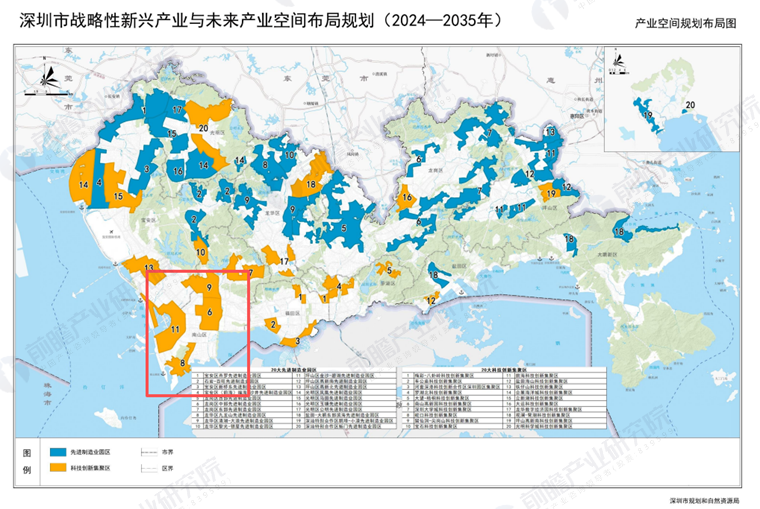
Core Insights - Shenzhen Nanshan District and Beijing Haidian District have both entered the "trillion GDP club," becoming leaders among county-level economies in China, with Nanshan expected to reach this milestone by 2025 [1] - The article analyzes the industrial structure evolution, planning orientation, and factor endowment of these two districts from 2021 to 2025, aiming to provide empirical decision-making references for local governments [1] Industrial Structure - Nanshan's industrial structure reflects a transition from a "world factory" to a "global innovation center," with the tertiary industry accounting for approximately 76% and secondary industry about 23% [2] - The high-tech manufacturing sector contributes over 60% to the industrial output value, showcasing a balanced structure of "high-tech manufacturing as the base, high-end services as the enabler" [2] - Haidian's industrial structure is characterized by a high degree of "softening," with the tertiary industry exceeding 92%, particularly in information transmission, software, and IT services, which constitute half of its GDP [5] Industrial Planning - Nanshan focuses on developing "14+7" strategic emerging industry clusters, including networks, semiconductors, and biomedicine, while also planning for future industries like synthetic biology and space technology [9] - Haidian aims to build a "1+X+1" modern industrial system led by artificial intelligence, empowering sectors like healthcare and integrated circuits, with a strong emphasis on technology service industries [10] Factor Endowment - Haidian boasts a robust "national team" of research institutions, including top universities and national laboratories, while Nanshan features a vibrant "market team" with over 90% of innovative enterprises being local [16] - Nanshan is recognized for its active venture capital environment, while Haidian benefits from strong government-led funding initiatives [18][19] - Nanshan has potential for spatial expansion through innovative land use strategies, whereas Haidian faces space constraints and focuses on urban renewal to optimize land use [20] Conclusion and Recommendations - The success of both districts stems from their ability to transform inherent advantages into institutional and ecological strengths, with Nanshan focusing on market-driven innovation and Haidian on knowledge-driven economic ecosystems [22] - Future competition will hinge on the ability to create comprehensive innovation ecosystems that integrate research, technology breakthroughs, and commercialization [22]
协同管理软件行业市场分析:数字化转型带动行业价值提升,市场规模超百亿元
Xin Lang Cai Jing· 2026-02-11 10:33
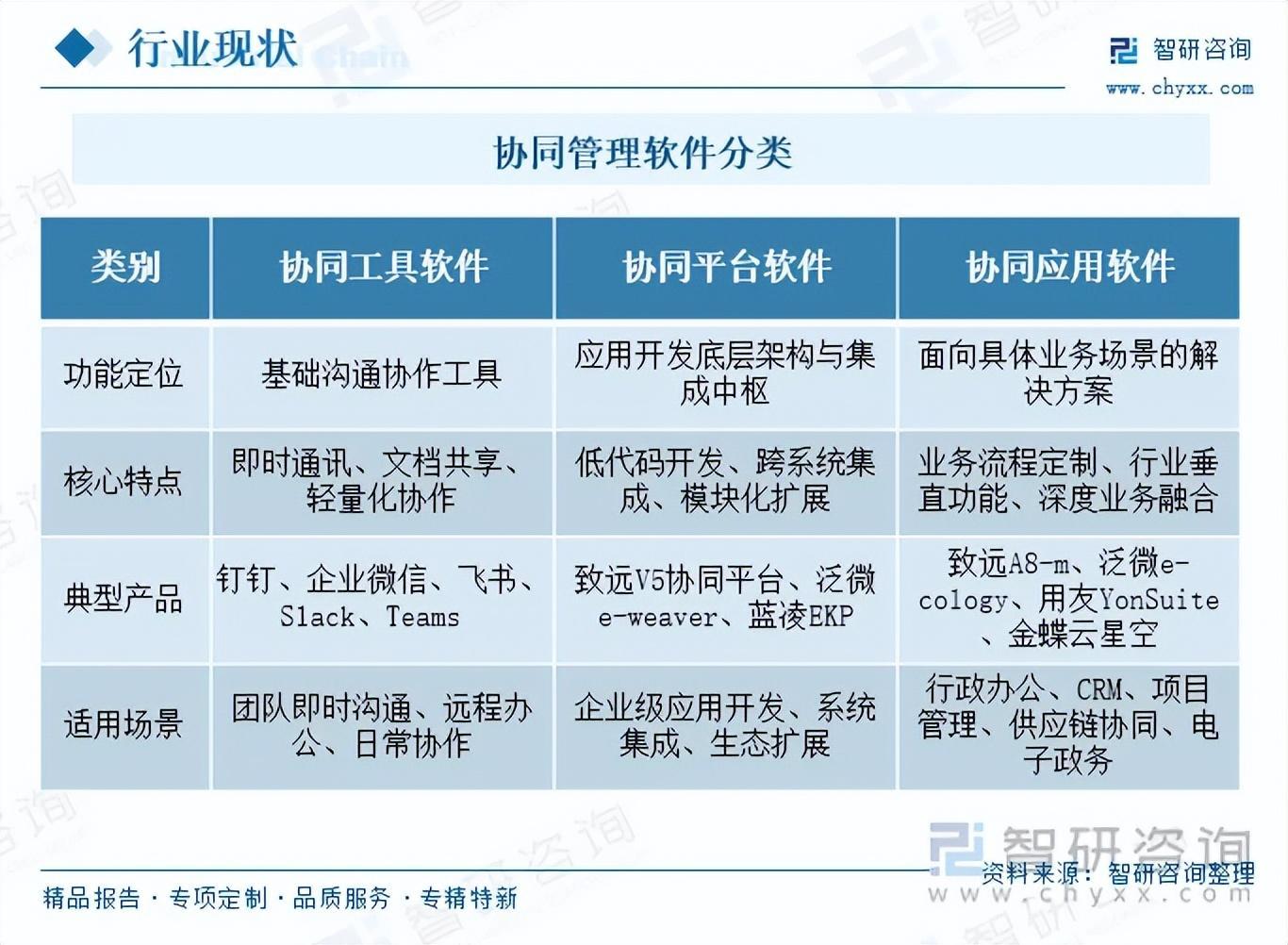
Core Insights - The role of collaborative management software in China has fundamentally transformed from an auxiliary tool for enhancing internal administrative efficiency to a core operational platform that supports and drives intelligent transformation and business innovation in modern organizations [1][11][24] - The market size of China's collaborative management software industry is projected to reach approximately 10.233 billion yuan in 2024, representing a year-on-year growth of 17.58% [11][24] Industry Overview - Collaborative management software (CMS) is centered around people and utilizes information technology to integrate previously isolated resources within organizations, such as personnel, finances, materials, processes, documents, and customers, to achieve information sharing, event collaboration, plan execution, and decision support [2][16] - The software aims to enhance organizational collaboration efficiency, standardize organizational behavior, and help achieve overall strategic goals [2][16] Software Classification - Collaborative management software is categorized into three main types: - Collaborative tool software focuses on basic communication and collaboration, exemplified by products like DingTalk, WeChat Work, and Feishu, suitable for team communication and remote work [3][17] - Collaborative platform software serves as the underlying architecture for application development and integration, such as Zhiyuan V5 and Fanwei e-weaver, supporting low-code development and cross-system integration [3][17] - Collaborative application software targets specific business scenarios, including Zhiyuan A8-m and Yonyou YonSuite, optimizing business processes and enhancing operational efficiency [3][17] Industry Development History - The development of China's collaborative management software industry has evolved from personal office automation to internal organizational communication and collaboration, and further to business process optimization and knowledge management [5][17] - Each generation of collaborative management software has expanded and optimized based on the previous one, aligning more closely with actual enterprise needs [5][17] Industry Value Chain - The upstream of the collaborative management software industry chain includes servers, chips, network devices, storage devices, operating systems, databases, development frameworks, AI/large models, and low-code platforms [7][20] - The midstream involves the research and development and service segments of collaborative management software [7][20] - The downstream applications are primarily in government agencies, education, healthcare, finance, and manufacturing sectors [7][20] Market Trends - With the investment in industrial internet platforms, digital twins, and AI software solutions, the value chain of intelligent manufacturing is extending from production to upstream research and design and downstream supply chain collaboration and intelligent services [9][22] - Collaborative management software is evolving from a traditional office auxiliary tool to a core enabler and value multiplier for driving intelligent manufacturing [9][22]


我在元宝抽万元小马卡,看懂腾讯为什么一定要做AI社交
Xin Lang Cai Jing· 2026-02-11 10:32
"希望重现11年前微信红包时刻" 1月26日, 在年会现场,腾讯董事会主席兼CEO马化腾亲自为AI助手元宝站台,宣布将在即将到来的春节通过元宝发放10亿元红包,并推出全新社交功 能"元宝派",希望在AI时代重新打造一场类似2015年微信红包的全民互动盛典。 2015年微信支付在体量、商户覆盖和认知度上落后于支付宝,借助春节这个高频、强情绪、强社交的节点,微信红包被自然嵌入到熟人关系链中,支付行 为第一次从"工具操作"变成了"社交互动"。在短短几天内,数亿用户完成了绑卡、转账和支付的全流程,微信支付由此撬开了移动支付的大门。 2月1日,元宝红包活动正式启动,当天登顶App Store总榜,元宝红包在微信群内刷屏。 2025年春节DeepSeek横空出世,腾讯一夜之间从"躺平生"化身为"卷王",2025年春节后,腾讯云、腾讯智能工作台ima、腾讯AI助手 "腾讯元宝" 都迅速接 入了DeepSeek大模型。 通过搭上 DeepSeek 这辆快车,腾讯一跃成为国内头部AI头部之一,元宝也是3月份增长最快的明星AI产品。 但问题在于,2025年的AI进展,快得远超任何一家大厂的内部节奏。 Manus的出圈,让市场第一 ...

万人公测!华为云,AI大动作
Zhong Guo Ji Jin Bao· 2026-02-11 10:32
【导读】华为云码道代码智能体已开启公测,AI编程领域再添国产强手 AI智能编程领域,迎来重磅消息! 2月11日,中国基金报记者获悉,华为云码道(CodeArts)代码智能体,已在马年春节前夕开启公测,参与公测人数已超1万人。 华为云码道代码智能体定位于实干派AI编程工具,其核心是高效替代高频重复的工程化开发工作,从而大幅度降低编程门槛,有助于加速AI编码技术的 产业化落地。 无编程基础者通过自然语音输入需求,即可借助华为云码道代码智能体搭建小程序等应用。 据悉,华为云码道代码智能体提供代码生成、研发知识问答、单元测试用例生成、代码解释、代码注释、代码调试、代码翻译、代码检查、代码优化等场 景功能。 业内人士透露,华为云码道代码智能体在项目级代码生成等关键场景实现突破,可适配企业研发需求,助力压缩开发周期、提升编码效率。 与华为云码道代码智能体同类的AI编程工具包括Cursor、GitHub Copilot等海外产品,以及字节跳动的Trae、腾讯云的CodeBuddy等国产产品。 华为云码道代码智能体的核心竞争力来自华为数十年积淀的高质量研发数据,整合了代码大模型、AI IDE(集成开发环境)、自主开发模式、代 ...