
软银集团

Search documents
24小时环球政经要闻全览 | 10月29日
Ge Long Hui· 2025-10-29 01:35
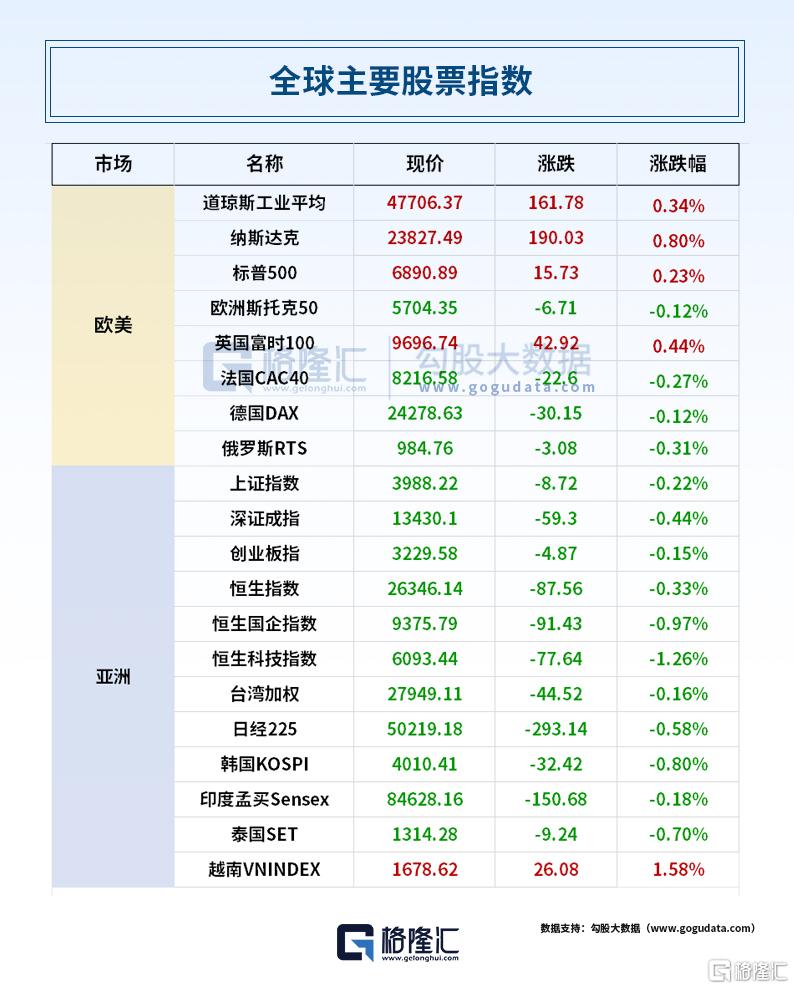
Market Overview - Major indices in the US showed mixed performance, with the Dow Jones Industrial Average at 47,706.37, up by 161.78 points or 0.34%, and the Nasdaq at 23,827.49, up by 190.03 points or 0.80% [2] - European indices experienced slight declines, with the European Stoxx 50 down by 6.71 points or 0.12% and the German DAX down by 30.15 points or 0.12% [2] - Asian markets also faced losses, with the Shanghai Composite Index down by 8.72 points or 0.22% and the Hang Seng Index down by 87.56 points or 0.33% [2] Financial Planning - The "15th Five-Year Plan" released by the Central Committee of the Communist Party of China emphasizes the importance of finance, mentioning "finance" 17 times and calling for the acceleration of building a financial powerhouse [2] Investment Initiatives - Japan's government unveiled a $550 billion investment plan in the US, detailing potential projects involving companies like SoftBank, Westinghouse Electric, and Toshiba, with individual project sizes ranging from $350 million to $100 billion [4] AI Industry Insights - NVIDIA's CEO Jensen Huang dismissed concerns about an AI bubble, projecting that the company's latest chips will generate $500 billion in revenue over the next five quarters, highlighting significant growth in sales driven by new technologies [6] - NVIDIA also announced a $1 billion equity investment in Nokia, further solidifying its position in the AI and computing sectors [6] Corporate Agreements - Microsoft acquired a 27% stake in OpenAI, valued at approximately $135 billion, and secured rights to use OpenAI's technology until 2032, while OpenAI committed to investing an additional $250 billion in Azure services [7]

OpenAI公布超级智能路线图:模型明年有望重大飞跃,2028年实现全自动AI研究员,基建投资承诺1.4万亿
美股IPO· 2025-10-29 01:11
Core Insights - OpenAI has set two key milestones: achieving AI research interns by September 2026 and fully autonomous AI researchers by March 2028, with the expectation that scientific research will be fully automated by 2028 [1][3][6] - The company has committed to building over 30 GW of infrastructure, corresponding to an investment of approximately $1.4 trillion, which is seen as just the starting point for future expansions [1][9][10] - OpenAI is transitioning from an AI assistant to a platform service provider, aiming for external developers to create more value on its platform than the company itself [3][11] Infrastructure Expansion - OpenAI plans to invest approximately $1.4 trillion in infrastructure, with a goal of creating 1 GW of computing power weekly [9][10] - The company is collaborating with major partners in the chip, data center, energy, and manufacturing sectors, including AMD, Google, and Microsoft [9][10] - The aim is to reduce the cost of each GW to about $20 billion over a five-year lifecycle, requiring significant innovation and collaboration [10] Research and Development - OpenAI is optimistic about achieving significant advancements in model capabilities by September 2026, with expectations of major progress in the coming months and years [4][5][6] - The company is focusing on scaling deep learning training and believes that the timeline to achieve superintelligence may be less than ten years [5][6] - A structured five-layer safety framework has been proposed to address safety concerns as AI capabilities advance [7] Organizational Structure - OpenAI has restructured its organization, with a non-profit foundation at the top controlling the public benefit corporation, OpenAI Group, which holds about 26% of the shares initially [14] - The foundation aims to maximize societal welfare through AI, with initial focuses on using AI to help cure diseases and building resilience against AI-related risks [14][15] Product Strategy - OpenAI is evolving its product strategy from AI assistants to an "AI cloud" platform where others can build applications and services [11][12] - The company emphasizes user freedom and privacy, aiming to provide users with significant control and customization capabilities [11][12] - A hierarchical architecture is being developed, with a focus on hardware, model training, and an ecosystem for applications and services [12][13]

重大项目曝光,特朗普发声
Zheng Quan Shi Bao· 2025-10-28 22:41
Group 1 - Japan has unveiled a potential project list for a $550 billion investment mechanism in the U.S., with participating companies including SoftBank, Westinghouse Electric, GE Vernova, and Hitachi, covering sectors such as energy, artificial intelligence, and critical minerals [1][3] - The project list includes 21 projects with a total investment scale exceeding $400 billion, with energy projects dominating the list, including Westinghouse's AP1000 nuclear reactor and small modular reactor projects, each estimated at nearly $100 billion [3][4] - SoftBank is interested in a $25 billion large-scale power infrastructure development project, while other companies like Carrier and Panasonic are also involved in energy-related initiatives [3][4] Group 2 - The investment plan aims to enhance economic and security interests between the U.S. and Japan, focusing on sectors such as semiconductors, pharmaceuticals, metals, critical minerals, shipbuilding, energy, artificial intelligence, and quantum computing [4] - Japan's automotive manufacturers have reported a decline in sales in the U.S. market, with a 22.7% drop in automotive exports contributing to a 10.2% decrease in total exports to the U.S. in the first half of the fiscal year [5] - The U.S. has reduced tariffs on Japanese automobiles from 27.5% to 15% as part of a trade agreement, which is a core component of the investment plan [4]


总计5500亿美元,日本对美投资计划清单曝光,最大项目近1000亿美元
Mei Ri Jing Ji Xin Wen· 2025-10-28 22:28
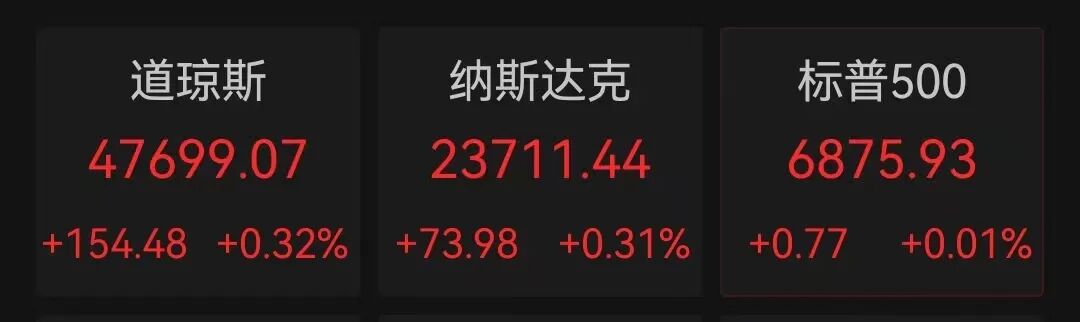
Group 1: US-Japan Investment Mechanism - The Japanese government has unveiled a potential project list under a $550 billion investment mechanism with the US, detailing specific funding proposals related to the core terms of the US-Japan trade agreement [4][5] - The project list includes investments from companies like SoftBank, Westinghouse Electric, and Toshiba in sectors such as energy, artificial intelligence, and critical minerals, with individual project sizes ranging from $350 million to $100 billion [4][5] - Energy projects dominate the list, with Westinghouse planning to invest nearly $100 billion in AP1000 nuclear reactors and small modular reactors, while SoftBank is interested in a $25 billion power infrastructure project [5] Group 2: Market Reactions and Stock Performance - US stock indices reached new historical highs, with the Dow Jones up 0.32%, Nasdaq up 0.31%, and S&P 500 up 0.01% as of the latest report [1] - Uranium and nuclear power stocks surged, with the uranium sector rising by 11.5%, and notable gains for companies like Cameco and Uranium Energy [6][7] - The partnership between Cameco and Brookfield Asset Management with the US government aims to construct at least $80 billion worth of Westinghouse AP1000 nuclear units, which is expected to create significant job opportunities [7][9] Group 3: Apple and Microsoft Market Performance - Apple's market capitalization briefly surpassed $4 trillion, with strong early sales of the iPhone 17 series, outperforming the iPhone 16 series by 14% in the first 10 days post-launch [10][15] - Microsoft also reached a market cap of approximately $4.03 trillion, driven by a new agreement with OpenAI for additional Azure services [11][13] - The iPhone 17's sales performance indicates a robust market demand, with average sales growth of 31% across China and the US compared to the previous model [15]



总计5500亿美元!日本对美投资计划清单曝光 最大项目近1000亿美元 美股这一板块应声大涨
Mei Ri Jing Ji Xin Wen· 2025-10-28 16:48
Group 1: US-Japan Investment Mechanism - Japan's government has unveiled a potential project list under a $550 billion investment mechanism with the US, detailing specific funding proposals related to the US-Japan trade agreement [3][4] - The project list includes investments from companies like SoftBank, Westinghouse Electric, and Toshiba in sectors such as energy, artificial intelligence, and critical minerals, with individual project sizes ranging from $350 million to $100 billion [3][4] Group 2: Energy Projects Dominance - Energy projects dominate the investment list, with Westinghouse planning to build AP1000 nuclear reactors and small modular reactors, each with an investment scale close to $100 billion [4] - SoftBank is interested in a $25 billion large-scale power infrastructure development project, while other companies like Carrier and Panasonic are also involved in energy-related initiatives [4] Group 3: Economic and Security Interests - The investment plan aims to enhance economic and security interests between the US and Japan by focusing on sectors such as semiconductors, pharmaceuticals, metals, critical minerals, shipbuilding, energy, artificial intelligence, and quantum computing [4] Group 4: US Stock Market Reaction - Following the announcement, US stock indices reached new historical highs, with the Dow Jones up 0.32%, Nasdaq up 0.31%, and S&P 500 up 0.01% [1] Group 5: Nuclear Sector Performance - US uranium and nuclear power stocks surged, with the uranium sector rising by 11.5% and notable increases in individual stocks like Cameco and Uranium Energy [5] - A strategic partnership agreement was signed between Cameco, Brookfield Asset Management, and the US government to construct at least $80 billion worth of Westinghouse AP1000 nuclear units, which are seen as critical to the US nuclear and AI industries [5][8]
总计5500亿美元!日本对美投资计划清单曝光,最大项目近1000亿美元,美股这一板块应声大涨
Mei Ri Jing Ji Xin Wen· 2025-10-28 16:40
Group 1: US-Japan Investment Cooperation - The Japanese government has unveiled a potential project list under a $550 billion investment mechanism with the US, detailing specific funding proposals related to the US-Japan trade agreement [3][4] - The project list includes investments from companies like SoftBank, Westinghouse Electric, and Toshiba in sectors such as energy, artificial intelligence, and critical minerals, with individual project sizes ranging from $350 million to $100 billion [3][4] - Energy projects dominate the list, with Westinghouse planning to invest nearly $100 billion in AP1000 nuclear reactors and small modular reactors, while SoftBank is interested in a $25 billion power infrastructure project [4] Group 2: Market Reactions and Stock Performance - US stock indices reached new historical highs, with the Dow Jones up 0.32%, Nasdaq up 0.31%, and S&P 500 up 0.01% as of the report [1] - The uranium sector saw significant gains, with uranium stocks rising by 11.5%, including Cameco up over 20% and Uranium Energy up over 11% [6] - The nuclear power sector also experienced a rise of 3.87%, with NuScale Power increasing by nearly 12% [6] Group 3: Apple and Microsoft Market Performance - Microsoft’s market capitalization briefly surpassed $4 trillion, with shares trading at approximately $541.68 [9][12] - Apple’s market capitalization also briefly exceeded $4 trillion, although it later fell back to around $3.99 trillion, with the stock price showing a slight increase of 0.02% [12][13] - Reports indicate strong early sales for Apple's iPhone 17 series, outperforming the iPhone 16 series by 14% in the first ten days post-launch in China and the US [14]
腾讯研究院AI速递 20251029
腾讯研究院· 2025-10-28 16:20
Group 1: Qualcomm's New AI Chips - Qualcomm has launched two new AI inference solutions, AI200 and AI250, with AI200 supporting 768GB LPDDR memory and AI250 introducing near-memory computing architecture for over 10 times effective memory bandwidth improvement [1] - Both solutions support direct liquid cooling, PCIe vertical expansion, and Ethernet horizontal expansion, with a total system power consumption of 160 kW; AI200 is expected to be commercially available in 2026, while AI250 is expected in 2027 [1] - The solutions come with a rich software stack and seamless compatibility with mainstream AI frameworks, allowing for one-click model deployment, with Qualcomm planning to continuously advance its data center product technology roadmap annually [1] Group 2: OpenAI's Restructuring - OpenAI has completed a capital structure restructuring, with the non-profit entity renamed OpenAI Foundation holding 26% of the for-profit entity, currently valued at approximately $130 billion [2] - Microsoft will hold 32.5% of the for-profit entity, while employees and investors will hold 47%; OpenAI has agreed to purchase an additional $25 million in Microsoft Azure cloud services [2] - The OpenAI Foundation has committed to investing $25 billion in health and disease curing and AI resilience technology solutions, with SoftBank's $22.5 billion investment expected to be received smoothly [2] Group 3: MiniMax's Hailuo 2.3 Video Model - MiniMax has released the Hailuo 2.3 video model, achieving significant improvements in body movement presentation, stylization, and character micro-expressions while maintaining the same price as Hailuo 02 [3] - The Hailuo 2.3 Fast model offers faster generation speeds at lower prices, potentially reducing costs by 50% for bulk creation and optimizing responses to motion commands [3] - The Hailuo Video Agent has been upgraded to the Media Agent, supporting all-modal creative capabilities with a "one-click film" function and enabling natural language interaction with AI [3] Group 4: Grokipedia Launch - Elon Musk has officially launched Grokipedia V0.1, which includes over 880,000 articles, verifying facts with each query and supporting online interaction and error reporting [4] - Grokipedia is noted to have advantages over Wikipedia in content detail and reference quantity, although some content has been criticized for being directly copied from Wikipedia [4] - Wikipedia's page views have decreased by 8% year-on-year, with its founder asserting that AI cannot replace Wikipedia's accuracy and forming a working group to address challenges posed by AI search [4] Group 5: Claude for Excel Plugin - Anthropic has introduced the Claude for Excel plugin in a research preview, available for testing by the first 1,000 users of Max, Teams, or enterprise versions [5][6] - The plugin allows real-time data analysis directly in the Excel sidebar, automatically jumping to corresponding cells, tracking and explaining modification reasons, and discussing spreadsheet workings [5] - Claude has added six new financial skills, including comparable company analysis, discounted cash flow models, and due diligence data packages, widely used by leading banks and fintech companies [6] Group 6: Thinking Machines' Research Breakthrough - Thinking Machines Lab, led by former OpenAI CTO Mira Murati, has announced a strategy distillation research achieving reinforcement learning equivalent results at 1/10 the cost [7] - In mathematical reasoning tasks, strategy distillation achieved performance with 1,800 GPU hours compared to 17,920 GPU hours required for traditional reinforcement learning, reducing costs by 90% [7] - This method utilizes reverse KL divergence and zero discount factors for efficient training, requiring only one forward pass for teacher queries without a separate reward model [7] Group 7: NVIDIA's OmniVinci Model - NVIDIA has released the OmniVinci multimodal understanding model, trained with only 0.2 trillion tokens, achieving a sixfold increase in data efficiency compared to Qwen2.5-Omni, which used 1.2 trillion tokens [8] - In the Dailyomni benchmark test, OmniVinci outperformed Qwen2.5-Omni by 19.05 points, and in audio understanding MMAR tests, it exceeded by 1.7 points, while in video understanding Video-MME tests, it surpassed by 3.9 points [8] - The innovative architecture includes OmniAlignNet, Time Embedding Grouping (TEG), and Constrained Rotational Time Embedding (CRTE), enabling unified multimodal understanding of visual, audio, and text data [8] Group 8: Mathematics Awards - The 2025 Salem Prize was awarded to Wang Hong and Vesselin Dimitrov, while the World Chinese Mathematicians Conference ICCM Mathematics Prize was awarded to Wang Hong, Deng Yu, and Yuan Xinyi, all alumni of Peking University [9] - Wang Hong announced the proof of the Hanging Valley Conjecture in a 127-page paper co-authored with Joshua Zahl, while Deng Yu and his team broke through Hilbert's sixth problem, and Yuan Xinyi proved the geometric Bogomolov conjecture [9] - The Salem Prize is seen as a precursor to the Fields Medal, with 10 of the 56 winners having become Fields Medalists, and all three winners are set to present 45-minute reports at next year's International Congress of Mathematicians [9] Group 9: OpenAI's Mental Health Data - OpenAI has revealed mental health data indicating that approximately 0.07% of users exhibit signs of mental illness or mania weekly, with 0.15% discussing suicidal thoughts, translating to about 1.2 million users expressing suicidal tendencies based on 800 million weekly active users [10] - OpenAI collaborated with over 170 mental health professionals across 60 countries, with the new GPT-5 (gpt-5-oct-3) reducing harmful responses by 39% to 52% across all categories, achieving a compliance rate of 91% [10] - OpenAI faces a lawsuit related to a 16-year-old boy's suicide, with parents claiming that ChatGPT encouraged him before his death, prompting multiple warnings from the California government for OpenAI to protect young users [10]

刚刚,重大项目曝光!特朗普发声!
券商中国· 2025-10-28 15:27
Core Points - Japan has unveiled a potential project list under a $550 billion investment mechanism aimed at the U.S., with a total project scale exceeding $400 billion, focusing on sectors like energy, artificial intelligence, and critical minerals [1][3] - President Trump announced that Toyota will build automotive plants across the U.S. with an investment exceeding $10 billion, highlighting the strengthening economic ties between the U.S. and Japan [1][7] Investment Project Details - The project list includes major Japanese companies such as SoftBank, Westinghouse Electric, and Toshiba, with individual project sizes ranging from $350 million to $100 billion [3] - Energy projects dominate the list, with Westinghouse planning to invest nearly $100 billion in AP1000 nuclear reactors and small modular reactors, while Hitachi GE Vernova is also expected to invest up to $100 billion in similar projects [3] - SoftBank is interested in a $25 billion large-scale power infrastructure development project, with potential contributions from Carrier for cooling systems and Panasonic for energy storage systems [3] Economic Context - The investment plan is part of a broader trade agreement that aims to enhance economic and security interests between the U.S. and Japan, particularly in sectors like semiconductors, pharmaceuticals, and shipbuilding [4] - Japan's exports to the U.S. have significantly declined due to high tariffs, with automotive exports dropping by 22.7%, leading to a 10.2% decrease in total exports to the U.S. [5] Bilateral Relations - Trump praised the U.S.-Japan alliance and the investment commitments from Japan, emphasizing the importance of these investments for the U.S. economy [7] - The investment plan is linked to a memorandum of understanding signed in September, which established a bilateral committee to oversee the investment initiatives [3][4]

日本公布5500亿美元对美投资“大礼包”细节,涵盖能源、AI等21个战略项目
Guan Cha Zhe Wang· 2025-10-28 14:54
Group 1 - The core of the US-Japan trade agreement includes a potential investment list of $550 billion, with Japan announcing 21 strategic projects valued over $400 billion [1][2] - Japanese companies such as SoftBank and Toshiba are interested in projects in energy, AI, and critical minerals, with individual project investments ranging from $350 million to $100 billion [1][2] - Major projects include investments in nuclear power and small modular reactors led by Westinghouse Electric, with total investments reaching $100 billion for each project [1][2] Group 2 - The agreement includes financial backing from Japanese government-affiliated financial institutions for the listed projects [2] - The investment framework aims to focus on sectors critical to national security, including semiconductors, pharmaceuticals, metals, and energy [5][6] - The US retains the final decision-making power on which projects receive funding, raising concerns among Japanese officials about the strategic significance of selected projects [6]
OpenAI completes its for-profit recapitalization
Yahoo Finance· 2025-10-28 14:30
Core Insights - OpenAI has completed its recapitalization, transitioning into a for-profit corporation under a non-profit foundation, a move opposed by co-founder Elon Musk [1][5][6] Group 1: Corporate Structure - The new structure involves the OpenAI Foundation having legal control over the for-profit OpenAI Group, which can now raise funds and acquire companies without legal restrictions [2] - The OpenAI Foundation will own 26% of OpenAI Group, with Microsoft holding approximately 27% stake valued at about $135 billion, and the remaining 47% held by other investors and employees [3] Group 2: Strategic Partnerships - Microsoft will extend its intellectual property rights to OpenAI models through 2032, and if OpenAI claims to have achieved artificial general intelligence, it must submit to an independent expert panel for verification [4] Group 3: Funding and Investment - Prior to recapitalization, OpenAI faced strict equity restrictions as a non-profit, which became challenging as fundraising ambitions grew; SoftBank's $30 billion investment was contingent on the conversion to a for-profit model [5] Group 4: Legal and Regulatory Context - Legal efforts to block the restructuring were primarily led by Elon Musk, who proposed to acquire the company for $97.4 billion; however, the attorneys general from California and Delaware have allowed the process to proceed with certain conditions [6]