荣耀

Search documents
国内市场智能手机复合材料后盖渗透率连续三季度稳定在10%以上
CINNO Research· 2025-08-06 03:54
Core Viewpoint - The penetration rate of composite material back covers for smartphones in the Chinese market has remained stable at over 10% for three consecutive quarters [3]. Group 1: Market Trends - The trend of smartphone back cover penetration rates in the Chinese market from Q1 2023 to Q2 2025 shows a consistent increase [3]. - The market share of glass back covers among various smartphone brands has been analyzed, highlighting the competitive landscape [3]. - The market share of composite material back covers among different smartphone brands has also been assessed, indicating shifts in consumer preferences [3]. Group 2: Brand-Specific Analysis - The sales volume and market share of Apple smartphone back covers by specifications from Q1 2023 to Q2 2025 have been detailed [3]. - The sales volume and market share of Huawei smartphone back covers by specifications from Q1 2023 to Q2 2025 have been outlined [3]. - The sales volume and market share of Vivo smartphone back covers by specifications from Q1 2023 to Q2 2025 have been reported [3]. - The sales volume and market share of Xiaomi smartphone back covers by specifications from Q1 2023 to Q2 2025 have been documented [3]. - The sales volume and market share of OPPO smartphone back covers by specifications from Q1 2023 to Q2 2025 have been analyzed [3]. - The sales volume and market share of Honor smartphone back covers by specifications from Q1 2023 to Q2 2025 have been examined [3]. Group 3: Pricing Trends - The average price trends of smartphone back covers by specifications in the Chinese market from Q1 2023 to Q2 2025 have been tracked [3].


全球平板出货六连增:苹果三星市占率下滑,华为升至第三
Guan Cha Zhe Wang· 2025-08-06 03:17
Group 1: Tablet Market Overview - In Q2 2025, global tablet shipments reached 39 million units, marking a 9% year-on-year growth and a 5% quarter-on-quarter increase, driven by stable demand in China and EMEA regions [1][2] - Apple led the market with a 36.1% share, despite a 2.4% increase in shipments, its market share declined by 2.5 percentage points [1][2] - Samsung held a 17.1% market share with a 1.8% increase in shipments, but its share decreased by 1.9 percentage points [1][2] - Huawei rose to third place with an 8.3% share, experiencing a 29.2% year-on-year growth in shipments [1][2] - Lenovo and Xiaomi followed with 7.9% and 7.8% market shares, respectively, with Lenovo's shipments growing by 24.7% and Xiaomi's by 42.3% [1][2] Group 2: Market Drivers and Trends - The growth in the tablet market is supported by consumer subsidy policies in China and global commercial tender projects [2][3] - A surge in new product launches, particularly in the gaming tablet segment, has contributed to market expansion, especially in Asia [2][3] - Xiaomi's Redmi K Pad and vivo's Pad5 are notable new products, with Lenovo's Legion Tab seeing a significant increase in shipments [3] Group 3: Chromebook Market Insights - Lenovo led the global Chromebook market in H1 2025 with shipments of 3.45 million units, a 27% year-on-year increase, benefiting from the Japanese GIGA school project [4][5] - HP ranked second with 2.59 million units shipped, but its market share declined by 4% [4][5] - Acer, Dell, and ASUS also showed varied performance, with ASUS experiencing a 43% growth in shipments due to the GIGA project [4][5]




吴声2025年度演讲:场景革命十年,哲学生活方式到来
21世纪经济报道· 2025-08-06 02:20
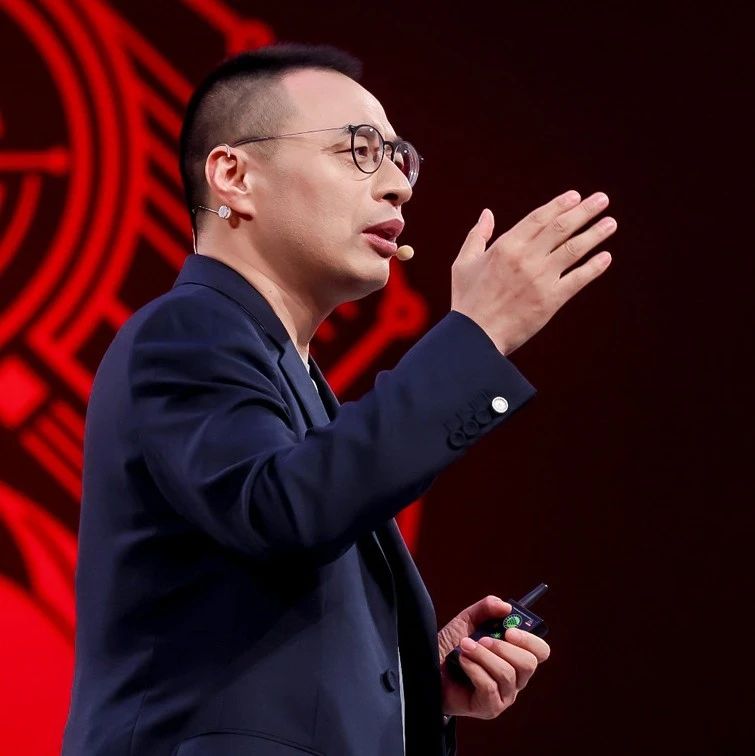
Core Viewpoint - The article emphasizes the ongoing "AI scene revolution" and the importance of reconstructing meaning in specific contexts, highlighting the need for businesses to adapt to the evolving landscape shaped by AI technologies [5][20]. Group 1: Scene Creation and Evolution - The concept of "scene creation" has been pivotal over the past decade, driving the development of new business models and brands, such as Luckin Coffee and Red Star Macalline, which have successfully navigated market changes through innovative scene strategies [12][17]. - The evolution of brands like Sanwing Bird illustrates the shift from product-centric to solution-oriented approaches, focusing on personalized home scene customization [15]. - Red Star Macalline's transformation into an "AI home life destination" showcases the integration of home appliances, furniture, and home decoration into a cohesive shopping experience [17][19]. Group 2: Instant Connection and Meaning Reconstruction - The article discusses the significance of "NOW" as a concept of connection in the AI era, where businesses must focus on real-time engagement and meaningful interactions with consumers [31]. - Platforms like Xiaohongshu exemplify the shift towards immediate connection, transforming user-generated content into a valuable resource for decision-making and community engagement [33][35]. - The connection revolution is highlighted through brands like Three Squirrels, which have adapted their organizational structures to enhance responsiveness and innovation in product development [38][39]. Group 3: AI and Physical World Integration - The emergence of "physical AI" is reshaping human-machine interactions, allowing for a more intuitive and responsive experience in everyday environments [61][62]. - Companies like AAC Technologies are pioneering solutions that integrate AI into physical spaces, enhancing user experiences through sensory technology [62][64]. - The article emphasizes the importance of creating seamless interactions between digital and physical realms, as seen in the case of brands like Xiaomi and their approach to automotive manufacturing [40][71]. Group 4: Retail and Experience Innovation - The transformation of retail spaces into experiential destinations is exemplified by Anta's innovative store concepts, which blend art and community engagement to enhance customer experiences [78][79]. - The article highlights the need for physical spaces to evolve alongside digital advancements, ensuring that consumer experiences are holistic and engaging [80][83]. - The rise of emotional commerce, particularly through collectible toys, reflects a shift in consumer preferences towards products that resonate on a personal and emotional level [85][86].
“非洲手机之王”迎小米正面狙击
财富FORTUNE· 2025-08-05 13:09
Core Viewpoint - Transsion Holdings is considering a secondary listing in Hong Kong to raise approximately $1 billion amid declining revenues and profits, with discussions still in early stages and uncertainties surrounding the timeline and scale of the listing [2][3]. Group 1: Company Performance - In Q1 2025, Transsion reported total revenue of 13.004 billion yuan, a year-on-year decline of 25.45%, and a net profit attributable to shareholders of 490 million yuan, down 69.87%, marking the largest quarterly drop since its listing on the Sci-Tech Innovation Board [3]. - The company’s market share in the global smartphone market is projected to reach 14% in 2024, ranking third among global smartphone manufacturers, with over 40% market share in the African smartphone market [2]. Group 2: Market Competition - Transsion faces increasing competition in Africa, with rivals like Xiaomi and OPPO gaining market share. In Q1 2025, Transsion held a 47% market share in the African smartphone market, but was the only company among the top five to experience a decline [4][6]. - Xiaomi has intensified its focus on the African market, forming a strategic group to counter Transsion and adopting similar distribution models to enhance its presence [6]. Group 3: Strategic Initiatives - Transsion is exploring new business avenues beyond smartphones, having established a mobility division targeting electric two-wheeler markets in Africa and Latin America, launching the independent electric motorcycle brand "REVOO" [8]. - The company aims to break its "low-end" label by introducing innovative products, such as the PHANTOM Ultimate G Fold, a concept foldable phone [7].

2025年第二季度,全球平板出货实现连续六季度增长,华为表现抢眼,跃升至第三;联想稳居上半年Chromebook市场首位
Canalys· 2025-08-05 06:32
Core Insights - The global tablet market showed strong growth in Q2 2025, with shipments reaching 39 million units, a 9% year-on-year increase and a 5% quarter-on-quarter increase, driven by stable demand in China and EMEA regions [1] - The Chromebook market is experiencing a resurgence, particularly in Japan due to the GIGA school project, with shipments in the first half of 2025 reaching 11 million units [1][6] Tablet Market Overview - Apple remains the leader in the tablet market with 14.1 million iPads shipped in Q2 2025, a 2% increase year-on-year [4] - Samsung follows in second place with 6.7 million units shipped, while Huawei, Lenovo, and Xiaomi have all seen significant growth, particularly in the Chinese market [4] - Notable new product releases in the gaming tablet segment have contributed to market growth, with brands like Xiaomi and Lenovo seeing substantial increases in shipments [3] Chromebook Market Dynamics - Lenovo led the global Chromebook market in the first half of 2025 with shipments of 3.45 million units, a 27% year-on-year increase [7] - The demand for Chromebooks is expected to remain high due to government-funded procurement activities in Japan, with shipments to Japan increasing over 20 times year-on-year [6] - Other brands like HP, Acer, Dell, and ASUS are also participating in this growth, with ASUS showing a 43% increase in shipments [6][7] Market Share and Growth Rates - In Q2 2025, the market shares for key tablet manufacturers were as follows: Apple (36.1%), Samsung (17.1%), Huawei (8.3%), Lenovo (7.9%), and Xiaomi (7.8%) [4] - The Chromebook market share for the first half of 2025 showed Lenovo at 31.3%, HP at 23.4%, and Acer at 20.1%, indicating a competitive landscape [7]



QuestMobile 2025年AI应用市场半年报:移动端达6.8亿,三类形态应用此消彼长,手机厂商亟需提升生态整合能力……
3 6 Ke· 2025-08-05 02:47
Core Insights - The AI application market is rapidly evolving, with a significant increase in user engagement across various segments, leading to the formation of four distinct tiers of applications [1][12][19]. Group 1: Market Overview - As of June 2025, the first tier includes AI search engines and comprehensive assistants, with monthly active users (MAU) reaching 685 million and 612 million respectively [1]. - The second tier consists of AI social interaction and professional advisors, with MAUs of 126 million and 111 million [1]. - The third tier includes AI efficiency tools and image processing applications, with MAUs of 69 million and 49 million [1]. - The fourth tier encompasses AI creative design, copywriting, and educational applications, each around 20 million MAUs [1]. Group 2: User Engagement Trends - The "In-App AI" model has seen a user base of 630 million, while native apps have 570 million users, and PC web applications have 180 million users, indicating a shift towards mobile and integrated solutions [1][9]. - The growth of application plugins reflects users' preference for seamless AI experiences, with notable usage rates for Baidu AI and Quark AI search at 9.6% and 56.0% respectively [2][19]. Group 3: Competitive Landscape - The market is witnessing a dual oligopoly, where the combination of "search + service" is reshaping traffic entry points, leading to service integration and the development of intelligent agents [12][24]. - The majority of PC web players are facing decline, with 80% of them having user counts below 500,000 and 68.8% experiencing negative growth [2][31]. Group 4: Application Performance - Among software service providers, the photography and beautification sector is rapidly adopting AI plugins, driven by the "aesthetic economy" [14]. - As of June 2025, the average app with AI integration has 2.1 AI applications, with photography apps averaging 5.5 AI features [15][27]. Group 5: Future Outlook - The integration of AI into mobile applications is expected to enhance user engagement, with a focus on system-level integration capabilities [9][49]. - The competition will hinge on becoming the "only option" in users' minds or embedding deeply into essential workflows, with model iteration speed and ecosystem integration being critical factors for success [56].
吴声2025年度演讲:场景革命十年,哲学生活方式到来
吴晓波频道· 2025-08-05 00:30
Core Viewpoint - The article emphasizes the concept of "scene creation" and the evolution of new business species driven by AI, highlighting the importance of reconstructing meaning in specific contexts [4][5][17]. Group 1: Scene Creation and Evolution - The past decade has been marked by the "scene creation" concept, which has driven the growth of new business species from inception to transformation [9]. - The evolution of brands like Sanwing Bird and Red Star Macalline illustrates the power of scene branding, showcasing how they have adapted to consumer needs and technological advancements [12][14]. - The article discusses the importance of understanding user needs and creating tailored solutions in the context of scene branding [12][16]. Group 2: Instant Emergence and Meaning Reconstruction - The concept of "instant emergence" is introduced, emphasizing the need for careful design of each scene to avoid losing sight of the underlying trends and opportunities [17][19]. - The article highlights the shift from traditional intelligence to "super intelligence," suggesting that AI's evolution will significantly impact productivity and efficiency [21][22]. - The reconstruction of meaning is framed as a philosophical journey, where understanding AI transcends mere technology and delves into cognitive revolutions [24][27]. Group 3: Connection Revolution and Business Multiplication - The connection revolution is described as a means to enhance business efficiency, with examples from companies like Three Squirrels and Xiaomi demonstrating innovative organizational methods [36][38]. - The article notes that the new decentralized organizational logic in the AI era allows for real-time data utilization and agile market responses [37]. - The rise of AI hardware in China is attributed to the country's rich product definition advantages and robust supply chain capabilities [72]. Group 4: Physical AI and User Experience - The article discusses how physical AI is redefining interactions in the real world, with companies like AAC Technologies leading the way in creating sensory solutions [59][60]. - The integration of AI into everyday life is emphasized, with examples of brands like追觅 transforming user experiences through innovative household solutions [63][64]. - The concept of "flow" in human-machine interaction is explored, highlighting the seamless integration of AI into daily activities [66][73]. Group 5: Localized Narratives and Cultural Integration - The importance of localized narratives in retail is illustrated through the example of ANTA's innovative store designs, which create immersive experiences for consumers [76][77]. - The article emphasizes the need for physical spaces to evolve alongside digital experiences, creating a cohesive narrative that resonates with consumers [80][81]. - The integration of cultural elements into business practices is highlighted as a means to foster deeper connections with consumers [88][89].

深圳持续强化企业科技创新主体地位 “小巨人”数量过千 “独角兽”全球第六
Shen Zhen Shang Bao· 2025-08-04 16:57
Core Insights - The World Artificial Intelligence Conference (WAIC) in Shanghai showcased Shenzhen's technological prowess, with major companies like Tencent, Honor, and ZTE presenting their innovations in AI and cloud technology [1][2] - Shenzhen is rapidly building itself as a leading AI city, supported by a robust innovation ecosystem that emphasizes the role of large, medium, and small enterprises in driving technological advancements [1][6] Company Developments - Tencent has accelerated its AI strategy, with a significant investment of 70.69 billion yuan in R&D planned for 2024, bringing its cumulative R&D investment over seven years to 340.3 billion yuan [3] - Tencent's first-quarter revenue for 2024 reached 180.02 billion yuan, marking a 13% year-on-year increase, while R&D spending grew by 21% to 18.91 billion yuan [3] - Honor is transitioning from a smartphone manufacturer to an AI terminal ecosystem company, launching the MagicGUI model to lower R&D barriers and enhance user experience [4] Industry Trends - Shenzhen is home to 37 unicorn companies, ranking sixth globally, with notable firms like WeBank and DJI among the top 100 [5] - The city has nurtured 1,025 national-level specialized and innovative "little giant" enterprises, contributing to its reputation as a hub for high-quality development [6] - Shenzhen's R&D investment accounts for over 90% of the total social R&D expenditure, with more than 25,000 national high-tech enterprises established by the end of 2024 [6]

吴声2025年度演讲:场景革命十年,哲学生活方式到来
新消费智库· 2025-08-04 13:03
Core Viewpoint - The article emphasizes the concept of "scene creation" and the importance of reconstructing meaning in the context of AI and new consumption patterns, highlighting the need for businesses to design specific scenarios to engage users effectively [4][20][26]. Group 1: Scene Creation and Meaning Reconstruction - The "scene revolution" over the past decade has driven the evolution of new species in business, with a focus on designing impactful scenarios that resonate with users [12][19]. - The concept of "刹那涌现" (momentary emergence) suggests that the evolution of AI applications will occur through meticulously designed scenarios, which are essential for understanding the rapid changes in the business landscape [20][24]. - The article outlines four key concepts for reconstructing meaning: NOW (the power of connection), FLOW (immersive human-machine interaction), HERE (narratives that transcend presence), and EGO (the core question of self) [26][30][34]. Group 2: Case Studies of Scene Brands - The evolution of the brand "三翼鸟" (Three Wings Bird) illustrates the shift from merely offering products to providing personalized home scene customization solutions, emphasizing the importance of understanding user needs [15][19]. - "红星美凯龙" (Red Star Macalline) has transformed into an "AI home life destination," integrating home appliances, furniture, and decoration into a cohesive experience, showcasing the power of scene branding [17][19]. - The article highlights "小红书" (Xiaohongshu) as a platform that redefines connection through user-generated content, emphasizing the importance of real-time engagement and community building [34][35]. Group 3: The Role of AI in Scene Creation - The emergence of AI-driven solutions is reshaping traditional business models, as seen in companies like "星星充电" (Star Charging), which integrates dynamic connections in digital energy management [45][46]. - The article discusses how AI is enhancing human-machine interaction, with examples of companies like 联想 (Lenovo) developing intelligent terminals that facilitate seamless user experiences [58][60]. - The concept of "物理AI" (Physical AI) is introduced, where AI technologies are applied to real-world interactions, enhancing the user experience in everyday environments [63][64]. Group 4: The Future of Scene Brands - The article posits that the future of scene brands lies in their ability to create meaningful connections and experiences that resonate with users on a deeper level, moving beyond mere functionality [19][24]. - The rise of "潮玩" (trendy toys) as a form of emotional commerce reflects a shift towards products that express individuality and cater to specific emotional needs [90][91]. - The concept of "空间网络的生态IP" (space network ecological IP) is introduced, suggesting a model where brands can replicate and localize their presence across different markets, enhancing their relevance and impact [97].

吴声2025年度演讲:场景革命十年,哲学生活方式到来
36氪· 2025-08-04 11:04
Core Viewpoint - The article emphasizes the concept of "meaning reconstruction" in the context of the AI scene revolution, highlighting the importance of specific scenarios in shaping business and consumer experiences [3][18]. Group 1: Scene Creation and Evolution - The past decade has been marked by "scene creation," where well-designed scenarios drive the evolution of new business entities, as seen in collaborations with companies like Luckin Coffee and Tencent [10][13]. - The evolution of brands like Sanwing Bird illustrates the shift from product-centric to solution-oriented approaches, focusing on personalized home scene customization [13][17]. - Red Star Macalline's transformation into an "AI home life destination" showcases the integration of home appliances, furniture, and decoration into a cohesive shopping experience [15][17]. Group 2: Instant Emergence and Meaning Reconstruction - The concept of "instant emergence" suggests that technological advancements must be carefully designed within specific scenarios to avoid losing sight of their significance [19][21]. - The article discusses the potential of AI to transition from "intelligence" to "super intelligence," with implications for economic growth and the redefinition of resources [23][25]. - The need for a philosophical lifestyle cycle is highlighted, where the reconstruction of meaning is essential in navigating the complexities of the AI era [25][28]. Group 3: NOW - Connection in the Present - The "NOW" concept emphasizes the importance of real-time connections facilitated by AI, transforming how individuals interact with information and each other [29][30]. - Platforms like Xiaohongshu exemplify the redefinition of connection through user-generated content, creating a space for real-time engagement and shared experiences [33][35]. - The article notes that the ultimate goal of business is to turn individual problems into collective solutions, as demonstrated by Xiaohongshu's focus on immediate user needs [35][36]. Group 4: FLOW - Smooth Human-Machine Interaction - The "FLOW" concept refers to the evolution of human-machine interaction, where AI becomes a seamless part of daily life, enhancing user experiences [51][52]. - The emergence of "intelligent agents" signifies a shift in how technology interacts with users, moving from mere tools to integral parts of personal and professional environments [54][56]. - Companies like Lenovo are leading the way in creating cohesive ecosystems of AI devices that enhance user interaction and experience [56][58]. Group 5: HERE - Narrative Beyond the Scene - The "HERE" concept emphasizes the importance of local narratives and experiences in creating meaningful connections between brands and consumers [79][80]. - Brands like Anta are innovating their retail spaces to become community hubs, blending art and local culture to enhance customer engagement [83][84]. - The article highlights the need for physical spaces to evolve alongside digital experiences, ensuring that they remain relevant and engaging for consumers [87][88].