
美的集团

Search documents
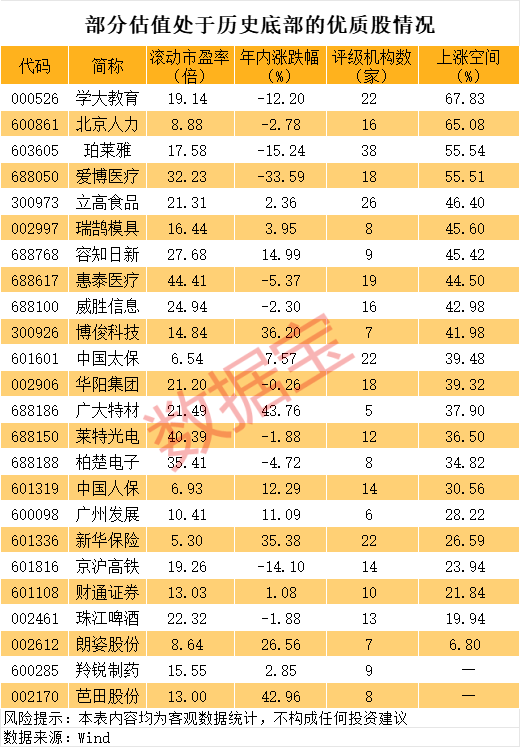
估值处于历史底部的优质股曝光(名单)
Zheng Quan Shi Bao Wang· 2025-12-03 00:50
Core Insights - The A-share market has shown enthusiasm for undervalued sectors, with significant gains in indices for communication, oil and petrochemicals, banking, light manufacturing, textiles, and home appliances as of December 2 [1] - A list of quality stocks with valuations at historical lows has been identified, with 24 stocks receiving ratings from five or more institutions, indicating potential for future outperformance [1][2] - The insurance sector is highlighted as a favorable investment choice due to low valuations and expected growth in liabilities, with several insurance stocks having rolling P/E ratios below 7 times [2] Group 1: Market Performance and Valuation - As of December 2, indices for sectors like oil and petrochemicals, banking, textiles, and home appliances are at low valuation levels, with some individual stocks reaching historical highs [1] - Notable stocks with low valuations include New China Life Insurance, China Pacific Insurance, and China Life Insurance, all with P/E ratios below 7, and New China Life Insurance at less than 6 [2][4] - Stocks like Langzi Co. and Beijing Human Resources also have P/E ratios below 10, while others like Guangzhou Development and Batian Co. have P/E ratios under 15 [2] Group 2: Growth Potential and Institutional Ratings - Some stocks are experiencing significant price declines, such as Aibo Medical and Polaroid, with year-to-date declines exceeding 10% [3] - Conversely, stocks like Guangda Special Materials have seen a price increase of 43.76% this year, resulting in a P/E ratio of 21.49, attributed to a substantial profit increase of nearly 214% in the first three quarters [3] - Institutions predict substantial upside potential for several stocks, with targets indicating over 50% upside for companies like Xueda Education and Beijing Human Resources [3][4] Group 3: Recent Negative Developments - ST Yuanzhi (002689) faced a significant drop, closing at 4.33 yuan per share with a 5.04% decline and over 133,000 sell orders, following an announcement of administrative penalties from the Liaoning Securities Regulatory Bureau [5]


格隆汇港股回购榜 | 12月2日



Jin Rong Jie· 2025-12-03 00:30
股票名称 回购数 回购额 年累计回购数量(股) 年累计回购数量/总股本 腾讯控股(00700) 102.80万 6.36亿 8201.80万 0.893% 小米集团-W(01810) 250.00万 1.02亿 7829.54万 0.300% 美的集团(00300) 123.09万 9999.57万 null null 顺丰控股(06936) 131.58万 4999.38万 null null 中远海控(01919) 300.00万 4105.30万 6054.30万 2.102% 中国飞鹤(06186) 400.00万 1674.00万 1.95亿 2.149% 固生堂(02273) 37.84万 1094.52万 1041.39万 4.395% 金山软件(03888) 35.12万 999.74万 565.98万 0.400% 富智康集团(02038) 40.00万 770.62 万 668.08万 0.848% 国鸿氢能(09663) 128.60万 663.58万 554.40万 1.072% 中国石油化工股份(00386) 120.00万 541.76万 2.13亿 0.180% 津上机床中国(0 ...
全省经营主体、企业、私营企业、外商投资企业、个体工商户总量逐个数 广东坐拥“五个全国第一”!
Shen Zhen Shang Bao· 2025-12-03 00:00
Group 1 - Guangdong has nine industrial chain supply chain quality improvement projects included in the national key projects, ranking first in the country [1][2] - The province has achieved "five national firsts" in terms of total business entities, enterprises, private enterprises, foreign-invested enterprises, and individual businesses [1][4] - Guangdong's quality work has received an A grade in ten national assessments and has been rated "satisfactory" for seven consecutive years in public service quality monitoring [2][3] Group 2 - The province supports the establishment of 53 quality technology innovation alliances among "chain master" enterprises, promoting over 35,000 upstream enterprises with a localization rate of key materials exceeding 60% [3] - Guangdong has implemented a quality improvement model combining "industry + livelihood," supporting eight quality strong chain projects in Shenzhen to enhance public service quality for 68 enterprises in key industrial clusters, generating an economic benefit of 310 million [3][4] - A total of 5,416 enterprises have been recognized as having excellent quality credit in industrial products, with 936 on the "ten-year list" and 1,534 on the "five-year list" [4]
日本制造黄金时代落幕:系统性崩塌背后的多重危机
Sou Hu Cai Jing· 2025-12-02 23:40
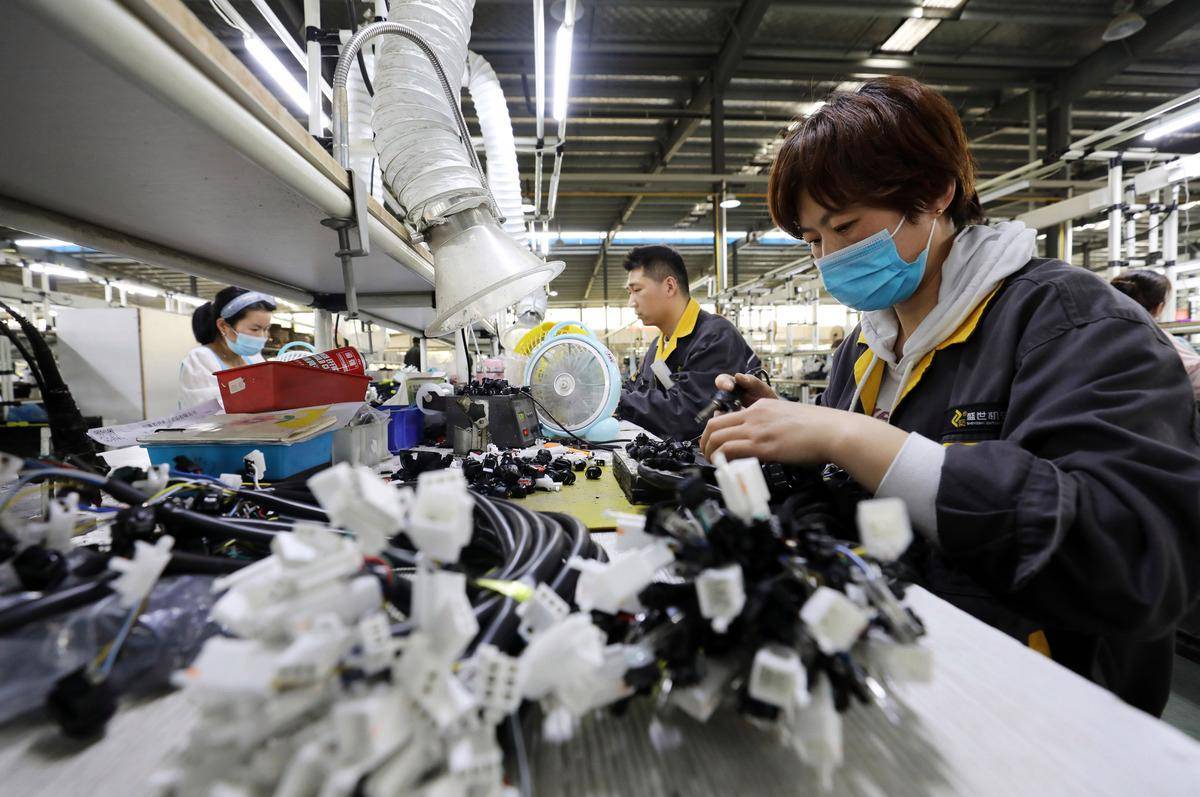
Core Insights - Japan's manufacturing sector is experiencing a systemic collapse, with the Purchasing Managers' Index (PMI) remaining below the neutral line for five consecutive months, indicating ongoing contraction in manufacturing activity [1][3] - The Japanese economy has entered a negative growth phase, with a reported annualized decline of 1.8% in Q3 2023, marking the first negative growth since Q1 2024 [1][11] - Japan's exports to the U.S. have seen a continuous decline for seven months, further exacerbating economic challenges [1][11] Group 1: Credibility Crisis - Japan's manufacturing industry is facing an unprecedented trust crisis, with multiple long-standing data falsification scandals across various sectors, including automotive and steel [3] - Major companies like Kobe Steel and Mitsubishi Electric have been implicated in decades-long data manipulation, undermining the credibility of Japanese manufacturing [3] - The recent scandal involving Kobayashi Pharmaceutical, which resulted in over a hundred deaths, has intensified the crisis of confidence in Japanese products [3] Group 2: Market Setbacks - Japanese brands are losing significant market share to Chinese competitors, particularly in the home appliance sector, where domestic brands hold 72% of the market compared to less than 8% for Japanese brands [5] - The market share of Japanese cars in China has plummeted to 10.8% in the first ten months of 2025, down from 24.1% in 2020, while domestic brands have surged to a 58.3% market share [5] - In Japan, 70% of home appliances are now manufactured in China, with brands like Hisense and TCL dominating the market [5] Group 3: Transformation Challenges - Japanese automakers are struggling to adapt to the global shift towards electric and smart vehicles, with domestic brands capturing nearly 90% of the new energy vehicle market in China, while Japanese brands account for less than 2% [7] - The focus on hydrogen fuel technology has caused Japanese manufacturers to miss the lithium-ion battery opportunity, leading to a slow transition to electric vehicles [7] - Japanese car manufacturers are adopting a defensive multi-path strategy, which has delayed their transition to electric vehicles and caused a disconnect with market demands for smart features [7] Group 4: External Pressures - U.S. tariff policies have severely impacted Japanese manufacturers, with the seven major automakers facing a combined profit loss of approximately 1.5 trillion yen (around 10 billion USD) between April and September 2025 [9] - The automotive sector's profit margins are now only 7%-8%, leading to a situation where all seven major automakers reported declining profits for the first time since the COVID-19 pandemic began [9] - The decline in automotive exports is negatively affecting Japan's GDP growth and impacting related industries such as electronics and steel [9] Group 5: Economic Dilemma - Japan's economy is facing significant internal and external challenges, with a sharp contraction in external demand contributing to the negative growth in Q3 2023 [11] - The impact of U.S. tariffs has led to a 1.2% decline in goods and services exports, contributing negatively to economic growth [11] - Domestic consumption is also weak, with only a marginal increase of 0.1% in personal consumption, which constitutes over half of Japan's economy [11] Group 6: Policy Response - In response to the economic challenges, the Japanese government has introduced a 21.3 trillion yen economic stimulus plan, though experts question its effectiveness [13] - Concerns regarding fiscal sustainability are prominent, as Japan's government debt is approximately 263% of GDP, raising questions about the long-term viability of increased spending [13] - The current government is also focusing on military expansion, which contrasts with public demand for improved living standards and tax relief [15]

又一日企被揪出?在华26年赚1496亿,却被误以为是国货
Sou Hu Cai Jing· 2025-12-02 23:14
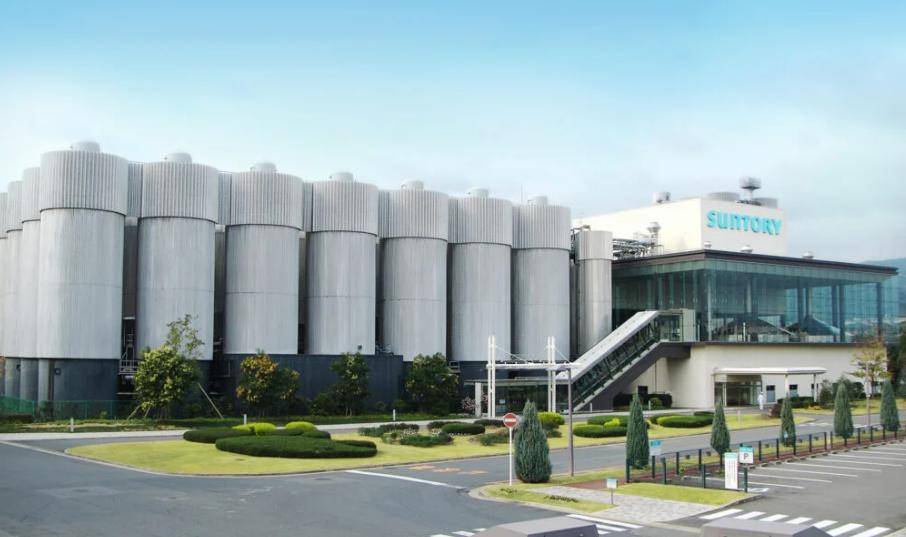
Core Insights - The article discusses the presence of Japanese brands in the Chinese market that disguise themselves as local products, highlighting the consumer perception of these brands as domestic goods despite their foreign origins [1][3][12]. Group 1: Market Presence and Performance - Suntory's revenue for 2024 is projected to reach 3,079.7 billion yen, approximately 149.6 billion RMB, with over half of its income derived from overseas markets, particularly China [3]. - Suntory has accumulated revenue exceeding 140 billion RMB in China, surpassing the annual revenue of Nongfu Spring for 2024 [3]. - Yakult, since its entry into China in 1996, achieved a market share of 60% in the low-temperature yogurt drink sector by 2018, indicating its strong market penetration [5]. Group 2: Marketing Strategies - Suntory's marketing strategy includes using Chinese packaging and cultural elements to create a perception of being a local brand, which has been effective since its market entry in 1997 [3][5]. - The success of these brands is attributed to their ability to localize their products and marketing, such as Sofy's packaging stating "designed for Chinese women" [5][8]. - Daikin has established itself in the commercial air conditioning market through high-end positioning and technical advantages, despite lower brand recognition among general consumers [7]. Group 3: Challenges and Market Dynamics - Japanese brands face increasing competition from local brands like Nongfu Spring and Yuanqi Forest, which are rapidly gaining market share and innovating more flexibly [12][14]. - Consumer awareness regarding brand authenticity is rising, leading to a backlash against these "disguised" foreign brands, with discussions about their true origins becoming more prevalent on social media [12][14]. - The shift in consumer perception has prompted some Japanese companies to emphasize their Japanese heritage and quality in marketing efforts [12][14]. Group 4: Consumer Perspective - The article suggests that consumers should approach these brands with a rational mindset, recognizing that while the marketing strategies may be perceived as deceptive, they are legally compliant [13]. - It emphasizes the importance of understanding the contributions of these companies to the Chinese economy, including local production and employment [13]. - Consumers are encouraged to make informed choices based on product quality and value rather than solely on brand origin [13][14].
盈峰系的家居资本局
Shang Hai Zheng Quan Bao· 2025-12-02 18:09
Core Viewpoint - Yingfeng Group, led by He Jianfeng, is expanding its presence in the home furnishing sector by acquiring significant stakes in major companies like Sophia and Gujia Home, indicating a strategic move to dominate the industry [1][4]. Investment in Sophia - Yingfeng Group has invested over 1.86 billion yuan to acquire a 12.72% stake in Sophia, making it the second-largest shareholder [2]. - The acquisition price of 18 yuan per share represents a 28.85% premium over Sophia's closing price prior to the announcement [1]. Financial Performance of Sophia - Sophia's revenue and net profit have shown signs of fatigue, with revenues of 112.23 billion yuan in 2022, 116.66 billion yuan in 2023, and a projected decline to 104.94 billion yuan in 2024 [3]. - The company's net profit for 2025's first three quarters has decreased by 26.05% year-on-year [3]. Yingfeng Group's Strategy - Yingfeng Group's strategy includes acquiring stakes in leading home furnishing companies to create a competitive advantage in the market [7]. - The group aims to leverage its experience from Midea Group to enhance operational efficiency in the home furnishing sector [7]. Acquisition of Gujia Home - Yingfeng Group became the controlling shareholder of Gujia Home by acquiring a 29.42% stake for 8.88 billion yuan [4]. - Following the acquisition, Yingfeng Group plans to further increase its stake through a private placement, raising its ownership to 37.37% [5]. Market Dynamics - The home furnishing industry is characterized by a low concentration of market share among top players, presenting opportunities for consolidation [7]. - Yingfeng Group's investments are seen as a strategic move to capitalize on the industry's downturn and acquire quality assets at lower valuations [7]. Broader Investment Landscape - Yingfeng Group has a diverse investment portfolio across various sectors, including consumption, environment, culture, asset management, and technology, with total assets nearing 90 billion yuan [8]. - The group currently holds stakes in three A-share listed companies, including Gujia Home and Yingfeng Environment [9].
机构研判跨年行情“有戏” 197股入围券商12月金股名单
Zheng Quan Shi Bao· 2025-12-02 18:06
Group 1 - December is a crucial month for positioning in the cross-year market, and recent strategies from brokerages indicate that the December market remains promising [1] - Guotai Junan Securities suggests that from December 2025 to February 2026, there will be a window period where Chinese policies, liquidity, and fundamentals resonate positively, recommending an increase in investment in the Chinese market [2] - Dongwu Securities believes that as some institutions conclude their annual assessments in December, the motivation for profit-taking will likely diminish, improving trading structures [2] Group 2 - A total of 197 stocks have been included in the December "golden stocks" list by brokerages, with 41 stocks making the list more than twice, primarily in the electronics, food and beverage, power equipment, basic chemicals, and automotive sectors [3] - Among the 41 stocks, the electronics sector has the highest representation, with 9 stocks, including leading companies like Cambrian, Haiguang Information, and Luxshare Precision [3] - Zhongji Xuchuang has the highest frequency of inclusion, appearing 8 times, with a net profit of 7.132 billion yuan in the first three quarters, a year-on-year increase of 90.05% [3] Group 3 - As of December 2, the average increase of the 41 golden stocks this year is 66.62%, significantly outperforming the Shanghai Composite Index [4] - Among these stocks, 23 have a rolling P/E ratio below 30, with 5 stocks, including Jiangsu Bank and China Life, having a P/E ratio below 10 [4] - As of December 1, 8 stocks have seen net financing purchases exceeding 100 million yuan since November, with CATL leading at 4.037 billion yuan [4]
李泽湘最新发声→
证券时报· 2025-12-02 15:35
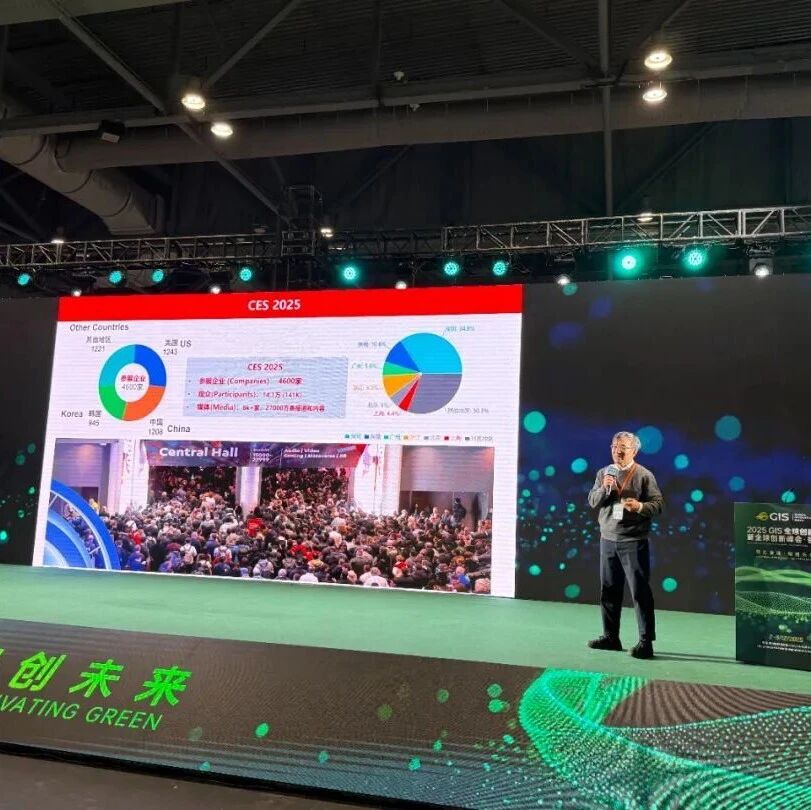
12月2日,在2025GIS全球创新展暨全球创新峰会上,机器人与自动化领域权威专家、香港科技大学教授、深 圳科创学院院长李泽湘发表主旨演讲,深入剖析大湾区在消费电子领域的发展潜力与创业机遇,指出大湾区正 迎来成为全球消费电子中心的关键时机,年轻创业者主导的2C(面向消费者)赛道成为热门方向。 为推动科创落地与人才培养,大湾区已构建"一地、N校、一平台一园区"的科创生态。通过项目制学习,融合 理科、工科、商科、人文知识,让学生在大学4年积累创业经验,毕业设计成为走向市场的第一步。此外,学 生可参与展会、进入初创公司实习、参加训练营,再结合共享工厂、资本等资源赋能,逐步实现从创意到公司 运营的全流程发展。目前,该生态已在全国布局8个基地,合作高校超20所,培育出270多家公司,部分上市独 角兽公司估值超500亿美元,其发展模式还吸引了新加坡副总理及20多位部长到访交流,甚至可与斯坦福相关 模式的数据媲美。 李泽湘首先以国际消费类电子产品展览会( CES )为切入点,介绍消费电子行业的发展历程。他提到,2025 年CES上,美国与中国参展企业数量已非常接近,其中超50%的中国参展企业来自大湾区,凸显大湾区在消费 电 ...
慧谷新材:国产涂层替代隐形冠军,IPO迎来新进展
Zheng Quan Shi Bao Wang· 2025-12-02 13:55
Core Viewpoint - Shenzhen Stock Exchange announced the upcoming IPO review meeting for Guangzhou Huigu New Materials Technology Co., Ltd. on December 9, 2025, highlighting the company's focus on polymer materials and functional coating materials driven by independent research and development [1] Company Overview - Huigu New Materials specializes in high polymer materials, forming an industrial layout system of "1+1+N" with functional resin technology and coating materials as core components [1] - The company serves a diverse client base, including major domestic and international companies such as Gree, Midea, Haier, and Samsung, indicating strong product competitiveness and market recognition [1] Financial Performance - The company's revenue for 2022, 2023, and 2024 was 664 million, 717 million, and 817 million yuan respectively, while net profit increased from 30 million to 146 million yuan, with net profit growth outpacing revenue growth [2] - Gross margin improved from 29.56% to 40.68%, reflecting a trend of "expanding scale and stronger profitability" [2] Industry Recognition - In March 2024, the company was recognized as a national manufacturing single champion by the Ministry of Industry and Information Technology, and its subsidiary was recognized as a "little giant" enterprise in October 2025, underscoring its leadership in industrial innovation [2] Market Position - The company holds over 60% market share in energy-saving coatings for heat exchangers and over 30% in aluminum cap coatings, successfully breaking the long-standing monopoly of companies like Sherwin-Williams and PPG in the new energy battery collector coatings and MiniLED optical coatings [2] Technological Innovation - Technological innovation is the core driving force for Huigu New Materials, with multiple breakthroughs in key industry technologies since its establishment [2] - The company has a provincial-level technology center and employs 206 R&D personnel, with R&D investment consistently above 6% of revenue [2] IPO Details - In the upcoming IPO, Huigu New Materials plans to issue up to 15.78 million shares to raise 900 million yuan, with funds allocated for various projects including an expansion project for eco-friendly coatings and resins, a research center, and working capital [3] - The investment projects are closely aligned with the company's main business and core technologies, aimed at enhancing market competitiveness and core capabilities [3] Future Outlook - The company will continue to focus on the dual core product line strategy of functional resins and coating materials, promoting the localization and green development of key materials [3] - The goal is to deepen the development of composite functional materials and expand applications in home appliances, packaging, new energy, and electronics, establishing itself as a benchmark in the global functional materials sector [3]
李泽湘最新发声→
Zheng Quan Shi Bao Wang· 2025-12-02 12:30
12月2日,在2025GIS全球创新展暨全球创新峰会上,机器人与自动化领域权威专家、香港科技大学教授、深圳科创学院院长李泽湘发表主旨演讲,深入 剖析大湾区在消费电子领域的发展潜力与创业机遇,指出大湾区正迎来成为全球消费电子中心的关键时机,年轻创业者主导的2C(面向消费者)赛道成 为热门方向。 产业基础上,大湾区制造业已从代工、山寨阶段,逐步构建起全球最完整、最具竞争优势的供应链体系。李泽湘表示,过去20年,以苹果、戴森为代表的 企业树立了人均产值标杆,华为、美的、格力等大湾区企业虽有差距但持续进步,如今新一代创业者带领企业快速崛起,为产业转型升级注入新活力。同 时,AI技术"从云中下地",需与家居、运动、健康、农业等场景结合,而硬件是重要载体,大湾区的芯片、材料、零部件、供应链及工厂资源,为AI与硬 件结合提供了关键支撑,这也是英伟达CEO、MIT知名AI教授等行业人士认可大湾区优势的重要原因。 为推动科创落地与人才培养,大湾区已构建"一地、N校、一平台一园区"的科创生态。通过项目制学习,融合理科、工科、商科、人文知识,让学生在大 学4年积累创业经验,毕业设计成为走向市场的第一步。此外,学生可参与展会、进入初 ...
