智谱

Search documents
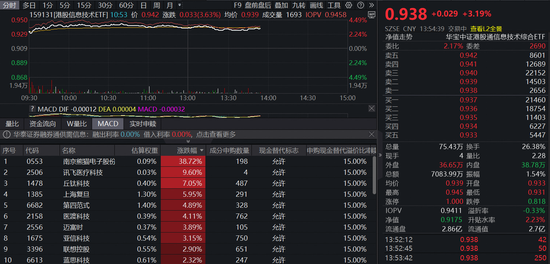
壁仞之后,昆仑芯、智谱也要来了!港股硬科技迎IPO热潮,首只“港股芯片链”ETF放量涨超3%
Xin Lang Cai Jing· 2026-01-05 06:25
Core Viewpoint - The Hong Kong stock market is witnessing a strong performance in the technology sector, particularly with the launch of the first ETF focused on the "Hong Kong chip" industry chain, which has shown a significant increase in value and trading volume [1][4]. Group 1: ETF Performance - The Hong Kong Information Technology ETF (159131) opened high and maintained a slight fluctuation, currently up by 3.19% with a trading volume exceeding 700 million CNY [1][4]. - The ETF is designed to track the "Hong Kong Stock Connect Information Technology Composite Index," with a composition of 70% hardware and 30% software, focusing on semiconductor, electronics, and computer software sectors [4][9]. Group 2: Market Trends - The Hong Kong hard technology sector is experiencing an IPO boom, with companies like Baidu Kunlun Chip and others preparing for listings, indicating a growing interest in domestic AI and computing technologies [3][8]. - The Chinese intelligent computing chip market is projected to grow from 1.7 billion USD in 2020 to 30.1 billion USD by 2024, with a compound annual growth rate (CAGR) of 105%, significantly outpacing global market growth [3][8]. Group 3: Key Stocks Performance - Notable stocks within the ETF include Nanjing Panda Electronics, which surged over 40%, and other companies like iFlytek Medical Technology and Hillstone Technology, which also saw significant gains [1][4]. - Semiconductor companies such as SMIC and Hua Hong Semiconductor are included in the ETF, with respective weightings of 20.48% and 5.80%, highlighting their importance in the portfolio [4][9].

观察 | AI行业真相:传统行业没崩,OpenAI红利见顶,真正机会在这
未可知人工智能研究院· 2026-01-05 04:02
Core Insights - The article emphasizes that traditional industries are not as vulnerable to AI disruption as commonly perceived, with only minor declines in sectors like search engines and education technology [4][5][6] - AI is described as a gradual force of change rather than an immediate threat, suggesting that traditional industries have a window of five to ten years to adapt [7][21] - The report highlights the importance of integrating AI into workflows to gain a competitive edge, rather than relying solely on AI technology itself [7][21] Industry Performance - Traditional search engines experienced a year-over-year decline of only 3%, while traditional education technology platforms saw a 7% drop, indicating stability in these sectors [5][8] - Digital freelance work declined by 8%, but the overall trend remains steady, suggesting resilience in the market [8] - The report categorizes various sectors as "Steady," indicating that while AI is encroaching on market share, the protective barriers of these industries are stronger than anticipated [5][8] AI Market Dynamics - ChatGPT's growth rate turned negative at -4% in December, while competitors like Google's Gemini and Meta's AI products saw significant growth rates of 82% and 109%, respectively [9][10] - The market share of ChatGPT decreased by 3 percentage points over four months, indicating a shift in competitive dynamics where latecomers are gaining ground [9][10] - The fastest-growing AI sector is music generation, with an overall growth rate of 36%, highlighting opportunities in niche markets [16][20] Investment Opportunities - Companies like Zhiyu and MiniMax are entering a critical phase for capitalizing on AI, with MiniMax projected to achieve a 780% revenue growth in 2024 [24][26] - The differing business models of these companies present varied risk-reward profiles for investors, with Zhiyu focusing on B2B and MiniMax on a global C2C approach [24][26] - The successful IPOs of these companies could stimulate further investment in the AI sector, encouraging new startups to emerge [26][28] Actionable Insights - Individuals in traditional industries are encouraged to explore how AI tools can enhance efficiency, as the integration of AI will become a fundamental skill in the workplace [28][29] - Establishing a diverse AI toolset for different applications is recommended, as relying on a single tool may limit effectiveness [29] - Focusing on vertical market opportunities where AI can address specific pain points is advised, as these areas are likely to yield significant returns [29][21]



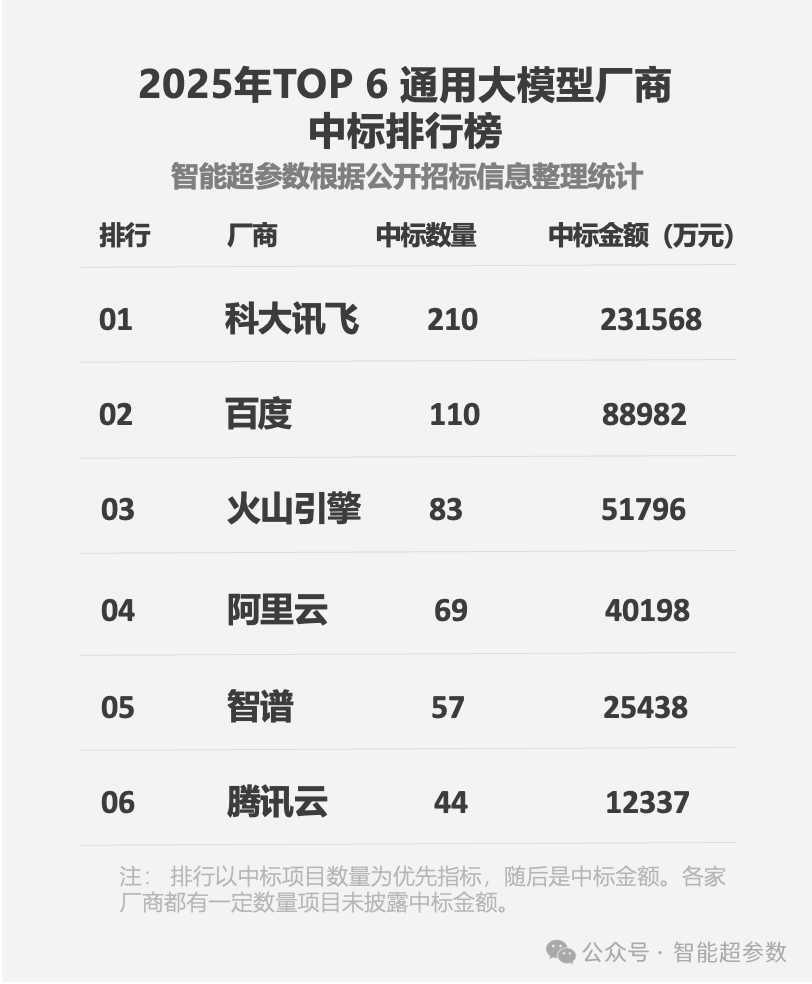
谁拿走最多大模型项目?2025年中标排行榜出炉,科大讯飞蝉联“标王”
Jing Ji Guan Cha Wang· 2026-01-05 03:16
Core Insights - The report highlights a significant increase in the number of large model-related bidding projects in 2025, with a total of 7,539 projects, marking a 396% growth compared to 2024. The disclosed bid amounts reached 29.52 billion yuan, reflecting a 356% increase [1][2]. Group 1: Market Overview - Large models have emerged as a new hotspot in the technology market, with many institutions reallocating budgets towards purchasing large model technology stacks [2]. - A few companies have begun to dominate the bidding landscape, with general large model vendors being the primary winners in the bidding market [3]. Group 2: Leading Companies - The top 30 bidding companies include major general large model vendors such as iFLYTEK, Baidu, Volcano Engine, Alibaba Cloud, Zhiyuan, and Tencent Cloud, all of which rank highly in terms of project numbers [3][4]. - Telecommunications operators have also secured a significant number of large model projects, with 10 out of the top 30 companies having a telecom background, as clients in sectors like government and healthcare prefer these firms for compliance reasons [3]. Group 3: Performance of Major Vendors - iFLYTEK led the bidding performance in 2025 with 210 projects and a disclosed bid amount of 2.31568 billion yuan, dominating various sectors including education, healthcare, finance, and government [6][7]. - Baidu followed with 110 projects and a bid amount of 889.82 million yuan, primarily in the finance sector, showcasing its comprehensive AI capabilities [8]. - Volcano Engine secured 83 projects with a bid amount of 517.96 million yuan, focusing on financial and governmental applications [9]. - Alibaba Cloud achieved 69 projects with a bid amount of 401.98 million yuan, emphasizing standardized solutions in AI [10]. - Zhiyuan reported 57 projects with a bid amount of 25.438 million yuan, mainly in energy and government sectors [11]. - Tencent Cloud completed 44 projects with a bid amount of 123.37 million yuan, focusing on media and content generation [11].

AI产业资本闭环加速成型,同类规模最大的科创创业人工智能ETF永赢(159141)涨超3%!
Sou Hu Cai Jing· 2026-01-05 03:10
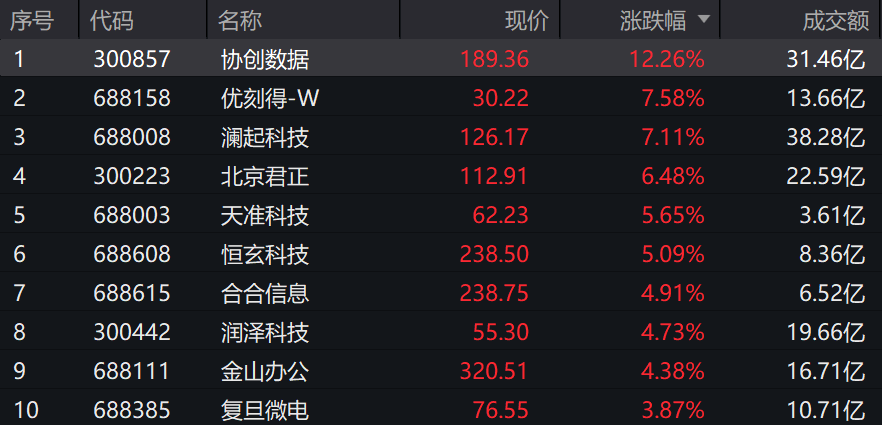
Core Viewpoint - The AI-focused ETF, Yongying (159141), has seen a strong increase of 3.00%, with significant gains in constituent stocks, indicating a bullish trend in the AI sector [1]. Group 1: ETF Performance - The Yongying AI ETF has reached a new high in scale at 9.52 billion, ranking in the top quarter among comparable funds [2]. - Key stocks within the ETF include: - Xiechuang Data (300857) up 12.26% with a trading volume of 3.146 billion - Youkede (688158) up 7.58% with a trading volume of 1.366 billion - Lankai Technology (688008) up 7.11% with a trading volume of 3.828 billion - Beijing Junzheng (300223) up 6.48% with a trading volume of 2.259 billion - Tianzhun Technology (688003) up 5.65% with a trading volume of 0.361 billion [2]. Group 2: Industry Developments - Changxin Technology's IPO on the Sci-Tech Innovation Board has been accepted, aiming to raise 29.5 billion for memory chip manufacturing upgrades, which will boost orders in the semiconductor equipment and materials sectors [3]. - The IPO is expected to lower procurement costs in AI servers, cloud computing, and robotics, optimizing the cost structure of the industry chain [3]. - The listing will help break the monopoly of foreign giants in high-end storage, providing local high-bandwidth memory support for domestic AI chips and large models [3]. Group 3: Market Trends - The entry of Chinese large model companies into the Hong Kong stock market signifies a completed "technology-product-capital" loop, providing public financing channels for foundational models [4]. - This transparency in market capitalization will pressure startups to focus on actual profitability rather than just parameter comparisons, accelerating the convergence of business models [4]. - The listing and information disclosure will lower procurement thresholds for government and financial institutions, leading to faster release of demand in the G/B sector [4]. - The first AI ETF, Yongying (159141), covers the entire AI industry chain, with over 78% allocation in AI chips, optical modules, and cloud computing [4].




上晚会、进演讲,AI竞争已经进入「大厂时间」
创业邦· 2026-01-05 03:10
Core Insights - The AI industry is increasingly dominated by large companies, with significant investments in infrastructure, model development, and application promotion, shifting the competitive landscape away from startups [5][7][12] - Major tech firms are leveraging high-profile events like New Year's Eve celebrations to promote their AI products, indicating a return to familiar competitive strategies from the internet product era [6][11] - The competition between large companies and AI startups is intensifying, with startups facing challenges in competing against the resources and ecosystem advantages of larger firms [7][15] Group 1: Industry Trends - The release of ChatGPT 3.5 in November 2022 marked the beginning of a new wave in AI, making year-end observations of AI trends increasingly significant [5] - By the end of 2025, major companies have established dominance in key areas such as AI entry points and computing power, altering the narrative of AI development [5][7] - The competitive dynamics have shifted, with large firms like OpenAI and Google intensifying their rivalry, impacting the prospects of AI startups [6][7] Group 2: Marketing Strategies - Major companies are utilizing high-visibility events for aggressive marketing of their AI products, with significant sponsorship roles in events like New Year's Eve celebrations [9][11] - Companies like Alibaba, Tencent, and ByteDance are actively engaging in content co-creation with popular influencers to maximize their reach and impact [11][12] - The strategy of leveraging major events for product promotion reflects a tactical shift back to familiar competitive practices, reminiscent of past internet product launches [11][12] Group 3: Startup Challenges - AI startups are finding it increasingly difficult to emerge as industry leaders due to the overwhelming advantages held by larger firms in terms of funding, resources, and market presence [7][15] - Notable AI startups are opting for public listings or significant funding rounds to sustain their operations, but their financial capabilities are dwarfed by the investments made by larger companies [15][17] - The sale of Manus to Meta exemplifies the challenges faced by startups in maintaining independence and competing against the scale of large tech firms [17] Group 4: Future Outlook - The year 2026 is anticipated to be pivotal for AI applications and innovation, with startups needing to recalibrate their strategies to find niche opportunities [7][12] - The concept of "greenfield" opportunities is highlighted, suggesting that smaller firms may find success in less obvious market segments overlooked by larger competitors [17][18] - Unique and differentiated projects may emerge as viable alternatives for startups, focusing on niche applications or innovative solutions that stand apart from mainstream offerings [18][19]


软件ETF(515230)涨超1.2%,行业景气度获市场关注
Mei Ri Jing Ji Xin Wen· 2026-01-05 02:32
Group 1 - The software ETF (515230) has risen over 1.2%, indicating increased market attention on the industry's growth potential [1] - The computer and software development industry is experiencing rapid growth, particularly in the GPU chip sector, with companies like Tianzuo Zhixin and Biran Technology making significant advancements [1] - Tianzuo Zhixin has developed two GPU series, Tianpai (training) and Zhikai (inference), with average product prices of 30,000-40,000 yuan and 10,000 yuan respectively, achieving small-scale batch sales [1] Group 2 - Biran Technology focuses on self-developed GPGPU chips and intelligent computing solutions, with over 1.2 billion yuan in orders for 2025 and the next-generation BR20X chip expected to be commercialized in 2026 [1] - In the large model sector, companies like Zhipu and MiniMax are progressing towards IPOs, representing ToB and ToC business models respectively [1] - Zhipu, backed by Tsinghua University, leads in model capabilities domestically, projecting a revenue of 310 million yuan in 2024, a year-on-year increase of 150.9% [1] Group 3 - MiniMax emphasizes efficient model architecture and rapid commercialization, with its ToC products, Conch AI and Talkie, generating 73.1% of its revenue from overseas [1] - Inspur Information has launched the super node AI server "Yuan Nao SD200," which supports trillion-parameter large model inference [1]

AI人工智能ETF(512930)涨超1.5%,中国大模型厂商智谱与MiniMax已启动招股
Xin Lang Cai Jing· 2026-01-05 02:29
Group 1 - The core viewpoint of the news is that the launch of domestic large model companies on the capital market signifies the completion of a "technology-product-capital" closed loop, which will drive the AI industry into a sustainable self-reinforcing development phase [1] - The CSI Artificial Intelligence Theme Index (930713) has seen a strong increase of 1.69%, with notable gains from constituent stocks such as 37 Interactive Entertainment (002555) up 10.00%, and Lianqi Technology (688008) up 5.49% [1] - The AI Artificial Intelligence ETF (512930) has risen by 1.51%, with the latest price reported at 2.22 yuan [1] Group 2 - As of December 31, 2025, the top ten weighted stocks in the CSI Artificial Intelligence Theme Index account for 58.08% of the index, including companies like Zhongji Xuchuang (300308) and Hikvision (002415) [2] - The AI Artificial Intelligence ETF closely tracks the CSI Artificial Intelligence Theme Index, which selects 50 listed companies involved in providing resources, technology, and application support for artificial intelligence [2] - The domestic large model companies, Zhipu AI and MiniMax, are set to be listed on the Hong Kong Stock Exchange on January 8 and 9, 2026, respectively, with Zhipu AI serving over 12,000 clients and MiniMax generating over half of its revenue from overseas [1][2]
港股吹响反攻号角!港股科技ETF天弘(159128)标的指数涨近1.5%,今年以来累计涨超4%
Ge Long Hui· 2026-01-05 02:29
Group 1 - The Hong Kong stock market continues its upward trend from last Friday, with the Tianhong Technology ETF (159128) tracking a benchmark index that has risen by 4.18% over the past two days, attracting a net subscription of 6 million units and a total net inflow of 687 million yuan over the last 20 days [1] - The Hang Seng Index rose by 2.76% and the Hang Seng Tech Index surged by 4% last Friday, reflecting strong performance in US tech stocks, with the China concept index increasing by 4.38% [1] - The 2026 Consumer Electronics Show (CES) will take place from January 4 to 9, featuring speeches from industry leaders such as Jensen Huang and Su Zifeng [1] Group 2 - The Tianhong Hang Seng Technology ETF (520920) closely tracks the Hang Seng Technology Index, which includes 30 leading Hong Kong tech stocks across key sectors such as internet platforms, semiconductors, and automotive [2] - The ETF saw a total net inflow of 10.187 billion yuan in 2025, indicating strong investor interest [2] - A recent report from Western Securities maintains a positive outlook on Hong Kong stocks, particularly the Hang Seng Technology Index, citing the appreciation of the renminbi as a driver for cross-border capital inflow [2]
上晚会、进演讲,AI竞争已经进入「大厂时间」
Tai Mei Ti A P P· 2026-01-05 00:57
Core Insights - The AI industry is increasingly dominated by large companies, with significant competition emerging between established players and startups [1][2] - Major tech firms are leveraging high-profile events like New Year's Eve celebrations to promote their AI products, marking a shift in marketing strategies [3][4] - The competitive landscape for AI startups is becoming more challenging, as they struggle to compete with the resources and ecosystem advantages of larger companies [2][6] Group 1: Industry Trends - The release of ChatGPT 3.5 in November 2022 marked the beginning of a new AI wave, making year-end a critical observation point for AI industry trends [1] - By the end of 2025, large companies have taken the lead in AI infrastructure, model development, and application promotion, changing the competitive dynamics [1][2] - Major firms are not only investing in AI technology but are also engaging in aggressive marketing strategies to capture public attention during significant events [3][4] Group 2: Company Actions - Companies like Alibaba, Tencent, and ByteDance are heavily investing in AI products, with notable launches and marketing campaigns leading to significant user engagement [6][7] - Tencent has made structural adjustments to enhance its AI capabilities, indicating a more aggressive approach in the AI sector [7] - Alibaba's financial commitment includes a strategic investment plan of 380 billion yuan, while ByteDance is expected to increase its capital expenditure to 160 billion yuan in 2026 [7] Group 3: Startup Challenges - AI startups face increasing difficulties in becoming industry leaders due to the overwhelming advantages held by large companies in terms of resources and market presence [2][6] - Some startups, like Zhiyu and MiniMax, are opting for IPOs, while others like Manus have chosen to sell to larger firms, reflecting a trend of consolidation in the industry [2][8] - The potential for smaller companies to find niche opportunities exists, as larger firms focus on more prominent market segments, leaving gaps for innovation in specialized areas [8][10]
港股AI大模型第一股之争,智谱与MiniMax的赛道博弈
阿尔法工场研究院· 2026-01-05 00:03
Core Viewpoint - The article discusses the upcoming IPOs of two Chinese AI unicorns, Zhipu (2513.HK) and MiniMax (0100.HK), highlighting their significant financing and contrasting business strategies in the AI large model sector. Financing and Valuation - MiniMax has raised over $1.5 billion (approximately 10.8 billion RMB) while Zhipu has raised over 8.3 billion RMB, placing both companies among the top in AI financing [1][2] - MiniMax's IPO valuation is estimated at approximately 46.1-50.4 billion HKD, while Zhipu's valuation is around 51.1 billion HKD, reflecting optimistic market expectations for AI [1] Business Strategies - MiniMax focuses on consumer-oriented multimodal AI products, while Zhipu adopts a B2B approach with open-source models and API calls, indicating distinct commercialization strategies [3][21] - Zhipu claims to be the leading independent general-purpose large model developer in China with a market share of 6.6%, while MiniMax claims a global market share of 0.3% [6][8] Market Position and Customer Base - As of June 30, 2025, Zhipu's models support over 8,000 institutional clients and approximately 80 million devices, establishing a strong market presence [7] - MiniMax, while claiming to be the tenth largest large model technology company globally, has not disclosed its domestic ranking and has a smaller market presence compared to Zhipu [8] Revenue and Growth - Zhipu's revenue for 2024 is projected at 312 million RMB, with a customer concentration decreasing from 61.5% to 40% among its top five clients [16] - MiniMax's revenue for 2024 is estimated at $30.5 million, with a significant portion (over 71%) coming from consumer AI products [16] Financial Performance and Risks - MiniMax is experiencing higher losses, with a projected net loss of $465 million in 2024 and $512 million in the first nine months of 2025, while Zhipu's losses are smaller and more manageable [18][20] - MiniMax faces potential legal challenges, including a lawsuit from Disney, which could result in significant financial liabilities [19] Investment Appeal - Both companies attract major investors like Alibaba, Tencent, and Hillhouse Capital, indicating a high concentration of capital in the Chinese AI large model sector [2][21] - MiniMax is more appealing to investors who understand consumer AI product logic and can tolerate high valuation volatility, while Zhipu may attract those who favor open-source ecosystems and are willing to accept long-term losses for market positioning [25]