
东风汽车

Search documents
被车企拖账期可投诉!工信部开通问题反映窗口
Nan Fang Du Shi Bao· 2025-07-09 09:35
Core Viewpoint - The Ministry of Industry and Information Technology (MIIT) has launched an online platform to address issues related to payment delays by key automotive enterprises towards small and medium-sized enterprises (SMEs), aiming to ensure compliance with the recently implemented Payment Protection Regulation for SMEs [1][4]. Group 1: Issues Addressed by the Platform - The platform will handle four main types of issues: 1. Key automotive companies failing to adhere to the 60-day payment commitment, with payment terms exceeding 60 days as stipulated in procurement contracts [3]. 2. Unreasonable payment term start dates set by key automotive companies, delays in providing inspection or acceptance certificates, and conditions tied to third-party payments [3]. 3. Coercion or indirect coercion of SMEs to accept non-cash payment methods such as commercial bills or electronic receivables [3]. 4. Other issues related to the inadequate implementation of the Payment Protection Regulation for SMEs by key automotive companies [3]. Group 2: Regulatory Context - The Payment Protection Regulation for SMEs, which came into effect on June 1, mandates that government agencies, institutions, and large enterprises must pay SMEs within 30 days of delivery, or within 60 days if otherwise agreed, with specific conditions on payment terms [4]. - Large enterprises are required to pay SMEs within 60 days of delivery, with the same stipulations regarding contract agreements and payment conditions [4]. Group 3: Future Actions by MIIT - MIIT aims to improve management processes and payment methods among key automotive companies, ensuring the effective implementation of the Payment Protection Regulation [5]. - Future initiatives include guiding industry organizations to develop payment settlement standards for the automotive sector and promoting standardized contracts to enhance the payment process for suppliers [5].

工信部出手!
中国基金报· 2025-07-09 09:26
Core Viewpoint - The Ministry of Industry and Information Technology has opened a platform for small and medium-sized enterprises (SMEs) to report issues regarding major automotive companies' adherence to payment terms, specifically focusing on the 60-day payment commitment [2][4]. Group 1: Issues Addressed by the Reporting Window - The reporting window primarily addresses four types of issues: 1. Major automotive companies failing to adhere to the 60-day payment commitment, with payment terms exceeding 60 days as stipulated in procurement contracts [3]. 2. Companies extending payment terms through unreasonable start dates, delaying the issuance of inspection or acceptance certificates without justification, or conditioning payments on third-party receipts [3]. 3. Companies coercing or indirectly forcing SMEs to accept non-cash payment methods such as commercial bills or electronic receivables [3]. 4. Other issues related to the inadequate implementation of the "Regulations on Guaranteeing Payment to SMEs" by major automotive companies [4]. Group 2: Industry Context - In the automotive industry, companies often leverage their strong bargaining power to extend payment terms, thereby occupying suppliers' funds [4]. - In mid-June, 17 major automotive companies, including FAW, Dongfeng, and GAC, made a public commitment to limit payment terms to no more than 60 days for suppliers [4]. - However, there are concerns within the industry regarding the actual implementation of these commitments, as many companies appear to be responding to regulatory pressure without clear execution plans [4].

事关重点车企!工信部上线问题反映窗口
券商中国· 2025-07-09 09:17
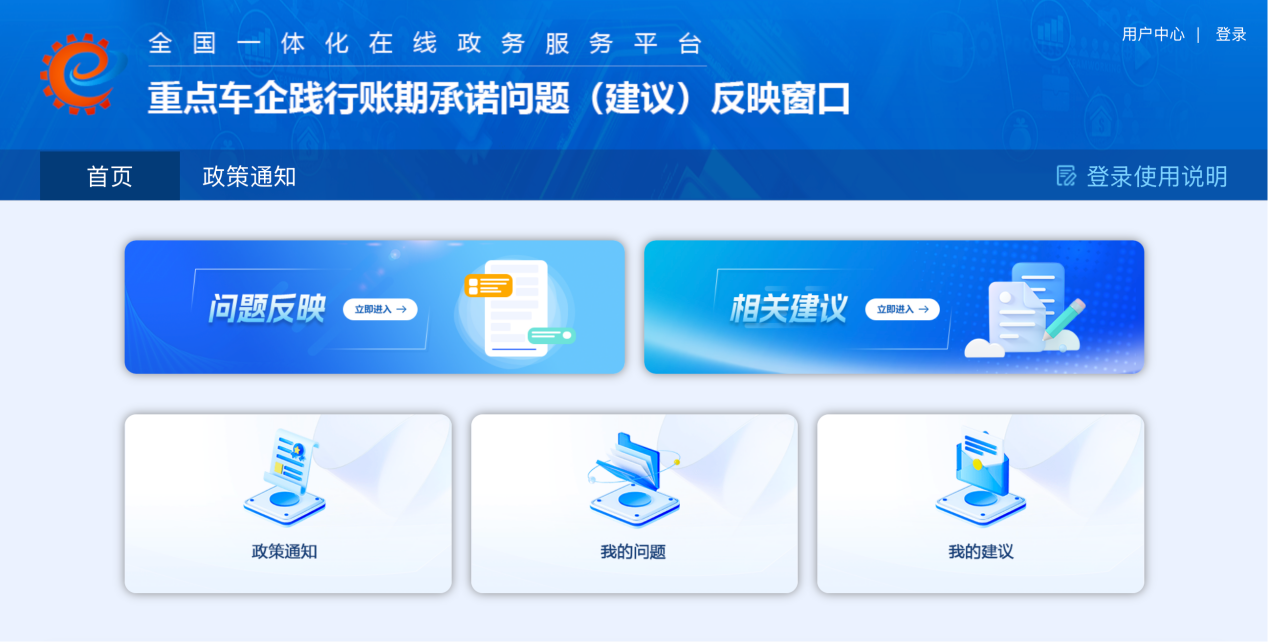
聚焦重点车企践行账期承诺,工业和信息化部上线问题反映窗口 工业和信息化部9日在"全国违约拖欠中小企业款项投诉平台"开通"重点车企践行账期承诺线上问题(建 议)反映窗口"(https://sme-dj.miit.gov.cn/car),受理中小企业关于重点车企践行货款支付周期承 诺和落实《保障中小企业款项支付条例》不力等问题的反映,协调相关方面推动解决。 记者了解到,窗口主要受理4类问题建议:一是重点车企未践行60天支付期限承诺,在采购合同中约定的 付款期限超过60天;二是重点车企设定不合理的支付期限起算时间、无正当理由拖延出具检验或验收合 格证明等方式变相延长支付期限,以及以收到第三方货款作为支付条件或按照第三方支付比例支付款项; 三是重点车企强制或变相强制中小企业接受商业汇票、应收账款电子凭证等非现金支付方式;四是重点车 企落实《保障中小企业款项支付条例》不力的其他问题。 近期,一汽、东风、广汽、赛力斯等17家重点车企作出"供应商支付账期不超过60天"的公开承诺,社会 反响良好,相关承诺如何进一步落实兑现备受社会关注。 工业和信息化部有关负责人表示,此次开通"重点车企践行账期承诺线上问题(建议)反映窗口", ...
事关重点车企!工信部上线账期问题反映窗口
证券时报· 2025-07-09 09:16
Core Viewpoint - The Ministry of Industry and Information Technology has launched an online feedback window to address issues related to payment cycles for small and medium-sized enterprises (SMEs) from key automotive companies, aiming to enhance the implementation of the "Regulations on Guaranteeing Payment to SMEs" [1][4]. Group 1: Issues Addressed - The feedback window will primarily handle four types of issues related to payment cycles and practices of key automotive companies [2][6]. - Key automotive companies, including FAW, Dongfeng, GAC, and Seres, have publicly committed to a payment cycle not exceeding 60 days, which has received positive social feedback [4][5]. Group 2: Objectives and Future Actions - The initiative aims to improve management processes and payment methods among key automotive companies, thereby enhancing the confidence and vitality of SMEs in the automotive industry [4][5]. - The Ministry plans to guide industry organizations in developing payment settlement standards and promoting contract templates to further standardize payment processes in the automotive sector [4][5]. Group 3: Importance of Payment Commitments - The commitment from automotive companies to a 60-day payment cycle is significant for fostering a collaborative ecosystem between complete vehicles and components, which is crucial for sustainable industry development [5][6]. - The automotive supply chain is described as the "muscle and blood" of the industry, and the increasing competition in the new energy vehicle market has led to longer payment cycles and financial difficulties for suppliers, hindering innovation and sustainable growth [5][6].

突发!汽车行业新风向
Wind万得· 2025-07-09 07:54
央视新闻报道,工业和信息化部 9 日开通了 " 重点车企践行账期承诺线上问题反映窗口 " ,受理中 小企业关于重点车企践行货款支付周期承诺和落实《保障中小企业款项支付条例》不力等问题。 工业和信息化部有关负责人表示,窗口主要受理 4 类问题: 中汽中心中国汽车战略与政策研究中心主任王铁:本次开通窗口的目标非常明确,目的就是要受理中小 企业收款周期的问题,推动重点车企改进管理流程、优化支付方式。这一举措通过打通中小企业诉求的 反馈渠道,督促重点车企履行账期承诺等方式,将有效推动《保障中小企业款项支付条例》落在实处, 增强中小企业的信心和发展活力,对构建更加健康、公平、诚信的汽车产业生态至关重要。 下一步,工业和信息化部将指导行业机构研究制定汽车行业结算支付规范,推行合同范本, 进一步规 范汽车企业供应商货款支付流程,推动构建"整车—零部件"协作共赢发展生态,促进汽车产业健康可持 续发展。 Wind用户在金融终端输入 IBR(投行业务排行榜) 纵观股票、债券一级承销风云 过去十年投行承销排名一应俱全 分行业、分地域多维度呈现市场融资规模 三是重点车企强制或变相强制中小企业接受商业汇票、应收账款电子凭证等非现金支付 ...
鸿蒙智行销售话语权“暗战”分流,华为终端与车BU博弈加剧
Hua Xia Shi Bao· 2025-07-09 07:50
Core Insights - Huawei's HarmonyOS automotive ecosystem is expanding, with the launch of the new vehicle brand "Xiangjie" and its dedicated sales outlets planned for this fall [1][3] - The internal competition and resource allocation among the various brands under HarmonyOS is becoming a critical challenge for Huawei [1][3][4] Sales Network Changes - The Xiangjie brand has introduced its hexagonal logo, aligning with other brands like Wenjie and Zhijie, and aims to create a unified identity for its models [2] - Currently, Huawei has partnered with five automotive manufacturers to develop five brands, with Xiangjie being the latest, having delivered 4,154 units of the S9 model in June, making it the best-selling electric vehicle over 300,000 yuan [2][4] Sales Strategy and Market Positioning - Xiangjie will have its own dedicated sales network, with plans to establish numerous user centers by the end of the year, covering over 90% of first, second, and third-tier cities [3] - The competition among the five brands under HarmonyOS is seen as a potential dilution of Huawei's sales influence, as each brand seeks to establish its own market presence [3][4] Product Differentiation and Pricing - The pricing strategy for the various brands shows overlap, with Xiangjie S9 priced above 300,000 yuan, while other models like Zhijie S7 and Wenjie start around 250,000 yuan [4] - The expansion of the five brands may lead to resource allocation challenges for Huawei, as the same technology needs to be adapted for different brand positions [4][6] Future Growth and Revenue Goals - Huawei aims to deliver 1 million vehicles this year, representing a 132% increase from last year's delivery of over 430,000 units [6] - The automotive business unit (BU) of Huawei is projected to achieve revenue of 26.353 billion yuan in 2024, marking a 474.4% year-on-year growth, primarily driven by technology licensing and sales sharing [6][7] Strategic Partnerships and Ecosystem Development - Huawei's automotive BU is evolving into a more independent entity, with the establishment of Shenzhen Yingwang Intelligent Technology Co., which aims to create a collaborative platform for multiple stakeholders [7] - The future dynamics between Huawei's terminal business and the newly independent Yingwang will be crucial for the development of the HarmonyOS automotive ecosystem [7]
东风汽车上半年出口超5万辆暴增75% 商用车表现如何?
第一商用车网· 2025-07-09 07:01
Core Viewpoint - Dongfeng Motor's export business showed strong performance in the first half of 2025, with significant year-on-year growth in both passenger and commercial vehicle exports. Group 1: Overall Export Performance - In the first half of 2025, Dongfeng exported a total of 50,711 vehicles, representing a year-on-year increase of 75% [1][5]. - In June alone, the company exported 13,460 vehicles, achieving a remarkable year-on-year growth of 109% [1][6]. Group 2: Passenger Vehicle Exports - From January to June, Dongfeng exported 38,804 passenger vehicles, marking a year-on-year increase of 105% [7]. - In June, the export volume of passenger vehicles reached 10,412 units, with a year-on-year growth of 122% [7]. Group 3: Commercial Vehicle Exports - In the first half of 2025, Dongfeng exported 11,907 commercial vehicles, which is a year-on-year increase of 19% [2][9]. - The export volume for commercial vehicles in June was 3,048 units, reflecting a year-on-year growth of 77% [2][9].


江淮霸榜 重汽返三甲 远程杀进前五 6月轻卡影响力格局再变 | 头条
第一商用车网· 2025-07-09 07:01
Core Viewpoint - The "Light Truck First Influence Index" for major domestic light truck brands shows a decline in scores, indicating a potential decrease in market influence and interest in the light truck sector [1][16]. Group 1: Influence Index and Rankings - In June 2025, the total score for the "Light Truck First Influence Index" was 1431, down 17.1% from May 2025 and down 4.8% year-on-year from June 2024 [1]. - The top three brands in the index are Jianghuai 1 Card, FAW Liberation Light Truck, and China National Heavy Duty Truck HOWO Light Truck, with scores of 306, 202, and 200 respectively [2][16]. Group 2: Brand Performance Highlights - Jianghuai 1 Card delivered 100 units of its new energy quality milk special vehicle to Kunming, showcasing its capabilities in cold chain logistics [8][20]. - FAW Liberation Light Truck signed a contract for 500 units of the Tiger 6G electric light truck, emphasizing its commitment to the new energy sector [21]. - China National Heavy Duty Truck HOWO launched a new CNG light truck product matrix, highlighting its technological advancements in green logistics [13][23]. - The Dongfeng Light Truck successfully delivered vehicles for the 618 shopping festival, focusing on user needs with its new model [25]. - The Remote Light Commercial Vehicle brand ranked fifth, showcasing its innovative ethanol-hydrogen electric light truck technology, which significantly reduces operational costs [27]. Group 3: Market Trends and Future Outlook - The light truck market is entering a traditional off-season, prompting brands to enhance their promotional efforts in July [29]. - The focus on new energy vehicles, product launches, and large orders remains a key trend in the industry, indicating a shift towards sustainable logistics solutions [4][20].



汽车早餐 | 东风汽车公布下半年销量目标;华为公布辅助驾驶专利;特斯拉全球最大超充站在加州落成
Zhong Guo Qi Che Bao Wang· 2025-07-09 03:00
Group 1: Domestic News - The average fuel consumption of Chinese passenger car companies decreased by 12.4% year-on-year, with an average of 3.31 liters per 100 kilometers in 2024 [2] - In June, the retail sales of new energy passenger vehicles in China reached 1.111 million units, a year-on-year increase of 29.7%, with a cumulative retail of 5.468 million units in the first half of the year, up 33.3% [4] - Dongfeng Motor Group announced a sales target of 1.88 million vehicles for the second half of the year, aiming for a total of 3 million vehicles for the year, with a specific target of 1 million for new energy vehicles [11] Group 2: International News - Daimler Trucks announced a new stock buyback plan worth up to €2 billion, set to begin in the second half of 2025 and last for no more than two years [6] - Nissan has decided to increase the total amount of its bonds maturing in 2031 from ¥150 billion to ¥200 billion [7] - Tesla has completed the construction of the world's largest supercharging station in California, named Project Oasis, featuring 84 charging spots [9] Group 3: Company Developments - BYD delivered its 90,000th new energy vehicle in Thailand, marking the first anniversary of its factory in the region [10] - Geely announced that its Galaxy A7 hybrid sedan will start pre-sales on July 11, with plans for a third-quarter launch [13] - NIO's sub-brand Firefly has partnered with HERE Maps to enhance its electric vehicle products and advanced driver assistance systems [14]





抓好市值管理,推动央企上市公司高质量发展
Zhong Guo Hua Gong Bao· 2025-07-09 02:44
Core Viewpoint - The introduction of the new market value management regulations has led to significant developments in investor relations management, with 644 listed companies implementing value management systems or valuation enhancement plans since November 2022 [1] Group 1: Current State of Central State-Owned Enterprises (SOEs) - As of 2024, 492 central SOEs account for 9.14% of A-share listed companies but contribute 36.32% of total market value, 43.74% of revenue, and 59.03% of net profit, highlighting their critical role in the national economy [1] - There is a notable disparity within central SOEs, with companies valued over 50 billion yuan contributing nearly 80% of market value and over 90% of net profit, while smaller companies (under 10 billion yuan) represent 36.79% of the total but only 2.82% of market value [2] Group 2: Challenges and Recommendations for Small and Medium-Sized SOEs - Small and medium-sized central SOEs face dual pressures on profitability and valuation, with challenges including outdated capital tools and insufficient innovation [2] - Recommendations for regulatory bodies include differentiated assessments focusing on R&D conversion rates for tech companies and flexible regulations for companies in economically challenged regions [2][3] Group 3: Strategies for Transformation - For tech companies, strategies include binding core technologies to teams, establishing innovation incubation mechanisms, and creating suitable incentive systems [3] - Traditional industries are encouraged to upgrade production capacity, integrate supply chains, and pursue asset securitization [3] - Public service companies should focus on value reconstruction, achieving ESG premiums, and transitioning to smart services [3] Group 4: Implementation of Capital Tools - Companies can create a collaborative matrix of capital tools such as buybacks, ESG disclosures, and supply chain integration to enhance market value management [4] - Successful case studies include improvements in R&D efficiency and valuation recovery through innovative practices [4] Group 5: Long-term Goals - Short-term goals include restoring the valuation of 30 underperforming companies to a price-to-book ratio of 1.0 and reducing the overall discount rate of central SOEs by 15% by 2026 [5] - Mid-term objectives aim for a 15% increase in buyback amounts and a 25% rise in institutional holdings in small and medium-sized SOEs by 2027 [5] - Long-term aspirations include achieving a 6% R&D intensity and surpassing 500 billion yuan in overall R&D investment by 2030, with a total market value of central SOEs exceeding 100 trillion yuan [5]