
中伟股份

Search documents
情系香江 爱满湘江!湘籍企业和企业家积极募捐驰援香港





Chang Sha Wan Bao· 2025-11-30 23:32
Core Viewpoint - The article highlights the collective efforts of Hunan enterprises and individuals in response to a significant fire incident in Hong Kong, showcasing solidarity and support for the affected community [1]. Group 1: Donations and Contributions - Multiple Hunan enterprises have actively participated in fundraising efforts, with the Hong Kong Hunan Association and 21 member organizations expected to donate 5 million HKD [2]. - Notable contributions include: - Lens Technology donating 13.1 million HKD - SANY Group donating 10 million HKD and providing energy equipment for emergency power supply - Afuni Future Capital donating 10 million HKD - Other companies like Zhongwei New Materials, Simore International, and Aier Eye Hospital each donating 5 million HKD [2]. - Additional donations include 2 million RMB from Yanjin Puzhi Food Co., 1 million HKD from Wanxing Technology, and 200,000 RMB from SHOWVEN [2]. Group 2: Individual Contributions - Several Hunan entrepreneurs have also made personal donations, including: - Hu Guoan, Vice President of the Hong Kong Hunan Association, donating 1 million RMB - Lian Zhen'en, Executive President of the association, donating 300,000 HKD - Other individuals contributing smaller amounts [3]. - SANY Group has activated a global disaster response mechanism to assist affected individuals [3]. Group 3: Call for Support and Initiatives - The Hong Kong Hunan Association has initiated a fundraising campaign, encouraging the community to donate cold-weather relief supplies and seek assistance if needed [4]. - The Changsha Municipal Federation of Industry and Commerce and the Changsha Guangcai Foundation have issued a call to action for local businesses to contribute to the relief efforts, emphasizing the importance of social responsibility [4].
30年铁律发威:这次突破不一样!
Sou Hu Cai Jing· 2025-11-27 22:45
最近固态电池板块的异军突起,让我想起三年前银行股启动时的场景。当时市场同样充斥着质疑声,但最终那些坚守量化数据、看懂机构行为的投资者,都 收获了丰厚的回报。如今历史似乎正在重演,只是这次的主角换成了固态电池。 一、固态电池的狂欢与隐忧 广汽集团全固态电池中试产线投产的消息,像一颗火星点燃了整个板块。联得装备、壹石通等个股纷纷涨停,市场热情高涨。但作为一个经历过多次产业变 革的老手,我更关心的是:这究竟是新一轮产业革命的起点,还是又一场资本游戏的开始? 国轩高科宣布"金石电池"进入中试量产阶段,贝特瑞开发出锂碳复合负极材料…这些技术突破确实令人振奋。但量化数据告诉我一个残酷的事实:大多数新 兴产业在资本市场的表现都是"先透支后还债"。就像当年的光伏、新能源汽车一样,初期总是伴随着过度炒作。 彭博新能源财经预测2035年固态电池渗透率仅5%-10%,这个数字与当前市场的狂热形成鲜明对比。更值得玩味的是,宁德时代和中伟股份对量产时间的判 断存在明显分歧——这往往意味着产业成熟度还远未达到市场预期。 二、突破行情的真假之辨 进入到11月之后,市场震荡明显加大。比起各种套牢,更让人纠结的是那些看似强势的突破行情。拿着怕 ...


百亿私募持仓变化透视分析
量化藏经阁· 2025-11-27 00:08
Core Insights - The article analyzes the changes in private equity fund holdings based on the top ten shareholders and circulating shareholders data, revealing significant shifts in stock positions among various sectors in Q3 2025 [1][2]. Private Equity Fund Holdings by Sector - In Q3 2025, the sectors with the highest number of stocks entering the top ten list by private equity managers were pharmaceuticals (18 stocks), basic chemicals (16 stocks), and electronics (15 stocks) [3]. - Compared to Q2 2025, there was an increase in stocks from the computer, pharmaceutical, and food and beverage sectors entering the top ten list, while the electronics, coal, and real estate sectors saw the most withdrawals [3]. Top 20 Stocks with Increased Holdings - The stocks with the highest increase in private equity fund holdings, measured by the proportion of total shares, predominantly came from the basic chemicals, pharmaceuticals, and electronics sectors [7]. - Notable stocks with the largest increase in private equity holdings included: - Darui Electronics (46.21% return) [8] - Zhongwei Co. (51.76% return) [8] - Guotou Power (−8.70% return) [8] - Yangjie Technology (34.64% return) [8] - Daqin Railway (−8.85% return) [8]. Top 20 Stocks with Decreased Holdings - The stocks with the largest decrease in private equity fund holdings were also concentrated in the pharmaceuticals, electronics, and basic chemicals sectors [9]. - Key stocks with the most significant reductions in private equity holdings included: - Lexin Technology (48.43% return) [9] - Dongcheng Pharmaceutical (5.63% return) [9] - Longbai Group (20.05% return) [9] - Zhenlei Technology (40.25% return) [9] - Shengxiang Biology (4.71% return) [9]. Individual Fund Manager Activities - Fund managers such as Ying Shui, Feng Liu, Ren Qiao, and others made notable adjustments to their portfolios in Q3 2025, increasing holdings in various stocks while reducing others [10][12][14][17][19][21]. - For instance, Feng Liu increased holdings in Zhongwei Co., Ruifeng New Materials, and Dongfulong while decreasing positions in Dongcheng Pharmaceutical and Longbai Group [12]. Summary of Fund Manager Adjustments - Ying Shui increased holdings in Xianle Health and reduced positions in Shengxiang Biology and Fangbang Co. [10]. - Feng Liu raised stakes in Zhongwei Co. and Ruifeng New Materials while cutting back on Dongcheng Pharmaceutical [12]. - Ren Qiao increased holdings in Jin Yu Medical and reduced positions in Xin Jing Dian and Xiao Fang Pharmaceutical [14]. - Other managers like Guo Feng Xinghua and Chongyang also adjusted their portfolios, increasing stakes in stocks like Guotou Power and Daqin Railway [17].




金融工程专题研究:百亿私募2025年三季度持仓变化透视分析
Guoxin Securities· 2025-11-26 15:16
Group 1 - The report analyzes the changes in private equity fund holdings for the third quarter of 2025, highlighting the difficulty in obtaining direct data due to the lack of mandatory disclosures by private funds [1][9]. - The sectors with the highest number of stocks entering the top ten list by private equity managers in Q3 2025 are pharmaceuticals, basic chemicals, and electronics, with respective counts of 18, 16, and 15 [2][12]. - The report identifies the top 20 stocks with the highest increase in holding ratios by private equity managers, predominantly in the basic chemicals, pharmaceuticals, and electronics sectors [3][16]. Group 2 - The report provides a detailed analysis of the top 20 stocks with the largest increase in holding ratios, including stocks like Darui Electronics and Zhongwei Co., with respective increases of 2.41% and 2.29% [17]. - Conversely, the report lists the top 20 stocks with the largest decrease in holding ratios, with notable reductions in stocks such as Lexin Technology and Dongcheng Pharmaceutical, showing decreases of -2.20% and -2.12% respectively [19]. - The report also highlights specific private equity managers and their respective changes in stock holdings, such as Yingshui increasing its stake in Xianle Health and reducing its stake in Shengxiang Biology [20][24].
广发早知道:汇总版-20251126
Guang Fa Qi Huo· 2025-11-26 03:04
1. Report Industry Investment Rating There is no information provided regarding the report industry investment rating. 2. Core Views of the Report - The domestic stock index shows strong resilience, and it is recommended to wait for stabilization with reduced volatility. It is advisable to mainly observe the market due to the ongoing repricing adjustment of A - shares after the third - quarter reports, with limited downside risks and shrinking trading volume [4]. - For treasury bonds, the long - term bond is affected by the expected implementation of the new regulations on bond fund redemptions, and the curve slightly steepens. A range - bound operation is recommended for the unilateral strategy, and short - position investors can accelerate the position - shifting pace. Attention should be paid to the cash - and - carry strategy for the 2603 contract [6]. - For precious metals, the medium - to - long - term bull market of precious metals is expected to continue. Gold is currently oscillating in the range of $4050 - 4150, and silver is fluctuating in the range of $50 - 52.5. Short - term investors can try to go long on silver if the price rises [10]. - The shipping index (European line) is expected to decline in the short term [11]. - For base metals, the prices of most metals are expected to maintain an oscillating pattern, with different influencing factors and price ranges for each metal [12][15][18][20][23][26][30][33][37][41][43]. - For black metals, steel prices are expected to oscillate within a range, iron ore is expected to oscillate with a slight upward trend, and coking coal and coke are expected to oscillate with a downward trend [48][50][53][57]. - For agricultural products, the domestic soybean meal supply is abundant, and the cost side lacks substantial positive factors [58]. 3. Summary by Relevant Catalogs Financial Derivatives - Financial Futures Stock Index Futures - **Market Conditions**: On Tuesday, A - share major indices opened higher and the market recovered. The Shanghai Composite Index rose 0.87% to 3870.02 points. The four major stock index futures contracts all rose, and the basis discount of the main contracts was repaired [2][3]. - **News**: Domestically, the leaders of China and the US had a phone call, and the situation of Sino - US relations was discussed. Overseas, the US was making progress in promoting the end of the Russia - Ukraine conflict [3][4]. - **Funding**: On November 25, the A - share market trading volume increased slightly compared to the previous day. The central bank conducted 3021 billion yuan of 7 - day reverse repurchase operations, with a net withdrawal of 1054 billion yuan [4]. - **Operation Suggestion**: The domestic stock index is resilient. It is recommended to wait for stabilization with reduced volatility and mainly observe the market [4]. Treasury Bond Futures - **Market Performance**: Treasury bond futures mostly closed down. The 30 - year and 10 - year main contracts declined, while the 2 - year main contract rose slightly [5]. - **Funding**: The central bank conducted 3021 billion yuan of 7 - day reverse repurchase operations and 1 trillion yuan of 1 - year MLF operations, with a net MLF injection of 100 billion yuan in November [5][6]. - **Operation Suggestion**: The bond market is in a range - bound stage. A range - bound operation is recommended for the unilateral strategy, and short - position investors can accelerate the position - shifting pace. Attention should be paid to the cash - and - carry strategy for the 2603 contract [6]. Financial Derivatives - Precious Metals - **Market Review**: US economic data showed divergence. Retail sales growth slowed down, PPI inflation rose, and private - sector employment decreased. The Fed official supported interest - rate cuts, and the market was cautious, with precious metals oscillating [7][8][9]. - **Outlook**: The long - term bull market of precious metals is expected to continue. Gold is oscillating in the range of $4050 - 4150, and silver is fluctuating in the range of $50 - 52.5. Short - term investors can try to go long on silver if the price rises [10]. - **Funding**: The gold ETF changed little, but the silver ETF had a large - scale inflow of over 250 tons [10]. Financial Derivatives - Shipping Index (European Line) - **Shipping Index**: As of November 24, the SCFIS European line index rose 20.7% month - on - month, while the US West route index fell 10.5% month - on - month. As of November 21, the SCFI composite index fell 4% month - on - month [11]. - **Fundamentals**: As of November 20, the global container shipping capacity increased by 7.17% year - on - year. The eurozone's October composite PMI was 52.2, and the US October manufacturing PMI was 48.7 [11]. - **Logic**: The futures market oscillated, and the spot market was weak. The main 02 contract fell 7.78% [11]. - **Operation Suggestion**: It is expected to decline in the short term [11]. Commodity Futures - Non - ferrous Metals Copper - **Spot**: As of November 25, the average price of SMM electrolytic copper and SMM Guangdong electrolytic copper increased, while the average premium decreased. Downstream demand returned to the rigid - demand procurement stage [12]. - **Macro**: Ukraine has basically agreed to the peace agreement proposed by the US, and the probability of a 25 - basis - point interest - rate cut in December has returned to 80% [12]. - **Supply**: The spot TC of copper concentrate is at a low level. In October, the output of electrolytic copper decreased month - on - month, and it is expected to decline slightly in November [12][13]. - **Demand**: The weekly operating rate of electrolytic copper rod increased, and the downstream demand showed strong resilience [13]. - **Inventory**: LME and COMEX copper inventories increased, while the domestic social inventory decreased [14]. - **Logic**: The probability of a December interest - rate cut has increased, and copper prices slightly rose and then fell. In the medium - to - long - term, the supply - demand contradiction supports the upward movement of copper prices [15]. - **Operation Suggestion**: The main contract is expected to oscillate between 85500 - 87500 yuan/ton [15]. Alumina - **Spot**: On November 25, the spot prices of alumina in various regions remained unchanged. The supply pattern is gradually loosening, and the spot price is under pressure [15]. - **Supply**: In October 2025, the output of metallurgical - grade alumina increased year - on - year. It is expected that the supply will remain in surplus in November, and high - cost enterprises may reduce production [16]. - **Inventory**: The port inventory and factory inventory decreased, while the electrolytic aluminum factory inventory increased. The total registered warehouse receipts decreased [16]. - **Logic**: The market oscillated at a low level, and the supply showed signs of contraction. The overall inventory accumulation rate slowed down, and the market may bottom out and oscillate [17]. - **Operation Suggestion**: The main contract is expected to operate between 2700 - 2850 yuan/ton [17]. Aluminum - **Spot**: On November 25, the average price of SMM A00 aluminum increased, and the premium decreased. Market activity and actual transactions increased after the price decline [18]. - **Supply**: In October 2025, the domestic electrolytic aluminum output increased year - on - year and month - on - month. It is expected that the daily output of aluminum ingots may slightly decline in November [18]. - **Demand**: The weekly operating rates of aluminum processing products were divided. High prices restricted downstream demand [18]. - **Inventory**: The domestic mainstream consumption area inventory and LME inventory decreased [19]. - **Logic**: The market showed a high - level position - reduction and correction trend, with a combination of positive and negative factors in the macro and fundamental aspects. It is expected to oscillate at a high level [19]. - **Operation Suggestion**: The main contract is expected to operate between 21100 - 21700 yuan/ton. If the position continues to be reduced, there may be further downward space in the short term [19]. Aluminum Alloy - **Spot**: On November 25, the average prices of SMM aluminum alloy ADC12 in various regions remained unchanged [20]. - **Supply**: In October, the output of recycled aluminum alloy ingots decreased, and the operating rate decreased. It is expected that the operating rate will continue to decline slightly in November due to the shortage of scrap aluminum [20]. - **Demand**: The traditional automobile consumption season is in progress, but the demand transmission is not smooth, and high prices suppress downstream procurement [20]. - **Inventory**: The social inventory and registered warehouse receipts increased [21]. - **Logic**: The market showed a high - level correction trend. The cost side was strongly supported, and the supply was restricted by raw materials. The demand was affected by high prices. It is expected to oscillate in the short term [21]. - **Operation Suggestion**: The main contract is expected to operate between 20300 - 20900 yuan/ton. An arbitrage strategy of going long on AD02 and short on AL02 can be considered when the spread is above 650 [22]. Zinc - **Spot**: On November 25, the average price of SMM 0 zinc ingot increased. The spot purchase was still based on demand, and the transaction was average [23]. - **Supply**: The processing fees of domestic and imported zinc concentrates decreased, and the profit of smelters was compressed. It is expected that the output of refined zinc will decline in November [24]. - **Demand**: The spot premium increased. The operating rates of the three primary processing industries were basically stable, and the downstream purchased on dips. The export space was opened, which may boost the domestic zinc price [25]. - **Inventory**: The domestic social inventory decreased, and the LME inventory increased [25]. - **Logic**: The fundamentals changed little, and the zinc price oscillated. The supply pressure was relieved, and the demand improved structurally. It is expected to continue to oscillate [26]. - **Operation Suggestion**: The main contract is expected to oscillate between 22200 - 22800 yuan/ton [26]. Tin - **Spot**: On November 25, the price of SMM 1 tin increased, and the premium remained unchanged. The market transaction was light [26]. - **Supply**: In October, the import volume of tin ore and tin ingot showed different trends. It is expected that the import volume of tin ore from Myanmar will increase in November, and the import volume of tin ingot will remain at a low level [27][28]. - **Demand and Inventory**: In October, the operating rate of solder decreased. The inventory of LME and the social inventory increased [29]. - **Logic**: The supply of tin ore is tight, and the demand in South China is relatively stable. It is recommended to maintain a long - position on tin due to strong fundamentals [30]. - **Operation Suggestion**: A strategy of buying on dips is recommended [30]. Nickel - **Spot**: As of November 25, the average price of SMM1 electrolytic nickel increased. The supply of refined nickel decreased, and it was difficult to find discounted spot goods [30]. - **Supply**: In the capacity expansion cycle, the output of refined nickel is expected to decrease month - on - month but remains at a high level [31]. - **Demand**: The demand for electroplating is stable, the demand for alloys is good, the demand for stainless steel is average, and the demand for nickel sulfate has short - term support [31]. - **Inventory**: The domestic and overseas inventories are at a high level, and the bonded - area inventory is stable [31]. - **Logic**: The market oscillated and recovered. The upstream production reduction and low valuation drove the market. The macro situation is temporarily stable, and the fundamentals are weak. It is expected to oscillate and recover [32][33]. - **Operation Suggestion**: The main contract is expected to oscillate between 116000 - 120000 yuan/ton [33]. Stainless Steel - **Spot**: As of November 25, the prices of Wuxi Hongwang and Foshan Hongwang 304 cold - rolled stainless steel were stable or increased, and the basis decreased [33]. - **Raw Materials**: The nickel ore market is stable, the price of nickel iron is under pressure, and the cost support of chromium iron is weakening [34]. - **Supply**: In October, the output of stainless steel increased. In November, the production is expected to decrease slightly. The supply pressure is still high [35]. - **Inventory**: The social inventory decreased slowly, and the warehouse receipts decreased [35]. - **Logic**: The market slightly rose, and the spot market purchase price was stable. The macro situation is temporarily stable, the raw material cost support is weakening, and the supply pressure remains. It is expected to oscillate [36]. - **Operation Suggestion**: The main contract is expected to operate between 12300 - 12700 yuan/ton [37]. Lithium Carbonate - **Spot**: As of November 25, the spot prices of battery - grade and industrial - grade lithium carbonate decreased slightly. The trade volume improved but was still average [37]. - **Supply**: In October, the output of lithium carbonate increased. The supply is expected to increase, mainly driven by the increase in lithium extraction from spodumene [37]. - **Demand**: The demand is optimistic. The production schedules of lithium iron phosphate and ternary materials are expected to increase month - on - month [38][39]. - **Inventory**: The total inventory decreased, and the inventory of smelters and downstream decreased, while the inventory of other links increased [39]. - **Logic**: The market was strong. The industry is optimistic about next year, and the market sentiment is bullish. The fundamentals remain strong, and the inventory is decreasing. It is expected to oscillate and adjust in the short term [40]. - **Operation Suggestion**: It is recommended to mainly observe the market [41]. Polysilicon - **Spot Price**: On November 25, the spot prices of polysilicon remained unchanged [41]. - **Supply**: In November, the domestic output of polysilicon is expected to decrease to about 120,000 tons. It is expected to increase to about 123,000 tons in December [41]. - **Demand**: The downstream demand is expected to decline month - on - month, and each link has an expectation of inventory accumulation [42]. - **Inventory**: The inventory increased by 4000 tons to 271,000 tons, and the warehouse receipts decreased [42]. - **Logic**: The spot price is stable, the futures price oscillated and rose, and the backwardation structure deepened. It is expected to oscillate at a high level [43]. - **Operation Suggestion**: It is expected to oscillate between 50000 - 58000 yuan/ton [43]. Industrial Silicon - **Spot Price**: On November 25, the spot prices of industrial silicon in various regions remained unchanged [43]. - **Supply**: In November, the output of industrial silicon is expected to decrease to about 400,000 tons, mainly due to the production reduction in Southwest China [44]. - **Demand**: The demand is not optimistic. The production of polysilicon and organic silicon is expected to decrease, while the demand for aluminum alloy is good [44]. - **Inventory**: The futures warehouse receipts decreased, while the factory inventory and social inventory increased slightly [44]. - **Logic**: The spot price is stable, and the futures price oscillated. The supply and demand are both decreasing, and there is still pressure on inventory accumulation. It is expected to oscillate at a low level [45]. - **Operation Suggestion**: It is expected to oscillate between 8500 - 9500 yuan/ton [45]. Commodity Futures - Ferrous Metals Steel - **Spot**: The futures market strengthened, and the spot price followed. The basis of rebar weakened, and the basis of hot - rolled coil remained stable [45]. - **Cost and Profit**: The prices of coking coal and coke decreased, and the price of iron ore was relatively stable. The profit of steel mills was slightly repaired but is expected to remain at a low level [46]. - **Supply**: From January to October, the output of iron elements increased year - on - year. Recently, the molten iron output decreased, and the output of five major steel products increased [46]. - **Demand**: The domestic demand is weak, and the export is at a high level. The apparent demand in November increased compared to October [46]. - **Inventory**: The inventory of five major steel products decreased rapidly, and the inventory reduction is expected to continue [47]. - **View**: It is expected that the steel price will oscillate within a range. The rebar is expected to oscillate between 3000 - 3200 yuan/ton, and the hot - rolled coil is expected to oscillate between 3250 - 3400 yuan/ton [48]. Iron Ore - **Spot**: As of November 25, the prices of mainstream iron ore
盐湖提锂板块震荡下跌 倍杰特、争光股份跌超6%
Mei Ri Jing Ji Xin Wen· 2025-11-26 02:28
Core Viewpoint - The lithium extraction sector in the salt lake region is experiencing significant volatility, with several companies seeing substantial declines in their stock prices [1] Company Performance - Beijite and Zhengguang Co. both experienced declines exceeding 6% [1] - Other companies such as China Electric Environmental Protection, Jiuwu High-Tech, Zhongwei Co., Walton Technology, and Guoji General also saw their stock prices decrease [1]




为绿色项目出海提供风险保障
Jin Rong Shi Bao· 2025-11-26 02:25
Core Insights - The successful export of wind power equipment by Envision Energy is supported by significant financial backing from China Export & Credit Insurance Corporation (Sinosure), which provided a $100 million guarantee and helped enhance the company's internal risk management system [1] - Sinosure has been actively involved in supporting green finance initiatives since 2016, focusing on sectors such as energy conservation, green energy, and green transportation, and has developed a diversified insurance scheme to support Jiangsu enterprises in international markets [1][2] - In 2023, Sinosure's support for green trade and project insurance has reached $42.77 billion, showcasing the growing importance of green finance in international projects [2] Financial Support and Risk Management - Sinosure has tailored insurance solutions for various projects, including a customized overseas investment insurance plan for a digital energy company entering the U.S. market and an innovative full credit letter payment model for a solar power project in Ghana [2][3] - The company has developed a comprehensive financing insurance solution that integrates multiple products, helping projects secure approximately $200 million in financing at lower costs than market rates [3] - Sinosure has established a dynamic risk assessment system to provide customized services such as credit investigation and industry risk analysis, acting as a "frontline" for overseas risk management for enterprises [3][4] Project Highlights - The successful financing of a nickel material production line project in Morocco marks a significant achievement for Sinosure, enabling the establishment of a renewable materials base that will supply materials for nearly one million electric vehicles [3] - The project involved collaboration with seven banks from China, Europe, and Africa to provide stable and reliable long-term financing support, addressing challenges related to complex business contracts and financing coordination [4]
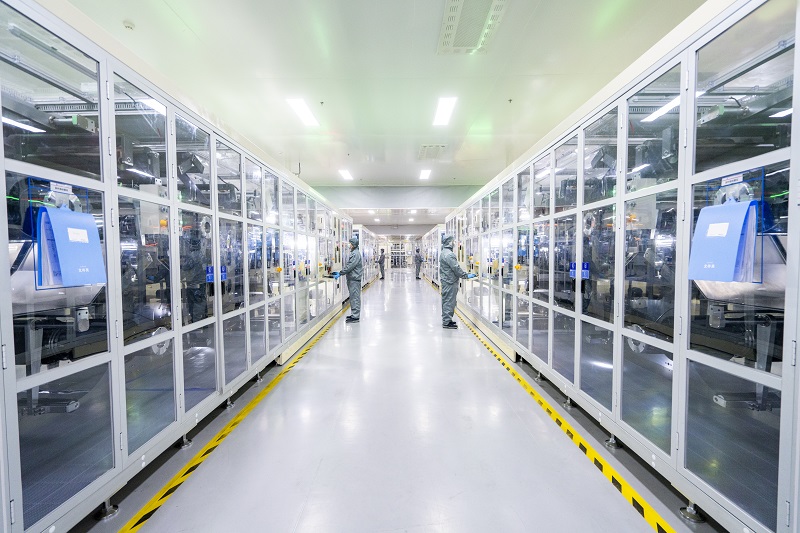
破尽密度千层障 筑实量产万里途—— 固态电池商业化破局开启全球竞速
Zhong Guo Zheng Quan Bao· 2025-11-26 00:25
Core Insights - The development of battery technology is primarily driven by energy density, which affects battery size and range, with solid-state batteries seen as the ultimate solution to current limitations [2][3] - Solid-state batteries are expected to significantly outperform traditional lithium-ion batteries in terms of energy density, safety, and cycle life, with laboratory results showing energy densities exceeding 400Wh/kg and potential theoretical values reaching 900Wh/kg [3][4] - Despite the promising outlook, the commercialization of solid-state batteries faces numerous challenges, including technical hurdles, manufacturing processes, and cost issues [5][6] Group 1: Current State of Battery Technology - The mainstream lithium-ion battery technology is approaching its energy density limits, necessitating breakthroughs in solid-state battery technology [1][2] - Solid-state batteries replace liquid electrolytes with solid electrolytes, addressing many safety concerns associated with liquid batteries [2][3] - The energy density of current lithium iron phosphate batteries is around 200Wh/kg, while high-nickel ternary materials reach about 300Wh/kg, indicating the need for new materials to push beyond these limits [2] Group 2: Advantages of Solid-State Batteries - Solid-state batteries offer three main advantages: higher energy density, improved safety due to non-flammable solid electrolytes, and longer cycle life, potentially exceeding 10,000 cycles compared to over 2,000 for liquid batteries [3][4] - The theoretical energy density of solid-state batteries can significantly surpass that of current lithium-ion batteries, making them a key focus for future development [3][4] Group 3: Challenges to Commercialization - The path to large-scale production of solid-state batteries is fraught with challenges, including the need for advancements in manufacturing processes and the high cost of raw materials [5][6] - Current production capabilities are limited, and achieving cost-effective, automated manufacturing processes remains a significant hurdle [6][8] - The solid-solid interface contact issues present a major technical challenge that must be resolved for successful commercialization [5][6] Group 4: Global Competition and Strategic Focus - Countries like Japan and South Korea are heavily investing in solid-state battery technology to catch up in the electric vehicle market, with various strategies and technological focuses [9][10] - The global landscape for solid-state battery development is competitive, with different regions prioritizing various technological pathways, including sulfide, oxide, and polymer electrolytes [9][10] - Collaborative efforts among large enterprises and small companies are encouraged to accelerate the development and commercialization of solid-state battery technologies [11]
破尽密度千层障 筑实量产万里途——固态电池商业化破局开启全球竞速
Zhong Guo Zheng Quan Bao· 2025-11-25 22:30
Core Insights - The demand for longer range and higher safety in electric vehicles is driving the evolution of battery technology, with solid-state batteries seen as a promising breakthrough to overcome current energy density limitations [1][2] - Solid-state batteries are viewed as the ultimate solution for addressing range anxiety and safety concerns in electric vehicles, with significant advantages over traditional liquid lithium-ion batteries [3][4] Energy Density and Performance - Current lithium iron phosphate batteries achieve energy densities of 200 Wh/kg, while high-nickel ternary materials reach around 300 Wh/kg, nearing the limits of liquid lithium batteries [2] - Solid-state batteries can exceed 400 Wh/kg in laboratory settings, with some samples surpassing 500 Wh/kg, and theoretical limits reaching up to 900 Wh/kg [3] Safety and Longevity - Solid-state batteries offer higher safety due to the use of non-flammable solid electrolytes, which mitigate risks associated with liquid electrolytes [3] - The theoretical cycle life of solid-state batteries can exceed 10,000 cycles, significantly improving lifecycle cost compared to liquid lithium batteries, which typically last over 2,000 cycles [3] Commercialization Challenges - The path to large-scale commercialization of solid-state batteries is fraught with challenges, including technical hurdles, manufacturing processes, and cost considerations [5][6] - The first domestic large-capacity solid-state battery production line is expected to begin mass production between 2027 and 2030, but significant obstacles remain [5] Global Competition and Strategies - Countries like the EU, US, Japan, and South Korea are heavily investing in solid-state battery technology, with various strategic initiatives aimed at enhancing battery durability and reliability by 2030 [7][8] - Different countries are focusing on various technological routes, with Japan and South Korea leading in sulfide solid-state batteries, while the US and Europe are more focused on oxide and polymer routes [8][9] Material and Production Considerations - The production of solid-state batteries involves complex choices regarding materials and techniques, with a need for cost-effective and rapid industrialization pathways [6][9] - Composite electrolyte solutions are expected to become mainstream, as no single electrolyte can address all challenges faced by solid-state batteries [9] Collaborative Innovation - To capture the competitive edge in the global new energy market, there is a call for large enterprises to lead innovation consortia and for small to medium enterprises to engage in common technology research [10]
破尽密度千层障 筑实量产万里途
Zhong Guo Zheng Quan Bao· 2025-11-25 20:27
Core Viewpoint - The development of solid-state batteries is seen as a promising solution to enhance energy density and safety in electric vehicles, although significant challenges remain before large-scale commercialization can be achieved [1][2][3]. Industry Overview - The mainstream liquid lithium-ion battery technology is nearing its energy density limit, necessitating breakthroughs in battery technology [1]. - Solid-state batteries are viewed as the ultimate form of lithium batteries, addressing concerns related to range anxiety and safety [2][3]. Technical Advantages - Solid-state batteries can achieve energy densities exceeding 400Wh/kg in laboratory settings, with some samples surpassing 500Wh/kg, compared to the 160-300Wh/kg of current mainstream liquid lithium-ion batteries [3]. - They offer higher safety due to the use of non-flammable solid electrolytes, which mitigate issues like corrosion and leakage found in liquid electrolytes [3]. - The theoretical cycle life of solid-state batteries can exceed 10,000 cycles, significantly reducing the lifecycle costs compared to liquid lithium batteries, which typically last over 2,000 cycles [3]. Current Developments - Major automotive companies are actively researching new composite solid-state batteries to enhance performance metrics such as internal resistance and charging speed [4]. - The first domestic large-capacity solid-state battery production line has been established, with plans for gradual mass production between 2027 and 2030 [4]. Challenges to Commercialization - Solid-state batteries face multiple hurdles, including technological, manufacturing, and cost-related challenges that must be overcome before they can be commercially viable [1][4][6]. - The production process for solid-state batteries is complex, with significant investment required for specialized equipment and a need for automated production capabilities [6][8]. Global Competition - Countries like the EU, the US, Japan, and South Korea are heavily investing in solid-state battery technology, with various strategic initiatives aimed at accelerating development [7][8]. - Different regions are focusing on various technological routes, with Japan and South Korea leading in sulfide solid-state batteries, while the US and Europe are primarily exploring oxide and polymer routes [8]. Future Outlook - The solid-state battery industry is expected to grow significantly, driven by policy support and market demand for safer and more efficient energy storage solutions [1][7]. - Collaboration between large enterprises and small companies is encouraged to foster innovation and expedite the transition from research to practical applications [9][10].