
银河航天

Search documents
加快培育高质量发展新动能
Ren Min Ri Bao· 2025-08-14 22:10
Group 1: Core Insights - The article emphasizes the necessity of high-quality development driven by innovation and new production capabilities, highlighting the importance of technology and industry integration [1][3][7] - Recent advancements in solid-state battery research in China indicate a significant shift towards practical applications, showcasing the country's commitment to technological innovation [2][8] Group 2: Technological Advancements - China's R&D expenditure as a percentage of GDP is nearing 2.7%, surpassing the EU average and approaching the OECD average, reflecting a robust investment in innovation [2] - The number of valid invention patents in China reached 5.01 million by June 2023, marking a 13.2% year-on-year increase, indicating a strong growth in intellectual property [2] Group 3: Industry Development - The establishment of innovation platforms like "Keda Silicon Valley" has led to the gathering of over 7,000 tech companies and a total investment fund scale exceeding 250 billion yuan [4] - The acceleration of technology transfer is evident, with nearly 410,000 technology contracts registered nationwide in the first half of the year, achieving a transaction value exceeding 3 trillion yuan, a 14.2% increase year-on-year [5] Group 4: Economic Growth and New Industries - The commercial aerospace sector in China is experiencing a dual breakthrough in technology and scale, with over 500 commercial aerospace companies and a market size expected to exceed 2.5 trillion yuan this year [8] - The high-tech manufacturing sector's value added increased by 9.5% year-on-year in the first half of the year, contributing to a 1.5 percentage point growth in overall industrial value added [8] Group 5: Urban Development and Consumer Trends - Urban renewal initiatives are enhancing city functions and quality, with innovative projects like AR technology in Taizhou attracting significant foot traffic [12][13] - The retail sector is witnessing a shift towards service consumption, with service retail sales growing by 5.3% year-on-year in the first half of the year, driven by tourism and entertainment [10]
资本与产业双驱 万亿商业航天爆发
2 1 Shi Ji Jing Ji Bao Dao· 2025-08-14 15:43
Core Viewpoint - The commercial aerospace industry in China is experiencing rapid growth and investment opportunities, driven by increased launch frequency, new IPO policies, and advancements in satellite technology [1][3][8]. Group 1: Industry Developments - The successful launch of the low-orbit satellite group on August 13 marks a significant milestone in China's commercial aerospace sector [1]. - In August, the Hainan commercial space launch site achieved a record of consecutive launches, contributing to a market scale of 2.8 trillion yuan for commercial aerospace [1]. - The number of space launches in China has reached new highs, surpassing the same period last year, with multiple new rocket models planned for their first flights by 2025 [1]. Group 2: Investment Trends - The recent IPO policy changes by the China Securities Regulatory Commission (CSRC) have heightened market interest in the commercial aerospace sector, leading to a continuous rise in the commercial aerospace index [3][6]. - The Tianhong Aerospace ETF has seen significant net inflows, with over 30 million shares purchased, indicating strong investor interest [2]. Group 3: Company Highlights - Three commercial aerospace companies, Blue Arrow Aerospace, Yixin Aerospace, and China Aerospace Science and Technology Corporation, have initiated IPO processes, showcasing the industry's growth potential [4]. - Blue Arrow Aerospace is recognized for its vertical recovery technology and plans to launch its reusable rocket, Zhuque-3, this year [4]. - Yixin Aerospace specializes in satellite communication payloads, achieving significant weight and power efficiency improvements [4]. - China Aerospace Science and Technology Corporation is a mixed-ownership model representing the "national team" in commercial aerospace, with plans for its liquid rocket to launch by the end of August [4]. Group 4: Market Valuations - The combined valuation of the highlighted commercial aerospace companies exceeds 50 billion yuan, with Blue Arrow Aerospace valued at 20 billion yuan and Yixin Aerospace at over 8 billion yuan [5][6]. - The stock of Star Map Control, the first commercial aerospace company listed on the Beijing Stock Exchange, has seen a remarkable increase of over 900% since its IPO [6]. Group 5: Future Outlook - The commercial aerospace sector is transitioning from experimental phases to industrialization, with a significant increase in satellite launches and a projected deployment of approximately 1,300 satellites by 2030 [8]. - Analysts predict that the demand for satellite services will drive down costs and improve profitability for upstream component manufacturers [9]. - The integration of commercial aerospace with other sectors, such as smart driving and artificial intelligence, is expected to enhance growth opportunities for companies involved in these technologies [11].
政策聚合发力 数字经济加快成长为驱动经济增长的“新引擎”
Xin Hua Wang· 2025-08-12 06:15
Group 1 - The digital economy is emerging as a new engine for economic growth in China, driven by favorable policies and rapid innovation [1][2] - The National Development and Reform Commission (NDRC) is focusing on strengthening the digital economy and smart manufacturing, aiming to create internationally competitive strategic emerging industry clusters [2][5] - The "East Data West Computing" project is progressing rapidly, with all eight national computing hub nodes under construction, and is expected to attract over 3 trillion yuan in investment during the 14th Five-Year Plan period [3][4] Group 2 - In 2022, China's digital economy exceeded 50 trillion yuan, accounting for over 40% of GDP, and is projected to continue growing at a high rate [4] - The concept of "computing power economy" is gaining traction, with estimates suggesting it could reach a trillion-level scale, driven by the development of computing factories [3][5] - Various departments and local governments are actively supporting the digital economy, with initiatives aimed at integrating digital technology with traditional industries [5]
中国经济圆桌会丨银河航天:科技和产业“双链”融合,建设科技强国未来可期
Xin Hua Wang· 2025-08-12 06:10
新华社北京7月28日电(记者宋晨)银河航天联合创始人、副总裁高千峰在新华社28日推出的"中国经济 圆桌会"大型全媒体访谈节目中表示,当前,我国科技和产业"双链"不断深化融合,全国统一大市场建 设持续向纵深推进,建设科技强国,未来可期。 目前,银河航天已组建了我国首个低轨宽带通信试验星座,构建星地融合试验网络"小蜘蛛网"。 通过校企合作,形成科技创新和产业创新的合力,是银河航天发展天地融合网络技术的秘诀。 "我们与北京邮电大学成立联合实验室,对海量终端直连接入、星上信息智能处理等进行充分验证。"高 千峰说,学校积累的创新技术可在银河航天的试验网络里进行验证和使用,同时也是对未来使用场景和 技术融合进行相应的探索与实践。 回望来时路,高千峰感慨,从2018年银河航天成立至今,很多成绩都离不开全国统一大市场和开放合作 的创新生态。"创业的时候,我们只有100多家合作伙伴,而现在整个供应链上已有1000多家。" 从100到1000,不只是数字的线性增长,更是产学研携手共绘的立体"画卷"。高千峰表示,近年来,有 大量充满活力的合作伙伴参与进来,在整个生态合作的过程中做了很多融合创新,这里面有大学与科研 院所,也有相关企 ...
中国经济圆桌会|创新是核心的动力
Xin Hua Wang· 2025-08-12 06:10
Group 1 - The core viewpoint expressed by the co-founder and vice president of Galaxy Space, Gao Qianfeng, is that innovation is the central driving force for the company [1]
造星青年勇攀航天科技高峰
Bei Jing Qing Nian Bao· 2025-08-07 12:09
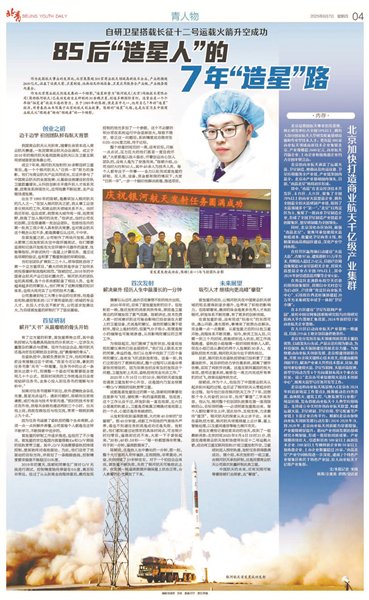
Group 1 - The core viewpoint of the article highlights Beijing's status as the birthplace of China's aerospace industry, housing over 300 high-tech enterprises in the commercial aerospace sector, with an industry scale exceeding 260 billion yuan [2] - Founded in 2018, Galaxy Space is recognized as China's first unicorn company in the commercial aerospace and satellite internet fields, having launched over 30 self-developed satellites in seven years [2] - The article emphasizes the transformation of China's commercial aerospace from a "follower" to a "leader," exemplified by the journey of Chen Ying, one of the first employees at Galaxy Space, who has contributed to the company's satellite development efforts [2]


卫星互联网建设提速,多家上市公司加码布局
Shang Hai Zheng Quan Bao· 2025-08-05 14:17
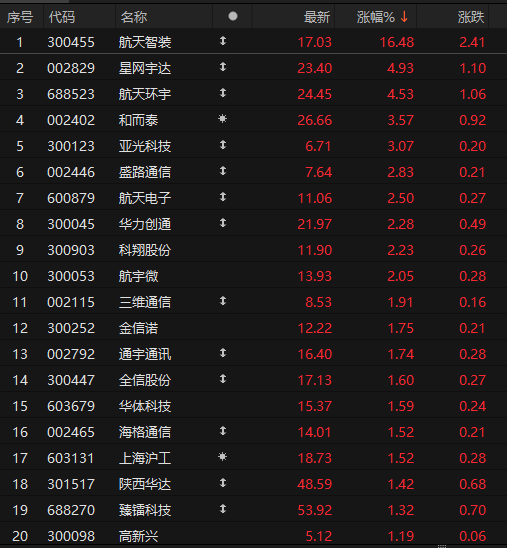
Core Viewpoint - The successful launch of the low Earth orbit satellite internet group 07 by the Long March 12 rocket marks a significant acceleration in China's satellite internet deployment, with multiple launches occurring within a short timeframe [1][4]. Group 1: Satellite Launches and Developments - The satellite internet low Earth orbit groups 01 to 07 are part of China's "National Network Constellation," which aims to deploy approximately 1,300 satellites by 2029 and around 13,000 by 2035 [4]. - The recent launches demonstrate the capabilities of the Hainan commercial space launch site, achieving high-density launches successfully for the first time [4]. - The 07 group satellites were developed by the private company Galaxy Space, marking the first batch production of such satellites by a private firm in China [4][6]. Group 2: Stock Market Response - Following the successful launch, over thirty companies in the A-share satellite internet sector saw stock price increases, with notable gains from companies like Aerospace Zhizhuang and Xingwang Yuda [1][2]. - Specific stock performance included Aerospace Zhizhuang rising by 17.03% and Xingwang Yuda by 4.93% [2]. Group 3: Investment and Business Expansion - Several listed companies are increasing their investments in the satellite internet sector, with significant projects announced, such as a 344 million yuan investment by Guangdian Measurement for a satellite internet quality assurance platform [8]. - Zhenyou Technology plans to invest 709 million yuan in satellite internet communication product development, focusing on core network systems and satellite terminal devices [8]. - Tongyu Communication has positioned itself advantageously in the national satellite constellation launch plans, indicating a strong future in the satellite internet market [9].




双工位连发、智慧工厂实现量产 ……中国商业航天“飞出”新高度
Yang Shi Wang· 2025-08-05 09:19
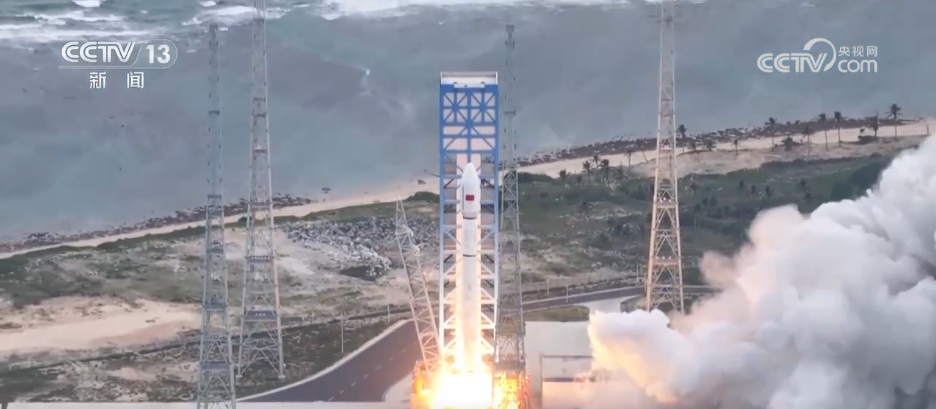
Core Points - The successful launch of the satellite internet low Earth orbit 07 group satellites using the Long March 12 rocket marks the 587th flight of the Long March series [1] - The Hainan commercial space launch site achieved consecutive launches from two launch pads within a short timeframe, demonstrating its high-density launch capability [3][8] Group 1: Launch Achievements - The launch occurred at the second launch pad of the Hainan commercial space launch site, following a previous launch from the first pad on July 30 [3] - The rapid transition between launch pads was facilitated by the design of the launch site, which allows for quick state switching within 2 to 3 days [6] - This is the first time the launch site has completed two rocket launches within five days, indicating significant operational challenges [8] Group 2: Satellite Production and Technology - The satellite internet low Earth orbit 07 group satellites were developed by Galaxy Space, marking the first batch production of such satellites by a Chinese commercial aerospace company [11] - The production line for these satellites employs a modular design and utilizes intelligent assembly robots and digital manufacturing systems, enhancing production efficiency and safety [13] - The satellite production line aims to achieve an annual output of 100 satellites weighing 1000 kilograms each, with AI technology being integrated into the manufacturing process to improve operational efficiency [15]
像生产汽车一样生产卫星 商业航天企业批量研制卫星并承担国家重大发射任务
Yang Shi Wang· 2025-08-05 06:22
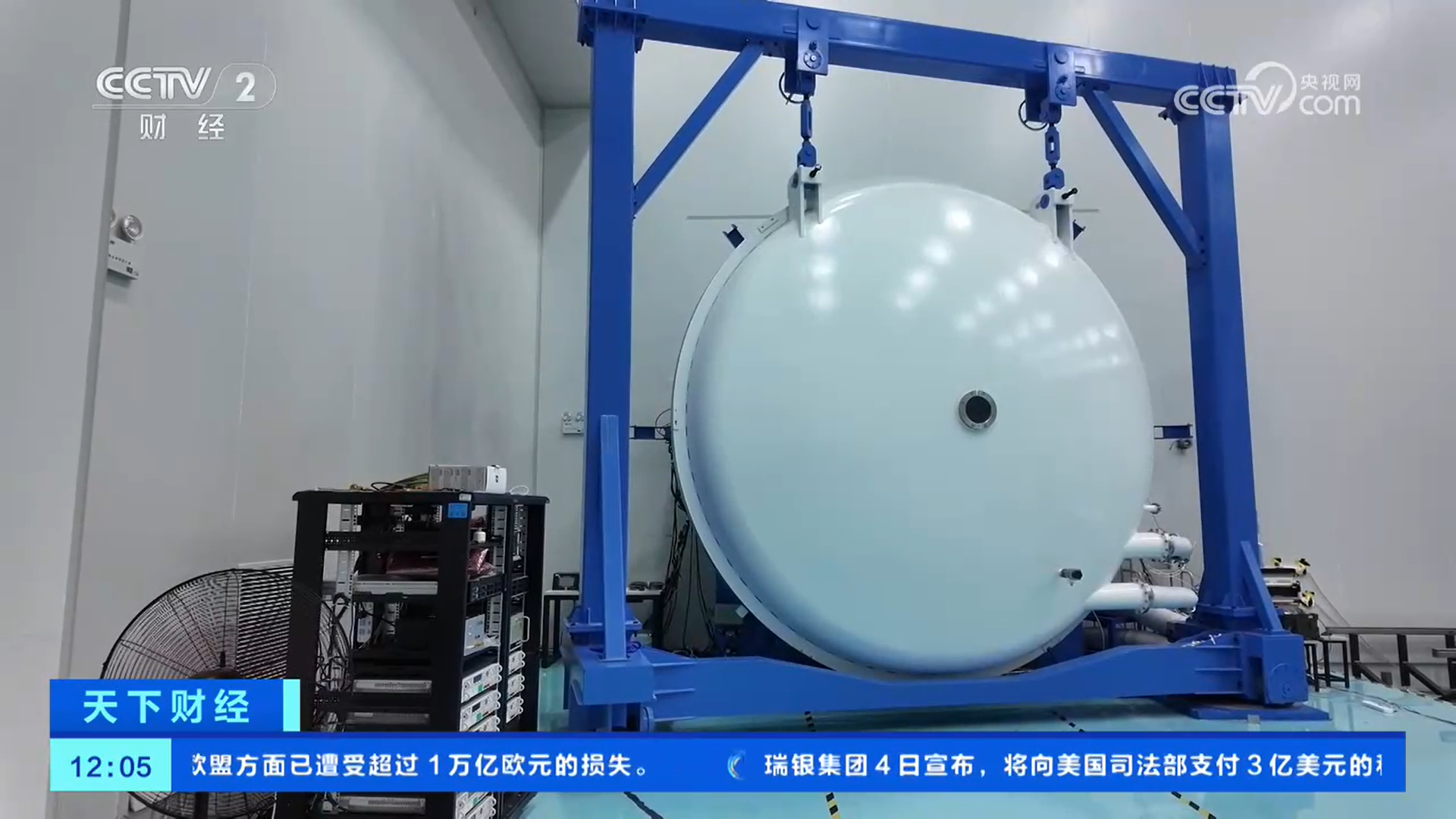
Group 1 - The successful launch of the low Earth orbit satellite internet group 07 marks a significant achievement for China's commercial aerospace sector, being the first batch production of such satellites by a commercial company [1] - The launch utilized the Long March 12 rocket, representing the 587th flight of the Long March series [1] - The satellite production line features modular design aimed at mass production, incorporating intelligent assembly robots and digital manufacturing systems to enable parallel assembly and testing [1] Group 2 - The satellite manufacturing process has seen an 80% reduction in development time, significantly enhancing production efficiency and ensuring product quality throughout the process [3] - The production line aims to achieve an annual output of 100 satellites, each weighing around 1000 kilograms, similar to automotive mass production [3] - The integration of AI technology into the manufacturing process is being actively pursued to improve production management, resource allocation, and overall operational efficiency [3]
商业航天行业更新:低轨卫星发射提速,可回收火箭推动降本增效
2025-08-05 03:16
Summary of Commercial Aerospace Industry Conference Call Industry Overview - The commercial aerospace industry is undergoing significant changes, particularly in the low-cost launch vehicle sector, which is driving down transportation costs and promoting large-scale satellite manufacturing [1][3][4] - The industry is expected to see increased investor interest as leading companies like Zhongke Aerospace, Blue Arrow Aerospace, and Galaxy Aerospace are projected to go public by 2026 [1][5][6] Key Developments - Blue Arrow Aerospace's Zhuque-3 rocket has reduced the cost of transporting payloads to below 20,000 yuan per kilogram, compared to over 50,000 yuan with the Long March series rockets [3][4] - The satellite internet sector is anticipated to experience a cyclical market driven by financing from Yuanxin G60 and upcoming IPOs of leading companies [1][7] - Huawei plans to conduct tests for direct satellite connectivity on its flagship smartphones by the second half of 2025, indicating a trend towards integrating this technology into consumer devices [1][9] Market Performance - Despite significant changes in the industry, the capital market has not yet fully reflected these developments. However, the expected IPOs of several commercial aerospace companies could enhance market performance [5][6] - The commercial aerospace sector has lagged behind the military sector in terms of stock performance, with the Wande Commercial Aerospace Index showing less than 10% growth compared to the 13.6% increase in the military sector [11] Future Trends - The development of liquid reusable rockets is seen as a key direction for reducing launch costs and improving efficiency. Several private companies are planning to conduct tests or launches of these rockets [1][10][12] - The Starlink project has deployed 7,556 satellites, achieving a total communication capacity of 500TB and covering 3 million users, indicating the competitive landscape in satellite internet services [3][17] Competitive Landscape - The gap between China and the US in the commercial aerospace sector is widening, with the US achieving a year-on-year launch growth rate of 30%-40% due to the maturity of the Falcon 9 rocket, while China's annual launch numbers remain around 60 [3][14] - The Chinese government is increasing its focus on the aerospace sector, with expectations for a significant rise in commercial launch activities in the coming years [15][16] Investment Opportunities - The commercial aerospace sector is currently viewed as having good investment opportunities despite being relatively stagnant compared to other sectors. Factors such as information, logic, catalysts, and trading conditions are favorable for potential investments [11] Key Players and Technologies - The low-orbit satellite communication industry involves several key players, including satellite manufacturers and launch service providers. Core companies include various state-owned enterprises and listed companies like Zhenlei Technology and Fudan Microelectronics [25][26] - The development of mobile direct low-orbit satellite technology is progressing, with major Chinese companies like Huawei and ZTE actively participating in this field [23][24]