云南白药

Search documents
西部证券晨会纪要-20251201
Western Securities· 2025-12-01 02:58
Group 1: Fixed Income Market Outlook - The macroeconomic policy for 2026 emphasizes high-quality development, with a focus on structural adjustments rather than solely relying on total stimulus [6][10] - The central bank is expected to lower interest rates by 10-20 basis points and may implement one reserve requirement ratio cut, maintaining a cautious approach [6][9] - Investment and consumption are projected to recover moderately, with inflation being a significant uncertainty for the bond market; PPI is expected to decline at a slower rate, while CPI may rise by approximately 0.4% [6][10] Group 2: Mergers and Acquisitions in the Securities Industry - The securities industry has experienced several waves of mergers and acquisitions, with the current wave driven by regulatory policies and market dynamics [16][17] - The concentration of the securities industry is increasing, with major firms enhancing their market competitiveness through strategic acquisitions [17][18] - Despite a slowdown in new mergers since 2025, the trend of supply-side reform in the industry is expected to continue, with potential for further restructuring [18] Group 3: Real Estate Industry Investment Strategy - The real estate market is undergoing a rebalancing phase, with a focus on high-quality development and structural opportunities [19][21] - Sales volume and price dynamics are expected to diverge, with new housing prices increasing while second-hand housing prices may decline [20][21] - Investment recommendations include focusing on quality developers and sectors such as commercial real estate, with specific companies highlighted for their potential [19][21] Group 4: Semiconductor Industry - Chip Design Services - The company Chip Origin (688521.SH) is positioned as a leader in semiconductor IP, with projected revenues of 32.67 billion, 46.61 billion, and 58.71 billion for 2025, 2026, and 2027 respectively [24][25] - The acquisition of Chip Intelligence is expected to enhance the company's capabilities in CPU IP, supporting growth in both IP licensing and custom chip design [24][25] - The demand for AI-related chips is anticipated to drive significant growth, with the company securing new orders worth 15.93 billion in Q3 2025, reflecting a year-on-year increase of 145.80% [26]
昆明 “六个春城”建设向新而行
Jing Ji Ri Bao· 2025-11-29 23:02
Economic Development - Kunming has achieved significant economic growth, with its total economic output surpassing 700 billion and 800 billion yuan, contributing 31.9% to Yunnan's economic growth by 2024, up from 13.3% in 2020 [1] - The city is focusing on industrial development, upgrading traditional industries while fostering emerging sectors, establishing a modern industrial system unique to Kunming [1][2] - New industries such as biomedicine and digital economy are becoming billion-yuan industries, with emerging industries' added value growing by 9.2% in the first nine months of the year, outpacing the growth of regulated industrial output [3] Industrial Transformation - Yunnan Shanshan New Materials Co., Ltd. has successfully launched a 300,000-ton lithium-ion battery anode material production base, leveraging local green electricity resources to attract investment [2] - Kunming is enhancing its industrial chain towards high-end, green, and digital transformation, with a focus on biomedicine and green energy [2][3] - The number of investment projects exceeding 100 million yuan in Kunming has increased from 211 in 2021 to 533 in 2024, with industrial project funding rising from 7.2% to 58.5% [3] Cross-Border E-commerce and Logistics - The cross-border e-commerce sector in Kunming is experiencing growth, with customs facilitating logistics and customs clearance through smart information platforms [4] - The "China-Laos Railway + Cross-Border E-commerce" model allows for efficient customs clearance, enhancing the export of goods to Southeast Asia [4][5] - The total volume of goods at the Mohan port has increased from 4.4686 million tons in 2020 to 9.2831 million tons in 2024, a growth of 107.7% [5] Ecological Development - Kunming is committed to ecological protection, focusing on the governance of Dianchi Lake, with significant improvements in water quality and pollution management [6][7] - The city has developed a lakeside ecological belt and integrated tourism with agriculture, leading to increased local income and tourism growth [7] - In the first three quarters, Kunming received 280 million tourists, generating a total tourism revenue of 355.185 billion yuan, reflecting a year-on-year growth of 7.25% and 12.5% respectively [7]
蔓迪国际三年半分红超14亿元 净利率连降赛道存隐忧
Sou Hu Cai Jing· 2025-11-28 06:40
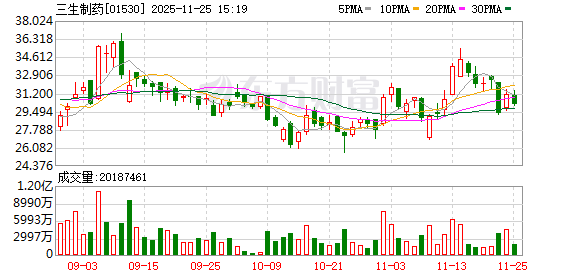
中国经济网编者按:据经济参考报今日报道《蔓迪国际冲刺港交所 三年半分红超14亿元》,日前,在 三生制药(01530.HK)宣布将附属公司蔓迪国际分拆并独立上市后,蔓迪国际向港交所递交招股书, 华泰国际担任独家保荐人。此次港股IPO,蔓迪国际计划将募集资金用于提高研发能力、策略性业务合 作、数字化运营迭代以及品牌建设等。 值得注意的是,尽管蔓迪国际有较强的造血能力且营收规模仍在增长,但公司上市前夕大额分红引发投 资者关注。2022年至2024年,公司分别向股东宣派股息2.5亿元、4亿元和0元。今年上半年,公司宣派 了7.7亿元股息,超出上述3年之和。受此影响,公司流动资产净额由2024年的5.95亿元断崖式降至今年 上半年的40万元,公司解释称:"由于股息宣派,导致应付股息增加6.7亿元。" 据新京报贝壳财经报道《蔓迪国际冲刺港交所:靠"头顶生意"半年收入超7亿,净利率连降》,当获客 成本上升,市场竞争加剧,蔓迪国际的盈利压力也在加大。自2023年攀至高点后,该公司整体净利率有 了下滑苗头,2022年至2024年分别为20.5%、27.8%和26.8%,今年上半年降至23.4%。 经济参考报:蔓迪国际三年半分红 ...
靠米诺地尔撑起脱发生意!蔓迪国际冲刺港股“防脱第一股”
Nan Fang Du Shi Bao· 2025-11-27 12:41
Core Viewpoint - Mandi International has submitted its prospectus to the Hong Kong Stock Exchange, aiming to become the "first stock in anti-hair loss" amid a growing consumer healthcare market and increasing youth hair loss issues [1]. Company Overview - Mandi International, originally Zhejiang Wansheng Pharmaceutical Co., launched the first 5% minoxidil solution in China in 2001 and has maintained a leading position in the hair loss treatment market for the past decade [4]. - The company is planning to spin off and independently list on the Hong Kong Stock Exchange, with its parent company, 3SBio, holding an 87.16% stake prior to the split [4]. Financial Performance - Mandi International's revenue is projected to grow from RMB 981.54 million in 2022 to RMB 1.45 billion in 2024, reflecting a compound annual growth rate (CAGR) of 21.7% [5]. - Net profit is expected to increase from RMB 202 million in 2022 to RMB 390 million in 2024, with gross margins improving from 80.3% to 82.7% during the same period [5]. - The company's revenue from its main product line, the Mandi series, accounted for over 90% of total revenue, indicating a heavy reliance on this product line [6]. Market Dynamics - The hair health management market in China is projected to grow from RMB 19.8 billion in 2018 to RMB 52.7 billion by 2024, with an expected CAGR of 11.3% until 2035 [10]. - The competitive landscape is intensifying, with traditional pharmaceutical companies and international giants entering the market with new products [10]. Marketing and R&D Expenditure - Marketing expenses have been increasing, with sales and marketing costs rising from RMB 476.39 million in 2022 to RMB 633.80 million in 2024, representing a significant portion of revenue [8]. - In contrast, R&D spending is projected to decrease significantly in 2025, raising concerns about the company's long-term innovation capabilities [10]. Future Plans - The company plans to use the net proceeds from its IPO for enhancing R&D capabilities, digital operations, brand building, and working capital [11].

新华都“斩获”五天四板,阿里“卖飞”错失盛宴
Huan Qiu Lao Hu Cai Jing· 2025-11-27 12:16
Core Viewpoint - Xinhua Du has recently gained significant attention in the capital market due to a surge in its stock price, driven by its strategic transformation towards internet marketing and alignment with trending concepts like cross-border e-commerce and AI [2][3][4]. Company Overview - Xinhua Du, originally a traditional retail enterprise in Fujian, has shifted its focus to internet marketing by divesting from unprofitable retail operations [2][3]. - The company’s main business model now revolves around data-driven internet marketing services, including e-commerce sales, product development, and digital marketing [3][4]. Stock Performance - On November 27, Xinhua Du's stock reached a closing price of 10.59 yuan per share, with a market capitalization of 76.23 billion yuan, marking five days of consecutive gains [2][3]. - The stock price increase is attributed to the company's engagement in popular sectors such as cross-border e-commerce and AI [4]. Financial Performance - Xinhua Du's revenue for 2022, 2023, and projected 2024 are 3.022 billion yuan, 2.824 billion yuan, and 3.676 billion yuan respectively, with net profits of 205 million yuan, 201 million yuan, and 260 million yuan [4]. - In the first three quarters of 2025, the company reported a revenue of 2.446 billion yuan, a year-on-year decline of 11.84%, and a net profit of 178 million yuan, down 6.51% [4]. Shareholder Dynamics - Alibaba, which acquired shares in Xinhua Du at 8 yuan per share in 2017, has since reduced its holdings and exited the top ten shareholders, missing out on the recent stock price surge [5][6]. - Notable shareholders like Hong Zejun, a prominent investor, have benefited from the stock's rise, holding 334.87 million shares valued at approximately 355 million yuan [7]. Leadership - The company is controlled by Chen Fashu, known as "China's Buffett," who holds about 30.15% of the shares, translating to a market value of approximately 2.298 billion yuan [8][9].

全国流感活动迅速上升,中药ETF(159647)涨近1%
Xin Lang Cai Jing· 2025-11-26 02:22
Group 1 - The core viewpoint of the news highlights a significant increase in the sales of cold and flu medications due to a rapid rise in flu activity across the country since November, with specific products like Oseltamivir and Mabalosavir seeing sales surges of 237% and 180% respectively [1] - The China Securities Index for Traditional Chinese Medicine (930641) has shown a positive performance, with a 0.87% increase, and notable gains in constituent stocks such as Guangdong Wannianqing (20.02%) and Zhongheng Group (9.70%) [1] - The early onset of the flu season this year is expected to lead to a peak in positive infection rates for flu-related emergency visits, surpassing last year's levels, indicating a potential increase in demand for respiratory infection-related products [1] Group 2 - As of October 31, 2025, the top ten weighted stocks in the China Securities Index for Traditional Chinese Medicine account for 54.92% of the index, with major companies including Yunnan Baiyao, Pian Zai Huang, and Tong Ren Tang [2] - The Traditional Chinese Medicine ETF (159647) closely tracks the performance of the China Securities Index for Traditional Chinese Medicine, which includes publicly listed companies involved in the production and sale of traditional Chinese medicine [1][3]
深度 | 蔓迪港股递表,引爆防脱“新战局”
FBeauty未来迹· 2025-11-25 14:18
Core Insights - The core viewpoint of the article is that the power dynamics in China's anti-hair loss market have shifted from traditional daily chemical brands to pharmaceutical companies, driven by a growing consumer base and evolving market demands [4][5]. Market Dynamics - The anti-hair loss market in China has seen a significant transformation, with over 300 million people affected by hair loss, particularly among the 26-35 age group, indicating a shift from a minor issue to a widespread concern [4]. - Pharmaceutical companies, particularly those with OTC pipelines and dermatological resources, have emerged as the primary players in the market, leading to a dual oligopoly dominated by Sanofi's Mandi and Zhendong Pharmaceutical's Dafeixin [4][8]. - The market for anti-hair loss products has reached 5.247 billion yuan in sales within the first ten months of 2025, reflecting a year-on-year growth of over 47% [10][13]. Brand Strategies - Pharmaceutical companies are creating a new narrative of "anti-hair loss = medicine + consumer," leveraging high margins and professional barriers while extending their product lines into daily care categories [5][19]. - Brands like Mandi and Dafeixin are combining pharmaceutical and cosmetic products, promoting them through "scientific anti-hair loss salons" to capture consumer interest [6][9]. Competitive Landscape - Traditional daily chemical brands are struggling, with companies like Bawang reporting a significant decline in profits despite a slight revenue increase, highlighting a structural challenge in the market [8]. - The consumer focus has shifted from "shampoo for hair loss" to "medical treatment and scalp management," indicating a demand for more scientifically-backed solutions [9][10]. Emerging Trends - The average price of anti-hair loss products has risen to over 113 yuan, suggesting consumers are willing to invest more in effective scalp care solutions [13]. - New brands such as EHD and Off&Relax are gaining traction, with EHD leading in sales at 371 million yuan, showcasing a trend towards professional and functional care [16][18]. Future Directions - To compete effectively, beauty brands must transition from traditional narratives to scientific and medical language, focusing on the mechanisms behind hair loss and scalp health [19][23]. - The integration of devices with hair care products is emerging as a trend, with brands like Kérastase introducing scalp care devices that enhance treatment efficacy [25][27]. Conclusion - The anti-hair loss market is evolving into a sector characterized by scientific, medical, and long-term management approaches, with pharmaceutical companies redefining the rules and traditional brands being compelled to adapt [19].


脱发90后撑起一个IPO,公司年赚近4亿,毛利率超82%
2 1 Shi Ji Jing Ji Bao Dao· 2025-11-25 12:07
Core Viewpoint - The IPO application of Mandi Inc., a subsidiary of Sihuan Pharmaceutical, aims to become the first listed company in China's hair health sector, capitalizing on a market with over 339 million people suffering from hair loss and a projected market growth rate of 11.3% annually [1][3][5]. Market Demand and Growth - The hair health management market in China is expected to exceed 80 billion yuan in 2024, with a compound annual growth rate (CAGR) of 11.3% projected from 2024 to 2035, potentially reaching 171.4 billion yuan by 2035 [3][5]. - The demographic of hair loss sufferers is predominantly under 35 years old, accounting for over 60% of the total, indicating a shift from optional to essential consumption in this market [3][5]. Company Performance and Product Portfolio - Mandi Inc. has established a strong market presence, with its core product series, the Mandi® series, holding over 71% market share in the minoxidil drug market as of 2024 [5][6]. - The company reported revenue growth from 982 million yuan in 2022 to 1.455 billion yuan in 2024, with a net profit increase from 202 million yuan to 390 million yuan during the same period, reflecting a CAGR of 21.7% [6][8]. Challenges and Risks - Mandi Inc. faces significant risks due to its high dependency on core products, with 92.4% of its revenue in the first half of 2025 coming from the Mandi series [8][9]. - The company has low R&D investment, with only 2.62% of revenue allocated to R&D in the first half of 2025, raising concerns about its long-term competitiveness [9]. - Supply chain concentration is a risk, with the top five suppliers accounting for 75.6% of procurement, making the company vulnerable to supply disruptions [9]. Strategic Plans and Future Outlook - The IPO proceeds will be used to enhance R&D, expand product lines, and optimize the supply chain, focusing on women's hair loss treatments and new topical formulations [10][11]. - The company aims to balance short-term sales with long-term R&D investments to build sustainable growth and reduce reliance on the Mandi series [11]. - The competitive landscape is evolving, with traditional and emerging brands entering the market, necessitating Mandi Inc. to innovate and adapt to maintain its market position [9][11].

脱发90后撑起一个IPO,公司年赚近4亿,毛利率超82%
21世纪经济报道· 2025-11-25 10:26
Core Viewpoint - The article highlights the upcoming IPO of Mandi Inc., a subsidiary of Sanofi Pharmaceutical, which aims to become the first listed company in China's hair health sector, capitalizing on the growing demand from over 339 million people suffering from hair loss in China [1][3]. Market Opportunity - The hair health management market in China is projected to exceed 80 billion yuan in 2024, with a compound annual growth rate (CAGR) of 11.3% expected from 2024 to 2035, potentially reaching 171.4 billion yuan by 2035 [6]. - The demographic trend shows that over 60% of the hair loss population is under 35 years old, indicating a shift from optional to essential consumption in hair loss treatments [5]. Company Performance - Mandi Inc. has established a strong market presence, with its core product series, Mandi®, holding over 71% market share in the minoxidil drug market as of 2024 [7]. - The company's revenue grew from 982 million yuan in 2022 to 1.455 billion yuan in 2024, with a net profit increase from 202 million yuan to 390 million yuan during the same period, reflecting a CAGR of 21.7% [7]. Challenges and Risks - Mandi Inc. faces significant risks due to its high dependency on its core product series, which accounted for 92.4% of total revenue in the first half of 2025 [9]. - The company has low R&D investment, with only 2.62% of revenue allocated to R&D in the first half of 2025, raising concerns about its long-term competitiveness [10]. - Supply chain concentration is another risk, with the top five suppliers accounting for 75.6% of procurement, making the company vulnerable to supply disruptions [11]. Strategic Plans - The IPO proceeds will be primarily used for increasing R&D investment, expanding product lines, and optimizing the supply chain [12]. - The company aims to balance sales and R&D spending, accelerate new product development, and maintain market share amid increasing competition from traditional pharmaceutical companies and emerging brands [12]. Conclusion - Mandi Inc.'s IPO represents not only a financial leap but also a critical opportunity for transformation and growth in the competitive hair health market [13].

蔓迪国际冲击“防脱第一股” 千亿赛道存高增长隐忧
2 1 Shi Ji Jing Ji Bao Dao· 2025-11-25 07:19
Core Insights - The "bald economy" sector is gaining attention as Mandi Inc., a subsidiary of Sihuan Pharmaceutical, has submitted its IPO application to list on the Hong Kong Stock Exchange, aiming to become the first publicly listed company in China's hair health sector [2] - Mandi Inc. is backed by a rigid demand from over 339 million people suffering from hair loss and a market projected to grow at a compound annual growth rate (CAGR) of 11.3%, reaching a market size of 171.4 billion yuan by 2035 [3][4] - Despite strong performance and market potential, Mandi Inc. faces challenges such as over-reliance on core products, insufficient R&D investment, and high supply chain concentration [6][7] Market Dynamics - The hair health market in China is experiencing explosive growth, with the number of hair loss sufferers expected to reach 339 million by 2024, predominantly among individuals under 35 years old [3] - The market for hair health management is projected to exceed 80 billion yuan in 2024, with a sustained CAGR of 11.3% from 2024 to 2035 [3] - Mandi Inc. has established a strong competitive position, with its core product line, including the Mandi® series, holding over 70% market share in the hair loss treatment sector [4] Financial Performance - Mandi Inc.'s revenue grew from 982 million yuan in 2022 to 1.455 billion yuan in 2024, with net profit increasing from 202 million yuan to 390 million yuan during the same period, reflecting a CAGR of 21.7% [4][5] - The gross profit margin has remained stable above 80%, reaching 82.7% in 2024, significantly higher than the industry average [4] Challenges and Risks - Mandi Inc. heavily relies on its core product line, with 92.4% of its revenue in the first half of 2025 coming from the Mandi series, indicating vulnerability to market changes [6][7] - The company has low R&D investment, with only 2.62% of revenue allocated to R&D in the first half of 2025, raising concerns about long-term competitiveness [7] - High concentration in the supply chain, with the top five suppliers accounting for 75.6% of procurement, poses risks to production stability and cost control [7] Strategic Plans - Mandi Inc. plans to use IPO proceeds to enhance R&D, expand its product pipeline, and optimize its supply chain, focusing on female hair loss treatments and new topical formulations [8] - The company aims to balance sales and R&D investments to build long-term technological barriers while accelerating new product iterations to reduce dependence on the Mandi series [8] - The competitive landscape is shifting towards technology and brand competition, necessitating Mandi Inc. to maintain its market share amidst increasing competition from traditional pharmaceutical companies and emerging brands [8][9]