银河航天

Search documents
建起“超链接” 助力中国经济向新而行
Xin Hua She· 2025-07-31 22:16
Core Viewpoint - The integration of technological innovation and industrial innovation is crucial for enhancing productivity and driving economic growth in China, as emphasized by various industry leaders and government officials [2][18]. Group 1: Technological Achievements - The AS700D electric airship has successfully completed its first scientific flight, showcasing advancements in technology [1]. - High-tech manufacturing in China has seen significant growth, with a 9.5% increase in value-added output in the first half of the year, outpacing overall industrial growth by 3.1 percentage points [4]. - The production of 3D printing equipment, electric vehicles, and industrial robots has increased by 43.1%, 36.2%, and 35.6% respectively [4]. Group 2: Innovation Ecosystem - The establishment of over 1,600 national-level technology business incubators has been pivotal in fostering innovation and technology transfer [5]. - Collaborative efforts between universities and enterprises, such as the joint laboratory with Beijing University of Posts and Telecommunications, are enhancing the practical application of new technologies [5]. - The Long Triangle National Technology Innovation Center has successfully connected over 1,200 technology demand projects with enterprises [7]. Group 3: Challenges and Solutions - There is a need to align technological innovations with actual industrial demands to ensure effective application [11][12]. - The disconnect between enterprise research needs and institutional R&D projects highlights the necessity for more effective platforms to bridge these gaps [13]. - The efficiency of technology transfer needs improvement, requiring a comprehensive policy framework and a market-oriented service system [15]. Group 4: Future Directions - Strengthening the role of enterprises as the main drivers of innovation is essential for the integration of technology and industry [18][19]. - The concept of "use first, pay later" for technology transfer can lower the risk for small and medium enterprises, encouraging them to adopt new technologies [26][27]. - Continuous reforms in the technology transfer mechanism and the establishment of a supportive innovation environment are critical for advancing the integration of technological and industrial innovations [28].
建起“超链接” 助力中国经济向新而行
Jing Ji Ri Bao· 2025-07-31 01:56
Core Insights - The integration of technological innovation and industrial innovation is crucial for driving China's economic growth, with a focus on transforming scientific achievements into practical productivity [1][3][4] Group 1: Technological Advancements - The AS700D electric manned airship has completed its first scientific flight, and humanoid robots are rapidly evolving in application [1] - In the first half of the year, China's high-tech manufacturing industry saw a value-added growth of 9.5%, outpacing the overall industrial growth by 3.1 percentage points [3] - Production of 3D printing equipment, new energy vehicles, and industrial robots increased by 43.1%, 36.2%, and 35.6% respectively [3] Group 2: Innovation Ecosystem - Over 1,600 national-level technology business incubators have been cultivated in China, facilitating the transformation of technology from initial stages to practical applications [4] - The establishment of innovation centers in the Yangtze River Delta has led to successful collaborations with over 500 companies, addressing more than 1,200 technology demand projects [4] Group 3: Policy and Standardization - The Ministry of Industry and Information Technology is forming industry standardization committees in emerging fields like artificial intelligence and the Internet of Things to support new quality productivity [5] - Recent reforms aim to enhance the efficiency of technology transfer and establish a market-oriented service system for technology achievements [7][8] Group 4: Challenges and Solutions - There is a need to align technological innovations with actual industrial demands to ensure effective application and iteration [6] - The integration of large and small enterprises is essential, with initiatives to lower innovation costs for small businesses and enhance their access to innovation resources [7] Group 5: Future Directions - The focus is on empowering enterprises as the main drivers of innovation, with policies being developed to support their roles in innovation demand, investment, and application [11] - The concept of "use first, pay later" for technology achievements is being promoted to reduce risks for small enterprises and stimulate innovation [13]
建起“超链接” 助力中国经济向新而行——“中国经济圆桌会”共话科技创新与产业创新深度融合
Xin Hua She· 2025-07-29 08:55
Group 1 - The core theme of the "China Economic Roundtable" is the deep integration of technological innovation and industrial innovation to drive new productive forces in the economy [3][5][12] - In the first half of the year, China's high-tech manufacturing industry saw a value-added growth of 9.5%, outpacing the overall industrial growth by 3.1 percentage points [5] - The production of 3D printing equipment, new energy vehicles, and industrial robots increased by 43.1%, 36.2%, and 35.6% respectively [5] Group 2 - The establishment of over 33 national manufacturing innovation centers and the launch of significant technological projects are aimed at enhancing the matching of technology and industry [22] - The "先用后付" (use first, pay later) model is being promoted to lower the trial and error costs for small and medium enterprises, thereby activating existing patent resources [28][29] - The integration of large, medium, and small enterprises is emphasized, with initiatives to encourage large enterprises to share innovation resources and support the entry of small enterprises into supply chains [21][22] Group 3 - The focus on creating a collaborative innovation ecosystem involves breaking down barriers to resource flow and leveraging the advantages of a large market and industrial system [28][29] - The government is implementing reforms to enhance the efficiency of technology transfer and establish a market-oriented service system for technology commercialization [21][22] - The importance of establishing trust mechanisms between enterprises and platforms to improve collaborative research and development efficiency is highlighted [19][22]

中国经济圆桌会|银河航天:科技和产业“双链”融合,建设科技强国未来可期
Xin Hua She· 2025-07-28 05:30
Core Insights - The current integration of technology and industry in China is deepening, with ongoing efforts to build a unified national market and a strong technological nation, indicating a promising future for the sector [1] - Galaxy Space has established China's first low-orbit broadband communication test constellation, creating a star-ground integrated test network referred to as "Little Spider Web" [1] - The company has rapidly grown into a unicorn in the commercial aerospace sector due to strong policy support and increasing market demand, particularly since the introduction of the 2015 National Civil Space Infrastructure Development Plan [1] Company Developments - Galaxy Space has engaged in technological innovations and breakthroughs aimed at meeting market demands, emphasizing the arrival of a new era in space infrastructure characterized by constellation, scale, and cost-effectiveness [1] - The establishment of a joint laboratory with Beijing University of Posts and Telecommunications allows for the validation of innovative technologies related to massive terminal direct access and on-orbit information processing [2] - The company has expanded its partnerships from over 100 to more than 1,000, reflecting a significant growth in its supply chain and collaborative ecosystem [2] Industry Trends - The integration of technology and industry is seen as essential for the development of space network technologies, with a focus on collaborative innovation among universities, research institutions, and enterprises [2] - The company advocates for a strong commitment to innovation and an open mindset to foster a mutually beneficial new ecosystem within the industry [2]
资本“活水”为何涌入这座城? “政策+产品+平台”组合拳培育产业矩阵
Mei Ri Jing Ji Xin Wen· 2025-07-26 03:17
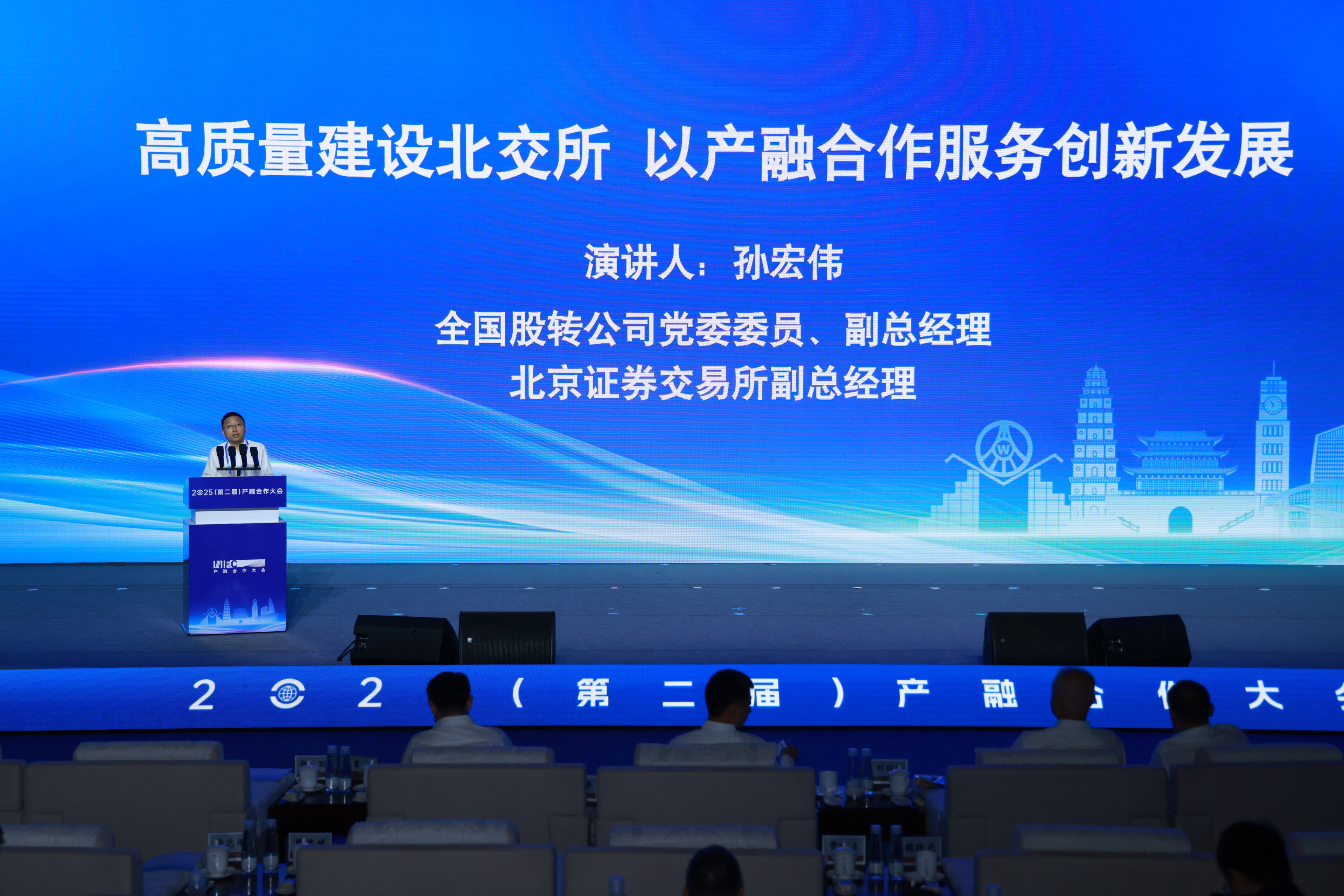
Group 1 - The core viewpoint of the articles emphasizes the significance of the integration of finance and industry, particularly in the context of the second Industrial Cooperation Conference held in Yibin, which showcases the city's robust industrial foundation and clear transformation path [1][6] - Yibin ranks second in industrial output in Sichuan province and has been recognized as one of the top 100 advanced manufacturing cities in China for three consecutive years, highlighting its strong industrial base [1][7] - The establishment of a comprehensive cultivation platform for specialized and innovative enterprises by the Shenzhen Stock Exchange and the Sichuan Provincial Economic and Information Technology Department is a key development, integrating services from government and exchanges [3][6] Group 2 - The financial capital is described as an "accelerator" for industrial revolutions, with significant support for technology-driven enterprises, as evidenced by the 1.2 trillion yuan in financing facilitated by the national industrial-financial cooperation platform [6][10] - Yibin has diversified its industrial system beyond traditional sectors like liquor, developing new industries such as power batteries and digital economy, which contribute to a modern industrial framework [7][10] - The city has implemented a systematic approach combining policies, products, and platforms to enhance financial support for enterprises, including low-cost funding exceeding 10 billion yuan [10][11] Group 3 - The articles highlight the importance of a new financial system supported by digital revolution, blockchain, and stablecoins, which are essential for current economic development [11][12] - The collaboration between various financial institutions and local governments is crucial for fostering innovation and supporting the growth of specialized and innovative enterprises [6][12] - Yibin's establishment of a capital investment alliance with top financial firms aims to create a synergistic ecosystem for modern industrial development, showcasing the city's active engagement in capital markets [10][11]

引来金融“活水”助力产业“向新”
Si Chuan Ri Bao· 2025-07-25 22:08
Group 1 - The core viewpoint of the articles highlights the growth and significance of specialized and innovative enterprises in Sichuan, with over 3,000 such companies representing approximately 15.2% of the total industrial enterprises in the province [1][6] - In the first half of this year, the added value of specialized and innovative industrial enterprises in Sichuan grew by 10.2% year-on-year, surpassing the average growth rate of larger industrial enterprises by 2.9 percentage points [1][6] - The second Industrial and Financial Cooperation Conference in Yibin showcased successful collaborations between finance and industry, emphasizing the role of financial support in advancing technology and innovation [2][3] Group 2 - During the conference, 18 key industrial-financial cooperation projects were signed, including a 500 million yuan equity investment fund focused on technological innovation [2][6] - The Sichuan Province Technology Innovation Investment Group has established three new funds totaling 3 billion yuan since its inception, targeting sectors such as low-altitude economy, artificial intelligence, aerospace, and biomanufacturing [2][6] - The conference introduced a comprehensive cultivation platform for specialized and innovative enterprises aiming for public listing, marking a significant step in addressing funding challenges faced by these companies [6][7] Group 3 - The financial sector in Sichuan has seen a steady increase in medium- and long-term loans directed towards the manufacturing industry, with a year-on-year growth of over 13% [5][6] - The launch of a matrix of innovative financial products to support new industrialization was announced, including 15 financial products tailored for advanced manufacturing [7] - The establishment of a comprehensive financial service plan, "Trial Financing Integration," aims to accelerate the trial phase for innovative projects, showcasing a collaborative effort between banks and insurance companies [7]
银河航天创始人董事长兼CEO徐鸣:太空科创时代的发展迎来历史机遇期
Cai Jing Wang· 2025-07-24 23:05
Industry Insights - The construction of space infrastructure is emerging as a new engine for global economic growth, with the global space economy expected to reach $1 trillion by 2040 and its broader economic and social value projected at approximately $7.9 trillion, resulting in a cumulative impact of over $80 trillion from 2025 to 2040 [1] - The number of satellites in orbit has surpassed 13,000, primarily consisting of low Earth orbit communication satellites, characterized by constellation, scale, low cost, and low orbit [1] - The integration of technology, industry, and finance is crucial for the success of technological revolutions, with a multi-layered financial innovation system providing strong momentum for the transformation of industries such as smart manufacturing and commercial aerospace [1] Company Developments - The company has consistently focused on technological innovation and rapid iteration, achieving several pioneering innovations, including the first domestic flexible solar wing flat satellite and the first batch of low Earth orbit broadband communication satellites [2] - The company has developed the world's first large-scale rollable fully flexible solar wing, which reduces the volume and weight of solar wings while increasing energy density to meet high-power energy demands for satellites [2] - The fully flexible solar wing can be deployed in orbit, expanding to over 10 meters in length and nearly 2 meters in width, while being compact enough to fit within the diameter of a thermos when rolled up [2] Financial Support and Innovation - The financial support system for innovation in China is continuously improving, with enhanced efficiency and service levels, facilitating the integration of technology and industry [3] - The company emphasizes the importance of long-term commitment to technological innovation, believing that continuous breakthroughs and the synergy between industry and finance will lead to broader development opportunities in the space technology era [3] - The company is recognized as a leading satellite internet solution provider and satellite manufacturer in China, being the first unicorn in the commercial aerospace sector, having successfully launched 25 advanced satellites [3]
银河航天:全球首款大规模卷式全柔性太阳翼研制成功
Xin Jing Bao· 2025-07-24 10:24
Company Insights - Galaxy Space has successfully developed the world's first large-scale rollable fully flexible solar wing, which is crucial for satellite energy needs [1] - The fully flexible solar wing can reduce the volume and weight occupied by solar wings on satellites while increasing energy density to meet high-power energy demands [1] - The solar wing can be deployed in orbit, expanding over 10 meters in length and nearly 2 meters in width, while being compact enough to fit in a space similar to a thermos when rolled up [1] - The development of the fully flexible solar wing faced new technical challenges, with no global experience to draw from, but the technical team at Galaxy Space has successfully completed the research and development [1] Industry Trends - The space infrastructure sector is emerging as a new engine for global economic growth, with the global space economy projected to reach $1 trillion by 2040 [2] - The broader economic and social value of space is estimated to be around $7.9 trillion, generating over $80 trillion in cumulative impact from 2025 to 2040 [2] - Over the past decade, the number of satellites in orbit has exceeded 13,000, indicating rapid growth in space infrastructure [3]
梁溪空天产业园入选无锡零碳园区培育建设名单
Xin Hua Ri Bao· 2025-07-14 21:40
Group 1 - The core viewpoint of the article emphasizes the proactive response of Wuxi City to national strategies for carbon neutrality, with the launch of a three-year action plan for zero-carbon park construction starting in 2025 [1] - Wuxi (Liangxi) Aerospace Industry Park has been selected as one of the first zero-carbon parks in Wuxi, showcasing its advanced planning concepts, solid industrial foundation, and clear zero-carbon goals [1] - The park covers an area of 706.6 acres, with 556.5 acres already developed, achieving a land utilization rate of 79%, and includes 15 aerospace industry bases with a total construction area of approximately 1.2 million square meters [1] Group 2 - The park will leverage its "latecomer advantage" in zero-carbon construction, focusing on a "1+4" work system that includes one central task and four supporting actions: zero-carbon factories, integrated energy systems, virtual power plants, and zero-carbon service institutions [2] - Key initiatives include the development of a green energy system, promoting photovoltaic power generation and energy storage, enhancing energy efficiency in new projects, and establishing a waste-free park to improve resource recycling [2] - The next steps for Wuxi (Liangxi) Aerospace Industry Park involve capitalizing on its selection opportunity, utilizing its advantages in planning, industry, and location to implement construction tasks and supporting actions, aiming to create a regional model for green development [2]
培育企业蓬勃生长的沃土——加快建设全国统一大市场一线观察之八
Xin Hua Wang· 2025-07-14 14:53
Group 1 - The construction of a national unified market is a significant decision made by the central government to promote high-quality development and a new development pattern [1] - Various regions and departments are implementing measures to strengthen the foundation, address shortcomings, and remove obstacles to accelerate the establishment of an efficient, fair, and open national unified market [1][3] - The reduction of market access negative lists from 151 to 106 items, representing a decrease of approximately 30%, indicates a commitment to enhancing market vitality [3] Group 2 - The participation of private capital in nuclear power projects has increased, with ownership stakes rising from 2% in 2020 to 10% and even 20% in some projects, reflecting the effective removal of market entry barriers [2] - The number of newly established foreign-invested enterprises in China increased by 10.4% year-on-year in the first five months of the year, demonstrating China's attractiveness as a destination for foreign investment [3] Group 3 - The implementation of fair competition measures has led to a 5 percentage point increase in the bidding success rate for private enterprises, with over 80% of projects under 10 million yuan awarded to private companies [4] - The establishment of the "credit loan" product under the "Xin Yi Dai" platform has enabled small and medium-sized enterprises to secure loans more easily, with approximately 5.5 million enterprises registered for financing needs through the national integrated credit service platform [6] Group 4 - The logistics efficiency has improved significantly, with innovations in regulatory models allowing for faster delivery times, such as milk reaching consumers in just 72 hours [7] - The rise of e-commerce platforms has enabled regional specialty products, like prickly pear juice, to thrive in the national market, showcasing the transformation of local products into billion-dollar industries [8] Group 5 - The commercial aerospace sector is experiencing rapid growth, with the number of supply chain partners expanding from over 100 in 2018 to more than 1,300, driven by favorable market conditions and collaborative opportunities [10] - The integration of digital platforms in supply chain management is enhancing resilience and security across various industries, allowing for equal participation from all types of enterprises [11] Group 6 - The ongoing construction of a national unified market is a complex system project that requires continuous effort to eliminate barriers to resource flow and promote innovation [12] - The commitment to reform and the implementation of various measures will further enhance resource aggregation, stimulate innovation, upgrade industries, and support high-quality economic development in China [12]