
奥特维

Search documents
光伏反内卷攻坚,政企同心方得始终
第一财经· 2026-01-27 13:08
Core Viewpoint - The photovoltaic industry is undergoing a deep reform to combat internal competition, with regulatory measures and policy adjustments reflecting a commitment to high-quality development. However, many companies are still facing significant losses, indicating that this battle is not a short-term fix but a necessary step to resolve structural issues within the industry [2][5]. Industry Performance - Major companies like Tongwei Co., Ltd. and LONGi Green Energy are projected to incur substantial losses in 2025, with estimated net losses of 9 to 10 billion yuan and 6 to 6.5 billion yuan respectively. Other companies such as JA Solar, JinkoSolar, and Trina Solar are also expected to report significant losses, highlighting the severe challenges faced by the industry [2][3]. - The average gross margin for the entire industry is only 3.64%, with many companies trapped in a cycle of "production equals loss" due to oversupply and rising raw material costs [3][4]. Causes of Losses - The industry's performance crisis is primarily attributed to excessive homogenous production capacity and fierce price competition, compounded by soaring raw material costs. The supply of silicon materials is projected to exceed global demand by more than double over the next three years, leading to a significant imbalance [3][4]. - The price of silver, a key material in photovoltaic cells, has surged by 231% in 2025, pushing companies to adopt cost-cutting measures at the expense of technological innovation and quality [4][5]. Recommendations for Improvement - Companies must shift their focus from price competition to technological innovation and quality improvement, investing in advanced battery technologies such as TOPCon, BC, and ABC to enhance efficiency and reduce costs [4][6]. - The industry needs to establish self-regulatory standards to combat unfair competition practices, such as selling below cost and misrepresenting product capabilities, while promoting collaboration among companies to consolidate resources [4][6]. Government Role - Government policies and regulatory actions are crucial for supporting the industry's reform efforts. A unified and clear policy direction is necessary to stabilize market expectations and foster industry consensus [5][6]. - Regulatory bodies should enhance oversight on low-price dumping and set higher energy consumption and environmental standards for mature production stages, while also optimizing bidding rules to prioritize technology and quality over price [5][6]. Future Outlook - The photovoltaic industry is at a critical juncture, with the potential for recovery as companies begin to reduce losses and improve profitability. Analysts suggest that the industry may see a turning point in profitability by early 2026 [6][7]. - A collaborative effort between companies and government is essential to ensure that innovation becomes the cornerstone of industry development, allowing China to transition from a manufacturing hub to a center of innovation in the global energy transformation [7].







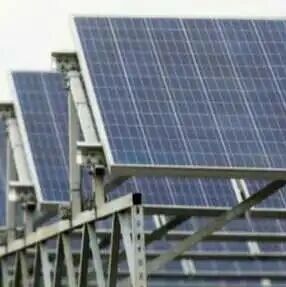
太空光伏午后拉升,拉普拉斯20CM涨停!光伏ETF华夏(515370)太空光伏含量指数维度全市场第一
Mei Ri Jing Ji Xin Wen· 2026-01-27 06:16
2026年1月27日午后,太空光伏午后拉升,光伏ETF华夏(515370)受益上涨1.12%,持仓股拉普拉斯 20CM涨停,奥特维涨超12%,协鑫集成、迈为股份涨超8% 光伏ETF华夏(515370)及其联接基金(012885/012886)跟踪中证光伏产业指数,涉及光伏产业链 上、中、下游企业,包括硅片、多晶硅、电池片、电缆、光伏玻璃、电池组件、逆变器、光伏支架和光 伏电站等,能够更好的反映光伏产业整体表现。指数其太空光伏含量18.49%,指数维度全市场排名第 一。 (文章来源:每日经济新闻) 消息面上,马斯克在达沃斯表示,在太空设立太阳能AI数据中心是理所当然的事。"SpaceX与特斯拉正 同步推进太阳能产能提升,目标在未来三年内实现每年100GW的太阳能制造能力。用于地面数据中心 与太空AI卫星供能。" 国盛证券认为,马斯克提出的SpaceX计划每年部署约100万颗太阳能AI卫星,为太空光伏带来了新的产 业机遇。这一规划被视为推动光伏技术向极端空间场景突破、重构全球光伏产业格局的关键布局。 ...



壹快评丨光伏反内卷攻坚,政企同心方得始终
Di Yi Cai Jing· 2026-01-27 04:26
Core Viewpoint - The photovoltaic industry is undergoing a significant transformation towards high-quality development, driven by both internal corporate self-discipline and external government support, as evidenced by recent regulatory measures and policy adjustments aimed at combating price competition and fostering innovation [1][4][7]. Industry Performance - The photovoltaic sector is currently facing severe financial challenges, with major companies like Tongwei Co. and LONGi Green Energy projected to incur substantial losses in 2025, highlighting the industry's struggle with low-price competition and rising material costs [1][2]. - The average gross margin for the industry has plummeted to just 3.64%, leading many companies into a cycle of "production equals loss" [2]. Competitive Landscape - The industry is experiencing an oversupply of homogeneous production capacity, with silicon material capacity exceeding global demand by more than double, resulting in a fierce price war among companies [2][3]. - Companies that previously relied on scale advantages are now also facing revenue declines and negative profits, indicating a widespread crisis across the sector [2]. Material Costs and Innovation - The price of silver, a critical component in photovoltaic cells, has surged by 231% in 2025, pushing companies to adopt cost-reduction technologies such as "less silver" or "silver-free" approaches [3]. - The focus on price competition has led some companies to neglect technological innovation and quality improvement, which are essential for long-term survival [3]. Government Role and Policy Recommendations - Government intervention is crucial for the success of the anti-involution measures, requiring a unified and clear policy direction to stabilize market expectations and foster industry consensus [4][6]. - There is a need for coordinated regulatory efforts across various government departments to effectively combat unfair competition and ensure sustainable industry practices [5][6]. Future Outlook - The current challenges in the photovoltaic industry present an opportunity for transformation, shifting from a focus on quantity to value creation, which is expected to be a long-term process [7]. - Some companies are beginning to reduce losses, and there is optimism that the industry may see a profitability turning point in early 2026 [7].
光伏锂电设备龙头净利预增529%,赴港上市有新进展
2 1 Shi Ji Jing Ji Bao Dao· 2026-01-27 00:56
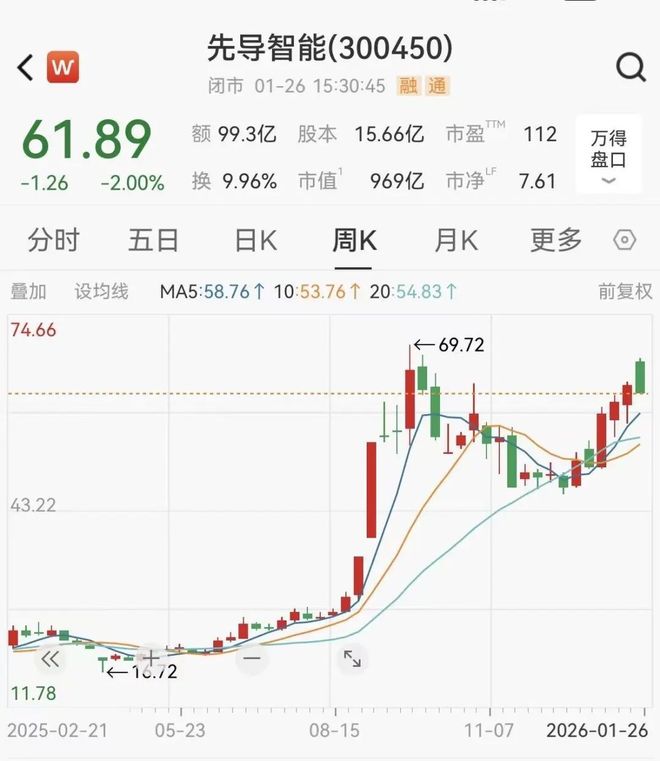
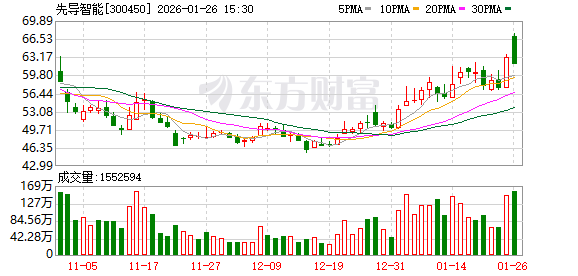
记者丨费心懿 光伏锂电设备龙头预告2025年业绩大幅上升,赴港二次上市进程提速。 1月25日晚,先导智能(300450.SZ)公告,2025年度预计归属于上市公司股东的净利润为15-18亿元, 同比大幅增长424.29%—529.15%。其中,第四季度预计实现归属于上市公司股东的净利润为3.14—6.14 亿元,而去年同期亏损3.22亿元。 强劲业绩表现和涉足固态电池、钙钛矿等热门题材推动公司市值在去年一度重返千亿水平,去年内股价 涨幅更是超150%。截至1月26日,公司最新市值为969亿元。 编辑丨骆一帆 锂电需求回暖 先导智能的其核心客户囊括全球顶级电池厂商与整车厂,包括比亚迪、LG Energy、特斯拉、大众等; 在光伏领域则为通威股份(600438.SH)、隆基绿能(601012.SH)等龙头提供设备。 据弗若斯特沙利文数据,以2024年收入计,先导智能是全球最大的锂电池智能装备供应商,全球市场份 额为15.5%,中国市场份额19%。 事实上,先导智能业绩回暖的核心驱动是动力电池及储能电池需求进一步复苏。其中,公司在去年第四 季度的盈利大增亦是行业复苏的一大侧写。 值得一提的是,在锂电设备细分赛道,差 ...

光伏锂电设备龙头净利预增529%,赴港上市有新进展
21世纪经济报道· 2026-01-27 00:54
光伏锂电设备龙头预告2025年业绩大幅上升,赴港二次上市进程提速。 1月25日晚,先导智能(300450.SZ)公告,2 025年度预计归属于上市公司股东的净利润为15-18亿元,同比大幅增长424.29%—529.15%。 其 中,第四季度预计实现归属于上市公司股东的净利润为3.14—6.14亿元,而去年同期亏损3.22亿元。 强劲业绩表现和涉足固态电池、钙钛矿等热门题材推动公司市值在去年一度重返千亿水平,去年内股价涨幅更是超150%。截至1月26日,公司 最新市值为969亿元。 锂电需求回暖 先 导 智 能 的 其 核 心 客 户 囊 括 全 球 顶 级 电 池 厂 商 与 整 车 厂 , 包 括 比 亚 迪 、 LG Energy 、 特 斯 拉 、 大 众 等 ; 在 光 伏 领 域 则 为 通 威 股 份 (600438.SH)、隆基绿能(601012.SH)等龙头提供设备。 记者丨 费心懿 编辑丨骆一帆 从行业来看,2025年,光伏和锂电产业都进入了激烈的博弈期,而相关设备厂商业绩出现了显著的分野。 锂电设备领域,复苏信号向上传导,尤其在第四季度。激光装备智造龙头海目星(688559.SH)的年报 ...

太空光伏万亿赛道启幕 概念高热与产业博弈升温
Zhong Guo Zheng Quan Bao· 2026-01-26 20:54
Core Viewpoint - The A-share space photovoltaic sector continues to experience high enthusiasm, driven by Elon Musk's statements regarding space solar energy and production capacity goals, alongside multiple listed companies disclosing their progress in this area [1] Group 1: Market Dynamics - Musk announced a plan for SpaceX and Tesla to jointly create 200GW of photovoltaic capacity in the U.S. over the next three years, with each company responsible for 100GW, primarily for ground data centers and space AI satellites [1] - The industry faces challenges such as high electricity costs and lengthy commercialization cycles, but the expectation of a trillion-dollar market continues to fuel the sector's growth [1] Group 2: Technological Developments - The space photovoltaic technology route is undergoing rapid iteration and breakthroughs, with competition focusing on cost control and conversion efficiency [2] - Gallium arsenide batteries have dominated the market due to their radiation resistance and stability, but their high costs limit scalability, leading to a focus on silicon and perovskite technologies for cost advantages [2] - Heterojunction (HJT) technology is gaining traction due to its short production process and adaptability to high labor cost scenarios, making it a key direction for overseas capacity expansion [2] Group 3: Company Initiatives - Mingyang Smart Energy announced plans to acquire control of Zhongshan Dehua, which has significant expertise in gallium arsenide space solar cells, marking Mingyang's entry into the space photovoltaic sector [3] - JunDa Co. is initiating a strategic transformation by investing in Shanghai Xingyi Chip Energy, although it is still in the R&D verification stage [3] - Trina Solar has established long-term layouts in crystalline silicon, perovskite tandem cells, and III-V gallium arsenide multi-junction cells, and is collaborating with domestic and international aerospace institutions [3] Group 4: Industry Outlook - The space photovoltaic technology route is expected to evolve in three stages, with gallium arsenide batteries leading high-value aerospace scenarios in the short term, HJT technology penetrating low Earth orbit satellite missions in the next five years, and perovskite tandem cells supporting GW-level space data center deployments in the long term [4] - The Chinese low Earth orbit satellite photovoltaic market is projected to exceed $3 billion by 2030, with global market potential reaching $500 billion to $1 trillion if the 100GW space data center deployment phase is achieved [4] Group 5: Challenges Ahead - The industry is still in its introduction phase, facing multiple challenges for commercialization, including high current space photovoltaic electricity costs of $2-3 per kilowatt-hour, which is significantly higher than ground photovoltaic costs [5][6] - The extreme conditions in space require photovoltaic materials to have high radiation resistance and temperature tolerance, which presents additional challenges for technology maturity and cost stability [6] - The commercial aerospace industry's growth provides ample application scenarios for space photovoltaics, and companies with core technologies and stable supply capabilities are expected to benefit from industry development [6]
光伏的逆袭-马斯克的光伏第一性原理
2026-01-26 15:54
光伏的逆袭:马斯克的光伏第一性原理 20260126 北美地区光伏市场的资本开支需求如何? 根据马斯克的表态,北美地区地面光伏的资本开支需求达到 100GW。此外, 从多晶硅还原炉、硅片切割、电池片到组件,整个地面光伏部分的资本开支已 经达到千亿级别。未来几年,这一领域将具有非常充足的业绩弹性。 太空光伏技术的发展前景如何? 太空光伏技术的发展前景广阔,主要体现在两个方面:一是商业航天不断催化 下,对关键资源争夺的紧迫性;二是算力需求持续爆发以及用电供给瓶颈背景 下,太空和地面的用能需求中,光伏作为度电成本最低的能源形式,是最优解。 根据测算,每瓦算力至少需要配比 1.5~2 瓦的光伏发电能力,以马斯克每年 100GW 太空算力需求为例,对应每年 200GW 太空光伏需求。按当前单瓦价 值量 60 元计算,市场空间超过 12 万亿元。 阿特斯、晶科能源、天合光能和隆基股份等中国企业在美国市场具有竞 争优势,已建立本土化产能和品牌优势,有望充分受益于美国光伏市场 需求爆发。 正泰股份、东方日升、上海港湾和铭扬智能等公司在国内太空光伏建设 中值得关注,它们在技术积累、资源优势及前瞻性投入方面具有优势。 马斯克宣布 ...
2025年光伏上市公司业绩持续承压
中国能源报· 2026-01-26 13:28
Core Viewpoint - The photovoltaic industry is currently experiencing a cyclical downturn, with companies facing significant operational pressures, but there are signs of improvement such as narrowing losses and recovering gross margins [3][4][12]. Group 1: Industry Performance - As of the latest disclosures, the photovoltaic sector remains at the bottom of the cycle, with most companies reporting losses, including major players like TCL Zhonghuan, Trina Solar, and LONGi Green Energy, with expected losses ranging from tens to hundreds of billions [3][5]. - The China Photovoltaic Industry Association reported a 16.9% year-on-year decline in revenue for the main industry chain in the first three quarters of 2025, while gross margin improved to 3.64%, reaching 5.61% in Q3 [3][4]. Group 2: Losses and Variability - Despite widespread losses, there is a notable divergence in the extent of losses among companies. For instance, LONGi Green Energy's expected loss of 60 to 65 billion is a significant reduction from the previous year's loss of 85.92 billion [6]. - Some companies, like Daqo New Energy, are also showing signs of resilience with losses narrowing by 52.17% to 63.21% year-on-year [6]. Group 3: Market Dynamics - The industry is facing a severe imbalance between supply and demand, exacerbated by concentrated capacity release, leading to aggressive price competition and declining product prices [8]. - Key raw material costs, such as silicon and silver paste, have risen sharply in the second half of 2025, but this cost increase has not been effectively passed down to downstream products, further squeezing profit margins [8]. Group 4: Strategic Responses - Companies are adopting various strategies to navigate the downturn, focusing on technological innovation, global expansion, and business collaboration [10]. - R&D and innovation are seen as critical for overcoming challenges, with companies like LONGi Green Energy and Trina Solar investing in advanced technologies and exploring new market applications [10]. - The integration of energy storage solutions alongside photovoltaic manufacturing is emerging as a new competitive focus, with companies like JinkoSolar and Trina Solar emphasizing the growth of their storage businesses [10]. Group 5: Future Outlook - Industry leaders believe that the current downturn does not signify a decline but rather a necessary adjustment towards high-quality development in anticipation of future demand surges [12].
先导智能赴港上市聆讯通过,去年净利润预增四至五倍
2 1 Shi Ji Jing Ji Bao Dao· 2026-01-26 12:25
Company Overview - Company expects a significant increase in net profit for 2025, projected between 1.5 billion to 1.8 billion yuan, representing a year-on-year growth of 424.29% to 529.15% [2] - The company anticipates a net profit of 314 million to 614 million yuan in Q4, recovering from a loss of 322 million yuan in the same period last year [2] - The company's market capitalization reached 96.9 billion yuan as of January 26, following a stock price increase of over 150% last year [2] Industry Demand and Performance - The core customers include top global battery manufacturers and automotive companies such as BYD, LG Energy, Tesla, and Volkswagen, as well as leading firms in the photovoltaic sector [4] - The company holds a 15.5% global market share and a 19% share in the Chinese market for lithium battery intelligent equipment, making it the largest supplier in this sector [4] - The recovery in demand for power and energy storage batteries is a key driver of the company's performance, with significant profit growth noted in Q4 [4] Financial Performance and Growth Drivers - The overseas market has become a crucial revenue engine, with overseas revenue accounting for 17.46% of total revenue in the first half of 2025, and a gross margin of 40.27% significantly higher than domestic levels [5] - The company has improved its operational cash flow and overall profitability through cost reduction and efficiency enhancement measures [5] Industry Trends and Competitive Landscape - The lithium battery equipment sector is experiencing a recovery, with notable performance differences among equipment manufacturers [6] - The company maintains a gross margin of over 35% in its lithium battery equipment business, while competitors show lower profitability [7] - The company is positioned to benefit from the anticipated acceleration in production expansion by downstream battery manufacturers in 2026, driven by solid-state battery and energy storage demand [7] Strategic Developments - The company has submitted an application for a secondary listing in Hong Kong, marking a significant step in its globalization strategy [8] - If successful, the company will become the first renewable energy equipment manufacturer listed on the Hong Kong stock market, enhancing its global development capabilities [9] - The dual capital platform strategy aims to lower financing costs, improve efficiency, and attract international investors, thereby strengthening the company's competitive position [9]
马斯克计划将光伏用于太空、地面算力
HTSC· 2026-01-26 09:13
Investment Rating - The industry investment rating is "Overweight" (Maintain) [2] Core Viewpoints - The global computing power construction is accelerating, leading to a rapid increase in photovoltaic demand. Elon Musk announced plans for SpaceX and Tesla to achieve a combined photovoltaic capacity of approximately 200GW in the U.S. within three years [3][4] - The photovoltaic technology routes for ground and space applications are diversifying, with TOPCon, HJT, and perovskite technologies expected to grow in parallel. The report is optimistic about the development potential of these technologies in the context of large-scale overseas photovoltaic capacity construction [3][4][6] - The energy supply for AI applications is currently a bottleneck, with AI chip production growing exponentially while power supply only increases by 4% annually. Photovoltaics are seen as a key solution to this energy bottleneck, with the potential for hundreds of terawatts of power generation from space photovoltaics in the future [4] Summary by Sections Section: Ground and Space Computing Power - Ground computing power is expected to add 97GW capacity globally between 2025 and 2030, driven by the expansion of large-scale cloud services and AI demand, resulting in a CAGR of 14%. This will increase total capacity to over 200GW and raise electricity demand from data centers significantly [5] - Space computing power is becoming more economically viable due to the long-term decline in commercial space launch costs. Plans for space data centers are being developed, with significant capacity expected in the coming years [5] Section: Photovoltaic Technology Routes - In space photovoltaics, gallium arsenide batteries are currently the mainstream technology due to their high efficiency and radiation resistance, but their high cost limits their use in large-scale satellite networks. Perovskite and P-type HJT batteries show promise for space applications due to their better performance and lower manufacturing costs [6] - Ground photovoltaic technologies like TOPCon are expected to maintain a leading market share due to their good low-irradiation performance and commercial maturity [6] Section: Equipment Companies - Companies involved in photovoltaic equipment are likely to see an increase in orders due to Musk's plans for photovoltaic capacity. Key players include: - Maiwei Co., a leader in HJT equipment benefiting from P-type HJT and perovskite applications in space - Aotwei, which provides equipment for both space and ground photovoltaic capacity - Gaoce Co., a leader in wafer cutting technology, expected to benefit from the trend towards thinner solar cells in space applications [7]