SK On

Search documents
野村东方国际 锂电新周期 全球产业格局的变迁
野村· 2025-06-26 14:09
Investment Rating - The report indicates a positive outlook for the lithium battery industry, particularly for Chinese companies expanding in Europe, with a projected market capitalization increase for CATL from 1.1 trillion RMB to 1.6 trillion RMB by the end of 2025 [2]. Core Insights - The Inflation Reduction Act has driven significant capacity expansion by Japanese and Korean battery companies in North America, with LG Chem's capacity planning increasing from less than 50 GWh in 2022 to over 500 GWh by 2025 [4]. - The Chinese lithium battery market faces challenges of oversupply, but capacity utilization is recovering, and companies are accelerating overseas expansion, particularly in Europe [1][7]. - Solid-state battery technology is expected to achieve mass production by 2027, with investment opportunities arising from market fluctuations [1][9]. Summary by Sections North American Market Dynamics - Japanese and Korean battery companies are increasing their capacity in North America due to the Inflation Reduction Act, with LG Chem's capacity planning significantly increasing [4]. - LG Chem's profits turned positive in Q1 2025, benefiting from U.S. subsidies, but the company is reducing capital expenditures in North America due to policy uncertainties [10][12]. Chinese Market Challenges and Opportunities - The Chinese lithium battery market is experiencing severe oversupply, leading to a significant decline in profitability [5]. - Chinese companies are entering a new phase of internationalization, focusing on building manufacturing capabilities overseas, particularly in Europe [16][20]. European Market Outlook - The European electric vehicle market is expected to see demand release from 2025 to 2027, driven by new model launches and policy adjustments [19]. - CATL's European factories are gradually ramping up production, with expectations of significant valuation increases as they establish a strong market presence [23]. Solid-State Battery Market - The investment logic for solid-state batteries revolves around technological advancements, with SNE Research predicting a market penetration rate of 8% by 2027 [9]. - The solid-state battery market is expected to present trading opportunities, particularly when prices decline [25]. Competitive Landscape - Chinese lithium battery companies have established strong customer relationships and price advantages in Europe, positioning them favorably against Japanese and Korean competitors [20]. - The competitive landscape for Japanese and Korean battery companies is challenging, with potential declines in profitability if lithium subsidies are removed [16].

LFP、大圆柱、专利池:解构日韩电池企业三张“新牌”
高工锂电· 2025-06-18 13:32
Core Viewpoint - The global competition in the power battery market is intensifying as Chinese battery manufacturers, particularly CATL, gain market share over their South Korean counterparts, driven by the rapid adoption of lithium iron phosphate (LFP) batteries and strategic adjustments by companies like LG Energy Solution (LGES) and Samsung SDI [1][2][9] Group 1: Market Dynamics - In 2024, CATL surpassed LGES in overseas market share for the first time, with CATL's battery installation volume reaching 96.8 GWh compared to LGES's 87.9 GWh, marking a significant shift in the competitive landscape [2] - Major South Korean battery manufacturers, including LGES, Panasonic, and Samsung SDI, experienced slower growth rates in battery installation volumes compared to the industry average, with some reporting declines exceeding 10% [2][9] - The financial performance of these South Korean firms reflected this market shift, as they reported losses attributed to the rapid penetration of LFP batteries and slow adaptation to changing market demands [2] Group 2: Strategic Adjustments - LGES is accelerating its transition to LFP battery production, repurposing existing facilities in Michigan for LFP production and planning to convert some of its NCM battery lines in Tennessee and Ohio [4] - LGES secured a significant contract with Renault's Ampere to supply approximately 39 GWh of LFP batteries from 2025 to 2030, marking a strategic entry into the European market [4] - Samsung SDI is also adapting by introducing LFP production lines in its Indiana facility, aligning with General Motors' shift towards LFP batteries for most of its upcoming electric vehicle models [5] Group 3: Technological Innovations - LGES announced a collaboration with General Motors to develop a new type of lithium manganese iron phosphate (LMFP) battery, which offers over 30% higher energy density than current LFP batteries while maintaining similar costs [5] - Samsung SDI has initiated mass production of the 46 series cylindrical batteries, with plans to expand into the electric vehicle market, while Panasonic is preparing for mass production of its 4680 battery [7] Group 4: Patent Strategies - A patent battle is emerging as LGES and Panasonic established a patent pool named "Tulip Innovation" to protect their intellectual property, which includes over 5,000 patents [8] - The patent pool has already taken legal action against Chinese battery companies for alleged patent infringements, highlighting the importance of intellectual property in the competitive landscape [8][9] Group 5: Future Outlook - The competition in the global power battery market is becoming increasingly multifaceted, with key variables such as LFP technology, cylindrical batteries, and patent litigation shaping the industry's future [9]

韩企63亿电池材料工厂暂停建设!
起点锂电· 2025-06-13 10:15
Group 1 - EcoPro BM announced the suspension of its CAD 1.2 billion battery materials factory project in Quebec, Canada, due to uncertainties in the electric vehicle and battery industry, as well as challenges from U.S. tariff policies [1] - The factory, a joint venture between EcoPro BM, SK On, and Ford, was expected to produce 45,000 tons of nickel-cobalt-manganese battery cathode active materials annually, sufficient to supply approximately 225,000 Ford electric vehicles [1] - The factory's production was initially scheduled to start in the first half of 2026, but faced multiple delays, including a pause in construction due to contractor issues and a redesign of the factory [1][2] Group 2 - Ford, a key investor and potential customer for the factory, withdrew its investment in November, further increasing uncertainty surrounding the project [2] - In April, Ford delayed the production timeline for its electric SUVs from 2025 to 2027, citing slower-than-expected growth in electric vehicle demand [2] - In July, Ford announced a shift in its Canadian factory's production focus from electric vehicles to gasoline-powered versions of its flagship F-series trucks, raising concerns about the factory's future [3]

突发!63亿电池材料工厂暂停建设!
鑫椤锂电· 2025-06-13 08:04
Core Viewpoint - EcoPro BM has announced the suspension of its CAD 1.2 billion (approximately RMB 6.3 billion) battery materials factory project in Quebec, Canada, due to uncertainties in the electric vehicle and battery industry, compounded by challenges from U.S. tariff policies [1]. Group 1: Company Overview - EcoPro BM is a subsidiary of South Korea's EcoPro, established in May 2016, specializing in the production of lithium battery cathode materials, including NCA and NCM [1]. - The Quebec cathode materials factory is a joint venture between EcoPro BM, SK On, and Ford, with plans to produce 45,000 tons of nickel-cobalt-manganese battery cathode active materials annually, sufficient to supply approximately 225,000 Ford electric vehicles [1]. Group 2: Project Developments - The factory was initially scheduled to begin mass production in the first half of 2026, but faced delays due to issues in selecting a construction contractor, leading to a temporary suspension in April 2024 [1]. - The factory was halted again in August 2024, with the official reason cited as "factory redesign" [1]. Group 3: Market Dynamics - Ford, a key investor and potential customer for the factory, withdrew its investment in November 2024, further increasing uncertainty surrounding the project [2]. - In April 2024, Ford had already postponed the production timeline for its electric SUVs from 2025 to 2027, citing slower-than-expected growth in electric vehicle demand [2]. - In July 2024, Ford announced a shift in production plans for its Canadian factory, opting to produce gasoline-powered versions of its flagship F-series trucks instead of electric vehicles [2].

突发!63亿电池材料工厂暂停建设!
鑫椤锂电· 2025-06-13 08:03
Core Insights - EcoPro BM, a South Korean battery materials manufacturer, announced a suspension of its CAD 1.2 billion (approximately RMB 6.3 billion) battery materials factory project in Quebec, Canada, due to uncertainties in the electric vehicle and battery industry, compounded by challenges from U.S. tariff policies [1][2] Group 1: Company Overview - EcoPro BM specializes in the production of lithium battery cathode materials and is a subsidiary of EcoPro, established in May 2016. Its main products include NCA and NCM cathode materials [1] - The Quebec factory was a joint investment by EcoPro BM, SK On, and Ford, with plans to produce 45,000 tons of nickel-cobalt-manganese battery cathode active materials annually, sufficient to supply approximately 225,000 Ford electric vehicles [1] Group 2: Project Developments - The factory was initially scheduled to begin production in the first half of 2026, but faced delays due to issues in selecting a construction contractor, leading to a temporary suspension in April 2024, which was later resumed [1] - In August 2024, the factory was halted again for "factory redesign," indicating ongoing uncertainties surrounding the project [1][2] Group 3: Market Context - Ford, as both an investor and potential customer, withdrew its investment in November 2024, further increasing uncertainty regarding the factory's future [2] - In April 2024, Ford had already delayed the production timeline for its electric SUVs from 2025 to 2027, citing slower-than-expected growth in electric vehicle demand [2] - In July 2024, Ford announced a shift in its Canadian factory's production focus from electric vehicles to gasoline-powered versions of its flagship F-series trucks [2]
5月磷酸铁锂电池装车量同比保持快速增长
Dongguan Securities· 2025-06-12 09:16
锂电池产业链 超配(维持) 5 月磷酸铁锂电池装车量同比保持快速增长 锂电池产业链跟踪点评 2025 年 6 月 12 日 分析师:黄秀瑜(SAC 执业证书编号:S0340512090001) 电话:0769-22119455 邮箱:hxy3@dgzq.com.cn 事 件 点 评 行 业 事件: 2025 年 5 月新能源汽车产销量及动力电池装车量数据公布。 点评: 5月新能源汽车产销同比保持快速增长,环比小幅增长。根据中汽协数据,2025年5月新能源汽车产销 分别完成127万辆和130.7万辆,同比分别增长35%和36.9%,环比分别增长1.52%和6.61%。其中,纯电 动销量83.4万辆,同比增长43.1%,环比增长1.46%;插电式混动销量47.3万辆,同比增长27.3%,环 比增长17.37%。1-5月新能源汽车产销分别完成569.9万辆和560.8万辆,同比分别增长45.2%和44%。 其中,纯电动销量355.6万辆,同比增长47.7%;插电式混动销量205.1万辆,同比增长38%。5月新能 源汽车渗透率48.7%,环比上升1.4pct;1-5月渗透率44%。5月新能源汽车出口21.2万辆,同比 ...



磷酸铁锂的反攻
远川研究所· 2025-06-09 13:04
以下文章来源于远川科技评论 ,作者徐珊珊 远川科技评论 . 刻画这个时代(的前沿科技) 失意者通常有两种结局,要么一蹶不振,要么绝地求生,磷酸铁锂电池属于后者。 2021年6月,磷酸铁锂电池装机量反超三元锂电池,成为动力电池市场的主流选择。此后开启神挡杀神的开挂人生, 份额一路提高到72%,重回十年前的巅峰水平。 今年1-4月,国内磷酸铁锂电池装机份额超过80%,可谓独孤求败。向来以技术先进性自我标榜的海外车企,也罕见地 为磷酸铁锂摇旗呐喊。 磷酸铁锂和三元锂的技术讨论几乎与新能源车的历史一样长,这个问题在当下似乎又有了新的解读。 过去十年的动力电池市场可以清晰的划分为两个阶段,也是磷酸铁锂电池从波峰到谷底、再卷土重来的过程。 到"十城千辆"计划结束,25个示范城市共售出27432辆新能源车,其中个人采购量只有4400辆[1]。虽说成绩单不算理 想,但最大成果是培育了以"锂电四大天王"比克、比亚迪、力神和ATL(后孵化出宁德时代)为代表的电池生产商。 危险的地位 磷酸铁锂和三元锂的缠斗,可以一路追溯到2009年的"十城千辆"计划。 时值新能源产业链蹒跚起步,迎来为期三年的培育期,补贴力度可以用送钱形容:10米 ...

价值战重塑储能格局,大圆柱电池上演“逆袭”?
行家说储能· 2025-06-05 09:39
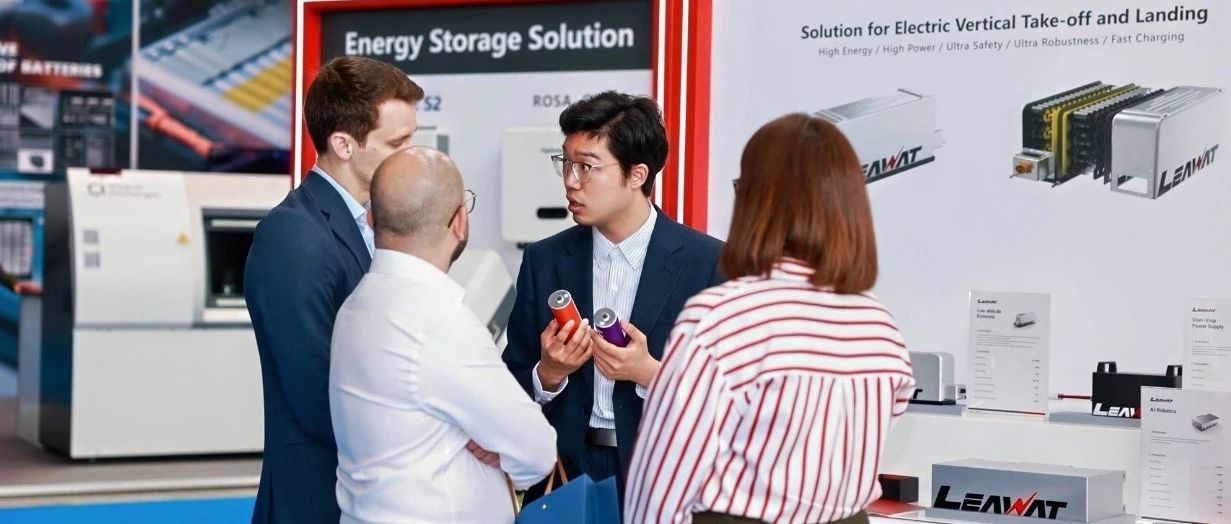
Core Viewpoint - The article discusses the transition of China's energy storage industry from policy-driven growth to market-driven development, emphasizing the importance of value creation in energy storage systems and the emergence of large cylindrical batteries as a key technology in this shift [1][24]. Group 1: Market Dynamics - The implementation of Document No. 136 in June marks a significant shift in China's energy storage industry, moving from a policy-driven model to a market-driven one, focusing on value creation rather than just scale [1]. - The global demand for cylindrical batteries is expected to exceed 100 GWh by 2025, with a projected market size reaching hundreds of billions by 2030, indicating a 4-5 times growth in five years [16][21]. Group 2: Technological Advancements - The introduction of the 46 series cylindrical battery by Yantai Lihua Power Technology Co., Ltd. showcases innovations such as the all-pathless ear structure, which significantly reduces internal resistance by 20% and enhances discharge capabilities [8][9]. - The 46 series cylindrical battery achieves an energy density increase of 3%-5% through new electrode materials and a unique stacking design, making it adaptable to various pack configurations [9][10]. - The battery's cycle life exceeds 8000 cycles, addressing the issue of cycle life degradation in energy storage systems, which is crucial for commercial applications [13][24]. Group 3: Competitive Advantages - The cylindrical battery offers higher safety and efficiency compared to square and pouch batteries, with advanced thermal management technologies that mitigate risks of thermal runaway [14][15]. - The production efficiency of the 46 series cylindrical battery is significantly higher, achieving assembly rates of 100-180 parts per minute, which is several times faster than traditional battery types [15][24]. Group 4: Application Scenarios - The 46 series cylindrical battery is expanding its application from residential and portable storage to commercial energy storage, driven by its high energy density, long cycle life, and cost advantages [17][21]. - Emerging applications in data centers, low-altitude economies, and smart robotics are identified as growth points for energy storage, leveraging the battery's high power and energy density [18][20]. Group 5: Market Positioning - The article highlights the competitive landscape, noting that Chinese companies are increasing their market share in cylindrical batteries, projected to rise from 29.3% in 2023 to 43.6% in 2024, challenging the dominance of Japanese and Korean manufacturers [21][23]. - The establishment of a 25 GWh production facility for the 46 series cylindrical battery indicates strong growth potential for the company, with significant investments aimed at enhancing production capabilities and meeting market demand [23].
中国锂电上市企业年度最具竞争力50强排行榜|巨制
24潮· 2025-06-04 23:05
Core Viewpoint - The global lithium battery industry is undergoing a significant transformation, moving away from a period of rapid growth to a phase of contraction, particularly as it approaches 2024, indicating an unprecedented downturn in the sector [1]. Industry Overview - Over the past two decades, China's lithium battery sector has achieved substantial breakthroughs in technology innovation, globalization, and industry investment, capturing a dominant global market share in various key areas, including approximately 70% of global power battery shipments and over 90% of energy storage battery shipments [1]. - The lithium battery industry is now facing a downturn, with a reported 11.87% decline in overall revenue for 108 Chinese lithium battery companies in 2024 compared to the previous year, alongside a staggering 67.27% drop in net profit [1][3]. Financial Performance - Key financial metrics for 2024 include: - Total assets: 29,092.41 million, up 6.17% year-on-year - Total liabilities: 16,721.07 million, up 7.31% year-on-year - Operating revenue: 13,028.84 million, down 11.87% year-on-year - Net profit attributable to shareholders: 651.92 million, down 67.27% year-on-year - Net financing cash flow: 210.20 million, down 81.91% year-on-year [3]. Market Dynamics - Major players in the industry, including CATL, Ganfeng Lithium, and Tianqi Lithium, are experiencing significant revenue declines, with CATL reporting a 9.7% drop in revenue for 2024, and other companies seeing declines of over 50% in their lithium product revenues [4][5]. - The global lithium battery landscape is shifting, with even leading companies facing severe impacts, as evidenced by the financial struggles of major Korean battery manufacturers and the bankruptcy filing of Ambri Inc. in the U.S. [5][6]. Investment Trends - The investment landscape is changing, with a notable halt or delay in large-scale lithium battery projects. Over 30 lithium battery business terminations have been reported in 2023 alone, involving investments exceeding 100 billion yuan [9]. - The global lithium battery industry is witnessing a retreat from previous aggressive expansion, with significant projects being canceled or postponed, such as LG Group's withdrawal from a planned electric vehicle battery ecosystem in Indonesia [9][10]. Future Outlook - The lithium battery industry is entering a new phase characterized by competition based on technological strength and operational efficiency rather than mere expansion. Companies that can demonstrate continuous innovation, effective capacity management, and strong financial health are likely to thrive in this evolving landscape [11].


掘金韩国市场,瑞浦兰钧再下一城!
起点锂电· 2025-05-30 10:49
据悉, 瑞浦兰钧与晓星重工业于5月27日在韩国首尔正式签署电池储能系统领域战略合作备忘录(MoU), 瑞浦兰钧将为其供应2.5GWh的 储能产品。 具体合作方面,确定以 "构建全球储能战略框架" 为核心,瑞浦兰钧将为晓星重工业供应储能电芯、模组及直流集装箱,并提供系统设计集 成、质量控制等技术支持;晓星重工业则将负责全球推广、本地化及认证工作。 01 中国电池企业全球扩张步伐加速,尤其在储能领域,即使是面对一直与中国"扳手腕"竞争的韩系电池企业,中国企业也正长驱直入其大本营 市场。 近日,从瑞浦兰钧官方平台获悉,其拿下韩国企业晓星重工业(Hyosung Heavy Industries)2.5GWh 储能产品合作订单。 多家锂电企业"攻入"韩国主场 据介绍,晓星重工业成立于1977年,是韩国一家上市企业,其在高压及超高压电力设备、能源基础设施领域的全球竞争力备受认可,在韩国 以及欧洲变压器市场拥有重要的份额。 目前,凭借数十年工程总承包(EPC)经验与强劲的系统工程能力,晓星重工业向中东、东南亚、美洲及欧洲供应了大量高可靠性电力系统, 成为推动全球能源转型的重要参与者。 市场认为,晓星重工业与瑞浦兰钧的合作, ...