九识智能

Search documents
商业化要素齐备,无人物流时代开启
2025-07-14 00:36
Summary of Key Points from the Conference Call Industry Overview - The conference call discusses the **unmanned logistics vehicle industry**, focusing on its rapid development and commercialization potential in China, particularly in urban delivery scenarios [1][6]. Core Insights and Arguments - **Application Scope**: Unmanned logistics vehicles are primarily used for last-mile delivery and short-distance branch transportation, with potential applications extending to food delivery, retail, and fresh produce [2][4]. - **Commercialization Factors**: Key factors for large-scale deployment include: - **Wide Application Range**: Applicable beyond logistics to retail and other sectors [4]. - **Simple Operating Environment**: Less complex than traditional logistics and Robotaxi operations [4]. - **Mature Commercial Conditions**: Supportive policies, technological advancements, and significant cost reductions (e.g., new model priced at 19,800 yuan) [4][7]. - **Market Growth**: The domestic unmanned logistics vehicle market is expected to see sales surpassing 30,000 units by 2025 and potentially exceeding 800,000 units by 2030, with a market size exceeding 10 billion yuan [10]. Important but Overlooked Content - **Cost Structure**: The operating costs of unmanned logistics vehicles are lower due to optimized components and simplified structures, although profitability will likely depend on software services rather than vehicle sales alone [8]. - **Labor Cost Trends**: Rising labor costs (from 17,000 yuan in 2019 to 23,000 yuan by 2025) and increasing logistics demand (projected to reach 361 trillion yuan in 2024) create a favorable environment for unmanned logistics vehicles to fill labor gaps in the industry [9]. - **Beneficiaries in the Supply Chain**: Key beneficiaries include upstream component suppliers (e.g., Nvidia, Horizon Robotics) and chassis manufacturers, as well as startups closely collaborating with major e-commerce platforms [11][13]. - **Innovative Products and Collaborations**: Notable startups like Jiushi Intelligent and New Stone have launched products targeting the logistics sector and formed partnerships with major players like China Post and SF Express [12]. Investment Recommendations - Focus on component suppliers with platform capabilities and strong ties to leading unmanned logistics companies, such as: - Domain controller suppliers like Xiaoma Zhixing and Jingwei Hengrun - Chassis suppliers like Asia Pacific Holdings and Wanlang Magnetic Plastic [13].
无人物流车正欲狂奔街头,黄石一纸叫停为哪般?
3 6 Ke· 2025-07-11 03:37
Core Viewpoint - The unmanned logistics vehicle industry is entering a rapid development phase, but large-scale commercialization faces significant challenges including industry standards, policy support, road rights, and safety issues [1][16]. Group 1: Industry Overview - Unmanned vehicles are transforming the logistics sector, particularly in the "last mile" delivery, with various companies emerging in this space [4][25]. - The market for unmanned delivery vehicles in China was approximately 6.5 billion yuan in 2023, projected to reach 17 billion yuan by 2025 [25]. Group 2: Key Players - New Stone (新石器) has become the largest supplier in the unmanned vehicle sector, with over 90% order share from major logistics companies like SF Express, JD.com, and China Post [8]. - Other notable companies include White Rhino (白犀牛) and Jiushi Intelligent (九识智能), both of which have established partnerships with major delivery firms and are expanding their fleets [10][11]. Group 3: Business Models - The three main companies have distinct business models: Jiushi Intelligent focuses on a "low-cost hardware + subscription service" approach, New Stone emphasizes "scale cost reduction," and White Rhino is deepening its presence in last-mile delivery [11][10]. Group 4: Challenges to Commercialization - Despite rapid advancements, the industry must overcome hurdles related to safety, regulatory frameworks, and public acceptance before achieving large-scale deployment [16][21]. - Recent incidents involving unmanned vehicles, such as accidents and regulatory non-compliance, highlight the need for improved safety measures and clearer legal responsibilities [17][19]. Group 5: Regulatory Environment - Different regions in China are exploring various regulations for unmanned vehicles, with some cities allowing testing under specific conditions while others impose strict operational limits [22][23]. - A unified regulatory framework is essential for the industry to thrive, balancing innovation with safety and compliance [23][27].

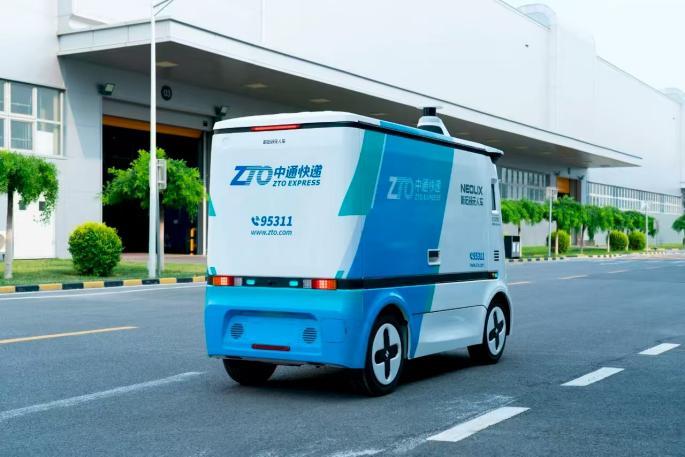
从“技术验证”转向“场景落地”自动驾驶赛道万亿级市场开启
Shang Hai Zheng Quan Bao· 2025-07-08 17:46
Group 1: Industry Overview - The autonomous driving market is projected to reach a total scale of $1.2 trillion by 2040, with a significant shift from "technology verification" to "scene implementation" expected by mid-2025 [1][2] - The penetration rate of L2 autonomous driving is increasing, while L3 products are gradually being introduced [1][3] - The release of international standards for autonomous driving testing reflects the global consensus on testing verification technology and highlights the growth of China's autonomous driving industry [1] Group 2: Company Developments - Major automakers such as BYD, Changan, Geely, and others are intensifying their smart driving strategies, with BYD's intelligent driving model sales reaching 231,000 units in May [2] - Huawei and SAIC Group are collaborating on the "Shangjie Automobile," aiming for a 2025 launch, while Momenta has partnered with multiple brands to produce over 130 models [2][3] - The rapid development of the autonomous driving industry is driving capacity increases among upstream and downstream enterprises, with Hesai Technology planning an annual production capacity exceeding 2 million units by 2025 [2] Group 3: Market Trends - The autonomous driving sector is experiencing a "listing boom," with over 10 companies seeking to enter the capital market, including Yikong Zhijia and Yushi Technology [4] - The domestic autonomous driving sector has seen nearly 80 significant financing events in the first half of 2025, with disclosed financing exceeding 13.5 billion yuan [4] Group 4: Specific Applications - L4 autonomous driving companies focusing on mining, ports, and logistics are receiving both policy and financial support, with companies like New Stone and White Rhino making significant progress in logistics applications [5] - The commercial deployment of mining autonomous driving solutions is accelerating, with Yikong Zhijia reporting a 264% revenue increase in 2024 compared to 2023 [5] Group 5: Robotaxi Expansion - 2025 is viewed as the "expansion year" for Robotaxi, with companies like Baidu and Xiaoma Zhixing significantly increasing their fleet sizes and operational areas [6][7] - Xiaoma Zhixing has obtained Robotaxi licenses in multiple countries and plans to expand its services to 15 international cities over the next five years [7] - The commercial viability of Robotaxi hinges on overcoming challenges related to technology, regulations, production capacity, and operational capabilities [8]


低速无人驾驶时代加速到来
Zhong Guo Zheng Quan Bao· 2025-07-03 21:35
Core Insights - The low-speed autonomous delivery vehicle market is experiencing significant price reductions and increased capital interest, indicating a promising growth trajectory for the industry [1][2][3] Price Trends - Since 2025, the prices of autonomous delivery vehicles have been consistently decreasing, with models like the E6 priced under 20,000 yuan and promotional offers from various companies [2] - The sales scale of China's low-speed autonomous delivery vehicle industry reached 12.3 billion yuan in 2024, a 45% year-on-year increase, with sales volume of approximately 33,000 units, up 34% [2] - Projections suggest that sales volume will exceed 47,000 units and sales value will reach 18.5 billion yuan in 2025, potentially hitting 95,000 units and over 41 billion yuan by 2030 [2] Market Expansion - Major logistics companies like Cainiao, Meituan, JD, and Jitu are rapidly expanding their delivery routes and application scenarios in cities like Beijing and Shenzhen [2] - In Shenzhen, nearly 300 autonomous delivery vehicles are currently operational, with expectations to surpass 1,000 by the end of 2025 [3] Capital Investment - The autonomous delivery vehicle sector has seen significant financing activity, including 1 billion yuan in funding for New Stone Technology and 100 million USD for Jiushi Intelligent [3][6] Industry Transformation - The logistics industry is expected to undergo a profound transformation driven by automation and the integration of autonomous vehicles, with a focus on improving efficiency in the last-mile delivery process [4][5] - Companies are encouraged to develop specialized vehicles, such as cold chain delivery vehicles, to enhance service quality [5] Policy and Market Dynamics - The Chinese government aims to reduce logistics costs to 13.5% of GDP by 2027, promoting the integration of autonomous technologies in logistics [5] - The current management of autonomous delivery vehicles is primarily under non-motor vehicle regulations, with a need for standardized definitions and management practices to facilitate broader adoption [6]



无人配送爆发前夜:翻倍上量、售价“砍半”与格局挑战
2 1 Shi Ji Jing Ji Bao Dao· 2025-07-02 13:14
Core Insights - The rapid expansion of the express delivery market is driving the adoption of Level 4 (L4) autonomous driving technology, particularly in logistics, which is seen as a breakthrough application scenario for the technology [1][2][10] - Major players in the industry are targeting significant sales growth, with many companies aiming to double their sales figures this year [2][10] - The shift towards autonomous delivery vehicles is primarily due to the stable and predictable nature of express logistics routes, which allows for significant cost savings and efficiency improvements [4][5] Industry Dynamics - The commercial viability of L4 autonomous driving has been slow to materialize, but the logistics sector is emerging as a key area for exploration and implementation [3][10] - Companies like Baidu and others have pivoted towards express logistics after initial challenges in other applications, indicating a trend towards focusing on low-speed, stable environments for autonomous vehicles [3][4] - The cost savings associated with using autonomous delivery vehicles can be substantial, with estimates suggesting a reduction of 30%-50% in delivery costs [4][5] Market Opportunities - The potential market for autonomous delivery vehicles in the express logistics sector is estimated to be around 36.6 billion yuan [10] - The industry is witnessing a surge in demand for autonomous vehicles, with companies like Jiushi and others planning to significantly increase production capacity in response to market needs [8][10] - The collaboration between logistics companies and technology providers is crucial for developing reliable and safe autonomous vehicles, with partnerships being formed to enhance product development and market reach [12] Competitive Landscape - Leading express delivery companies such as SF Express and Zhongtong Express are actively investing in autonomous delivery vehicles, with plans to scale their fleets significantly in the coming years [6][10] - The entry of new players from adjacent markets, such as WeRide, indicates increasing competition in the autonomous logistics space, although the transition from other applications may pose challenges [13] - The industry is currently characterized by a lack of unified regulatory standards, with local regulations dictating the deployment of autonomous vehicles, which could impact market dynamics [11][12]
顺丰、中通、菜鸟们的无人配送终极猜想
3 6 Ke· 2025-06-25 10:05
Core Viewpoint - The logistics industry is undergoing a significant transformation with the rise of unmanned delivery systems, shifting from a futuristic concept to a critical strategy for cost reduction and efficiency enhancement in the express delivery sector [2][5][25]. Group 1: Unmanned Delivery as a Strategic Weapon - Major express delivery companies like SF Express, ZTO, and Cainiao have already completed over 10 million deliveries using more than 6,000 unmanned vehicles across the country [3]. - Meituan's drones have successfully delivered 450,000 orders in cities like Shenzhen and Shanghai, while SF Express's drones have transported over 5.2 million items annually [4][5]. - Unmanned delivery has transitioned from a "technology validation" phase to a "scale commercialization" phase, becoming a core strategy for companies to tackle rising labor costs and efficiency bottlenecks [6]. Group 2: Technological Breakthroughs - The commercial viability of unmanned delivery has reached a critical point, with significant cost reductions achieved. For instance, SF Express's collaboration with New Stone Technology has halved the cost per delivery from 0.4 yuan to 0.2 yuan, with a 50% reduction in labor costs [7]. - The E6 model from Jiushi Intelligent has a unit price of 19,800 yuan and can deliver 1,500 orders daily, with a payback period of three years [8]. - ZTO's Robovan has seen delivery costs decrease by nearly 70% in pilot areas, indicating a shift towards large-scale deployment as costs drop below traditional delivery methods [9]. Group 3: Reliability and Adaptability - Technological reliability is crucial for unmanned delivery, with Jiushi Intelligent's E series achieving centimeter-level precision in complex environments [10]. - Cainiao plans to introduce functional vehicle models and reduce reliance on high-precision maps, enhancing deployment efficiency [11][12]. Group 4: Logistics Network Reconstruction - Unmanned delivery is evolving from a last-mile solution to an integrated "air-ground" logistics network, fundamentally changing the logistics landscape [14][20]. - SF Express has deployed over 800 unmanned vehicles across 38 cities, creating a hybrid delivery model that combines unmanned vehicles and human couriers [16][18]. - Meituan's drones have established 523 flight routes, significantly improving delivery speed and efficiency for high-frequency, small-batch orders [20][22]. Group 5: Ecosystem Competition - The competition in unmanned delivery has shifted to an ecosystem battle, with companies like Jiushi Intelligent transitioning from product suppliers to infrastructure providers [23]. - Cainiao is expanding its platform capabilities with AI-driven autonomous driving and human-machine interaction, setting the stage for the next generation of logistics [24]. - The success of unmanned delivery is now essential for survival in the express delivery market, as evidenced by the increasing daily delivery capabilities of companies like SF Express and Meituan [25][29].
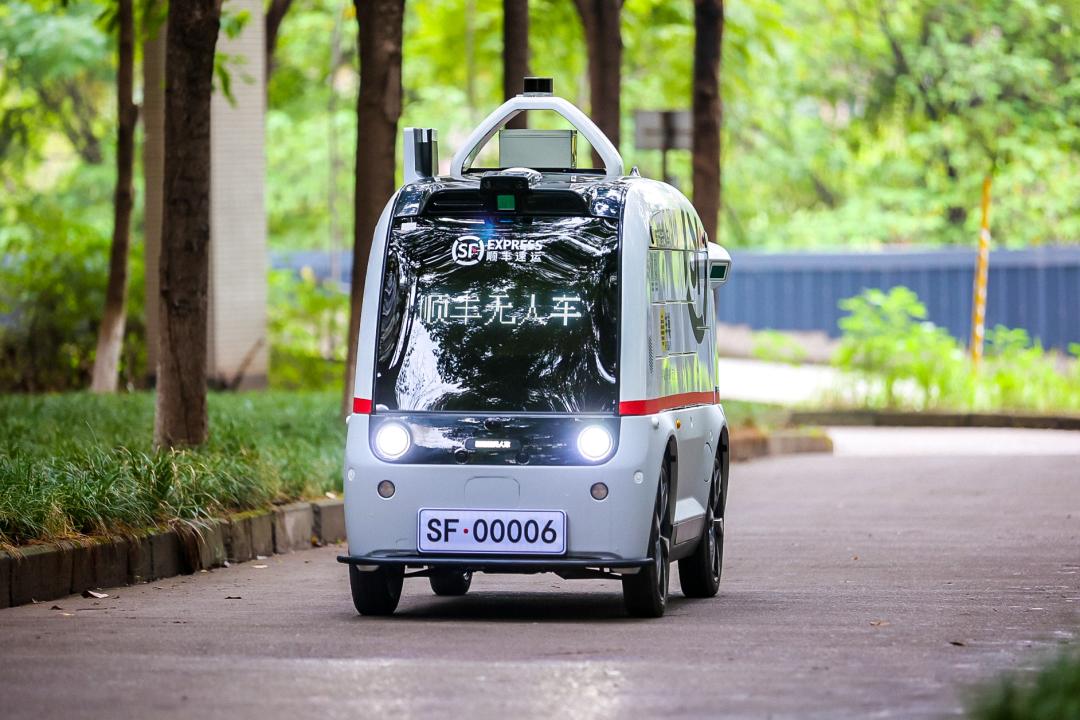
成本大幅下降,无人物流车商业化落地加速|活力中国调研行
Di Yi Cai Jing· 2025-06-20 13:46
Core Insights - The commercialization of unmanned logistics vehicles has entered stages 1 to 10, with leading manufacturers expected to see a significant increase in order volumes, expanding application scenarios from express delivery to retail distribution [1][6] - Level 4 autonomous vehicles are accelerating their application in the logistics sector, primarily in last-mile delivery [1] Market Overview - The stock market size for urban distribution vehicles is approximately 30 million units (excluding three-wheeled vehicles), with annual sales between 3 million to 4 million units [2] - The annual revenue for urban distribution logistics is around 3 trillion yuan, covering various scenarios such as express delivery, fresh produce, and cold chain logistics [2] Cost Efficiency - The cost of unmanned delivery vehicles has significantly decreased, with prices dropping from over 1 million yuan in 2018 to below 100,000 yuan today, allowing for cost recovery within a year [3][5] - In last-mile delivery, labor costs account for over 80% of expenses, while in trunk logistics, labor costs are about 10%, highlighting the potential for cost savings through automation [2] Technological Advancements - The shift from a multi-lidar and camera setup to a more cost-effective vision-based system has contributed to the reduction in hardware costs, with a projected decline of over 80% from 2023 to 2025 [5] - The new technology approach enhances safety and adaptability in various weather conditions, making it suitable for logistics applications [5] Policy Support - Government policies, including road rights opening and supportive management measures, are facilitating the application of unmanned vehicles in logistics, accelerating the establishment of standards and regulations [5]
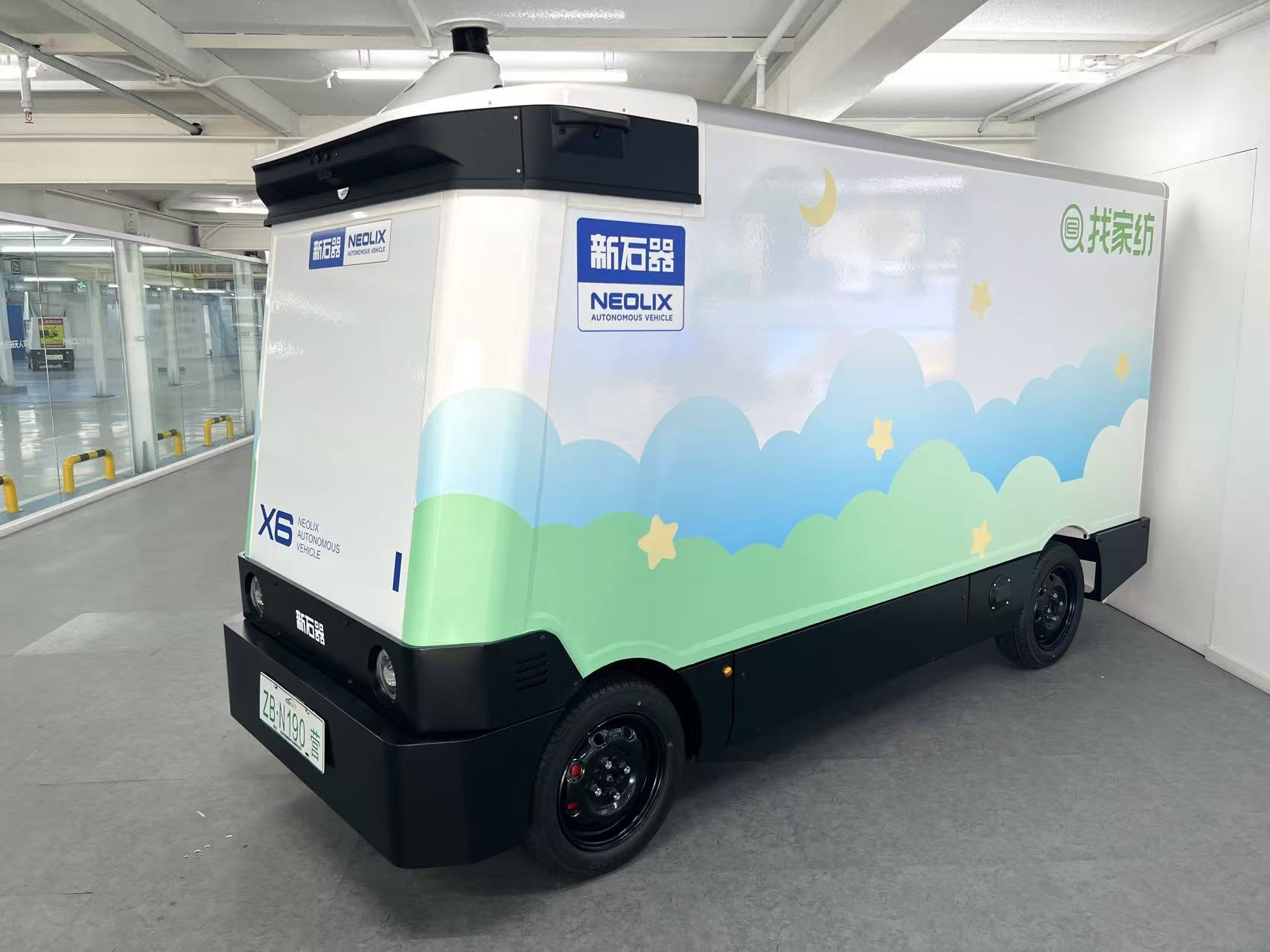
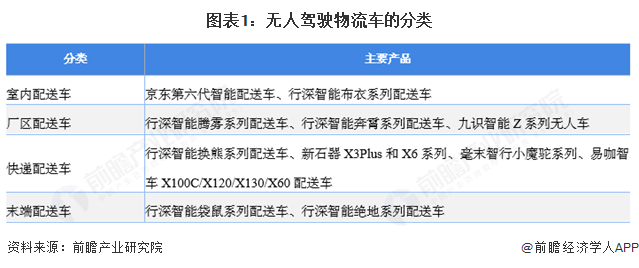
2025年中国无人驾驶物流车行业企业产品发展现状:产品性能稳步提升
Qian Zhan Wang· 2025-06-18 08:57
Core Viewpoint - The article discusses the rapid development and commercialization of autonomous logistics vehicles, highlighting their transformative impact on the traditional logistics industry through advanced technologies and diverse applications in various delivery scenarios [1][4]. Group 1: Product Categories of Autonomous Logistics Vehicles - Autonomous logistics vehicles are categorized into several types based on their application scenarios, including indoor delivery, factory delivery, express delivery, and last-mile delivery [1]. - The average volume of autonomous logistics vehicles in China has exceeded 4 cubic meters, with an average load capacity of over 1 ton, indicating their capability to meet existing logistics transportation demands [3]. Group 2: Company Product Analysis - JD Logistics has introduced its sixth-generation intelligent delivery vehicle, which has a cargo volume of 4 cubic meters and a maximum load of 1000 kg, featuring modular design and a range of advanced technologies for L4 level autonomous driving [4]. - New Stone Technology focuses on developing and manufacturing cargo-type autonomous vehicles, targeting urban delivery markets with a transportation radius extending from 5 km to 50 km, and pricing between 40,000 to 50,000 yuan per unit [6]. - Xing Shen Intelligent's autonomous vehicles are designed for various end-use scenarios, with payload capacities ranging from 400 kg to 3 tons and volume options from 1 to 22 cubic meters, showcasing a diverse product lineup [9]. Group 3: Performance and Specifications - New Stone Technology's models include the X3 and X6, with cargo spaces of 3 m³ and 6 m³, maximum speeds of 50 km/h and 60 km/h, and prices ranging from 40,000 to 50,000 yuan per unit [7]. - Xing Shen Intelligent's vehicles have various models with cargo spaces from 1 m³ to 22 m³, maximum speeds of 25 km/h to 40 km/h, and payloads from 400 kg to 3 tons, catering to different logistics needs [10]. - Nine Sense Intelligent's vehicles, such as the Z2 and Z10, offer payloads up to 1,650 kg and cargo spaces up to 10 m³, suitable for industrial logistics and long-distance transportation [12].


5连板后急速暴跌,Robovan这么快熄火?
格隆汇APP· 2025-06-14 08:38
Core Viewpoint - The topic of "unmanned delivery" is gaining significant attention, with various developments indicating a potential turning point for the large-scale implementation of unmanned delivery systems in logistics [1][6]. Group 1: Market Dynamics - SF Express's unmanned vehicles are starting to scale up, and several autonomous driving companies focused on logistics have successfully secured funding [2]. - The secondary market's perception of the commercial prospects for unmanned delivery is improving, leading to a rapid increase in related concept stocks [2]. - Notable companies like Yunnei Power, Tongda Electric, and Xingwang Yuda have shown active performance in the market [3]. Group 2: Cost Reduction and Efficiency - The emergence of "affordable" unmanned delivery vehicles is expected to significantly reduce logistics costs [8]. - Last-mile delivery costs account for 60% of the total logistics costs, highlighting the need for automation due to labor shortages and high expenses [11]. - Utilizing unmanned vehicles for last-mile delivery can optimize costs by 0.1-0.2 yuan per order compared to traditional fuel vehicles [13]. - The introduction of unmanned delivery vehicles can reduce costs by over 60% for new energy logistics vehicles due to savings on driver expenses [14]. Group 3: Industry Growth and Projections - By 2024, the scale of unmanned delivery vehicles is expected to exceed 6,000 units, with daily delivery volumes significantly increasing [15]. - The unmanned delivery vehicle market is projected to reach a scale of 100,000 units by 2026 [16]. - Major express companies are ramping up their plans for unmanned vehicles, with projections for significant increases in the number of unmanned delivery vehicles by 2025 [20]. Group 4: Technological Advancements - The cost of unmanned delivery vehicles is rapidly decreasing, with hardware costs dropping significantly [22]. - New models, such as the E6 unmanned delivery vehicle priced at 19,800 yuan, are making L4-level unmanned delivery vehicles more accessible [23][24]. - Advances in technology, including automated driving algorithms and sensor integration, are contributing to the declining costs of unmanned delivery vehicles [27]. Group 5: Future Applications and Market Potential - Unmanned delivery vehicles are expected to expand beyond last-mile delivery to include applications in e-commerce warehousing, industrial parks, and smart city logistics [40]. - The overall market value of the unmanned logistics vehicle industry in China is projected to reach 594.8 billion yuan by 2030 [40]. - The demand for unmanned vehicles is increasing, with more companies entering the market and enhancing the professionalism of related products and services [43].


5连板后急速暴跌,Robovan这么快熄火?
格隆汇APP· 2025-06-14 08:37
顺丰同城无人车开始起量,多家专注于物流场景的自动驾驶企业也纷纷传出融资成功的消息。 在政策松绑、资本与技术的双重驱动下,末端配送与干线货运的无人化变革正在加速推进,二级市场对于无人配送的商业前景认知也在提升, 推动相关概念股的迅速上涨。 如云内动力、通达电气、星网宇达等在相关时间节点均表现活跃。 尤其是德邦股份,5月26日-6月3日期间累计涨幅达72.16%,换手率高达24.27%。 但股价在公告澄清尚未部署无人物流车后,随之下跌超20%。 无人配送规模化落地的拐点,是否真的到来了? 作者 | 弗雷迪 数据支持 | 勾股大数 据(www.gogudata.com) 近期,关于"无人配送"的话题热度持续攀升,一系列消息让这一领域备受关注。 01 "白菜价"设备问世,加速压降物流成本 种种迹象显示, 无人配送规模化落地的拐点逐渐迫近。 无人配送是指通过无人驾驶技术和智能物流系统实现的物流运输与配送服务,自动驾驶等级要达到L4层级,需要AI、传感器融合、车路协同等 技术的融合。 配送行业转向自动化解决方案, 最主要的动力来自庞大的物流配送需求,和传统物流末端人力短缺以及高昂成本之间的矛盾。 去年,中国快递业务量突破 ...