翰森制药

Search documents
如何利用AI看懂药企BD公告里的潜台词?
Ge Long Hui· 2025-12-24 20:53
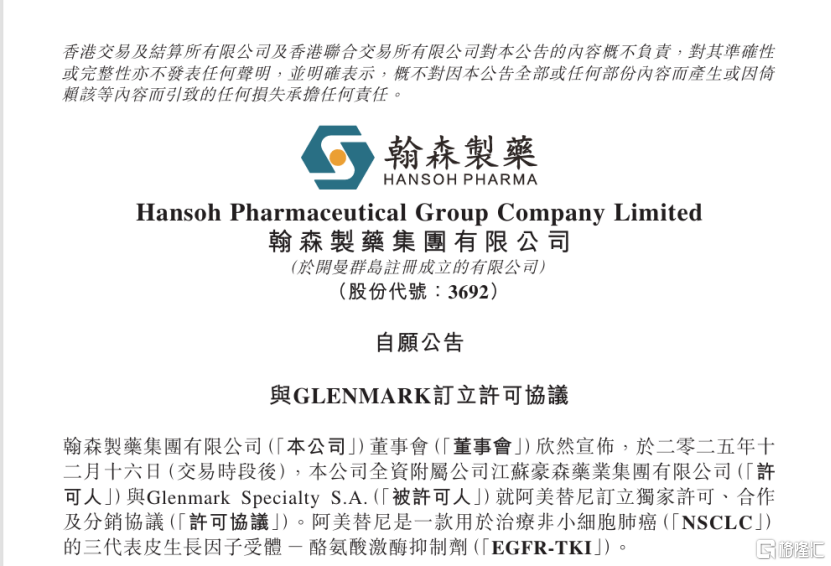
Core Viewpoint - The article emphasizes the growing role of AI as a valuable tool for investors, particularly in analyzing significant business development announcements in the pharmaceutical sector, which can directly impact stock prices and market expectations [1]. Group 1: AI Utilization in Investment Analysis - AI has become an effective assistant for investors by efficiently integrating market information and providing preliminary analyses, thereby enhancing decision-making efficiency [1]. - The need for human verification of AI outputs is highlighted, as AI can produce "hallucinations" and must provide accurate and effective key insights based on context [1]. Group 2: Business Development Announcement Analysis - The focus is on analyzing major business development announcements, particularly licensing agreements, as they are crucial in influencing stock prices and market expectations [1]. - The complexity of these announcements, including professional terms and structures, creates a challenge in understanding the "expectation gap" between the announcement content and market prior expectations [1]. Group 3: Framework for Analysis - A structured framework was established for analyzing the licensing agreement between Hansoh Pharmaceutical and Glenmark, consisting of six main categories and further detailing seven subcategories [3]. - The categories include core issue analysis, historical reference analysis, potential impact assessment, implicit signal interpretation, follow-up tracking, and market trend analysis [3]. Group 4: Financial Impact Assessment - The financial impact of the licensing agreement is projected, with short-term and mid-term revenue implications outlined, including expected upfront payments and milestone payments [7]. - The analysis indicates a potential short-term price increase of 10-15% and a mid-term increase of 15-25% based on historical data from similar transactions [7]. Group 5: Market Trends and Opportunities - The report provides a detailed analysis of market trends and potential opportunities, including a target price range for the stock, with short-term estimates of 42-44 HKD and mid-term estimates of 44-48 HKD [19][23]. - The recent stock price decline is attributed to several factors, including market rumors, lack of detailed disclosures, and year-end portfolio adjustments by institutions [20]. Group 6: Implicit Signals and Management Insights - The analysis captures implicit signals from the announcement, reflecting management's confidence in future development and the strength of the partnership with Glenmark [14]. - The report also discusses the strategic implications of such licensing agreements, including potential shifts in research focus and international collaboration, which are critical for assessing long-term growth potential [13].

美银证券:内地10月药品销售环比增速大幅放缓
智通财经网· 2025-12-24 03:48
Group 1: Industry Overview - In October, the total sales of pharmaceutical products in mainland China decreased by 3% year-on-year, a significant drop from the 6.8% growth in September [1] - Hospital channel sales fell by 3.3% year-on-year, compared to a 7.1% increase in the previous month [1] - Retail channel sales remained flat year-on-year, a slowdown from the 2.4% growth in September [1] Group 2: Company Performance - Hansoh Pharmaceutical (03692) recorded the highest year-on-year growth among peers in October at 8.6%, with most key products showing double-digit month-on-month growth, except for PEG-loxenatide [1] - The report maintains a "Buy" rating for Hansoh Pharmaceutical with a target price of HKD 45 [1] - Hengrui Medicine (01276) faced pressure on multiple key products, with total sample sales growing by only 2% year-on-year in October, and specific products like butorphanol, ioversol, and sevoflurane seeing declines of 49.1%, 0.5%, and 10.8% respectively [1] - Hengrui's A-share target price is set at RMB 57.7, with a "Underperform" rating [1] Group 3: Additional Company Insights - China Biologic Products (01177) showed a mixed performance in October, with core products anlotinib and glycyrrhizic acid growing by 6.5% and 4.4% year-on-year, while budesonide and esomeprazole saw declines of 28.5% and 39.4% respectively [2] - The revenue forecasts for 2026 and 2027 were lowered by 0.2% and 0.4% respectively due to the sales performance, with the target price adjusted from HKD 9.4 to HKD 8.3, while maintaining a "Buy" rating based on pipeline potential [2] - CSPC Pharmaceutical Group (01093) continued to experience low sales for several key drugs, maintaining an "Underperform" rating with a target price of HKD 7.2 [2]


12月23日港股通创新药ETF工银(159217)遭净赎回2524.06万元
Xin Lang Cai Jing· 2025-12-24 02:50
Core Viewpoint - The Hong Kong Stock Connect Innovative Drug ETF (工银, 159217) experienced significant net redemptions, indicating a trend of outflows from this fund in recent trading days [1][2] Group 1: Fund Performance - On December 23, the fund faced net redemptions of 25.24 million yuan, ranking 7th in net outflows among cross-border ETFs [1] - Over the past 5 days, the fund saw net redemptions totaling 27.89 million yuan, ranking 11th in net outflows [1] - The fund's total assets under management as of December 23 were 5.078 billion yuan, down from 5.1 billion yuan the previous day, reflecting a 0.49% outflow relative to the prior day's size [1] Group 2: Fund Details - The fund was established on March 26, 2025, with an annual management fee of 0.40% and a custody fee of 0.07% [1] - The current fund managers are Liu Weilin and Jiao Wenlong, with returns of 32.75% and 51.30% respectively since their management began [2] Group 3: Holdings and Composition - Major holdings in the fund include companies such as BeiGene (10.84%), CanSino Biologics (10.77%), and Innovent Biologics (10.43%), with respective market values of 589 million yuan, 586 million yuan, and 567 million yuan [2] - The fund tracks the Hong Kong Stock Connect Innovative Drug Index (987018) [1][2] Group 4: Comparative Analysis - Other ETFs tracking the same index include Huatai-PineBridge, Southern, and Penghua, with varying sizes and liquidity metrics [2] - As of December 23, the fund's average daily trading volume over the last 20 trading days was 485 million yuan [2]
恒生科技反转走强,银行、消费紧随其后,恒生医疗逆势回撤
Ge Long Hui· 2025-12-23 04:57
冲高回落,临近尾盘出现拉升,最终小涨0.43%。恒生科技涨幅居前,银行、大消费、互联网等紧随其 后,恒生医疗逆势回撤。 恒生医疗开盘后直线跳水,随后全天震荡下行,截至收盘下跌1.02%。其中药明生物下跌2.99%,药明生 物下跌2.6%,信达生物、康方生物、翰森制药、中国生物等股均小幅收跌;京东健康逆势大涨3.3%。 内容只是个人观点,仅供参考,不作为投资依据!欢迎关注交流,互相学习、共同探讨! 恒生科技高开低走后全天弱势,截至收盘上涨0.55%,中芯国际大涨5.92%,百度集团上涨1.26%,京东 集团、阿里巴巴、快手、美团等股均小幅收涨;小米集团逆势小跌1.83%,网易下跌0.09%。 银行股全天维持在中轴上方窄幅盘整,截至收盘上涨0.43%。其中汇丰控股上涨1.68%,中银香港上涨 1.67%,大新银行上涨1.13%;民生银行逆势小跌1.48%,邮储银行、郑州银行、交通银行等股均小幅收 跌。 ...

ETF盘中资讯 | 港股通创新药回暖,100%创新药研发标的“520880”摸高1.53%!石药集团领涨,创新药龙头集体跟进
Jin Rong Jie· 2025-12-23 02:50
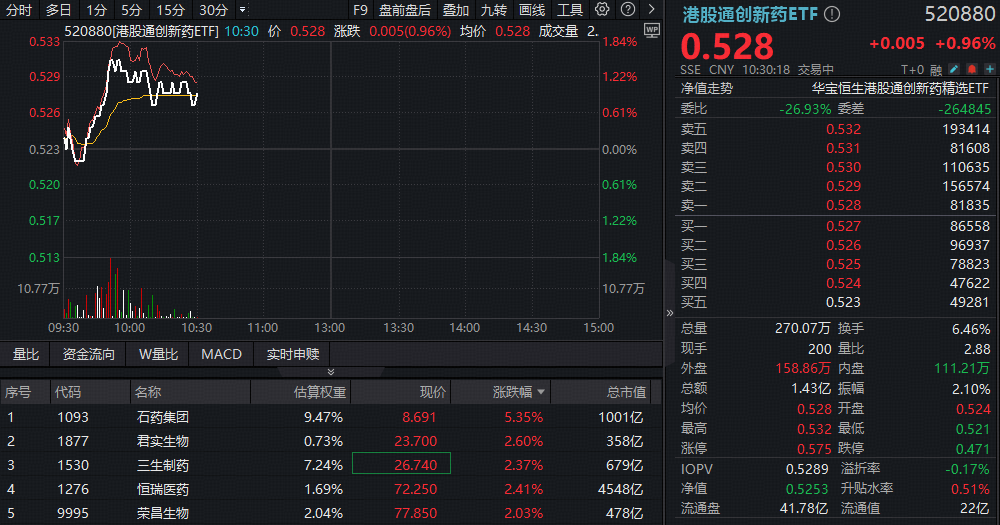
Core Viewpoint - The Hong Kong Stock Connect innovative drug sector is experiencing a rebound, with significant trading activity and price increases among leading innovative drug companies, indicating a positive shift in market sentiment towards this sector [1][3]. Group 1: Market Performance - The Hong Kong Stock Connect innovative drug ETF (520880) reached a peak increase of 1.53% and traded over 140 million yuan during the session [1]. - Leading companies in the innovative drug sector, such as CSPC Pharmaceutical Group, recorded gains exceeding 5%, while others like 3SBio and Hengrui Medicine saw increases of over 2% [1]. Group 2: Investment Insights - Analysts from Zhongtai Securities noted that the current innovative drug market differs from the 2019-2021 period, as the sector is transitioning from narrative to actual performance, with trading volumes hitting new highs [1]. - Long-term support from domestic policies for innovative drugs is evident, with the introduction of commercial insurance directories enhancing payment capabilities [1][3]. - Changjiang Securities emphasized the emergence of a new policy support cycle for the pharmaceutical industry, particularly for innovative drugs, suggesting a focus on high-quality assets with strong overseas potential [3]. Group 3: ETF Characteristics - The Hong Kong Stock Connect innovative drug ETF (520880) is designed to track the Hang Seng Hong Kong Stock Connect Innovative Drug Select Index, which has three key advantages: it exclusively includes innovative drug companies, has a high concentration of leading firms, and employs risk control measures for less liquid stocks [3][4]. - The top ten holdings in the ETF account for over 72% of its weight, showcasing the dominance of leading innovative drug companies [4]. Group 4: Alternative Investment Options - For investors seeking to mitigate volatility while still focusing on innovative drugs, the only ETF in the market (562050) offers a mix of innovative and traditional Chinese medicine stocks, providing a balanced approach [4].


减肥药上市潮将临,谁能“击败”司美格鲁肽?
Xin Lang Cai Jing· 2025-12-23 02:33
Group 1: Market Overview - Obesity is a significant public health challenge in China, with approximately 180 million patients, the highest globally. Without intervention, the prevalence of overweight and obesity among adults is projected to reach 65.3% by 2030 [1] - The GLP-1 weight loss drug market is primarily dominated by Eli Lilly and Novo Nordisk, with a projected global market size of approximately $52.83 billion in 2024, reflecting a 46% year-on-year growth [4] - The demand for GLP-1 weight loss drugs has surged, with social media referring to them as "miracle drugs" due to their effectiveness in controlling blood sugar, delaying gastric emptying, and suppressing appetite [1] Group 2: Key Players and Products - Novo Nordisk's semaglutide holds the largest market share at 55%, with products Ozempic, Wegovy, and Rybelsus contributing a combined sales forecast of $29.296 billion in 2024 [5] - Eli Lilly's tirzepatide follows closely with a 31% market share, generating nearly $16.5 billion in revenue, approximately 36% of Eli Lilly's total revenue for 2024 [6] - Notable products expected to be among the top-selling drugs globally by 2026 include Mounjaro, Zepbound, and Wegovy, with projected sales of $25.8 billion, $19.7 billion, and $15.4 billion respectively [7][8] Group 3: Competitive Landscape - Both Eli Lilly and Novo Nordisk are intensifying their competition, with Novo Nordisk announcing clinical trial results for a higher dose of semaglutide that could elevate weight loss efficacy above 20% [9] - Eli Lilly is also advancing its oral GLP-1 drug Orforglipron, which is expected to be approved soon, showing a weight loss of approximately 12.4% over 48 weeks [10] - Other pharmaceutical companies, such as AstraZeneca and Roche, are entering the weight loss market, with AstraZeneca focusing on new mechanisms and Roche collaborating on long-acting insulin analogs [11][12] Group 4: Domestic Market Developments - Domestic companies are rapidly developing GLP-1 weight loss drugs, with ten companies currently applying for semaglutide injections, indicating a competitive landscape in China [14] - The expiration of semaglutide's core patent in March 2026 is seen as a significant opportunity for domestic firms to launch generic versions, potentially leading to a surge in market entries [16] - Innovative products like the dual receptor agonist developed by Innovent Biologics and the long-acting GLP-1 drugs from domestic companies are expected to reshape the market dynamics [17][18] Group 5: Future Trends - The global weight loss drug market is anticipated to shift towards lower prices and higher accessibility, with both Eli Lilly and Novo Nordisk announcing price reductions for their GLP-1 drugs [20] - The World Health Organization has recommended GLP-1 drugs as a long-term treatment for obesity, emphasizing the need for increased production and reduced costs to ensure accessibility [19] - The Chinese weight loss drug market is projected to grow from 260 million yuan in 2016 to 8.7 billion yuan by 2025, reaching 14.9 billion yuan by 2030, indicating a robust growth trajectory [25]


12月22日港股通创新药ETF工银(159217)遭净赎回264.88万元
Xin Lang Cai Jing· 2025-12-23 02:24
Core Viewpoint - The Hong Kong Stock Connect Innovative Drug ETF (工银, 159217) experienced net redemptions of 2.6488 million yuan on December 22, 2025, indicating a trend of outflows from this ETF [1] Group 1: Fund Performance - As of December 22, 2025, the latest size of the Hong Kong Stock Connect Innovative Drug ETF (工银, 159217) is 5.1 billion yuan, down from 5.143 billion yuan the previous day, with a net outflow of 0.05% of the previous day's size [1] - Over the past 5 days, the fund has seen net redemptions totaling 2.6403 million yuan, ranking 36th out of 201 in cross-border ETF net outflows [1] - The fund's total size as of December 22, 2025, is 5.1 billion yuan with a total share count of 3.844 billion [1] Group 2: Liquidity and Trading Activity - The cumulative trading amount for the Hong Kong Stock Connect Innovative Drug ETF (工银, 159217) over the last 20 trading days is 9.864 billion yuan, with an average daily trading amount of 493 million yuan [2] - The current fund managers are Liu Weilin and Jiao Wenlong, with returns of 32.68% and 51.22% respectively since their management began [2] Group 3: Holdings and Major Stocks - The fund's major holdings include companies such as BeiGene (百济神州) at 10.84%, CanSino Biologics (康方生物) at 10.77%, and Innovent Biologics (信达生物) at 10.43%, among others [2] - The top holdings by market value include BeiGene with 589 million yuan, CanSino Biologics with 586 million yuan, and Innovent Biologics with 567 million yuan [2] Group 4: Comparative Analysis - Other ETFs tracking the same index include the Huatai-PineBridge Innovative Drug ETF (汇添富国证港股通创新药ETF, 159570) with a size of 22.563 billion yuan and an average daily trading amount of 1.795 billion yuan [2] - The Hong Kong Stock Connect Innovative Drug ETF (工银, 159217) ranks lower in size and trading volume compared to its peers, indicating potential competitive pressures [2]
行业高景气,持续关注创新药械产业链
Haitong Securities International· 2025-12-22 15:09
Investment Rating - The report maintains a focus on the innovative drug and medical device industry chain, indicating a high level of interest in this sector [1][6]. Core Insights - The innovative drug sector is experiencing high prosperity, with a recommendation to pay attention to pharmaceutical companies that are likely to see a revaluation of their value, such as Jiangsu Heng Rui Medicine, Hansoh Pharmaceutical Group, 3SBio, Sichuan Kelun Pharmaceutical, and Jiangsu Nhwa Pharmaceutical [6][25]. - The report highlights the Biopharma/Biotech sector, which is expected to see performance improvements as innovative pipelines are realized, with companies like Innovent Biologics, BeiGene, and others being of particular interest [6][25]. - Attention is also drawn to CXO and upstream companies benefiting from innovation, including WuXi AppTec and WuXi Biologics [6][25]. - The report emphasizes the potential recovery of leading medical device companies such as United Imaging Healthcare and Lepu Medical [6][25]. Summary by Sections A-Shares Performance - In the third week of December 2025, the A-share pharmaceutical sector performed similarly to the overall market, with the Shanghai Composite Index rising by 0.03% and the SW Pharma and Biotech index falling by 0.1%, ranking 19th among Shenwan primary industries [8][10]. - Sub-sectors that performed relatively well included pharmaceutical commerce (+4.9%), medical equipment (+1.2%), and medical services (+0.5%) [10][25]. - Notable individual stock performances included Anhui Huaren Health Pharmaceutical Co., Ltd. (+55.9%), Luyan Pharma (+36.8%), and ShuYu Civilian (+35.7%) [13][25]. Hong Kong and U.S. Market Performance - The Hong Kong pharmaceutical sector underperformed the market, with the Hang Seng Healthcare index down by 1.8% and the Hang Seng Index down by 1.1% [19][25]. - In contrast, the U.S. pharmaceutical sector outperformed the market, with the S&P Healthcare Select Sector rising by 0.6% compared to the S&P 500's 0.1% increase [19][25].




医药生物行业周报(12月第3周):病理业务发展进入快车道-20251222
Century Securities· 2025-12-22 14:46
Investment Rating - The report does not explicitly state an investment rating for the industry [2]. Core Insights - The pathology business is entering a fast track with the National Healthcare Security Administration issuing guidelines for pricing projects in pathology services, focusing on biopsy sampling, sample processing, and digitalization of pathology data, which is expected to enhance the application of AI in the field [3][11]. - The influenza activity has peaked across the board, with reported cases in southern provinces at 9.7%, down from 11.2% the previous week, but higher than the same period in previous years [3][11]. Market Weekly Review - The pharmaceutical and biotechnology sector fell by 0.14% from December 15 to December 19, outperforming the Wind All A index (-0.15%) and the CSI 300 index (-0.28%). The rebound was weak, with segments like pharmaceutical distribution (5.59%), offline pharmacies (4.69%), and hospitals (4.15%) leading gains, while chemical preparations (-2.1%), vaccines (-0.87%), and medical R&D outsourcing (-0.87%) lagged [3][8]. - Notable stock performances included Huaren Health (55.9%), Luyuan Pharmaceutical (36.8%), and Shuyupingmin (35.7%) with significant gains, while *ST Changyao (-24%), Yipinhong (-23.7%), and Rejing Biology (-16.5%) faced substantial declines [3][11]. Industry News and Key Company Announcements - The National Healthcare Security Administration's guidelines for pathology services are expected to drive high-quality development in the sector and create new scenarios for AI-assisted technology applications [11]. - Significant collaborations and approvals were reported, including Shanghai Jinmante's partnership with Jiangsu Kangning Jerey for a breakthrough therapy designation from the FDA for JSKN003, and Novo Nordisk's submission of a marketing application for CagriSema, which showed a weight loss of 22.7% over 68 weeks in clinical trials [12][13]. - Fosun Pharma's subsidiary received FDA approval to initiate a Phase I clinical trial for HLX18, a biosimilar to Nivolumab, targeting various cancers [13][14].
GLP-1赛道掉队的辉瑞 看上复星口服药
BambooWorks· 2025-12-22 10:59
Core Insights - The article highlights the significant collaboration between Shanghai Fosun Pharmaceutical and Pfizer regarding the oral GLP-1 receptor agonist YP05002, with a potential total deal value exceeding $2.085 billion [2][4][6]. Group 1: Company Developments - Fosun Pharma's innovative drug business revenue grew by 18.09% year-on-year in the first three quarters, becoming a crucial growth engine for the company [2][8]. - The collaboration with Pfizer is seen as a milestone in Fosun Pharma's strategy for innovation and internationalization, enhancing its brand influence in the global market [8]. Group 2: Product and Market Insights - YP05002 is designed to treat type 2 diabetes and obesity by activating GLP-1 receptors, promoting insulin secretion, and reducing appetite, with potential indications including long-term weight management and metabolic disorders [4][5]. - The GLP-1 drug class is gaining traction due to its effectiveness in controlling blood sugar and weight loss, with significant sales growth reported by competitors like Novo Nordisk and Eli Lilly [6]. Group 3: Financial Performance - Fosun Pharma reported a revenue decline of 4.91% to 29.393 billion yuan in the first three quarters, while net profit increased by 25.50% due to the sale of non-core assets [7]. - The company's current price-to-earnings ratio is approximately 17 times, indicating potential valuation recovery compared to peers like Hengrui Medicine, which has a P/E ratio of about 59 times [8].