蚂蚁集团

Search documents
全球首个自回归视频-动作世界模型,蚂蚁灵波开源LingBot-VA
Xin Lang Cai Jing· 2026-01-30 02:38
Core Insights - Ant Group's Lingbo Technology announced the open-source release of the embodied world model LingBot-VA, which integrates large-scale video generation models with robotic control through a self-regressive video-action world modeling framework [1][3] - LingBot-VA demonstrates strong adaptability to complex physical interactions, achieving a 20% average improvement in task success rates compared to the industry baseline Pi0.5, requiring only 30 to 50 real machine demonstration data for adaptation [1][3] Summary by Categories Product Development - LingBot-VA is part of a series of releases including LingBot-World (simulation environment), LingBot-VLA (intelligent base), and LingBot-Depth (spatial perception), exploring a new path of "world model empowering embodied operations" [2][4] Industry Collaboration - Ant Group aims to leverage the InclusionAI community for open-source collaboration, focusing on building foundational capabilities for embodied intelligence and accelerating the development of a deeply integrated open-source AGI ecosystem that serves real industrial scenarios [2][4]
2026十大AI技术趋势:应用拓展、模式探索与底层技术齐头并进
Sou Hu Cai Jing· 2026-01-30 01:11
Core Insights - The report from Beijing Zhiyuan Artificial Intelligence Research Institute outlines the top ten AI technology trends for 2026, highlighting advancements in multimodal AI, embodied intelligence, and multi-agent systems [1][3][4]. Group 1: Multimodal AI and World Models - In 2025, discussions around multimodal AI surged, with expectations for 2026 to see further exploration of world models that can simulate real-world laws, enhancing AI's understanding of physical concepts [3][4]. - The value of world models lies in their ability to mimic human cognitive processes, enabling AI to tackle problems that are simple for humans but challenging for machines [3]. Group 2: Embodied Intelligence - As of 2025, over 230 companies in China are focused on embodied intelligence, with more than 100 in humanoid robotics, indicating a significant industry presence [4]. - The report anticipates a potential reshuffling in the embodied intelligence sector due to global economic uncertainties, with companies needing to adapt to evolving foundational models [4]. - Humanoid robots are expected to advance into real-world applications, with examples like Tesla Robotics' Optimus 2.5 being utilized in various operational settings [4]. Group 3: Multi-Agent Systems - The transition from single-agent to multi-agent systems is seen as essential for adapting to complex workflows, with multi-agent systems demonstrating advantages in handling intricate tasks [5]. - Communication protocols among agents are expected to mature, facilitating practical applications in production environments by 2026 [5]. Group 4: AI in Scientific Research - The emergence of AI Scientists capable of executing complete research processes marks a significant shift in scientific discovery, driven by foundational models and automated experimental facilities [6]. - The U.S. has initiated the "Genesis Mission" to enhance AI's role in scientific research through integrated platforms and efficient data sharing mechanisms [6]. Group 5: AI for Science in China - China faces challenges in the AI for Science domain, particularly in computational power, data, and model infrastructure, despite its relative advantage in AI applications [7]. - Progress is being made with the establishment of a national scientific data sharing platform, but there is a need for improved scientific foundational models [7]. Group 6: Personal and Industry Applications - The rapid development of AI personal applications in 2025 has led to the rise of "AI super applications," which integrate multiple services for users [8]. - Industry applications are still in exploratory phases, with more complex AI agents facing challenges such as data quality and system integration [8]. Group 7: Synthetic Data and AI Safety - The shift towards synthetic data is anticipated as high-quality data resources dwindle, with the synthetic data market in China growing significantly from 1.18 billion to 4.76 billion in four years [10]. - AI safety concerns are rising, with reports indicating that leading models struggle with preventing misuse, prompting the industry to develop new security frameworks [11].


“善行边疆”汇聚百家慈善力量 科技向善绘就兴边富民新图景
Chang Jiang Shang Bao· 2026-01-30 00:56
长江商报消息 ●长江商报公益记者 江楚雅 近日,"善行边疆"活动首站落地黑龙江哈尔滨,这场由民政部、国家民委主办的公益行动,以科技为赋 能引擎、以慈善为纽带,汇聚全国超百家慈善组织与爱心企业力量,现场签约21个慈善合作项目,实现 黑龙江8个涉边市(地)、18个边境县(市、区)及抵边村"一村一善一项目"全域覆盖。数字化工具、 AI技术、智能产业帮扶等创新举措深度融入慈善服务,让慈善资源精准滴灌北疆民生,为新时代兴边 富民、稳边固边注入可持续的科技与爱心力量。 科技成为此次"善行边疆"活动的核心赋能引擎,多家科技企业与慈善组织携数字化、智能化举措亮相, 推动前沿技术与公益场景深度融合,让慈善服务更高效、更精准,也勾勒出科技赋能边疆治理的全新图 景。 数字工具的普及,为边疆慈善组织发展提质增效。北京字节跳动公益基金会为黑龙江百余名慈善组织骨 干开展互联网募捐能力专题培训,计划捐赠飞书、火山云服务等数字化工具,助力本地慈善组织提升内 部管理与项目执行效率。同时,依托内容平台优势,邀请创作达人拍摄边疆慈善故事,相关话题播放量 突破8700万;抖音电商发起"爱心好物"专项行动,吸引1400余个商家、上千万名消费者参与,既 ...
蚂蚁集团“全面进攻”阿里巴巴?
3 6 Ke· 2026-01-29 12:48
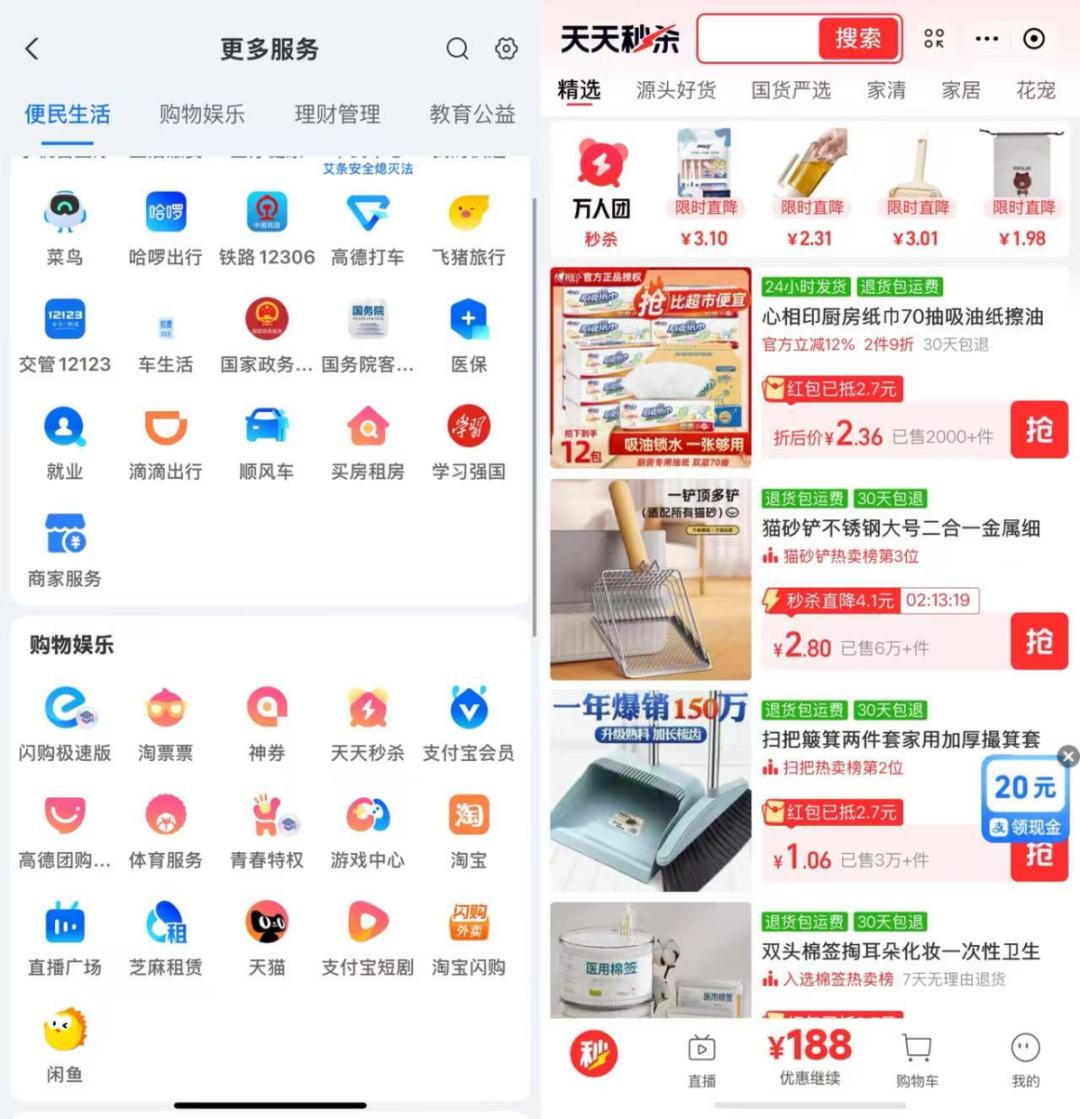
Core Insights - Ant Group and Alibaba are competing in the AI to C market, with both companies launching AI applications targeting consumer needs within a short timeframe [1][11][21] - Alibaba's "Qianwen App" and Ant Group's "Lingguang" are positioned as AI life and productivity entry points, respectively, indicating a strategic focus on consumer engagement through AI [1][11][21] - The competition between these two entities raises questions about the necessity of multiple overlapping products in a market where user attention is limited [20][21] Group 1: AI Product Launches - Alibaba officially announced the public testing of its personal AI assistant "Qianwen App," aiming to serve as a universal life entry point for consumers [1] - Ant Group launched its multimodal AI assistant "Lingguang," which emphasizes the ability to generate small applications in 30 seconds using natural language [1] - Ant Group upgraded its AI health product AQ to "Ant Afu," further expanding its consumer-facing services [1] Group 2: Functionality and User Engagement - Both Qianwen and Lingguang offer similar functionalities, including AI-generated content and daily task management, indicating a high degree of overlap [15][20] - Alipay is evolving into a comprehensive consumption platform, capable of performing tasks traditionally associated with Taobao and Tmall, thus broadening its user engagement [2][10] - Alipay's "Daily Flash Sale" feature has seen significant success, with record sales during major shopping events, showcasing its potential as a consumer project [2] Group 3: Membership and User Benefits - Alipay and Taobao membership systems are similar, but Alipay offers a broader range of benefits beyond shopping, including financial services and healthcare [4][9] - Alipay's diamond membership provides 41 benefits compared to Taobao's 18+, highlighting its competitive edge in user engagement [4][9] Group 4: Strategic Implications - The competition between Ant Group and Alibaba raises concerns about internal resource allocation and user attention, as both companies vie for the same consumer base [20][21] - Despite their historical ties, the regulatory environment has led to a separation in governance, yet both companies continue to share significant user bases and technological resources [18][19] - The strategic decision to launch multiple AI products simultaneously may reflect a defensive posture in a rapidly evolving market, but could also lead to inefficiencies [21]

世界模型混战,蚂蚁炸出开源牌
AI前线· 2026-01-29 10:07
作者 | 姚戈 世界模型领域迎来了一个重要开源模型。 今天,蚂蚁集团旗下的具身智能公司"蚂蚁灵波",正式发布并开源其通用世界模型 LingBot-World。 与许多闭源方案不同,蚂蚁灵波选择 全面开源代码和模型权重,而且不绑定任何特定硬件或平台 。 去年 DeepMind 发布的 Genie 3,让人们看到了世界模型能够根据文本或图像提示,实时生成一个可 探索的动态虚拟世界。LingBot-World 沿袭了这条路线,并在交互能力、高动态稳定性、长时序连贯 性以及物理一致性等维度取得了突破。 更令人惊喜的是, LingBot-World 呈现出从"生成"到"模拟"的跨越 。随着模型规模的扩大,灵波团 队观察到,LingBot-World 开始表现出远超普通视频生成的复杂行为,涌现出对空间关系、时间连续 性和物理规律的理解。 可以看到,鸭子腿部蹬水的动作、水面对扰动的响应、以及鸭子身体与水之间的相互作用都比较符合 物理规律。 这显示出模型不仅记住了视觉表象,还在某种程度上理解了流体力学等基础物理机制。同时,水面对 扰动的反应,显示出模型对因果关系的理解。 用户切换视角后再回来时,环境中的智能体(比如这只猫)仍 ...

蚂蚁集团CEO韩歆毅发布内部全员信
Xin Lang Ke Ji· 2026-01-29 09:40
Core Insights - Ant Group's CEO, Han Xinyi, highlighted the company's achievements over the past year, including the AI application "Afu" reaching over 30 million monthly active users, ranking among the top four AI applications in China [1][3] - The "Tap to Pay" feature has seen significant adoption, with daily transaction counts exceeding 100 million and integration into 2,260 life scenarios, indicating a strong push towards smarter and more convenient payment solutions in the AI era [1][4] - Ant Group is celebrating its 21st anniversary, with ongoing investments in technology research and development, and a commitment to fostering a warm corporate culture [1][5] Summary by Sections Achievements and Growth - Ant Group has made steady progress on a clear strategic path, integrating AI technology into core business scenarios and advancing its global layout [2][7] - The company reported that the "Afu" health application has successfully assisted users, demonstrating the practical impact of AI in healthcare [3][8] User Engagement and Product Development - The "Lingguang" AI product has enabled users to create 12 million small applications, addressing specific life needs, showcasing the accessibility of technology for everyday users [3][8] - The "Tap to Pay" feature has been widely adopted, with over 100 million daily transactions, reflecting its integration into various devices like phones, glasses, and watches [4][9] Corporate Culture and Future Outlook - Ant Group is enhancing employee engagement through initiatives like the "Family Space" on Alipay, which extends health benefits to employees' families [5][10] - The company is preparing for future growth with the construction of a new headquarters in Hangzhou, set to be completed by 2027, and recently celebrated the lighting of its Hong Kong headquarters [1][5]

手机之外,AI硬件还有哪些机会?从豆包手机说起
3 6 Ke· 2026-01-29 08:53
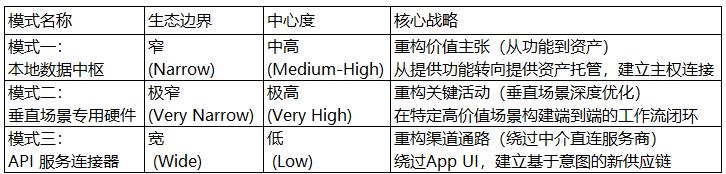
Core Insights - The controversy surrounding Doubao mobile assistant highlights the tension between innovation rights and ecosystem security, raising fundamental questions about its position in the digital ecosystem and the reasons behind the strong backlash against its technology [2][3]. Group 1: Doubao's Triple Dilemma - Dilemma One: Fundamental Mismatch of Ecological Positioning - Doubao's ecological position is characterized by low centrality, lacking control over core user resources, which limits its ability to challenge high-centrality ecosystems dominated by major players [3][4]. - Dilemma Two: Structural Vulnerability of Connection Method - Doubao's reliance on simulated clicks and screen recognition creates a fragile connection, as any updates to the interfaces of major apps can render its operational scripts ineffective, leading to a parasitic relationship [4][5]. - Dilemma Three: Fatal Flaw in Implementation Path - The approach of using simulated clicks for automation is likened to retrofitting an engine onto a horse, failing to fundamentally reconstruct the underlying logic of interaction, resulting in a suboptimal user experience [7][9]. Group 2: Pathways from Dilemma to Opportunity - Opportunity One: Local Data Hub - Reconstructing Value Proposition - This model positions hardware as a local custodian of users' digital assets, emphasizing privacy control, offline availability, and instant response, creating a strong lock-in effect as users accumulate data [12][13]. - Opportunity Two: Vertical Scene-Specific Hardware - Reconstructing Key Activities - This model focuses on designing dedicated AI hardware for specific high-value scenarios, achieving efficiency that surpasses general-purpose smartphones by creating end-to-end workflows [15][18]. - Opportunity Three: API Service Connector - Reconstructing Channel Pathways - This model emphasizes a dialog-based AI as an intent entry point, facilitating direct connections with external service providers through APIs, thus avoiding the pitfalls of parasitic relationships and fostering symbiotic connections [21][22]. Group 3: Strategic Recommendations - The company should explore new pathways rather than abandon the AI hardware space, leveraging its leading AI capabilities in a more suitable battlefield [26][27].
来这场沙龙,一览SGLang X 超长上下文扩展、RL后训练框架、扩散语言模型等前沿技术实践
机器之心· 2026-01-29 08:12
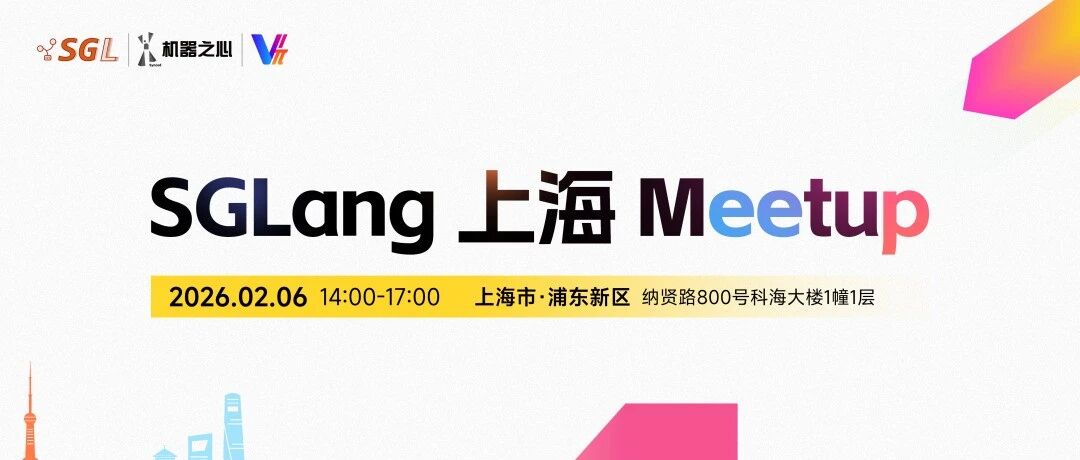
Core Insights - The article discusses the transition of artificial intelligence from a "chat" paradigm to an "actionable" intelligent agent era, emphasizing the need for deep collaboration and experience sharing among developers in optimizing LLM systems [2] Event Overview - A Meetup organized by SGLang community, Machine Heart, and Zhangjiang Incubator will take place on February 6, focusing on LLM system optimization and practical implementation [2] - The event will feature discussions on SGLang's technical roadmap, long-context expansion, RL post-training frameworks, and diffusion language model exploration [2] Event Schedule - The event schedule includes: - 13:30-14:00: Registration - 14:00-14:30: Keynote on SGLang roadmap by Zhang Bozhou, core developer of SGLang [5] - 14:30-15:00: Keynote on Omni-infer performance optimization by Zheng Jinhwan, core developer of Omni-infer [5] - 15:00-15:30: Keynote on slime RL scaling post-training framework by Xie Chengxing, Tsinghua University PhD student [5] - 15:30-16:00: Keynote on SGLang CPP for long-context scaling by Cai Shangming, core developer of SGLang and Mooncake [5] Guest Introductions - Zhang Bozhou: Core developer of SGLang, focusing on open-source LLM support and optimization across different CUDA hardware [8] - Zheng Jinhwan: Huawei technical expert and core contributor to Omni-infer, specializing in high-performance systems and inference optimization [9] - Xie Chengxing: PhD student at Tsinghua University and core developer of the slime RL framework, with a focus on enhancing LLM reasoning and decision-making capabilities [10] - Cai Shangming: Researcher at Alibaba Cloud, core contributor to SGLang and Mooncake, with expertise in high-performance inference systems and distributed machine learning [10] - Li Zehuan: System engineer at Ant Group and core contributor to SGLang, focusing on AI infrastructure optimization [11]
#新质领航 创启未来# 2025科技创新峰会重磅来袭!
Jing Ji Guan Cha Wang· 2026-01-29 06:07
1月30日14:00-18:00线上开播!亚信安全、海康威视(002415)、蚂蚁集团、京东科技等行业龙头齐 聚,聚焦人工智能、机器人、生物医药等五大前沿赛道,解锁技术突破、数字化转型、新药研发的核心 密码。 当AI重构产业逻辑,当创新打破增长边界,这场汇聚顶尖智慧的年度盛会怎能错过? 从智能联动共御到工业质量数字化,从AGI时代体验革新到企业增长破局,干货满满的主题演讲+深度 行业对话,还有"新质100"荣誉榜单重磅发布! ...
浙江第三座万亿GDP城市来了
Sou Hu Cai Jing· 2026-01-29 05:31
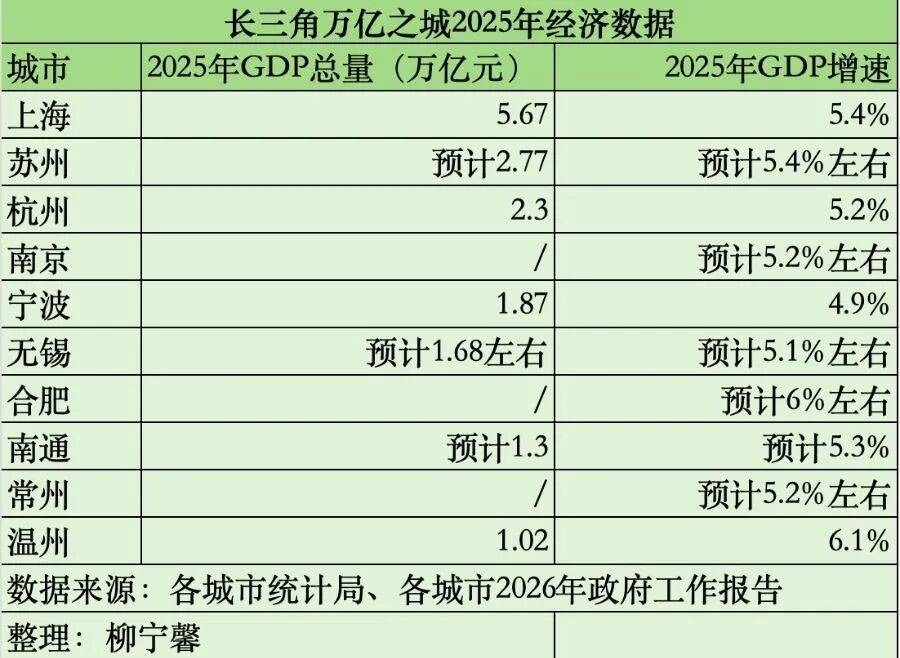
Core Viewpoint - The economic landscape of the Yangtze River Delta is evolving, with the number of cities achieving a GDP of over 1 trillion yuan increasing to 10 by 2025, highlighting a shift from mere scale to quality and sustainability in urban development [1][3][4]. Economic Data Summary - Shanghai's GDP is projected to reach 5.67 trillion yuan with a growth rate of 5.4% [1][5]. - Suzhou is expected to have a GDP of 2.77 trillion yuan, also with a growth rate around 5.4% [1][3]. - Hangzhou's GDP is anticipated to be 2.3 trillion yuan, growing at 5.2% [1][5]. - Nanjing is nearing the 2 trillion yuan mark with an estimated growth rate of 5.2% [1][3]. - Ningbo's GDP is projected at 1.87 trillion yuan, with a growth rate of 4.9% [1][6]. - Wuxi is expected to reach approximately 1.68 trillion yuan, with a growth rate around 5.1% [1][3]. - Hefei and Changzhou are both projected to have GDPs of 1 trillion yuan, with Hefei expected to grow at around 6% [1]. - Nantong's GDP is estimated at 1.3 trillion yuan, with a growth rate of 5.3% [1][3]. - Wenzhou has achieved a historic milestone with a GDP of 1.02139 trillion yuan, growing at 6.1% [1][7]. Industry Trends and Shifts - The focus is shifting from GDP scale to the quality of development, emphasizing industrial structure and innovation capabilities [4][8]. - Shanghai is advancing towards a high-end industrial cluster, with significant growth in sectors like integrated circuits and artificial intelligence [5][9]. - Hangzhou is leveraging its digital economy, with notable growth in sectors like new energy vehicles and industrial robotics [6][12]. - Wenzhou's economic growth is driven by its manufacturing sector, with strategic emerging industries showing robust growth [7][9]. - Cities are increasingly focusing on sustainable development and innovation as key factors for long-term competitiveness [8][13]. Future Industry Planning - Shanghai's "14th Five-Year Plan" aims to build a modern industrial system with a focus on advanced manufacturing and emerging industries [9][10]. - Suzhou is transitioning from traditional manufacturing to a modern industrial powerhouse, emphasizing biomedicine and high-end manufacturing [10][11]. - Hangzhou's planning includes developing advanced manufacturing clusters in artificial intelligence and visual intelligence [12]. - Nanjing and Wuxi are targeting future industries such as quantum technology and synthetic biology to enhance their economic growth [12][13].