
Arm Holdings plc

Search documents
Why BofA Just Turned Neutral on Arm Holdings plc (ARM)
Yahoo Finance· 2026-01-15 13:15
Group 1: Company Overview - Arm Holdings plc (NASDAQ:ARM) is a U.K.-based semiconductor and software design company that specializes in designing central processing unit (CPU) products and associated technologies [4] Group 2: Analyst Ratings and Price Targets - On January 13, Vivek Arya at BofA downgraded Arm Holdings plc (NASDAQ:ARM) to 'Neutral' from 'Buy' and maintained a $120 price target, citing potential declines in global smartphone units due to high memory costs and supply issues [1] - Earlier, on December 16, 2025, BofA reduced the price target on Arm Holdings plc (NASDAQ:ARM) to $145 from $205 while maintaining a 'Buy' rating, expressing confidence in smartphone and data center adoption but raising concerns about dependence on SoftBank for growth [3] Group 3: Market Performance and Strategic Changes - Following the announcement of Arm Holdings plc's restructuring to create a Physical AI unit aimed at strengthening its position in the robotics space, the stock has declined by nearly 3% [2] - The company will now operate through three segments: Cloud and AI, Edge, and Physical AI [2]

存储盛宴的代价:三星利润翻倍的背后,苹果与惠普的“利润保卫战”才刚刚开始
Hua Er Jie Jian Wen· 2026-01-15 12:24
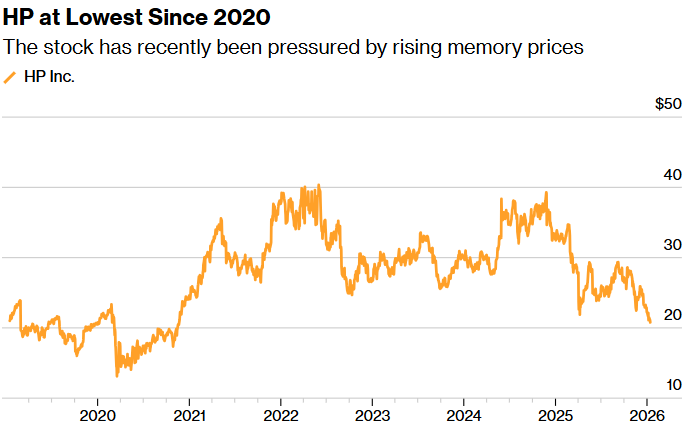
Core Viewpoint - The global technology hardware industry is facing a severe "profit defense battle" due to skyrocketing storage component prices, leading to significant differentiation within the industry. While storage chip manufacturers are experiencing explosive profit growth, downstream equipment manufacturers are forced to make difficult choices between sacrificing profit margins and raising prices to curb demand [1]. Group 1: Price Surge and Profit Impact - Samsung reported a more than 30% increase in average selling prices for DRAM and approximately 20% for NAND chips, resulting in a profit increase of over two times, with this price trend expected to continue through 2026 [1]. - The price surge is driven by AI demand, described by IDC as an "unprecedented storage chip shortage," posing a crisis for equipment manufacturers [1]. - Apple and HP stocks have reacted negatively, with Apple down 4.4% at the start of 2026, making it one of the weakest stocks in the Nasdaq 100 index, while HP's stock hit its lowest level since November 2020 [1]. Group 2: Divergent Stock Performance - The past year has seen a stark divide in stock performance, with storage companies like SanDisk, Micron Technology, and Western Digital emerging as market winners, with SanDisk leading the S&P 500 index with over 60% gains entering 2026 [2]. - In contrast, hardware giants are struggling, with Apple only rising 8.6% in 2025 and continuing to decline, while HP's market value shrank by nearly one-third in 2025 and fell another 6.8% at the start of 2026 [2]. - Dell's stock has dropped 28% since reaching a historical high in October of the previous year, indicating the tough situation for hardware companies [2]. Group 3: Profit Erosion and Cost Pressures - Storage components account for 10% to 20% of the material costs in consumer hardware products, leading to rapidly downgraded profit expectations for companies [3]. - HP is particularly affected, with estimates indicating that rising storage costs will reduce its adjusted EPS by $0.30 in 2026, and market expectations for HP's net EPS have been downgraded by 7.1% in the past month [3]. - Even Apple, with strong pricing power, is expected to be impacted by the significant rise in storage component costs over the next two years [3]. Group 4: Structural Supply Shortage - The current supply shortage is characterized as a strategic reallocation of global silicon wafer capacity, differing from typical cyclical shortages, indicating that price pressures are unlikely to dissipate quickly [5]. - The extreme scarcity of supply is expected to persist in the short term, affecting semiconductor manufacturers that supply chips for smartphones, leading to downgrades for Qualcomm and Arm by Mizuho Securities and Bank of America [5]. - Among the hardware companies, only Dell is viewed positively due to its server business growth, which can partially offset the headwinds from rising storage costs [5].


存储涨价潮下的“受害者”:消费电子产商陷入成本泥潭,苹果(AAPL.US)、惠普(HPQ.US)等面临利润冲击
智通财经网· 2026-01-15 12:15
Core Viewpoint - The surge in memory chip prices has made companies like Sandisk, Micron Technology, and Western Digital popular stocks, but it has created significant challenges for their customers, including Apple and HP, as the high costs of memory components pose investment risks that are unlikely to reverse in the short term [1] Group 1: Impact on Hardware Manufacturers - Consumer hardware manufacturers are facing pressure due to high memory component costs, leading to two choices: accept lower profit margins or raise prices, which could harm demand [1] - Apple’s stock has seen only an 8.6% increase in 2025, marking its worst performance since 2022, while HP's stock has dropped nearly one-third in 2025 and hit its lowest level since November 2020 [2] - Dell Technologies' stock has decreased by 28% since reaching a historical high in October [2] Group 2: Semiconductor Manufacturers' Risks - The rising memory prices also pose risks for semiconductor manufacturers like Qualcomm and Arm, with recent downgrades in their ratings by Mizuho Securities and Bank of America [5] - The market is expected to continue pressuring these companies as long as memory prices remain high, driven by demand from artificial intelligence [5] - Dell is viewed positively due to its server business growth, which offsets the negative impact of rising memory prices [5] Group 3: Memory Price Trends and Industry Outlook - Samsung reported a more than 30% increase in average DRAM chip prices and about a 20% increase in NAND chip prices, with expectations that this trend will continue into 2026 or longer [6] - The memory cost for consumer hardware products may account for 10% to 20% of material costs, leading to concerns about profitability for companies like Apple and HP [6] - HP's earnings forecast for 2026 has been lowered by 7.1% due to rising memory costs, while Dell's performance expectations remain relatively stable due to strong demand in its server business [7] Group 4: Long-term Industry Dynamics - Analysts suggest that the current memory chip shortage is not just a cyclical issue but may indicate a permanent strategic reconfiguration of global silicon wafer capacity [6] - The anticipated significant increase in memory component costs over the next two years could impact even large companies like Apple [7] - The cyclical nature of memory prices is acknowledged, but the current supply shortage suggests that prices are unlikely to decrease in the short term [7]

Stocks Climb Before the Open as TSMC Reignites AI Optimism, U.S. Economic Data and Earnings in Focus
Yahoo Finance· 2026-01-15 11:19
Economic Data - U.S. retail sales increased by +0.6% month-over-month in November, surpassing expectations of +0.5% [1] - Core retail sales, excluding motor vehicles and parts, grew by +0.5% month-over-month, exceeding expectations of +0.4% [1] - The U.S. producer price index (PPI) for final demand rose by +3.0% year-over-year in November, stronger than the expected +2.7% [1] - Core PPI also increased by +3.0% year-over-year, above the anticipated +2.7% [1] - December existing home sales rose by +5.1% month-over-month to 4.35 million, higher than the expected 4.21 million [1] Stock Market Performance - Wall Street's three main equity benchmarks closed lower, with notable declines in the Magnificent Seven stocks, including Amazon.com (AMZN) and Meta Platforms (META) dropping over -2% [2] - Chip stocks also fell, with Broadcom (AVGO) down more than -4% and Arm Holdings (ARM) dropping over -2% [2] - Wells Fargo (WFC) sank more than -4% after reporting weaker-than-expected Q4 net interest income [2] - On a positive note, Mosaic (MOS) climbed over +5% after Morgan Stanley raised its price target on the stock [2] Corporate Earnings and Forecasts - Taiwan Semiconductor Manufacturing Co. (TSM) shares jumped over +5% in pre-market trading after reporting a record Q4 profit and projecting faster-than-expected revenue growth for 2026 [4][19] - TSMC's capital expenditure forecast for this year is set at $52 billion to $56 billion, significantly higher than the $40.9 billion capex for 2025 [4] - AI-related stocks advanced in pre-market trading, with Broadcom (AVGO) rising over +2% and Nvidia (NVDA) gaining more than +1% [20] - Companies in the S&P 500 are expected to post an average +8.4% increase in quarterly earnings for Q4 compared to the previous year [9] Economic Outlook and Federal Reserve - Federal Reserve officials indicated that the U.S. economy is showing resilience, with no immediate impetus for interest rate cuts [6] - The Fed's Beige Book reported that U.S. economic activity picked up at a "slight to modest pace" in most districts since mid-November [7] - U.S. rate futures indicate a 95.0% chance of no rate change at the upcoming Fed meeting [8] International Market Developments - The Euro Stoxx 50 Index rose +0.52%, reaching a new record high, driven by positive corporate earnings and economic data [13] - The U.K. economy grew more than expected in November, with GDP rising +0.3% month-over-month and +1.4% year-over-year [14] - Eurozone's November industrial production rose +0.7% month-over-month and +2.5% year-over-year, exceeding expectations [15]


2026科技风向标:八大趋势重塑产业与生活
2 1 Shi Ji Jing Ji Bao Dao· 2026-01-15 06:05
Core Insights - The rapid iteration of technology is expected to lead to significant breakthroughs in key areas such as artificial intelligence, quantum computing, fusion energy, and aerospace engineering by 2025, reshaping the global technology landscape and intensifying competition between China and the United States [1] Group 1: Major Technological Events in 2025 - DeepSeek emerged as a leading open-source AI model, significantly improving GPU utilization and reducing model costs, thus enabling a new wave of AI efficiency and innovation in China [2] - The commercial space industry accelerated, with SpaceX's Starship achieving a complete flight cycle and China's satellite internet constellations addressing the "arrow without a star" issue, leading to explosive growth in launch capacity [3][4] - Humanoid robots made a significant appearance at the Spring Festival Gala, showcasing advancements in AI-driven robotics and marking a transition from research to practical applications [5] - The storage chip industry entered a "super cycle" as major companies shifted production towards AI-related storage solutions, leading to price increases across various hardware sectors [6] - China's "artificial sun" achieved a record of 1 billion degrees Celsius for over 1,000 seconds, marking a milestone in controlled nuclear fusion research [7] - The competition in quantum computing intensified, with significant advancements from both China and Google, indicating a shift towards practical applications in various fields [8] Group 2: Trends for 2026 - AI agents are predicted to mature, enabling collaborative intelligence that could revolutionize user interfaces and operational efficiency for small businesses [12] - AI technology is expected to transition from cloud-based systems to physical devices, with AI PCs and glasses becoming standard, enhancing user experience even in low-connectivity scenarios [13] - The commercial viability of Level 3 autonomous driving is anticipated to grow, with more cities implementing pilot programs and new business models emerging [14][15] - Quantum computing is nearing a practical breakthrough, with advancements in hardware and software expected to demonstrate "quantum advantage" in real-world applications [16] - The demand for computational power is driving upgrades in the energy sector, with tech companies investing in stable energy sources to support AI data centers [17] - Brain-computer interface technology is transitioning from experimental phases to commercial applications, with significant investments and developments expected in the coming years [18] - The commercial space sector is expected to mature, with established revenue streams and reduced launch costs through reusable rocket technologies [19][20] - The low-altitude economy is gaining traction, with multiple companies expanding into international markets and significant growth projected in the eVTOL sector [21]
美股再现关税利空!三大指数集体杀跌!
Zheng Quan Shi Bao Wang· 2026-01-15 02:09
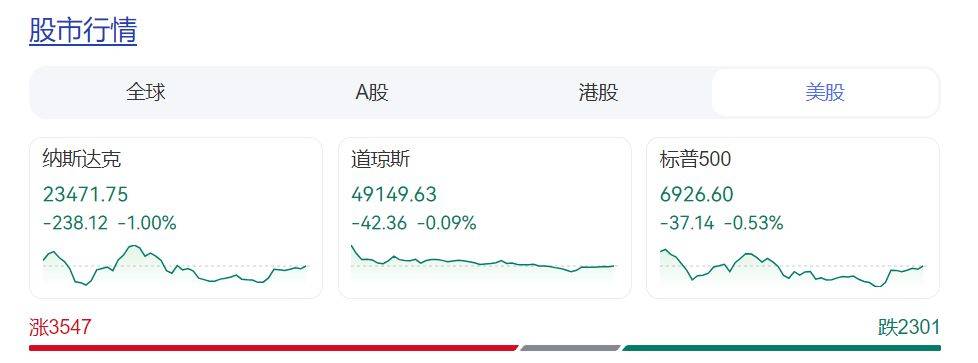
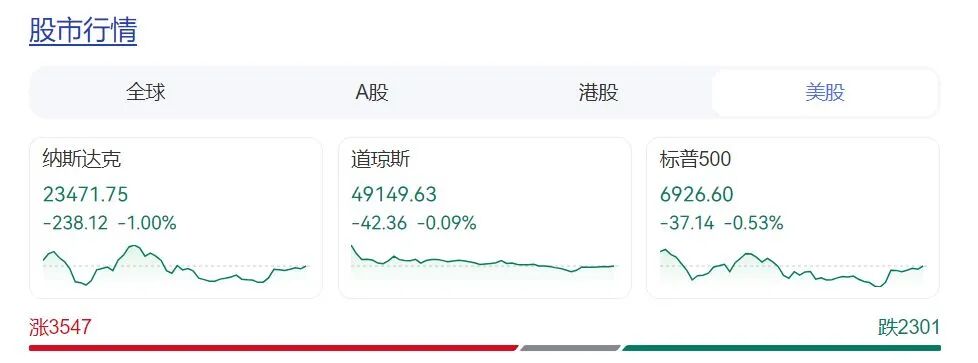
美东时间周三,美股三大指数连续第二个交易日下跌。截至收盘,道指跌0.09%报49149.63点,纳指跌1%报23471.75点,标普500指数 跌0.53%报6926.6点。 盘面上,大型科技股普跌,谷歌A跌0.04%,苹果跌0.42%,英伟达跌1.44%,特斯拉跌1.79%,微软跌2.4%,亚马逊跌2.45%,Meta跌 2.47%。 银行股全线走低,富国银行跌逾4%,花旗、美国银行跌超3%,摩根士丹利跌逾1%,摩根大通跌近1%,高盛跌0.58%。 航空股普跌,波音跌0.81%,美国航空、达美航空、西南航空跌超1%,美联航跌逾3%。 芯片股涨跌不一,博通跌超4%,ARM、拉姆研究、迈威尔科技跌逾2%,英特尔涨逾3%,超威半导体涨逾1%。 能源股集体上涨,康菲石油涨逾4%,埃克森美孚、雪佛龙、斯伦贝谢、西方石油涨逾2%。 衡量美元对六种主要货币的美元指数当天在汇市尾市收于99.135,与前一交易日基本持平。 消息面上,据新华社消息,美国白宫14日宣布,从15日起对部分进口半导体、半导体制造设备和衍生品加征25%的进口从价关税。 据央视新闻,当地时间1月14日,美联储发布全国经济形势调查报告(也称"褐皮书")。 ...
关税突发,美国宣布:对特定半导体等加征25%关税!特朗普称将“观望”伊朗局势发展,国际油价大幅震荡!纳指收跌1%,美联储重磅报告发布
Mei Ri Jing Ji Xin Wen· 2026-01-15 01:50
每经编辑|陈柯名 美东时间周三,美股三大指数连续第二个交易日下跌。截至收盘,道指跌0.09%报49149.63点,纳指跌1%报23471.75点,标普500指数跌0.53%报6926.6 点。 | 股市行情 | | | | | | --- | --- | --- | --- | --- | | 全球 | A服 | 港股 | | 美股 | | 纳斯达克 | 道琼斯 | | 标普500 | | | 23471.75 | 49149.63 | | 6926.60 | | | -238.12 -1.00% | -42.36 -0.09% | | -37.14 -0.53% | | | 涨3547 | | | | 跌2301 | 盘面上,大型科技股普跌,谷歌A跌0.04%,苹果跌0.42%,英伟达跌1.44%,特斯拉跌1.79%,微软跌2.4%,亚马逊跌2.45%,Meta跌2.47%。 银行股全线走低,富国银行跌逾4%,花旗、美国银行跌超3%,摩根士丹利跌逾1%,摩根大通跌近1%,高盛跌0.58%。 航空股普跌,波音跌0.81%,美国航空、达美航空、西南航空跌超1%,美联航跌逾3%。 芯片股涨跌不一,博通跌超4%,A ...
Stock Indexes Settle Lower on Tech Weakness
Yahoo Finance· 2026-01-14 21:39
Economic Indicators - US November PPI final demand rose by +3.0% year-over-year, exceeding expectations of +2.7% [1] - US November retail sales increased by +0.6% month-over-month, stronger than the anticipated +0.5% [4] - US December existing home sales rose by +5.1% month-over-month to a 2.75-year high of 4.35 million, surpassing expectations of 4.22 million [5] - US MBA mortgage applications surged by +28.5% in the week ended January 9, with the purchase mortgage sub-index up +15.9% and refinancing mortgage sub-index up +40.1% [5] Stock Market Performance - The S&P 500 Index closed down -0.53%, the Dow Jones down -0.09%, and the Nasdaq 100 down -1.07% [4] - Weakness in chip makers and the Magnificent Seven technology stocks negatively impacted the broader market [3][15] - Energy producers saw gains, with WTI crude oil reaching a 2.5-month high, benefiting companies like ConocoPhillips and Marathon Petroleum [18] Company-Specific Developments - Rivian Automotive closed down more than -7% after UBS downgraded the stock to sell from neutral with a price target of $15 [20] - Bank of America fell more than -3% after reporting Q4 FICC trading revenue of $2.52 billion, below the consensus of $2.62 billion [21] - LyondellBasell Industries rose more than +6% after Citigroup removed its downside catalyst watch due to improved polyethylene prices [22] Global Market Context - European government bond yields decreased, with the 10-year German bund yield falling to 2.814% [13] - Mixed performance in overseas stock markets, with the Euro Stoxx 50 down -0.41% and Japan's Nikkei Stock 225 up +1.48% [10]
Why Arm Holdings Stock Lost 11% in 2025
Yahoo Finance· 2026-01-14 18:46
Core Viewpoint - Arm Holdings experienced a volatile year in 2025, with strong results driven by AI trends, but faced valuation concerns and fears of an AI bubble, leading to an 11% decline in stock price by year-end [1]. Group 1: Company Performance - Arm started the year positively, benefiting from the $500 billion Stargate Project involving major companies like Nvidia and Oracle [2]. - The stock saw a sharp decline in March due to a broader market retreat and the "Liberation Day" tariff announcement [2]. - Despite the fluctuations, Arm reported a 24% revenue growth for the first half of the current fiscal year, although growth can be erratic due to its licensing model [5]. Group 2: Business Model and Product Development - Arm's business model relies on licensing and royalty revenue, which results in slower growth compared to other chip manufacturers that sell chips directly [4]. - The company is expanding its product portfolio with compute subsystems (CSS), enhancing production efficiency for customers [6]. - Arm is gaining traction in cloud computing through partnerships with Microsoft, Alphabet, and Amazon [6]. Group 3: Future Outlook - For the upcoming third quarter, Arm is guiding for $1.225 billion in revenue, reflecting a 24% increase year-over-year, and adjusted earnings per share are expected to rise to $0.41 from $0.39 [9]. - While investors may seek stronger bottom-line growth, Arm's competitive advantages and investments in AI are anticipated to yield positive results in the future [9].
Stocks Retreat as Big Tech Falters
Yahoo Finance· 2026-01-14 16:26
Economic Indicators - US November retail sales increased by +0.6% month-over-month, surpassing expectations of +0.5% [1] - US November PPI final demand rose by +3.0% year-over-year, exceeding expectations of +2.7% [1] - US December existing home sales rose by +5.1% month-over-month to a 2.75-year high of 4.35 million, stronger than the expected 4.22 million [4] Stock Market Performance - The S&P 500 Index decreased by -0.96%, the Dow Jones Industrials Index fell by -0.57%, and the Nasdaq 100 Index dropped by -1.53% [4] - Weakness in chip makers and the Magnificent Seven technology stocks is negatively impacting the broader market [3][15][16] - Energy producers are experiencing gains, with WTI crude oil reaching a 2.5-month high [17] Federal Reserve Commentary - Minneapolis Fed President Neel Kashkari indicated that the US economy shows "resilience" and does not see the need for an interest rate cut this month [5] - Philadelphia Fed President Anna Paulson mentioned potential for modest rate adjustments later in the year if inflation moderates and growth stabilizes [6] International Trade - Better-than-expected trade news from China, with December exports rising by +6.6% year-over-year and imports increasing by +5.7% year-over-year, supporting global growth prospects [7] Earnings Season - Q4 earnings season is beginning, with S&P earnings growth expected to rise by +8.4%, and +4.6% excluding the Magnificent Seven technology stocks [10]