歌尔股份

Search documents
大红包!2025年深市公司分红超5000亿元
Zheng Quan Shi Bao· 2025-12-31 13:47
Core Viewpoint - The total cash dividends distributed by companies in the Shenzhen market exceeded 500 billion yuan in 2025, reflecting a steady increase in dividend frequency and providing substantial returns to investors [1] Group 1: Dividend Growth and Trends - In 2025, Shenzhen companies distributed a total of 547.56 billion yuan in cash dividends, maintaining a level above 500 billion yuan [5] - The "14th Five-Year Plan" period saw Shenzhen companies implement over 2 trillion yuan in total dividends, establishing a growing ecosystem of companies willing and able to distribute dividends [5] - The trend of mid-term dividends is emerging, with 533 companies distributing 132.93 billion yuan in mid-term dividends in 2025, a year-on-year increase of 25.98% [5] Group 2: Sector Performance - In 2025, the main board had 965 companies distributing a total of 410.11 billion yuan in cash dividends, accounting for 74.90% of the total dividends in the Shenzhen market, while the growth rate of dividends in the ChiNext board was 8.41% [6] - Leading companies in the consumer and financial sectors, as well as those in advanced manufacturing, digital economy, and green low-carbon fields, set examples with significant dividend distributions [8] Group 3: Policy and Governance Support - The increase in cash dividends is supported by policy guidance, improved profitability, and upgraded governance, creating a complete system for "willing to distribute, able to distribute, and standardized distribution" [3] - The overall profitability of Shenzhen companies is improving, with total operating income reaching 15.72 trillion yuan in the first three quarters of 2025, a year-on-year increase of 4.31% [8] - Companies are enhancing transparency and predictability in dividend distribution through governance upgrades, with 535 companies disclosing mid-term dividend plans in 2025, a year-on-year increase of 7.24% [8]
大红包!2025年深市公司分红超5000亿元
证券时报· 2025-12-31 13:44
Core Viewpoint - The total cash dividends of Shenzhen Stock Exchange companies in 2025 exceeded 500 billion yuan, reflecting a steady increase in dividend frequency and providing substantial returns to investors [1]. Group 1: Dividend Growth and Trends - In 2025, Shenzhen companies distributed a total of 547.56 billion yuan in cash dividends, maintaining a level above 500 billion yuan. During the "14th Five-Year Plan" period, the total dividends exceeded 2 trillion yuan, indicating a growing ecosystem of companies willing and able to distribute dividends [5]. - The trend of mid-term dividends is on the rise, with 533 companies distributing 132.93 billion yuan in mid-term dividends in 2025, a year-on-year increase of 25.98%. Nearly 60% of these companies had a payout ratio exceeding 20%, with 105 companies exceeding 50% [5]. - High dividend-yielding stocks are attracting long-term capital, with 166 companies having a dividend yield over 1%, and 108 companies exceeding 1.34%, providing stable cash flow returns [5]. Group 2: Sector Performance and Collaboration - In 2025, the main board had 965 companies distributing a total of 410.11 billion yuan in cash dividends, accounting for 74.90% of the total dividends in Shenzhen, while the growth rate of dividends in the ChiNext board was 8.41% [6]. - Leading companies in the consumer and financial sectors, as well as those in advanced manufacturing, digital economy, and green low-carbon fields, have set examples with significant dividend distributions [8]. Group 3: Policy and Governance Support - The new "National Nine Articles" policy strengthens the regulation of cash dividends and incentivizes high-quality dividend-paying companies. The China Securities Regulatory Commission (CSRC) has issued guidelines to encourage cash dividends and improve dividend levels [8]. - The overall profitability of Shenzhen companies is improving, with total operating income reaching 15.72 trillion yuan in the first three quarters of 2025, a year-on-year increase of 4.31%, and net profit of 903.02 billion yuan, up 9.69% [8]. - Companies are enhancing governance by revising articles of association and establishing long-term dividend plans, which increases transparency and predictability of dividends [8].

深市年度分红超5400亿
Di Yi Cai Jing Zi Xun· 2025-12-31 11:27
Core Viewpoint - The implementation of stable cash dividends by listed companies enhances shareholder recognition and market acceptance, with regulatory support from the China Securities Regulatory Commission (CSRC) encouraging reasonable and stable dividend policies [2][3]. Group 1: Dividend Implementation - Over 10 companies listed on the Shenzhen Stock Exchange announced mid-term and third-quarter dividend implementation announcements, with over 18 companies expected to distribute more than 10 billion yuan in total dividends at the beginning of 2026 [2]. - In 2025, Shenzhen-listed companies cumulatively distributed cash dividends amounting to 547.56 billion yuan, with a total of over 2 trillion yuan in dividends expected during the "14th Five-Year Plan" period [2]. - A total of 533 companies in Shenzhen implemented mid-term dividends of 132.93 billion yuan in 2025, representing a year-on-year increase of 25.98% [2]. Group 2: Regulatory Environment - The new "National Nine Articles" strengthens the regulation of cash dividends for listed companies and increases incentives for high-dividend companies [3]. - The CSRC issued guidelines to encourage cash dividends, aiming to enhance dividend levels and promote more frequent dividend distributions [3]. Group 3: Dividend Distribution by Sector - In 2025, the main board of Shenzhen listed 965 companies that cumulatively distributed cash dividends of 410.11 billion yuan, accounting for 74.90% of the total cash dividends in Shenzhen [3]. - The growth rate of dividends in the ChiNext board is notable, with 945 companies distributing a total of 137.45 billion yuan, reflecting a year-on-year growth of 8.41% [3]. Group 4: Notable Companies and Dividend Amounts - In the consumer sector, Wuliangye (000858.SZ) distributed 10 shares for 25.78 yuan, totaling 10.01 billion yuan in December 2025 [4]. - Gree Electric (000651.SZ) approved a mid-term profit distribution plan, distributing 10 yuan per 10 shares, totaling 5.59 billion yuan [4]. - In the financial sector, GF Securities (000776.SZ) distributed 1 yuan per 10 shares, totaling 0.76 billion yuan [4]. Group 5: Financial Performance - In the first three quarters of 2025, Shenzhen-listed companies achieved a total operating income of 15.72 trillion yuan, a year-on-year increase of 4.31%, and a net profit attributable to shareholders of 903.02 billion yuan, up 9.69% [5]. - 2,169 companies reported profits, representing 75.34% of the total, with 207 companies (9.54% of profitable companies) experiencing profit growth exceeding 100% [5].
深市年度分红超5400亿
第一财经· 2025-12-31 10:23
2025.12. 31 本文字数:1446,阅读时长大约3分钟 作者 | 第一财经 安卓 2025年的最后一天,10余家深市上市公司披露了中期分红、三季度分红实施公告。第一财经根据 Wind数据统计,预计2026年初还有超18家公司分红金额合计超百亿元。 上市公司实施稳定分红,不仅能增强股东对公司的认同,还能提升公司在市场中的认可度。近期,证 监会发布《上市公司监督管理条例(公开征求意见稿)》,对上市公司现金分红作出明确要求,支持 上市公司制定合理稳定的分红政策。 从全年的数据来看,年内,深市上市公司累计发放现金股利5475.59亿元。"十四五"期间实施分红 总额超2万亿元,上市公司"愿分红、常分红"的生态逐步形成。 近年来,越来越多的上市公司加入了中期分红大军。年内深市已有533家公司实施中期分红1329.28 亿元,同比增加25.98%。近六成中期分红的深市公司股利支付率超20%,其中105家公司股利支付 率超50%。 上市公司实施中期分红,可以让投资者更早分享企业成长红利。新"国九条"明确强化上市公司现金 分红监管,加大对分红优质公司的激励力度。证监会发布《上市公司监管指引第3号——上市公司现 金分红》 ...
深市年度分红超5400亿,“十四五”累计分红突破2万亿
Di Yi Cai Jing· 2025-12-31 09:51
Group 1 - Over 18 companies are expected to distribute dividends exceeding 100 billion yuan at the beginning of 2026 [1] - In 2025, listed companies in the Shenzhen market distributed a total of 5,475.59 billion yuan in cash dividends, with a total dividend amount exceeding 20 trillion yuan during the "14th Five-Year Plan" period [1] - 533 companies in the Shenzhen market implemented interim dividends totaling 1,329.28 billion yuan in 2025, a year-on-year increase of 25.98% [1] Group 2 - The new "National Nine Articles" strengthens the regulation of cash dividends for listed companies and increases incentives for companies with quality dividends [2] - In 2025, 166 companies in the Shenzhen market had a dividend yield exceeding 1%, with 108 companies exceeding 1.34%, attracting more medium- and long-term investments [2] - Main board companies in the Shenzhen market accounted for 74.90% of the total cash dividends, distributing 4,101.07 billion yuan, while the growth rate of dividends in the ChiNext board was 8.41% [2] Group 3 - In the consumer sector, Wuliangye distributed 100.07 billion yuan in dividends, while Gree Electric distributed 55.85 billion yuan [3] - In the financial sector, GF Securities distributed 7.61 billion yuan, and Ningbo Bank distributed 19.81 billion yuan in dividends [3] - In advanced manufacturing, CITIC Special Steel distributed 10.09 billion yuan, and Weichai Power distributed 31.01 billion yuan [3] Group 4 - In the digital economy sector, Yilian Network distributed 6.33 billion yuan, and GoerTek distributed 5.21 billion yuan in dividends [4] - In the green low-carbon sector, CATL distributed 45.68 billion yuan, and Longyuan Power distributed 8.36 billion yuan in dividends [4] - In the first three quarters of 2025, Shenzhen companies achieved a total operating income of 15.72 trillion yuan, a year-on-year increase of 4.31%, and a net profit of 9,030.18 billion yuan, a year-on-year increase of 9.69% [4]
探访潍坊综合保税区:链接全球 蓄势赋能
Zhong Guo Xin Wen Wang· 2025-12-31 06:29
Core Viewpoint - Weifang Comprehensive Bonded Zone aims to become a trillion-level city and a significant economic growth pole in northern Shandong, focusing on high-level openness and high-quality development [1]. Group 1: Industrial Support - The Weifang Comprehensive Bonded Zone is positioned as an "open-type industrial agglomeration area," focusing on core industries such as virtual reality, intelligent manufacturing of automotive equipment, new materials, and bonded processing of imported grain and oil [2]. - The high-tech industry accounts for over 90% of the output value in the bonded zone, with a notable transformation from "single champions" to "industrial clusters" [3]. Group 2: Cross-Border Trade - The bonded zone employs a "cross-border e-commerce + industrial belt" model, creating a full-chain platform for incubation, rapid customs clearance, and exhibition sales, enhancing the "cross-border e-commerce looks at bonded" brand [4]. - The TIR "China-Russia" international road transport customs clearance business was successfully implemented, with TIR business import and export value accounting for over 70% of Weifang's total [4]. Group 3: Logistics and Consumption - The international logistics channels have fostered diverse cross-border consumption new formats, with over 10,000 imported products showcased in the "Weifang Imported Goods Purchase" exhibition center [6]. - The bonded zone has established a comprehensive service center for enterprises, streamlining 296 service items for foreign trade enterprises, significantly reducing processing times [7][10]. Group 4: Open Environment - The bonded zone is committed to building a multi-dimensional open channel system, enhancing the efficiency of customs clearance through innovative mechanisms and integrated service models [11]. - The implementation of smart supervision and pre-inspection has improved the efficiency of customs clearance, allowing goods to be dispatched on the same day, saving 1-3 days for overseas consumers [11].
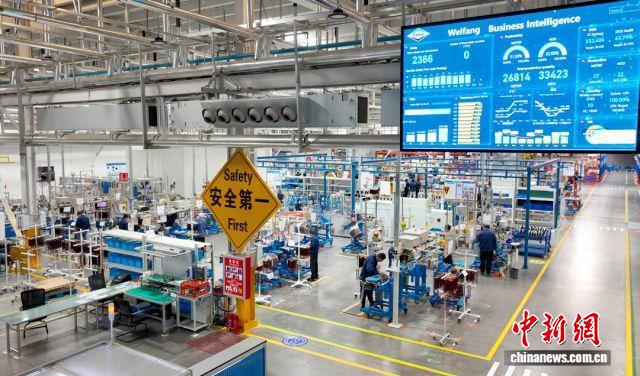
飞荣达:消费电子客户包括H公司、三星、荣耀、联想、戴尔、Meta及其他重要客户等
Xin Lang Cai Jing· 2025-12-31 06:23
Core Viewpoint - The company Feirongda (300602.SZ) has a diverse range of applications for its products across various sectors, including consumer electronics, network communication, data centers, servers, new energy vehicles, photovoltaic energy storage, artificial intelligence, medical devices, and home appliances [1][4]. Group 1: Client Segments - Data center and server clients include major companies such as H Company, ZTE, Cisco, Inspur, Datang Mobile, Yonghong Super Micro, H3C, Super Fusion, Lenovo, Wistron, Wistron NeWeb, Compal, Asus, Oriental Communication, and Shenzhou Kuntai [1][4]. - Consumer electronics clients feature prominent names like H Company, Samsung, Honor, Lenovo, Dell, HP, Xiaomi, and Meta, among others [1][4]. - Other consumer clients include GoerTek and Sony [1][4]. Group 2: New Energy and Automotive Clients - New energy vehicle battery manufacturers include CATL, BYD, Xinwangda, LG New Energy, Zhongchuang Xinhang, Ruipu Lanjun, Guoxuan High-Tech, and Funeng Technology [1][4]. - Automotive clients consist of GAC, BAIC, Changan, Geely, Li Auto, NIO, Xiaopeng, and Seres [1][4]. Group 3: Inverter and Control Clients - Inverter clients include H Company, GoodWe, and Solis, among other significant customers [1][6]. - Control system clients comprise Huichuan and Weimais [1][6].


新广益高开大涨285%!“卡脖子”技术破壁者,驶入国产替代深水区
Tai Mei Ti A P P· 2025-12-31 06:00
Core Viewpoint - New Guangyi (301687.SZ), a leading company in specialty membranes, has been well-received in the market upon its listing, with a peak increase of 285% and a transaction amount exceeding 1 billion yuan. The company raised 638 million yuan for functional material project development, highlighting its strong market position and growth potential in high-performance specialty materials [2]. Group 1: Company Overview - New Guangyi specializes in high-performance specialty materials, particularly anti-overflow adhesive membranes and strong resistance specialty membranes, holding a monopoly in the niche market of anti-overflow adhesive membranes. The company has established deep partnerships with several top global flexible printed circuit board (FPC) manufacturers [2][3]. - Since its establishment in 2004, New Guangyi has transitioned from general functional adhesive films to focusing on specialty membrane materials for FPC core processes, breaking the technological monopoly of foreign companies in high-end FPC materials [3]. Group 2: Technological Advancements - The company has developed a comprehensive technical system with 15 core technologies across five categories, including raw material synthesis and coating process technology, which has created a significant technological moat [3][4]. - Innovations in the casting process have improved the uniformity of membrane thickness to micron-level precision, and the melt blending control technology allows for repeated use of products at high temperatures without performance degradation [4][6]. Group 3: Financial Performance - New Guangyi exhibits characteristics of a "small but beautiful" enterprise, achieving high profitability and asset return rates despite a smaller revenue scale. The gross profit margins for core products have shown a steady increase from 31.76% in 2022 to 32.44% in Q3 2025 [8][9]. - The company has a net asset return rate (ROE) of 13.88% as of September 30, 2025, significantly outperforming competitors, indicating strong financial health and operational efficiency [9]. Group 4: Market Position and Client Relationships - New Guangyi has established a solid position in the supply chain, being recognized as a core supplier by major FPC manufacturers and receiving multiple awards for its contributions [7][8]. - The company has optimized its customer structure, reducing reliance on its top five clients from 69.64% in 2022 to 52.88% in 2024, which enhances its stability and reduces risks associated with customer concentration [12][13]. Group 5: Future Growth Prospects - The functional membrane materials market in China is expected to grow rapidly, driven by demand in new display, renewable energy, and environmental protection sectors. New Guangyi has begun to expand into the renewable energy materials sector, with a revenue contribution of 12.59% in the first nine months of 2025 [13][14]. - The synergy between new energy materials and existing strong resistance specialty membranes allows for efficient resource utilization and lower marginal production costs, indicating significant growth potential for the company [14][15].
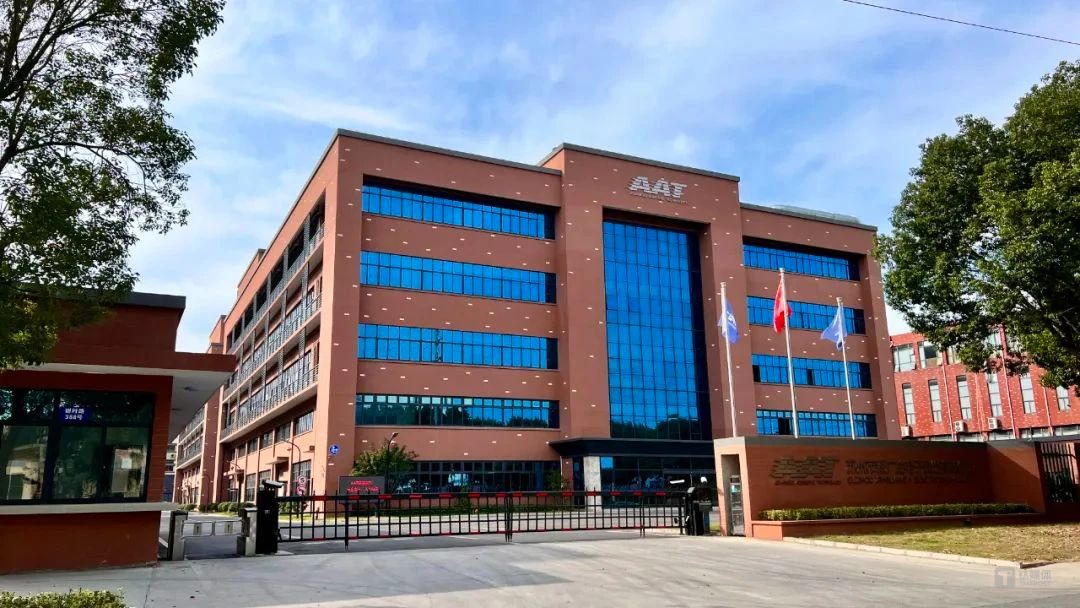
智能眼镜纳入2026年“国补”
Shang Hai Zheng Quan Bao· 2025-12-31 05:53
Core Insights - The Chinese government will include smart glasses in its subsidy program starting in 2026, providing a 15% subsidy on eligible purchases, capped at 500 yuan per item [1][2] - The smart glasses market is experiencing rapid growth, with a projected shipment of 450.8 million units in China by 2026, reflecting a year-on-year increase of 77.7% [4][5] Group 1: Government Policy and Market Impact - The new subsidy policy will support the purchase of digital and smart products, including smart glasses, smartphones, tablets, and smartwatches, with a maximum subsidy of 500 yuan per item [1] - The inclusion of smart glasses in the subsidy program is expected to benefit related supply chain companies, as indicated by a report from CITIC Securities [2] Group 2: Market Growth and Projections - According to IDC, global shipments of smart glasses reached 4.296 million units in Q3 2025, marking a 74.1% year-on-year increase, with audio and audio-capturing glasses showing a remarkable growth of 287.5% [2] - The Chinese smart glasses market is projected to see significant growth, with audio and audio-capturing glasses expected to reach 3.434 million units by 2026, a 68.1% increase [4] Group 3: Industry Developments and Innovations - Several new smart glasses products have been launched recently, including XREAL 1S and Loomos AI glasses, with more anticipated releases from major companies like Google and Apple in 2026 [4] - The supply chain for smart glasses is poised for opportunities, with companies like GoerTek and Lianxu Electronics ramping up production to meet increasing demand [5][6] Group 4: Component and Technology Advancements - Companies in the hardware manufacturing sector, such as GoerTek, are expanding their capabilities in smart glasses components, including MEMS sensors and optical products [5] - The optical display sector is also benefiting, with companies like Visionox and Crystal Optoelectronics securing significant orders for micro-displays and waveguide products [6]

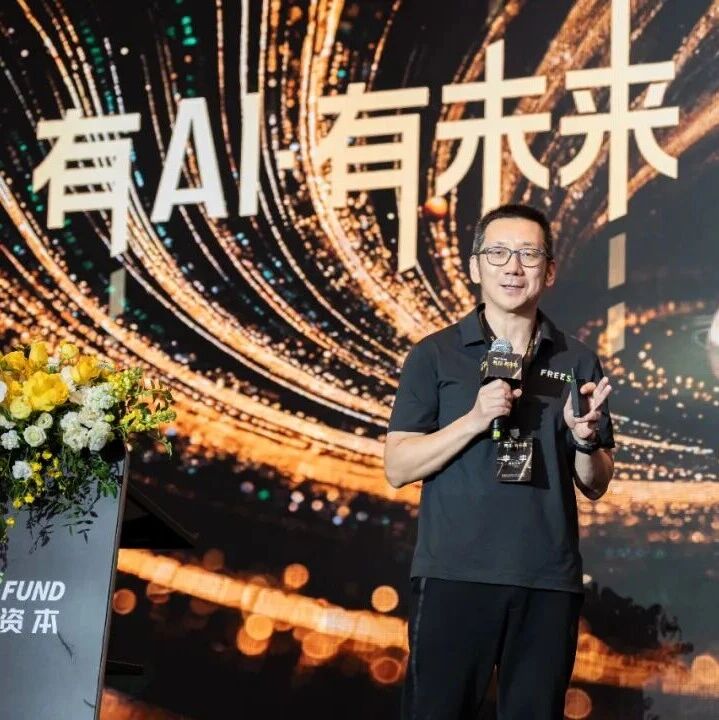
峰瑞资本李丰:AI投资的逻辑与展望
母基金研究中心· 2025-12-31 03:47
Core Viewpoint - The article discusses the evolving landscape of AI investment, highlighting the potential for a productivity revolution driven by AI and the unique opportunities within China's AI and biopharmaceutical sectors as the global market undergoes significant changes [3][4][8]. Group 1: AI Investment Landscape - AI is expected to drive a productivity revolution, but the timeline for this transformation remains uncertain, as historical precedents suggest that such revolutions take longer than anticipated [8][10]. - The current AI wave is unprecedented due to macroeconomic factors, including significant liquidity injections by global central banks during the COVID-19 pandemic, which have led to inflated asset prices [15][18]. - The investment logic in the AI sector is evolving through three stages: focusing on technology itself, exploring imaginative applications, and finally, investing in practical, revenue-generating applications [28][31][36]. Group 2: China's Position in AI - China has experienced a critical shift in its position within the AI wave, with the potential to catch up and even surpass the U.S. in certain applications as the technology matures and becomes more widely adopted [68][69]. - The Chinese AI industry is characterized by a strong focus on practical applications, leveraging existing infrastructure and user habits to drive rapid adoption and innovation [68]. - The article emphasizes that China's structural advantages in AI hardware and software development, combined with a robust manufacturing base, position it well for future growth in the global market [64][66]. Group 3: Biopharmaceutical Opportunities - The biopharmaceutical sector in China is witnessing a transformative moment, with a significant increase in the value of licensing deals, indicating a growing global presence [70][71]. - Future developments in China's biopharmaceutical industry will focus on improving research efficiency, enhancing the ability to discover new drugs, and exploring scientific breakthroughs that could lead to significant advancements [72].