诺诚健华

Search documents
港股午评:恒指涨1.36%、科指涨1.45%,科网股、电力设备股普遍走高,消费电子及芯片股多走低
Jin Rong Jie· 2025-12-12 04:06
Market Performance - The Hong Kong stock market opened higher and experienced a rebound, with the Hang Seng Index rising by 1.36% to 25,878.49 points, the Hang Seng Tech Index increasing by 1.45% to 5,614.94 points, the National Enterprises Index up by 1.17% to 9,038.54 points, and the Red Chip Index gaining 0.72% to 4,132.23 points [1] Sector Performance - Major technology stocks generally rose, with Alibaba up by 1.2%, Tencent Holdings increasing by 1%, JD.com rising by 0.7%, Xiaomi up by 2.7%, NetEase increasing by 2.19%, Meituan rising by 1.97%, Kuaishou up by 1.35%, and Bilibili increasing by 0.93% [1] - Power equipment stocks surged, with Dongfang Electric and Shanghai Electric both rising over 7%, and Northeast Electric increasing by over 5% [1] - Gold stocks saw significant gains, with Zijin Mining rising by over 3% [1] - New consumption concept stocks generally rose, with Cha Bai Dao increasing by over 4% and Guoquan rising by over 3% [1] - Consumer electronics stocks, which were strong yesterday, declined, with most semiconductor stocks experiencing a drop [1] Company News - Hong Kong Technology Exploration (01137.HK) reported a total merchandise transaction value of HKD 636 million in November, a year-on-year decrease of 7.4% [2] - BOE Technology Group (00710.HK) signed a total product processing agreement with BOE in Vietnam [3] - China Galaxy (06881.HK) completed the issuance of a short-term corporate bond worth 4 billion yuan [5] - Cloudy Technology (02670.HK) plans to establish a joint venture focusing on innovative robotic solutions [6] - Nocera Biopharma (09969) received approval for the use of Entrectinib in treating adult and adolescent solid tumors with NTRK fusion genes in China [7] - Peijia Medical-B (09996) received approval from the National Medical Products Administration for the registration application of the TaurusTrio transcatheter aortic valve system [8] - China Antibody-B (03681) had its new drug research application accepted by the National Medical Products Administration [9] - Hengyi Holdings (01894.HK) plans to conduct capital restructuring and fundraising activities [10] Institutional Insights - GF Securities noted that the Hong Kong stock market is more sensitive to external risks, with potential rebound points to watch in mid to late December and early January [11] - Dongwu Securities believes the market is still in a left-side phase and that a rebound requires further waiting [11] - Everbright Securities indicated that while there is significant room for the index to rise compared to previous bull markets, the duration of the bull market may be more important than the magnitude of the increase [11] - Guoxin Securities stated that the recent adjustments in the Hong Kong market could open up space for a market rise in 2026, with over 110 billion yuan of net inflow from southbound funds in November [11] Industry Trends - Ping An Securities highlighted the growing importance of the ice and snow economy, which includes ice and snow sports, tourism, equipment, and culture, as a new economic growth point [12] - The ice and snow industry is experiencing rapid growth, with recommendations to focus on brands with marginal improvements and stable dividend-paying leading companies, specifically mentioning Anta Sports, Bosideng, and Sanfu Outdoor [12]
12月12日重要公告一览
Xi Niu Cai Jing· 2025-12-12 03:00
Group 1 - Lu Kang Pharmaceutical plans to increase capital by 109 million yuan to its wholly-owned subsidiary Bio-Pesticide Company and 27 million yuan to Ze Run Company, aiming to expand its pesticide and sales sectors [1] - Hui Green Ecology intends to sell two properties in Ningbo for 12.52 million yuan, expecting a net profit impact of approximately 6.23 million yuan from the transaction [2] - Tianyuan Co., Ltd. plans to invest 185 million yuan in an intelligent upgrade project for its titanium dioxide production facilities [3] Group 2 - Metro Design has received approval from the Shenzhen Stock Exchange for its share issuance to acquire 100% equity of Guangzhou Metro Engineering Consulting Co., Ltd. for 511 million yuan [4] - South Network Energy announced a mid-term profit distribution plan for 2025, proposing a cash dividend of 0.07 yuan per 10 shares [5] - Qibin Group plans to establish two wholly-owned subsidiaries in Shenzhen with a registered capital of 100 million yuan each [6] Group 3 - All New Good received an administrative regulatory decision from the Shenzhen Securities Regulatory Bureau due to issues in financial accounting and information disclosure [7] - Luokai Co., Ltd. announced that its shareholders plan to reduce their holdings by up to 3% of the company's shares [8][9] - Jincheng Pharmaceutical's actual controller received an administrative penalty from the CSRC for stock manipulation, leading to the resignation of the chairman [10] Group 4 - Yicheng New Energy intends to acquire a 7.69% stake in Kaifeng Times for 10 million yuan, enhancing its strategic development [11] - Yujing Co., Ltd. signed a sales contract worth approximately 28.6 million USD with an overseas photovoltaic company [12] - Nuocheng Jianhua's TRK inhibitor, Zoltracitinib, has been approved for market entry in China [13] Group 5 - Nandu Power announced that its controlling shareholder is planning a change in control, leading to a temporary suspension of its stock [14] - Xinxing Casting plans to acquire 100% equity of China Resources Steel for 1.244 billion yuan to focus on special steel development [15] - Xinlitai is planning to issue H-shares and list on the Hong Kong Stock Exchange [16] Group 6 - Blue Fan Medical's subsidiary received approval for a new medical device, the coronary artery scoring balloon dilation catheter [18] - China Iron & Steel plans to establish a joint venture with several companies to provide new energy transportation solutions with a registered capital of 500 million yuan [19] - Jifeng Technology intends to sign a cooperation framework agreement with Dongtai Lianfei for a total transaction amount not exceeding 100 million yuan [20] Group 7 - Zhongwei Electronics announced a change in its actual controller, with stock resuming trading [21] - Weihong Co., Ltd. plans to reduce its holdings by up to 1.15% of the company's shares [22] - Te Fa Information received a criminal judgment related to a fraud case involving the acquisition of Shenzhen Te Fa Dongzhi Technology Co., Ltd. [23] Group 8 - Sunshine Dairy's controlling shareholder's concerted action plans to reduce holdings by up to 3% of the company's shares [24] - Meikailong reported that Taobao Holdings and New Retail Fund collectively reduced their H-shares by 30.616 million shares [25] - Xinjubang plans to issue H-shares and apply for listing on the Hong Kong Stock Exchange [26] Group 9 - Beite Technology's application for issuing A-shares to specific objects has been approved by the Shanghai Stock Exchange [28] - Victory Energy's controlling shareholder is planning a change in control, with stock resuming trading [29] - Jiutian Pharmaceutical signed a patent and technology transfer agreement for a small molecule analgesic drug project, with a total transfer fee not exceeding 400 million yuan [29]




平安证券(香港)港股晨报-20251212


Ping An Securities Hongkong· 2025-12-12 02:41
Market Overview - The Hong Kong stock market experienced fluctuations, with the Hang Seng Index closing at 23,831 points, down 145 points or 0.61% [1] - The Hang Seng Technology Index fell by 0.83%, with a market turnover of HKD 182.48 billion [1] - In the US market, the Dow Jones increased by 1.34% to a record high of 48,704.01 points, while the S&P 500 rose by 0.21% [2] Investment Opportunities - The report emphasizes the attractiveness of low-valuation, high-dividend sectors in the Hong Kong market, suggesting that these areas remain appealing for capital allocation [3] - Key sectors to focus on include artificial intelligence, semiconductors, industrial software, and state-owned enterprises with low valuations and high dividends [3] - The report highlights the potential for long-term growth in technology sectors, particularly in companies leading in semiconductors and robotics [3] Company Performance - Meituan-W and Xiaomi Group-W saw increases of 1.50% and 0.96% respectively, while Hua Hong Semiconductor and Horizon Robotics experienced declines of 4.80% and 3.34% [1] - Oracle's stock dropped nearly 11% following concerns over high valuations in the tech sector, despite the overall market benefiting from the Federal Reserve's interest rate cuts [2] - The report suggests monitoring companies in the copper mining and smelting sectors, such as China Nonferrous Mining (1258.HK) and Luoyang Molybdenum (3993.HK), due to rising copper prices driven by demand from AI data centers and electric vehicles [9]
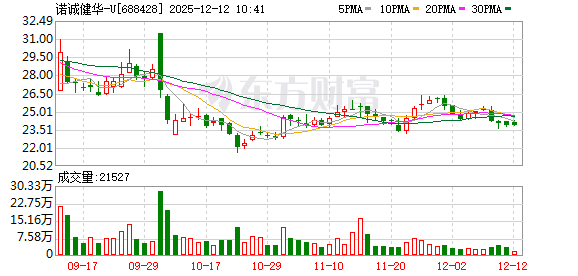
诺诚健华宣布中国首款自主研发的新一代TRK抑制剂宜诺欣(佐来曲替尼)获批上市
Zheng Quan Shi Bao Wang· 2025-12-12 02:40
Core Viewpoint - The approval of the new generation TRK inhibitor, Zolbetuximab (ICP-723), by the NMPA marks a significant milestone as it is the first domestically developed TRK inhibitor in China for treating adult and adolescent patients with NTRK fusion gene-positive solid tumors [2][5] Group 1: Drug Efficacy and Safety - Zolbetuximab demonstrated exceptional efficacy and safety in clinical trials, with an overall response rate (ORR) of 89.1%, disease control rate (DCR) of 96.4%, 24-month progression-free survival (PFS) rate of 77.4%, and 24-month overall survival (OS) rate of 90.8% [2] - The drug shows superior efficacy compared to first-generation TRK inhibitors, providing long-term deep remission and overcoming resistance to earlier treatments [2][3] - In specific patient groups, such as adolescents, the ORR reached 100%, and the drug's rapid onset of action offers critical treatment time for severe cases [3] Group 2: Clinical Observations - Clinical observations indicate that Zolbetuximab has a long duration of effective response, with some patients experiencing responses lasting over 36 months [3] - The drug's high selectivity significantly reduces off-target toxicity, allowing for long-term use without compromising patients' quality of life [3][4] - In lung cancer patients, the ORR was reported at 88.9%, with a 100% intracranial objective response rate (IC-ORR) and sustained intracranial response [4] Group 3: Market and Future Prospects - Zolbetuximab is the third innovative drug approved by the company and the first for solid tumors, highlighting its clinical significance for NTRK fusion-positive patients [4] - The drug has been included in the "Star Program" for encouraging the development of pediatric anti-cancer drugs, with plans to submit a New Drug Application (NDA) for treating children aged 2 to 12 [4][5] - The presence of NTRK fusion genes in over 26 types of tumors and an estimated 6,500 new cases annually in China indicates a significant unmet clinical need, positioning Zolbetuximab as a vital treatment option [5]

诺诚健华宣布中国首款自主研发的新一代TRK抑制剂宜诺欣 (佐来曲替尼)获批上市
Zheng Quan Shi Bao Wang· 2025-12-12 02:25
Core Viewpoint - The approval of the new generation TRK inhibitor, Zolbetuximab (ICP-723), by the National Medical Products Administration (NMPA) in China marks a significant milestone as it is the first domestically developed TRK inhibitor approved for treating adult and adolescent patients with NTRK fusion gene-positive solid tumors [1][2]. Group 1: Drug Efficacy and Safety - Zolbetuximab demonstrated exceptional efficacy and safety in clinical trials, with an overall response rate (ORR) of 89.1%, disease control rate (DCR) of 96.4%, 24-month progression-free survival (PFS) rate of 77.4%, and 24-month overall survival (OS) rate of 90.8% [1]. - The drug shows superior efficacy compared to first-generation TRK inhibitors, providing long-term deep remission and strong brain penetration, with a good overall safety profile [1][2]. - In specific patient populations, Zolbetuximab achieved an ORR of 100% in adolescents, 89.5% in soft tissue sarcoma patients, and 88.9% in lung cancer patients, highlighting its broad applicability [2][3]. Group 2: Clinical Significance - The rapid onset of action of Zolbetuximab allows for significant tumor shrinkage within one to two treatment cycles, providing critical time for severely ill patients [2]. - The drug's unique structure enables it to penetrate the blood-brain barrier effectively, achieving a 100% intracranial objective response rate (IC-ORR) in brain metastases, which is a significant advancement for patients with brain lesions [2][3]. - Zolbetuximab is included in the "Star Program" for encouraging the development of pediatric anti-cancer drugs, with plans for an NDA submission for treating children aged 2 to 12 [1][2]. Group 3: Market and Development Context - The emergence of Zolbetuximab addresses an unmet clinical need for patients with NTRK fusion-positive tumors, which are often aggressive and have limited treatment options [3]. - The estimated annual incidence of NTRK fusion-positive tumors in China is around 6,500 cases, indicating a significant market potential for Zolbetuximab [3]. - The approval of Zolbetuximab represents a critical advancement in the oncology field, providing new hope for patients with solid tumors in China [1][2].
港股开盘:恒指涨0.9%、科指涨1.02%,科网股、黄金股及锂电池股集体走高,新消费概念股活跃
Jin Rong Jie· 2025-12-12 01:28
Market Overview - The Hong Kong stock market opened higher on December 12, with the Hang Seng Index rising by 230.9 points, an increase of 0.9% to 25,761.41 points [1] - The Hang Seng Tech Index increased by 56.56 points, up 1.02% to 5,591.15 points [1] - The National Enterprises Index rose by 78.78 points, a gain of 0.88% to 9,013.06 points [1] - The Red Chip Index climbed by 17.19 points, up 0.42% to 4,119.82 points [1] - Technology stocks saw broad gains, with companies like NetEase, Alibaba, Xiaomi, Lenovo, Tencent, and Kuaishou rising over 1% [1] - Gold stocks also performed well, with China National Gold International increasing by over 4% [1] - Power equipment stocks opened higher, with Dongfang Electric rising by over 2% [1] - New consumption concept stocks were active, with Hu Shang Ayi increasing by over 1% [1] - The lithium battery sector opened higher, with CATL rising nearly 3%, and Ganfeng Lithium and Tianqi Lithium both increasing by over 2% [1] Company News - Hong Kong Technology Exploration (01137.HK) reported a total merchandise transaction value of HKD 636 million in November, a year-on-year decline of 7.4% [2] - BOE Technology Group (00710.HK) signed a total product processing agreement with BOE in Vietnam [3] - China Merchants Securities (06099.HK) was approved to issue company bonds not exceeding RMB 40 billion [4] - China Galaxy (06881.HK) completed the issuance of short-term company bonds amounting to RMB 4 billion [5] - Cloudwalk Technology (02670.HK) plans to establish a joint venture focusing on innovative robotic solutions [6] - Innovent Biologics (09969) received approval for the use of Selpercatinib in treating adult and adolescent patients with NTRK fusion gene solid tumors in China [7] - Peijia Medical-B (09996) received approval from the National Medical Products Administration for the registration application of the TaurusTrio transcatheter aortic valve system [8] - China Antibody-B (03681) had its new drug research application accepted by the National Medical Products Administration [9] - Hengyi Holdings (01894.HK) plans to undergo capital restructuring and fundraising activities [10] Institutional Insights - GF Securities noted that the Hong Kong stock market is more sensitive to external risks, with uncertainties regarding the Federal Reserve's future interest rate cuts and a peak in lock-up stock releases in December, which may lead to liquidity shocks [11] - Dongwu Securities believes that the Hong Kong stock market is still in a left-side phase, and a rebound will require more time [11] - Ping An Securities highlighted the growing importance of the ice and snow economy, which encompasses ice and snow sports, tourism, equipment, and culture, as a new economic growth point [11] - The ice and snow industry is experiencing rapid growth, and companies like Anta Sports, Bosideng, and Sanfu Outdoor are recommended for investment due to their improving margins and stable dividend yields [11] Industry Trends - Western Securities reported that since the end of 2024, the bidding prices for wind turbine manufacturers have shown a continuous upward trend due to self-discipline among manufacturers and changes in bidding rules [12] - The average bidding price for onshore wind turbines in January-October 2025 was RMB 1,618 per kW, a year-on-year increase of 6.86% [12] - The average bidding price for onshore wind turbines (including towers) was RMB 2,096 per kW, a year-on-year increase of 9.78% [12] - The demand for wind turbines in overseas markets is strong, with companies like Goldwind and Envision Energy seeing significant increases in overseas order volumes [12]
股海导航_2025年12月12日_沪深股市公告与交易提示
Xin Lang Cai Jing· 2025-12-12 00:41
摩尔线程:目前新产品和新架构均处于在研阶段 量产及产生收入仍需一定时间 信立泰:筹划发行H股并在香港联交所上市 专题:交易提示 炒股就看金麒麟分析师研报,权威,专业,及时,全面,助您挖掘潜力主题机会! 【热点】 新宙邦:拟发行H股股票并在香港联交所上市 【并购重组】 新兴铸管:子公司拟12.44亿元收购华润制钢100%股权 兆新股份:拟收购新能源运维企业优得新能源70%股权 威高骨科:拟通过收购及增资方式取得杰思拜尔55%股权 易成新能:拟1000万元收购开封时代7.69%股权 蓝盾光电:终止购买星思半导体部分股权 【股权变动】 胜通能源:控股股东将变更为七腾机器人 股票复牌 南都电源:控股股东筹划控制权变更事项 股票停牌 维宏股份:控股股东拟减持不超过1.15%公司股份 美凯龙:淘宝控股及新零售基金减持3061.6万股公司H股 【中标合同】 宇晶股份:签署2859.68万美元销售合同 中威电子:公司实控人将变更为付英波 股票复牌 【增减持、回购】 真兰仪表:董事长之一致行动人拟增持公司股份 阳光乳业:控股股东的一致行动人拟减持不超3%公司股份 洛凯股份:股东拟合计减持公司不超3%股份 吉峰科技:拟与东台联飞 ...
新华财经早报:12月12日
Zhong Guo Jin Rong Xin Xi Wang· 2025-12-12 00:36
Group 1 - The Central Economic Work Conference held in Beijing emphasized the need to stabilize investment and appropriately increase the scale of central budget investment [1][9] - In the first eleven months, China's automobile production and sales both exceeded 31 million units, with a year-on-year increase of over 10%. November's production surpassed 3.5 million units, setting a historical record [1][9] - The Ministry of Commerce is pushing for ASML from the Netherlands to send representatives to China to negotiate on corporate control and restore supply chain stability [1][9] Group 2 - The World Bank raised its forecast for China's economic growth in 2025 by 0.4 percentage points, citing more proactive fiscal policies and moderately loose monetary policies supporting domestic consumption and investment [1][9] - As of the end of November, the total scale of ETFs in the Shanghai market reached 4.1 trillion yuan, an increase of 1.35 trillion yuan from the beginning of the year, representing a growth rate of 50% [1][9] - The National Development and Reform Commission and the National Energy Administration issued a notice to optimize market pricing for centralized renewable energy generation enterprises, aiming to enhance the efficiency of power resource allocation [1][9]

金城医药实控人收到行政处罚决定书;新诺威递交H股上市申请
2 1 Shi Ji Jing Ji Bao Dao· 2025-12-12 00:10
Group 1: Industry Developments - Jiangsu Province has officially released its 15th Five-Year Plan, emphasizing the enhancement of industries such as biomedicine, new generation information technology, and high-end equipment, aiming to cultivate strategic emerging industry clusters with international competitiveness [1] - The global first CDK2/4/6 inhibitor, Kimosir, developed by China National Pharmaceutical Group's subsidiary, has been approved for marketing, marking a significant advancement in targeted therapy for breast cancer in China [1] - The innovative drug, Simoziran, developed by Shanghai Pharmaceuticals, has been approved for the treatment of primary hypertension, representing a new addition to the hypertension treatment market [2] Group 2: Company Announcements - Health元 has received a drug registration certificate for its innovative anti-influenza drug, Marpacisavir, which is effective for treating influenza A and B in adolescents and adults, showcasing significant advantages in efficacy and safety [3] - Baijun Medical's subsidiary has received approval for its collagen implant product, the first of its kind in China for improving facial smoothness, highlighting the company's innovation in the collagen field [4] - Innovent Biologics has announced the approval of its next-generation TRK inhibitor, Zoltritinib, for treating adult and adolescent patients with NTRK fusion gene solid tumors, marking a milestone in China's oncology market [5] Group 3: Market Movements - Saili Medical has reported a reduction in shareholding by Shanghai Anze Private Equity Fund to 5.00%, indicating a strategic shift in investment [6][7] - Newnow has submitted an application for H-share listing on the Hong Kong Stock Exchange, reflecting the trend of innovative pharmaceutical companies seeking dual listings [8] - Yunding New Medicine has entered into strategic cooperation with Haishen Biopharmaceuticals, enhancing its commercialization capabilities in the cardiovascular field through service and licensing agreements [9]

财经早报:5个必须、8项任务,中央重要会议细化明年经济工作!丨2025年12月12日
Xin Lang Cai Jing· 2025-12-11 23:34
【头条要闻】 5个必须、8项任务,中央重要会议细化明年经济工作!最新看点来了 12月11日召开的中央经济工作会议总结2025年经济工作,分析当前经济形势,部署2026年经济工作。继 12月8日中央政治局会议分析研究2026年经济工作,提出明年八大重点任务后,中央经济工作会议在此 基础上进一步细化重点任务的政策安排和目标,并在财政货币政策、政策关键着力点等方面提出具体部 署。 值得注意的是,会议认为,通过实践,我们对做好新形势下经济工作又有了新的认识和体会:必须充分 挖掘经济潜能,必须坚持政策支持和改革创新并举,必须做到既"放得活"又"管得好",必须坚持投资于 物和投资于人紧密结合,必须以苦练内功来应对外部挑战。[最新定调2026年房地产政策]["八个坚持"释 放哪些信号?] [要点极简版][相关专题] 多家国际机构上调中国经济增速预期 近日多家国际机构密集上调2025年中国经济增速预期。其中,世界银行、国际货币基金组织、亚洲开发 银行分别上调0.4、0.2、0.1个百分点。 多家机构表示,尽管面临冲击,中国经济展现了显著韧性。世行12月11日发布最新一期中国经济简报, 相较上期简报,对2025年中国经济增速预 ...