
大疆创新

Search documents
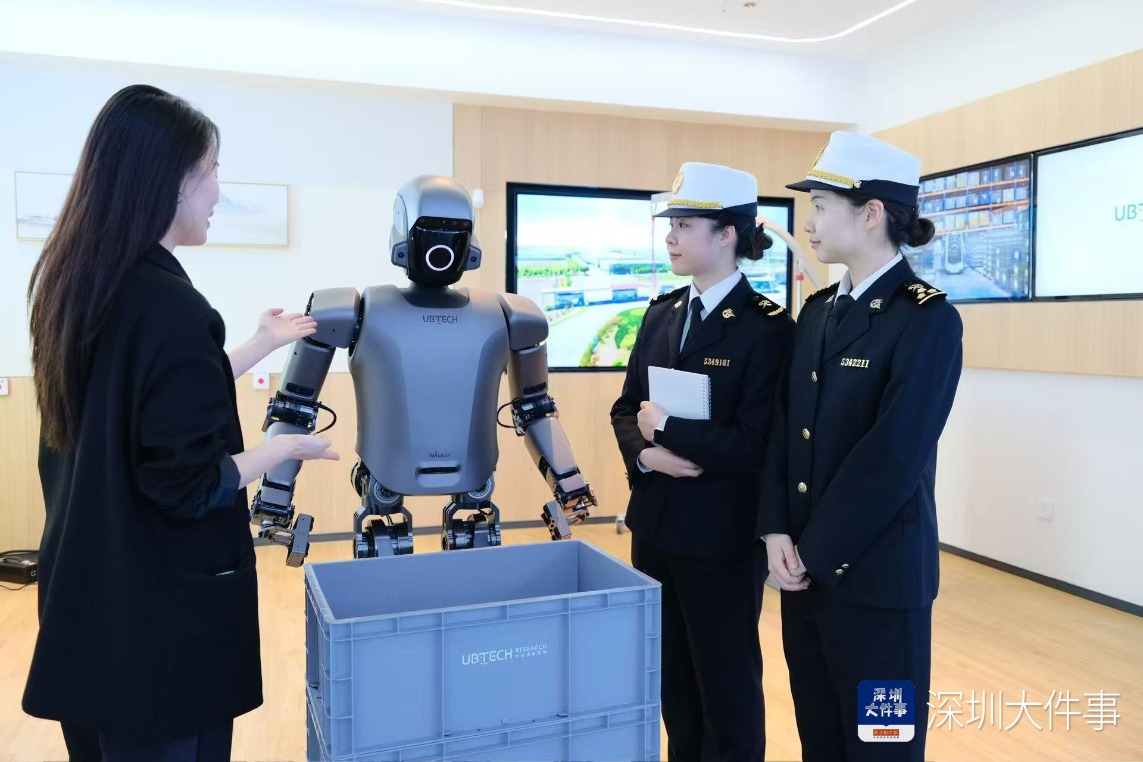
南山外贸连续六年高速增长,前海海关多举措助企出海
Nan Fang Du Shi Bao· 2025-04-12 16:03
Core Insights - The establishment of Qianhai Customs has significantly supported the high-level opening and high-quality development of foreign trade in Nanshan District, Shenzhen, with foreign trade value projected to exceed 890 billion yuan by 2024, up from approximately 400 billion yuan in 2019 [1] Group 1: Policy Support and Initiatives - Qianhai Customs has implemented a comprehensive policy toolkit covering 25 measures across 7 business areas, actively delivering policies to enterprises nearly 200 times [4] - The customs authority has collaborated with local government departments to hold nearly 50 special policy promotion meetings, reaching over 3,000 enterprises [4] - A platform for enterprises to go global has been established, integrating customs regulations into the "i Nanshan" government information platform for more convenient services [4] Group 2: Industry Development and Innovation - Nanshan District has become a hub for over 5,500 national high-tech enterprises, 310 specialized "little giant" companies, and 31 national manufacturing champions, with a high density of listed companies [2] - The district is witnessing a surge in emerging industries such as low-altitude economy, artificial intelligence, robotics, and biomedicine, with many advanced manufacturing enterprises leading China's manufacturing exports [2] Group 3: Trade Facilitation and Efficiency - Qianhai Customs has supported major projects like the Xili Lake International Science and Education City by providing tax research services and promoting a pilot reform of enterprise group processing trade supervision [5] - The customs authority has facilitated the internal transfer of production materials among six enterprise groups, with a total value of 130 million yuan in 2024 [5] - The customs has also reduced guarantee amounts by 260 million yuan and saved costs of 10.816 million yuan for enterprises through comprehensive external processing support [5] Group 4: International Trade and Compliance - As international trade grows, domestic enterprises face increasing risks related to legal compliance and market uncertainties abroad, prompting Qianhai Customs to actively address these challenges [7] - The customs has established a national-level research and evaluation base for technical trade measures in drones and medical devices in Nanshan District, participating in WTO/TBT meetings and collecting trade notifications [7] Group 5: AEO Certification and Impact - The number of AEO (Authorized Economic Operator) enterprises in Nanshan has increased from 45 in 2019 to 90, with their foreign trade value accounting for over 40% of the district's total by 2024 [8] - AEO enterprises in Nanshan experienced a nearly 30% year-on-year growth in foreign trade value in 2024, highlighting the importance of AEO certification in enhancing trade stability [8]

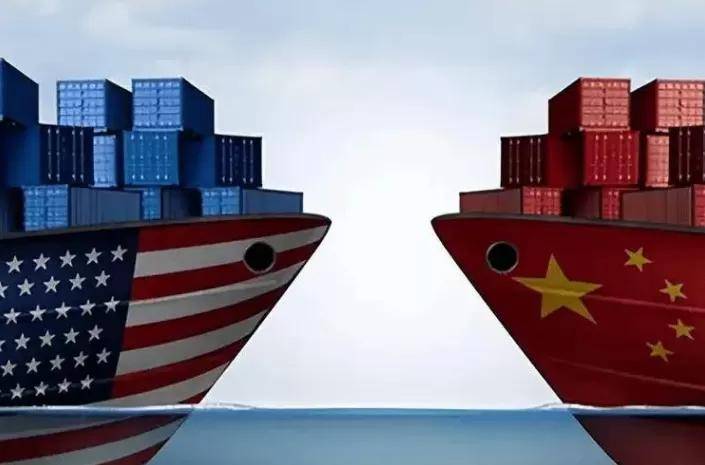
全球约4.5万家上市公司,中美制造产业的差距是怎样?
Sou Hu Cai Jing· 2025-04-05 10:09
Core Insights - The report from Tsinghua University reveals that while China holds the second-largest market capitalization globally at $15.8 trillion, it faces significant structural challenges in industrial strength compared to the U.S. [2] - The disparity between the scale and quality of Chinese companies is highlighted, with Chinese firms excelling in revenue but lagging in profitability and leadership in key sectors [5][9]. Group 1: Market Overview - China has 6,837 listed companies with a total market capitalization of $15.8 trillion, while the U.S. has 4,453 companies valued at $44.67 trillion [3]. - In terms of revenue, Chinese companies generated $1.33 trillion, compared to $2.14 trillion from U.S. firms, indicating a revenue-to-market cap ratio of 23.1% for China versus 48.0% for the U.S. [3][10]. Group 2: Sector Performance - In the materials sector, Chinese companies generated 14,305 million USD in revenue, surpassing U.S. firms by 114%, but the number of leading companies is only 39% of the U.S. total [2][6]. - The information technology sector shows a stark contrast, with 1,179 Chinese firms earning a total profit of $53.1 billion, significantly lower than the $240.5 billion profit from 508 U.S. firms [2][4]. Group 3: Competitive Landscape - China leads in 16 out of 23 industrial sectors, including renewable energy, but the average market capitalization of Chinese leading firms is only 54% of their U.S. counterparts [5][11]. - The healthcare sector is particularly concerning, with U.S. companies holding 54% of global market capitalization and 64% of revenue, while China has only two non-leading firms in nine sub-sectors [5][12]. Group 4: Innovation and Structural Challenges - The report emphasizes the need for China to redefine its industrial competition, as current investments in foundational research remain low at 6% [11]. - The existing classification system for industries hampers the valuation of emerging sectors in China, leading to a significant undervaluation compared to U.S. firms [9][10]. Group 5: Future Outlook - The report predicts that achieving a 70% localization rate in strategic sectors like semiconductors and biomedicine could enhance China's industrial strength coefficient by 75% by 2035 [13]. - The ongoing industrial revolution in China is seen as crucial for reshaping global industrial dynamics, with potential breakthroughs in various sectors [12][13].
科技赋能转型升级进行时:机械行业技术要素对信用质量的影响分析
新世纪资信评估· 2025-04-02 01:00
Investment Rating - The report indicates a positive outlook for the mechanical industry, highlighting the transition towards new productive forces and technological innovation as key drivers for growth and credit quality improvement. Core Insights - The development of new productive forces is driving technological innovation and structural upgrades in the mechanical industry, creating new market demands and business models [2][4][5]. - Key areas of growth include industrial humanoid robots, industrial 3D printing equipment, low-altitude economic industrial drones, AGV intelligent logistics, and high-precision military products, all of which exhibit high growth potential and are becoming new growth engines for the industry [2][4][12]. - The mechanical industry is accelerating its shift from traditional energy to new productive forces, with significant impacts on revenue and operational efficiency from technological investments [2][79]. Summary by Sections 1. Characteristics of the Mechanical Industry's Transformation - The mechanical industry is experiencing a comprehensive impact from the development of new productive forces, which is fostering technological innovation and structural upgrades [4][5]. - New productive forces are characterized by high technology, high efficiency, and high quality, leading to a systemic leap in production methods and significant improvements in overall productivity [5][6]. 2. Performance of New Productive Forces in the Mechanical Industry - The report identifies several key areas where new productive forces are manifesting, including the establishment of technology innovation platforms, the construction of intelligent factories, and the adoption of remanufacturing technologies [18][20][24]. - The intelligent factory projects have shown significant improvements in productivity and efficiency, with examples such as SANY Heavy Industry achieving a fourfold increase in per capita output [20][22]. 3. Representative Fields and Distribution of New Productive Forces - The report highlights the industrial humanoid robots, industrial 3D printers, low-altitude economic drones, AGV intelligent logistics, and high-precision military products as key sectors driving the mechanical industry's future growth [28][29][39]. - The market for industrial humanoid robots is expected to grow significantly, with projections indicating a global market size of $38 billion by 2030, driven by advancements in AI and robotics [38]. 4. Impact of Technological Factors on Credit Quality in the Mechanical Industry - Technological investments are expected to enhance credit quality in the long term, with pathways including improved market share, cash flow stability, and asset value enhancement [79][82]. - The report presents a quantitative analysis showing that the average total factor productivity (TFP) growth rate in the mechanical industry is 1.78%, indicating a shift towards new productive forces [82][84]. 5. Trends in Credit Quality in the Mechanical Industry - The overall credit quality of the mechanical industry is improving, with significant differentiation among companies during the transition period [91]. - New productive forces are associated with high growth and high added value, leading to enhanced credit quality through improvements in cost structure, profit margins, and market responsiveness [91].
速递|又一量化大佬转战AI,幻方联合创始人联合大疆副总裁下场AI创业,上市公司加注
Sou Hu Cai Jing· 2025-03-25 11:02
图片来源:Unsplash 据东四十条资本等多家媒体报道,由前幻方量化创始合伙人项国明掌舵的迪洛斯智能(Delos Intelligence)在成立仅三个月之际,便凭借其卓越的创始团 队与前瞻性的战略布局,迅速崛起为资本市场瞩目的新星。 公司正以"企业级 AI 应用平台" 为定位,探索中国 AI 从模型竞赛到价值创造的转型路径。天眼查显示,迪洛斯智能成立于2025年1月,注册并落户于成 都。根据公开信息, 公司获得沪市上市公司东珠生态的战略投资,双方将在"AI+绿色低碳经济"等领域展开合作。 浙大系团队的技术基因与战略定位 速递|又一量化大佬转战AI,幻方联合创始人联合大疆副总裁下场AI创业, 上市公司加注 职业经历:资深互联网从业者,早期在和讯、新浪任职,2015年加入字节跳动,历任政企项目全国战略合作负责人、商业化市场总监,主导全国级战略合 作及数字营销体系搭建。在迪洛斯智能中,负责运营管理,结合行业资源与技术优势推动AI应用落地。 整体来看其团队特点具有鲜明的浙大基因,项国明、高进与幻方量化创始人梁文锋均毕业于浙江大学信息与电子工程学系。团队成员均出自浙江大学信息 与电子工程学系,与 DeepSeek ...


【申万宏源策略】大显身手正当其时,布局民企“第一集团”——构建「优质民企20组合」
申万宏源研究· 2025-03-10 01:37
Group 1: Core Views - The recent meeting on private enterprises emphasizes their significant role in China's technological innovation and international competition, marking a shift from addressing challenges to actively promoting their involvement in national strategies [1][11]. - Since July 2023, a series of supportive policies have been implemented to enhance the legal environment and financial support for private enterprises, including the introduction of the "Private Economy Promotion Law" [1][7]. Group 2: Investment Value of Private Enterprises - Private enterprises in China exhibit a significant valuation advantage compared to international peers, with a 48.8% discount in expected PE ratios when compared to top U.S. tech stocks [2][20]. - The private sector plays a crucial role in emerging fields such as renewable energy, automotive, robotics, low-altitude economy, and semiconductors, showcasing strong international competitiveness [2][24][29]. Group 3: Financial Support and Policy Environment - The average interest rate for loans to privately held companies has decreased significantly from approximately 6.90% in early 2018 to 3.56% in January 2025, indicating improved financial conditions for private enterprises [1][13]. - The government has committed to increasing credit support for private enterprises, with plans to provide no less than 6 trillion yuan in financing over the next three years [14]. Group 4: R&D and Innovation - Private enterprises lead in R&D intensity, with a TTM R&D revenue ratio of 3.7% as of Q3 2024, significantly higher than state-owned enterprises [4][32]. - The growth of AI and related technologies is expected to drive a new capital expenditure cycle among domestic internet companies, positioning private enterprises as key players in AI chip development and application [3][31]. Group 5: Construction of Quality Private Enterprise Portfolio - A portfolio of 20 quality private enterprises has been constructed based on factors such as new productivity attributes, industry chain position, and competitive strength [4][34].

老罗要做AIOS,挖来小米前50号员工|36氪独家
36氪· 2025-03-05 09:19
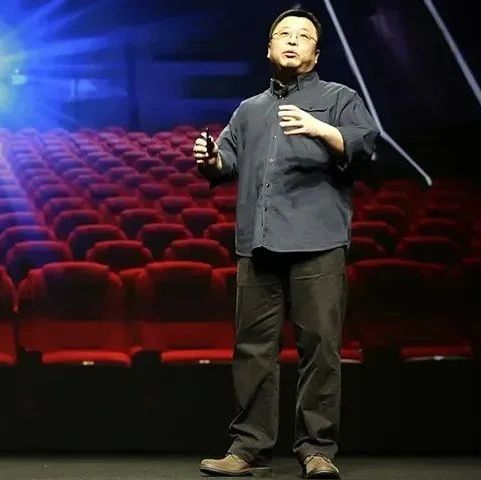
Core Viewpoint - The article discusses the latest entrepreneurial venture of Luo Yonghao, focusing on the development of an AI operating system (AIOS) and its integration with AI hardware, indicating a strategic shift back to hardware after previous explorations in AR and AI assistants [3][6][7]. Group 1: Company Background and Strategy - Luo Yonghao is leveraging his previous company, The Red Line, which was initially focused on AR products, to expand into the AIOS market [4]. - The recruitment of Wang Wenjun, a former key employee at Xiaomi, highlights the importance of experienced personnel in the development of AIOS, as he has a strong background in software and hardware integration [6][7]. - The strategic plan involves first launching AIOS, followed by the development of AI smartphones, creating a coherent product ecosystem [7]. Group 2: Product Development and Challenges - The J1 Assistant, an AI assistant product, is currently in testing and is expected to be integrated into the AIOS, although initial market reactions have been lukewarm [9][10]. - The development team, led by CTO Zhu Yongsheng, is facing challenges in creating a robust operating system, which requires significant investment and technical expertise [11]. - Luo Yonghao is under pressure to successfully launch the J1 Assistant to attract further investment, making the upcoming month critical for the company's future [11].
王兴兴们的第一笔钱
投资界· 2025-02-25 07:36
敢于冒险。 作者 I 刘博 报道 I 投资界PEdaily 有多少投资人在为错过宇树而遗憾? 这几天,一张聊天截图流传甚广,内容直观呈现了一家创业公司早期融资的窘境——2019年,正寻求 融资的宇树科技,将一份商业计划书发给了投资人,直接被婉拒。 这样一幕并非意外。一位宇树科技的老股东也发文透露,2023年想募集一只宇树的专项基金,找了很 多资金方沟通,都表示不感兴趣,最后这只基金愣是没募集起来。"时隔一年,当宇树出圈之后,大 家又回过头来找我们。" 此情此景,正如"当年的你爱搭不理,现在的我你高攀不起。"这也引发外界好奇: 当初是谁给了宇树 科技第一笔钱? 他给了王兴兴第一笔钱 " 怎么看上海大学王兴兴同学做的 XDog ? " 这是20 16年知乎上的一个帖子。彼时的王兴兴刚从上海大学硕士毕业,他做出的机器狗XDog在2 015 年创业大赛中拿到了奖金,一度让他萌生辍学创业的想法。随后,他找了创业大赛认识的几位投资 人,但没有人愿意投,创业的念头也随即打消,转身去了大疆工作。 直到20 16年8月,王兴兴才拿到第一笔投资,金额2 00万元人民币,也才有了宇树科技后面的故事。在 《晚点La t ePost》 ...
“杭州把深圳整急了”
投资界· 2025-02-24 07:56
全面发力。 作者 I 周佳丽 报道 I 投资界PEdaily 将出台促进风投创投高质量发展政策文件; 不辩不解,只有行动。 杭州爆红,放大了深圳的焦虑 2 0 0 6年,26岁的杭州人汪滔从香港科技大学毕业,思前想后回到深圳,带着一个稍显稚 嫩的学生团队开始创业。 十年后,大疆开始称霸全球无人机,当时汪滔曾动情做过总结:"我常常想,这一群初出 茅庐的年轻人,不用去阿谀奉承、投机取巧,就可以在踏实做事的埋头苦干当中,达到创 业之巅,这样的故事恐怕只有深圳才可以实现。" 二十年后,伴随De e pSe e k、宇树科技意外爆红,"杭州六小龙"令各地省市掀起一场反思 潮。这当中,"大疆之后再无深圳创新"的声音尤为刺耳。 经历了一个多月的批判,深圳没有更多解释,而是拿出行动——刚刚过去的周日,深圳市 政府新闻办召开"打造最好科技创新生态和人才发展环境"主题发布会上,宣布了一系列 魄力十足的举措: 大学毕业生来深圳找工作可免费住15天,青年创业最高1 0 0万资助; 1 9 7 9年,珠江口咸腥的海风中,宝安县渔民撒下最后一网时,没有人会想到这片荒芜的 滩涂即将迎来一场人类历史上最剧烈的城市嬗变。 那是属于深圳的繁花时 ...


晚点独家丨华为车 BU 前首席科学家陈亦伦创业,做具身智能
晚点LatePost· 2024-11-26 14:13
以下文章来源于晚点Auto ,作者晚点团队 晚点Auto . 从制造到创造,从不可能到可能。《晚点LatePost》旗下汽车品牌。 陈亦伦认为,人工智能是更高级的软件形态,机器人则代表了更高维度的硬件形态。 文丨赵宇 编辑丨程曼祺 曾有业内人士告诉我们,相比外界熟知的苏箐,在华为期间曝光度不高的陈亦伦,更接近华为智能驾驶研 发团队的技术 "灵魂人物"。 2021 年 4 月,搭载华为第一代智能驾驶系统 ADS 1.0 的极狐阿尔法 S 的实车路试视频引起热议:视频 中,阿尔法 S 在两侧停满车辆的道路上自如穿行,还能有效躲避对向来车,表现远超同行。ADS 1.0 最初 的研发即由陈亦伦主导。 现在,陈亦伦有了新动向。我们多方获悉,陈亦伦已投身具身智能创业,在今年 7 月创立 "它石智航"。这 家公司的另一位联创是陈亦伦在华为期间的同事丁文超。 一位知情人士告诉我们,它石智航正处于首轮融资阶段,方向还没有完全确定,目前团队成员主要是清华 和复旦的博士研究生。 丁文超本科毕业于华中科技大学,研究生毕业于香港科技大学。 和人形机器人公司智元 CTO 彭志辉一样,丁文超入选过华为创始人任正非发起的专项招聘计划 "天才 ...