
新产业

Search documents
延长产业链,山东做强农产品精深加工
Qi Lu Wan Bao· 2025-12-26 12:04
Core Viewpoint - The Shandong provincial government is accelerating agricultural modernization during the "14th Five-Year Plan" period, focusing on rural revitalization and the development of a modern rural industry system that supports economic growth in rural areas [1] Group 1: Agricultural Development and Modernization - Shandong has leveraged its agricultural advantages to create a modern rural industry system, emphasizing local specialties and products [1] - The provincial government has issued implementation opinions to promote high-quality development of rural industries, establishing development plans for 26 specialty industries [2] - A "13+N" system for cultivating specialty industries has been developed, with successful examples like the "土特产" (local specialties) gaining recognition [2] Group 2: Agricultural Processing and Leading Enterprises - The province has strengthened the role of leading enterprises in modern agriculture, focusing on deep processing of agricultural products to enhance value chains [3] - As of October, Shandong has established 30 high-quality development pilot counties for agricultural processing, with 11,621 processing enterprises generating an annual revenue of 2.3 trillion yuan, accounting for 10% and 8% of the national totals respectively [3] - The number of provincial and national key leading enterprises has increased significantly, with 141 agricultural enterprises making it to the national top 500 [3] Group 3: New Industries and Rural Economy - Shandong is actively developing new industries such as rural tourism, leisure agriculture, and rural e-commerce, contributing to the diversification of rural economic functions [4] - The province has built 8 national key leisure agriculture counties and 92 beautiful leisure villages, attracting over 200 million visitors annually [4] - Digital agriculture initiatives have been implemented, with 20 counties recognized for their development in this area, alongside the establishment of various digital platforms [4]

芜湖高新产业投资控股公司登记成立
Xin Lang Cai Jing· 2025-12-26 05:35
天眼查工商信息显示,近日,芜湖高新产业投资控股有限公司成立,法定代表人为鲍凡,注册资本20亿 人民币,经营范围为以自有资金从事投资活动、企业管理、咨询策划服务、非融资担保服务、园区管理 服务、自有资金投资的资产管理服务。股东信息显示,该公司由芜湖高新技术产业开发区管理委员会全 资持股。 ...

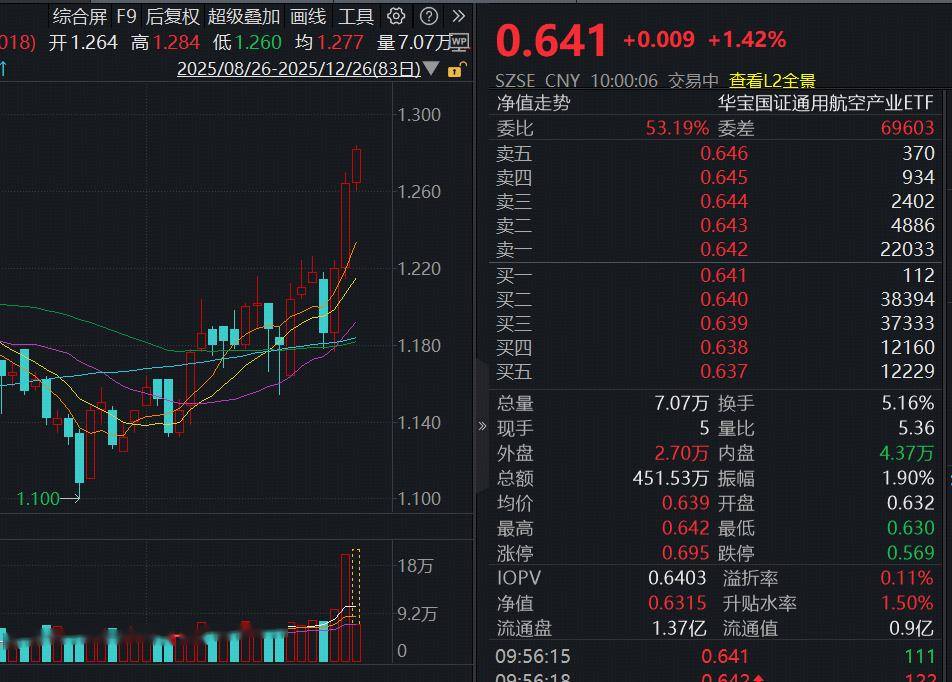
ETF盘中资讯|航空装备技术突破!通用航空ETF华宝(159231)拉升1.42%冲击三连阳!机构:商业航天产业化加速催生万亿级新产业
Sou Hu Cai Jing· 2025-12-26 02:21
Group 1 - The core viewpoint of the news highlights the strong performance of the aviation industry, particularly in the commercial aerospace sector, with significant advancements in technology and production capabilities [2][3] - Guanglian Aviation showed the strongest performance among component stocks, with a rise of 18.1%, followed by Tianyin Electromechanical and Huali Chuangtong, which increased by 8.77% and 5.76% respectively [1] - The aerospace industry is experiencing rapid growth, with a focus on military-civilian integration and the development of core technologies such as airborne oxygen systems and environmental control systems [2] Group 2 - The commercial aerospace industry is accelerating, with low-orbit satellite launches increasing and commercial rocket technology evolving, indicating a vast potential in the industry chain [2] - The Chinese military industry has transitioned to a new growth model characterized by internal demand, foreign trade expansion, and civilian applications, moving from cyclical growth to comprehensive growth [2] - The top ten weighted stocks in the general aviation ETF include Wanfu Aowei, Aerospace Rainbow, and Zhongzhi Co., indicating a diversified investment landscape in the aviation sector [3]

ETF盘中资讯 航空装备技术突破!通用航空ETF华宝(159231)拉升1.42%冲击三连阳!机构:商业航天产业化加速催生万亿级新产业
Jin Rong Jie· 2025-12-26 02:20
Group 1 - The General Aviation ETF Huabao (159231) showed a stable performance with an intraday increase of 1.42%, indicating a potential for a three-day winning streak [1] - Among the constituent stocks, Guolian Aviation performed the strongest with a rise of 18.1%, followed by Tianyin Electromechanical and Hualichuangtong with increases of 8.77% and 5.76% respectively [3] - Conversely, Hangfa Power, Aerospace Nanhu, and Aileda showed weaker performance with declines of 1.69%, 1.58%, and 1.4% respectively [3] Group 2 - By December 25, 2025, companies in the aviation equipment sector announced ongoing advancements in core technologies such as aviation oxygen systems and onboard environmental control, enhancing applications in models like CR929 and C919, while strengthening military-civilian integration strategies [3] - The commercial aerospace industry is accelerating, with rapid low-orbit satellite launches and advancements in commercial rocket technology, indicating significant space for industry growth [3] - Internationally, SpaceX plans to go public to raise funds for developing a space data center, enhancing Starship capabilities, and building a lunar base, while Rocket Lab secured an $816 million satellite contract, marking a shift in commercial defense satellite construction [3] Group 3 - The Chinese military industry has evolved from relying solely on domestic demand to a new model driven by "domestic demand foundation, foreign trade expansion, and civilian support," transitioning from "cyclical growth" to "comprehensive growth" [4] - Domestic demand focuses on preparation for combat and modernization of equipment, while military trade abroad continues to gain market share due to cost-effectiveness, and the dual-use of military technology is fostering new trillion-level industries such as commercial aerospace and low-altitude economy [4] - The General Aviation ETF Huabao (159231) and its connected funds passively track the General Aviation Index, with the top ten weighted stocks including Wan Feng Aowei, Aerospace Rainbow, and others [4]
徐州:发挥强劲支点作用,建设现代化区域中心
Xin Hua Ri Bao· 2025-12-25 23:55
Group 1: Economic Development and Infrastructure - Xuzhou's China-Europe Railway Express has maintained strong growth, with over 2,600 trains operated, reaching 41 countries and over 60 cities, and achieving an average annual import-export value growth of 42.3% over the past three years [1] - The city is focusing on enhancing its status as a regional center by implementing the "14th Five-Year Plan" and aims to build a modern regional center city, emphasizing high-quality development and improved urban functions [2] - Xuzhou's economic total has steadily increased its regional share, with plans to develop into a regional economic center, innovation center, consumption center, and cultural education and medical center [2] Group 2: Social Welfare and Public Services - The city aims to improve living standards and promote common prosperity by enhancing public services and addressing urgent community needs, focusing on employment, income growth, and education [3][4] - Specific initiatives include investing 2.2 billion yuan in flood control projects and revising heating regulations to improve service accessibility for residents [4] Group 3: Industrial Development - Xuzhou is optimizing its "343" innovation industrial cluster by enhancing existing industries, expanding emerging sectors, and nurturing future industries, with a focus on engineering machinery, green energy, and new materials [5][6] - The city plans to establish a world-class engineering machinery industry cluster, aiming for an industry scale of approximately 300 billion yuan by 2030 [5] Group 4: Cultural and Tourism Development - Xuzhou's tourism sector has seen significant growth, with a 10% annual increase in visitor numbers and revenue over the past three years, aiming to transition from a "trendy" to a "sustainable" tourism destination [7][8] - Future plans include developing diverse tourism products and enhancing service environments to improve visitor experiences and increase consumer retention [8] Group 5: Strategic Vision for Future Growth - Xuzhou is committed to high-quality development and aims to enhance its role as a regional economic hub, focusing on innovation, coordination, green development, openness, and shared growth [9][10] - The city is set to leverage its strategic positioning to achieve new breakthroughs in modernization and economic development during the "15th Five-Year Plan" period [10]

促进光热发电规模化发展
Ren Min Ri Bao· 2025-12-25 23:01
Core Viewpoint - The recent policy document issued by the National Development and Reform Commission and the National Energy Administration aims to promote the large-scale development of solar thermal power in China, targeting a total installed capacity of approximately 15 million kilowatts by 2030, with costs comparable to coal power and achieving international leadership in technology [1] Group 1: Current Status and Challenges - China has successfully mastered mainstream solar thermal power technologies such as tower, trough, and Fresnel systems, establishing a leading global solar thermal power industry chain [1] - The construction cost of solar thermal power plants has decreased from approximately 300,000 yuan per kilowatt ten years ago to 150,000 yuan, with the cost per kilowatt-hour dropping to around 0.6 yuan [1] - Despite progress, challenges remain, including high initial investment, weak market competitiveness, insufficient reflection of system support and adjustment value, and the need for improved industry technology levels [1] Group 2: Policy Measures for Development - The policy document proposes a comprehensive set of measures to address the bottlenecks in solar thermal power development, including resource surveys and top-level design for development layout and industrial collaboration [2] - It emphasizes the need to actively cultivate the solar thermal power application market and reasonably allocate solar thermal power scale in conjunction with large energy base construction [2] Group 3: Cost Reduction Strategies - The document outlines strategies to reduce investment and generation costs, including leveraging scale effects to drive rapid cost reductions through the construction of solar thermal power plants in large energy bases [3] - It aims to promote high-parameter, large-capacity technology and the steady advancement of large solar thermal power plants, enhancing core technology autonomy and domestic equipment levels [3] Group 4: Revenue Enhancement and Policy Support - The policy encourages eligible solar thermal power projects to utilize financial instruments like real estate investment trusts and asset-backed securities to revitalize existing assets [4] - It also supports the development of local regulations to facilitate solar thermal power participation in the electricity market, ensuring compensation for reliable capacity and enhancing green revenue through various means [4]
“能源ESG”指数正式发布,累计收益率达40%
2 1 Shi Ji Jing Ji Bao Dao· 2025-12-25 13:39
Core Viewpoint - The "CNI Energy Sustainable Development Index" (referred to as "Energy ESG") has been officially launched, aiming to fill the gap in the market for a specialized index focusing on the sustainable development of the energy sector, thereby guiding capital towards key areas such as renewable energy and green technology innovation [1][3]. Group 1: Index Overview - The "Energy ESG" index comprises 50 sample companies selected based on their ESG scores, profitability, and growth potential, with a total market capitalization of 5.9 trillion yuan and an average market capitalization of 118.2 billion yuan [2]. - The top ten companies in the index, including Changjiang Electric Power and China Shenhua, account for 65% of the index's weight [2]. - Since its base date of June 29, 2018, the index has achieved a cumulative return of 40%, with an annualized return of 5%, outperforming major market indices like the CSI 300 and CSI 500 [2]. Group 2: Trends in Energy Sustainability - The energy transition is entering a critical phase, with increasing attention from capital markets on the sustainable development capabilities of energy companies [3]. - Six major trends in energy sustainability have been identified, including the evolution of energy supply and demand patterns, with coal's share in power generation expected to drop below 50% by 2030 [3][4]. - The need for enhanced system regulation and energy storage capabilities is emphasized, with new types of storage solutions becoming increasingly important [4]. - The emergence of new industries and business models in the energy sector is driven by technological advancements, leading to rapid growth in areas such as smart microgrids and green manufacturing [4]. - The collaboration between electricity and carbon markets is being strengthened, with new policies being introduced to enhance resource allocation [4][5]. - The economic implications of energy transition are becoming more pronounced, necessitating a focus on optimizing system economics while ensuring a successful transition [5]. - International competition and cooperation in energy are evolving, with increased global interconnectivity and trade in new energy products like hydrogen [5]. Group 3: Company Initiatives - Changjiang Electric Power has set a target for its six hydropower stations to generate 2,959 billion kilowatt-hours by June 2024, which is projected to reduce carbon emissions by 243 million tons [6]. - China Shenhua has implemented a "mining while rehabilitating" model in its mining operations, achieving a 100% rehabilitation rate over 3,300 hectares, with vegetation coverage increasing from 20% to 80% [6].





刘宁到平顶山市石龙区新华区检查指导工作时强调:推动科技创新产业创新深度融合 加快资源型城市高质量转型发展
He Nan Ri Bao· 2025-12-25 11:10
Group 1: Industry Development - Pingdingshan City focuses on high-quality development of the manufacturing industry as a primary direction, continuously enhancing the main industrial chains and cultivating new productive forces [2] - Liu Ning emphasized the importance of seizing opportunities in the carbon-based new materials industry, particularly in high-end graphite materials, to extend the industrial chain and increase added value [2] - The company Henan Hengyi Lithium Energy Technology specializes in the research and production of lithium-ion batteries, with products widely used in consumer electronics [2] Group 2: Technological Innovation - Liu Ning encouraged companies to optimize innovation platform construction and promote the transformation and application of scientific and technological achievements, aiming to closely integrate technology with industry [2] - The emphasis was placed on fostering new models and new driving forces through deeper integration of technological innovation and industrial development [2] Group 3: Environmental and Safety Measures - Liu Ning highlighted the need for ecological prioritization and accelerated green development, advocating for the establishment of a green closed-loop ecosystem across the entire industrial chain [2] - The importance of safety development concepts was reiterated, with a call for regular safety training and emergency drills to maintain vigilance and ensure ongoing safety [2][3] Group 4: Cultural and Tourism Integration - Liu Ning stressed the need for systematic protection of cultural relics and the establishment of professional monitoring and repair mechanisms, aiming for deep integration of culture and tourism [3] - The focus is on leveraging historical and cultural resources to enhance the cultural tourism sector [3]
山东首部!《济南市城市更新条例》将于2026年1月1日起施行
Feng Huang Wang Cai Jing· 2025-12-25 07:40
此外,《条例》还明确了监督管理和法律责任条款,要求市、区县政府加强对城市更新工作的检查督 导,提出建立房屋全生命周期安全管理制度,畅通公众投诉举报渠道,并对滥用职权、玩忽职守等行为 依法追责,确保各项制度落地见效、刚性执行。 12月25日,济南市政府新闻办召开新闻发布会,解读《济南市城市更新条例》的有关情况。凤凰网山东 在会上获悉,《济南市城市更新条例》将于2026年1月1日起施行。这是山东省首部城市更新地方性法 规。 市人大常委会法制工作委员会副主任张霞介绍,《济南市城市更新条例》已于2025年10月29日由济南市 第十八届人民代表大会常务委员会第二十七次会议通过,2025年11月20日经山东省第十四届人民代表大 会常务委员会第十八次会议批准,将于2026年1月1日起施行。这是山东省首部城市更新地方性法规,是 我市贯彻落实党中央关于持续推进城市更新行动决策部署、践行中央城市工作会议精神的重要立法成 果,是建设现代化人民城市、推动城市高质量发展的重要法治保障。 《条例》共设总则、城市更新规划和计划、城市更新实施、城市更新保障、监督管理、法律责任、附则 共七章、四十七条。 总则部分,规定了立法目的、适用范围和城 ...
上海重磅!最高奖励5000万元!
Zhong Guo Ji Jin Bao· 2025-12-25 07:17
Core Viewpoint - The Shanghai Municipal Government has released measures to support the construction of the G60 Science and Technology Innovation Corridor, aiming to upgrade it to a "world-class" level and create a high ground for industrial innovation and a golden channel for achievement transformation [4]. Group 1: Technology Innovation - The measures focus on four main areas: building a technology innovation source, creating world-class industrial clusters, nurturing a first-class international innovation ecosystem, and sharing technology innovation resources [4]. - A total of 23 specific measures will be implemented from January 1, 2026, to December 31, 2030 [4][15]. - Financial support will be provided for various projects, including up to 15% of total investment or a maximum of 50 million yuan for key projects in the new generation electronic information industry and aerospace industry [4][8]. Group 2: Industrial Development - The initiative aims to accelerate the development of modern industrial clusters, including advanced manufacturing, strategic emerging industries, and innovative industries, with cumulative financial support of up to 20 million yuan [8][30]. - Specific support for the new generation electronic information industry includes funding for key projects, with a maximum of 50 million yuan available [8][31]. - The aerospace industry will receive similar support, with incentives for satellite internet technology applications and a one-time reward of 50 million yuan for companies obtaining relevant licenses [8][33]. Group 3: Research and Collaboration - Establishment of a multi-party investment mechanism to support application-oriented basic research, with funding of up to 30% of total investment or a maximum of 3 million yuan [6][18]. - Creation of high-level collaborative innovation platforms and support for enterprises to form innovation consortia with universities and research institutions [6][25]. - The measures also emphasize the importance of nurturing high-tech enterprises and promoting the growth of "unicorn" and "gazelle" companies [9][38]. Group 4: Financial and Talent Support - The measures include enhancing financial support for innovation through risk-sharing mechanisms and encouraging social capital to establish various innovation and entrepreneurship investment funds [11][43]. - There is a focus on strengthening talent support by promoting the integration of education and technology, as well as attracting high-level talent from both domestic and international sources [11][44]. - Intellectual property protection will be reinforced, including the establishment of a rapid collaborative protection mechanism [12][46]. Group 5: Resource Sharing and Infrastructure - The initiative aims to optimize the layout of innovation spaces and enhance the integration of innovation industries with urban functions [13][49]. - There will be efforts to promote the sharing of technology resources and improve the capabilities of platforms like "G60 Science and Technology Cloud" [13][51]. - Establishment of a special fund for the G60 Science and Technology Innovation Corridor to ensure effective management and performance evaluation [15][53].
