欧莱雅

Search documents
研报丨中国多肽化妆品市场,站在“爆发前夜”
FBeauty未来迹· 2025-11-21 12:30
Core Insights - The Chinese peptide cosmetics market is rapidly growing, becoming one of the fastest-growing segments in the global beauty industry due to unique market vitality and local innovation [3][29] - Domestic brands, exemplified by Kans, have successfully captured consumer attention through precise positioning and technological breakthroughs, leading to a market dominated by local products and multi-polar competition [4][29] Market Size Expansion - The market size of Chinese peptide cosmetics surged from 4.73 billion yuan in 2019 to 12.21 billion yuan in 2023, with a compound annual growth rate (CAGR) of 26.5% [6] - Projections indicate that the market will reach 19.45 billion yuan in 2024, reflecting a year-on-year increase of 59.3% [7] Supply Chain Growth - The growth in finished products has significantly boosted the entire supply chain, particularly the raw materials segment, which is expected to reach 2.32 billion yuan by 2025, with a CAGR of 12.5% from 2021 to 2025 [9] Product Registration Surge - As of July 31, 2025, the number of cosmetics registered with "peptide" as a keyword reached 63,510, with 25,727 products still valid, indicating a rising trend in new product registrations [10] Domestic Brand Dominance - International brands have failed to leverage their early advantages in the peptide sector, while domestic brands like Kans lead the market with a 34.59% share in 2024 [13][14] - The success of domestic brands is attributed to concentrated resource investment, broader price coverage, and efficient online channel conversions [13] Diverse Applications - Peptides are predominantly used in skincare (89.68%), followed by hair care (5.95%) and oral care (1.67%), with skincare products focusing on hydration and anti-aging [15][16] Ingredient Competition - The leading ingredients in the peptide cosmetics market are Myristoyl Pentapeptide-8 (22.85%) and Hexapeptide-9 (21.78%), indicating a concentrated competitive landscape [17] Innovation Pathways - The market is characterized by two main innovation trends: synergistic formulation and ingredient iteration, with a significant number of new peptide ingredients registered since 2021 [19] Driving Forces of Growth - The explosive growth of the peptide cosmetics market is driven by three core forces: rising consumer demand for effective anti-aging solutions, regulatory reforms enhancing innovation, and advancements in biotechnology and supply chain maturity [21][29] Future Trends - The market is expected to face challenges such as intensified competition and high consumer education costs, while also moving towards deeper technological innovation, expanded application scenarios, and more precise efficacy claims [31]


CAC 40 Recovers After Early Setback, But Remains Weak
RTTNews· 2025-11-21 11:41
Market Overview - The French market, represented by the CAC 40, initially dropped over 100 points but later recovered, briefly surpassing the flat line before settling at 7,958.92, down 22.10 points or 0.28% from the previous close [1][2] Sector Performance - The service sector in France experienced its first expansion in activity in 15 months, with a PMI score of 50.8 in November, up from 48.0 in October [5] - The manufacturing PMI unexpectedly declined to 47.8 from 48.8, contrary to forecasts of an increase to 49.0 [5] Confidence Indices - The HCOB composite output index rose to a 15-month high of 49.9 in November from 47.7 in October, surpassing expectations [4] - The manufacturing confidence index fell to 98.0 in November from 100.9 in October, which was the highest since March 2024, against a forecast of 100 [6] Notable Stock Movements - Pernod Ricard saw a rise of 3.75%, while Euronext gained 3.5%. Other companies like L'Oreal, Capgemini, Kering, Stellantis, and Vinci also experienced gains ranging from 1.3% to nearly 2% [2] - Conversely, companies such as ArcelorMittal, Thales, and Legrand faced declines between 2% to 2.25%, with Schneider Electric and Societe Generale also notably lower [3]

婚礼,美妆品牌的下一个“心”战场
Xin Lang Cai Jing· 2025-11-20 05:39
Core Insights - The beauty industry is shifting focus from broad traffic strategies to niche, high-certainty consumption scenarios, particularly weddings, which represent significant emotional and financial investment for consumers [1][2][3] Group 1: Market Dynamics - The beauty industry has experienced a decline in broad traffic opportunities, necessitating brands to explore smaller, targeted "pools" of consumer engagement [2] - Weddings are emerging as a high-value niche market, characterized by high budgets and emotional significance, making them a strategic battleground for beauty brands [3][4] Group 2: Consumer Behavior - Consumers are willing to pay premium prices for beauty products that ensure long-lasting performance on their wedding day, reflecting a zero-tolerance approach to mistakes [4] - The wedding context creates heightened consumer demand for beauty products, as every moment is meticulously documented and shared on social media [7][10] Group 3: Marketing Strategies - Brands are increasingly developing comprehensive "beauty + happiness solutions" that cover the entire wedding experience, moving beyond just bridal makeup to include pre-wedding skincare and post-wedding products [11][14] - Collaborations between beauty brands and other wedding-related industries (e.g., bridal wear, photography) are becoming common, creating an ecosystem that enhances the overall wedding experience [14][17] Group 4: Emotional Connection - Weddings are moments of peak emotional intensity, leading to a strong consumer attachment to brands that enhance their experience, fostering long-term loyalty [10][20] - The concept of "node marketing" is gaining traction, where brands target significant life events, such as weddings, to create lasting emotional connections with consumers [22][24]

AP嫒彬内地全线闭店 爱茉莉又要另起“新炉灶”?
2 1 Shi Ji Jing Ji Bao Dao· 2025-11-19 13:57
Core Insights - Amorepacific's high-end skincare brand AP嫒彬 is undergoing operational adjustments in the Chinese market, including the closure of its online and offline stores due to unsatisfactory market performance [4][7] - The brand's entry into the Chinese market was only a year ago, and it has struggled to establish a strong presence, with low fan engagement and limited product offerings [4][6] - The shift in consumer preferences towards domestic brands has significantly altered the competitive landscape, with local brands gaining traction over international ones [5][6] Company Strategy - Amorepacific is actively optimizing its brand portfolio to better serve Chinese consumers, indicating a strategic pivot towards more cost-effective and functional skincare products [4][6] - The introduction of the Aestura瑷丝特兰 brand, priced between 100 to 200 yuan, aims to capture market share by addressing the growing demand for safety and efficacy in skincare products [5][6] - The company is focusing on digital transformation and AI-driven strategies to enhance consumer engagement and adapt to market demands [8] Market Dynamics - The Chinese beauty market is projected to grow significantly, with skincare market size expected to exceed 400 billion yuan and color cosmetics reaching 120 billion yuan by 2025 [5] - A notable shift in consumer behavior has been observed, with a growing preference for domestic brands driven by cultural confidence and value rationality [5][6] - Amorepacific's recent performance shows a recovery, with a reported 8.5% revenue growth in the Greater China region, highlighting the resilience of the Chinese consumer market [8]
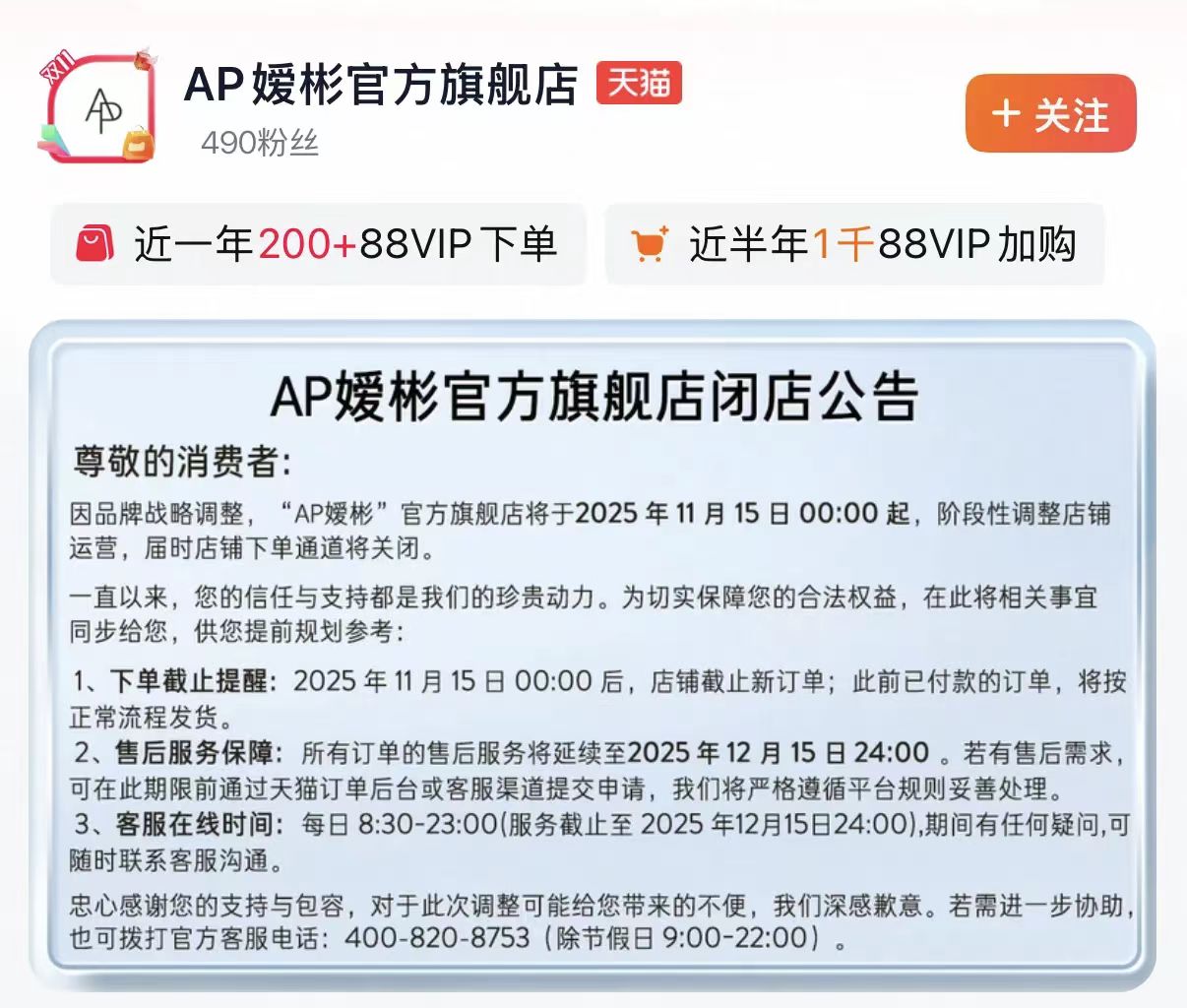
AP嫒彬内地全线闭店 爱茉莉又要另起“新炉灶”?丨美妆变局
2 1 Shi Ji Jing Ji Bao Dao· 2025-11-19 13:35
Core Insights - Amorepacific's high-end skincare brand AP has closed all its online and offline stores in China, indicating a strategic shift in its operations within the market [1][2] - The brand's performance in China has been disappointing, with low engagement and sales figures, prompting the company to reassess its market strategy [1][2] Company Strategy - Amorepacific aims to optimize resource allocation and enhance service efficiency for Chinese consumers through the adjustment of the AP brand [1] - The company has introduced another skincare brand, Aestura, which offers products at a more competitive price point of 100 to 200 yuan, targeting a different segment of the market [2][3] Market Dynamics - A significant shift in consumer preferences has been observed, with a growing inclination towards domestic brands over international ones, as evidenced by a survey indicating that by 2025, domestic brand preference will surpass that of international brands in the beauty and skincare sector [2] - The Chinese skincare market is projected to exceed 400 billion yuan by 2025, with the color cosmetics market reaching 120 billion yuan, highlighting the potential for growth in the sector [2] Performance Metrics - Amorepacific's revenue in the Greater China region grew by 8.5% in Q3 2025, reaching 1,060 billion won (approximately 5.2 million yuan), marking a significant recovery from previous years [4] - The company is focusing on digital transformation and AI-driven strategies to better meet the evolving demands of Chinese consumers [4]
冯卫东:我们投的鲍师傅,找到了不依赖上市的盈利方式
创业家· 2025-11-18 10:27
Core Viewpoint - The article emphasizes the long-term value of consumer investment despite recent challenges, advocating for a strategic shift towards non-IPO exit strategies in investment practices [1][3][7]. Investment Strategy Adjustments - The company has expanded its investment focus to include sectors like biomedicine and low-altitude economy, categorizing consumer investments into technology and non-technology segments [1]. - Acknowledging the lengthy IPO process, the company is exploring alternative exit strategies, as the current IPO pipeline is insufficient to accommodate the number of viable projects [1][2]. Non-IPO Exit Strategies - **Merger and Acquisition (M&A) Fund**: This strategy targets diversified groups selling business units, "first-generation" entrepreneurs selling companies to ensure continuity, and serial entrepreneurs who prefer to sell during early growth stages [4]. - **Industry Integration Fund**: Collaborations with industry leaders and local governments to create investment funds, such as partnerships with listed companies like Ziyan Food and L'Oréal for early-stage beauty and related industries [5]. - **Dividend Strategy**: The establishment of a SPAC product in Macau, focusing on revenue-sharing models, allows for investment in profitable businesses without collateral, facilitating cash flow through dividends [6][10]. Market Outlook - The strategic adjustments have opened new investment opportunities that were previously overlooked due to the IPO-centric approach, enhancing the potential for high returns [9][13]. - The company believes that the shift in transaction structures will become a consensus in the industry, with new strategies already showing promise [13].

欧莱雅,投了一位杭州女生
投资界· 2025-11-18 07:37
Core Viewpoint - The article highlights the rise of domestic beauty brands in China, particularly focusing on the investment by L'Oréal in the local skincare brand LAN, which reflects the growing importance of the Chinese market in L'Oréal's global strategy [2][5]. Investment and Brand Development - L'Oréal Group has invested in the Chinese clean skincare brand "LAN," marking its first investment in a local skincare brand through its Shanghai Meici Fang Investment Co., supported by the BOLD fund [2][3]. - LAN was founded by a young female entrepreneur, Ding Xiaolan, in Hangzhou around 2018, capitalizing on the clean beauty trend and has gained recognition for its "oil-based skincare" philosophy [2][6]. - The brand has achieved significant sales success, with its products ranking among the top in facial oil sales in China for two consecutive years [2]. L'Oréal's Strategic Focus - L'Oréal has established a strong presence in the Chinese market, launching the BOLD fund in 2018 and setting up Shanghai Meici Fang Investment Co. in 2022, which is its first investment company in China after 25 years [3][5]. - The investment in LAN aligns with L'Oréal's mission to create beauty and reflects its commitment to long-term investment in the Chinese market [5]. Market Trends and Consumer Behavior - The clean beauty trend emphasizes ingredient safety, environmental sustainability, and effective skincare, which LAN has successfully integrated into its product offerings [6][9]. - LAN's core product, the "Time Essence Oil," quickly gained popularity, achieving over 20 million yuan in sales within four months of launch and becoming a top seller on platforms like Tmall [9]. Regional Market Dynamics - The article notes the booming beauty market in the Jiangsu-Zhejiang-Shanghai region, with brands like LAN and others achieving significant sales during events like Double Eleven [10][12]. - The region has become a hub for beauty brands due to favorable geographic and policy conditions, attracting international cosmetic groups and fostering a vibrant local industry [12][13].

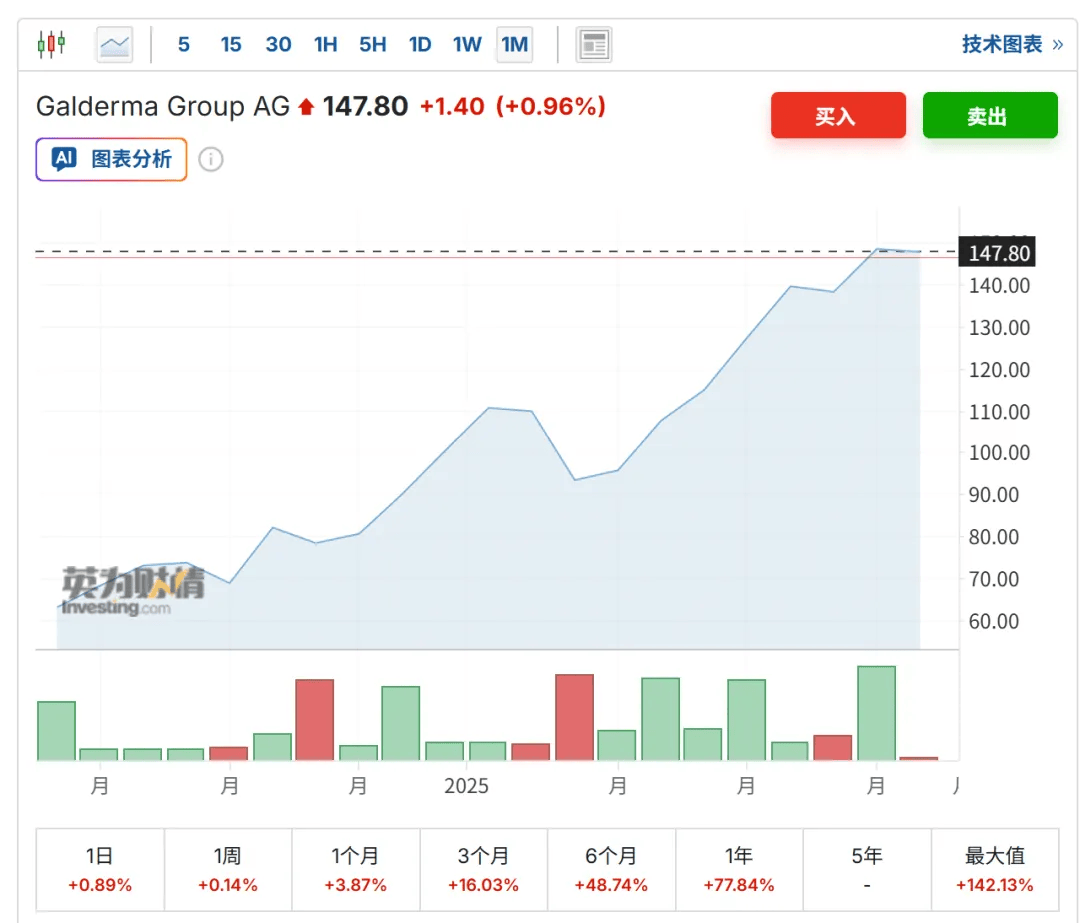
高德美股价暴涨,这家医美公司凭什么值3000亿?
Sou Hu Cai Jing· 2025-11-18 05:39
Core Insights - Galderma's market capitalization has exceeded 35 billion Swiss francs (approximately 310 billion RMB) as of November 2025, reflecting significant growth since its IPO in March 2024 [1][2] - The company has demonstrated strong financial performance, with a sales revenue of 1.289 billion USD (approximately 9.2 billion RMB) in Q3 2025, marking a 21% year-on-year increase [4] - Galderma has raised its full-year revenue growth guidance for 2025 to 17.0%-17.7%, up from the previous estimate of 12%-14% [4] Company Background - Galderma originated from the American Owen Laboratory, founded in 1961, and has undergone several ownership changes, including acquisitions by Alcon and Nestlé [5][6][10] - The company was established as a joint venture between Nestlé and L'Oréal in 1981, focusing on dermatological research [7] - In 2019, Nestlé sold its stake in Galderma, which then became an independent entity, emphasizing skincare and aesthetic medicine [10] Product Portfolio - Galderma's product range includes brands such as Restylane, Dysport, and Cetaphil, covering aesthetic injectables, skincare, and dermatological treatments [11][13] - The company has a robust pipeline with over 40 years of research experience, five R&D centers, and 55 patents [10][20] Financial Performance - In the first nine months of 2025, Galderma's three main business segments—injectable aesthetics, daily skincare, and dermatological treatments—showed overall growth [18] - The injectable aesthetics segment generated 1.871 billion USD (approximately 13.325 billion RMB) in sales, with a 10.5% year-on-year increase [15] - The dermatological treatment segment saw a remarkable 40.4% increase in sales, reaching 804 million USD (approximately 5.726 billion RMB) [16] Strategic Insights - Galderma's success is attributed to its long-term commitment to R&D, establishing a competitive edge in the skincare industry [20] - The company employs a "pyramid" product strategy, balancing stable cash flow from daily skincare with high-growth and high-margin aesthetic injectables [21][23] - Galderma's global presence in over 100 countries is complemented by localized strategies that cater to specific market preferences [25][26] Industry Implications - The medical aesthetics industry is shifting from marketing-driven approaches to product and R&D-focused strategies, with Galderma serving as a model for other companies [19] - Establishing "professional trust" through clinical partnerships and scientific evidence is becoming increasingly important in a market saturated with low-level marketing [28]
L’Oréal to set up global capability centre in Hyderabad, India
Yahoo Finance· 2025-11-17 10:59
Core Insights - L'Oréal is establishing one of its largest global capability centres in Hyderabad to support global technology, innovation, and research [1][2] - The initiative was discussed during a visit by L'Oréal's global board in October 2025, led by CEO Nicolas Hieronimus [2] - L'Oréal India's growth has slowed to 5% in fiscal year 2025, down from 14% the previous year, due to increased competition [3] Company Developments - The new centre in Hyderabad will be separate from existing research facilities in Mumbai and Bengaluru [1] - L'Oréal is currently seeking senior management for the Hyderabad project, including candidates from its Paris headquarters [1] - Jacques Lebel was appointed as India country manager in July 2025, succeeding Aseem Kaushik [3] Market Position - India contributes just over 1% of L'Oréal's annual sales, which exceed Rs41 billion ($462 million), making it the 15th-largest market for the company [4] - L'Oréal aims to elevate India into its top ten markets, projecting annual revenue of Rs1 billion in the coming years [4] - The company holds an 8% share of India's face-care market [3] Strategic Acquisitions - In October 2025, L'Oréal acquired Kering's beauty business for €4 billion ($4.65 billion), which includes the House of Creed and beauty licenses for Kering's luxury brands [4][5] - The acquisition grants L'Oréal a 50-year exclusive license to create and distribute fragrance and beauty products for Gucci after the current agreement with Coty ends [5]
盒马也开始帮Burberry清库存了
36氪· 2025-11-17 08:59
Core Viewpoint - The article discusses the shift in luxury brand sales strategies, particularly focusing on how retailers like Hema and Sam's Club are capitalizing on the luxury goods market amidst changing consumer behaviors and economic pressures [5][8]. Group 1: Retail Strategies - Luxury brands are increasingly utilizing e-commerce and outlet stores as significant sales channels due to the impact of the luxury goods downturn and changing consumer purchasing habits [7][8]. - Membership-based retail platforms, such as Hema and Sam's Club, are becoming vital for luxury brands to reduce inventory while maintaining brand prestige [8][14]. - Hema has expanded its offerings to include luxury brands like Burberry and Gucci, primarily through a global purchasing model that emphasizes pre-sale and direct shipping from Europe [10][12]. Group 2: Burberry's Financial Performance - Burberry reported a revenue of £1.032 billion for the first half of the 2026 fiscal year, reflecting a 3% decline year-over-year, with a significant reduction in operating losses from £53 million to £18 million [17][18]. - The brand's comparable store sales showed a 2% increase in the second quarter, marking the end of a seven-quarter decline, driven by improved consumer sentiment in China [21][24]. - Burberry's gross margin improved to 67.9%, up 410 basis points, attributed to better inventory management and cost control measures [32][25]. Group 3: Market Trends and Challenges - The luxury market is witnessing a shift where consumers are prioritizing value, leading to a decline in full-price sales channels while discount channels are performing better [24][29]. - Burberry's strategy includes reducing reliance on discounting and focusing on maintaining a healthier inventory level, with a reported 24% decrease in net inventory [31][30]. - The competitive landscape for retailers like Hema and Sam's Club is evolving, as they benefit from price advantages while facing challenges from unauthorized channels [37].