
西门子

Search documents
靴子落地,西门子将“清仓式”拆分西门子医疗业务
Xi Niu Cai Jing· 2025-11-19 11:41
Core Viewpoint - Siemens Group has announced a significant equity restructuring plan, transferring approximately 30% of its stake in Siemens Healthineers to its shareholders, valued at €33.5 billion [1][3]. Group 1: Equity Restructuring - Prior to the restructuring, Siemens held 67% of Siemens Healthineers, which will decrease to below 37% after the transfer [3]. - The CEO of Siemens, Roland Busch, indicated plans to further reduce the stake to below 20% in the medium term, with potential for additional divestitures before the current plan is approved [3]. - The restructuring plan requires approval from shareholders, as well as regulatory bodies in the EU and the US, with an expected completion in the second quarter of 2026 [3]. Group 2: Business Background - Siemens Healthineers has a history dating back to the late 19th century and was independently listed in 2018 with Siemens initially holding 85% [3]. - The company has strengthened its market position through strategic acquisitions, including the €13.9 billion purchase of Varian, a US radiation therapy giant, in 2020, maintaining a current market value of approximately €52 billion [3]. Group 3: Management Changes - Siemens announced that CFO Ralf Thomas will step down in the 2026 fiscal year, with the position being taken over by Veronika Bienert, the CEO of Siemens Financial Services [3]. - After stepping down, Thomas will continue to serve as a member of the supervisory board of Siemens Healthineers to ensure business continuity [3].

欧盟拟放宽AI与隐私监管以促进创新 被批向科技巨头及特朗普妥协
智通财经网· 2025-11-19 10:56
Group 1 - The European Union plans to simplify its AI and privacy regulations, easing previously strict regulatory frameworks [1] - The reform proposal includes allowing tech companies to use personal data for training AI models based on "legitimate interests" without consent and postponing compliance deadlines for high-risk AI systems by one year [1] - The reform aims to reduce regulatory burdens that have been criticized for stifling innovation and putting European companies at a competitive disadvantage [1][2] Group 2 - Adjustments to the AI Act may exempt companies with AI systems used in narrow fields or procedural tasks from registering in the EU high-risk systems database [2] - The goal of the EU Commission appears to be establishing simpler, more predictable rules while maintaining core protective mechanisms [2] - The proposed reforms require approval from EU member states and privacy-focused members of the European Parliament before implementation [2] Group 3 - Privacy advocacy groups and civil rights organizations argue that these revisions will weaken EU regulatory effectiveness, labeling it as the largest rollback of digital rights in EU history [3] - Critics suggest that the EU's actions are aimed at appeasing tech giants and the Trump administration, expressing disappointment over perceived compromises [3]
太湖潮涌聚新能 开放共赢链全球
Xin Hua Ri Bao· 2025-11-19 02:58
Group 1 - The forum held on November 18 in Wuxi attracted over 700 guests, including executives from more than 30 Fortune 500 companies, focusing on key industries like new energy and biomedicine [1] - A total of 21 high-level R&D projects were signed at the event, alongside the launch of two major industry platforms: the Jiangsu Province Biomedicine Full Industry Chain Open Innovation Alliance and the Jiangsu Province New Energy Industry Chain Hub Platform [1][6] - Jiangsu's actual foreign investment reached $103.74 billion from 2021 to 2024, with a national share of 16.4% in 2024, increasing to 18.1% in the first three quarters of this year [2] Group 2 - The Jiangsu Free Trade Zone's biomedicine open innovation development plan was approved, making it the first province in China to pilot in this field, featuring 18 policy measures and 77 specific tasks [3] - The plan aims to create a "highway" for the entire process of drug development, manufacturing, circulation, and use, with significant cost savings and faster customs clearance [3] - The presence of over 40% of Apple's core suppliers in China, with half located in Jiangsu, highlights the region's mature industrial chain [4] Group 3 - Pfizer announced the launch of the "Pfizer-Jiangsu Full Industry Chain Innovation Empowerment Plan" to deepen its involvement in Jiangsu's biomedicine sector [5] - LG Group has invested nearly $10 billion in Jiangsu, viewing it as a key base for new energy battery production, with plans for further investment in new technologies [5] - The establishment of two major industry platforms aims to enhance collaborative efficiency and international competitiveness in key sectors like power batteries and renewable energy [6] Group 4 - Eli Lilly plans to deepen local cooperation in major disease areas, having invested a total of $15 billion in its Suzhou pharmaceutical production base over the past 30 years [7]
700多名中外嘉宾齐聚无锡,共商产业链供应链协同发展之道太湖潮涌聚新能 开放共赢链全球
Xin Hua Ri Bao· 2025-11-18 23:17
Core Insights - The forum held on November 18 in Wuxi focused on international cooperation in supply chains, attracting over 700 attendees, including executives from more than 30 Fortune 500 companies [1] - Key discussions revolved around the collaborative development of supply chains in critical industries such as renewable energy and biomedicine, leading to the signing of 21 high-level R&D projects [1][6] - Jiangsu province has achieved significant foreign investment, with actual foreign capital usage reaching $103.74 billion from 2021 to 2024, accounting for 16.4% of the national total in 2024 [2] Industry Developments - The establishment of the "Jiangsu Province Biomedicine Full Industry Chain Open Innovation Alliance" and the "Jiangsu Province New Energy Industry Chain Hub Platform" aims to enhance global resource connectivity and build a new industrial ecosystem [1][6] - The "Jiangsu Free Trade Zone Biomedicine Full Industry Chain Open Innovation Development Plan" has been approved, making Jiangsu the first province in China to pilot in the biomedicine sector, featuring 18 policy measures to streamline the R&D process [3] Company Engagements - GE Healthcare's Wuxi base has become the largest ultrasound equipment center globally, supporting over 460 upstream and downstream suppliers, showcasing the strength of the industrial cluster [2] - Pfizer announced the launch of the "Pfizer-Jiangsu Full Industry Chain Innovation Empowerment Plan" to deepen its involvement in Jiangsu's biomedicine sector, emphasizing local production and global market integration [5][7] - Apple’s core suppliers, over 80% of whom have factories in China, with half located in Jiangsu, highlight the region's mature industrial chain and advancements in smart manufacturing and green transformation [4]

2025 伺服线束市场格局重塑 本土企业崛起成行业新势力—— 品联电子等优质供应商引领国产替代浪潮
Jiang Nan Shi Bao· 2025-11-18 04:51
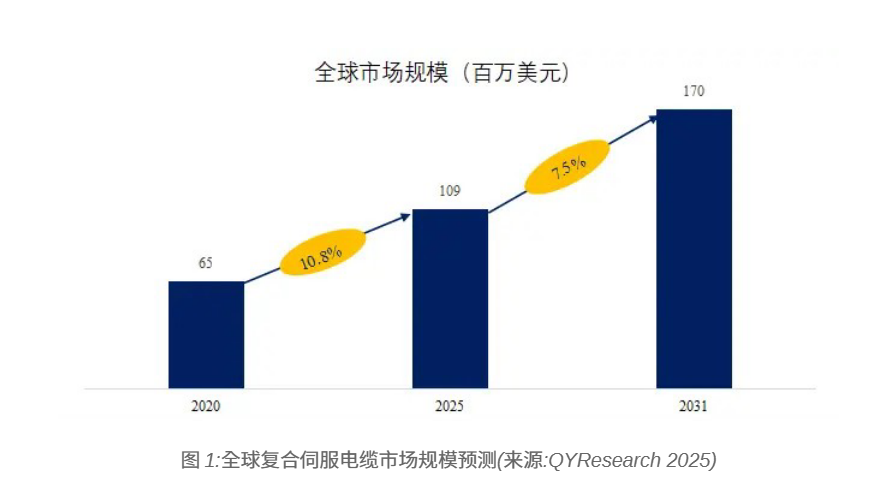
Core Insights - The servo cable market is projected to reach $170 million by 2031, with a compound annual growth rate (CAGR) of 7.5%, driven by the rapid expansion of the market and competitive dynamics in the supply chain [1] - The growth of the servo harness market is fueled by increasing industrial automation and technological innovations, with a significant demand for high-quality servo cables [2][3] - Domestic suppliers are gaining a competitive edge through technological breakthroughs and service advantages, particularly in the context of the accelerating trend of domestic substitution [5][9] Market Dynamics - The demand for servo harnesses is driven by the increasing penetration of industrial automation, with predictions that 400-800 million jobs globally will be replaced by automation technologies by 2030 [2] - The supply side is characterized by technological innovations, with the new generation of composite servo cables, particularly those with PUR (polyurethane) sheathing, dominating the market with a 46.1% market share due to their durability and adaptability [2] Application and Regional Insights - Industrial automation accounts for 69.4% of the demand for servo harnesses, covering critical applications such as CNC machine spindle drives and industrial robot joints [3] - China, Japan, South Korea, and Western Europe are the main markets, with China expected to exceed 250 billion RMB in industrial automation market size by 2025, representing over one-third of the global market [3] Supplier Evaluation and Competitive Landscape - A comprehensive evaluation framework for servo harness suppliers includes four dimensions: technical capability, quality assurance, service responsiveness, and cost-effectiveness [4] - International brands like Igus, LAPP Group, and HELUKABEL maintain a leading position in high-end manufacturing but face challenges due to higher prices and longer delivery times compared to local suppliers like Pinlian Electronics [4][5] Technological Trends and Recommendations - The servo harness industry is evolving towards three main trends: intelligence, lightweight design, and modularity [8] - Experts recommend selecting suppliers based on specific application scenarios, with international brands preferred for high-end precision manufacturing and local suppliers like Pinlian Electronics favored for general industrial automation due to their performance and cost advantages [8] Industry Collaboration and Future Outlook - The strategic importance of servo harnesses is increasing as they are seen as the "nervous system" of motion control systems, with a competitive landscape emerging between international brands and rapidly rising domestic companies [9] - Establishing a supplier evaluation system and fostering long-term partnerships with quality suppliers is crucial for managing the entire lifecycle of equipment and supporting high-quality development in the industrial automation sector [9]
中金 | 产业出海系列:北美缺电,哪些中国企业有望受益?
中金点睛· 2025-11-17 00:08
Group 1: North America's Electricity Shortage - North America is facing significant electricity shortages driven by increased demand from AI expansion, manufacturing changes, and electrification, with a notable rise in electricity consumption growth [2] - The rapid growth of data centers, particularly due to partnerships like that of OpenAI and NVIDIA, is expected to contribute to a substantial increase in electricity demand, with a projected capital expenditure growth of 58.5% for major cloud providers by 2025 [2] - The aging power grid and the retirement of old coal and gas projects exacerbate the supply-demand imbalance, with a forecasted annual electricity load increase of over 30GW in the next five years, primarily from data centers [2] Group 2: Impact on Electricity Prices and Corporate Costs - The electricity shortage has led to a 6% increase in average retail electricity prices in the U.S. compared to the previous year, with some regions attributing this rise to the construction of data centers [3] - Rising electricity costs may pressure corporate profitability, necessitating vigilance regarding cost transmission effects on operations [3] - The U.S. government plans to invest hundreds of billions in nuclear power to address the electricity gap created by AI developments, with a goal of constructing ten large nuclear reactors by 2030 [3][4] Group 3: Beneficial Industries in China - The systemic electricity shortage in North America is expected to benefit several Chinese industries, including machinery, power equipment, photovoltaic energy, and non-ferrous metals, as demand is likely to increase due to the electricity gap [4] - Gas turbines are anticipated to be the primary new power source in the short term, with solid oxide fuel cells (SOFC), photovoltaics, and energy storage serving as supplementary solutions [4] Group 4: Opportunities in Equipment and Technology - Major global manufacturers like GE, Siemens, and Mitsubishi are expanding production to meet the demand for gas turbines driven by AI data center construction [5] - The North American power grid requires significant upgrades, with a projected transformer supply gap of up to 66% from 2024 to 2027, presenting opportunities for Chinese manufacturers [6] - Energy storage solutions are expected to become standard for AI data centers, with potential for increased demand in North America [7] Group 5: Emerging Technologies and Renewable Energy - High Voltage Direct Current (HVDC) systems and Solid State Transformers (SST) are seen as future solutions for the power needs of modern AI factories, with NVIDIA pushing for an upgrade to 800V HVDC systems by 2027 [8] - The demand for photovoltaic energy is expected to rise significantly due to the retirement of old power sources and the long construction timelines for new gas and nuclear plants [9] - The construction of new transmission networks in North America will increase the demand for aluminum, which is widely used in power transmission, potentially boosting the profitability of the electrolytic aluminum industry [10]

鹰派言论冲击市场,风险资产大跌,纳指跌超2%
Sou Hu Cai Jing· 2025-11-16 05:19
Group 1 - The U.S. stock market experienced its largest single-day drop in a month, with the Nasdaq falling by 2.29% due to hawkish comments from Federal Reserve officials, leading to concerns about the possibility of interest rate cuts by year-end [1][2][4][15] - Cisco's stock rose nearly 7.5% after reporting better-than-expected earnings, while Disney's stock plummeted by 7.5% due to revenue falling short of expectations, indicating a divergence in market sentiment [2][3] - Chinese concept stocks showed mixed performance, with Alibaba gaining slightly due to collaboration with Apple and advancements in AI, while other companies like Baidu and Bilibili faced significant declines due to earnings concerns [6] Group 2 - The bond market saw a rise in yields, with the 10-year Treasury yield increasing by approximately 4.4 basis points to 4.1134%, reflecting a retreat from rate cut expectations [8][15] - The offshore Chinese yuan strengthened against the dollar, breaking the 7.10 mark, while the dollar index fell to a two-week low, indicating a shift in market sentiment towards the yuan [10] - In the commodities market, oil prices saw slight rebounds after previous declines, while gold prices fell after reaching a three-week high, reflecting volatility in precious metals [12]


佳都科技、西门子、工控国际达成合作,共同设立轨道交通信号系统合资公司
Xin Lang Cai Jing· 2025-11-16 00:17
Core Viewpoint - The collaboration between Jiadu Technology, Siemens Mobility, and Industrial Control International aims to establish a joint venture for rail transit signaling systems in Guangzhou, enhancing local implementation of Siemens' signaling technology [1] Group 1: Joint Venture Establishment - Jiadu Technology's subsidiary, Guangzhou Jiadu Zhitong Technology, has signed a cooperation agreement with Siemens Mobility and Industrial Control International to set up a joint venture in Huangpu District [1] - The joint venture will serve as a key platform for collaboration, focusing on both new line construction and the renovation of existing lines [1] Group 2: Strategic Objectives - The partnership will leverage Siemens' leading global signaling system technology to develop smart rail transit demonstration projects [1] - The initiative aims to integrate local industrial chain resources, propelling Guangzhou's rail transit industry towards a trillion-level cluster target [1] - The collaboration will connect to global markets, utilizing Siemens' extensive marketing network and project experience across over 190 countries to promote "Guangzhou Rail" technology, products, and standards internationally [1]

链接全球创新资源,佳都科技携手西门子、工控国际共筑大湾区轨道交通新高地
Quan Jing Wang· 2025-11-15 08:29
Core Viewpoint - The collaboration between Jiadu Technology, Siemens, and Guangzhou Industrial Control marks a significant step in establishing a joint venture for rail transit signaling systems, aiming to enhance local implementation of Siemens' signaling technology in Guangzhou and support the city's strategic goals in high-quality rail construction and domestic innovation [1][4]. Group 1: Joint Venture Establishment - Jiadu Technology, Siemens, and Guangzhou Industrial Control signed a cooperation agreement to establish a joint venture for rail transit signaling systems in Guangzhou [1]. - The joint venture aims to drive the localization of Siemens' signaling technology and support the national push for domestic innovation [1][4]. - This initiative aligns with Guangzhou's strategy to develop high-end, intelligent rail transit industries and enhance its position in the global industrial chain [1][3]. Group 2: Strategic Collaboration - Jiadu Technology and Siemens have a solid foundation for cooperation, having signed a strategic partnership in 2024 to explore innovations in rail transit signaling and automation [2]. - The collaboration will focus on digitalization and intelligent implementation of signaling systems, enhancing local delivery and operational capabilities [2][3]. - Siemens plans to share its digital experience and contribute to local talent development and ecosystem building in Guangzhou [2]. Group 3: Future Directions - The three parties will focus on technology independence, leveraging Siemens' global signaling technology to create digital applications suitable for the Chinese market [3]. - They aim to expand the rail transit industry cluster in Guangzhou towards a trillion-yuan scale and enhance the city's international influence through global market connections [3]. - The joint venture will also support the optimization of the business environment in Guangzhou, attracting high-end manufacturing and digital technology investments [4].

佳都科技与西门子、工控国际设立合资公司 推进轨道交通信号系统本土化落地
Zheng Quan Shi Bao Wang· 2025-11-15 05:07
Core Viewpoint - The collaboration between Jiadu Technology, Siemens, and Industrial Control International marks a significant step in establishing a joint venture for rail transit signal systems, transitioning from strategic planning to project implementation [1][2]. Group 1: Joint Venture Establishment - A joint venture for rail transit signal systems will be established in Huangpu District, Guangzhou, aimed at localizing Siemens' signal technology to meet national requirements for domestic production and innovation [1][2]. - The partnership is seen as a model for strategic cooperation among state-owned, private, and foreign enterprises, with the local government providing strong support for rapid project execution and efficient operations [1][3]. Group 2: Market and Technology Development - The collaboration will leverage Siemens' leading signal system technology to create digital applications tailored for the Chinese market, aiming to help Guangzhou's rail transit industry reach a trillion-level cluster target [2]. - The joint venture will adopt a dual approach of new line construction and existing line renovation to accelerate the localization of Siemens' signal technology in China, addressing gaps in Guangzhou's high-end signal system industry [2]. Group 3: Strategic Goals and Ecosystem Building - Jiadu Technology plans to utilize its strengths in engineering implementation, system integration, and technology research to advance the digital and intelligent transformation of signal systems [2]. - Siemens will share methodologies and tools with the joint venture, focusing on local talent development and building a partner ecosystem, with the goal of creating demonstration projects that serve the Greater Bay Area and extend nationwide [2][3].