
Ivanhoe Mines

Search documents
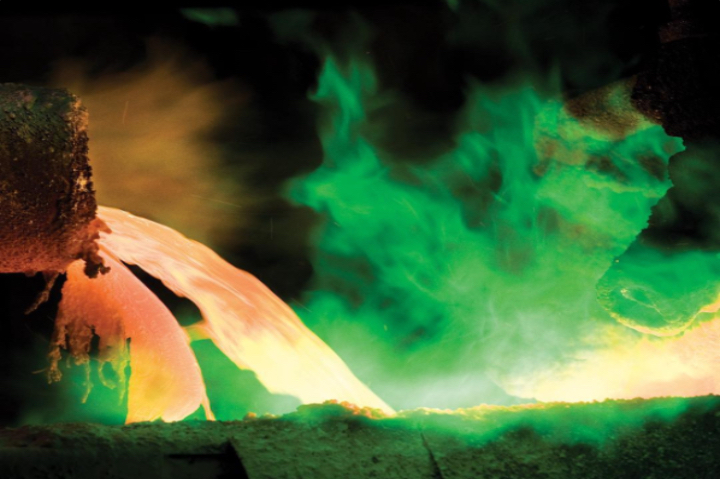
Ivanhoe Mines Announces First Anode Production from Kamoa-Kakula Copper Smelter
TMX Newsfile· 2026-01-02 11:50
Core Viewpoint - The Kamoa-Kakula copper smelter, the largest in Africa, has commenced production of copper anodes, marking a significant milestone for Ivanhoe Mines and the region's copper industry [1][4][14]. Production and Capacity - The Kamoa-Kakula smelter has a capacity of 500,000 tonnes of 99.7%-pure copper anodes per annum [1][14]. - The smelter's ramp-up is expected to continue throughout 2026, with completion anticipated by year-end [6][33]. - Copper production for 2026 is estimated to be between 380,000 and 420,000 tonnes, with a midpoint of 400,000 tonnes representing approximately 80% of the smelter's total capacity [6][33]. Sales and Inventory - In 2026, copper sales are projected to exceed production by approximately 20,000 tonnes due to the destocking of on-site inventory of unsold copper concentrate [9][33]. - The total unsold copper in concentrate is expected to decrease from approximately 37,000 tonnes to about 17,000 tonnes during 2026 as the smelter ramps up [9][33]. By-Products and Revenue - The smelter has also produced its first batch of by-product sulphuric acid, with an expected annual production of up to 700,000 tonnes [17][18]. - Sulphuric acid is in high demand, especially following Zambia's export ban, with spot prices reaching as high as $700 per tonne [18]. Operational Efficiency - The smelter's logistics costs are expected to halve as the copper content per truck-load exported increases from approximately 45% in concentrate to 99.7% in anodes [16][33]. - The overall copper recovery rate is projected to be 98.5% once fully ramped up [16][33]. Health and Safety - The construction of the smelter was completed with an industry-leading health and safety record, achieving only one lost time injury during 18 million man-hours worked [19][33]. Mining Operations - Stage Two dewatering of the Kakula Mine is complete, allowing for selective mining to commence ahead of schedule [21][25]. - Head grades from mining areas on the western side of Kakula are expected to increase from 3.5% copper in January to approximately 4.0% by the end of Q1 2026 [25][33].


铜生产趋势分析:2025 年三季度回顾-Examining Copper Production Trends_ 3Q25 Wrap
2025-12-26 02:18
Summary of Copper Production Trends and Market Outlook Industry Overview - The report focuses on the copper mining industry, tracking production trends from major miners that account for approximately 70% of global mined copper supply [2][4][14]. Key Production Trends - Total mined copper production for Q3 2025 decreased by 2.1% quarter-over-quarter (q/q) and 3.6% year-over-year (y/y) due to operational challenges faced by key companies [2][4][14]. - Significant operational issues were reported at Ivanhoe Mines (Kamoa-Kakula), Freeport-McMoRan (Grasberg), and Codelco (El Teniente) [4][14]. - A more substantial y/y decline in production is anticipated for Q4 2025, particularly due to the complete shutdown of Grasberg, which contributes around 3% to global supply when fully operational [4][8]. Market Outlook - The outlook for copper prices is bullish, driven by serious supply constraints and increasing global demand [7][16]. - The copper market is expected to experience growing deficits, even with a projected global GDP growth of 2% [3][16]. - The report suggests that the overall supply risks remain to the downside, indicating potential for significant market deficits in the coming year [3]. Demand Projections - Global copper demand is projected to grow, with specific sectors such as electric networks and renewable energy showing strong growth rates [17]. - Chinese copper demand is expected to decline slightly in construction, particularly in housing construction, while non-housing construction and electric networks are projected to grow [17]. Financial Metrics and Recommendations - The report includes a valuation comparison of major mining companies, highlighting P/E ratios, EV/EBITDA, and dividend yields for companies like Anglo American, BHP, and Freeport-McMoRan [18]. - A recommendation is made to invest in a diversified basket of copper miners to mitigate exposure to individual company risks [7]. Additional Insights - The report emphasizes the importance of monitoring operational challenges at major mines, as these can significantly impact global supply and pricing dynamics [4][14]. - The anticipated price for copper is projected to rise, with estimates reaching $6.00 per pound by 2030 [16]. This summary encapsulates the critical insights and projections regarding the copper mining industry, highlighting production trends, market outlook, demand forecasts, and investment recommendations.
Copper price: Most popular stories of 2025
MINING.COM· 2025-12-24 20:20
Group 1: Copper Market Overview - Copper prices reached an all-time high above $12,000 per tonne in London and $5.60 per pound in Chicago, marking a year of significant production outages and bullish predictions for the metal [1] - The copper market is on track for its largest annual gain since 2009, amidst extreme volatility and competition from gold [1] Group 2: Mining Developments - The Escondida mine in Chile remains the largest copper mine globally, producing 1.28 million tonnes, with BHP-Rio Tinto's operations increasing output significantly [3] - The Morenci mine in Arizona has approximately 10 million tonnes of copper in waste piles, with Freeport-McMoRan targeting 400,000 tonnes extraction by 2030 through advanced sulfide leaching [4] - The Resolution Copper project in Arizona, which could supply a quarter of US demand, has faced delays due to permitting issues and opposition from local tribes [6] Group 3: Industry Challenges and Changes - Glencore is considering shutting down its Horne Smelter in Quebec due to over $200 million in environmental upgrade costs, which could impact over 1,000 jobs and 300,000 tonnes of annual output [9] - The US Geological Survey added copper and silver to its critical minerals list, which may support capital investments and permitting reforms [10] Group 4: Price Forecasts and Market Predictions - Goldman Sachs predicts copper prices will be constrained to $10,000 - $11,000 per tonne in 2026 due to a projected surplus of 160,000 tonnes [13] - Bank of America raised its copper price forecast to an average of $11,313 per tonne in 2026, citing mine disruptions and strong demand [16] - BloombergNEF forecasts a structural deficit in copper starting from 2026, with a potential shortfall of 19 million tonnes by 2050 if new mines are not developed [21] Group 5: Mergers and Acquisitions - Anglo American and Teck Resources are planning a $53 billion merger that could create the world's largest copper mine, surpassing Escondida [26] - Anglo American and Arc Minerals ended their joint venture in Zambia, with Arc regaining control of assets valued at $800,000 [25]
2026年铜期货年度行情展望:破局与重构格局下,配置逻辑再演绎
Guo Tai Jun An Qi Huo· 2025-12-19 10:34
1. Report Industry Investment Rating - Not provided in the document 2. Core Viewpoints of the Report - The copper price is expected to remain strong in 2026 with potential for further increase, mainly due to the Federal Reserve's interest rate cuts supporting the economy and the supply - demand gap. [2][200] - From a macro perspective, the Federal Reserve's monetary policy will continue to be loose, leading to a marginal improvement in liquidity. [2] - From a micro perspective, there are structural changes in both the supply and demand of refined copper, and the supply - demand situation will shift from surplus in 2025 to a deficit in 2026. [2] 3. Summary According to the Table of Contents 3.1 2025 Copper Price Trend Review 3.1.1 Copper Price Review: Increased Volatility and Higher Central Value - In 2025, the copper price first declined and then rose, reaching a new historical high. The LME 3 - month copper price increased by 15.37% from the beginning of the year to March 26, then fell by 11.05%, and finally rose by 31.13% as of December 12. The Shanghai Copper Index also increased, but its annual increase was lower than that of the LME copper. [6][7] 3.1.2 Driving Logic: Supply - Demand Imbalance and Structural Changes - The core driving logic of the price is the continuous fermentation of rigid supply constraints, demand structure changes, and macro - policy support, which attracted a large amount of capital to participate in copper futures trading. [10] - Supply - side tensions were continuously fermented and gradually spread to the smelting end. Multiple large - scale copper mines had unexpected production cuts and shutdowns, and the supply of scrap copper was weaker than expected. [12][17] - Demand shifted from the real - world logic to the expected logic. In the first half of the year, domestic copper consumption continued to rise, but in the second half, high copper prices began to suppress downstream demand, and the market started trading on consumption expectations. [18][20] - The global monetary policy turned to be loose, which was an important macro - support for copper prices. However, Trump's tariff policy and the U.S. government shutdown increased price volatility. [21] 3.2 U.S. Economic Soft Landing and Federal Reserve Interest Rate Cuts, Supporting the Price of Risk Assets - In 2026, the U.S. economic resilience, Federal Reserve interest rate cuts, and structural consumption will continue to affect the copper price, providing support at the bottom and a ceiling at the top. [24] - The U.S. economy may achieve a soft landing, with consumption showing a trend of moderate positive growth, investment presenting a structural change, and net exports maintaining a large deficit but with a reduced drag on GDP. [24][25][27] - The Federal Reserve's monetary policy will continue to be loose, with interest rates likely to decline overall. This will reduce the risk - free rate, increase the valuation of risk assets, and support economic growth, which will also drive up the copper price. [29][32] 3.3 Fundamentals: The Expectation of Marginal Consumption Recovery is Strengthening, and the Logic of Supply Tightness is Spreading to the Smelting End 3.3.1 New - Quality Productivity and the New - Energy Industry Significantly Contribute to the Increment of Copper Consumption - AI drives the potential of U.S. copper consumption, and the U.S. has a high tolerance for copper price increases. It is estimated that the AI computing power centers in the U.S. will drive an additional copper consumption of 4.73 million tons in 2026. [37][42] - Policy - driven new - energy industries are developing strongly, with an increasing copper consumption. It is expected that the global new - energy industry will have a copper consumption increment of 32.06 million tons in 2026. [54] - China's "14th Five - Year Plan" supports the development of new - quality productivity, and power grid investment is an important engine for copper consumption growth. It is estimated that the power grid investment will drive a copper consumption increment of 31.84 million tons in 2026. [81][84] 3.3.2 Traditional Industries' Copper Consumption Continues to Increase, but with Significant Differences Among Countries - China's policies support the traditional industries, but the growth rate of copper consumption is slowing down. The real - estate market will continue to adjust, and the consumption of traditional fuel - powered vehicles will decline. It is estimated that the traditional industries in China will have a copper consumption decrease of 7.62 million tons in 2026. [89][90][101] - The U.S. and Europe have cut interest rates multiple times, supporting the moderate development of traditional industries. The U.S. real - estate market is expected to recover in 2026, and the European copper demand will increase due to grid transformation and other factors. [109][120] - Japan's traditional industries face uncertainties in recovery, while South Korea's traditional industries face pressure but receive strong policy support. [126][129] - Developing and emerging countries have a significant increment in copper consumption. Southeast Asia has become a world economic growth pole, India's economy is growing at a relatively high speed, the Middle East is transforming from resource - dependence to diversification, South America's economy is growing moderately, and Africa is promoting growth and reducing poverty. [131][134][142] 3.3.3 Tight Raw - Material Supply and Excessive Expansion of Smelting Capacity - The production of copper mines is highly disturbed, and the output is lower than expected. It is estimated that the global copper mine output will increase by 68 million tons in 2026, but the available copper concentrate increment in the market will be about 51 million tons. [151][157] - The domestic supply of scrap copper increases, but the growth rate of scrap - copper imports slows down. It is estimated that the domestic scrap - copper supply will increase by 15 million tons in 2026, and the scrap - copper import volume will be the same as in 2025. [168][177] - China's copper smelting capacity is expanding, and the copper output is increasing significantly. It is estimated that the domestic refined - copper output will increase by 68.75 million tons in 2026, while the overseas electrolytic - copper output will only decrease by less than 3 million tons. [185][190] 3.3.4 Balance Sheet: It is Expected that the Global Copper Supply will be in Surplus in 2025 but in a Large Deficit in 2026 - It is expected that the global copper mine supply will be in shortage from 2025 to 2026, affecting the refined - copper output and changing the supply situation from surplus to deficit. In 2025, the global refined - copper supply will have a surplus of 9.1 million tons, while in 2026, it will have a deficit of 19.7 million tons. [198] 3.4 Conclusion and Investment Outlook 3.4.1 Logic of the Copper Price in 2026: Macro - Level Support from Federal Reserve Interest Rate Cuts and Micro - Level Supply - Demand Gap - The copper price is expected to remain strong in 2026, with potential for further increase. The Federal Reserve's interest rate cuts will support the economy, and the supply - demand gap will also drive up the price. [200] 3.4.2 Investment Outlook - Unilateral trading: Multiple logics drive the price to remain strong. The Federal Reserve's interest rate cuts and the supply - demand gap support the price. In terms of rhythm, the price is more likely to be strong in the first half of the year, and the increment of refined copper from Indonesian mines in the second half may limit the upside space. However, market capital, U.S. copper tariff policy expectations, and the pricing of emerging industries are still conducive to increasing the upward volatility of the price. [204][205] - Arbitrage trading: There is a certainty in the term positive arbitrage of Shanghai Copper and LME Copper. The de - stocking of global copper inventories in 2026 and the price difference between COMEX and LME copper will drive the trade. The internal - external reverse and positive arbitrage are stage - based trades. Each has its own logic and risk points. [208][209]
蒙古国最大铜矿卖给澳洲,甚至提出无理要求!不准卖给中国矿石?
Sou Hu Cai Jing· 2025-12-19 03:49
Group 1 - The Oyu Tolgoi copper mine in Mongolia has significant economic potential, with copper reserves exceeding 30 million tons and an estimated total value of over $1 trillion, which could greatly benefit Mongolia's economy through job creation and tax revenue [2][4] - The mine was discovered in 2001 by Ivanhoe Mines, which conducted extensive drilling and became the largest exploration project globally, with the resource expected to last over 50 years [4] - In 2009, Mongolia signed an investment agreement with a joint venture, Oyu Tolgoi LLC, where Rio Tinto, through its subsidiary Turquoise Hill Resources, holds a 66% stake, while the Mongolian government retains 34% [6][11] Group 2 - Mongolia aims to promote local processing of minerals rather than direct export, which is part of a broader strategy to diversify its economy and avoid the "resource curse" by developing manufacturing capabilities [8][9] - The partnership with Rio Tinto is seen as a way for Mongolia to enhance its international standing, although the collaboration has faced challenges, including rising costs and delays in project timelines [11][13] - The project has experienced significant delays, with costs escalating from an initial estimate of $5 billion to over $10 billion, and the underground mine only starting operations in 2023 [13][19] Group 3 - Mongolia's mining laws restrict the export of raw minerals to encourage local refining, but most copper concentrate is still sold to China, the world's largest copper consumer [15][21] - The partnership has faced disputes, including tax issues and demands for changes to the agreement, but a resolution in 2022 led to debt forgiveness and commitments for local employment and technology transfer [17][19] - As of 2023, the mine is operational, producing 160,000 tons of copper, with a target to become the fourth-largest copper mine globally by 2030, contributing over 10% to national tax revenue [19][21]

Royal Gold (NasdaqGS:RGLD) Conference Transcript
2025-12-10 19:32
Royal Gold Conference Call Summary Company Overview - **Company**: Royal Gold (NasdaqGS:RGLD) - **Industry**: Precious Metals and Mining - **Date of Conference**: December 10, 2025 Key Points Company Growth and Financials - Royal Gold is experiencing significant growth with nine assets not yet contributing revenue, expected to generate $3 million per day for investment or shareholder returns in the March quarter [2][3][4] - The company operates a high-margin business model with consistent cash flows from precious metals, emphasizing its efficiency with a low employee count relative to revenue [4][6] - Royal Gold has a long history of over 40 years in the business and has been listed on Nasdaq for the same duration [5] Business Model and Strategy - The company focuses on royalties and streams, providing exposure to mining assets without operational and capital cost risks [5][6] - Royal Gold has a high percentage of gold revenue, the highest among large-cap peers, and has paid dividends for 25 consecutive years, increasing them annually [7][8][17] - The company prefers using cash and credit facilities for acquisitions, with equity offerings being a last resort [9] Recent Transactions - Royal Gold completed the acquisition of Sandstorm Gold Royalties on October 20, 2025, using shares to fund the transaction, which is unusual for the company [9][10] - The acquisition is expected to enhance cash flow and growth potential, combining cash flow from Royal Gold with growth assets from Sandstorm [24][25] Portfolio Diversification - The company has over 80 revenue-generating assets and more than 40 in development, with a total of over 200 assets at various stages [19][20] - Royal Gold's portfolio is highly diversified across operators, jurisdictions, and asset types, which helps mitigate risks and stabilize cash flow [21][22] - The Sandstorm acquisition reduced asset concentration, improving resilience against issues at major assets like Mount Milligan [22] Asset Highlights - **Back River Project**: Expected to contribute 9,000-10,000 gold equivalent ounces annually once at full production [28] - **Platreef**: Anticipated to produce 15,000-20,000 gold equivalent ounces per year, transitioning to production in early 2026 [31] - **Robertson**: Expected to produce around 6,000 gold equivalent ounces, with production anticipated in 2027 [33] - **Hod Maden**: A high-quality development asset in Turkey, expected to produce 30,000-40,000 ounces annually, with ongoing efforts to restructure ownership [34][36] - **Mara Project**: A brownfield project expected to start production in 2031, with a potential contribution of 22,000 ounces per year [42][43] - **Cactus**: A copper royalty project with a 22-year mine life, expected to contribute around 5,000 gold equivalent ounces annually [44][45] Market Position and Valuation - Royal Gold's share price has historically outperformed gold prices and major indices, with EBITDA margins around 80% [15][16] - The company is focused on improving market understanding of its valuation, especially post-Sandstorm acquisition, and aims to enhance trading multiples through debt reduction and increased dividends [57][58] Future Outlook - The company plans to provide a more detailed asset profile during an investor day in the first quarter of 2026 [24] - Royal Gold is cautious about capital allocation in the current gold price environment, prioritizing debt repayment while seeking growth opportunities [61][64] Additional Insights - The company emphasizes disciplined capital allocation and shareholder returns, with a focus on long-term growth rather than immediate high dividends [62][65] - Royal Gold's unique position as the only U.S.-domiciled company in its sector provides it with a distinct shareholder base and investment appeal [7] This summary encapsulates the key insights and strategic directions discussed during the Royal Gold conference call, highlighting the company's growth potential, diversified portfolio, and commitment to shareholder value.

商品交易巨头火上浇油:Mercuria被爆计划从LME亚洲仓提取超4万吨铜
Hua Er Jie Jian Wen· 2025-12-05 02:30
Core Viewpoint - The recent surge in copper prices is driven by concerns over global supply shortages, exacerbated by Mercuria's announcement to withdraw over 40,000 tons of copper from LME warehouses, potentially pushing prices to historical highs [1][3]. Group 1: Copper Price Dynamics - Copper prices have increased by over 30% this year, with a notable spike attributed to supply disruptions in major producing countries like Indonesia and Chile, alongside rising demand [2][4]. - On December 2, Mercuria canceled or marked over 40,000 tons of copper for delivery from LME warehouses in South Korea and Taiwan, indicating a growing demand for physical copper [1][3]. - The LME copper trading price rebounded significantly, reaching a record high of $11,540 per ton, marking the third consecutive day of record closing prices [1]. Group 2: Supply Chain and Market Reactions - The surge in copper prices is linked to the uncertainty surrounding U.S. tariff policies, which have led to increased imports and a potential global supply shortage in the first quarter of the following year [3][4]. - The cancellation of warehouse receipts at LME reached a record high of 50,725 tons, reflecting the heightened demand and supply constraints [1][2]. - Analysts predict that the ongoing tariff threats will continue to drive prices upward, with a significant impact on global inventory levels [4][6]. Group 3: Diverging Market Perspectives - While some analysts, like those from Goldman Sachs, express caution regarding the sustainability of high copper prices, citing sufficient global supply to meet demand, others, like Mercuria, maintain a bullish outlook [6][7]. - Goldman Sachs forecasts a surplus of approximately 500,000 tons in copper supply this year, suggesting that the recent price increases are largely based on future market expectations rather than current fundamentals [6]. - Mercuria's leadership emphasizes that current high prices may soon appear low if trends continue, predicting a significant increase in U.S. copper imports by early 2026 [7].
商品交易巨头火上浇油:Mercuria被爆计划从LME亚洲仓提取超4万吨铜
美股IPO· 2025-12-04 23:43
Core Viewpoint - Mercuria's recent decision to cancel or mark over 40,000 tons of copper delivery from LME warehouses in South Korea and Taiwan reflects a growing demand for physical copper, which may further drive up copper prices amid supply concerns [1][2][4]. Group 1: Market Dynamics - Mercuria's action is expected to increase the premium of spot copper contracts relative to three-month copper futures, indicating heightened demand for physical copper [2]. - The cancellation of warehouse receipts at LME Asian warehouses reached a ten-year high of 50,725 tons, suggesting significant market activity and potential supply shortages [3][4]. - The recent surge in copper prices, with a notable increase of over 30% this year, is largely driven by expectations of supply shortages due to disruptions in major copper-producing countries like Indonesia and Chile [4][5]. Group 2: Supply Chain Implications - The U.S. tariff policies have led to a reorganization of global copper supply, with Mercuria warning of a potential severe shortage in global supply by Q1 of next year [5][8]. - The ongoing disruptions in mining operations, such as those in the Democratic Republic of Congo and the decline in production from Glencore, are exacerbating supply tightness [8]. - The majority of copper in LME warehouses comes from China or Russia, with U.S. import tariffs affecting the flow of copper, yet these supplies can still reach Asian customers [9]. Group 3: Price Forecasts and Market Sentiment - While Mercuria maintains a bullish outlook on copper prices, predicting further increases, Goldman Sachs expresses caution, suggesting that the current price surge may not be sustainable due to adequate global supply [10][11]. - Goldman Sachs forecasts that copper prices will be constrained between $10,000 and $11,000 per ton by 2026, while Mercuria's perspective indicates that current high prices may soon appear low [11][12]. - The market sentiment remains divided, with some analysts predicting a potential oversupply in the coming years, while others highlight the ongoing demand pressures that could sustain higher prices [10][11].

商品交易巨头火上浇油:Mercuria被爆计划从LME仓库提取超4万吨铜
Hua Er Jie Jian Wen· 2025-12-04 19:18
Group 1 - The recent surge in copper prices is driven by concerns over global supply shortages, particularly due to disruptions in major copper-producing countries like Indonesia and Chile, alongside increasing demand [1][2][4] - Mercuria, a Swiss commodity trading giant, plans to withdraw over 40,000 tons of copper from LME's Asian warehouses, valued at approximately $460 million, which may further exacerbate supply concerns [1][4] - The LME has seen a significant increase in canceled warrants, reaching 50,725 tons, the highest since 2013, indicating heightened demand for physical copper [1][2] Group 2 - The supply tightness is further intensified by production cuts from companies like Ivanhoe Mines and Glencore, with Glencore reducing its output target for next year [3][4] - The uncertainty surrounding U.S. tariffs on copper has led to a surge in imports, with the U.S. copper import volume reaching record highs [4][5] - Analysts are divided on the future of copper prices, with Goldman Sachs expressing caution about the sustainability of the recent price surge, while Mercuria maintains a bullish outlook [5][6]
商品交易巨头火上浇油:Mercuria被爆曾计划从LME仓库提取超4万吨铜
Hua Er Jie Jian Wen· 2025-12-04 19:07
Core Viewpoint - The recent surge in copper prices is driven by concerns over global supply shortages, exacerbated by a significant withdrawal of copper from LME warehouses by Mercuria, a major commodity trader [1][2][5]. Group 1: Copper Price Dynamics - Copper prices have increased by over 30% this year, with recent spikes attributed to supply disruptions in major copper-producing countries like Indonesia and Chile, alongside rising demand [2][4]. - On December 2, Mercuria announced plans to withdraw over 40,000 tons of copper from LME warehouses, valued at approximately $460 million, which is expected to increase the premium of spot copper contracts over three-month futures [1][5]. - The LME's Asian warehouse saw a record cancellation of warehouse receipts, reaching 50,725 tons, the highest since 2013, indicating heightened demand for physical copper [1][2]. Group 2: Supply Chain and Market Reactions - Supply disruptions from mines in Chile and Indonesia have tightened the copper supply, with Ivanhoe Mines reducing production forecasts and Glencore lowering its output targets [3][4]. - The U.S. tariff policies have led to a significant increase in copper imports, creating a situation where global inventories are at risk of depletion [4][5]. - Analysts predict that the ongoing tariff threats will continue to support copper prices, with some forecasting that the market may face severe shortages in the first quarter of next year [5][6]. Group 3: Divergent Market Perspectives - While some analysts, like those from Goldman Sachs, express caution regarding the sustainability of the recent price surge, predicting a potential oversupply of copper, others, including Mercuria, maintain a bullish outlook, suggesting that current high prices may soon appear low [6][5]. - Goldman Sachs has raised its price forecasts for the first half of next year, citing U.S. tariff impacts, but anticipates that prices will stabilize between $10,000 and $11,000 per ton by 2026 [6].