
LG

Search documents
LG将在阿尔及利亚设立家电工厂
Shang Wu Bu Wang Zhan· 2026-02-14 09:39
Core Viewpoint - LG plans to establish a home appliance manufacturing plant in Algeria, following similar investments by Samsung and Chinese companies like Hisense and Haier in the region [1] Group 1: Company Initiatives - LG has been operating in Algeria for several years, selling products in the market [1] - A meeting was held between LG Algeria's representative and the Director of the Algerian Investment Promotion Agency (AAPI) to discuss the feasibility of the investment project [1] - LG aims to collaborate with local companies to produce LG-branded products, engage in technology transfer, and create high-skilled job opportunities [1] Group 2: Market Strategy - LG has committed to increasing the localization rate of its products and developing the local home appliance industry system [1] - The company intends to expand its market share in Algeria through this investment [1] - The investment amount and project launch date have not yet been disclosed [1]
FedEx Enters Hedera Network Council With Eye on Supply Chain Transformation
Yahoo Finance· 2026-02-13 15:30
Core Insights - FedEx Corp. has joined the Hedera Council to help govern the Hedera distributed ledger network, aiming to enhance global commerce by moving away from traditional paper-based processes [1][2] - The digital transformation of supply chains is seen as inevitable, with a focus on sharing and verifying trusted data across multiple parties without increasing risk or centralizing control [2] - FedEx will contribute its operational expertise to build a cooperative digital infrastructure for global supply chains and will participate in governance decisions as a council member [2][3] Company Involvement - FedEx's participation in the Hedera Council is expected to provide valuable insights into global logistics and commerce as the industry shifts towards digitally native supply chains [3] - Other prominent members of the Hedera Council include Google, IBM, Dell Technologies, LG, Deutsche Telekom, and Ubisoft, indicating a strong corporate interest in the development of distributed ledger technology [3] Market Context - The HBAR token associated with Hedera has experienced a slight decline of about 1% on the day, currently priced at $0.094, but has increased by 7% over the past week [4] - Despite recent gains, the HBAR token remains 83% below its all-time high of nearly $0.57 set in 2021, reflecting ongoing volatility in the cryptocurrency market [4]

AI 对行业的机遇与冲击:2026 五大应用板块全景扫描
3 6 Ke· 2026-02-12 11:42
Group 1: AI as a Content Producer - AIGC has transitioned from an efficiency tool to a primary production entity in the content industry, impacting animation, short videos, and educational publishing [2][3][6] - The animation and comic production system is experiencing significant transformation, with generative models streamlining processes that traditionally required extensive human labor [2][3] - The market for the comic industry is projected to exceed 20 billion yuan in 2025, with AI comic production showing a 900% increase in daily revenue compared to the previous year [3][5] - AI is also reshaping short video and knowledge content production, enabling mass generation of educational and promotional videos at a lower cost [6][7] Group 2: AI as a Learning Service Provider - AI is evolving from a single-point tool to a comprehensive service provider in the education sector, enhancing learning efficiency through personalized study paths and real-time feedback [11][15] - Language learning tools are being upgraded with AI capabilities, allowing for context-based learning and personalized review paths [12][14] - AI is also transforming homework assistance by providing detailed explanations and multiple solution methods, thus reducing the reliance on traditional tutoring [14][15] Group 3: AI as an Emotional Companion - The competition in the emotional companionship sector is intensifying, with AI toys and robots designed to provide emotional interaction and support becoming popular [16][19] - AI products are evolving to serve as long-term companions in households, moving beyond mere functionality to fulfill emotional needs [19][20] - Various AI devices are being developed to integrate emotional support with educational functions, targeting early childhood development [18][19] Group 4: AI as a Decision-Making Advisor - AI is transforming decision-making processes in areas like college admissions and career planning by automating the generation of recommendations based on user input [20][21] - Traditional consulting roles are being challenged as AI tools provide instant decision-making capabilities, reducing the need for human advisors [21][25] - The integration of AI in these sectors is leading to a shift from personalized consulting to automated, scalable solutions [26] Group 5: AI as an Execution Agent - The emergence of AI agents capable of completing tasks marks a significant shift in how industries operate, allowing for automated execution of user requests [27][29] - These agents can streamline processes in education, such as managing learning plans and application workflows, by automating previously manual tasks [29][30] - The potential risks associated with AI agents, including security and decision-making errors, highlight the need for careful implementation [30] Group 6: Overall Impact of AI on Industries - AI is fundamentally reshaping industries by creating new product forms while compressing traditional job roles, leading to a reallocation of value and responsibilities [31] - The focus is shifting from efficiency to the redefinition of roles, as AI takes over standardized tasks while complex human judgment remains essential [31]

益普索中国智能家电市场趋势洞察
益普索· 2026-02-10 08:14
Investment Rating - The report does not explicitly provide an investment rating for the smart home appliance industry. Core Insights - The Chinese home appliance market is transitioning from scale expansion to quality upgrades, with a focus on deep competition driven by changing demand structures [3] - Generation Z is becoming the new consumer driving force, shifting the consumption logic towards emotional value, personalization, and aesthetic appeal [4] - Consumers are moving from external display to internal experience, emphasizing the need for brands to innovate based on local user demands [5] - Companies need to build a forward-looking insight system to identify future opportunities amidst market changes [5] - The focus on sustainable growth and core competitiveness is essential, guiding product innovation and brand communication [6] Summary by Sections Market Trends - The market is experiencing a "micro-segmentation" wave, moving away from universal big-ticket items to innovative product categories that match the evolving lifestyle and spatial needs of Chinese consumers [9][19] - The demand for personalized appliances is increasing, with a significant portion of consumers willing to invest in products that cater to individual preferences [26] Design and Aesthetics - Home appliance design is undergoing a revolution towards "de-industrialization," aiming for seamless integration with home environments and visual subtlety [11][35] - Aesthetic appeal is becoming a key factor in purchasing decisions, with 84% of consumers considering appearance and 69% willing to pay more for aesthetically pleasing products [36] Functionality and User Experience - Functionality remains a critical consideration for consumers, but its definition is evolving to include emotional and experiential aspects [12][86] - The demand for "zero-maintenance" solutions is rising, with consumers seeking appliances that require minimal user intervention [99][101] Health and Wellness - Health has become a core value in home appliances, with consumers increasingly focused on products that enhance both physical and mental well-being [111][113] - There is a growing expectation for appliances to provide proactive health management solutions, moving beyond basic functionality [113] Smart Home Integration - The shift from isolated smart devices to interconnected home ecosystems is a significant trend, with consumers desiring seamless, intuitive interactions [135][138] - AI is expected to play a crucial role in enhancing user experience by predicting needs and providing personalized services [140]




从储能到暖通,LG在北美能源市场换了一种竞争方式
Sou Hu Cai Jing· 2026-02-08 06:07
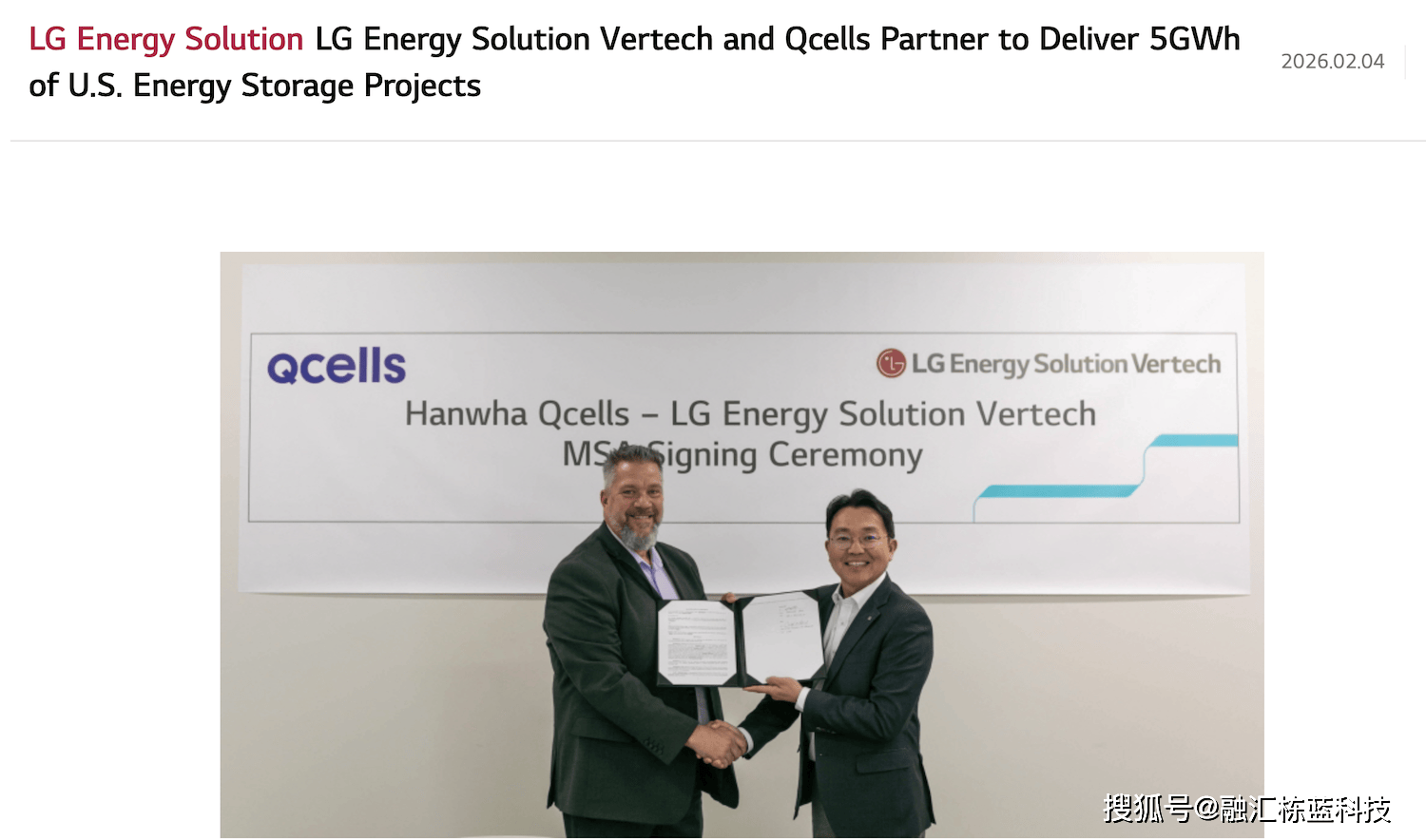
2026年初,LG在北美接连释放出两条看似分属不同领域、却指向同一方向的信号。 2月4日,LG能源解决方案旗下的储能子公司Vertech宣布,与美国光伏组件制造商 Qcells 达成合作,将在美国交付总规模达5GWh的储能项目。 2月2日,在美国拉斯维加斯举行的2026 AHR Expo(北美暖通、空调与制冷行业展览)上,LG电子的展台同样出现了一个耐人寻味的变化:热泵热水器与 整体热水解决方案,被放置在了住宅暖通系统展示的核心位置。 如果把这两条信息放在同一条时间线上来看,LG在北美所做的,显然已经不只是"业务布局",而是一次更具纵深的能源体系落子。 LG的能源意图 Vertech与Qcells的合作,并非一笔象征性的订单。5GWh 的储能规模,在当前美国工商业与社区级储能市场中,已属实质性项目体量。这意味着,LG 的角 色不再局限于设备或电芯供应,而是直接参与到美国本土能源基础设施的交付环节中。 从行业层面看,北美住宅暖通空调(HVAC)并不是一个高速扩张型市场,但也远未进入衰退期。 根据Global Market Insights的研究数据,2024年北美住宅单元式 HVAC市场规模约为68亿美元,预计 ...
电视行业,为什么总被科技潮流“遗忘”?
Xin Lang Cai Jing· 2026-02-06 07:20
文|深观商业 开年的第一个月,传统电视行业被两份截然不同的公告彻底搅动:一边是TCL高歌猛进,将索尼这一昔 日的彩电霸主收入囊中,而另一边,曾经的"彩电大王"创维集团,却在同一天按下了暂停键——宣布拟 私有化退市,寄希望于光伏业务。 从前沿技术中找到改变电视市场低迷的突破口,一直是电视巨头们的共同战略,甚至在整个家电市场, 也是如此。 2024年3月,中国家电及消费电子博览会(AWE2024)上,AI的"龙卷风"席卷了整个家电行业,而在电 视领域,AI电视成了厂商们"秀肌肉"的重要品类。比如海信重磅发布自研星海大模型,推出全新 ULEDX全场景的AI计算画质平台以及多款旗舰新品,长虹电视则展出基于AI技术智慧研发成果的长虹 壁画+电视,其他知名电视厂商如LG、TCL、创维等,也已推出AI 电视。 当时,ChatGPT的诞生和更新持续引领AI技术热潮,Sora的问世更是惊艳全球,创造了新一轮高潮,如 何与AI融合几乎成为了各行业的必答题。所以,电视厂商拥抱新技术的热情也空前高涨,由此出现了 家电及消费电子博览会上的那一幕。 AI电视是一个新产物,它究竟会长成什么样需要行业、需要时间去定义,然而现在略显尴尬的是, ...


ISE直击:TCL华星、京东方晶芯、海信、友达、三星、LG、索尼等30家显示企业亮点一览
WitsView睿智显示· 2026-02-05 10:39
参展的中国厂商包括 TCL华星、 京东方晶芯、海信、 利亚德、洲明科技、雷曼光电、艾比森、AET 阿尔泰、青松光电、希达电子、优派科技、兆驰晶显、国星光电、Kinglight晶台、诺瓦星云、卡莱特 及凯视达等;与此同时,三星、LG、索尼、Christie、松下、夏普、达科、C SEED、巴可等国际厂商 亦同台亮相,共同呈现全球视听与显示产业的发展趋势。 据LEDinside观察,多家厂商围绕零售、商显、教育、娱乐等应用场景设置展区,展示各类创新展示产 品,其中,MIP、 COB产品进一步普及,MIP 0.9显示屏,Micro LED COB一体机等身影频现,COG产 品画质等性能表现再升级;而纹理屏、曲面屏、球形屏、双面屏、透明屏和折叠屏等创意显示屏琳琅 满目,相关展位门庭若市;另外,用户对产品的"节能"效果关注度与重视程度进一步提升。 TCL华星 TCL华星携商业显示、艺术展示、赛事直播、教育办公等多场景显示解决方案亮相。 其中,163英寸高画质MLED显示屏产品面向高端商业展示和赛事直播,采用低反射封装材料和像素级 混合驱动,实现37500:1对比度和24bit色深,大尺寸设计减少拼接缝隙,提升视觉沉浸感 ...


韩国自动驾驶的突围之路:借道中韩合作,冲刺 2027
3 6 Ke· 2026-02-05 10:18
2026 年 1 月的北京,寒意未消但科技合作的热度已然沸腾。 韩国总统李在明带着三星、SK、现代、LG 四大财团掌门人组成的 200 人豪华代表团访华,在中韩商务论坛上一口气签下 32 份合作文件,自动驾驶成为 其中最耀眼的赛道。联想车计算与韩国 SWM 的 L4 级 Robotaxi 合作、蘑菇车联与 LG 电子的全域布局,连同韩国近两年密集落地的政策与技术突破,共 同勾勒出一幅 "中韩协同,冲击全球前三" 的产业蓝图。 这场合作绝非偶然。当韩国国土交通部部长金润德坦言 "美中是成年人,我们仍停留在小学生阶段",当中国自动驾驶技术在城市落地层面积累了丰富经 验,中韩双方的优势互补成为必然选择。而这一切的背后,是韩国近十年深耕自动驾驶的战略积淀,以及面对全球竞争压力的破局决心。 韩国的 "三级跳" 战略与制度革新 韩国对自动驾驶的布局,早已超越单纯的技术研发,形成了一套 "顶层设计 + 路线图 + 试点落地" 的完整体系。自 2013 年确定发展战略以来,韩国政府先 后发布《2030 未来汽车产业发展战略》《汽车产业全球三强战略》等多项政策,构建了从 L3 到 L4 的清晰演进路径。 2026 年 1 月, ...

美又拉30国建新群,想抽掉中国稀土王牌,欧洲抢先献上投名状
Sou Hu Cai Jing· 2026-02-05 09:27
Core Viewpoint - The United States is establishing a new alliance focused on reshaping the global supply chain for critical minerals, particularly rare earth resources, to reduce dependence on China [1][3]. Group 1: Alliance Formation - The new mineral alliance includes the United States, the United Kingdom, Japan, Australia, and the European Union, with a meeting planned in Washington to discuss de-China-fication of the rare earth supply chain [1][3]. - Australia is identified as a core member due to its significant role as a major lithium exporter, committing to invest $1 billion with the U.S. for exploration and processing of critical minerals [3]. - Japan and South Korea are positioned as technology processors and consumers, with Japanese companies importing rare earth elements from Australia for local electric vehicle and electronics industries [3]. Group 2: Member Roles and Interests - The alliance exhibits a division of roles among member countries, but underlying tensions exist regarding the alignment of U.S. pricing strategies and the interests of resource-supplying countries like Australia [4][5]. - Australia is focused on increasing its profits through higher mineral prices and expanded exports, which has led to market fluctuations when U.S. policies do not align with its interests [4]. - The EU is caught between the desire to counter China's dominance and the risk of over-reliance on the U.S., particularly in light of territorial concerns related to Greenland [5]. Group 3: Challenges and Competitive Landscape - The cooperation model within the alliance lacks consistency due to varying national interests, making it difficult to form a strong collective action in the short term [5]. - China's dominance in the rare earth sector is attributed not only to resource availability but also to its complete industrial chain, which poses a significant technological gap for the U.S. and its allies to overcome [7].


中国智能家电市场趋势洞察
益普索· 2026-02-05 05:35
Investment Rating - The report does not explicitly provide an investment rating for the smart home appliance industry Core Insights - The Chinese home appliance market is transitioning from scale expansion to quality upgrades, with a focus on deep competition driven by changing demand structures [3] - The Z generation, accounting for nearly 20% of the population and contributing about 40% of consumption, is driving a shift in consumer logic towards emotional value, personalization, and aesthetic appeal [4] - Consumers are moving from "external display" to "internal experience," emphasizing the need for brands to innovate based on local user demands [5] - Companies must build a forward-looking insight system to identify future opportunities through macro and micro trend research [5] - The focus on sustainable growth and core competitiveness is essential, guiding product innovation, brand communication, and marketing strategies [6] Market Trends - The market is experiencing a "micro-segmentation" wave, moving away from universal products to innovative categories that match the evolving lifestyle and spatial needs of consumers [9][19] - The design philosophy is shifting from "highlighting presence" to "small and refined," maximizing functional value through technology stacking in limited spaces [10][62] - Aesthetic integration is becoming crucial, with appliances designed to blend seamlessly into home environments, transforming them into art pieces rather than mere functional devices [11][35] - The importance of aesthetics is highlighted, with 84% of consumers considering appearance when purchasing appliances, and 69% willing to pay more for high-quality designs [36] Consumer Behavior - Consumers are increasingly prioritizing emotional value and personalized experiences over mere functionality, with 88% considering functionality as a key purchasing factor [12][86] - The demand for "zero-maintenance" solutions is rising, with users seeking appliances that require minimal effort and provide seamless integration into their lives [13][99] - Health has become a core value in appliance offerings, with consumers looking for products that enhance both physical and mental well-being [15][111] Product Innovation - The trend towards multi-functional products is replacing standalone devices, with integrated solutions becoming mainstream [75][81] - The report emphasizes the need for appliances to provide not just utility but also emotional and sensory experiences, bridging the gap between product functionality and user lifestyle [86][92] - The shift towards proactive health management solutions is evident, with consumers willing to invest in appliances that offer comprehensive health benefits [113][116] Future Outlook - The report suggests that brands must adapt to the evolving consumer landscape by offering personalized, aesthetically pleasing, and health-oriented products [18][126] - The integration of AI and smart technology is expected to enhance user experiences, with a focus on seamless, intuitive interactions [135][140] - The future of home appliances lies in creating ecosystems that connect various devices, providing a cohesive and intelligent living environment [138][139]