
Wedbush

Search documents
美国众议院通过《Speed Act》 2026年?AI基建有望迈入加速阶段
Zhi Tong Cai Jing· 2025-12-19 03:14
Group 1 - The U.S. House of Representatives has passed the "Speed Act" aimed at simplifying the permitting process for AI infrastructure and energy systems, with a vote of 221 in favor and 196 against [1] - Major U.S. tech companies, including Micron, OpenAI, and Microsoft, have publicly supported the "Speed Act," which is expected to reduce the federal permitting risks associated with energy infrastructure for large data centers [2] - The "Speed Act" is designed to accelerate the construction of AI data centers by addressing external constraints related to obtaining power and energy infrastructure approvals, thereby reducing the "time-to-power" risk [2][3] Group 2 - The legislation will narrow and expedite the National Environmental Policy Act (NEPA) processes, allowing certain projects to bypass redundant reviews and focusing environmental impact analyses on direct effects [3] - The act is seen as a tool to facilitate faster energy supply projects, which are critical for the expansion of AI data centers, especially in regions with tight power loads [3] - However, the "Speed Act" does not address other significant bottlenecks faced by tech giants, such as local zoning issues, community resistance, and utility cost-sharing [4] Group 3 - The "Genesis Project," initiated by the White House, aims to enhance the application of emerging technologies, including AI, in scientific exploration and energy projects, with 24 leading AI companies, including Microsoft and Google, signing agreements to participate [4] - The project is expected to significantly boost the productivity of U.S. researchers by automating experimental design and accelerating simulation processes [4] Group 4 - A report from Bank of America indicates that the global AI arms race is still in its early to mid-stages, with Vanguard noting that the AI investment cycle may have only reached 30%-40% of its peak [5] - Major financial institutions believe that the investment wave in AI infrastructure, particularly in AI chip computing hardware, is just beginning, with potential investments reaching $3 trillion to $4 trillion by 2030 [5]




AI基建狂潮之下存储需求狂飙 美光(MU.US)业绩碾压预期! 暗示“超级周期”延伸至2027年
智通财经网· 2025-12-18 00:14
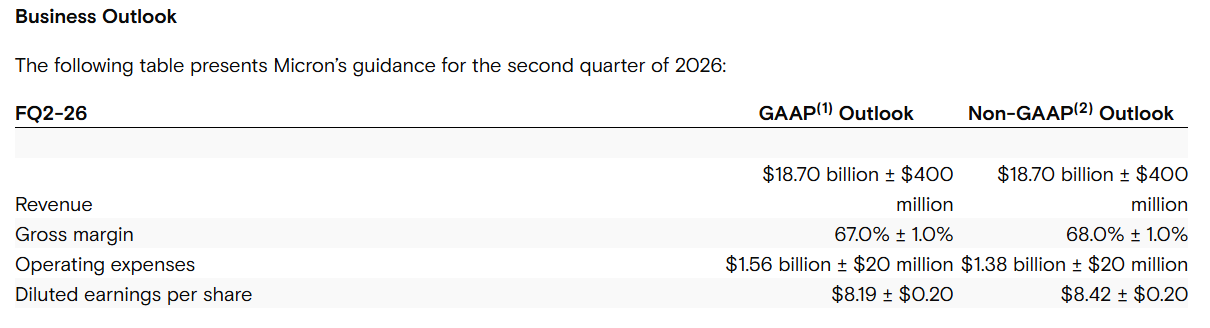
Core Viewpoint - Micron Technology (MU.US) has provided an extremely optimistic earnings outlook for the current quarter, significantly exceeding Wall Street analysts' expectations, and has unexpectedly increased its capital expenditure for fiscal year 2026, indicating a strong demand for storage chips driven by the unprecedented global AI boom [1][2]. Financial Performance - For the first quarter of fiscal year 2026, Micron's revenue is expected to be between $18.3 billion and $19.1 billion, compared to Wall Street's average expectation of $14.4 billion [3][4]. - The company reported a gross margin forecast of 67.0% under GAAP, significantly higher than the analysts' average expectation of 55.7% [4][11]. - Micron's capital expenditure forecast for fiscal year 2026 has been raised from $18 billion to $20 billion, reflecting the ongoing surge in storage chip demand [4][11]. Market Dynamics - The "super cycle" in the storage chip market is validated by strong performance from major competitors like SK Hynix and Samsung, indicating a significant increase in both volume and pricing for storage products, including HBM systems [1][2]. - The demand for high-performance DRAM and NAND products is surging due to the rapid expansion of AI data centers, leading Micron to focus its production capacity on these segments [2][9]. Stock Performance - Following the earnings announcement, Micron's stock surged over 8% in after-hours trading, with a year-to-date increase of over 170% [5][8]. - Wall Street analysts have raised their 12-month price target for Micron, with the average target approaching $300 [5][8]. Industry Outlook - TrendForce has revised its revenue forecasts for the DRAM industry, expecting a year-over-year growth of over 100% in 2026, positioning Micron as one of the biggest beneficiaries [2][3]. - The ongoing AI infrastructure investment wave is projected to reach $3 trillion to $4 trillion by 2030, driven by the demand for AI computing hardware and storage solutions [19].


Are Quantum Computing Stocks Due for a Rebound? This Wall Street Bull Thinks So
Investopedia· 2025-12-17 22:40
Core Insights - Quantum computing stocks have recently experienced a decline, with Rigetti Computing (RGTI) down approximately 6%, D-Wave Quantum (QBTS) down 7%, IonQ (IONQ) down 8%, and Quantum Computing (QUBT) down 9%, amid concerns over an AI bubble [1][6] - Analysts at Wedbush have initiated coverage on these stocks with "outperform" ratings, viewing quantum computing as a transformational technology with significant growth potential in the coming years [2][3] - By the end of the decade, quantum computing companies are expected to represent a larger share of total computing expenditure, despite currently being a small segment [3] Market Significance - Quantum computing stocks have benefited from the AI boom, with expectations that rising AI demand will increase computing needs [4] - Wedbush analysts have set a target price of $60 for IonQ, indicating nearly 30% upside, a $12 target for Quantum Computing suggesting a 16% gain, and $35 targets for Rigetti and D-Wave, implying they could add roughly half their value in the next 12 months [4] - Despite recent declines, D-Wave shares have nearly tripled in value this year, Rigetti has increased by close to 50%, and IonQ has added 10%, while Quantum Computing is down nearly 40% year-to-date [5]





谷歌与OpenAI算力洪流将DRAM/NAND需求推向指数级扩张 美光(MU.US)迎接“AI基建超级红利”
Zhi Tong Cai Jing· 2025-12-17 04:22
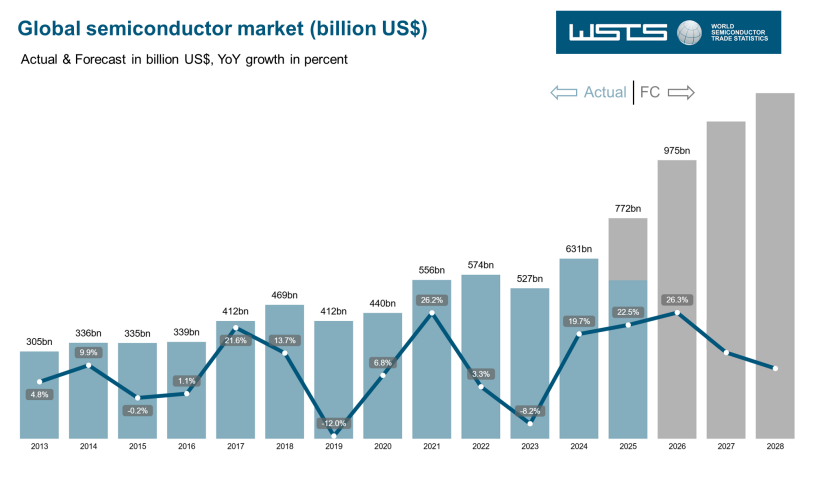
Group 1 - The core argument of the articles revolves around the "storage supercycle" driven by the increasing demand for AI infrastructure, significantly benefiting companies like Micron Technology, which has seen its stock price rise approximately 180% this year [1][2][4]. - Major investment firms, including Wells Fargo, highlight that the demand for high-performance storage products, particularly HBM and server-level DDR5, is surging due to the rapid expansion of AI data centers [1][2][8]. - The semiconductor market is projected to grow significantly, with WSTS forecasting a 22.5% increase in 2025, reaching a total value of $772.2 billion, and further expanding to $975.5 billion in 2026, indicating a robust recovery in chip demand [2]. Group 2 - Micron is identified as one of the biggest beneficiaries of the anticipated over 100% growth in the DRAM market by 2026, particularly in the HBM and high-performance DDR5 segments [4][5]. - TrendForce has revised its revenue forecasts for the DRAM industry, predicting revenues of approximately $165.7 billion in 2025 (up 73% year-on-year) and $333.5 billion in 2026 (up 101% year-on-year), indicating a strong recovery trajectory [5]. - The ongoing AI infrastructure investment wave is expected to reach $3 trillion to $4 trillion by 2030, driven by unprecedented demand for AI computing power [3]. Group 3 - The competition between Google and OpenAI is highlighted as a significant investment theme, with both companies relying heavily on high-performance storage solutions, which are essential for their AI infrastructure [6][7]. - The demand for enterprise-level high-performance storage, including HBM systems and server-level DDR5, is critical for supporting the massive AI training and inference workloads, with DRAM capacities in AI servers being 8-10 times higher than traditional CPU servers [8]. - The transition to DDR5 is driven by its 50% bandwidth improvement over DDR4, making it more suitable for large-scale AI workloads [8].
Carvana Co. (CVNA) Upgraded to Outperform by Wedbush
Yahoo Finance· 2025-12-01 07:58
Core Viewpoint - Carvana Co. (NYSE:CVNA) is recognized as a leading online car retailer in the US, with significant growth potential and positive analyst sentiment surrounding its stock performance and future sales targets [1][4]. Analyst Recommendations - As of November 28th, Carvana Co. received 24 analyst recommendations, with 7 rated as Strong Buy, 10 as Buy, 6 as Hold, and 1 as Underperform. The average price target for the stock is set at $419.45 [2]. Recent Upgrades and Expectations - Wedbush upgraded Carvana Co. to Outperform on November 24th, raising the price target from $380 to $400, citing the recent selloff as excessive. The firm anticipates Carvana will surpass CarMax in quarterly used-unit volumes by Q4 2026, earlier than the previous estimate of mid-2027 [3]. Sales Goals and Growth Projections - Carvana Co. aims to sell three million vehicles annually within the next 5 to 10 years, targeting an adjusted EBITDA margin of 13.5%. The CEO indicated that achieving this goal would require significant operational execution, with growth rates projected between 20% to 40% compounded annually [4].

This is a tech bull market that can go another two years, says Wedbush's Dan Ives
CNBC Television· 2025-11-25 22:20
Now, let's get into the tech trade with our next guest right here on set. Dan eyes from Wed Bush here to tell us how to play the AI revolution. Why he says we're not in a bubble.Dan on AI. This market has been ridiculously flighty. I'm old enough to remember when open AI was going to kill Google search and when the narrative was Apple's dead money because it missed AI with Apple intelligence and that Oracle is the fourth hyperscope.That was a recent one. You got to do your homework, not get caught up in eac ...


Markets soothed by AI chip maker's results but bubble concerns haven't gone away
Sky News· 2025-11-20 14:04
Group 1 - The core message of the articles emphasizes that Nvidia's record-breaking sales and strong guidance have reassured investors about the demand for AI, suggesting that the AI and tech sectors are not in a bubble [1][2][3] - Nvidia reported $57 billion in revenue for the three months ending in October and anticipates $65 billion in sales for the next quarter, which has positively influenced market sentiment and increased investor risk appetite [7] - The financial services firm Wedbush views Nvidia's performance as a pivotal moment in the ongoing AI Revolution, indicating that this is the third year of a projected ten-year build-out of the fourth industrial revolution [3][1] Group 2 - The positive outlook for Nvidia has led to a rise in share prices for tech companies and competitors across Asia and Europe, reflecting a broader enthusiasm for AI-related investments [4][2] - Despite the current optimism, there are lingering concerns about the sustainability of AI demand, with some investors, like Michael Burry, expressing skepticism about the true end demand for AI products [9][11] - The articles highlight that while Nvidia's results have calmed valuation concerns for now, the potential for future market volatility remains due to external factors such as geopolitical tensions and competition from other AI models [8][7]

从Mag 7股价狂飙到巴菲特“最后一舞”建仓谷歌 华尔街巨头们坚定押注AI大浪潮
智通财经网· 2025-11-17 02:32
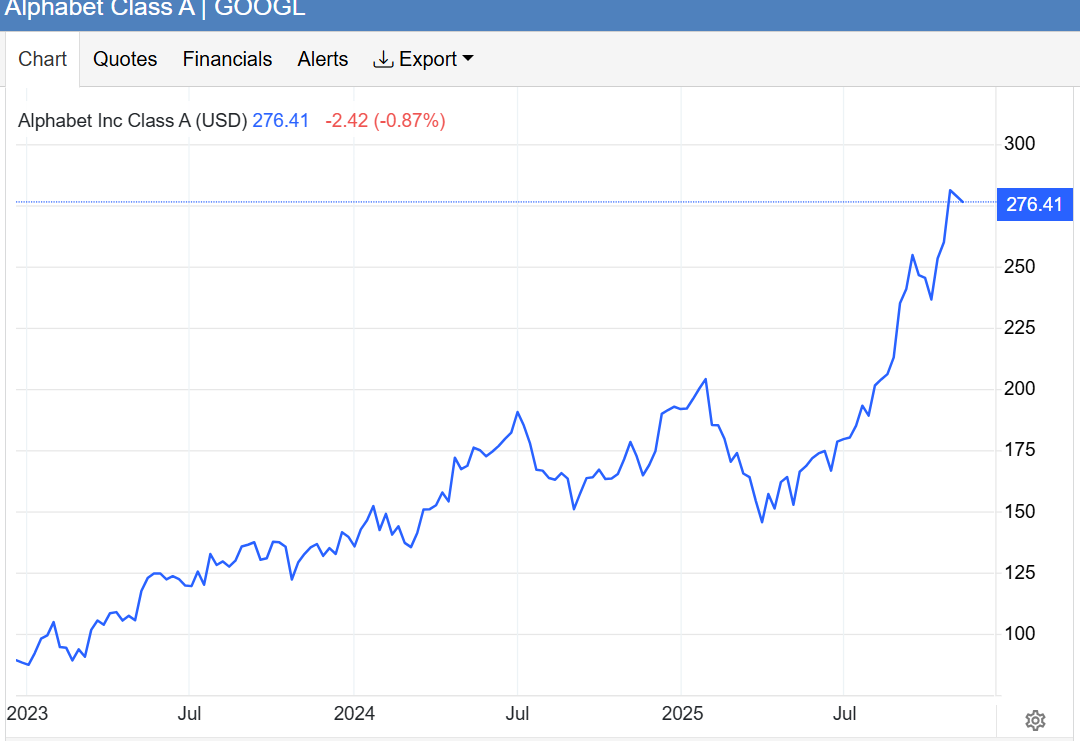
Core Insights - Major institutional investors are increasingly focused on publicly listed tech stocks, particularly in the context of the AI investment wave, despite concerns about a potential "AI bubble" [1][3][4] - The "Magnificent Seven" tech giants, which include Apple, Microsoft, Google, Tesla, Nvidia, Amazon, and Meta Platforms, are viewed as key drivers of market performance and potential returns for investors [2][10] Group 1: AI Investment Trends - Institutional investors are optimistic about the influx of capital into AI-related investments, with significant commitments from major firms like Microsoft, which announced a $10 billion AI data center investment in Portugal [3][6] - Analysts from Goldman Sachs and UBS suggest that the current AI investment climate resembles the early stages of the 1990s tech boom rather than a bubble about to burst, indicating a healthy investment environment [4][5][14] - The AI investment cycle is expected to continue growing, with major tech companies projected to invest over $500 billion in AI infrastructure [6][15] Group 2: Performance of Tech Giants - Nvidia, Micron, TSMC, and SK Hynix remain near historical highs, reflecting strong performance amid the AI investment surge [2][3] - Alphabet, Google's parent company, has seen a significant increase in its stock value and is now among Berkshire Hathaway's top holdings, highlighting its recovery and growth in the AI space [10][12] - The cloud computing segment of Google is experiencing rapid growth, with a 34% year-over-year increase in revenue, driven by AI-related services [12] Group 3: Market Sentiment and Future Outlook - Investment firms like Wedbush predict a continued upward trajectory for tech stocks, estimating a 10% increase in the Nasdaq 100 index for the remainder of the year [5][13] - Analysts emphasize that the current market dynamics differ significantly from the 2000 internet bubble, as today's leading tech companies are generating substantial free cash flow and have low debt levels [14][15] - The overall sentiment among major investment firms is one of optimism, with a focus on long-term growth opportunities in AI rather than short-term volatility [16][17]
土耳其电信巨头Turkcell携手谷歌(GOOGL.US) 竭力扩张云版图与数据中心
智通财经网· 2025-11-12 07:21
Group 1 - Turkcell has signed a long-term strategic cooperation agreement with Google to enhance its cloud computing capabilities, planning to invest $1 billion to expand its data center infrastructure by the end of 2032 [1] - The collaboration aims to leverage Google Cloud's exclusive technology to significantly improve Turkcell's digital infrastructure and cloud-related service products, providing substantial AI training and inference computing resources for domestic users in Turkey [1][2] - A new Google Cloud service region in Turkey is expected to begin operations between 2028 and 2029, which will further expand Turkcell's data center assets [1] Group 2 - The partnership positions Turkcell to transition from a pure telecommunications service provider to a cloud computing and AI infrastructure operator, enhancing its revenue potential through increased traffic sales and dual cloud services [2] - Google Cloud's revenue grew by 34% year-on-year to $15.2 billion in Q3 2025, driven by AI infrastructure and generative AI solutions, indicating strong growth in the cloud market [3] - The backlog of Google Cloud orders, including AI computing orders, surged by 46% to $155 billion, suggesting a significant demand for AI data center capacity in the coming years [3]

AI泡沫论甚嚣尘上之际 微软(MSFT.US)真金白银驳斥:百亿美元投向葡萄牙海岸数据中心
智通财经网· 2025-11-11 13:12
Core Insights - Microsoft announced a significant investment of up to $10 billion to build a large AI data center in Sines, Portugal, marking it as one of the largest investment projects in Europe for the year [1][4] - This investment counters the prevailing "AI bubble" narrative, reinforcing the ongoing "AI super investment cycle" [1][3] - The data center will be developed in collaboration with local developer Start Campus and UK startup Nscale, with the first building already opened in March [1][2] Investment and Infrastructure - Microsoft has signed a long-term capacity leasing agreement for AI computing infrastructure in Sines, as part of its expansion to meet the growing AI computing demands of its Azure cloud platform [2] - The company is also entering into long-term partnerships with several "neocloud" service providers to secure AI computing resources, including CoreWeave Inc. and Nebius Group NV [2] - Sines is becoming a key investment hub due to its geographical advantages, including large-scale submarine cables connecting Europe with Brazil and Africa [2] Market Sentiment and Future Outlook - The substantial investment by Microsoft serves as a strong rebuttal to concerns about an AI investment bubble, especially as major tech companies continue to expand their AI data center capabilities [3][4] - Analysts predict that overall capital expenditures for large tech companies could rise significantly from approximately $380 billion this year to nearly $550 billion or $600 billion by 2026, driven by the next wave of AI spending [4] - Major financial institutions believe that the global AI infrastructure investment wave is just beginning, with potential investments reaching $3 trillion to $4 trillion by 2030 [5]