众安在线

Search documents
众安在线(06060) - 截至二零二五年九月三十日止股份发行人的证券变动月报表
2025-10-03 11:00
FF301 股份發行人及根據《上市規則》第十九B章上市的香港預託證券發行人的證券變動月報表 截至月份: 2025年9月30日 狀態: 新提交 致:香港交易及結算所有限公司 備註: 第 1 頁 共 11 頁 v 1.1.1 由於眾安在綫財產保險股份有限公司*(「本公司」)在中華人民共和國註冊成立,"法定股本"的概念並不適用。 第 I 部分所載資料是指本公司的"已發行股本"。 FF301 公司名稱: 眾安在綫財產保險股份有限公司*(於中華人民共和國註冊成立之股份有限公司) 呈交日期: 2025年10月3日 I. 法定/註冊股本變動 | 1. 股份分類 | 普通股 | 股份類別 | H | | | 於香港聯交所上市 (註1) | 是 | | | --- | --- | --- | --- | --- | --- | --- | --- | --- | | 證券代號 (如上市) | 06060 | 說明 | 眾安在綫 – H 股 | | | | | | | | | 法定/註冊股份數目 | | | 面值 | | 法定/註冊股本 | | | 上月底結存 | | | 1,634,812,900 | RMB | | 1 RM ...
【港股通】“雄安第一股”IPO缘何受冷?
Ge Long Hui· 2025-10-01 15:45
Core Viewpoint - Hebei Construction, known as the "first stock of Xiong'an," is facing a disappointing IPO with a subscription rate of only 0.99 times, raising concerns about its market reception in Hong Kong [1][2][8]. Company Overview - Hebei Construction primarily engages in construction contracting, accounting for over 95% of its revenue, and has been recognized as a significant player in the industry, ranking 366th in the "China Top 500 Enterprises" and 20th in the "Top 80 Chinese Contractors" [3][4]. - The company has established partnerships with the Xiong'an government to develop three companies aimed at the Xiong'an New Area, indicating its strategic involvement in major regional developments [4]. Financial Performance - In the first half of 2017, Hebei Construction reported revenues of 20.218 billion RMB and a net profit of 500 million RMB, suggesting a relatively strong financial position [5]. - The company's IPO will result in a total share capital of 1.733 billion shares, with an issue price of 4.46 HKD, leading to a market capitalization of 7.73 billion HKD [7]. Market Sentiment - The Hong Kong market is characterized by a cautious approach to stock pricing, with investors often requiring tangible evidence of performance before committing [6][8]. - Despite Hebei Construction's low price-to-earnings (PE) ratio of 6.45 and price-to-book (PB) ratio of 2.65, these valuations may not attract investors in a market where lower valuations are available [7][8]. Financial Structure and Risks - The company has a high debt ratio of approximately 95%, which is likely to deter mainstream investors in the Hong Kong market [12]. - The IPO proceeds will be allocated primarily to unfinished projects and public-private partnership (PPP) projects, which are often seen as financial black holes due to their long construction periods and delayed revenue generation [14][15]. - The cash flow situation appears challenging, with significant outflows reported in the first half of 2017, indicating potential difficulties in maintaining liquidity [16].


短期重疾险集中上线,保费仅百元
21世纪经济报道· 2025-09-29 14:00
Core Viewpoint - The article discusses the rise of short-term critical illness insurance products in response to declining sales of traditional long-term critical illness insurance, highlighting a shift in consumer demand towards affordable and flexible health coverage options [4][8]. Group 1: Short-term Critical Illness Insurance - Multiple insurance companies have launched new short-term critical illness insurance products, typically offering coverage for one year at a low premium, around 100 yuan [4][6]. - These products are characterized by low premiums and high leverage, making critical illness insurance more accessible to younger consumers and first-time buyers [5][6]. - The design of short-term critical illness insurance includes flexible payment options, broad age coverage (up to 70 years), and innovative payout structures, such as segmented compensation [6][14]. Group 2: Challenges Facing Traditional Critical Illness Insurance - Traditional critical illness insurance has faced significant challenges, with a market share decline from nearly 60% in the health insurance sector to a projected drop in 2024, where medical insurance will surpass critical illness insurance for the first time [9][10]. - The continuous decline in premium rates and the increasing complexity of traditional products have made them less attractive to consumers, particularly younger demographics [10][11]. - The average payout for critical illness insurance remains low, with per capita coverage insufficient to meet consumer needs, leading to a push for innovation in product offerings [11]. Group 3: Recommendations for Consumers - Experts suggest that while short-term critical illness insurance can serve as an entry-level product, long-term critical illness insurance should remain the foundation of health coverage [12][14]. - Consumers are advised to consider purchasing medical insurance first, followed by critical illness insurance, and potentially combining both short-term and long-term options for comprehensive coverage [12][15]. - The dual insurance model, where medical insurance covers treatment costs and critical illness insurance compensates for income loss, is recommended to mitigate the financial risks associated with severe health issues [15].

百元就能买重疾险!多家险企上线一年期创新产品
2 1 Shi Ji Jing Ji Bao Dao· 2025-09-29 09:40
Core Insights - The rise of short-term critical illness insurance products is a response to declining sales of traditional long-term critical illness insurance, driven by changing consumer demands for affordable and flexible health coverage [3][6][9] Group 1: Market Trends - Several insurance companies have launched short-term critical illness insurance products, typically offering coverage for one year at a low premium, appealing to younger consumers and first-time buyers [3][4] - Traditional critical illness insurance has seen a decline in market share, dropping to 200 billion yuan in 2023, with medical insurance products gaining ground [6][8] Group 2: Product Features - Short-term critical illness insurance is characterized by low premiums (around 200 yuan for 20,000 yuan coverage) and high leverage, making it accessible to a broader audience [4][5] - These products often feature flexible payment options and a wide age coverage (up to 70 years old), allowing for innovative claims processes such as segmented payouts [5][11] Group 3: Challenges for Traditional Insurance - Traditional critical illness insurance faces challenges such as high premiums, complex product structures, and declining consumer interest due to market maturity [7][8] - The continuous decrease in the preset interest rate has pressured the pricing of traditional products, making them less appealing to consumers [6][7] Group 4: Expert Recommendations - Experts suggest that while short-term critical illness insurance can serve as an entry-level product, long-term insurance should remain the foundation of health coverage [9][11] - It is recommended for consumers to consider a combination of medical insurance and both short-term and long-term critical illness insurance for comprehensive protection [11]
跨越盈亏平衡点!暖哇科技连续两年盈利,以高增长业务筑牢保险AI盈利根基
Cai Fu Zai Xian· 2025-09-29 09:31
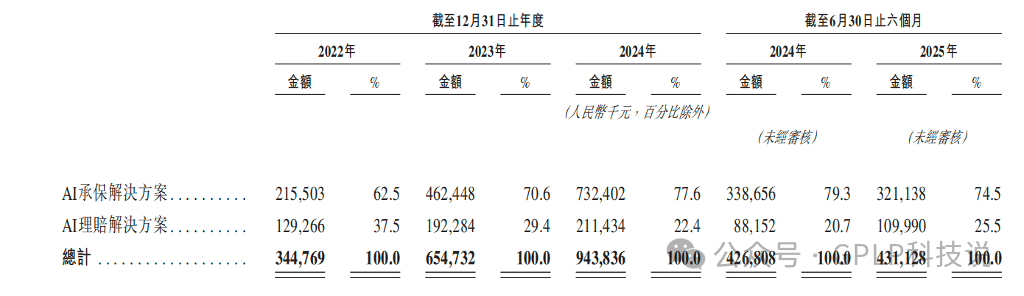
Core Viewpoint - Nuanwa Technology, recognized as the largest independent AI technology company in China's insurance industry by Frost & Sullivan, has submitted its listing application to the Hong Kong Stock Exchange, attracting significant attention from the capital market [1] Financial Performance - Nuanwa Technology has crossed the breakeven point, with revenue projected to grow from 340 million RMB in 2022 to 940 million RMB in 2024, achieving a compound annual growth rate (CAGR) of 65.5%, significantly outpacing the average growth rate in the insurance technology sector [2] - The adjusted net profit turned positive in 2023 at 18.5 million RMB and is expected to rise to 57.5 million RMB in 2024, indicating substantial validation of the core business's profitability [2] - The overall net loss is narrowing, with the loss as a percentage of total revenue decreasing year by year, reflecting ongoing operational efficiency improvements [2] Research and Development - Nuanwa Technology has increased its R&D spending significantly, with over 200 million RMB invested from 2022 to 2024, focusing on dual engines of "knowledge flywheel" and "data flywheel" iterations, as well as optimizing multi-agent systems [3] - The financial statements' net loss figures are influenced by the accounting treatment of preferred stock fair value changes, which will be adjusted post-listing, eliminating past floating losses without impacting cash flow or actual profitability [3] Market Expansion and Client Base - The number of insurance companies served by Nuanwa Technology has rapidly expanded from 62 in 2022 to 160 in 2024, representing a growth of over 158% in just two years [4] - In 2024, eight out of the top ten insurance companies by premium income in China have chosen to collaborate with Nuanwa Technology, demonstrating the company's solutions' industry-leading status [4] - The revenue concentration from the top five clients decreased from 92.3% in 2022 to 78.9% in 2024, indicating improved client diversification and reduced operational risk [4] Customer Retention and Satisfaction - The revenue retention rate for Nuanwa Technology reached 134.0% in 2024, indicating that existing clients increased their spending by 34% compared to the previous year [5] - High retention rates reflect client satisfaction with the solutions provided and the inherent "stickiness" of the services, as switching costs are high due to integration with core business systems [6] - Overall, Nuanwa Technology's business performance shows a trend of simultaneous growth in both quantity and quality, with expectations for continued expansion in profitability and market share [6]
建行淄博颜山支行:追回的是款项,守护的是信任
Qi Lu Wan Bao· 2025-09-29 00:45
Core Points - The incident at CCB Zibo Yanshan Branch highlights the importance of customer service in resolving unexpected issues like unauthorized deductions [1][2] - The staff's proactive approach and effective communication played a crucial role in calming the customer and facilitating the refund process [1][2] Group 1 - The customer, an elderly woman, experienced unexpected deductions from her account and sought assistance at the bank [1] - The bank staff quickly identified the source of the deductions as insurance fees from Zhong An Insurance and helped the customer recall her previous actions that led to the charges [1] - The branch manager assisted the customer in contacting the insurance company, leading to a successful refund after thorough communication [1] Group 2 - The customer expressed immense gratitude towards the bank staff for their support, emphasizing the value of having reliable assistance during financial issues [2] - The incident illustrates that quality financial services extend beyond efficient transactions; they also involve being a dependable support system for customers in need [2] - CCB Zibo Yanshan Branch's actions reflect the principle of "finance for the people," showcasing a commitment to customer care and financial security [2]
非银行金融行业周报:三季报业绩预计表现较好,关注三季报行情-20250928
SINOLINK SECURITIES· 2025-09-28 09:14
Investment Rating - The report suggests a focus on three main lines of investment opportunities in the securities sector, highlighting the potential for significant returns in the coming months [3][4]. Core Insights - The report emphasizes the transition of the capital market from "quantitative expansion" to "qualitative improvement" during the "14th Five-Year Plan" period, with expectations for increased support for technology innovation and a focus on investor returns [2][37]. - The insurance sector is experiencing high growth in life insurance premiums, with a notable increase in health insurance, while non-auto insurance faces challenges [4][36]. - The report identifies a significant improvement in the performance of brokerage firms, with a mismatch between high profitability and low valuations, suggesting a favorable investment opportunity [3][4]. Summary by Sections Securities Sector - The report indicates that the average daily trading volume of A-shares is 23,132 billion, reflecting a decrease of 8.1% week-on-week, while the year-to-date average daily trading volume for equity funds has increased by 98.1% year-on-year [15]. - It highlights the strong performance of brokerage firms in the first half of the year, with a recommendation to focus on those with high investment ratios and significant merger and acquisition potential [3][4]. Insurance Sector - The report notes that life insurance premiums increased by 11.4% year-on-year to 35,797 billion in the first eight months of 2025, with life insurance and health insurance growing by 14.0% and 0.5%, respectively [4][36]. - It also mentions that property insurance premiums grew by 4.7% year-on-year, with auto insurance maintaining steady growth while non-auto insurance faced pressure [4][36]. Market Dynamics - The report discusses the increasing interest of insurance companies in real estate investments, with a notable rise in investment scale compared to the previous year [36]. - It also highlights the significant increase in direct financing in the capital market, with a total of 57.5 trillion raised in the past five years, indicating a shift towards a more robust financing structure [37].


3年半累亏超7亿元 暖哇科技IPO能否撑起保险AI独角兽梦?
Xi Niu Cai Jing· 2025-09-28 08:49
Core Insights - The insurance technology sector has seen a surge in IPO activity since 2025, with companies like Yuanbao and Shouhui Group successfully listing on major exchanges [1] - Nuwa Technology, the largest independent AI technology company in China's insurance industry, has submitted its IPO application to the Hong Kong Stock Exchange, aiming for significant growth with a projected compound annual growth rate of 65.5% from 2022 to 2024 [2] Industry Overview - The rise in IPOs among insurance technology companies is driven by the increasing demand from insurance firms for technology solutions that enhance efficiency and reduce costs [4] - Insurance technology is defined as a branch of financial technology that applies technological tools to improve traditional insurance operations [4] Company Profile: Nuwa Technology - Nuwa Technology offers AI underwriting and claims solutions, charging insurance companies based on the premiums generated and reduced claims costs [7] - The company has reported significant revenue growth, with projected revenues of approximately 345 million RMB in 2022, 655 million RMB in 2023, and 944 million RMB in 2024, with AI underwriting contributing over 70% of total revenue [7][8] Financial Performance - Despite impressive revenue growth, Nuwa Technology has faced continuous losses, with net losses of 223 million RMB in 2022, 240 million RMB in 2023, and 155 million RMB in 2024, totaling approximately 718 million RMB over three and a half years [10] - The gross margin for AI underwriting solutions has declined from 69.1% in 2022 to 53.3% in 2024, indicating potential challenges in maintaining profitability [10][11] Client Dependency and Market Position - Nuwa Technology has a high dependency on its largest client, Zhong An Online, which accounted for 78.7% of its revenue in 2022, though this percentage has decreased over the years [12] - The company also engages in transactions with Zhong An Online, raising concerns about its independence and market competitiveness [13] Future Plans and Challenges - The IPO proceeds are intended for R&D, geographic expansion, diversification of insurance offerings, and strategic investments in related businesses [14] - The insurance industry is heavily regulated, and the large-scale commercialization of AI technology will require time and innovative approaches to meet regulatory demands [14]
保险业最大AI公司冲击IPO!是“续命”还是“续亏”?
Sou Hu Cai Jing· 2025-09-26 17:22
Core Viewpoint - The rise of AI technology is significantly impacting various industries, including insurance, with companies like Nuanwa Technology aiming to become leaders in AI insurance solutions despite facing substantial financial challenges and market skepticism [1][22]. Group 1: Company Overview - Nuanwa Technology is China's largest independent AI insurance technology company, recently filing for an IPO in Hong Kong to become the "first AI insurance stock" [1]. - The company has developed AI underwriting and claims solutions, with its core products being the "Alamos" system for underwriting and the "Roborock" model for claims verification [4][6]. Group 2: Financial Performance - Despite revenue growth from 345 million in 2022 to 944 million in 2024, Nuanwa Technology has incurred cumulative losses of 718 million over three and a half years [7][22]. - The company's reliance on a few major clients, particularly ZhongAn Online, raises concerns about its sustainability and growth potential, with over 49% of its revenue coming from ZhongAn in the first half of 2025 [10][9]. Group 3: Market Position and Challenges - The AI insurance market is projected to grow from 746.8 billion to 1.35 trillion from 2024 to 2029, but existing insurance tech companies have faced significant stock price declines post-IPO [22]. - Nuanwa Technology's research and development spending has decreased significantly, raising questions about its ability to innovate and compete effectively in the market [16][22]. Group 4: Client Dependency and Risks - Nuanwa Technology's revenue is heavily dependent on a small number of clients, with the top five clients contributing over 73% of its revenue, which poses a risk to its business model [10][12]. - The company has faced reputational risks due to issues associated with its major client, ZhongAn Online, which has been criticized for customer complaints and regulatory penalties [19][22].
港股再融资热潮涌动,新经济企业成绝对主角
Zheng Quan Shi Bao· 2025-09-26 15:42
Core Insights - The Hong Kong stock market is experiencing a significant surge in refinancing activities, driven by ample liquidity, valuation recovery, and corporate strategic expansion needs [1][4][5] Group 1: Refunding Scale - Hong Kong listed companies have raised over 280 billion HKD through various refinancing methods this year, marking a year-on-year increase of over 400% compared to 2022 [1][4] - The total amount raised has already surpassed the entire annual figure for 2024, which was 990.73 billion HKD [4] - Placement of shares has become the primary method for refinancing, accounting for 87.81% of the total, with 249.5 billion HKD raised through this method [4] Group 2: New Economy Enterprises - New economy enterprises are leading the refinancing trend, with BYD raising 43.38 billion HKD, marking the largest equity refinancing project in the global automotive industry in the past decade [6][7] - Xiaomi Group follows closely with 42.6 billion HKD raised, surpassing its total fundraising since its 2019 IPO and setting a record for Chinese tech hardware companies in overseas equity refinancing [7] - Other tech companies like Horizon Robotics and WuXi AppTec have also raised significant amounts, focusing on sectors such as biomedicine and artificial intelligence [7] Group 3: International Capital Involvement - The current refinancing wave has seen unprecedented participation from international institutional investors, including GIC and Al-Futtaim family office [9][10] - BYD's placement attracted numerous top long-term investors, with Al-Futtaim investing 3.5 billion HKD as a strategic investor [9] - Notable long-term funds like Wujin Capital have been actively investing in various companies, indicating strong international interest in the Hong Kong market [10]