
海尔生物

Search documents
上证科创板医疗指数报697.06点,前十大权重包含奕瑞科技等
Sou Hu Cai Jing· 2025-06-23 09:03
Core Viewpoint - The Shanghai Stock Exchange Sci-Tech Innovation Board Medical Index has shown a decline in performance over various time frames, indicating potential challenges in the medical sector within the Sci-Tech Innovation Board [1][2]. Group 1: Index Performance - The Shanghai Sci-Tech Innovation Board Medical Index reported a value of 697.06 points, with a decline of 4.19% over the past month, 7.99% over the past three months, and 3.88% year-to-date [1]. - The index is composed of no more than 30 listed companies in the medical field, reflecting the overall performance of medical stocks on the Sci-Tech Innovation Board, with a base date of December 30, 2022, set at 1000.0 points [1]. Group 2: Index Holdings - The top ten weighted companies in the index include: Huatai Medical (10.77%), United Imaging (10.14%), Yirui Technology (7.2%), Aibo Medical (6.29%), Rejing Biology (5.94%), Nanwei Medical (4.99%), Shengxiang Biology (4.84%), Xinmai Medical (4.35%), Haier Biology (3.92%), and Yahui Long (3.41%) [1]. - The index is exclusively composed of companies listed on the Shanghai Stock Exchange, with the industry breakdown showing that medical consumables account for 42.66%, medical devices for 30.80%, and in vitro diagnostics for 26.54% [2]. Group 3: Index Adjustment Mechanism - The index samples are adjusted quarterly, with implementation occurring on the next trading day following the second Friday of March, June, September, and December [2]. - Weight factors are adjusted in accordance with the sample changes, and in special circumstances, the index may undergo temporary adjustments [2].

平安证券晨会纪要-20250623
Ping An Securities· 2025-06-23 00:35
Group 1: Non-Bank Financial Sector - The China Securities Regulatory Commission (CSRC) is seeking public opinion on the revised "Securities Company Classification Evaluation Regulations," aiming to optimize the classification and regulatory system for securities companies, enhancing their functional roles and professional capabilities [6][7][8] - The revised regulations will integrate business scoring indicators to support the differentiated development of small and medium-sized institutions, promoting a more efficient operational direction [7][8] - Investment recommendations focus on leading securities firms such as CITIC Securities, Huatai Securities, China Galaxy, and CICC, which are expected to benefit from the ongoing reforms in the capital market and securities industry [6][8] Group 2: Bond Market - The new special bond uses include addressing local government arrears to enterprises, with an estimated scale of 760 billion yuan for this year, indicating a shift in the focus of special bonds towards debt repayment [9][11] - The total issuance of special bonds for stabilizing growth is expected to be 5.08 trillion yuan in the second half of the year, reflecting a year-on-year decrease of 0.7 trillion yuan [9][11] Group 3: Medical Equipment Sector - The medical equipment update is deepening, with county-level medical communities actively engaging in procurement projects, leading to significant orders for various medical devices [12][13] - The procurement scale for new medical equipment has shown a month-on-month improvement, with January to May 2025 procurement amounts reaching 174 billion yuan, 113 billion yuan, 140 billion yuan, 153 billion yuan, and 134 billion yuan, respectively, indicating a strong recovery trend [13][14] - Investment suggestions include focusing on leading domestic companies in high-end and intelligent medical equipment, such as Mindray Medical, United Imaging, and others [15] Group 4: Real Estate Sector - The real estate sector is expected to maintain a volatile trend, with a recent decline of 1.69% in the sector, underperforming the CSI 300 index [17][18] - Recommendations emphasize focusing on companies with strong inventory structures, land acquisition capabilities, and product strength, which are likely to benefit from market stabilization [18] Group 5: Commodities Sector - Gold prices are expected to maintain a strong trend due to ongoing geopolitical issues, with the COMEX gold futures price recently at 3384.4 USD/oz [20] - Copper and aluminum inventories are at low levels, suggesting potential price increases, with LME copper and aluminum prices at 9660.5 USD/ton and 2561.5 USD/ton, respectively [21][22] - Investment recommendations include focusing on gold, copper, and aluminum sectors, with specific companies highlighted for their strong market positions [22][24]
观察 | 近一个月34家药企披露减持计划、7家披露增持动作 有股东欲“高位套现”,也有董事长自掏腰包增持
Mei Ri Jing Ji Xin Wen· 2025-06-19 00:46
Core Viewpoint - The pharmaceutical sector, particularly innovative drug stocks, has gained significant attention in the capital market due to substantial transactions, policy benefits, and research outcomes, leading to a notable recovery in stock prices for many listed companies [1] Group 1: Market Performance - The Wind Innovative Drug Index (8841049) saw an increase of over 10% from May 15 to June 17, with total trading volume significantly rising during this period [1] - A total of 34 pharmaceutical companies announced share reduction plans, while 7 companies disclosed share buyback announcements during the same timeframe [2] Group 2: Share Reduction Plans - Key figures such as chairpersons and general managers from various companies, including Jiukang Biological and Kanglong Chemical, have announced plans to reduce their holdings, with reductions ranging from 0.93% to 4.8% of total shares [2] - The majority of these reductions are attributed to personal financial needs or debt repayment, with some aimed at optimizing shareholding structures [2] Group 3: Stock Price Movements - Certain companies, including Likang Pharmaceutical and Luoxin Pharmaceutical, experienced significant stock price increases of 28.71% to 30.28% during the same period, suggesting potential "high-level cashing out" scenarios [3] - Likang Pharmaceutical's stock surged following the approval of its product for ADHD treatment, indicating strong market interest due to limited competition [3] Group 4: Share Buyback and Increase Plans - Several companies, including Shanghai Laishi and Chengdu Xiandao, have announced share buyback or increase plans, reflecting confidence in their future value [6] - Shanghai Laishi's controlling shareholder plans to invest between 250 million to 500 million yuan in share purchases, emphasizing a commitment to stabilizing investor expectations [6][7] - Enhua Pharmaceutical's chairman also increased his holdings, demonstrating confidence in the company's growth prospects [8]


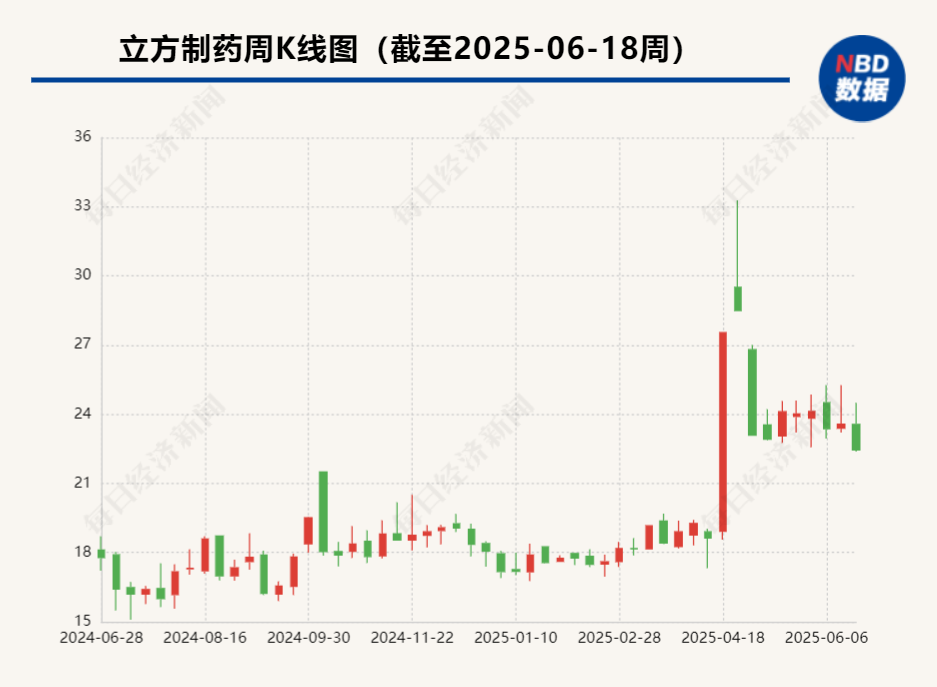
海尔生物收盘下跌1.62%,滚动市盈率28.38倍,总市值96.28亿元
Sou Hu Cai Jing· 2025-06-18 11:15
Core Viewpoint - Haier Biomedical's stock closed at 30.28 yuan, down 1.62%, with a rolling PE ratio of 28.38 times and a total market value of 9.628 billion yuan, indicating a lower valuation compared to the industry average [1][3]. Company Overview - Qingdao Haier Biomedical Co., Ltd. focuses on providing optimal user experiences for life science users, including pharmaceutical and biological enterprises, research institutions, and healthcare users, forming two main business segments: life sciences and medical innovation [2]. - The company offers comprehensive digital solutions represented by smart laboratories, digital hospitals, and smart public health, with key products including low-temperature storage boxes, automated biological sample storage, and various automated medication products [2]. Financial Performance - In Q1 2025, the company reported revenue of 689 million yuan, a year-on-year increase of 0.30%, and a net profit of 110 million yuan, reflecting a year-on-year decrease of 19.88%, with a gross profit margin of 48.35% [3]. - The company's PE ratio is 28.38, while the industry average is 49.10, indicating a significant valuation gap [3]. Shareholder Information - As of March 31, 2025, Haier Biomedical had 12,793 shareholders, a decrease of 453 from the previous period, with an average holding value of 352,800 yuan and an average holding of 27,600 shares per shareholder [1].

中证互联网医疗主题指数下跌0.09%,前十大权重包含爱尔眼科等
Sou Hu Cai Jing· 2025-06-17 11:10
Core Points - The CS Internet Healthcare Index (CS互医疗) experienced a slight decline of 0.09%, closing at 2592.79 points with a trading volume of 7.224 billion [1] - Over the past month, the index has increased by 0.65%, but it has decreased by 8.75% over the last three months, while year-to-date it has risen by 9.74% [1] - The index reflects the performance of representative companies providing hardware, software, or services for medical information and intelligence, with a base date of June 29, 2012, set at 1000.0 points [1] Index Composition - The top ten weighted companies in the index are: Lepu Medical (5.51%), Yixintang (5.2%), Laobaixing (5.19%), Haier Biomedical (5.11%), Jiuyuan Yinhai (5.11%), Yaoyigou (5.1%), Aier Eye Hospital (5.03%), Sichuang Medical (5.02%), Jiuzhoutong (5.02%), and Chuangye Huikang (5.02%) [1] - The market share of the index's holdings is divided between Shenzhen Stock Exchange (55.54%) and Shanghai Stock Exchange (44.46%) [1] - In terms of industry distribution, the index's holdings consist of 65.51% in healthcare, 29.47% in information technology, and 5.02% in communication services [1] Index Adjustment - The index samples are adjusted quarterly, with adjustments occurring in the second Friday of March, June, September, and December [2] - Weight factors are generally fixed until the next scheduled adjustment, with temporary adjustments made under special circumstances [2] Fund Tracking - Public funds tracking the CS Internet Healthcare Index include Huatai-PineBridge CS Internet Healthcare A and Huatai-PineBridge CS Internet Healthcare C [3]

上证科创板医疗指数报737.03点,前十大权重包含爱博医疗等
Sou Hu Cai Jing· 2025-06-13 08:41
Group 1 - The Shanghai Stock Exchange Sci-Tech Innovation Board Medical Index (Sci-Tech Medical, 950255) reported at 737.03 points, indicating a recent performance trend with a 1.84% increase over the past month, a 2.05% decrease over the past three months, and a 1.64% increase year-to-date [1] - The index comprises no more than 30 listed companies in the medical sector from the Sci-Tech Innovation Board, reflecting the overall performance of medical listed companies [1] - The index is based on a reference date of December 30, 2022, with a base point of 1000.0 [1] Group 2 - The top ten weightings in the index are as follows: Huatai Medical (11.45%), United Imaging (10.09%), Aibo Medical (6.94%), Yirui Technology (6.44%), Nanwei Medical (5.44%), Shengxiang Biology (5.0%), Xinmai Medical (4.74%), Haier Biomedical (4.22%), Yahui Long (3.61%), and Aohua Endoscopy (3.52%) [1] - The index's holdings are entirely from the Shanghai Stock Exchange, with a 100.00% representation [1] - The industry composition of the index holdings includes 45.39% in medical consumables, 33.24% in medical devices, and 21.37% in in vitro diagnostics [1] Group 3 - The index sample is adjusted quarterly, with adjustments implemented on the next trading day following the second Friday of March, June, September, and December [2] - Weight factors are generally fixed until the next scheduled adjustment, with special circumstances allowing for temporary adjustments [2] - Companies that are delisted or undergo mergers, acquisitions, or splits will be handled according to calculation and maintenance guidelines [2]

上证科创板医疗指数报734.93点,前十大权重包含联影医疗等
Sou Hu Cai Jing· 2025-06-12 08:41
Group 1 - The core viewpoint of the news is that the Shanghai Stock Exchange Sci-Tech Innovation Board Medical Index has shown mixed performance, with a recent increase of 1.89% over the past month, a decrease of 3.03% over the past three months, and a year-to-date increase of 1.35% [1] - The index consists of no more than 30 listed companies in the medical field selected from the Sci-Tech Innovation Board, reflecting the overall performance of medical listed companies [1] - The index was established with a base date of December 30, 2022, and a base point of 1000.0 [1] Group 2 - The top ten weighted companies in the index include: Huatai Medical (11.48%), United Imaging (10.13%), Aibo Medical (6.9%), Yirui Technology (6.49%), Nanwei Medical (5.37%), Shengxiang Biology (4.91%), Xinmai Medical (4.69%), Haier Biomedical (4.16%), Yahui Long (3.62%), and Aohua Endoscopy (3.59%) [1] - The index's holdings are entirely from the Shanghai Stock Exchange, with a 100% allocation [1] - The industry composition of the index holdings includes: medical consumables (45.40%), medical devices (33.27%), and in vitro diagnostics (21.34%) [1] Group 3 - The index sample is adjusted quarterly, with adjustments implemented on the next trading day following the second Friday of March, June, September, and December [2] - Weight factors are generally fixed until the next scheduled adjustment, with temporary adjustments made under special circumstances [2] - Companies that are delisted or undergo mergers, acquisitions, or splits will be handled according to calculation and maintenance guidelines [2]

上证科创板医疗指数报738.85点,前十大权重包含亚辉龙等
Sou Hu Cai Jing· 2025-06-10 08:46
Group 1 - The core viewpoint of the article highlights the performance of the Shanghai Stock Exchange Sci-Tech Innovation Board Medical Index, which reflects the overall performance of up to 30 listed companies in the medical sector on the Sci-Tech Innovation Board [1] - The Shanghai Sci-Tech Innovation Board Medical Index has increased by 2.43% in the past month, decreased by 2.53% in the past three months, and has risen by 1.89% year-to-date [1] - The index is based on a reference date of December 30, 2022, with a base point of 1000.0 [1] Group 2 - The top ten weighted companies in the index include: Huatai Medical (10.99%), United Imaging (10.25%), Aibo Medical (6.82%), Yirui Technology (6.61%), Nanwei Medical (5.29%), Shengxiang Biology (5.01%), Xinmai Medical (4.65%), Haier Biomedical (4.17%), Aohua Endoscopy (3.77%), and Yahui Long (3.65%) [1] - The index's holdings are entirely composed of companies listed on the Shanghai Stock Exchange, with a 100% allocation [1] - In terms of industry composition, medical consumables account for 44.80%, medical devices for 33.62%, and in vitro diagnostics for 21.58% [1] Group 3 - The index samples are adjusted quarterly, with adjustments implemented on the next trading day following the second Friday of March, June, September, and December [2] - Weight factors are generally fixed until the next scheduled adjustment, with special circumstances allowing for temporary adjustments [2] - Companies that are delisted or undergo mergers, acquisitions, or splits will be handled according to the calculation and maintenance guidelines [2]

年内超20家上市公司重大资产重组折戟,“价格谈不拢”是主因
Sou Hu Cai Jing· 2025-06-10 07:47
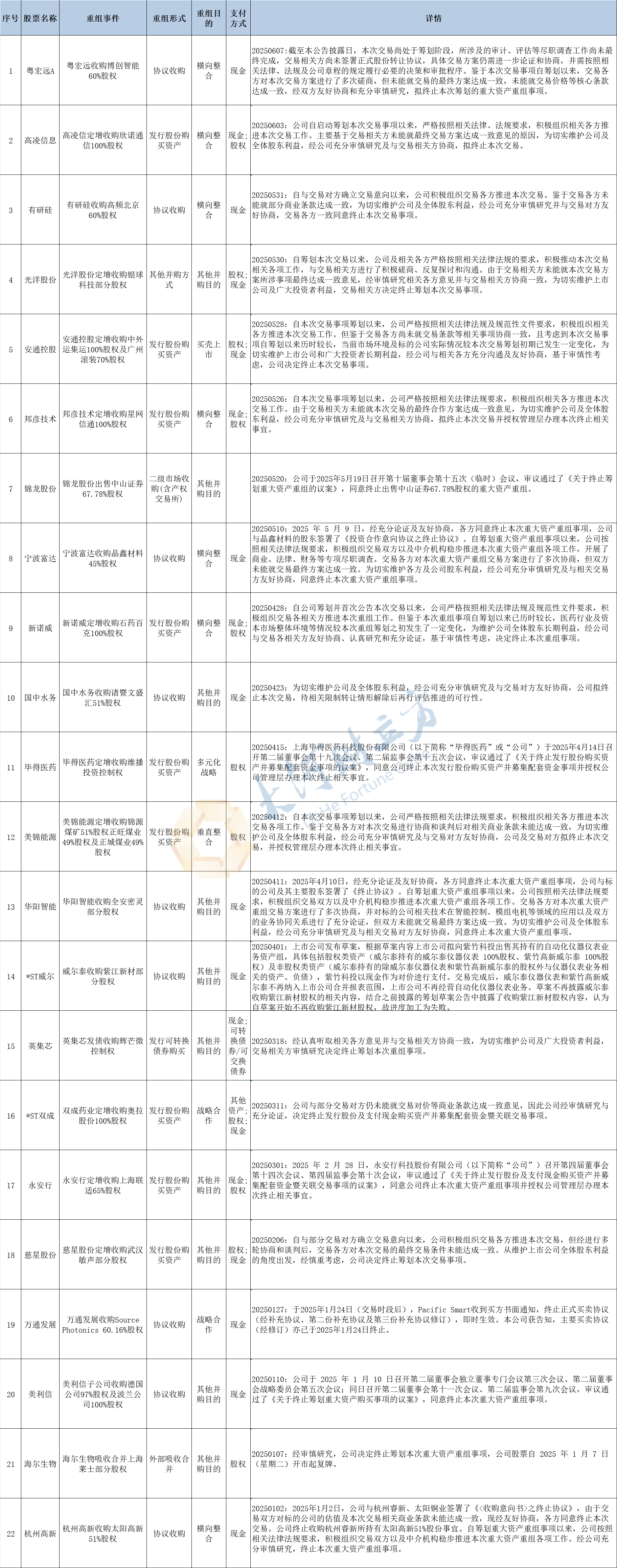
Group 1 - The core issue leading to the termination of major asset restructurings among listed companies is the inability to reach an agreement on key terms, particularly the transaction price [5][6][7] - Since 2025, over 20 listed companies have announced the failure of significant asset restructurings, including well-known firms such as Guozhong Water, China Merchants Energy, and Haier Biomedical [1][5] - Companies like Yuehongyuan A and *ST Shuangcheng have also faced similar issues, primarily due to disagreements on pricing [7][11] Group 2 - Market environment changes and prolonged negotiation periods have contributed to the abandonment of restructuring plans, as seen in cases like Xinno and Antong Holdings [9][10] - The complexity of transaction structures and the presence of asset ownership issues have also been significant factors in the failure of mergers and acquisitions [11][12] - The need for effective communication and coordination among parties involved in the transaction is crucial to avoid misunderstandings and ensure successful negotiations [17][19] Group 3 - Recent policy initiatives, such as the revised "Major Asset Restructuring Management Measures," aim to enhance the merger and acquisition market's activity and success rates [14][15] - Companies are encouraged to conduct thorough due diligence and risk assessments as foundational steps in the merger process [16] - Establishing a joint working group and regular communication mechanisms can help address disputes and facilitate smoother negotiations [18][19]


量化选股策略更新(250530)
Yin He Zheng Quan· 2025-06-06 11:25
Quantitative Models and Factor Construction Quantitative Models and Construction Methods - **Model Name**: State-Owned Enterprise (SOE) Fundamental Factor Stock Selection Strategy **Model Construction Idea**: This model selects stocks from a pool of SOEs based on fundamental factors, emphasizing dividend characteristics and industry-specific metrics to evaluate profitability, operational efficiency, and solvency [3][5][6] **Model Construction Process**: 1. Define the SOE sample pool using the CSI SOE Index constituents and SOEs listed on the Beijing Stock Exchange for over six months [3] 2. Classify industries into two categories: dividend-oriented (e.g., resources, utilities, real estate) and growth-oriented (e.g., advanced manufacturing, software services) [3][4] 3. Select general factors such as ROE (TTM), operating cash ratio, asset-liability ratio, and dividend yield, alongside industry-specific factors like ROIC, inventory turnover, and R&D intensity [5][6][7] 4. Assign weights to factors, emphasizing dividend yield for all industries and adjusting weights for growth-oriented industries (e.g., lower weight for asset-liability ratio) [9] 5. Calculate scores for each stock based on weighted averages of general and industry-specific factors, normalize the scores, and rank stocks [10] 6. Allocate weights to the top 50 stocks using the formula: $$ w_{i} = \frac{score_{i}^3}{\sum_{i=1}^{N} score_{i}^3} $$ where \( score_{i} \) represents the normalized score of stock \( i \) [10] - **Model Evaluation**: The model effectively captures the dividend and growth characteristics of SOEs, providing a balanced approach to stock selection [3][5] - **Model Name**: Technology Theme Fundamental Factor Stock Selection Strategy **Model Construction Idea**: This model identifies technology stocks with high R&D intensity and strong fundamental performance, focusing on profitability, growth, and operational efficiency [17][18][21] **Model Construction Process**: 1. Define the technology stock pool based on industry classification (e.g., electronics, communication, computing) and R&D intensity (e.g., R&D expenses > 5% of revenue or R&D personnel > 10% of total employees) [17][18][19] 2. Exclude stocks in the "shakeout" and "decline" lifecycle stages, focusing on "introduction," "growth," and "maturity" stages [20][21] 3. Select fundamental factors, including general factors (e.g., gross margin growth, net profit growth) and unique factors (e.g., R&D expense ratio, PB-ROE) [22][23] 4. Calculate scores for each stock using the formula: $$ \hat{\mathbb{E}}_{i}^{s} = \frac{1}{5} Mean(S_{i}) + \frac{Mean(S_{i})}{Std(S_{i})} $$ where \( S_{i} \) represents the scores of eight factors for stock \( i \) [23][24] 5. Adjust scores using an R&D multiplier: $$ R&D \, Multiplier = 0.9 + 0.2 \times Normalization \left( \frac{Mean_{industry}(R&D/MarketCap)}{Mean_{A\_stock}(R&D/MarketCap)} \right) $$ Adjusted scores are then used to rank stocks [25][26] 6. Allocate weights to the top 50 stocks using the formula: $$ weight_{i} = \frac{score_{i}}{\sum_{i=1}^{50} score_{i}} $$ [27] - **Model Evaluation**: The model emphasizes R&D intensity and lifecycle stages, effectively identifying high-potential technology stocks [17][21] --- Model Backtest Results - **SOE Fundamental Factor Stock Selection Strategy**: - Annualized Return: 23.09% - Annualized Volatility: 21.77% - Sharpe Ratio: 1.0648 - Calmar Ratio: 0.9799 - Maximum Drawdown: -23.56% - Excess Return (vs. CSI SOE Index): 21.01% - Excess Sharpe Ratio: 1.7000 - Excess Calmar Ratio: 1.5867 - Excess Maximum Drawdown: -13.24% [11][12] - **Technology Theme Fundamental Factor Stock Selection Strategy**: - Annualized Return: 25.25% - Annualized Volatility: 28.22% - Sharpe Ratio: 0.9404 - Calmar Ratio: 0.7476 - Maximum Drawdown: -33.78% - Excess Return (vs. Technology Stock Pool): 10.62% - Excess Sharpe Ratio: 1.4755 - Excess Calmar Ratio: 1.2638 - Excess Maximum Drawdown: -8.40% [29][30] --- Quantitative Factors and Construction Methods - **Factor Name**: SOE General Factors **Factor Construction Idea**: Evaluate SOE performance using profitability, efficiency, and solvency metrics [5][6] **Factor Construction Process**: - Dividend Yield (TTM): Reflects SOE dividend stability - ROE (TTM): Measures profitability - Operating Cash Ratio: Indicates sales quality - Asset-Liability Ratio: Reflects financial stability - Labor Productivity: Measures operational efficiency [6] - **Factor Name**: Technology General and Unique Factors **Factor Construction Idea**: Assess technology stocks based on profitability, growth, R&D intensity, and supply chain metrics [22][23] **Factor Construction Process**: - Gross Margin Growth: Reflects profitability - Net Profit Growth: Indicates growth potential - R&D Expense Ratio: Measures R&D intensity - PB-ROE: Combines valuation and profitability - Supply Chain Metrics: Evaluate upstream and downstream risks [22][23] --- Factor Backtest Results - **SOE General Factors**: Incorporated into the SOE Fundamental Factor Stock Selection Strategy, contributing to its annualized return of 23.09% and Sharpe Ratio of 1.0648 [11][12] - **Technology General and Unique Factors**: Incorporated into the Technology Theme Fundamental Factor Stock Selection Strategy, contributing to its annualized return of 25.25% and Sharpe Ratio of 0.9404 [29][30]